
Editorial
Chase ends in surrender


Deshabandu Tennekoon, the suspended Inspector General of Police, surrendered to the Matara Magistrate last Wednesday after leading the force he once headed on a merry chase for some 20 days, resulting in a lot of egg on the face of the police. He did so after unsuccessfully moving Court of Appeal earlier in the week seeking a writ order to prevent his arrest. This was obviously a last ditch attempt which failed. No doubt fearing that he could not hide for ever, Tennekoon turned up at the court house early on Wednesday morning, reportedly in a Benz car although there is no confirmation of that, staying in the court room until his case was taken up later in the day.
Although we believe the police could have arrested him when he turned up in court, as is known to have been done in the past, that did not happen. Tennekoon would have no doubt been prepared for such an eventuality. The prosecutor went on record that the fugitive should have been in a holding cell rather than seated in the open court room. At the end of the day he was remanded till April 3 and taken away to the Angunukolapelessa jail under special escort by the prison authorities who have been directed to ensure his safety in custody. This is an obvious precaution given the suspect’s notoriety and it was not long ago that a suspect was shot dead as he stood on a courtroom dock. Also, many grudges are known to have been settled in jail in the past.
Deshabandu Tennekoon is not the only high profile fugitive who has recently evaded the long arm of the law. Readers will no doubt remember that the woman accomplice, disguised as a lawyer, who smuggled in the firearm used in the recent court room killing in a hollowed out copy of the Criminal Procedure Code, is not yet in custody although an attractive reward for finding her has been offered. Notably no such inducement was offered by law enforcers for the arrest of their fugitive chief. But a lot else has been done in searching his home where some 795 bottles of foreign liquor and 214 bottles of wine had been found. These salacious details were presented to parliament last week by Public Security Minister Ananda Wijeypala who is the political authority responsible for the police. Since we are now into a New Year and Christmas was only recently past, Tennekoon probably received these as gifts which are customary in this season particularly to those holding high office and others who can do favours. The minister, no doubt, derived much satisfaction in revealing these details to parliament just as much as his cabinet colleagues have relished exposing misdoings of predecessor governments during the ongoing committee stage on the 2025 budget debate.
It is not unusual for police to take family members of wanted suspects as hostages until the quarry is either arrested or surrenders. This was not done in Tennekoon’s case although his family had been questioned about his whereabouts. Also there have been other past instances of high profile wanted suspects evading arrest for much longer periods than the suspended IGP. One such was Rear Admiral Royce de Mel, a former commander of the then Royal Ceylon Navy, who was wanted in connection with the abortive 1962 coup d’etat. De Mel successfully evaded arrest for several weeks before he was surrendered to the specially created trial-at-bar that tried the accused by his counsel, GG Ponnambalam Q.C. Many years after de Mel’s death, details of where he hid in a remote plantation bungalow were published in the media.
While Tennekoon was in hiding, there were threats of confiscation of his property and punishment to those who helped him were made although it was not clear whether such measures were enforceable or not. The public will now have to await the unraveling of the usually prolonged legal process before being able to see where this matter will eventually end. But it is patently clear that Deshabndu Tennekoon’s was a rank bad appointment to the position of IGP. He had been found guilty of torture by the supreme court in December, 2023 in what was described as a “historic judgment” where it was held that he was “personally responsible” for acts of torture against a suspect in custody. Before this judgment there were other allegations of his being complicit in attacking peaceful protests and making death threats to journalists and much more.
Former President Ranil Wickremesinghe resisted appointing Tennekoon as IGP extending the tenure of his predecessor, CD Wickremeratne for three month periods several times before he caved into demands by a Tennekoon patron before finally making the appointment. But this also necessitated some sleight of hand at the Constitutional Council (CC) which had to approve the appointment. Then Speaker Mahinda Yapa Abeywardene counted the votes of two absent members of the CC as noes (rather than absent) against Tennekoon declared a tie and then registered his own casting vote to record approval.
This demonstrated that even the checks and balances safety mechanism of the CC has been aborted for a clearly bad appointment to be made. It is to be hoped that such unfortunate situations will not be allowed to arise in the future.


Friday 10th April, 2026
A motion of no confidence against Energy Minister Kumara Jayakody is scheduled to be taken up in Parliament, today. The JVP-NPP government, which came to power promising to eliminate bribery and corruption and cleanse Parliament, finds itself in an unenviable position. It assured the public that its members would be above suspicion, but it is now in the dock over a corrupt deal. It has chosen to defend Minister Jayakody indicted of corruption and allegedly involved in a corrupt coal procurement deal. The only way the JVP/NPP can extricate itself from the current imbroglio is to ask Minister Jayakody to step down.
President Anura Kumara Dissanayake badly dented his good governance credentials on Tuesday by claiming in Parliament that the low-quality of coal imports had caused a drop in electricity generation at the Norochcholai power plant, but there had been no irregularities in the coal procurement process. He sought to fix the blame squarely on the coal supplier. He was obviously defending his friend, Jayakody, caught in a cleft stick. Interestingly, no sooner had he made that claim than the National Audit Office released its report on the coal procurement process revealing very serious irregularities therein. This official document has helped knock the bottom out of the government’s argument in defence of Minister Jayakody.
Keheliya Rambukwella and several Health Ministry panjandrums who served under him were arrested, remanded and prosecuted for their involvement in the procurement of substandard medicines which caused huge losses to the state coffers. So, why Minister Jayakody and his officials have not been dealt with in a similar manner over the coal scam defies comprehension. There is a prima facie case against them. The JVP-NPP government has made a mockery of its commitment to upholding the rule of law and accountability. The SLPP-UNP government ruined its chances of winning elections by defending Rambukwella and defeating a no-faith motion against him in 2023. The JVP-NPP administration is doing something similar.
The worst is yet to come where the adverse impact of the coal scam is concerned. Electricity tariffs will have to be increased again to recover the additional cost of burning diesel to produce more than 150 MW of electricity a day to make up for the Norochcholai generation shortfall caused by low-grade coal imports, independent experts have pointed out, warning of power cuts in a few months. The Opposition has stated that unofficial load shedding is already on. It has produced documentary proof in support of its claim.
More information about the Health Ministry procurement rackets came to light after the defeat of the no-faith motion against Rambukwella. Similarly, the magnitude of the coal procurement scam is yet to be determined. JVP/NPP politicians are known for their glib tongue, but they will not be able to pull the wool over the eyes of the resentful public battered by the soaring cost of living.
Two-thirds parliamentary majorities are apparently accursed in this country. Governments with such steamroller majorities indulge in corruption, succumb to the arrogance of power, which blinds them to reality, and dig their own political graves. They remind us of Lord Acton’s words of wisdom about the corruptive nature of power. One may recall that the SLFP-led United Front government, which abused its two-thirds majority, had a Humpty-Dumpty-style fall in 1977.
The Mahinda Rajapaksa government, which had a razor-thin majority, defeated the LTTE, developed the economy, implemented many development projects and lived up to the people’s expectation, but it failed pathetically after securing a second term and mustering a two-thirds majority in 2010. It became a metaphor for corruption, and suffered a catastrophic fall. The Gotabaya Rajapaksa government also became a victim of its two-thirds majority, so to speak. The JVP-NPP government is moving in the same direction, defending corrupt politicians and covering up crooked deals.
Ironically, many key Opposition figures who are flaying the JVP-NPP government for corruption and trying to engineer its ouster are themselves facing allegations of corruption. The people seem to have little option but to set thieves to catch thieves.


Thursday 9th April, 2026
The whole world must have heaved a huge sigh of relief yesterday when the US and Iran agreed to a two-week ceasefire, with Israel consenting to follow suit. Pakistan deserves praise for a timely intervention to de-escalate the West Asian conflict and prepare the ground for negotiations aimed at working out a lasting solution.
However, the situation is far from right as rain. What we are witnessing in the trouble-torn West Asia, which is red in tooth and claw, is an interval in hell, so to speak. Over the past several days, US President Donald Trump has repeatedly threatened to unleash hell on Iran unless the Hormuz Strait is reopened for international navigation. Hell hath no fury like a US President piqued, one may say with apologies to the Bard. There are some contentious issues to be resolved for a durable solution to be negotiated.
Iran has put forth 10 conditions and the US 15 for ending the conflict peacefully. It is now up to the other world powers and the UN to step in and ratchet up pressure on the US, Israel and Iran to reach a middle ground, without resuming hostilities, and give peace a chance. They ought to do so for their own sake. Occasions were not rare when the world experienced the so-called butterfly effect, or the phenomenon whereby a minute localised change in a complex system has large effects elsewhere. But what it has recently witnessed in West Asia may be described as the Pterosaur effect, as it were, the impact of the conflict on the rest of the world being so huge. Oil prices soared, making economies around the world scream. Some leading economists even warned of possible global stagflation risks in case of prolonged energy shocks from the Iran war. Oil prices came down significantly following the announcement of the ceasefire, but it is highly unlikely that they will return to the pre-conflict level of USD 70 a barrel any time soon due to irreparable damage suffered by critical energy infrastructure in the region. This has been the cost of US-Israeli military aggression.
Long dead as Mahatma Gandhi is, a core tenet of his teachings, nonviolent resistance, lives on today. What the Iranians adopted yesterday to protect their power plants, bridges, etc., vis-à-vis US President Trump’s threat to destroy them in a matter of a few hours was the Gandhian method of countering violence with nonviolence. According to media reports, a large number of Iranians gathered around potential US/Israeli targets, appealing to the conscience of the Americans. Whether their conscience-stirring method was the reason why Trump decided against carrying out his threat to annihilate the Iranian civilization in one fell swoop is a moot point, but blowing up infrastructural facilities together with thousands of unarmed civilians is something that no leader, other than someone like Hitler, can bring himself to do. Trump is already facing protests in the US against his war and has incurred international opprobrium for US aggression. Most of all, an attempt to wipe out a whole civilization would have triggered a spate of retaliatory attacks by Iran on multi-billion dollar US assets in the region.
It is ironic that the Iranian authorities who mercilessly ordered crackdowns on civilian protests before the eruption of the conflict had to urge the people to come out in their thousands and form human chains around infrastructural facilities to protect them.
One thing we gather from the West Asian conflict is that some elderly leaders’ dreams can become nightmares for others, especially the youth. Driven by his MAGA dream, Trump is trying to build an empire and grab the precious oil resources of other nations. He has graduated from abductions (in Venezuela) to assassinations (in Iran) in a bid to realise his goal. Israeli Prime Minister Benjamin Netanyahu has declared that a 40-year-old dream came true for him when he and Trump started attacking Iran. The Iranian leaders have also been dreaming of obliterating Israel. These dangerous dreams of ageing leaders remind us of Wilfred Owen’s Anthem for Doomed Youth: “What passing-bells for these who die as cattle? — Only the monstrous anger of the guns …” Perhaps, the best elderly leaders with a penchant for belligerence can do for the world, particularly the youth, who bear the brunt of any war, is to stop dreaming.
It is hoped that the peacemakers who have undertaken the onerous task of reconciling the warring parties in West Asia will not lose sight of the need to address the root cause of the conflict. While welcoming the Pakistan-brokered ceasefire, many seasoned analysts have pointed out that without a resolution of the Palestine question, particularly working towards a two-state solution supported by the UN, broader peace initiatives in West Asia are unlikely to reach fruition.
Wednesday 8th April, 2026
It is ironic that the JVP-NPP government is now defending tainted ministers and downplaying corruption in the Parliament it came to power promising to clean up. A few weeks ago, it vehemently denied the allegation that more than a dozen coal shipments obtained from a new supplier for the Norochcholai power plant were substandard. Having realised the futility of defending the indefensible, it chose to eat its words. However, it kept on claiming that the low-quality coal had not affected power generation. Now, it has had to admit that the low-grade coal imports have led to a huge drop in electricity generation at the Norochcholai power plant. However, it claims that there have been no irregularities in the coal procurement process! It has thus craftily conceded some points to defend its main argument that the integrity of its members is above reproach.
President Anura Kumara Dissanayake yesterday admitted in Parliament that low-quality coal had adversely impacted electricity generation. Assuring that the additional costs would not be passed on to the public, he claimed that the price of the first shipment of coal had effectively dropped from USD 98 per tonne to around USD 68 per tonne after penalties were imposed on the supplier. This cannot be cited in extenuation of the offences of supplying and procuring low-quality coal. The quality of coal was so low that all coal stocks should have been rejected in keeping with the tender guidelines. Instead, the government allowed the errant supplier to dump dirty coal here after paying penalties! Even if the penalties have led to a coal price reduction, as the President has claimed, more than 1.2 million litres of diesel have to be burnt daily to meet the electricity generation shortfall caused by the use of low-quality coal at Norochcholai, according to Convener of the United Trade Union Force, Ananda Palitha, a former Ceylon Petroleum Corporation worker.
Although President Dissanayake has said the additional costs arising from low-quality coal will be recovered from the supplier and they would not be passed on to electricity consumers, electricity tariffs have already been increased, and it is feared that another power price hike is in the pipeline. Diesel stocks meant for transport and agricultural purposes are being diverted for power generation. The Opposition yesterday claimed that unofficial power shedding was already on because it was not feasible to burn diesel to produce power to meet the Norochcholai generation shortfall. Power and energy experts have warned that official power cuts will be imposed after the upcoming traditional New Year.
It can also be argued that the government has raised colossal amounts of funds at the expense of the public to absorb losses caused by the coal scam. It has resorted to price gouging. It is accused of having jacked up the prices of fuel stocks procured before the eruption of the Iran war. The Opposition says the government has increased the price of old LGP stocks. The people are without any defence when their government orders them to stand and deliver.
While addressing Parliament, President Dissanayake also sought to defend his friend, Energy Minister Kumara Jayakody the Opposition is all out to oust over the fraudulent coal procurement. A no-faith motion against Jayakody is scheduled to be taken up in Parliament on 10 April. The President laid the blame for the low-quality coal imports solely at the doorstop of the supplier. True, that company must be held accountable for violating the tender guidelines and fined. But the government cannot absolve itself of the blame for the coal scam. It postponed the commencement of the bidding process and changed the tender criteria in favour of the errant company, as the Opposition has revealed in Parliament, holding Minister Jayakody accountable for the corrupt coal deal.
A future government is bound to have the coal scam probed thoroughly, and the JVP/NPP big guns involved in it will have to face legal action when they lose their hold on power. They will have a lot to answer for. Former ministers have been imprisoned for misusing fuel allowances.

PM on inspection tour of newly renovated Colombo Central Bus Stand

Israel to hold direct talks with Lebanon but no ceasefire, Netanyahu says

Sun directly overhead Nagawilluwa, Galgamuwa, Sigiriya, Palugasdamana and Mankerni about 12:11 noon today (10)

Showers expected in the Western, Sabaragamuwa, Southern and Uva provinces and in Kandy and Nuwara-Eliya districts after 2.00 p.m

Opposition tells Minister Kumara Jayakody to resign

Coal tender scandal: FSP to move court against illegal deals

‘Dates have the highest sugar content to fight Coronavirus’

Sunday Island 27 December – Headlines

#SundayIsland 17th December – Headlines

Sunday Island – 28th March

Sunday Island Headlines – 21 March

Sunday Island – 21st February – Headlines
-

 Features5 days ago
Ranjith Siyambalapitiya turns custodian of a rare living collection
-

 News5 days ago
Global ‘Walk for Peace’ to be held in Lanka
-

 News3 days ago
Lankan-origin actress Subashini found dead in India
-

 Features5 days ago
Beyond the Blue Skies: A Tribute to Captain Elmo Jayawardena
-

 Features5 days ago
Aspects of Ceylon/Sri Lanka Foreign Relations – 1948 to 1976
-

 Business1 day ago
Hayleys Mobility introduces Premium OMODA C9 PHEV
-

 News1 day ago
AG: Coal procurement full of irregularities
-
 News2 days ago
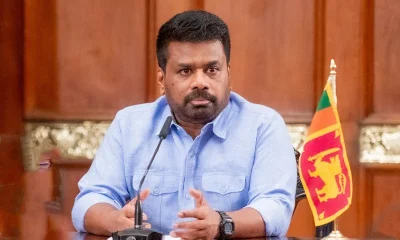
AKD admits import of substandard coal, blames technicalities and supplier