
News
Change at ICTA helm in the wake of shocking COPE revelations

Patali questions move to launch 500 more projects….
By Shamindra Ferdinando
Close on the heels of the recent revelation of massive waste, corruption and irregularities at the country’s apex ICT institution, the Information and Communication Technology Agency (ICTA), there has been a change at the helm of the institution.
The Parliamentary watchdog – COPE (Committee on Public Enterprises) on Dec 08, 2020 exposed staggering losses amounting to over Rs 2.6 bn due to negligence, shortcomings and failure on the part of the ICTA. ICTA bosses had been present at the meeting along with representatives from the Auditor General’s Department.
The COPE under the leadership of SLPP (Sri Lankan Podujana Peramuna) National List lawmaker Prof. Charitha Herath dealt with projects that had been carried out since 2013. The 31-member COPE found fault with projects undertaken during the 2010-2015 Rajapaksa administration and also 2015-2020 yahapalana period.
The Communications Department of the Parliament confirmed the COPE inquiry conducted two days before the end of parliamentary session for the year.
ICTA has been authorized to implement the government’s policies and action plans in relation to ICT.
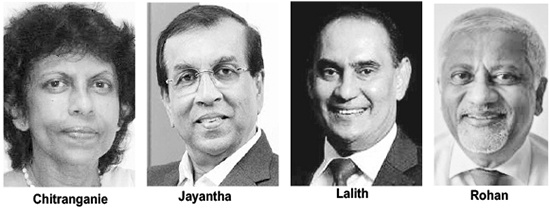
Prof. Lalith Gamage, who has been a member of the ICTA board yesterday (1), succeeded Jayantha de Silva whereas the latter received appointment as Secretary to the newly created Technology Ministry.
The current ICTA board consists of Prof. Lalith Gamage, Reshan Dewapura, the Chief Executive Officer at GSS International (Pvt) Ltd, Vimukthi Janadara, Director General, Information Technology Management Department, Oshada Senanayake, Director General of the Telecommunications Regulatory Commission of Sri Lanka, Kushan S. Kodituwakku, Managing director of Orel Corporation, Mano Sekaram, Chief Executive Officer (CEO) & Co-Founder of 99X Technology Ltd and Madu Ratnayake, Group CIO and the Center Head for Virtusa Sri Lanka.
The COPE session that inquired into ICTA comprised Prof. Herath, Minister Mahinda Amaraweera, State Ministers Susil Premajayantha, Indika Anuruddha and Members of Parliament Eran Wickramaratne, Jagath Pushpakumara, Premnath C. Dolawaththa, S. M. Marikkar, Patali Champika Ranawaka and Shanakiya Rasamanickam. Out of its31 members, only ten attended the session.
The COPE is empowered to report to Parliament on accounts examined, budgets and estimates, financial procedures, performance and management of Corporations and other Government Business Undertakings.
COPE sources said that the most of the projects examined had been carried out before Jayantha de Silva a former CEO and President of IFS Sri Lanka took over the apex body on Dec 19, 2019, just three days after Gotabaya Rajapaksa’s election as the President.
Prior to the appointment of Jayantha de Silva it was chaired by Prof. Rohan Samarajiva, also a former CEO and President of IFS Sri Lanka. Prof. Samarajiva received the appointment in April 2018. Samarajiva succeeded Chitranganie Mubarak, who had been the first ICTA head under Yahapalana administration.
The ICTA board appointed immediately after the Nov 2019 presidential election consisted of Jayantha de Silva, 99X Technology CEO Mano Sekaram; founder of WSO2 Dr. Sanjiva Weerawarana; CEO of the Sri Lanka Institute of Information Technology (SLIIT) Prof. Lalith Gamage; former ICTA CEO Reshan Dewapura; SAP India Country Sales Manager Manori Unambuwe and former Digital Secretary and ICTA Programme Director Wasantha Deshapriya.
Prime Minister Ranil Wickremesinghe led UNF Government established ICTA in terms of the Information and Communication Technology Act No. 27 of 2003, (ICT Act), was subsequently amended by the UPFA by Act No. 33 of 2008.
According to the Communications Department, a high profile ‘e-Pensions’ project launched in late Oct 2010 had been abandoned on Nov 1, 2013 after spending a staggering Rs 510 mn. At the time of the launch of the project involving ministries of Public Administration and Home Affairs, ICTA had been under the Presidential Secretariat
The then ICTA Chairman Professor P.W. Epasinghe is on record as having said that under the project the whole procedure – from computation to the payment of pension – would be changed for the benefit of the pensioner.
The abandoned project was meant to develop the required hardware and software for its implementation in the Western Province covering the District Secretariat, the Armed Forces, the Department of Prisons, the Department of Railways and the Department of Civil Defense.
The COPE asserted that ICTA performances in respect of other failed developments, too, could be compared with the disastrous ‘e-Pension’ project.
The COPE also examined Google Loon project officially announced in June 2013 but finalized in late July 2015, too had been abandoned after spending Rs 1,851, 322 mn to clear Google Loon equipment from the Customs, in addition to Rs 64 mn spent on project promotions.
COPE also revealed that another high profile project called ‘Lanka Government Network’ or LGN launched in Nov 2016 by then Minister Harin Fernando amidst much fanfare to provide internet services countrywide, too, failed to achieve desired results with the progress asserted at just 17 per cent. Of Rs 850.47 mn approved for the project, Rs 148.33 mn had been spent, the COPE bared while categorizing LGN, too, as a failed initiative.
Samagi Jana Balavegaya (SJB) lawmaker Patali Champika Ranawakaka, who had been present at the COPE meeting questioned ICTA officials why the launch of 500 projects was contemplated against the backdrop of such losses.
Funds amounting to Rs 32.5 mn allocated for ‘e-NIPO’ (project undertaken for the National Intellectual Property Office) had been utilized by the I.C.T.A to pay salaries of its officials.
The Island
in a front-page report titled ‘Sheer negligence on the part of the Treasury, Parliament revealed’ carried on Dec 14th edition, pointed out how some employees received monthly salaries in the range of Rs 755,000 to Rs 245,000 outside public sector salary scales though they were paid by the taxpayers’ money.
The COPE also found fault with ICTA for not including Rs 39 mn spent on ‘e-Local Authorities’ yahapalana project in the performance reports.
The COPE also made the shocking revelation that a 2017 Corporate Plan that had been prepared at the cost of Rs. 2,737,000 mn was thrown away without seeking approval from the board. One of the challenges faced by the new Chairman is to conduct an internal inquiry as regards preparation of Corporate Plans beginning 2003-2019.
The COPE is also under fire for the recruitment of management level workers on contract basis to senior positions.


Convenor of the Samagi Joint Trade Union Alliance affiliated with the Samagi Jana Balawegaya, Ananda Palitha, yesterday (16) said that the Ceylon Electricity Board was seeking to raise electricity tariffs by 13.56% percent although it had earned a profit of more than Rs 22,000 mn.
The CEB recently submitted its proposal to the Public Utilities Commission of Sri Lanka (PUCSL) for an electricity tariff revision for the second quarter of this year – the period effective from April 1 to June 30.
Palitha alleged that the PUCSL, in spite of knowing the massive profit earned by the CEB, at the expense of the hapless public, had chosen to allow the state enterprise to propose an additional burden.
The economic, technical and safety regulator of the electricity industry, and the designated regulator for petroleum and water services industries, should exercise its powers in terms of the PUCSL Act No. 35 of 2002 and the Sri Lanka Electricity Act No. 20 of 2009 to provide relief, the veteran trade unionist said.
Palitha emphasised that the PUCSL had the right to intervene on behalf of electricity consumers but, unfortunately, chose to facilitate the CEB’s despicable strategy. “The proposal to increase tariffs by 13.56% was meant to divert attention. The real issue at hand is the percentage of electricity tariff reduction,” Palitha said. The former UNPer found fault with the Opposition for failing to expose the CEB.
Taking into consideration the Rs 22,000 millionplus profit, the PUCSL could order the CEB to grant relief to consumers, Palitha said, adding that the CEB and PUCSL, together, deprived electricity consumers tariff reduction in the first quarter of this year, too.
In January this year, the CEB asked for a 11.59% tariff increase though it was enjoying Rs 22,000 mn profit at that time, the trade unionist said.
Palitha said that as the PUCSL received all data available to the CEB it was fully aware of the finances of the state enterprise.
In January, 2025, regardless of the NPP government floating the idea regarding as much as a 37% tariff increase, the PUCSL granted a 20% tariff reduction (25% of Rs 22,000 mn profit), Palitha said.
According to him, as a result of relief granted to the consumers, the profits had been reduced to Rs 16,000 mn but by June 2025 profits had increased to Rs 18,000 mn and there was a need to grant tariff reduction. But, the NPP, having always lashed out at the International Monetary Fund (IMF) in the run up to the presidential election, held in September 2024, started playing a different tune.
Responding to The Island queries, Palitha said that contrary to claims that the CEB proposed a 13.56% tariff increase to cover up losses caused by the importation of low-quality coal for the Norochcholai Lakvijaya coal-fired power plant, the current strategy seemed to have been adopted at the behest of the IMF.
Instead of granting tariff reduction for the third quarter in 2025, the PUCSL ordered an 18% increase, Palitha said. The trade unionist claimed that the Finance Ministry, at the behest of the IMF, directed both the CEB and the PUCSL to increase electricity tariffs by 20% in violation of the relevant Acts, he said.
Then in Oct, 2025, the CEB proposed a 6.8 % tariff increase at a time its profits were around Rs 22,000 mn. The CEB and PUCSL staged a drama over that proposal and finally, on the false pretext of the CEB’s failure to furnish its proposal on time, the revision was dropped, Palitha said. The SJB activist pointed out that the Opposition failed to highlight that consumers had been deprived of downward revision in spite of massive profits earned by the Board. “In fact, when Energy Minister Kumara Jayakody met trade unions, he very clearly declared that they were considering electricity power reduction, perhaps by 10%, 12% or 15%. But in the end nothing happened.”
Now the same drama is being enacted by the government, the CEB and the PUCSL, Palitha said.
By Shamindra Ferdinando
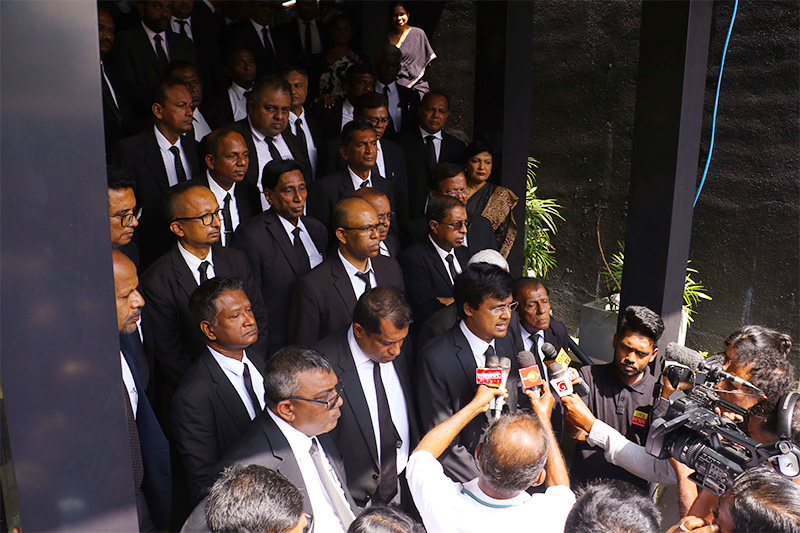
Members of the BASL yesterday (16) staged a protest march over the murder of a lawyer and his wife in Akuregoda, Thalangama, last week. The BASL staged a protest march from the Supreme Court Complex to the BASL Head Office.
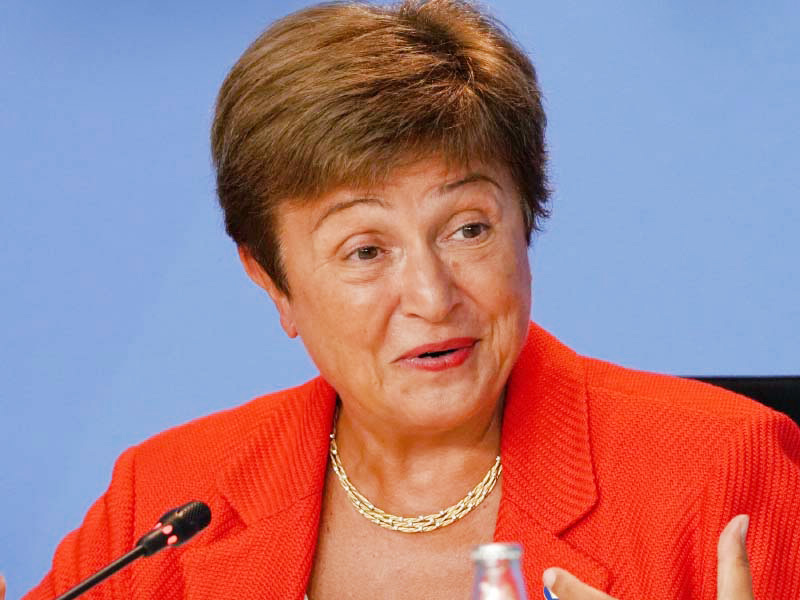
Managing Director of the International Monetary Fund (IMF) Kristalina Georgieva arrived in Colombo yesterday (16) for top level discussions with the government. She is scheduled to leave tomorrow (18) after meeting government authorities and key stakeholders, observing firsthand the impact of Cyclone Ditwah, and discussing ways in which the IMF could support recovery efforts and contribute to building a more resilient future for all Sri Lankans, sources said.

Samra’s record 110 in vain as Phillips and Ravindra put New Zealand in Super Eights

Canada reacts as cheating row rocks curling superpower

Long queues and confusion mar first day of India’s landmark AI summit

Ancient bone may prove legendary war elephant crossing of Alps

Nepal, Scotland chase win to close out what-if tournament

How dark web agent spotted bedroom wall clue to rescue girl from years of harm

‘Dates have the highest sugar content to fight Coronavirus’

Sunday Island 27 December – Headlines

#SundayIsland 17th December – Headlines

Sunday Island – 28th March

Sunday Island Headlines – 21 March

Sunday Island – 21st February – Headlines
-
 Life style2 days ago
Marriot new GM Suranga
-

 Business1 day ago
Ministry of Brands to launch Sri Lanka’s first off-price retail destination
-

 Features2 days ago
Monks’ march, in America and Sri Lanka
-
 Midweek Review6 days ago
A question of national pride
-
 Business6 days ago
Autodoc 360 relocates to reinforce commitment to premium auto care
-
 Opinion5 days ago
Will computers ever be intelligent?
-
 Features2 days ago
The Rise of Takaichi
-
 Features2 days ago
Wetlands of Sri Lanka: