
News
CFL urges government to abandon USAID inspired labour reforms


The Ceylon Federation of Labour (CFL) has accused President Gotabaya Rajapaksa of “clandestinely” undertaking a program of labour reforms through the Ministry of Justice “to set, what is euphemistically called, a conducive environment for investment, especially Foreign Direct Investment (FDI).”
In a statement iussued last week, CFL General Secretary TMR Rasseedin said that these changes are sought to be made through the justice ministry usurping the functions of the labour ministry and called upon the government to abandon these ongoing efforts.
“At the very outset it has to be categorically stated that the mandate the government received from the country at the last Presidential and Parliamentary Elections did not include labour law reforms and that too with the assistance of a foreign agency with questionable antecedents.
“Labour reforms find no mention in President Rajapaksa’s Manifesto ‘Saubagya Dekma’. We are astonished to find that the Ministry of Justice (MoJ) has been engaged to review labour laws with the assistance of USAID, sans involvement of the Ministry of Labour and relevant stakeholders.”
Such an exercise, if at all, should be handled by the Ministry of Labour (MoL) and not by any other agency and, by doing so, the MoJ is usurping the role and responsibilities of the MoL to oversee matters involving labour in the country, the statement said.
“We hold the view that the MoL and the Department of Labour (DoL) hold the sole responsibility to manage issues related to labour in the country and oppose such interference by outside authorities. Previous attempts to promote such reforms catering to employer demands have been successfully beaten back by trade unions.
“In 2017 during the Yahapalana period, the then Minister of Labour abdicated his role and acquiesced in allowing the Ministry of Development Strategies & International Trade, with the assistance of some surrogate unions and the USAID to initiate labour reforms which were stymied in time by a strong protest by the overwhelming majority of unions in the National Labour Advisory Council (NLAC), the statement said.
“This project is now being revived under the MOJ whose Minister recently earned notoriety for some uncalled for remarks on strikes, exposing the limits of his knowledge of not only international law but also our own National Workers Charter which continues to govern our labour relations. It has to be stated that unless otherwise officially retracted, the National Workers Charter constitutes the policy framework that regulates labour affairs in the country.
“We urge the Minister of Justice to take stock of the ground reality before he ventures into unfamiliar terrains such as labour reforms. In an evidence-based comparison of labour market regulations vis-a-vis FDI, CFL has found out that there is no empirical evidence to justify the type of labour law regime that capital is seeking to advance in order to enhance its profit.
“The statistics obtained by the CFL covers key East and South Asian economies such as Vietnam, Indonesia, Cambodia, China, Myanmar, Pakistan, Bangladesh, India and Nepal with which Sri Lanka is in competition to attract FDIs for export-based manufacturing industries.
“The labour markets of some of these countries are often quoted by local authorities and some policy advocates as ideally positioned for the inflow of FDIs. As verifiably evidence from the online statistical base of the Doing Business 2019 World Bank Report, labour market regulation in Sri Lanka is clearly the worst or far below average when compared with the above key regional economies “
This was in respect of matters such as Minimum Wages Statutory protection in hiring i.e. probation periods, fixed term contracts etc as well as many others, CFL said.
It said the present Minister of Labour sought to give a more precise definition to the different employment categories such as Fixed Term, etc. when he gazetted the Minimum Retirement Age of Workers Bill on 12.10.21.
“However, during its passage through Parliament, we saw the Interpretation Clause being reworked to appease employer interests. The CFL understands that the main focus of the MoJ-USAID inspired labour law reform agenda is to further whittle down clauses from our statutes such as these which protect workers and thereby pave the way for a race towards the bottom.,” the statement said.
“The politically ill-advised and cronyism-driven present exercise of the MoJ under the aegis of a foreign government development agency with a questionable political record has to be stymied before it further degrades the labour laws of the country, which even today is way below average for the region.”
The Ceylon Federation of Labour urged the government “to abandon this clandestine project without stirring unrest among the working class that may well turn out to be calamitous for the government.”

News
Prime Minister of Sri Lanka holds a bilateral meeting with Minister for Education and Skills Development of Bhutan

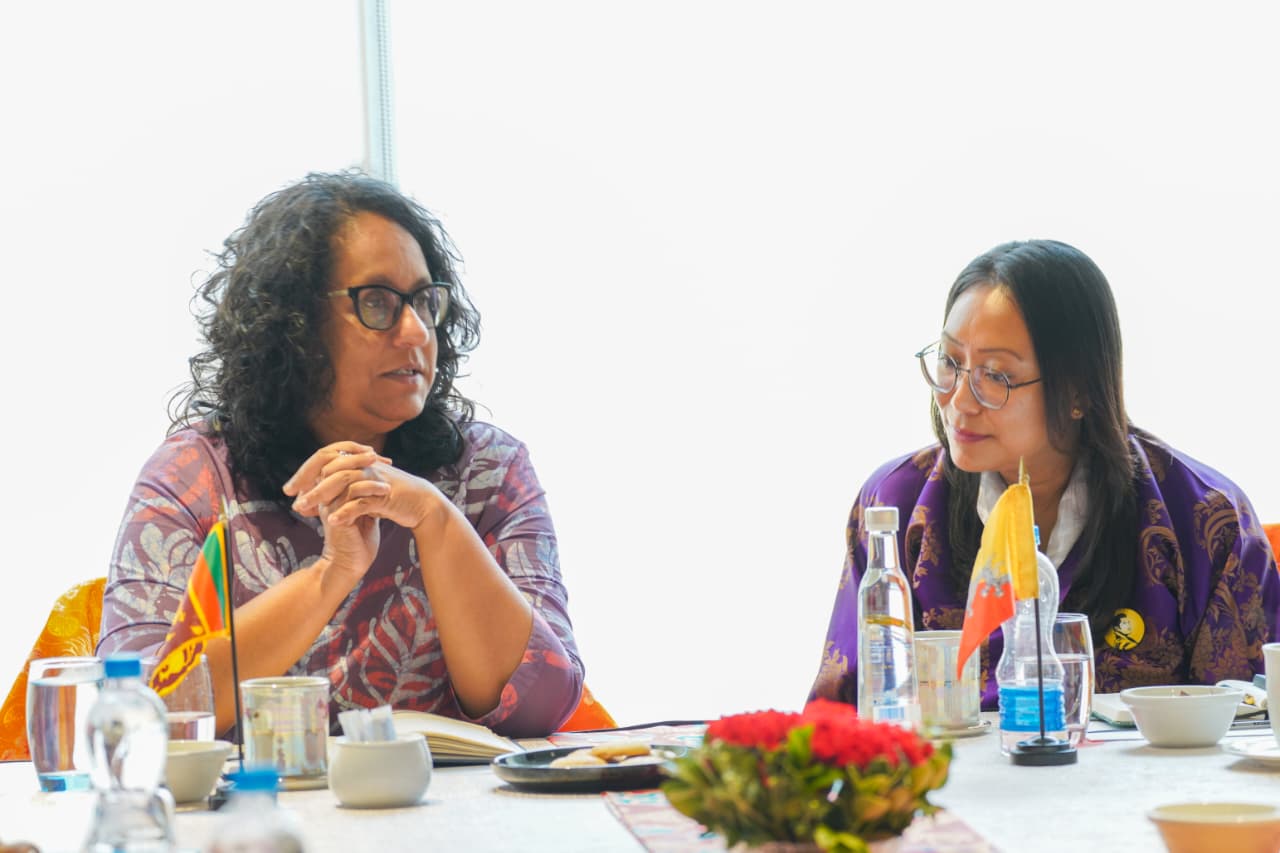
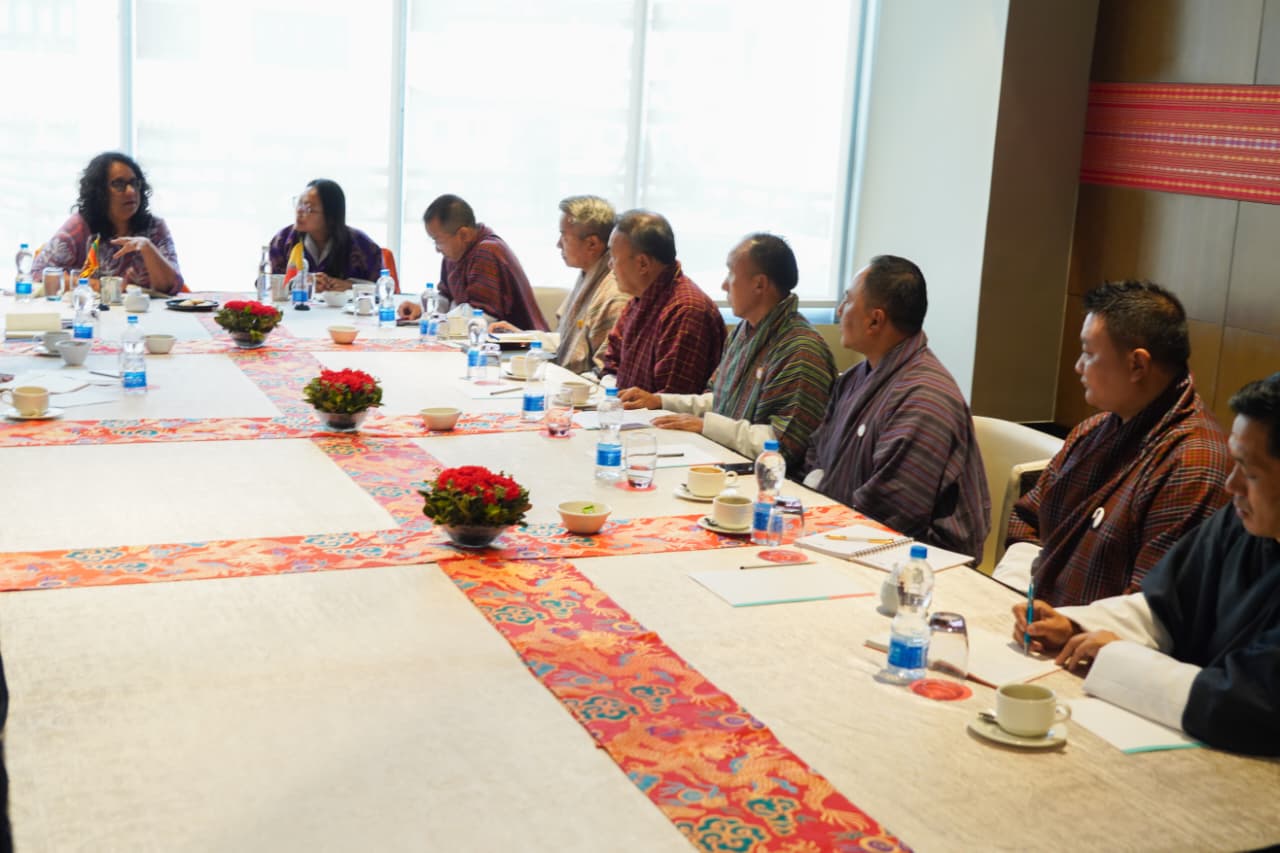
On the sidelines of the inaugural Global Conscious Food Systems Summit 2026, being held in Bhutan from 31 August to 4 September 2026, Prime Minister of Sri Lanka, Dr. Harini Amarasuriya, in her capacity as Minister of Education, Higher Education and Vocational Education, held a productive bilateral meeting with Yeezang De Thapa, Minister for Education and Skills Development of Bhutan, on 03 September 2026.
The discussions focused on further strengthening and expanding Sri Lanka-Bhutan cooperation in the education sector, with particular emphasis on developing mutually beneficial initiatives through enhanced Government-to-Government engagement.
Both sides underscored the importance of deepening institutional cooperation and exploring new avenues for collaboration in education, higher education and vocational training, with a view to creating greater opportunities for students, educators and academic institutions of both countries.
During the meeting, both sides agreed to initiate discussions towards the finalization and signing of a Memorandum of Understanding (MoU) on cooperation in the fields of education and vocational training. It was also agreed that the implementation of the MoU could be facilitated through the establishment of a Joint Working Group, headed at the Secretary level, with meetings to be convened annually to review progress, identify new areas of cooperation, and facilitate the effective implementation of agreed activities.
The major areas of cooperation discussed included enhancing collaboration among universities and academic institutions, promoting academic and faculty exchanges, joint research and university programmes, strengthening training and capacity-building opportunities for educators and teachers, and sharing expertise and best practices in the education and vocational training sectors.
The two sides also discussed strengthening child protection and safeguarding mechanisms, promoting ethical values among students, and addressing violence against children while ensuring their safety, protection, well-being and access to quality education.
Opportunities for Bhutanese students to pursue undergraduate studies at universities in Sri Lanka were also discussed, with particular emphasis on Dentistry, Medicine (MBBS), and allied health disciplines such as Physiotherapy. The discussions further covered opportunities for postgraduate studies in medical and health sciences at Sri Lankan universities, as well as enhanced collaboration among universities and other academic institutions of the two countries.
The meeting provided a valuable opportunity for Sri Lanka and Bhutan to advance cooperation in education and vocational training and explore new avenues for long-term collaboration for the mutual benefit of students, educators and academic institutions of both countries.
(Prime Minister’s Media Division)
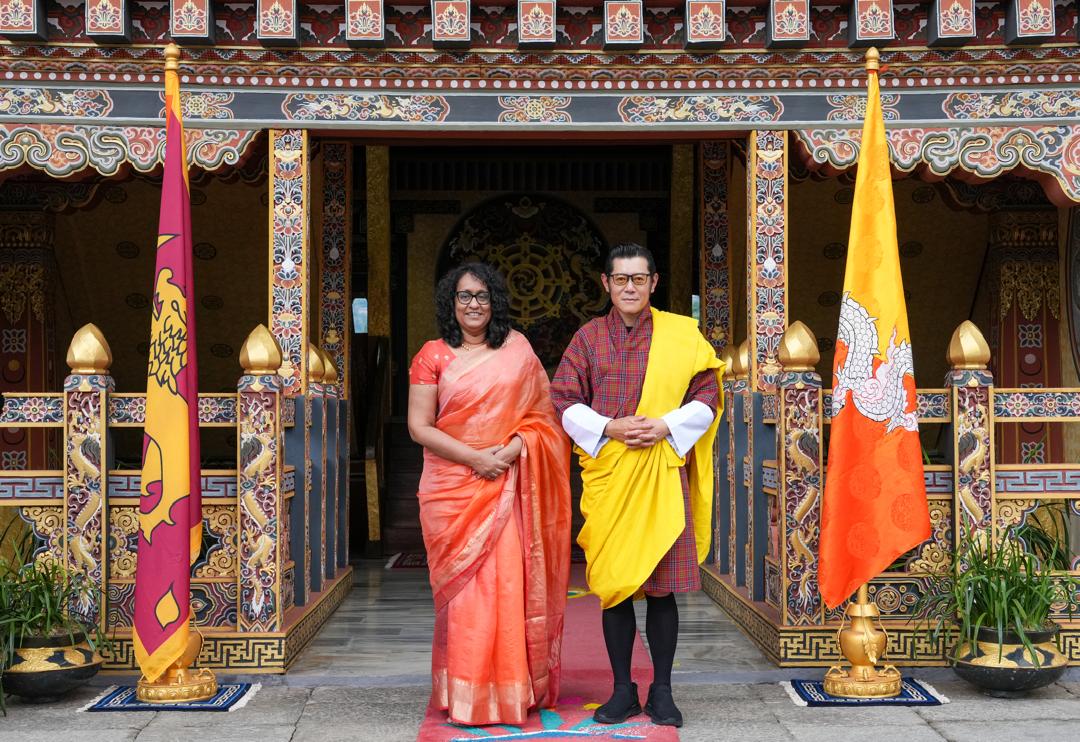
Prime Minister Dr. Harini Amarasuriya had an audience with His Majesty King Jigme Khesar Namgyel Wangchuck at the Tashichhodzong in Thimphu on September 02, during her official visit to the Kingdom of Bhutan.
The cordial discussion focused on Bhutan’s future development priorities and opportunities for cooperation between the two countries.
His Majesty expressed Bhutan’s interest in drawing on Sri Lanka’s experiences and expertise in areas relevant to its development plans. The discussion also focused on promoting investment between the two countries, including the possibility of establishing an investment zone in Bhutan.
The two sides also exchanged views on demographic challenges facing Bhutan, including the increasing migration of young people and its impact on the country’s population and future workforce.
The meeting highlighted the importance of strengthening bilateral cooperation and sharing experiences and best practices in support of the sustainable development of both countries.
(Prime Minister’s Media Division)
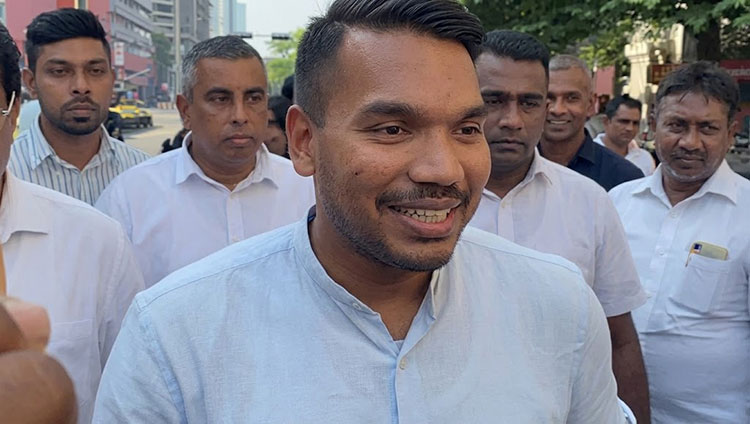
Sri Lanka Podujana Peramuna (SLPP) Member of Parliament Namal Rajapaksa has been arrested by the Commission to Investigate Allegations of Bribery or Corruption (CIABOC).
Namal Rajapaksa had been summoned by CIABOC to provide a statement in connection with investigations into the controversial Airbus deal. He was subsequently arrested by CIABOC after recording his statement for over 5 hours.

Prime Minister of Sri Lanka holds a bilateral meeting with Minister for Education and Skills Development of Bhutan

Prime Minister Meets His Majesty the King of Bhutan

Kusal Mendis, Binura Fernando ruled out of T20I series in England

SLPP MP Namal Rajapaksa arrested by CIABOC

Devapathiraja clinch U15 Division I title with 33-run win over Royal

Mandhana’s record ton powers India into semi-finals

‘Dates have the highest sugar content to fight Coronavirus’

Sunday Island 27 December – Headlines

#SundayIsland 17th December – Headlines

Sunday Island – 28th March

Sunday Island Headlines – 21 March

Sunday Island – 21st February – Headlines
-

 Features6 days ago
“Wrap Me Up in My Blazer”— A Gentlemanly Bradby Reminiscence
-

 Features5 days ago
When Sri Lankan stories find their own voice
-
 Features6 days ago
JVP/NPP government as seen from outside by Lionel Bopage now domiciled in Australia
-

 News5 days ago
BASL takes exception to Justice Ganepola being denied a place in SC
-

 Editorial7 days ago
Govt. trying to dupe UN Rapporteur?
-
 Features6 days ago
Prof. Savitri Goonesekere: What has she done?
-

 News2 days ago
Denied of promotion to SC despite vacancies, justice Gurusinghe retires
-

 Latest News2 days ago
Grade 5 scholarship exam results released