
News
CBSL says interest waiver on loans and leases could undermine stability of fiscal system

‘Moratorium related to payment of installments on capital borrowed ‘
by Suresh Perera
Notwithstanding protests over charging interest on repayment of loans and leases based on the one-year Covid-19 related moratorium, a senior Central Bank of Sri Lanka (CBSL) official said there’s no question of reversing the decision as neither banks nor other financial institutions can afford to absorb the negative impact of a waiver on interest on the capital, particularly at a time of an economic crunch.
“With the country facing a financial crisis largely due to the fallout of the pandemic, the government cannot be expected to offer further relief by reducing the interest component on the due repayments”, he stressed.
In terms of a Central Bank directive, all banks have been authorized to levy seven percent interest per annum on the total outstanding of loans and leases up to March 31, 2021, while finance companies can charge 11.5 percent.
Under the moratorium, credit facilities and leasing arrangements secured by key economic sectors hit by the outbreak of coronavirus were initially given a six-month grace period on repayments with effect from April 1, 2020. It was later extended by another six months as the worsening pandemic situation continued to cripple economic activity.
“The grace period related to payment of installments on the capital borrowed to fund loan and leasing facilities. Where the interest payments were concerned, a rate was agreed upon after a discussion with the stakeholders”, the official noted.
How can financial institutions, particularly finance companies, run their day-to-day operations and honor their commitments towards investors if there’s no return on borrowings?, he queried.
This can be done only if there is a situation where they don’t have to pay interest on investor holdings, he pointed out. “If they were to offer a return to one segment, while being denied their due revenue from the other, mounting losses are bound to push them towards insolvency”.
Financial institutions have to also absorb the cost of funds, as for example, a customer who has to repay a loan installment of Rs.10 million per month, holds back a repayment of Rs. 120 million during the one-year moratorium, the official explained.
With 50% of their funds disbursed as loans, the cash flow of these institutions have taken a big hit”, he said.
Under the circumstances, it is reasonable that at least the due interest on the borrowings are settled on time to ensure the survival of the financial sector in these difficult times, he said.
The tourism industry is still tottering. In this scenario, their loan installments are unlikely to roll in even after the grace period ends on March 31, 2021, he remarked.
He said that in the event of a natural disaster, the government can be expected to disburse funds to provide relief. However, a bail out on the interest payable by borrowers is too much to demand at a time of an economic downturn.
“We have received a plethora of complaints on this matter, and certainly understand that there are difficulties, but a perfect solution to please everybody is difficult to find”.
“Levying 11.5 percent interest on the total capital outstanding is unacceptable”, protested D. Nalaka Lankapurage, secretary of the All Ceylon Vehicle Leasing and Installment Payers Collective (ACVLIPC).
“We don’t mind paying reasonable interest on the monthly premium, but when it comes to the total capital outstanding, the commitment is too much to bear as business is slack across the board”, he complained.
With interest calculated on the basis of the total capital outstanding, even small-time borrowers are asked to pay Rs. 50,000 to Rs. 60,000 per month, which is next to impossible with business at a low ebb, he noted.
“Financial institutions even decline to give us a breakdown of the payments. When they demand, we are expected to duly pocket out with no questions asked”, Lankapurage asserted.
Many of these institutions have made billions of rupees in profits over the years. Can’t they offer us a degree of relief even at a time the pandemic has ripped apart life and livelihoods in the country?, he asked.
“We admit that financial establishments cannot give loans gratis. All what we are asking for is a reasonable rate of interest on the monthly premium; not on the total capital outstanding”, he continued.
Lankapurage said that those who have leased vehicles have to also shoulder the added burden of paying insurance and meeting running costs.
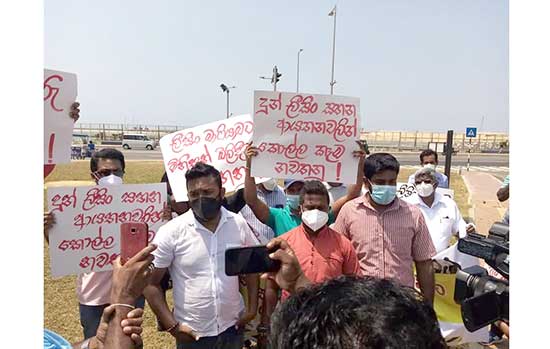
Members of the ACVLIPC staged a protest opposite the Presidential Secretariat recently against what they termed a “rip-off by banks and other financial institutions”.
A memorandum addressed to the President, which set out their grievances, was handed over to a Presidential Secretariat official during the agitation.

Latest News
Do not be misled by Fake news created using the PM’s name, photographs, and video footage – Prime Minister’s Media Division


It has been revealed that fake news created using the name, photographs, and video footage of Prime Minister Dr. Harini Amarasuriya along with the unauthorized use of official logos of various media institutions and news websites are being circulated on social media platforms.
Certain groups have published videos edited to appear as though the Prime Minister is expressing particular views, as well as fake social media posts featuring her photographs. Through such misleading content, false information has been circulated regarding various business and employment opportunities, as well as the country’s economy and tax policies.
These false stories have been created using Artificial Intelligence (AI) and modern technological tools. As the Prime Minister’s Media Division, we kindly urge the public not to be deceived by such misinformation and to remain vigilant regarding these matters.
Legal action will be taken against all individuals who create and distribute such false news through social media in a manner that harms the Government and the reputation of the Prime Minister.
[Prime Minister’s Media Division]
News
New High-Definition (HD) Television Studio at the University of Vocational Technology handed over to students with the participation of the Prime Minister
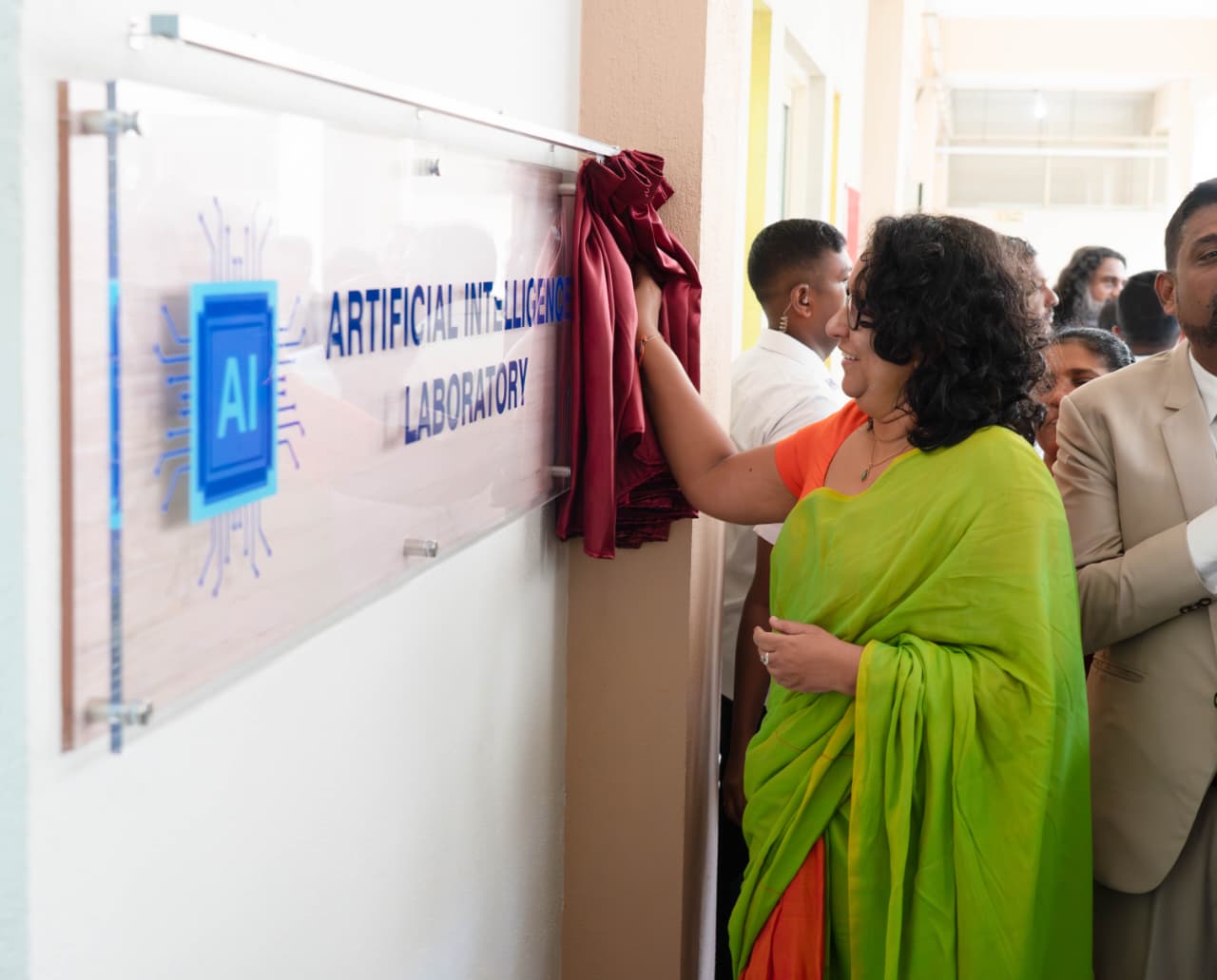
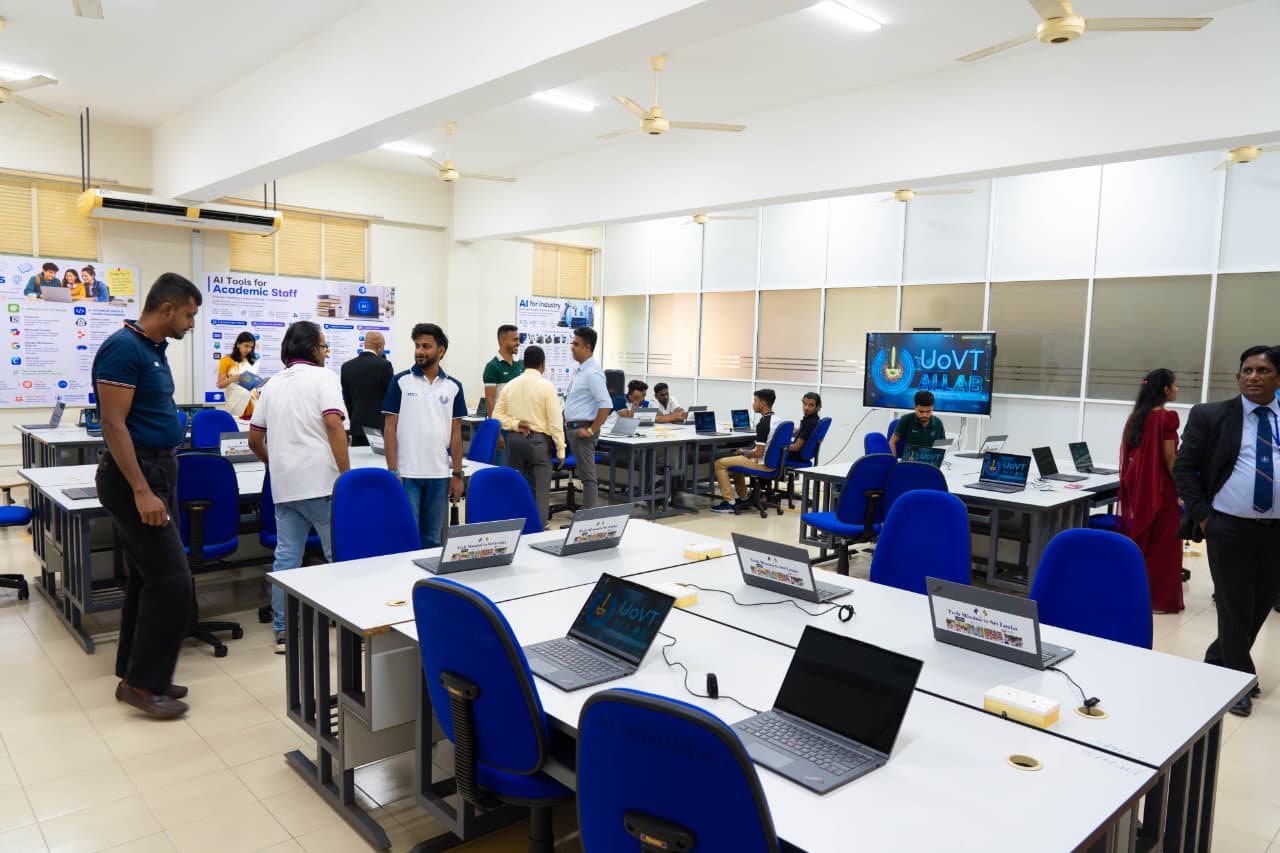
The newly equipped television studio, which had remained an incomplete component of the media complex constructed for the practical training of students at the University of Vocational Technology (UoVT), Ratmalana, was officially handed over to the students on Tuesday (26 May) with the participation of Prime Minister Dr. Harini Amarasuriya, following the installation of modern technological equipment and studio production facilities.
Following the opening of the television studio, several newly established affiliated centres aimed at expanding students’ practical and academic activities were also declared open.
Accordingly, a broadcasting studio providing opportunities for students to launch a range of educational services, including a web radio channel, an Artificial Intelligence Research Laboratory, and a Centre for Gender, Equity and Equality were inaugurated during the occasion.
Coinciding with the event, laptop computers were donated to support the uninterrupted continuation of the educational activities of students in at several schools affected by the recent floods and other natural disasters. In addition, the “UoVT Greening Policy,” formulated with a comprehensive understanding of technology and environmental inter connectivity, was officially launched during the occasion.
Following this policy, all construction and development activities within the university are expected to be carried out based on green concepts, with the goal of transforming the university into a carbon-neutral environmental unit by the year 2030.
One of the key objectives of this initiative is to encourage students pursuing vocational education to engage more actively in employment opportunities within industries that prioritise green concepts and sustainability.
Following the event, the Prime Minister also engaged in a discussion with representatives of the university student unions.
The event was attended by the Deputy Minister of Vocational Education Nalin Hewage, Secretary to the Ministry of Education, Higher Education and Vocational Education Nalaka Kaluwewa, Vice Chancellor of the University of Vocational Technology, Professor K.M.G. Prasanna Premadasa, along with several distinguished invitees.
[Prime Minister’s Media Division]
Sri Lanka’s banking sector has provided a collective and categorical assurance that it remains stable, resilient, and secure despite a few recent isolated incidents of financial fraud, emphasising that these developments do not pose a threat to the safety of customer deposits or the overall integrity of the financial system.
While acknowledging that such incidents have understandably generated some concerns, the industry has reiterated that it is addressing these matters comprehensively and that it is well equipped to manage and mitigate these challenges. This assurance was conveyed in a statement issued to the media by the Sri Lanka Banks’ Association (SLBA), which represents all licensed commercial banks in the country.
Addressing recent reports of financial fraud and cyber-related incidents that have drawn heightened public attention, the Association underscored the strength of the sector’s fundamentals and the effectiveness of ongoing regulatory oversight and risk management frameworks.
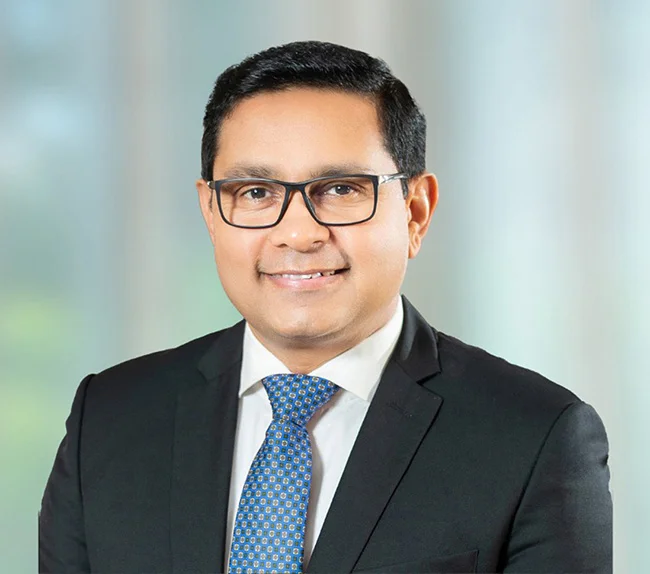
“Recent reports of financial fraud and cyber-related incidents have understandably received public attention. Industry leaders and regulators emphasise, however, that the banking sector remains fundamentally strong, resilient, and well equipped to withstand such challenges, without compromising its core stability or the security of customer deposits,” the Chairman of the SLBA Sanath Manatunge stated.
He noted that while many social media posts are either misleading or carry inaccurate information, some recent cases, including electronic fund transfer fraud, have raised important questions about digital security. However, these incidents represent only a very small proportion relative to the substantial institutional capital buffers maintained by banks. Importantly, depositors are assured that customer funds remain secure, with any such losses being absorbed through institutional capital buffers rather than public deposits.
Other cybercrime cases reported in recent months, including phishing-related fraud which are not directly connected to the banking industry and hence do not manifest any vulnerabilities in the system, however underscore the evolving and increasingly sophisticated nature of digital threats faced by financial systems worldwide, the Chairman said, but stressed that these are isolated incidents and do not reflect systemic weaknesses across the banking industry.
Reinforcing this position, the Central Bank of Sri Lanka has confirmed that all licensed banks continue to maintain capital adequacy and liquidity ratios well above minimum regulatory requirements, the Association pointed out. The regulator has also reiterated its readiness to provide temporary liquidity support if required, ensuring the uninterrupted stability of the financial system.
“Sri Lanka’s banking sector collectively manages trillions of rupees in assets, supported by diversified portfolios and robust governance frameworks. This scale, combined with prudent risk management practices, provides a strong foundation for absorbing shocks while maintaining public confidence,” Manatunge said.
At the same time, the industry is actively strengthening its defences against emerging threats. Banks are continuously enhancing cybersecurity frameworks through investments in advanced Fraud Risk Management Systems, more rigorous monitoring protocols, and independent forensic audits. These efforts are complemented by ongoing regulatory and parliamentary initiatives aimed at strengthening governance, accountability, and transparency across the sector.
Recognising that customer awareness is a critical line of defence, banks have also intensified public education initiatives focused on safe digital practices. These include guidance on password security, phishing prevention, and the secure use of QR codes and other digital payment tools.
The SLBA noted that cyber fraud is not unique to Sri Lanka, with similar incidents reported in major economies around the world. In these markets, banking systems have remained stable, supported by strong regulatory oversight and continuous adaptation to emerging risks. Sri Lanka’s banking industry is demonstrating comparable resilience, with swift corrective measures and vigilant supervision reinforcing confidence in the system.
While recent incidents have highlighted certain challenges in the environment, the benefits of digital banking far outweigh such concerns, Manatunge added, reiterating that Sri Lanka’s financial sector remains robust, well-capitalised, and subject to close regulatory oversight. These incidents are isolated in nature and do not indicate systemic failure, and the corrective measures already underway are expected to further strengthen the sector’s resilience against future threats.
The SLBA concluded: “Sri Lanka’s banks continue to stand as pillars of stability, safeguarding customer deposits while supporting the country’s economic progress. We urge customers to remain vigilant in their own digital practices, even as the industry continues to enhance the safeguards that protect them.”

Five people found alive after week trapped in flooded Laos cave

Peace deal to fully reopen Hormuz as US military pulls out

World Cup contenders England and India hope to get their combinations right

Do not be misled by Fake news created using the PM’s name, photographs, and video footage – Prime Minister’s Media Division

Israeli strike in Gaza City kills new head of Hamas’s military wing

Sri Lanka Cricket launch a program to enhance coaching standards of school cricket

‘Dates have the highest sugar content to fight Coronavirus’

Sunday Island 27 December – Headlines

#SundayIsland 17th December – Headlines

Sunday Island – 28th March

Sunday Island Headlines – 21 March

Sunday Island – 21st February – Headlines
-

 Business6 days ago
Historic launch of CCWE Fashion Week & International Summit 2026
-
 Opinion7 days ago
Murder of Ehelepola family, Bogambara Wewa and Sightings of Wangediya
-
 News7 days ago
Steps underway to safeguard Sri Lanka’s maritime heritage
-

 News4 days ago
All-New GRAVITE launches at LKR 6.99 Mn
-
 News3 days ago
Police probe underway to ascertain links between criminals deported from UAE and local politicians
-

 Features4 days ago
The NPP’s pivot to the past
-
 News2 days ago
Easter Sunday carnage: Court told Maulana’s statement cannot be accepted without cross-examination
-

 Opinion6 days ago
The need to reform Buddhist ecclesiastical order