
News
CB optimistic about controlling runaway inflation

By Shyam Nuwan Ganewatta
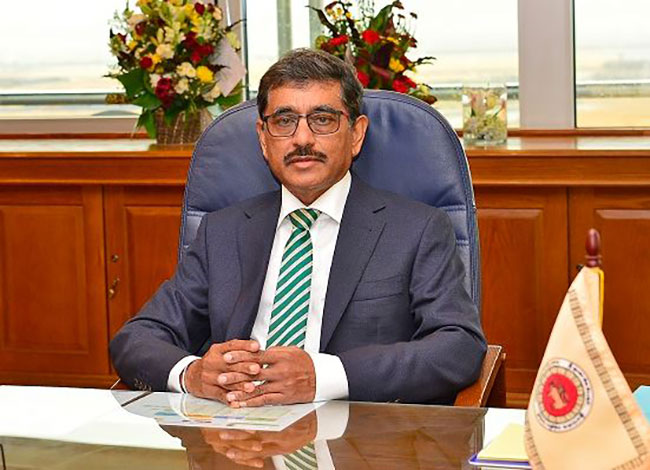
Governor of the Central Bank of Sri Lanka (CBSL) Dr. Nandalal Weerasinghe yesterday (19) said there was some political and social stability in the country and it would help the CBSL achieve some success in its endeavours.
Dr. Weerasinghe said so responding to a question posed by a journalist about the Governor’s earlier claim that he would resign from his post if political stability could not be restored within two weeks.
“Now, we have a Prime Minister. We have a cabinet. The Parliament is in session. We expect that a Finance Minister will be appointed soon. There is no violence now. Peaceful protests and demonstrations do not affect political and social stability. I think the country is on the right track. Most MPs have expressed a desire to work together. I think things will become more stable soon,” he said.
Inflation in Sri Lanka would decrease in the coming months due to the corrective policy measures of the Central Bank and the expected improvements in both domestic and global supply conditions, the Central Bank has said in a press release (19).
Inflation is projected to escalate in the near term on account of domestic supply shortages, increased global commodity prices, the effects of the large depreciation of the Sri Lanka rupee against the US dollar thus far during the year, along with the impact of aggregate demand pressures.
“However, this will change in the coming months and the bank expects that the recent tightening of monetary conditions and the strengthening of monetary policy communication will help anchor inflation expectations of the public in the period ahead.
“The Central Bank expects to minimize excessive volatility in the domestic foreign exchange market through tightening of the monetary policy stance, restrictions on imports on open account terms, and the reduction in the proportion of mandatory foreign exchange sales by the banks to the Central Bank.
“The Central Bank expects an increase in workers’ remittances due to the notable reduction in the gap between the official exchange rate and the rate offered by the grey market and the continued increase in migration of workers.
“The near term outlook of the tourism sector is likely to remain unfavourable due to both global and domestic factors.
“Meanwhile, gross official reserves as of end April 2022 were provisionally estimated at US dollars 1.8 billion, including the swap facility from the People’s Bank of China equivalent to around US dollars 1.5 billion, which is subject to conditionalities on usability.”
The Central Bank and the government have commenced technical level discussions with the International Monetary Fund aimed at working towards a programme to address the macroeconomic challenges faced by the economy while expeditious arrangements are being made to commence the external debt restructuring process.
“Negotiations have already begun with bilateral and multilateral partners to obtain bridging finance in order to secure foreign exchange required to finance imports of essential goods and strengthen the social safety net programmes.
“Economic activity is expected to be affected considerably by the ongoing supply shortages, energy related issues and social tensions, as reflected by several leading indicators. Demand management policies of the Central Bank and anticipated fiscal consolidation measures are also expected to keep aggregate demand subdued during the year.
“Global economic growth is also expected to moderate in response to the tightening of monetary policy by the central banks globally to counter inflationary pressures along with the spillover effects of the geopolitical tensions in Eastern Europe.
“After carefully considering the current and expected macroeconomic developments both globally and domestically, the Monetary Board of the Central Bank of Sri Lanka, at its meeting held on 18 May 2022, decided to maintain the Standing Deposit Facility Rate (SDFR) and the Standing Lending Facility Rate (SLFR) of the Central Bank at the current levels of 13.50 per cent and 14.50 per cent, respectively.
“The Board was of the view that the policy measures that have already been implemented by the Central Bank would continue to be further transmitted to the financial markets, while some signs of tighter monetary policy are already being observed in real economic activity. The Central Bank would continue to monitor domestic and global macroeconomic and financial market developments and stand ready to take appropriate measures proactively to help reinforce greater macroeconomic stability in the economy in the period ahead.”
“In order to prevent further deterioration of economic conditions and complement the efforts of the Central Bank implemented thus far, urgent measures are required to restore greater political stability through consensus governance and social harmony.
“In addition, swift policy actions are required to strengthen the fiscal performance that would help avoid excessive reliance on monetary financing and maintain fiscal sustainability over the medium term. Furthermore, expeditious and transparent revision of tariffs in the energy sector remains a priority in order to strengthen the financial position of energy-related state owned business enterprises, while improving the efficiency of social welfare programmes to support the vulnerable groups of the society impacted by the unprecedented economic circumstances.”




The Ministry of Industries and Entrepreneurship Development has recommended the establishment of Sri Lankan Standards, i.e. the import testing methodology for imported tires used for passenger cars and pneumatic tires for three-wheelers with the aim of ensuring a fair competitive environment for local
manufactures and ensuring consumer safety and security.
Taking into the said recommendations, “Import and Export (control regulations N0.08 of the 2026)” has been enacted to amend the existing regulations by means of the Extraordinary Gazette Notification No. 2508/27 dated 2026-10-01, prescribing Sri Lanka standard 1212 for the import of passenger types (HS Code 4011.10.90) and Sri Lanka standard 1347 for the import of
pneumatic tires for three – wheeled vehicles (HS Code 4011.90.10).
Accordingly, the Cabinet of Ministers has approved the resolution furnished by the President in his capacity as the Minister of Finance, Planning, and Economic Development to submit the aforementioned regulations to Parliament for approval.
Approval of the Cabinet of Ministers was granted at their meeting held on 02.06.2025 to introduce a new act to promote and providing legal provisions for facilitating the Public Private Joint Enterprises within Sri Lanka as well as the establishment of the National Agency for Public Private Partnership Joint Enterprises.
Accordingly, the Legal Draftsman has formulated the relevant draft bill and the Attorney General has given his clearance to the said draft bill.
The Cabinet of Ministers approved the resolution furnished by the President in his capacity as the Minister of Finance, Planning and Economic Development to publish the said
draft bill in the government gazette notification and thereby submit it to the Parliament for its concurrence.
Regulation, development and control of indigenous medical sector in Sri Lanka comprised of Ayurvedha, Sidhdha, Unani, Local Therapies are carried out under the provisions of Ayurvedha Act No. 31 of 1961.
Although amendments were made to the act from time to time as per the requirements, the necessity of further amending the Ayurvedha Act has been identified to enable efficiently maintaining all activities of local medical field productively, further formalizing the regulation of the sector, taking actions to providing licenses applicable to export of local medicines, and achieving the progress and sustainable development goals in the local medical sector.
Based on the said factors, the Cabinet of Ministers granted approval to the resolution furnished by the Minister of Health and Mass Media to direct the Legal Draftsman to formulate a draft bill to amend the Ayurvedha Act No. 31 of 1961.

Import and Export (Control) Regulations No. 08 of 2026
Draft Bill of the Public Private Partnership Enterprises Act to be gazzetted
Amendment of the Ayurvedha Act No. 31 of 1961

Cabinet nod to amend the Sri Lanka Development Administration Institute Act No. 9 of 1982
Establishment of the National Higher Performance Centre
State patronage for the cremation ceremony of the late deputy prelate (Anu Nayaka Thero) of the Sri Laka Ramangya Maha Nikaya, Gatambe Rajopawanramadhipatha, Siri Chandawimala Wanshalankara, Chandrakeerthi Sri Amarawansha, Sadhdharmawageeshwara, Shasanashobhanna Most Venerable Keppetiyagoda Siriwimalabhidhana Thero

‘Dates have the highest sugar content to fight Coronavirus’

Sunday Island 27 December – Headlines

#SundayIsland 17th December – Headlines

Sunday Island – 28th March

Sunday Island Headlines – 21 March

Sunday Island – 21st February – Headlines
-

 Features3 days ago
Kotahena:A Small Enclave, An Extraordinary Legacy
-

 News7 days ago
Sri Lanka, India caught in US-Iran ship crisis
-
 News4 days ago
Asgiri Mahanayake calls for immediate release of Gnanasara Thera
-

 News3 days ago
Record 1,600 students take Russian Classical Ballet examination in Sri Lanka
-
 News6 days ago
AC President recuses himself from hearing prison attire case pertaining to Gnanasara Thera
-
 News5 days ago
Naval officer testifies Yoshitha received Rs. 5.15 mn in salaries during SLN service
-

 Latest News7 days ago
Heavy showers above 100 mm are likely at some places in the Western, Sabaragamuwa, Southern, Central, and North-western provinces and in Anuradhapura district.
-

 News3 days ago
Karannagoda pushed for £24,536 for Yoshitha’s UK training, Court told