
News
CB Governor pins hopes on tourism to achieve higher growth rate

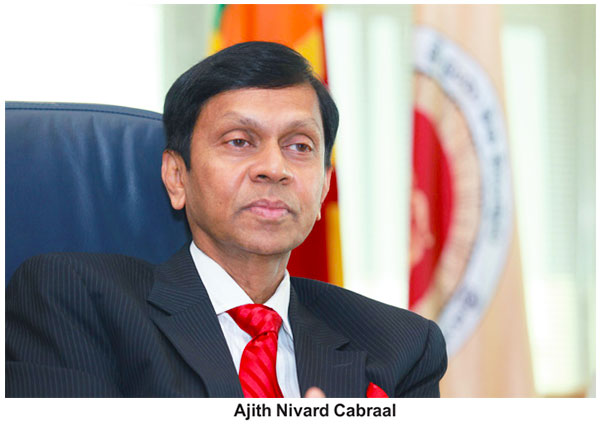
… says CB professionals capable of handling the situation on their own
With the upward trend in tourist arrivals in Sri Lanka, the tourism industry could help boost the economic growth rate in 2022, Central Bank Governor Ajith Nivard Cabraal said on Thursday.
“The tendency for that is evident. I had a meeting with tourism stakeholders on Wednesday. Their data showed that there would be 50,000 arrivals for this month and they expect it to go up to 75,000 in December. They expect tourist arrivals to increase between 10%-20% on a monthly basis in 2022.
The industry players have set apart required funds to facilitate the incoming leisure travellers and together with authorities they have ironed out shortcomings in the travel sector to pave the way for tourists to have a comfortable stay in the country. When we see that rejuvenation in Tourism, it will help achieve a growth rate of 6% in 2022,” he said.
The Central Bank Governor said so at a media briefing held to announce its latest monetary policy stance where the Monetary Board of the Bank has decided to maintain the policy rates at current levels.
“As all stakeholders of the Sri Lanka Tourism Industry are moving forward to attract more tourists via strategic developments, its increased contribution to the overall economy looks more promising,” he said.
However, the Governor said that inward remittances from the Sri Lankan migrant workforce had decreased during the past few months and the Central Bank was taking measures to address the issue.
“We have put forward a plan and are implementing it to increase our remittances again. About 230,000 people go for jobs overseas per year. They were not able to go in the last two years due to the pandemic. That gap caused the decrease in remittances. Now we can see them going back, which is a good thing.
However, a lot of migrant workers send remittances through informal channels. We have gathered information about this and have taken steps to retard and discourage the sending of money via informal channels because they are not regularized as official channels. So, in the future, we will take action against those who engage in this practice in an undue manner. This happens because the migrant workers get lower returns when they remit their money through banks. We are taking action to encourage migrant workers to send money through official channels by introducing a pension scheme, insurance schemes etc. The banks already pay an additional Rs. 2 for each US dollar sent by them. When other measures are also implemented, we will be able to equate the previous levels of remittances or even higher than that.”
Referring to the controversy whether Sri Lanka could default on its international sovereign debt servicing, the Governor said,” We clearly say that we will pay all our debt and we have set apart funds for that. So there is no need for anyone to speculate on it. We have determined ways to do it and it has been spelled out in the Central Bank’s Road Map. We will inform the public more about how it is taking place, by the end of the year.
Addressing another controversy on the conversion of export proceeds, he said,” This is a very simple thing. If someone imports some goods, he takes rupees to the bank, converts it into dollars and pays for the import. In the same way when someone exports, dollars are sent in and the dollars are converted into rupees. That’s how the export-import cycle completes itself. If importing of goods is necessary for a value added export, such exporters have been given the permission to pay for such imports in dollars. If they service any dollar loans, they can get dollars to do that. If they need foreign currency for international travel they can have access to their dollars. If they want to invest in Sri Lanka Development Bonds, they can use their dollars to do that also. We have asked them to convert the balance of their export proceeds after all these are allowed. I have spoken with the members of the Chamber of Commerce and the Apparel sector about this and they don’t have any grievances about that.”
Talking about the hot topic of debt restructuring and the IMF, he said “We have no fear or issue in going to the IMF to arrange a facility, but the thing is, we must face it all by ourselves without seeking help from outside. Our International Sovereign Bonds (ISB) quantum was USD 5 billion in 2014 when our GDP was USD 79 billion. It was pressurized when Sri Lanka raised USD 6.9 billion in ISBs between April 2018 and June 2019. By end 2019, ISBs were USD 15 billion and the GDP was only 84%. That means, ISBs which remained at 6% went up to 18%. Then we decided that we won’t take more and ISBs and get into a debt trap. As an alternative, we sought to raise loans through other means and repay our loans. That is what is in progress.
Even if the IMF comes, it will ask us to do the same. So we don’t need anyone from the outside to do it for us. For example, the IMF would ask us to change or scrap rules on maximum retail prices. We have already done it. The IMF may ask us to depreciate the rupee.
They may ask us to raise interest rates by 30%-40%-50%. And would ask us to reduce the number of government employees, cut back pensions, sell various government assets etc. They will suggest such a reform agenda. But our opinion is, that is not necessary.
Our opinion is that we can meet our obligations to our creditors without seeking a reform agenda of that nature. We are in the process of resolving this issue.”
Touching upon money printing by the Central Bank, the Governor said, “In the recent months, we have been able to find the money from the Treasury bill market. Gradually the bill yields have also eased. This shows that our monetary policy is flowing to the market and responding to its objectives as envisaged. That’s why the Monetary Board of the Central bank has decided to keep the policy rates unchanged,”
Last but not least, Governor Cabraal came up with his take on the inflation which is biting the vulnerable sections of the people as well as the middle class.
“Globally, inflation has risen substantially In the U.S. inflation has hit a 30-year high. Europe, Brazil, Russia, India, China all face increased inflation as commodity prices have increased. This is supply-driven inflation, not demand driven. That is why our inflation is also 2% over the target range. At this moment, increasing interest rates won’t be needed. Interest rate can’t control it. Interest rates can control demand side issues. We already see some optimum level at the demand side with the rate increases in recent times. The Monetary Board has taken this into account as it decided to keep interest rates unchanged,”
The Governor, however, pointed out that there is a clash between stability and growth and the Central Bank is taking all necessary decisions as and when necessary to drive growth while maintaining stability and refilling low foreign reserves.
Cabraal said that Central Bank officials comprised more than 30 PhDs, more than 200 Master’s Degree holders, chartered accountants, legal personnel and experts in many other disciplines are able to handle the challenge without seeking foreign expertise.


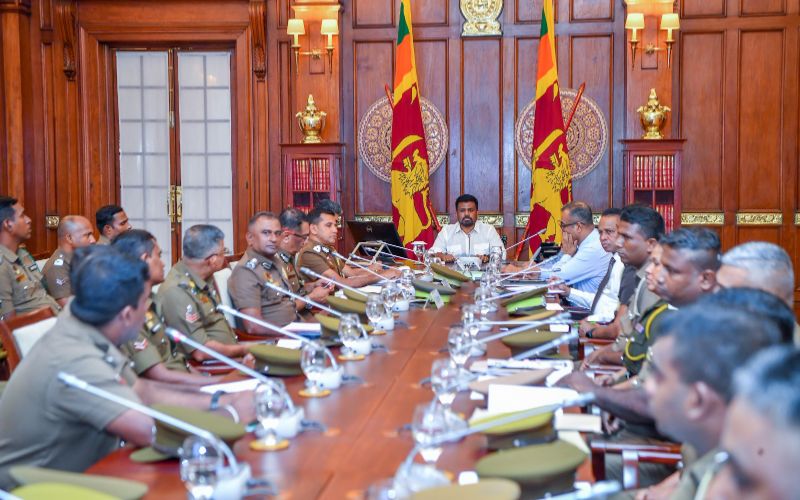
President Anura Kumara Dissanayake met with the officers of the Department of Prisons, including Superintendents of Prisons, Jailers and other officials, on Friday (17) afternoon at the Presidential Secretariat.
Extensive discussions focused on the challenges currently faced by the prison system and the urgent measures required to address them.
Special attention was also given to the recent incident at the Negombo Prison, with lengthy discussions held on the steps needed to prevent similar incidents from occurring in the future.
The meeting also addressed the challenges faced by prison officers and matters relating to their welfare.
The officials noted that this was the first opportunity they had been given to discuss their concerns directly with the President and expressed their appreciation for the opportunity.
Minister of Justice and National Integration Harshana Nanayakkara, Minister of Labour and Deputy Minister of Finance and Planning Anil Jayantha Fernando, Senior Additional Secretary to the President Roshan Gamage, Secretary to the Ministry of Justice and National Integration Ayesha Jinasena, Commissioner General of Prisons Prasad Hemantha Kumara, Commissioner of Prisons (Rehabilitation) S.K. Pallethanna, Commissioner of Prisons (Operation/ Intelligence) A.C. Gajanayake, along with a number of other officials of the Department of Prisons, were present at the meeting.
(PMD)
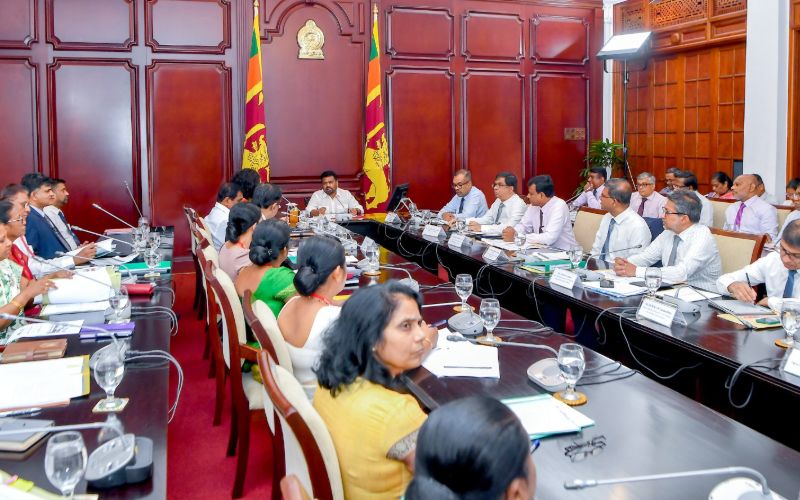
President Anura Kumara Dissanayake emphasised that greater priority must be given to strengthening Sri Lanka’s vocational education sector in parallel with the country’s ongoing education reforms, stating that the Government is prepared to allocate the necessary funding through the 2027 Budget.
The President made these remarks on Friday (17) during a meeting at the Presidential Secretariat to review the progress of projects implemented under the 2026 Budget allocations for the Ministry of Education, Higher Education and Vocational Education and to discuss the Ministry’s funding requirements ahead of the 2027 Budget.
A total allocation of Rs. 303 billion has been made to the Ministry under the 2026 Budget, comprising Rs. 160 billion for general education, Rs. 122 billion for higher education and Rs. 20 billion for vocational education.
The meeting reviewed the implementation of projects funded under these allocations, future plans and the Ministry’s funding requirements for the coming year. The President stressed that budget allocations should not be spent merely because they have been provided, but should instead be utilised in line with national priorities and identified needs.
Officials noted that the largest-ever capital allocation of Rs. 8 billion had been provided this year for vocational education. They also reported that 57,959 students had been enrolled during the first two quarters of the year across 310 Government vocational training institutions.
Particular attention was given to increasing the annual intake of students into vocational education institutions. Discussions also covered the allocation of a permanent site for the Ocean University, the gradual increase in student admissions to the University of Vocational Technology from next year and measures to expand both the number and quality of University Colleges across the country, enabling students in the regions to access technical degree and diploma programmes more easily.
The meeting also focused on programmes implemented under the general education sector. The President stressed that projects financed through foreign assistance should not become an unnecessary debt burden on the country, but should instead be undertaken only where they are aligned with Sri Lanka’s education policies and genuine national requirements.
Attention was also directed towards welfare programmes for schoolchildren. The President instructed that priorities be established to ensure that benefits reach those who genuinely require them based on the effectiveness of each programme. The President further noted that the President’s Fund remains ready to support scholarship programmes and instructed officials to prepare and submit proposals outlining such funding requirements.
The meeting also held extensive discussions on increasing the monthly financial assistance provided to students with special educational needs from 2026 onwards, as well as raising the allowances paid to student teachers at the National Colleges of Education.
Officials also briefed the President on issues relating to the existing student insurance scheme.
Discussions further focused on plans to invest Rs. 382 billion in the education sector during the 2027–2031 period to support its continued development. Particular attention was given to the proposed Digital Transformation Project, which forms part of this investment programme.
It was also noted that work has commenced on the rehabilitation of 20 schools and National Colleges of Education damaged by Cyclone Ditwah, with Rs. 1.9 billion allocated for the programme.
The meeting also agreed that teacher shortages, vacancies among non-academic staff and salary anomalies within the education sector should be addressed through a coordinated approach across the public sector. It was further agreed that a special commission would be tasked with recommending permanent solutions to these issues.
Prime Minister and Minister of Education, Higher Education and Vocational Education Dr. Harini Amarasuriya; Minister of Labour and Deputy Minister of Finance and Planning Dr. Anil Jayantha Fernando; Deputy Minister of Vocational Education Nalin Hewage; Secretary to the President Dr. Nandika Sanath Kumanayake; Chief of Staff to the President Prabath Chandrakeerthi; Senior Additional Secretaries to the President Russel Aponsu and Kapila Janaka Bandara; Secretary to the Ministry of Finance, Planning and Economic Development Dr. Harshana Suriyapperuma; Secretary to the Ministry of Education, Higher Education and Vocational Education Nalaka Kaluwewa; together with officials from the Ministry of Finance, Planning and Economic Development and the Ministry of Education, Higher Education and Vocational Education, were also present at the meeting.
(PMD)
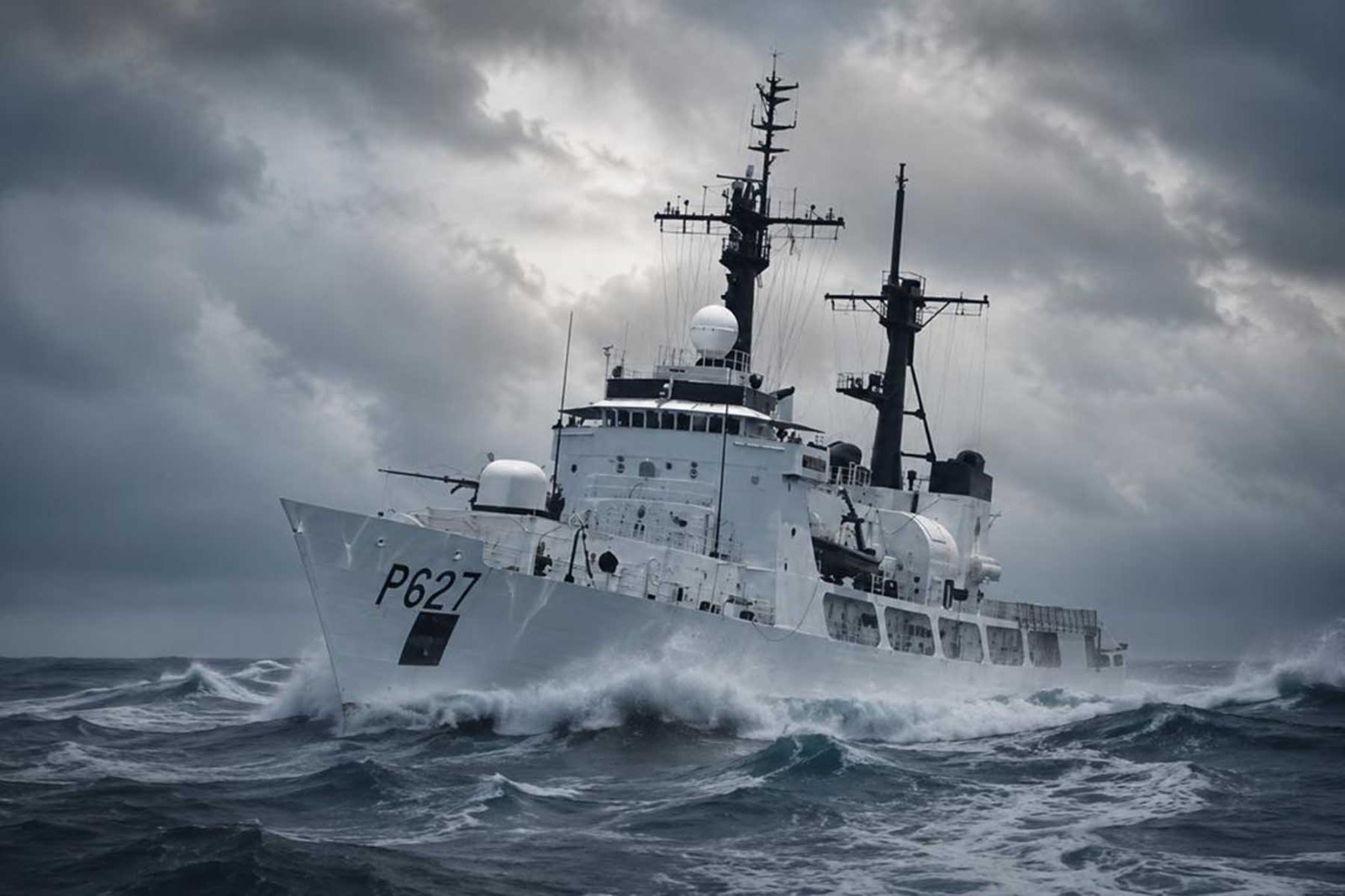
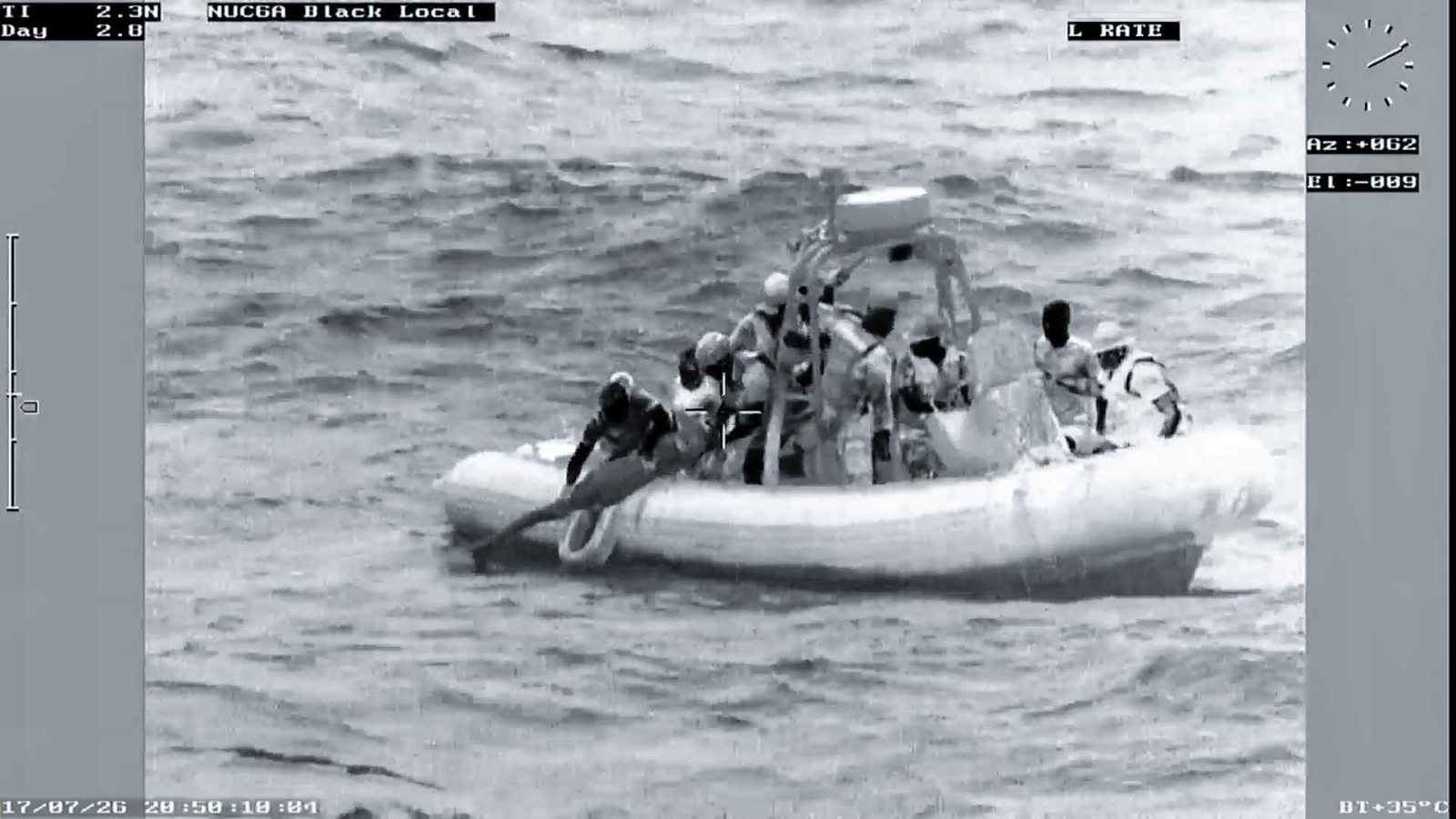
The Sri Lanka Navy rescued a fisherman from a local fishing trawler that encountered distress due to adverse weather conditions off the eastern coast of Sri Lanka.
The rescue operation took place on 17 July 2026, approximately 15 nautical miles off Pothuvil. The operation was launched following information received by the Maritime Rescue Coordination Centre (MRCC) Colombo.
In response, the Sri Lanka Navy deployed the Offshore Patrol Vessel SLNS Vijayabahu along with additional craft to conduct a search operation in the designated sea area, where they successfully located the distressed fisherman.
Following the rescue, the individual was brought aboard SLNS Vijayabahu, where naval personnel administered preliminary first aid. He was subsequently brought to the mainland and rushed for further medical attention.
Meanwhile, the Navy, along with the coordination of MRCC Colombo, remains constantly prepared to swiftly respond to the eventualities faced by maritime and fishing communities operating within the island’s Search and Rescue Region (SRR).

Iran accuses US of striking critical infrastructure as war intensifies

President meets with Department of Prisons Officials

Prioritize Vocational Education in future Education Planning – President

Davis cup Asia/Oceania Group IV 2026 to be held in Colombo from 20th to 25th July

Navy brings fisherman in distress off Pothuvil, ashore

Malinga, Asalanka seal Galle Gallants win in LPL opener

‘Dates have the highest sugar content to fight Coronavirus’

Sunday Island 27 December – Headlines

#SundayIsland 17th December – Headlines

Sunday Island – 28th March

Sunday Island Headlines – 21 March

Sunday Island – 21st February – Headlines
-
 Features7 days ago
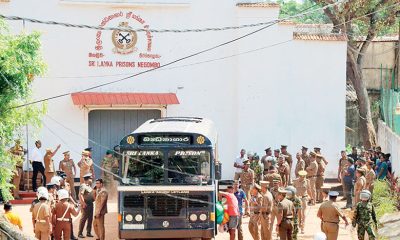
Prison riots and politics: NPP’s biggest challenge and Sri Lanka’s biggest opportunity
-
 Features4 days ago
Dirty Money
-

 Editorial7 days ago
Much ado about crime: Fish or cut bait
-
 Sports7 days ago
The banker who rescued Sri Lankan cricket
-
 Features7 days ago
More on Saudi Arabia: ARAMCO and beyond
-

 News2 days ago
Money laundering case against Yoshitha, fixed for pre-trial conference
-
 Midweek Review4 days ago
The sordid tale of theft and tragedy at Finance Ministry
-
 Latest News4 days ago
Oil prices hit 1-month high as US-Iran attacks dim Strait of Hormuz outlook