… says CB professionals capable of handling the situation on their own
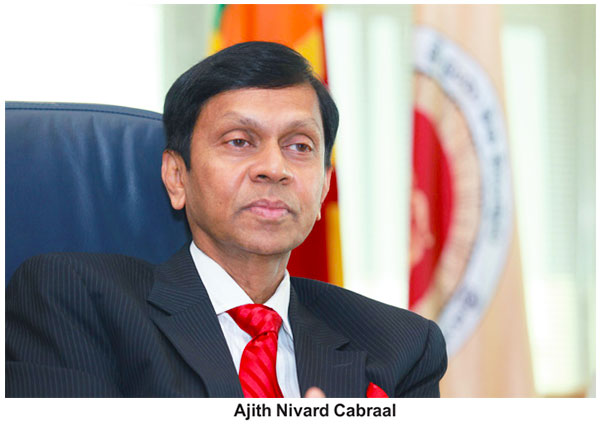
With the upward trend in tourist arrivals in Sri Lanka, the tourism industry could help boost the economic growth rate in 2022, Central Bank Governor Ajith Nivard Cabraal said on Thursday.
“The tendency for that is evident. I had a meeting with tourism stakeholders on Wednesday. Their data showed that there would be 50,000 arrivals for this month and they expect it to go up to 75,000 in December. They expect tourist arrivals to increase between 10%-20% on a monthly basis in 2022.
The industry players have set apart required funds to facilitate the incoming leisure travellers and together with authorities they have ironed out shortcomings in the travel sector to pave the way for tourists to have a comfortable stay in the country. When we see that rejuvenation in Tourism, it will help achieve a growth rate of 6% in 2022,” he said.
The Central Bank Governor said so at a media briefing held to announce its latest monetary policy stance where the Monetary Board of the Bank has decided to maintain the policy rates at current levels.
“As all stakeholders of the Sri Lanka Tourism Industry are moving forward to attract more tourists via strategic developments, its increased contribution to the overall economy looks more promising,” he said.
However, the Governor said that inward remittances from the Sri Lankan migrant workforce had decreased during the past few months and the Central Bank was taking measures to address the issue.
“We have put forward a plan and are implementing it to increase our remittances again. About 230,000 people go for jobs overseas per year. They were not able to go in the last two years due to the pandemic. That gap caused the decrease in remittances. Now we can see them going back, which is a good thing.
However, a lot of migrant workers send remittances through informal channels. We have gathered information about this and have taken steps to retard and discourage the sending of money via informal channels because they are not regularized as official channels. So, in the future, we will take action against those who engage in this practice in an undue manner. This happens because the migrant workers get lower returns when they remit their money through banks. We are taking action to encourage migrant workers to send money through official channels by introducing a pension scheme, insurance schemes etc. The banks already pay an additional Rs. 2 for each US dollar sent by them. When other measures are also implemented, we will be able to equate the previous levels of remittances or even higher than that.”
Referring to the controversy whether Sri Lanka could default on its international sovereign debt servicing, the Governor said,” We clearly say that we will pay all our debt and we have set apart funds for that. So there is no need for anyone to speculate on it. We have determined ways to do it and it has been spelled out in the Central Bank’s Road Map. We will inform the public more about how it is taking place, by the end of the year.
Addressing another controversy on the conversion of export proceeds, he said,” This is a very simple thing. If someone imports some goods, he takes rupees to the bank, converts it into dollars and pays for the import. In the same way when someone exports, dollars are sent in and the dollars are converted into rupees. That’s how the export-import cycle completes itself. If importing of goods is necessary for a value added export, such exporters have been given the permission to pay for such imports in dollars. If they service any dollar loans, they can get dollars to do that. If they need foreign currency for international travel they can have access to their dollars. If they want to invest in Sri Lanka Development Bonds, they can use their dollars to do that also. We have asked them to convert the balance of their export proceeds after all these are allowed. I have spoken with the members of the Chamber of Commerce and the Apparel sector about this and they don’t have any grievances about that.”
Talking about the hot topic of debt restructuring and the IMF, he said “We have no fear or issue in going to the IMF to arrange a facility, but the thing is, we must face it all by ourselves without seeking help from outside. Our International Sovereign Bonds (ISB) quantum was USD 5 billion in 2014 when our GDP was USD 79 billion. It was pressurized when Sri Lanka raised USD 6.9 billion in ISBs between April 2018 and June 2019. By end 2019, ISBs were USD 15 billion and the GDP was only 84%. That means, ISBs which remained at 6% went up to 18%. Then we decided that we won’t take more and ISBs and get into a debt trap. As an alternative, we sought to raise loans through other means and repay our loans. That is what is in progress.
Even if the IMF comes, it will ask us to do the same. So we don’t need anyone from the outside to do it for us. For example, the IMF would ask us to change or scrap rules on maximum retail prices. We have already done it. The IMF may ask us to depreciate the rupee.
They may ask us to raise interest rates by 30%-40%-50%. And would ask us to reduce the number of government employees, cut back pensions, sell various government assets etc. They will suggest such a reform agenda. But our opinion is, that is not necessary.
Our opinion is that we can meet our obligations to our creditors without seeking a reform agenda of that nature. We are in the process of resolving this issue.”
Touching upon money printing by the Central Bank, the Governor said, “In the recent months, we have been able to find the money from the Treasury bill market. Gradually the bill yields have also eased. This shows that our monetary policy is flowing to the market and responding to its objectives as envisaged. That’s why the Monetary Board of the Central bank has decided to keep the policy rates unchanged,”
Last but not least, Governor Cabraal came up with his take on the inflation which is biting the vulnerable sections of the people as well as the middle class.
“Globally, inflation has risen substantially In the U.S. inflation has hit a 30-year high. Europe, Brazil, Russia, India, China all face increased inflation as commodity prices have increased. This is supply-driven inflation, not demand driven. That is why our inflation is also 2% over the target range. At this moment, increasing interest rates won’t be needed. Interest rate can’t control it. Interest rates can control demand side issues. We already see some optimum level at the demand side with the rate increases in recent times. The Monetary Board has taken this into account as it decided to keep interest rates unchanged,”
The Governor, however, pointed out that there is a clash between stability and growth and the Central Bank is taking all necessary decisions as and when necessary to drive growth while maintaining stability and refilling low foreign reserves.
Cabraal said that Central Bank officials comprised more than 30 PhDs, more than 200 Master’s Degree holders, chartered accountants, legal personnel and experts in many other disciplines are able to handle the challenge without seeking foreign expertise.