
News
Cardinal Ranjit: “Hope, the word that describes the spirit that prevails in Lanka”

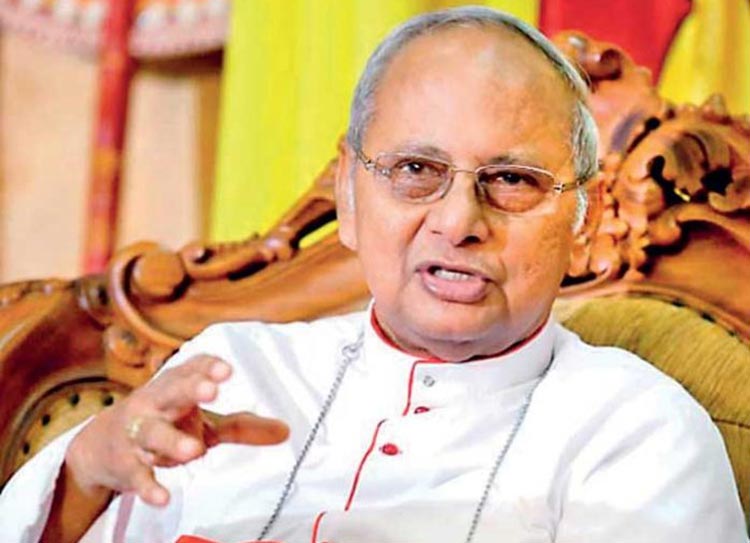
Colombo (Agenzia Fides) – “Sri Lanka is going through a period of profound political and democratic renewal. Since November 2024, we have had a new president and a new parliament, with an absolute majority, changing the old power structure linked to a corrupt political class guilty of abuse of power and human rights violations. In a country that has emerged from a serious social and economic crisis, a new hope is emerging,” said Cardinal Albert Malcolm Ranjith, Archbishop of Colombo, in an interview with Fides. “Hope,” the Cardinal said, is precisely the right word to describe the spirit that prevails in the country today.
And we Catholics celebrate the Jubilee of Hope so that our actions, our thoughts, our words, our direction are fully in line with what is happening politically, socially, culturally, and spiritually in the nation.” In the last election, “a change was expected, and it has happened: a socialist-oriented government is now in office, one that appears honest and committed to the welfare of the people and aware of its responsibilities, a government that intends to combat poverty and care for the well-being of the most disadvantaged social classes,” he notes. “The new government,” he says, “has started a new era and set to work to bring justice to those who have suffered injustice in the past, those who are in prison or have suffered violations of fundamental rights. And it is doing so through legality, with full respect for the principles of the rule of law.
” “One area to which the government of new President Anura Kumara Dissanayake is devoting resources and attention,” the Cardinal said, “is the country’s economy. It is slowly recovering from the crisis and following the recommendations of the International Monetary Fund, which, in turn, has granted loans. We are in a phase of recovery, and tourism is also in a phase of recovery, and this bodes well, as it is an important sector of our economy that contributes to wealth creation.
” “Of course,” Cardinal Ranjith continued, “the recovery process will take at least a few years, but we are on the right track. There is a certain optimism among the population today; we see a responsible political class and a president in whom people place their trust. The majority of the Catholic population has also supported him, and the Church has good relations with the government. There are good prospects for cooperation.”
There is still an open wound in the relationship between the Catholic Church and political institutions, the Cardinal told Fides: “It is a question of justice, that is, the search for the perpetrators, executors, and sponsors responsible for the Easter terrorist attacks on churches and hotels in 2019, and their prosecution. President Dissanayake has announced a new investigation to create transparency and find the truth.
We are hopeful because a commission has already been set up, which also regularly interviews some of our priests. From the beginning, we have demanded truth and justice against the cover-up of the case. Now we are waiting for a trial and for the real responsibilities or complicity within the state apparatus to come to light. The victims are waiting for justice.” In this context, the Cardinal is grateful that the Holy See has decided to include the 167 Catholic faithful who were murdered in a church in Sri Lanka on Easter Sunday, April 21, 2019, in the catalogue of “Witnesses of the Faith of the 21st Century” compiled by the Dicastery for the Causes of Saints and presented in the Jubilee Year.
In the meantime, he says, “the daily life of the Church continues; we walk as the people of God; we continue our social, educational, and charitable activities at the service of humanity. The parishes are celebrating the Holy Year; each diocese has prepared a calendar of celebrations and spiritual initiatives: for us, it is a moment of inner renewal and a new beginning with a new impulse that comes from the Lord. The theme of hope fits the feeling in people’s hearts: in this phase, we are bearers of hope; we have the hope that comes from God. We listen and offer our strength so that the Lord may complete his work and we may do our part humbly and with faith.”
Regarding the election of Pope Leo XIV, the Cardinal says: “We see him as a person who, thanks to his missionary experience, is attentive to the reality of all the Churches. I believe that in him we will have a solid point of reference. With his reference to Pope Leo XIII, he told us that the Church today is called to offer Christian responses to modern times. We trust in his humble and wise leadership.”



The Welfare Benefits Board has announced that the March allowance for senior citizens over 70 years of age will be credited to each beneficiaries account on Thursday (26th).
693,801 senior citizens over the age of 70 years are set to benifit under this welfare scheme

A looming power crisis is casting an ominous shadow over the country, with engineers warning that the current “no power cut” situation may not last beyond the Sinhala and Tamil New Year due to worsening diesel shortages and ongoing coal-related disruptions.
A senior electrical engineer, attached to the Ceylon Electricity Board Engineers Union, cautioned that while authorities appear to be managing the system for now, the underlying fuel constraints are reaching a critical point.
He told The Island: “At the moment, there are no scheduled power cuts across the country. But this is being maintained under significant strain. With the diesel shortage and unresolved coal issues, sustaining uninterrupted supply, beyond the New Year period, will be extremely challenging.”
The engineer noted that thermal power generation — particularly diesel-based plants — has become increasingly difficult to sustain due to limited fuel stocks and logistical bottlenecks. At the same time, the substandard quality coal supply issues that have plagued recent shipments continue to undermine the efficiency of base-load generation.
“We are stretching available resources to avoid immediate outages. owever, unless there is a rapid improvement in fuel availability, the system will be forced into load shedding soon after the New Year,” he warned.
According to him, authorities are likely to delay any scheduled outages until after the festive season to avoid public backlash and economic disruption during a traditionally sensitive period.
“Most probably, they will try to continue like this until the New Year. But after that, daytime or peak-time load shedding becomes almost inevitable if the situation remains unchanged,” he added.
Energy analysts say the warning reflects a deeper structural vulnerability within the power sector, where over-reliance on imported fossil fuels — particularly diesel and coal — continues to expose the system to external shocks and procurement failures.
The recent use of substandard coal has already resulted in reduced generation capacity at the country’s sole coal power plant at Norochcholai, compounding the pressure on thermal plants to bridge the shortfall. Engineers say this has forced operators to depend more heavily on costly diesel generation — an option now constrained by supply shortages.
Industry sources indicate that demand is also on the rise, particularly during night peak hours, possibly driven by increased reliance on electricity for cooking, amid gas shortages, further tightening the supply-demand balance.
Despite the absence of official announcements, insiders suggest contingency planning for load shedding is already underway.
“If the fuel situation does not improve within the next few weeks, controlled power cuts will be the only viable option to protect the grid from a total system failure,” the engineer stressed.
The warning comes at a time when the country is attempting to maintain economic stability following successive crises, with uninterrupted power supply considered critical for industry, commerce, and daily life.
However, unless urgent corrective measures are taken to secure reliable fuel supplies and stabilise generation capacity, the return of power cuts — including during daytime hours — appears increasingly unavoidable, an expert said.
By Ifham Nizam
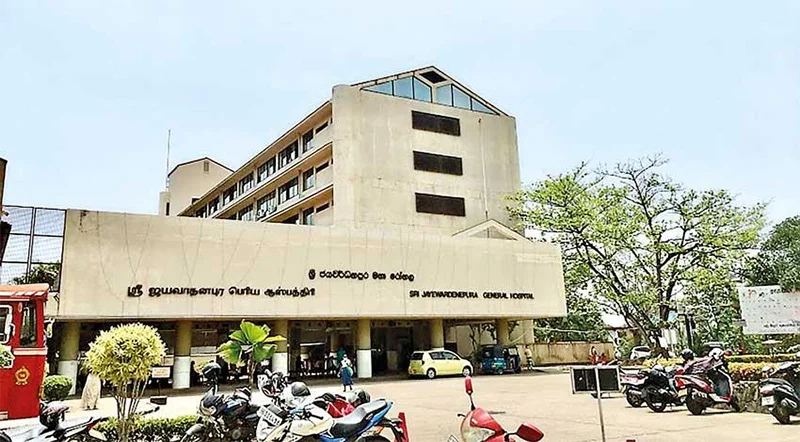
Japanese Ambassador to Colombo, Akio Isomata, on 24 March, handed over the newly established dental unit and 4D Angio CT suite at Sri Jayewardenepura General Hospital. Health Minister Dr. Nalinda Jayatissa and other senior officials from the Ministry of Health and the hospital attended the event.
Highlighting the strong partnership between Japan and Sri Lanka in the health sector, the Embassy issued the following press release yesterday: “This handover marks the second phase of the project, following the initial provision of ophthalmic equipment in December 2023. The current phase represents a significant milestone, featuring the introduction of a state-of-the-art CT Angiography system – the first of its kind in South Asia – as well as dental units. These contributions are expected to enhance Sri Lanka’s capacity to address non-communicable diseases (NCDs), including cancer, stroke, and diabetes, thereby saving lives, reducing long-term complications, and improving the quality of life of patients.
The CT Angiography system integrates CT scanning and angiography functions, enabling highly accurate and timely diagnosis and treatment. It is expected to further strengthen the hospital’s role as a key medical hub in Sri Lanka and the wider region.
In addition, the provision of 10 dental units will support the establishment and enhancement of dental services at the hospital. In Japan, oral health is considered closely linked to overall health and plays an important role in extending healthy life expectancy. This support is, therefore, also expected to contribute to the promotion of preventive healthcare in Sri Lanka.
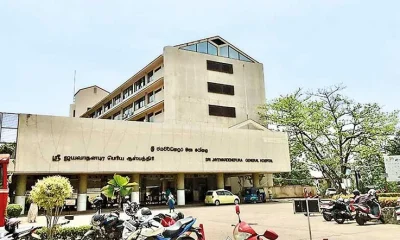
The Sri Jayewardenepura General Hospital was constructed in 1984 with grant assistance from the Government of Japan. The well-known “1001-bed” story—originating from former President J.R. Jayewardene’s remark to add one more bed to the originally planned 1,000—remains a memorable episode reflecting the history of this cooperation.
Japan has consistently supported Sri Lanka’s health sector over the decades, including the development of medical facilities, strengthening of blood supply systems, and support during the COVID-19 pandemic through vaccine delivery assistance. Furthermore, during Sri Lanka’s recent economic crisis, Japan provided fuel essential for maintaining healthcare services, and in times of natural disasters, dispatched emergency medical teams to deliver urgent care. These efforts demonstrate Japan’s continued commitment to standing by Sri Lanka, especially in times of need. These efforts reflect Japan’s commitment to “investment in people” and “human security,” supporting a healthcare system in which all individuals can live healthy and dignified lives.
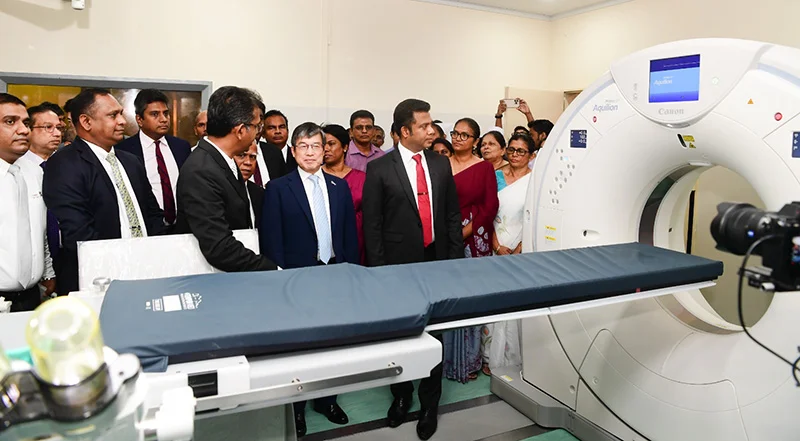
Japanese Ambassador Isomata with Minister Dr Jayatissa and officials (pic courtesy Japanese Embassy)
Ambassador Isomata remarked, “This support is not merely for the provision of equipment, but also for the consolidation of the foundation for safeguarding lives and livelihoods. Sri Jayewardenepura General Hospital, built with the support of Japan, stands as a symbol of the longstanding friendship between our two countries. We sincerely hope that this project will contribute to building a sustainable healthcare system that benefits future generations in the field of medicine and further strengthen our partnership.”
Minister Jayatissa highlighted,” This is not just a donation of machines. It is an investment in the lives and futures of our patients. By establishing this modern dental unit, we are addressing a critical need in the prevention and treatment of oral diseases for our population. I wish to express our deepest gratitude to the Government and people of Japan for this generous assistance. These are acts of true friendship, and the people of Sri Lanka will always remember them with gratitude.”
Japan will continue to work closely with Sri Lanka to further strengthen the healthcare sector and deepen the longstanding friendship between the two countries.”

Esterhuizen, bowlers lead South Africa to 3-2 series win

IPL captains’ meeting: What’s on the agenda?

Russia launches 948 drones at Ukraine in largest attack over 24-hour period

Oil at $150 will trigger global recession, says boss of financial giant BlackRock

Showers will occur at several places in the Western and Sabaragamuwa provinces and in Galle and Matara districts after 2.00 pm

Senior citizens above 70 years to receive March allowances on Thursday (26)

‘Dates have the highest sugar content to fight Coronavirus’

Sunday Island 27 December – Headlines

#SundayIsland 17th December – Headlines

Sunday Island – 28th March

Sunday Island Headlines – 21 March

Sunday Island – 21st February – Headlines
-

 Features3 days ago
Trincomalee oil tank farm: An engineering marvel
-

 News7 days ago
Bailey Bridge inaugurated at Chilaw
-

 News6 days ago
CIABOC tells court Kapila gave Rs 60 mn to MR and Rs. 20 mn to Priyankara
-

 News7 days ago
Pay hike demand: CEB workers climb down from 40 % to 15–20%
-
 Features6 days ago
Science and diplomacy in a changing world
-

 Features3 days ago
The scientist who was finally heard
-

 News5 days ago
Colombo, Oslo steps up efforts to strengthen bilateral cooperation in key environmental priority areas
-
 News21 hours ago
Japanese boost to Sri J’pura Hospital, an outright gift from Tokyo during JRJ rule