
News
Cardinal calls for justice and change in Lanka

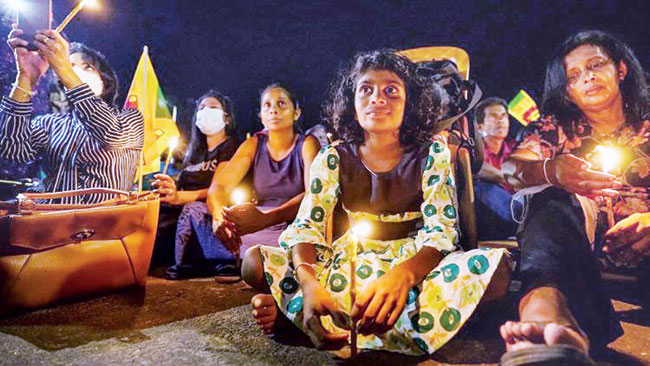
Vatican News: Malcolm Cardinal Ranjith, Archbishop of Colombo, is in Rome to mark the anniversary of the 2019 Easter Sunday bombings in Sri Lanka.
Pope Francis is meeting participants in St. Peter’s Basilica after a Eucharistic celebration in St. Peter’s Basilica. The event comes a few days after a Mass celebrated by the Sri Lankan Cardinal on 21 April, during which the prelate delivered a hard-hitting speech blaming the country’s President and his government for failing to keep their pledge to grant justice to the victims and cleanse the country of “all elements of terror”.
Three years from the coordinated bombings that wrought death, injury and destruction, mostly amongst the Christian community, investigations have proved insufficient and recommendations issued by the Presidential Commission of Inquiry have not been implemented. Furthermore, the government, it is alleged, is covering up the truth in order to hide its own involvement.
The country’s top Catholic leader has tirelessly pushed for truth, calling for accountability and transparency. Together with other faith leaders of the island nation, he has given voice to the people’s growing anger and dissent as they suffer one of the worst economic crises the country has ever seen.
Speaking to Vatican Radio just before the Mass in the Vatican on 25 April, he explained that the country’s current rulers are accused of corruption and mismanagement that have brought about the spiralling crisis, and are facing serious accusations they not only have not sought justice for the victims of the Easter Sunday bombings in which 269 people were killed and more than 500 were injured, but have sought to bury evidence the attacks may have been carried out for political aims to favour their own re-election.
Cardinal Ranjith explained that the prevailing narrative led most people to believe that those attacks were carried out in an atmosphere of Islamic fanaticism, but, he said “elements of testimony emerged that these attacks had something more than just an Islamic connotation.”
The Cardinal went on to say that there is emerging evidence to the effect that the government, and especially the intelligence wing of the military, had contacts with the terrorists who carried out the attacks.
Notwithstanding insistent requests that those contacts be investigated, he added, nothing has happened.
He listed a number of reasons that point to the involvement of the government and to something more than “simply an Islamic attack” that have raised suspicions.
Cardinal Ranjith added that “after the Presidential Commission of Inquiry issued its report, the present government hesitated to carry out the recommendations or chose to carry out only those recommendations that refer to the Islamic community and tried to hide some of the recommendations, which would, if they are further investigated, reveal other angles of these attacks.”
Therefore, Cardinal Ranjith continued, “we are highly suspicious of these things and we want further investigations to be done.” Until then, the people who are injured and who have lost their loved ones, will not get justice.
This serious situation of suspicion and lack of trust in the government is currently compounded by the socio-economic crisis that is triggering protests and even violence.
The Cardinal looked back at years of “inefficient management of the country, of its economy, and wrong policy decisions that have led to a total collapse of the national economy.”
“Right now in Sri Lanka,” he said, “people are not able to make ends meet (…) because of lack of employment, a lack of income, the rising prices of items and sometimes scarcity of items, like the difficulty in obtaining fuel for the maintenance of life, as well as the lack of electricity, lack of gas, various other items for daily sustenance.”
All this, he said, has led to a general feeling of total dissatisfaction and the realisation that the country has collapsed and it is a failed state.
Cardinal Ranjith went on to illustrate a desperate situation caused by the total breakdown of trust in the entire political system, including the Opposition.
The country’s main religious leaders have sought to into this vacuum.
“We hope,” he continued, ” that we will be able to sustain this country and make it work once again. So it has become the role of the religious leaders to assist the people to get out of this situation.”
“Along with the Buddhists, Hindus, Muslims, we Christians can work together and thinking about the country as a whole, not just only our people. We can try to work out a solution to this present crisis,” he said.


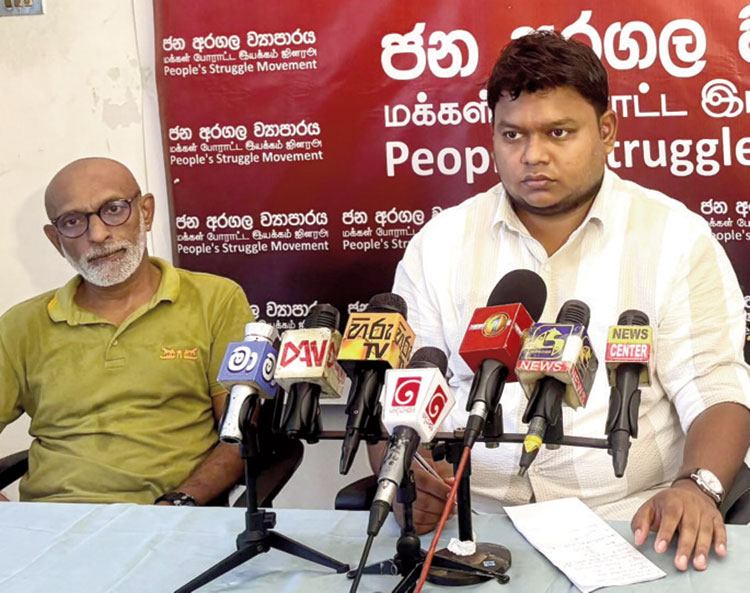
The Frontline Socialist Party-backed People’s Struggle Movement is set to stage a protest march in Colombo today (03) against what it describes as the growing tax burden on the public and the rising cost of living.
The organisers are due to commence the “Colombo March Against Unjust Taxes” at noon from Campbell Park, Borella. The FSP has also been mobilising support for the protest in Colombo and its suburbs in the run-up to the event.
People’s Struggle Movement National Executive Council member Wasantha Mudalige, speaking at a media briefing in Nugegoda yesterday (02), called on the public to join the protest, saying the movement intended to bring the tax burden faced by ordinary people to the forefront.
Mudalige alleged that successive tax measures had placed an excessive burden on households, particularly through taxes on food and educational items. He also criticised the Government over what he described as the high cost of basic food items and the difficulties faced by parents in meeting their children’s educational expenses.
He accused the Opposition of failing to adequately address the issue, claiming that opposition parties raised such concerns, mainly during election periods.
Mudalige also criticised the Government for what he described as a departure from promises made before the 2024 presidential election regarding taxes on educational equipment.
He questioned the tax burden on food items, citing figures of Rs. 100 per kilogramme on dried sprats, Rs. 310 per kilogramme on chicken and Rs. 11 per egg.
He further alleged that while ordinary people were bearing a heavy tax burden, wealthy groups were receiving tax concessions. He also criticised the Government’s economic programme and its implementation of measures associated with the International Monetary Fund (IMF).
The movement has framed today’s protest as part of a broader campaign over the cost of living and taxation. The People’s Struggle Alliance has separately announced that the Campbell Park demonstration will be the first in a series of public actions, with further protests planned in November.
Mudalige said the movement would continue to take the issue to the streets and urged the public to participate in today’s demonstration.
People’s Struggle Movement National Executive Council member Jayantha Amarasinghe also addressed the press.
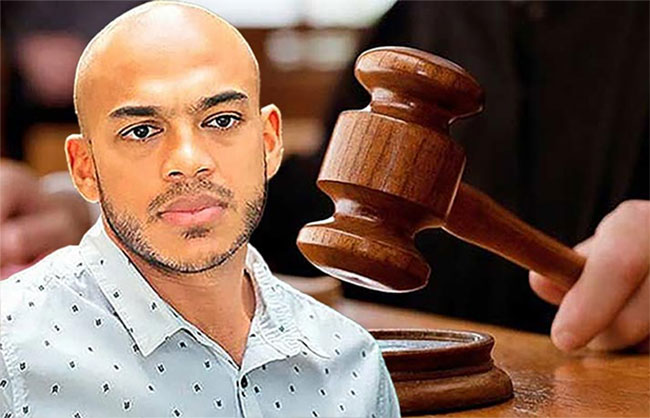
The Colombo High Court yesterday postponed the trial in the case filed under the Prevention of Money Laundering Act against Yoshitha Rajapaksa, son of former President Mahinda Rajapaksa.
The case was taken up before Colombo High Court Judge Udesh Ranatunga, with Yoshitha Rajapaksa, who is currently out on bail, appearing in court.
The trial was postponed as the President’s Counsel appearing for the defence was indisposed.
The Attorney General has filed the case against Rajapaksa, alleging that he committed an offence under the Prevention of Money Laundering Act by purchasing five plots of land in Dehiwala and Ratmalana, worth more than Rs. 73 million.
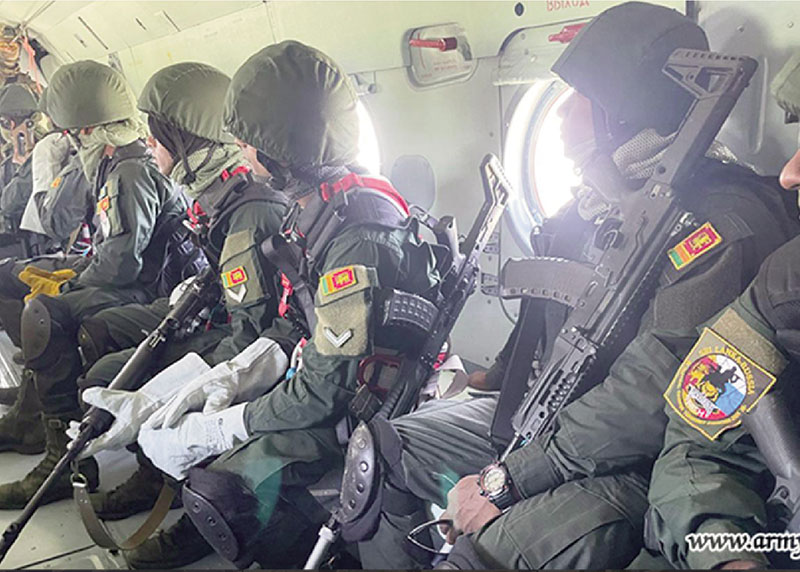
A contingent of the Sri Lanka Army, comprising 20 officers and 55 other ranks, participated in the combined military exercise ‘Wolverine Path II–2026’, conducted with the Armed Forces of the Russian Federation in Vladivostok, Russia, from September 18 to 25.
According to the Ministry of Defence, the exercise primarily focused on counter-terrorism operations and provided participating troops with training in a challenging combined operational environment.
The exercise included a range of tactical activities, including heli-rappelling, close-quarters battle (CQB), ambush operations, sniper firing, drone operations, buggy training and combat medical support.
The Ministry said the training enabled Sri Lankan troops to further develop their combat skills, tactical coordination and operational readiness.
It also provided an opportunity for the two militaries to exchange professional knowledge, operational experience and tactical expertise. Sri Lankan personnel gained exposure to training methodologies, tactical approaches and operational practices adopted by the Russian Armed Forces, the Ministry said.
The participation also enabled the Sri Lankan contingent to identify lessons from the joint training and share its own experiences with the Russian military.
The Sri Lankan contingent returned to the country following the exercise and arrived at Mattala Rajapaksa International Airport on September 28.
The Ministry said participation in the exercise contributed to enhancing the professional knowledge, tactical awareness and operational preparedness of Army personnel while promoting military-to-military cooperation, mutual understanding and professional relations between Sri Lanka and Russia.

Turkish court detains football refereeing chief pending corruption trial

Ten injured after car crashes into rugby supporters in Australia

Polls open in Latvia against backdrop of perceived Russia threat

Abhishek, Tilak and spinners secure gold for India at Asian Games again

Tharindu Rathnayake, bowlers secure Asian Games Bronze for Sri Lanka

G7 to release 100 million barrels of oil and diesel after Trump export ban threat

‘Dates have the highest sugar content to fight Coronavirus’

Sunday Island 27 December – Headlines

#SundayIsland 17th December – Headlines

Sunday Island – 28th March

Sunday Island Headlines – 21 March

Sunday Island – 21st February – Headlines
-

 News6 days ago
Police remove Thileepan statue in Jaffna
-

 Features6 days ago
The 22nd Amendment, constitutional recovery and illiberal slippage
-

 Features6 days ago
Of foreigners as CEOs of Lankan ventures
-

 Latest News4 days ago
Gold winner Tharanga gets brand-new Honda Vezel from SLAAJ
-

 News6 days ago
Sajith rejects Jt. Opp. protest sabotage claim; SJB TU chief demands remedial action
-

 Features4 days ago
Why Sri Lanka needs an Inclusive Civic Nationalism – urgently
-

 Features5 days ago
Thailand’s biggest new global star …
-

 News3 days ago
US-assisted ‘Ice’ detection: NPC to examine IGP’s move to transfer drug-busting team