
Foreign News
Canada’s Carney makes statement by choosing Europe, not US, for first foreign trip

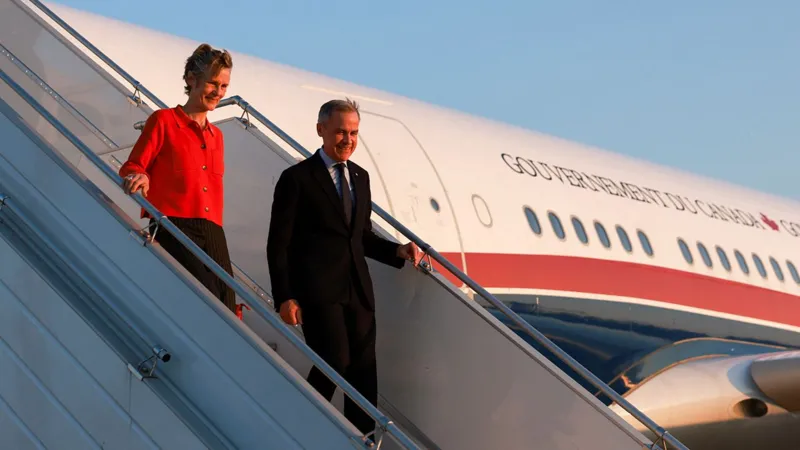
Two European politicians, dressed symbolically in red and white, sent a message last week to Canada on social media declaring “we’ve got your back”.
Also signalling support was King Charles, who planted a red maple tree on the grounds of Buckingham Palace and wore his Canadian medals during a high-profile visit to a naval warship.
Canada’s new Prime Minister Mark Carney has arrived in Paris before heading to London on Monday – a day after his 60th birthday – for his first foreign visit hoping to achieve more than symbolic encouragement. He wants solid support from allies.
Not only is Canada being targeted, like Europe, by a raft of swingeing US tariffs, but Donald Trump is making it clear he wants to take over his northern neighbour.
“We appreciate all the symbolic gestures but we need more public backing,” a Canadian official told me in a voice which underlined the nervous disbelief shared by most Canadians – Trump is not joking when he calls Canada the United States’s “51st state”.
The official messaging from Ottawa about Carney’s trip underlines his priorities – finance and fortifying security – a natural fit for the economist who headed the central banks in both Canada and the UK. A statement from his office said his visit is meant “to strengthen two of our closest and longest-standing economic and security partnerships”.
His itinerary is full of great symbolism too.
Carney revealed it on Friday during his first speech as prime minister when he hearkened back – with a shiny polish – to the origins of this former colony. He hailed “the wonder of a country built on the bedrock of three peoples: indigenous, French and British”.
So there’s a third destination on this whistle-stop tour – Iqaluit, the capital of Canada’s northernmost territory of Nunavut and homeland of its Inuit people. That stop, the statement emphasised, was to “reaffirm Canada’s Arctic security and sovereignty”.
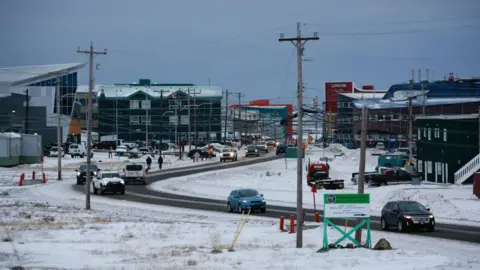
Spectacular Arctic and northern terrain makes up 40% of the land mass of the world’s second largest country. Protecting it is a critical Canadian concern in the midst of intensifying rivalry among world powers in the Arctic region, which has drawn in the US, Russia, China and more; it’s the cold war of all cold wars.
And there’s a personal twist. Carney was born in the small town of Fort Smith in the Northwest Territories, which lies next to Nunavut.
His schedule underlines that he also needs to be a quick study in a new skill – retail politics. A federal election, which has to be held by October, is expected to be called very soon. Carney needs to prove that he can engage with voters, in English and French, as naturally as he does with bankers and finance bosses.
And he needs a proper political mandate. He secured a whopping 86% of the vote when his Liberal Party chose to replace Justin Trudeau, who stepped down as [rime minister amid growing calls to resign from his own party after a decade at the top.
But Carney doesn’t have a seat in parliament; he still doesn’t have the vote of Canadians.
His Liberal party has just experienced a dramatic reversal, a “Trump bump” as well as a Trudeau one. The party which seemed certain to lose, and lose badly, is now tied with its main Conservative rivals in the polls.
Looking like a world leader, and understanding the world of tariffs and trade, is a good look when you are running for high office in the dark shadow of an external threat.
“I think part of the purpose of Mark Carney’s trip to Europe is to show that he can talk internationally to other like-minded powers at this very important moment,” reflects the eminent Canadian historian Margaret MacMillan.
Back home, voters will decide if that is what counts.
Carney is certain to talk Trump tactics, in private, with France’s President Emmanuel Macron and Britain’s Prime Minister Sir Keir Starmer. They’ve both taken great pains to flatter the US president in public, and press their case behind closed doors.
Many will be watching to see how Trump addresses Mark Carney – he recently referred to Canada’s former prime minister as “Governor Trudeau”.
Canada’s new top talker has been talking tough.
A week ago, when Carney won his party’s leadership contest, he invoked Canada’s national sport, ice hockey, which has long been locked in rivalry with US teams. “Canadians are always ready when someone else drops the gloves,” Carney declared to rousing applause.
“Make no mistake, Canada will win.”
But everyone knows this is no game. Carney described this escalating trade war as “the greatest crisis of our lifetime”. More than 80% of Canada’s exports cross the border to the US.
And while there have been a few reports of Canadians flying the US flag, a recent poll by the Angus Reid Institute underlined that a thumping 91% of Canadians reject becoming the 51st state.
On Friday, in Ottawa’s icy cold weather, Carney struck a warmer tone, highlighting how he and Trump share a background in business, including real estate.
“The president is a successful businessperson and dealmaker. We are his largest client in so many industries,” he remarked. “Clients expect respect and working together in a proper commercial way.”
Carney says he “looks forward” to speaking with President Trump. But the fact it will be a call, not a visit, is a measure of this moment. Traditionally, the first foreign visit of a Canadian leader is to the US – its closest neighbour and most trusted partner.
[BBC]


King Charles has hosted a spectacular state banquet for the president and first lady of Nigeria, praising the strengths of Nigeria’s partnership with the UK.
After greeting the 160 guests in the Yoruba language, the King spoke of the “living bridge” of the Nigerian community in the UK, in a speech in St George’s Hall at Windsor Castle.
Famous figures at the banquet included England rugby union captain, Maro Itoje, Olympic athlete Christine Ohuruogu and poet Sir Ben Okri, alongside senior royals including Queen Camilla and the Prince and Princess of Wales.
There were special adaptations for Muslims, with the banquet taking place in the fasting month of Ramadan.
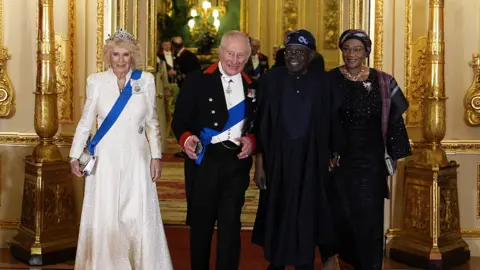
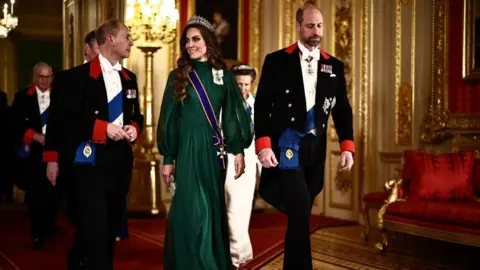
A prayer room was set aside in Windsor Castle and the usual lunch hosted by the King on such state visits did not take place.
It’s become a tradition to invent a cocktail for state visits – and in this case the “crimson bloom” was made from non-alcoholic ingredients, combining the Nigerian drink Zobo with English rose soda and hibiscus and ginger syrup.
There were also alcoholic drinks available for guests in St George’s Hall, including fine red and white wines, port and whisky.
The King’s speech reflected on the importance of religious tolerance, in which “people of different faiths can, do, and must live alongside one another in peace”.
He also told President Bola Ahmed Tinubu and First Lady Oluremi Tinubu of the importance of partners such as Nigeria and the UK standing together in difficult times “when rain clouds gather”.
As well as diplomatic ties, King Charles spoke of “Afrobeats filling our concert halls and Nollywood captivating our screens”.
There was also a reflection by the King on the “painful marks” of a shared history, in a reference to colonialism.
“I do not seek to offer words that dissolve the past, for no words can,” said the King, but he hoped for a more optimistic future “worthy of those who bore the pains of the past”.
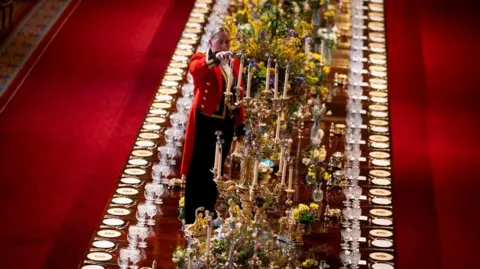
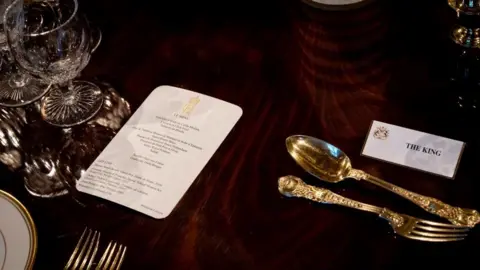
The banquet, on an elaborately decorated table filled with spring flowers, saw a meat-free menu.
It included:
- Soft boiled quail egg tartlet with watercress and kale and a basil sabayon
- Fillet of turbot, lobster mousse wrapped in spinach, beurre blanc sauce, sprouting broccoli with hollandaise sauce, fricassee of peas and broad beans, Jersey Royal potatoes
- Iced blackcurrant souffle with red fruit coulis
The two-day state visit began on Wednesday morning with a ceremonial welcome at Windsor.
In warm spring sunshine, the president and first lady – wearing traditional robes – were given the ceremonial grandeur of a royal welcome.
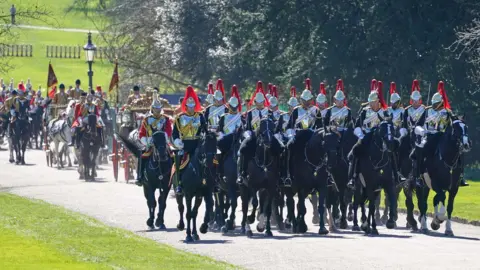
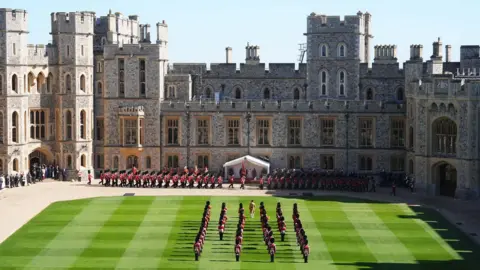
There was a carriage procession, bringing the Nigerian visitors into the quadrangle inside Windsor Castle, where a military band, with careful symmetry, paraded on the chequerboard lawn.
There was a gun salute, national anthems were played, guards were inspected and the Household Cavalry kicked up dust as they paraded inside the castle, in front of a viewing stand for the King and Queen and their visitors.
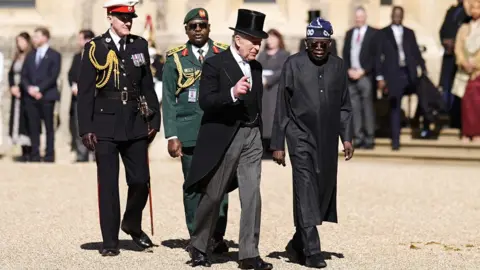
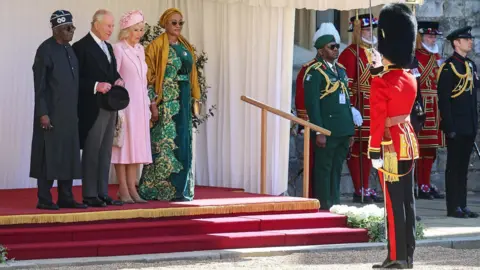
Official gifts were exchanged. The president and Mrs Tinubu were given hand-crafted pottery, a silver photo frame containing a picture of the King and Queen and a silver and enamel bowl.
In return, the King and Queen were given a traditional Yoruba statuette and a jewellery box featuring the faces of important Nigerian women.
President Tinubu is a Muslim and his wife is a Christian and the couple attended an interfaith event at Windsor Castle, designed to build bridges between religions.
It’s at a time of tensions within Nigeria, with a series of suspected suicide bombings this week in the north-eastern state of Borno, in which at least 23 people were killed and 108 injured in attacks blamed on hard-line Islamist militants from the Boko Haram group.
This is Nigeria’s first state visit to the UK for 37 years and such visits are a way of building relationships with international partners.
The Nigeria visit will see a strengthening of business links, including financial services. And there are personal and family connections, with more than 270,000 Nigerian-born people living in the UK.
“This state visit is about turning a historic relationship into a modern economic partnership – transforming trust into opportunity,” said Nigeria’s government spokesman Mohammed Idris.
“Nigeria’s economic reforms are unlocking the potential of Africa’s largest consumer market. The United Kingdom is a natural partner in what comes next.”
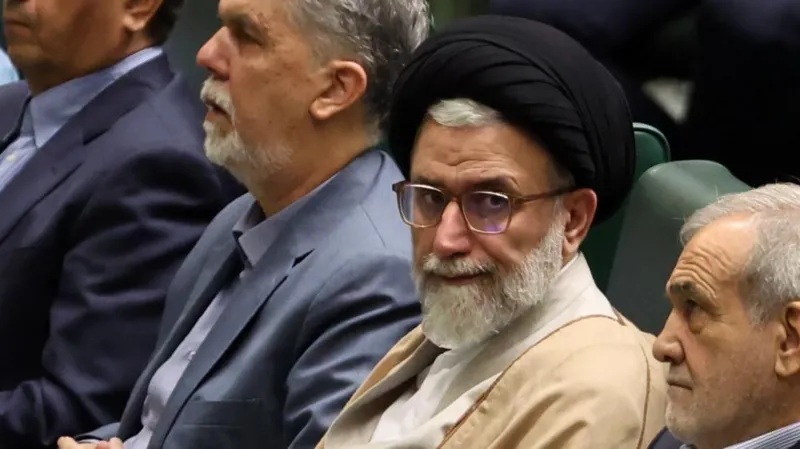
Iran’s intelligence minister Esmail Khatib has been killed, the country’s president has confirmed.
Masoud Pezeshkian said the “cowardly assassination” had left Iran “in deep mourning”, after Israel said on Wednesday it had killed Khatib in an air strike.
It comes a day after Israel announced it had killed Iran’s top security official, Ali Larijani, and head of the paramilitary Basij force, Gholamreza Soleimani, in strikes.
Since the assassination of Supreme Leader Ayatollah Ali Khamenei on the first day of the war on 28 February, multiple senior Iranian officials and commanders have been killed in efforts by Israel and the US to weaken the regime’s leadership.
In a post on X, Pezeshkian extended his condolences to the Iranian people over the officials’ deaths, adding he was “certain their path will continue more steadfastly than before”.
Speaking to the BBC, a woman from Tehran said the “killing of Khatib might help the people since he was among the leadership”.
“It might be that when people come out after a call to protest, the likelihood of them being killed is lower now,” she said. “Even though they all have replacements, these were the main figures.”
Earlier on Wednesday, Israel’s defence minister Israel Katz announced that Khatib had been “eliminated” in an Israeli strike on Tehran.
“Prime Minister Benjamin Netanyahu and I have authorised the IDF to eliminate any senior Iranian official for whom the intelligence and operational circle has been closed, without the need for additional approval,” he said.
[BBC]

Ten people have been killed after a fire broke out in the trauma centre of a government hospital in the eastern Indian state of Odisha.
All the victims were patients, while 11 hospital staff are being treated for burns suffered while trying to rescue patients, state Chief Minister Mohan Charan Majhi said.
The fire – suspected to have been caused by an electrical short circuit – started in the trauma care ICU of SCB Medical College and Hospital in Cuttack city around 02:30 local time on Monday (21:00 GMT Sunday).
Hospital fires are often reported in India, with many blamed on electrical faults. Last October, six critically ill patients were killed in an ICU fire in Rajasthan state.
In 2024, a blaze in the neonatal ICU of a medical college in northern Jhansi city killed at least 10 new born babies. In 2021, a fire in the ICU of Vijay Vallabh hospital in the western city of Virar killed 13 patients receiving treatment for Covid-19. Another fire in 2021 at a newborn care unit in Bhandara district in western state Maharashtra killed 10 infants.
In Odisha, the blaze was brought under control after fire service personnel rushed to the hospital. Patients were moved to other departments inside the same hospital, officials said.
SCB Medical College and Hospital is one of the largest government-run medical facilities in Odisha.
Speaking to reporters after visiting the hospital, Majhi said the fire affected the trauma care ICU as well as an adjoining ICU and wards.
Majhi said medical staff and security personnel “risked their lives” during the rescue operation and some of them were injured, adding that the government had directed officials to ensure proper treatment for those hurt in the incident.
The state government has announced financial compensation for the families of the victims. Majhi said he has ordered a judicial inquiry into the incident and said strict action would be taken against anyone found responsible.
Short circuits are among the most common causes of hospital fires in India. Hospitals are particularly vulnerable to fires because they contain a lot of electrical equipment, oxygen systems and patients who often cannot be moved quickly during emergencies.
[BBC]

Devine’s all-round masterclass hands New Zealand 2-1 series lead

Senegal and Morocco tied by religion and trade but divided by AFCON fallout

Showers expected in the Central, Sabaragamuwa and Uva provinces and in Galle, Matara, Mannar, Anuradhapura and Vavuniya districts after 2.00 pm.

CIABOC tells court Kapila gave Rs 60 mn to MR and Rs. 20 mn to Priyankara

Opposition moves no-faith motion against Energy Minister Kumara Jayakody

NJC takes up cudgels on behalf of Sallay, who played pivotal role in combating terrorism

‘Dates have the highest sugar content to fight Coronavirus’

Sunday Island 27 December – Headlines

#SundayIsland 17th December – Headlines

Sunday Island – 28th March

Sunday Island Headlines – 21 March

Sunday Island – 21st February – Headlines
-

 Business4 days ago
Browns EV launches fast-charging BAW E7 Pro at Rs. 5.8 million
-
 Life style5 days ago
From culture to empowerment: Indonesia’s vision for Sri Lanka
-

 News2 days ago
CIABOC questions Ex-President GR on house for CJ’s maid
-
 Business6 days ago
Sri Lanka Institute of Information Technology raises the bar for academic excellence
-

 Life style5 days ago
Ranjith Fernando celebrates cricketing journey with Hob Nails to Spikes
-
 Latest News5 days ago
QR code system will be implemented for fuel with effect from 06.00 a.m. today (15th)
-

 News3 days ago
Australian HC debunks misleading travel risk claims for Sri Lanka
-

 News3 days ago
Sri Lankan marine scientist Asha de Vos honoured at UNGA opening