
Latest News
Can Sri Lanka test injury-hit England?

After three weeks of bright lights, big city action in the Hundred, England’s men resume Test commitments with a three-match series against Sri Lanka. Which is the bigger deal is arguable, of course. Test cricket might still be the main economic driver in this part of the world but the ECB’s hopes for a significant injection of cash through its marque white-ball competition, and a low-profile summer for the longest format, mean the runes are harder to read than usual.
Can Sri Lanka, whose last Test engagement outside the subcontinent came almost 18 months ago, provide more of a contest than West Indies, who were soundly beaten 3-0 inside just ten days of cricket last month? Should their ability to compete – or otherwise – be taken as a marker for the health of Test cricket as a whole? Could the absence of Ben Stokes, who suffered a torn hamstring during his first stint playing in the Hundred since 2021, leave England’s rejigged Test team more vulnerable than they might otherwise have been?
Certainly, the evidence for Sri Lanka springing a surprise is thin on the ground. Although they have a 100% win record in Test matches this year (and currently sit above England on the World Test Championship table), the last of their three fixtures was in Bangladesh in March. Their only tour match in the build-up to Old Trafford saw them defeated by an inexperienced England Lions side, having been bundled out for 139 in the first innings. And while a rare chance to play in England in late summer offers the enticing prospect of warmer weather and worn surfaces for their spinners to exploit, the forecast for the first Test in Manchester is as grim as anything faced on previous trips to chilly northern outposts in May
Add to that a record that has seen Sri Lanka lose seven of their last eight Tests against England, with more than ten years elapsing since their last win – albeit a famous performance in which three members of the current squad participated – and you might be left fearing the worst.
Key to their chances of competing, most likely, will be the ability of the batters to put runs on the board. Sanath Jayasuriya, Sri Lanka’s interim head coach and a Bazballer before the term was invented, enjoyed plenty of success in England and can call on the expertise of Ian Bell, the former England batter brought in as batting coach for this tour. Dimuth Karunaratne, Angelo Matthew and Dinesh Chandimal will bring the experience of tours in 2014 and 2016, while Dhanajaya de Silva has a solid Test pedigree that has only been enhanced since taking on the captaincy earlier this year ( average 56.20).
The squad is well stocked with seam options, with Vishwa Fernando and Asitha Fernando both possessing county experience, while only two spinners – Nathan Lyon and R Ashwin – have taken more wickets than slow left-armer Prabath Jayasuriya since his debut in 2022. The fact that Jayasuriya has taken 63 at 24.28 at home, compared to eight at 57.25 away, gives a sense of the challenge to adapt that the tourists will nevertheless face.
In their favour is the fact that, all of a sudden, they are set to face an England team that looks strikingly different. The loss of Zak Crawley to a fractured finger suffered during the third West Indies Test three weeks ago was then compounded by Stokes’ torn hamstring, meaning that England’s XI at Old Trafford will feature both a first-time Test opener, in Dan Lawrence, and an untried captain, with Ollie Pope’s previous experience limited to a handful of England warm-ups and games for Surrey.
Stokes will still be around the changing room to provide leadership but the absence of the architect of Bazball on the field is bound to have an effect – and not just in shortening the batting order. With Matthew Potts named as Stokes ahead of Jordan Cox, bringing the Durham seamer only his second cap since the summer of 2022, it means a shuffle up the order for each of Jamie Smith – who impressed so much batting at No. 7 in his debut series against West Indies – Chris Woakes and Gus Atkinson.
The unexpected disruption, with England having also called up Olly Stone after Dillon Pennington picked up an injury in the Hundred, adds to the sense that this might not be such a straightforward assignment – particularly if Sri Lanka, who are unbeaten in six London Tests going back to 1998, can emerge from this week unscathed. For some, the fact they have the opportunity to perform in a three-Test series in England at the height of summer for the first time is something in itself to be savoured. Just don’t say that the future of the format depends on the result.
Dan Lawrence has a more exotic range of shots than most and played his best Test innings, an effervescent 91 in Barbados, two games before losing his place at the start of the Stokes-McCullum era in 2022. Since then he has had to bide his time for a taste of Bazball, featuring as the spare batter pretty much throughout – and it has taken an injury to an opener for him to finally get back in the side. Lawrence has opened just seven times in 203 first-class innings but, as he put it, would have snapped their hand off for any opportunity. Now he just has to take it.
During a lengthy career across all formats, Angelo Matthews has been there, done that and got the t-shirt. Now 37, and unlikely to play much of a part of Sri Lanka’s limited-overs sides, he shapes as the rock of the Test middle order and a key man to their hopes of putting England under pressure this time around. It was Mathews’ majestic second-innings 160 that helped turn the 2014 Headingley Test and bring Sri Lanka their most-recent victory over England; he averages 47.88 in the country, having also got himself on the Lord’s honours board on that tour.
England named their team two days out from the start, confirming that Potts would come in for Stokes as part of a rebalanced XI. The loss of their captain and star allrounder means Smith moving into the top six and Woakes at No. 7, with Potts joining a four-man seam attack supplemented by Shoaib Bashir’s offspin. Lawrence, whose promotion to opener was inked in a few weeks ago, could also be called on to bowl.
England: Dan Lawrence, Ben Duckett, Ollie Pope (capt), Joe Root, Harry Brook, Jamie Smith (wk), Chris Woakes, Gus Atkinson, Matthew Potts, Mark Wood, Shoaib Bashir
Sri Lanka largely have a settled top six, and given Kamindu Mendis’ start in Tests (he has passed fifty in four of his five innings so far, with two hundreds), he takes the No. 7 spot. Vishwa and Asitha have been their most reliable long-form quicks recently, while left-arm spinner Prabath Jayasuriya will play against an England XI made up of 10 right-handers. The biggest surprise, however, is the inclusion of Milan Rathnayake, who has been picked for a debut ahead of Kasun Rajitha and Lahiru Kumara, both of whom were good against Bangladesh earlier in the year, though they played only one Test apiece.
Sri Lanka: Dimuth Karunaratne, Nishan Madushka, Kusal Mendis, Angelo Mathews, Dinesh Chandimal (wk), Dhananjaya de Silva (capt), Kamindu Mendis, Prabath Jayasuriya, Asitha Fernando, Vishwa Fernando, Milan Rathnayake
(Cricinfo)

Latest News
Landslide Early Warnings issued to the Districts of Kandy, Kegalle, Matale and Ratnapura

The Hational Building Research Institute (NBRI) has issued landslide early warnings to the Districts of Kandy, Kegalle, Matale and Ratnapura valid from 2200 hrs on 03rd October upto 2200 hrs on 04th October 2026.
Accordingly,
LEVEL II (AMBER) landslide early warnings have been issued to the Divisional Secretaries Divisions and surrounding areas of Udu Dumbara and Minipe 8n the Kandy district, Dehiowita in the Kegalle district, and Ambanganga Korale and Matale in the Matale district.
LEVEL I (YELLOW) landslide early warnings have been issued to the Divisional Secretaries Divisions and surrounding areas of Rambukkana in the Kegalle district, Rattota in the Matale district, and Eheliyagoda in the Ratnapura district.
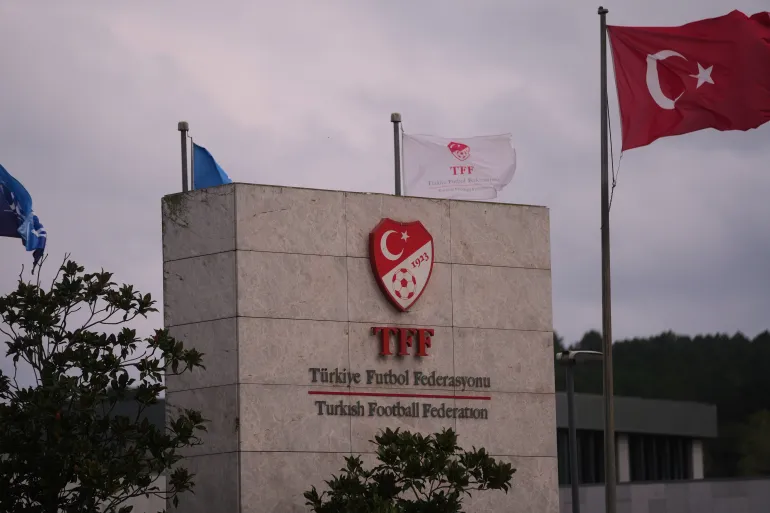
The head of Turkiye’s football refereeing body and four other officials have been placed in pretrial detention by a court as part of a corruption investigation, the state news agency Anadolu reports.
Ferhat Gundogdu, head of the Central Referees Committee, and six others appeared before a judge over allegations of manipulation of the referee administration process, Anadolu said on Saturday.
They appeared on Friday before a judge at Istanbul’s Caglayan courthouse on several charges, including forgery of official documents, breach of trust and illegal acquisition of personal data, the report said.
The judge remanded five people in custody and granted the other two conditional release, Anadolu said.
It was the latest scandal to shake football in Turkiye, coming exactly a year after the Turkish Football Federation (TFF) suspended 149 referees on charges of illegal betting.
On Thursday night, police from the illegal betting and sports crime unit also detained Yasin Kol, a referee from Turkiye’s top-flight Super Lig, as well as an assistant referee, media reports said.
Justice Minister Akin Gurlek said prosecutors are examining claims about “interference in the processes of referee classification, assignments, scoring and appointments as well as the exams on rules”.
During raids on Tuesday, police searched the VAR room at TFF’s headquarters in Istanbul. Observers said the investigation was likely linked to last year’s betting scandal and would have implications for the federation.
“It does seem to be a continuation of 2025, and it looks like it will continue further,” sports journalist Ayhan Sensoy told the AFP news agency.
Sensoy, who wrote a 2024 book on the issue called The Gambling Pit, said it was unlikely that federation bosses “have any chance of staying in office”.
So far, the TFF has not directly addressed the arrests as its top officials are due to fly home on Saturday after attending Friday night’s Belgium-Turkiye UEFA Nations League clash in Liege, which Turkiye lost 3-0.
[Aljazeera]
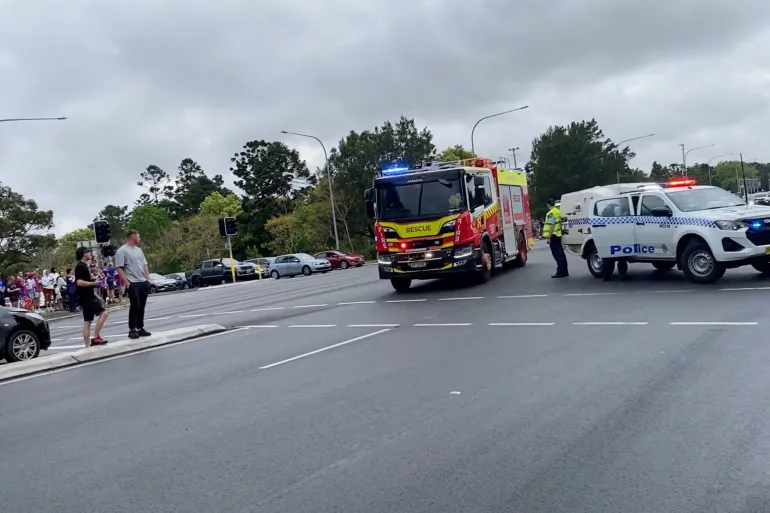
A car has crashed into a crowd of rugby league supporters in the eastern Australian city of Newcastle, injuring 10 people, including three children.
New South Wales police said on Saturday that two of the injured – a five-year-old girl and a 67-year-old man – were in a critical condition and the other eight were in stable condition in hospital.
Police said they had arrested the 18-year-old man driving the vehicle and were investigating what happened. They said the crash was not believed to be related to “terrorism”.
The crowd had gathered to farewell the local rugby league side, the Newcastle Knights, ahead of their grand final against the Sydney Roosters on Sunday.
Newcastle Lord Mayor Gavin Morris said the driver, a rugby league fan, had lost control of his vehicle and had been taken into custody.
“He was revving the car, he was excited, he was a supporter, he was there for the joy of the moment,” Morris told the national broadcaster ABC.
“Somehow he lost control of the car … and he’s gone into the crowd,” he added.
Prime Minister Anthony Albanese said: “My thoughts are with everyone injured or involved in the horrible incident this morning in Newcastle.”
“Rugby league brings people together, and this should have been a weekend of excitement and pride for Newcastle fans,” he wrote in a social media post.
[Aljazeera]

Showers or thundershowers will occur at several places in the most part of the island after 1.00 p.m

Geneva takes up Sallay’s case and govt. ignores opportunity to answer accusations

Section of wartime KKS High Security Zone vacated to facilitate economic development in the area

Lawyer lodges complaint against Govt. Printer, Media Ministry Secy.

Sri Lankan troops in joint anti-terrorist exercise in Russia

Nine Indian poachers brought to KKS with their boat

‘Dates have the highest sugar content to fight Coronavirus’

Sunday Island 27 December – Headlines

#SundayIsland 17th December – Headlines

Sunday Island – 28th March

Sunday Island Headlines – 21 March

Sunday Island – 21st February – Headlines
-

 Latest News6 days ago
Gold winner Tharanga gets brand-new Honda Vezel from SLAAJ
-

 News5 days ago
US-assisted ‘Ice’ detection: NPC to examine IGP’s move to transfer drug-busting team
-

 Features6 days ago
Why Sri Lanka needs an Inclusive Civic Nationalism – urgently
-

 Features7 days ago
Thailand’s biggest new global star …
-

 Editorial4 days ago
Colombo Port drug bust: The plot thickens
-
 News7 days ago
First cases taken up by SC after enactment of 22A dismissed
-

 News6 days ago
Civil society activist accuses govt. of favouring Ven. Gnanasara
-

 Editorial7 days ago
Aftershocks of 22A