
Business
Can Debt-for-Climate and Nature Swaps help make Sri Lanka’s debt more manageable?


Lakmini Fernando is a Research Fellow at IPS with primary research interest in Development Economics, Public Finance and Climate Change. She has expertise in econometric data analysis, research design and causal methodologies. Lakmini holds a BSc in Agriculture from the University of Peradeniya, a Master of Development Economics (Advanced) from the University of Queensland, Australia and a PhD in Economics from the University of Adelaide, Australia.
 Sunimalee Madurawala is a Research Economist at the Institute of Policy Studies of Sri Lanka (IPS). She has over 15 years of research experience in the areas of gender, health economics and population studies. Sunimalee holds a BA (Economics Special) degree with a first-class and a Masters in Economics (MEcon) degree from the University of Colombo, Sri Lanka.
By Dr Lakmini Fernando and Sunimalee Madurawala
Sri Lanka’s economic crisis, fuelled by unsustainable debt and a default in 2022, left the country struggling to stabilise its economy. Its high climate vulnerability that disrupts livelihoods exacerbated the economic challenges. In the face of dual pressures from an economic crisis and climate vulnerability, the need for alternative approaches to financial recovery has never been more urgent. Therefore, debt-for-climate-and-nature (DfCN) swaps could be a possible option to lower the financial burden while addressing climate challenges.
The Need for Alternative Financing Options in Sri Lanka
Sri Lanka was forced to default on its external debt and seek a USD 3 billion bailout from the International Monetary Fund (IMF) in March 2023. Its total debt stock stood at USD 92 billion, with 40% being external debt in 2023. Sri Lanka’s debt portfolio is complex and its outstanding debt to China and India accounted for 18% of total external debt (59% of bilateral loans) in September 2022 (Figure 1). Amidst the conclusion of debt restructuring, Sri Lanka might benefit by opening to alternative financial instruments.

DfCN Swaps as an Alternative
DfCN swaps are a sovereign debt restructuring tool that helps (partial) restructuring of external debt in exchange for domestic investment in climate action. Well-designed DfCN swaps provide debtor countries the fiscal space to invest in climate adaptation and biodiversity sustainability.
With unsustainable debt and climate change identified as pressing issues for developing countries, Sri Lanka emerges as a priority country for DfCN swaps. Earlier, DfCN swaps followed a ‘piecemeal approach’ – implementing smaller, uncoordinated projects and managing funds through extrabudgetary channels. In contrast, recent swaps follow a ‘systematic approach’ – focusing on broader programmes instead of individual projects and providing budget support by channelling funds directly into debtor countries’ national budgets. This approach makes DfCN swaps more effective by mobilising larger amounts of funds, increasing debtor governments’ accountability, linking payments to performance, and aligning Nationally Determined Contributions (NDCs) and National Biodiversity Strategies and Action Plans (NBSAPs) in target setting.
Global Context and Debt Swap Options for Sri Lanka
DfCN swaps was first introduced in 1984 in response to the deteriorating tropical rain forests and mounting debt obligations in Latin America. Since then, many countries have adopted DfCN swaps to address both financial and environmental challenges.
In 2002, the United States (US) engaged in a bilateral swap with Peru, subsidised by NGOs such as The Nature Conservancy (TNC),
to protect over 1 million hectares of wilderness areas. The US has also engaged in similar swaps with Guatemala and Indonesia to protect tropical forests.
In 2015, Seychelles, pioneered a Blue Economy debt for nature swaps, converting USD 21.6 million of sovereign debt with Paris Club creditors to fund marine conservation. This is considered the world’s first debt swap for ocean conservation and climate adaptation.
Belize engaged in a ‘tripartite blue economy swap’ with the TNC in 2021, which reduced its external debt by 10% of GDP. TNC helped Belize to buy back USD 553 million of national debt borrowed from commercial creditors (30% of GDP) by issuing USD 346 million in blue bonds (10% of GDP). In response, Belize agreed to invest in marine conservation. This deal allows buy back of entire external commercial debt by TNC and Belize to invest USD 4 million annually on marine conservation until 2041 aiming to increase marine-protection parks from 15.9% of its oceans to 30% in 2040. Hence, this deal addresses the triple objectives of restoring debt sustainability, promoting sustainable development and enhancing climate resilience.
In 2023, Ecuador entered into the world’s largest DfCN swap, facilitated by Credit Suisse, buying back USD 1.6 billion of sovereign debt for USD 656 million in new sovereign debt. In return, Ecuador agreed to allocate USD 450 million in long-term marine conservation in the Galápagos Islands. The success of this deal was driven by several key factors: participation of academia, collaboration and consensus among multiple stakeholders including civil society and local governments, an innovative financing model, and government leadership.
The effectiveness of swaps depends on the ability to address several key challenges: political and macroeconomic stability to ensure long-term accomplishment; stable institutional structures to denote stability in planning and implementation; strong regulatory frameworks to cover both financial and environmental obligations; and knowledge/skills on swaps at every level of the public service. Accordingly, the success of DfCN swaps is dependent on the leadership role of debtor governments and a systematic approach in the designing and implementation of swaps.
Debt swaps are determined collectively by the respective parties involved, hence, it is difficult to predict the magnitudes of these swaps. However, following the three criteria proposed by Boland (2023) on the magnitude of debt, type of lending (whether it is a commercial or concessional loans) and interest of the creditors (considering the country’s track record), Sri Lanka may consider the following four creditors for a possible DfCN swap in the future (Table 1).
Way Forward
In addressing the triple challenges of high indebtedness, climate change and loss of nature, DfCN swaps can serve as an effective alternative fiscal instrument for debt-ridden Sri Lanka. Systematic planning and stringent government commitment and all relevant key stakeholders are crucial for its success. Also, addressing knowledge and skill gaps on debt swaps is crucial. With sufficient political and macro-stability, Sri Lanka could be ready to implement DfCN swaps potentially accelerating its economic recovery.


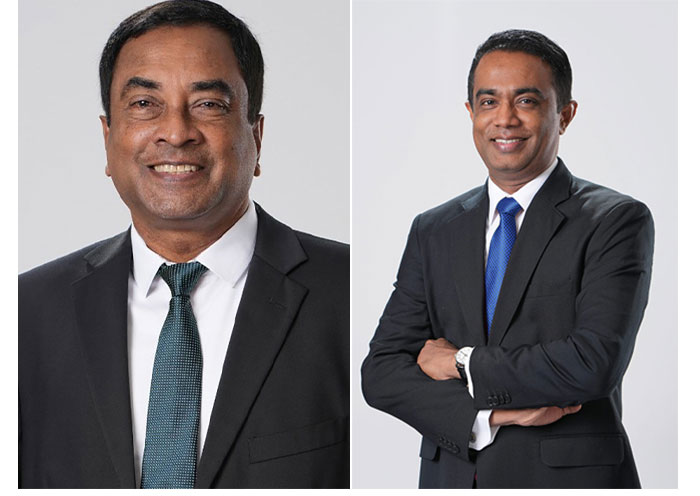
HNB Life PLC has delivered a robust performance in the first quarter of 2026, recording a 54% year-on-year increase in Gross Written Premium (GWP) to Rs. 7.01 billion, up from Rs. 4.55 billion in Q1 2025. Net Written Premium rose by a matching 54% to Rs. 6.69 billion, reflecting strong new business generation and policy persistency.
Total net income grew 39% to Rs. 8.69 billion, supported by solid underwriting and steady investment income, including Rs. 2.05 billion from interest and dividends. The company’s balance sheet remains resilient, with total assets reaching Rs. 71.38 billion and the Life Insurance Fund expanding to Rs. 52.55 billion.
Profit after tax stood at Rs. 0.21 billion, though profitability was tempered by a low-interest rate environment and fair value fluctuations in the equity portfolio. No surplus transfer from the Life Insurance Fund has been made yet, as this typically follows year-end valuation.
Chairman Stuart Chapman attributed the momentum to the company’s recent rebranding and its strategic alignment with the Hatton National Bank Group. CEO Lasitha Wimalaratne emphasized disciplined execution, digital enablement, and enhanced distribution as key drivers.
HNB Life, rated ‘A’ (lka) by Fitch, marks 25 years as one of Sri Lanka’s fastest-growing life insurers, operating 79 branches nationwide. The company remains well-positioned for sustainable long-term growth.
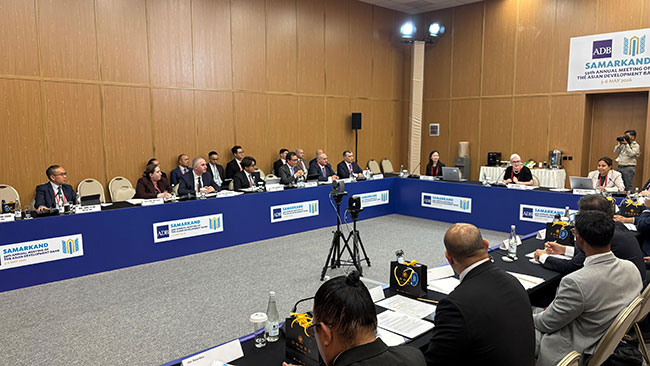
The atmosphere in Samarkand, Uzbekistan, during the 59th Annual Meeting of the Asian Development Bank (ADB) was nothing short of electric. Walking through the Silk Road Samarkand complex – a venue steeped in the history of ancient global trade – one could easily feel the weight of past legacies. “More pressing, however, was the palpable urgency of the future, as the halls of the Congress Center resonated with strategic discussions on ‘Asia’s Second Growth Leap.'” The global narrative was unmistakable: the talk of post-crisis recovery was no longer relevant. For Sri Lanka, the echoing message from Samarkand was both a warning and an invitation: the transition from an aid-recipient mindset to a competitive global partner is no longer a choice. It is our only survival mechanism.
While delegates from across the region shared aggressive blueprints for economic acceleration, the absence of Sri Lankan policymakers was a stark reality. Other Asian nations did not speak of mere “potential”; they spoke of velocity.
In Samarkand, the ancient gateway of the Silk Road, the irony was impossible to ignore. As regional leaders debated the deployment of an Interconnected Pan-Asia Grid to revolutionise energy integration, discussed how deep capital markets must drive development, and outlined strategies to scale up investments from critical minerals to advanced manufacturing value chains, a troubling realisation set in. The world is moving at lightning speed on digital highways for inclusive growth, yet Sri Lanka remains haunted by the ghost of political and bureaucratic “dilly-dallying.”
The true “Samarkand Spirit” demands an immediate, radical shift in our national mindset. Sri Lanka must aggressively shed its “crisis” label. The high-level discourse in Uzbekistan focused entirely on how emerging economies can stop begging for economic concessions and start delivering regional solutions.
Whether the focus was on maximising opportunities within the Regional Comprehensive Economic Partnership (RCEP) or financing large-scale offshore wind projects, the core directive for our nation remained constant: Sri Lanka must stop looking for a hand-out and start building an economic bridge.
The ADB has laid out the catalytic pathway for the Asia-Pacific’s second growth phase. The infrastructure, the capital, and the frameworks are ready. The burning question for Sri Lanka’s policymakers is simple: Are we ready to execute, or are we content with stagnation?
Leaving Uzbekistan, the takeaway for our leadership is vivid and uncompromising. Decisive action is the sole currency of the new Asian century.
To bridge the gap between the historic Silk Road and the strategic Indian Ocean, Sri Lanka must:
Accelerate Digitisation: Swiftly overhaul bureaucratic frameworks to create a seamless, trusted digital economy.
Integrate Energy Grid Connectivity: Boldly plug into the regional grid networks discussed at the summit to resolve long-term energy insecurity.
Plug into Global Supply Chains: Pivot aggressively toward high-value manufacturing and regional trade agreements.
The 59th ADB Annual Meeting proved that the international community is ready to partner with a competitive, forward-thinking Sri Lanka. We possess the geographic location and the inherent talent. Now, post-Samarkand, we have the definitive roadmap.
The “Second Leap” of the Asia-Pacific region is already in motion. The ultimate test for Sri Lanka’s policymakers is whether they will lead the country into this dynamic new era or leave us observing fruitlessly from the sidelines.
By Sanath Nanayakkare

Here is the point that carries more weight than the headline PMI figures released by the Central Bank of Sri Lanka. While much of April’s contraction in manufacturing (42.6) and services (46.7) was dismissed as seasonal — the Sinhala and Tamil New Year holidays, fewer working days, fading festive demand — the rupture in new business flows tells a different, more troubling tale.
April 2026 marked the first month since April 2023 that services sector new business contracted. Not a slowdown. Not a plateau. An outright decline. Nor was it narrow in scope. The deterioration cut across transportation of goods, insurance, wholesale and retail trade, and accommodation, food and beverage service activities.
The Island Financial Review asked an independent analyst for his take. Here is what he said.
“These are not fringe sub-sectors; they are the arteries of Sri Lanka’s domestic economy. Why does this matter beyond the seasonal logic? Because new business is a leading indicator. What falls today in new orders will show up tomorrow in production, employment and stock purchases. April’s drop in new business — the first in three full years — suggests that May’s anticipated recovery may be shallower than hoped, and that a return above the neutral 50 PMI threshold before June is unlikely unless geopolitical tensions ease sharply.”
“Compounding the concern, the decline in new business was not an isolated Sri Lankan phenomenon. It arrived alongside two external shocks: rising energy prices, which hammered transport and personal services, and the ongoing Middle East conflict, which lengthened supplier delivery times and added logistical friction.”
“To be sure, expectations over the next three months remain positive. Firms hope for a stabilisation following the end of the war. But the first decline in new business in three years is a quiet alarm. Seasonal patterns explain April’s production dip. They do not explain why customers stopped placing new orders. For Sri Lanka’s policymakers and business leaders, that is the story to watch in May,” he said.
By Sanath Nanayakkare

Fighter jet crews parachute safely after collision at US air show

WHO declares Ebola outbreak in DR Congo an international emergency

Trump warns ‘clock is ticking’ for Iran as peace progress stalls

Axar, Ashutosh, Starc keep Delhi Capitals’ playoffs hopes alive

Venkatesh, Rasikh take Royal Challengers Bengaluru into IPL 2026 playoffs

Showers will occur at times in the Western, Sabaragamuwa, Central, North-western and Northern provinces and in Anuradhapura, Galle and Matara districts

‘Dates have the highest sugar content to fight Coronavirus’

Sunday Island 27 December – Headlines

#SundayIsland 17th December – Headlines

Sunday Island – 28th March

Sunday Island Headlines – 21 March

Sunday Island – 21st February – Headlines
-
 News5 days ago
Ex-SriLankan CEO’s death: Controversy surrounds execution of bail bond
-

 Features1 day ago
Sri Lankan Airlines Airbus Scandal and the Death of Kapila Chandrasena and my Brother Rajeewa
-
Features6 days ago
High Stakes in Pursuing corruption cases
-

 Features6 days ago
When University systems fail:Supreme Court’s landmark intervention in sexual harassment case
-
 News2 days ago
Lanka’s eligibility to draw next IMF tranche of USD 700 mn hinges on ‘restoration of cost-recovery pricing for electricity and fuel’
-

 Midweek Review5 days ago
A victory that can never be forgotten
-

 News1 day ago
Kapila Chandrasena case: GN phone records under court scrutiny
-

 Features3 days ago
Mysterious Death of United Nations Secretary General Hammarskjöld