
Business
Can Debt-for-Climate and Nature Swaps help make Sri Lanka’s debt more manageable?


Lakmini Fernando is a Research Fellow at IPS with primary research interest in Development Economics, Public Finance and Climate Change. She has expertise in econometric data analysis, research design and causal methodologies. Lakmini holds a BSc in Agriculture from the University of Peradeniya, a Master of Development Economics (Advanced) from the University of Queensland, Australia and a PhD in Economics from the University of Adelaide, Australia.
 Sunimalee Madurawala is a Research Economist at the Institute of Policy Studies of Sri Lanka (IPS). She has over 15 years of research experience in the areas of gender, health economics and population studies. Sunimalee holds a BA (Economics Special) degree with a first-class and a Masters in Economics (MEcon) degree from the University of Colombo, Sri Lanka.
By Dr Lakmini Fernando and Sunimalee Madurawala
Sri Lanka’s economic crisis, fuelled by unsustainable debt and a default in 2022, left the country struggling to stabilise its economy. Its high climate vulnerability that disrupts livelihoods exacerbated the economic challenges. In the face of dual pressures from an economic crisis and climate vulnerability, the need for alternative approaches to financial recovery has never been more urgent. Therefore, debt-for-climate-and-nature (DfCN) swaps could be a possible option to lower the financial burden while addressing climate challenges.
The Need for Alternative Financing Options in Sri Lanka
Sri Lanka was forced to default on its external debt and seek a USD 3 billion bailout from the International Monetary Fund (IMF) in March 2023. Its total debt stock stood at USD 92 billion, with 40% being external debt in 2023. Sri Lanka’s debt portfolio is complex and its outstanding debt to China and India accounted for 18% of total external debt (59% of bilateral loans) in September 2022 (Figure 1). Amidst the conclusion of debt restructuring, Sri Lanka might benefit by opening to alternative financial instruments.

DfCN Swaps as an Alternative
DfCN swaps are a sovereign debt restructuring tool that helps (partial) restructuring of external debt in exchange for domestic investment in climate action. Well-designed DfCN swaps provide debtor countries the fiscal space to invest in climate adaptation and biodiversity sustainability.
With unsustainable debt and climate change identified as pressing issues for developing countries, Sri Lanka emerges as a priority country for DfCN swaps. Earlier, DfCN swaps followed a ‘piecemeal approach’ – implementing smaller, uncoordinated projects and managing funds through extrabudgetary channels. In contrast, recent swaps follow a ‘systematic approach’ – focusing on broader programmes instead of individual projects and providing budget support by channelling funds directly into debtor countries’ national budgets. This approach makes DfCN swaps more effective by mobilising larger amounts of funds, increasing debtor governments’ accountability, linking payments to performance, and aligning Nationally Determined Contributions (NDCs) and National Biodiversity Strategies and Action Plans (NBSAPs) in target setting.
Global Context and Debt Swap Options for Sri Lanka
DfCN swaps was first introduced in 1984 in response to the deteriorating tropical rain forests and mounting debt obligations in Latin America. Since then, many countries have adopted DfCN swaps to address both financial and environmental challenges.
In 2002, the United States (US) engaged in a bilateral swap with Peru, subsidised by NGOs such as The Nature Conservancy (TNC),
to protect over 1 million hectares of wilderness areas. The US has also engaged in similar swaps with Guatemala and Indonesia to protect tropical forests.
In 2015, Seychelles, pioneered a Blue Economy debt for nature swaps, converting USD 21.6 million of sovereign debt with Paris Club creditors to fund marine conservation. This is considered the world’s first debt swap for ocean conservation and climate adaptation.
Belize engaged in a ‘tripartite blue economy swap’ with the TNC in 2021, which reduced its external debt by 10% of GDP. TNC helped Belize to buy back USD 553 million of national debt borrowed from commercial creditors (30% of GDP) by issuing USD 346 million in blue bonds (10% of GDP). In response, Belize agreed to invest in marine conservation. This deal allows buy back of entire external commercial debt by TNC and Belize to invest USD 4 million annually on marine conservation until 2041 aiming to increase marine-protection parks from 15.9% of its oceans to 30% in 2040. Hence, this deal addresses the triple objectives of restoring debt sustainability, promoting sustainable development and enhancing climate resilience.
In 2023, Ecuador entered into the world’s largest DfCN swap, facilitated by Credit Suisse, buying back USD 1.6 billion of sovereign debt for USD 656 million in new sovereign debt. In return, Ecuador agreed to allocate USD 450 million in long-term marine conservation in the Galápagos Islands. The success of this deal was driven by several key factors: participation of academia, collaboration and consensus among multiple stakeholders including civil society and local governments, an innovative financing model, and government leadership.
The effectiveness of swaps depends on the ability to address several key challenges: political and macroeconomic stability to ensure long-term accomplishment; stable institutional structures to denote stability in planning and implementation; strong regulatory frameworks to cover both financial and environmental obligations; and knowledge/skills on swaps at every level of the public service. Accordingly, the success of DfCN swaps is dependent on the leadership role of debtor governments and a systematic approach in the designing and implementation of swaps.
Debt swaps are determined collectively by the respective parties involved, hence, it is difficult to predict the magnitudes of these swaps. However, following the three criteria proposed by Boland (2023) on the magnitude of debt, type of lending (whether it is a commercial or concessional loans) and interest of the creditors (considering the country’s track record), Sri Lanka may consider the following four creditors for a possible DfCN swap in the future (Table 1).
Way Forward
In addressing the triple challenges of high indebtedness, climate change and loss of nature, DfCN swaps can serve as an effective alternative fiscal instrument for debt-ridden Sri Lanka. Systematic planning and stringent government commitment and all relevant key stakeholders are crucial for its success. Also, addressing knowledge and skill gaps on debt swaps is crucial. With sufficient political and macro-stability, Sri Lanka could be ready to implement DfCN swaps potentially accelerating its economic recovery.

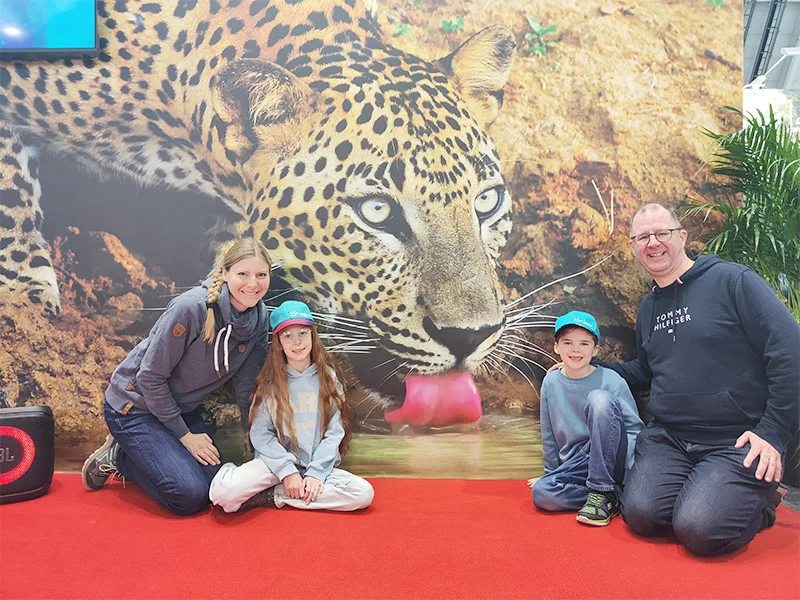
Sri Lanka Tourism marked its presence at CMT 2026, held in Stuttgart, Germany, one of the largest consumer travel fairs in Europe. The Sri Lanka Stand accommodated representatives from the local tourism industry, providing a valuable platform to connect directly with the German travel community, particularly travellers with long-haul travel intentions.
Sri Lanka’s participation at CMT 2026 enabled direct engagement with consumers and helped stimulate interest in exploring the country’s diverse and year-round travel experiences. This presence addressed a long-standing need for Sri Lanka Tourism to participate in major consumer-focused travel platforms, effectively taking destination promotion directly to the travellers’ doorstep.
A wide range of travel packages, customised itineraries, accommodation options, and experiential offerings were presented to interested German consumers by Sri Lankan DMCs, under the umbrella of Sri Lanka Tourism. The platform also allowed potential travellers to clarify concerns and queries related to planning travel to Sri Lanka through direct, face-to-face interactions with industry professionals.
These direct engagements enabled Sri Lankan industry participants to gain valuable insights into emerging travel interests, changing consumer behaviour, and evolving customer expectations in the German market. The face-to-face discussions with end consumers strengthened the industry’s understanding of demand trends and product requirements.
Strategically, Sri Lanka Tourism’s focus on B2C promotions serves as a catalyst for strengthening B2B platforms, ensuring that final decision-makers—the travellers—are actively engaged alongside trade partners. This alignment enhances the overall effectiveness of trade collaborations. Well-designed consumer promotion activities, including giveaways, contests, experiential engagements, and cultural performances, created emotional connections with visitors, improved destination recall, and reinforced Sri Lanka’s positioning as a compelling long-haul destination. (Sri Lanka Tourism)

Dr. Piyumini Gunasekara on advanced non surgical treatments
Hemas Hospitals has strengthened its regional healthcare positioning with the launch of Adora Cosmetic Centre at Hemas Hospital Wattala, introducing a hospital-backed, clinically governed model of aesthetic medicine at a time when South Asia’s cosmetic sector is expanding faster than regulation.
Unlike standalone cosmetic clinics, Adora is fully integrated into the Hemas Hospital ecosystem, embedding aesthetic services within hospital-grade infrastructure, multidisciplinary medical support and internationally aligned clinical governance.
Speaking at the launch, Dr. Lakith Peiris, Managing Director of Hemas Hospitals & Labs, said the centre represents a deliberate shift in strategy.
“Adora is not about cosmetic enhancement alone. It is built on protocols, trained clinicians and governance. As healthcare providers scale across the region, safety and medical credibility must remain non-negotiable,” he told The Island Financial Review.
The centre is positioned as a health-class facility, combining advanced aesthetic technologies with evidence-based medical pathways. This approach addresses growing regional concerns over unregulated cosmetic practices, offering patients reassurance through professional oversight and ethical medical standards.
Prabhan Gunawardena, Director General Manager of Hemas Hospital Wattala, said the initiative reflects both clinical responsibility and business foresight.
“The cosmetic industry is evolving rapidly across South Asia. Adora demonstrates how innovation can be scaled responsibly when anchored in medical expertise and hospital governance,” he said.
Detailing the centre’s scope, Dr. Piyumini Gunasekara, Medical Officer – Adora Cosmetic Centre, said treatments are designed to address medical and aesthetic concerns through personalised, evidence-based care.
She told The Island Financial Review:”We offer advanced non-surgical treatments for concerns such as hyperpigmentation, acne and acne scarring, fine lines and wrinkles, collagen loss, enlarged pores, rosacea, UV damage, excessive sweating, warts and moles. Every procedure is clinically assessed and delivered within a hospital-backed framework to ensure safe and sustainable outcomes.”
Clinical governance remains central to operations, reinforced by Dr. Malith Atapattu, Director – Medical Services and Quality, who highlighted the importance of protocol-driven care in a sector often challenged by inconsistent standards.
As Sri Lanka positions itself as a regional healthcare and medical tourism destination, hospital-led aesthetic centres such as Adora signal a broader industry shift—where growth is aligned with governance, trust and long-term sustainability.
For Hemas Hospitals, Adora represents a calculated entry into a high-growth segment without compromising medical integrity. For the region, it underscores a clear message: the future of aesthetic care lies in hospital-backed, clinically governed models—not cosmetic shortcuts.
By Ifham Nizam
Business
John Keells Consumer Foods Sector dominates SLIM National Sales Awards 2025 with landmark wins
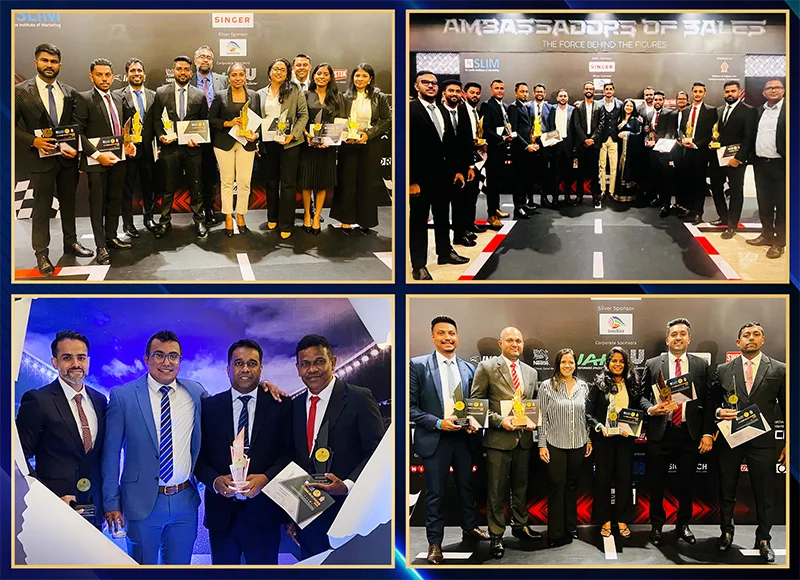
The John Keells Consumer Foods Sector (JKCF) has reinforced its standing as a powerhouse in Sri Lanka’s FMCG industry with an exceptional performance at the SLIM National Sales Awards 2025, securing an impressive total of 27 awards. This remarkable achievement reflects the sector’s unwavering commitment to building high-performing teams, nurturing sales excellence, and driving sustained growth across its diverse business verticals.
Representing the iconic brands of Ceylon Cold Stores PLC (CCS), Keells Food Products PLC (KFP), and Colombo Ice Company (CICL), JKCF has long been recognized for its rich legacy of innovation and leadership in beverages, frozen confectionery, and processed foods. Its long-standing focus on people capability and performance culture continues to fuel industry-leading achievements, with the latest recognition at SLIM NSA 2025 marking one of the largest collective wins by a single organization in the event’s history.

BCB receives investigation report on sexual misconduct allegation

Trump confirms talks with Iran as US military shoots down Iranian drone

Shower will occur in the Northern, North-central, Eastern and Uva provinces and in Nuwara-Eliya and Matale districts

House erupts over suspension of Deputy Secretary General

78th Independence Day celebrations at Bogambara Stadium

Colombo-Kandy railway line to be fully restored this year – Minister Bimal

‘Dates have the highest sugar content to fight Coronavirus’

Sunday Island 27 December – Headlines

#SundayIsland 17th December – Headlines

Sunday Island – 28th March

Sunday Island Headlines – 21 March

Sunday Island – 21st February – Headlines
-

 Opinion5 days ago
Sri Lanka, the Stars,and statesmen
-
 Business6 days ago
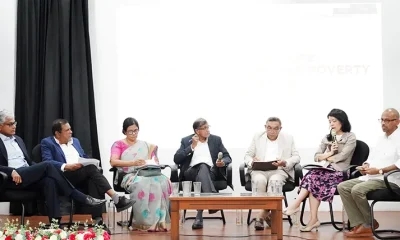
Climate risks, poverty, and recovery financing in focus at CEPA policy panel
-

 Business4 days ago
Hayleys Mobility ushering in a new era of premium sustainable mobility
-

 Business1 day ago
SLIM-Kantar People’s Awards 2026 to recognise Sri Lanka’s most trusted brands and personalities
-

 Business4 days ago
Advice Lab unveils new 13,000+ sqft office, marking major expansion in financial services BPO to Australia
-

 Business4 days ago
Arpico NextGen Mattress gains recognition for innovation
-

 Business3 days ago
Altair issues over 100+ title deeds post ownership change
-

 Business3 days ago
Sri Lanka opens first country pavilion at London exhibition