
News
Building Future-Ready Youth: Sri Lankan Career Guidance Leaders Complete Fellowship Program in the Republic of Korea

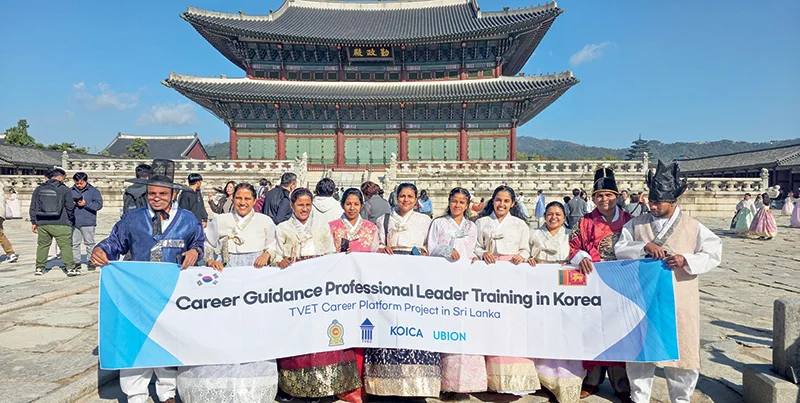
 The Korea International Cooperation Agency (KOICA), in collaboration with Ubion Co. Ltd., successfully conducted the “Fellowship Program for Career Guidance Professional Leaders”, a capacity development program held from 27th October to 14th November in the Republic of Korea. The program was designed to enhance the competencies of Sri Lankan Career Guidance Officers by sharing Korea’s advanced knowledge, innovative practices, and technological expertise in the field of career guidance and vocational education.
This Fellowship Program is an integral component of the “Tertiary and Vocational Education and Training (TVET) Career Platform Project” in Sri Lanka, a grant initiative worth USD 6 million, provided by KOICA to the Ministry of Education and the Tertiary and Vocational Education Commission (TVEC) in 2022. The project aims to establish an ICT-based career guidance platform to support the career development of TVET trainees and to strengthen their employment outcomes.
In line with this objective, the project places a strong focus on enhancing the skills and capacities of policymakers, platform operators, and Career Guidance Officers through a series of well-structured local and international training programs and workshops. Recognizing that Career Guidance Officers are the backbone of the CareerOne platform, a series of intensive local training programs was conducted across Sri Lanka over 30 days, reaching nearly 200 officers. From this group, ten outstanding officers were selected as Master Career Guidance Specialists to participate in a prestigious 21-day Invitation Training Program in the Republic of Korea. This Fellowship Program marks a significant milestone in the ongoing collaboration between the Republic of Korea and Sri Lanka, reflecting the enduring partnership between the two countries in promoting a more inclusive, innovative, and future-ready career guidance system.
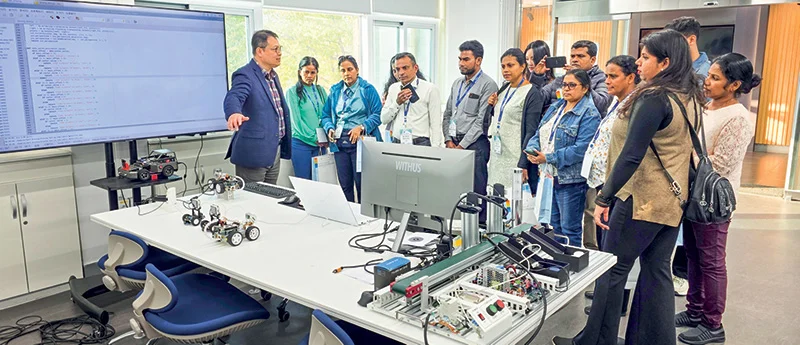
During the three-week Fellowship Program, participants engaged in a comprehensive series of lectures, workshops, and field visits designed to deepen their understanding of vocational education and career guidance systems. The program covered a range of topics, including integrated vocational studies, labour market structures, digital employment services, and the use of psychological assessment tools in career counselling. Participants also gained hands-on exposure through visits to leading institutions such as Korea Job World, university career centers, and the Korea Employment Information Service (KEIS), offering valuable insights into Korea’s best practices in employment and vocational development.

A fellowship participant from the National Apprentice and Industrial Training Authority (NAITA), Ms. N.D. Kavindi Muthumali, an Inspector attached to the Marketing and Career Guidance Division of the NAITA Head Office, shared her experience of the program, which offered a valuable exposure to Korea’s latest technologies and innovative practices in career guidance. Since assuming her current role in 2021, Ms. Muthumali has been actively involved in implementing career guidance initiatives, conducting counselling sessions, and contributing to the development of content for the CareerOne platform. She also plays a vital role in collaborating with training institutions and industries to enhance career pathways and employment opportunities for trainees across the country.
“Through this training, I was able to observe how Korea successfully connects education and industry through digital systems. Seeing how institutions use real-time employment data, digital career assessments, and close partnerships with industries motivated me to apply similar practices in Sri Lanka. It inspired me to strengthen private sector engagement so that the CareerOne platform can become more responsive to genuine employment opportunities.”
Another participant of the Fellowship Program, Ms. N.A. Achini Ingika, a Career Guidance Officer from the College of Technology (COT) Galle under the Department of Technical Education and Training (DTET), shared that the program offered a valuable opportunity to gain an in-depth understanding of how Korea effectively operates its TVET and career guidance systems through strong collaboration between the government and the private sector.
With over 20 years of professional experience, Ms. Ingika highlighted that the visits to institutions such as Korea Job World, the Startup Hub, and the Korea Employment Information Service (KEIS) provided firsthand insight into Korea’s integrated, technology-driven human capital development ecosystem. She emphasized that learning from experienced Korean trainers, particularly their high-impact delivery methods, session design, and learner-centered approaches, was one of the most meaningful aspects of the program.
Reflecting on the relevance to Sri Lanka, she noted several key practices that could be adapted locally, including:
• Developing annual action plans linked to individual performance indicators,
• Expanding industry participation in curriculum development and training delivery,
• Adopting continuous monitoring and feedback mechanisms, and
• Strengthening government commitment and policy leadership in the TVET sector.
 She added that these approaches would significantly enhance the effectiveness of the CareerOne platform and drive innovation across Sri Lanka’s TVET and career guidance system. She further recommended institutionalizing school and chamber of commerce participation, as well as engaging embassies and foreign employment agencies to widen employment pathways. She emphasized the importance of assessing the long-term contributions of Career Guidance Officers and linking their performance to incentive and appraisal systems to sustain platform activation.
Looking ahead, she expressed confidence that the insights gained from the Fellowship Program will contribute to strengthening Sri Lanka’s career guidance services through increasing the number and capacity of Career Guidance Officers, establishing a clear career pathway for CGOs, enhancing ICT equipment at guidance centers, building stronger early-stage school linkages, expanding continuous training opportunities, and developing a national roadmap for TVET training. She concluded that the program “has laid a strong foundation for advancing the future of career guidance services in Sri Lanka.”
Career Development Through the ICT-Based Career Platform (CareerOne)
CareerOne is the national career guidance platform of Sri Lanka’s Technical and Vocational Education and Training (TVET) sector, developed to bridge the gap between skilled youth and the evolving needs of industry. The platform aims to digitalize career guidance services and create a centralized ecosystem that connects NVQ trainees, certificate holders, Career Guidance Officers, and Industries from both the public and private sectors.
Since its public launch in January 2025, the national career platform has demonstrated strong progress and engagement across Sri Lanka. To date, over 7,187 vocational trainees from 83 TVET institutions have benefited from career guidance and counseling services delivered by 130 trained Career Guidance Officers. Furthermore, 106 public and private sector industries and companies have joined the platform, collectively posting 19 job opportunities for skilled youth. This growing participation highlights the platform’s success in connecting training with employment, fostering inclusive access to career opportunities nationwide. Beyond reducing youth unemployment, the platform also plays a vital role in bridging regional disparities by ensuring more equitable access to resources and opportunities across Sri Lanka.
“Connecting Youth to Their Dreams Through the Career Platform”
Ms. Yoo Li Lee, KOICA Country Director for Sri Lanka, stated, “KOICA is committed to supporting Sri Lankan youth to design their careers and prepare for the future, in partnership with the Government of Sri Lanka. This project will serve as a model case for bridging the gap between education and employment and providing tangible job opportunities to young people through a digital career platform.” She further encouraged participation, expressing hope that “the growth potential of Sri Lankan youth will be further expanded through increased engagement from companies and the revitalization of the Career Platform (Career One).”
This fellowship program marks a milestone for KOICA’s initiatives in the Education Sector in Sri Lanka, evolving it beyond mere vocational training support into a youth-led career development ecosystem. Under the project’s vision of ‘Fostering the Power to Design Careers, Beyond Skills,’ KOICA will continue to build a foundation for Sri Lankan youth to realize their dreams through digital innovation.
About KOICA
KOICA (Korea International Cooperation Agency) contributes to the advancement of international cooperation through various projects that build friendly and collaborative relationships and mutual exchanges between Korea and developing countries and support the economic and social development in developing countries, under the mission of ‘Leave no one behind with People-centered Peace and Prosperity.’







Ven. Galagoda Aththe Gnanasara Thero was not at his temple in Rajagiriya when prison officials visited the premises yesterday to take steps following the Supreme Court ruling that nullified the presidential pardon granted to him, police sources said.
Prison officials who visited the temple on Nawala Road, Rajagiriya, were reportedly informed by those present that the Thero’s whereabouts were unknown. The development comes a day after the Supreme Court declared former President Maithripala Sirisena’s 2019 pardon of Gnanasara Thero null and void.
The three-member Supreme Court bench comprising Justices Janak De Silva, Dr. Sobhitha Rajakaruna and Sampath B. Abayakoon held that the pardon was arbitrary, violated the public trust and principles of natural justice, and was made beyond the proper exercise of the President’s constitutional discretion.
The case arose from Gnanasara Thero’s conduct at the Homagama Magistrate’s Court in January 2016 during proceedings relating to the disappearance of journalist and political cartoonist Prageeth Eknaligoda.
The Court of Appeal convicted him on four counts of contempt of court in 2018 and imposed concurrent prison terms amounting to six years. He had served about nine months when Sirisena granted him a presidential pardon on May 23, 2019.
The Supreme Court found that although Article 34 empowers the President to grant pardons, that power is held in trust for the people and is subject to constitutional limitations and judicial review. The Court concluded that Sirisena had effectively acted on the recommendation of the Additional Secretary (Legal) without demonstrating that he had independently considered the relevant material.
Justice De Silva held that the pardon was “arbitrary”, violated public trust and the rules of natural justice, and was ultra vires the President’s powers. The Court consequently found that the decision violated the fundamental right to equality guaranteed by Article 12(1) of the Constitution.
The ruling effectively restores the legal position under the original conviction, leaving Gnanasara Thero without the benefit of the 2019 pardon. The Supreme Court also clarified that a pardon does not erase a conviction or sentence, but merely relieves an offender from serving the sentence to the extent specified in the pardon.
Gnanasara Thero, the General Secretary of the Bodu Bala Sena, had been convicted over his conduct during proceedings concerning the disappearance of Eknaligoda, who went missing in January 2010 and has not been located.
Sandhya Eknaligoda, Prageeth Eknaligoda’s wife, was among those who challenged the presidential pardon before the Supreme Court, alongside the Centre for Policy Alternatives and its Executive Director Dr. Paikiasothy Saravanamuttu.
The detailed account of the judgment indicates that the Court’s ruling primarily nullified the pardon and restored the legal effect of the original sentence, with the implementation of the sentence falling to the relevant authorities.
Police sources said that the Supreme Court, however, did not permanently close the door on executive clemency. It held that a future President could grant Gnanasara Thero another pardon, provided the power is exercised lawfully and after proper consideration of all relevant material.
The Supreme Court has so far overturned three presidential pardons granted to two former Presidents. In January 2024, the Court declared former President Gotabaya Rajapaksa’s pardon of former MP Duminda Silva unlawful and invalid. In June 2024, it invalidated two pardons granted by former President Maithripala Sirisena to Royal Park murder convict Jude Shramantha Anthony Jayamaha — the first in May 2016, which commuted his death sentence to life imprisonment, and the second in October 2019, which released him from prison. Jayamaha, who was convicted of the murder of 19-year-old Yvonne Johnson, remains at large. Most recently, on September 10, 2026, the Supreme Court declared Sirisena’s 2019 pardon of Ven. Galagoda Aththe Gnanasara Thero null and void, ruling that it was arbitrary and inconsistent with the Constitution.

Parliament is scheduled to debate the Twenty-Second Amendment to the Constitution Bill and the Judicature (Amendment) Bill on September 24 and 25, subject to the Speaker’s announcement following the delivery of the Supreme Court determination on petitions filed against the Bills.
The programme for the Parliamentary Week from September 22 to 25 was decided at a meeting of the Committee on Parliamentary Business held on Thursday (10) under the chairmanship of Speaker Dr. Jagath Wickramaratne.
On each sitting day, Parliamentary Business under Standing Orders 22(1) to 22(6) will be taken up from 9.30 am to 10 am, followed by Questions for Oral Answers from 10 am to 11 am Questions under Standing Order 27(2) will be taken up from 11 am to 11.30 am.
On Tuesday (22), the Orders published in Extraordinary Gazette No. 2497/37 under the Petroleum Resources Act and the Promotion of Export Agriculture (Amendment) Bill will be debated from 11.30 am to 5 pm.
The Tredso Development Foundation (Incorporation) Bill, a Private Member’s Bill, will then be taken up for Second Reading before being referred to the Legislative Standing Committee.
An Opposition motion at the Adjournment Time will follow.
On Wednesday (23), the Chartered Institute of Media Professionals of Sri Lanka Bill will be debated from 11.30 am to 5 pm, followed by Questions at the Adjournment Time.
The Second Reading debate on the 22nd Amendment Bill and the Judicature (Amendment) Bill is scheduled for 11.30 am to 7 pm on Thursday (24) and Friday (25).

Two children aged 11 and 17 were mistakenly killed and their 55-year-old father injured in an early morning hand grenade attack on Sirisangabo Mawatha on Friday. Police investigations later revealed that the attackers targeted the wrong house during an ongoing underworld clash.
Three police teams have been deployed to investigate the attack, which occurred at around 3 am.
According to police, a man who arrived near the house in a three-wheeler knocked on the front door before throwing a grenade into the premises and fleeing.
The victims were identified as 17-year-old Kasun Rashmika and 11-year-old Duminda Gihan. Their 56-year-old father, Nalin Thusantha Perera, was seriously injured and admitted to the Kalubowila Teaching Hospital.
Police said the injured man’s brother was allegedly a close associate of a drug trafficker known as ‘Sando’ and had also been accused of involvement in drug trafficking.
The brother lives in a house adjoining the one targeted in the attack, and police suspect the grenade may have been thrown at the wrong house.
Police are also investigating information that the attack was allegedly carried out at the direction of several overseas-based drug traffickers, identified as Pandithage Shantha Kumara alias ‘Kos Malli’, Samantha Perera alias ‘Chuwa Samantha’, ‘Kudu Avishka’ and ‘I.D.’
Police said the attack was believed to be linked to an ongoing conflict between two underworld factions, which have targeted each other’s associates in shootings and grenade attacks. More than 20 people have reportedly been killed in such attacks.
Security agencies are also investigating alleged links between one faction and overseas-based criminals including Kanjipani Imran, Unakuruwe Shantha, Dubai Gagana and Handaya.
Security agencies have also received information that overseas-based criminals identified as Kanjipani Imran, Unakuruwe Shantha, Dubai Gagana and Handaya are allegedly behind the supply of firearms and drugs to the faction associated with Kos Malli and Chuwa Samantha.

Death toll from Philippines ferry fire rises to 76, with more still missing

Anthropic boss Dario Amodei calls for AI development to slow down

It’s spin vs spin as India and Sri Lanka battle for Asia Cup title

Atmospheric conditions are favorable for afternoon thundershowers in most parts of the Island today [13]

Gnanasara Thero absconding after SC ruling

House to debate 22A, Judicature Bill next week

‘Dates have the highest sugar content to fight Coronavirus’

Sunday Island 27 December – Headlines

#SundayIsland 17th December – Headlines

Sunday Island – 28th March

Sunday Island Headlines – 21 March

Sunday Island – 21st February – Headlines
-

 Sports2 days ago
DDS set to lose Test captaincy
-

 Features6 days ago
After the parade: What a traffic OIC’s walk-out tells us
-

 Editorial6 days ago
Arrests as theatre
-

 News5 days ago
Thailand shuts door on undesirables from Sri Lanka
-

 Latest News6 days ago
Harshitha’s composed knock seals Sri Lanka’s semi-final berth
-
 Business5 days ago
CEB successor company breaks into top three in competitive BESS tender
-

 News6 days ago
‘Choka Malli’ slips out of country before travel ban
-

 News2 days ago
Sri Lanka faces new grid challenge as rooftop solar surges: former CEB GM