
Features
Buddhism, Spirituality and Science

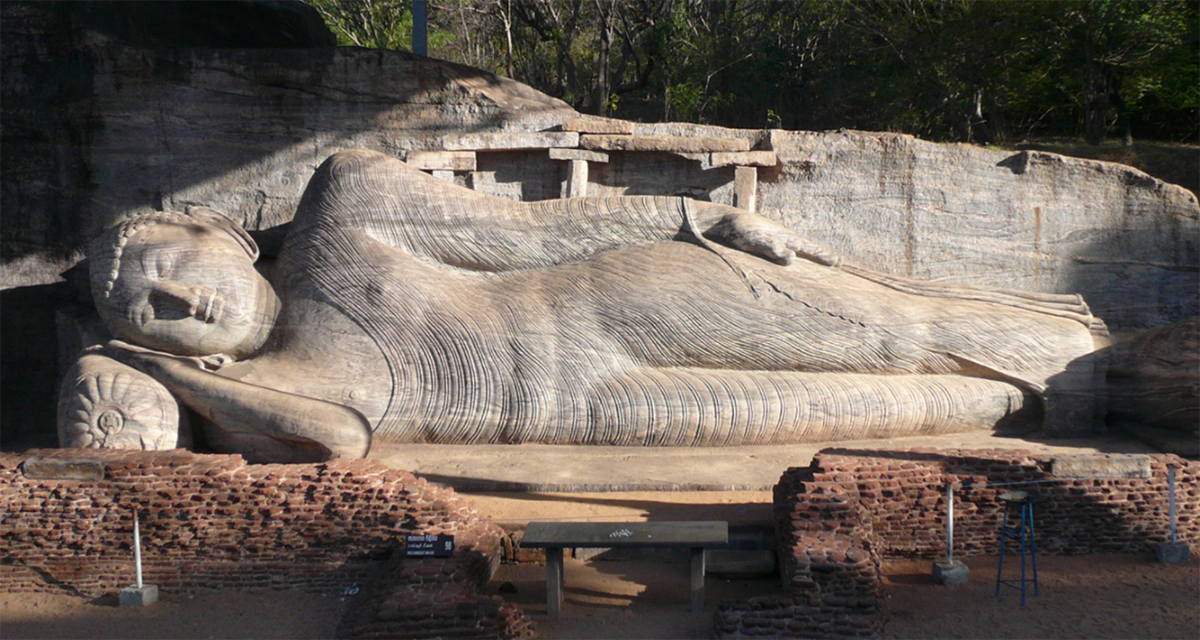
(Continued from last week)
The teachings of Gautama must be viewed against the background of pre-existing traditions of Hinduism, the religion to which Gautama himself was born. His philosophy could be seen as a form of protestant revolt against the tenets of orthodox Hinduism. Yet, certain basic Hindu concepts were taken over essentially unchanged, for instance the doctrine of Karma, the inexorable law of cause and effect whereby actions in our present life are thought to have consequences in future reincarnations. Another ancient Hindu concept was the belief that the world abounds in ignorance and misery from which the wise and the pious should endeavour to escape.
Where Gautama differed in a fundamental way from Hindu ascetics of old, however, was the manner in which he sought salvation. His own experience had led him to conclude that excessive self-denial such as fasting practised by Hindu ascetics was futile in furthering this cause. Gautama advocated the so-called ‘Middle Path’, the path that lies between austere asceticism on the one hand and extreme self-indulgence on the other. Furthermore, revolting against long-established Hindu traditions, he rejected the caste system, asserting that all human beings are equal in their potential to accomplish salvation.
Gautama’s first sermon at Varanasi embodies two fundamental pronouncements of Buddhist philosophy: The Four Noble Truths, and alongside it an exposition of the Noble Eightfold Path. The Four Truths are enumerated thus:
(1) Suffering is an essential component of individual existence
(2) The cause of suffering is a craving or attachment for objects of sense
(3) Release from suffering involves the elimination of craving
(4) The elimination of craving is achieved by following the Noble Eightfold Path.
The Noble Eightfold Path itself implies an ethical code of conduct and self-discipline summarised as:
· right knowledge
· right resolve
· right thought
· right speech
· right action
· right living
· right mindfulness
· right concentration.
The ultimate goal to be achieved in Buddhism is seen as freedom from the cycle of birth and re-birth reaching finally the state known as Nirvana. So much is commonly accepted as the bare essentials of Buddhist philosophy derived most directly from the historical facts relating to Gautama Buddha. The details of practice and the specific interpretations given to scriptures, in relation to subjects such as the Nature of the World, have led to the emergence of a diversity of Buddhist sects.
For 2566 years Buddhism has been a major civilizing influence throughout much of Asia and the Far East. The graceful spires and domes of temples and stupas in Sri Lanka, Burma, Thailand and Japan and the murals and sculpture within them bear impressive testimony to the influence of Buddhism upon the art and architecture of these lands. Two centuries after the death of Gautama Buddha his religion had spread across much of Northern India and had just reached the shores of Sri Lanka. Buddhism was deemed to be the state religion of India during the reign of the great Emperor Asoka from 269-237BC. The Buddhism in India at this time, and that which came to Sri Lanka in the latter half of the third century BC were, in their most pristine forms, the religion as preached by Gautama himself.
The scriptures that expound these original teachings are contained in the Tripitaka (the triple basket), a document that was compiled by Indian monks well before the dawn of the Christian Era. The original version of Buddhism is known as Hinayana Buddhism (Buddhism of the Lesser Vehicle) and it is this version that is preserved almost unchanged in modern Sri Lanka. Buddhist doctrines of a generally similar form are also preserved in Thailand and Burma.
In India, however, the dominance of Buddhism over Hinduism was not destined to last. The original Hinayana form, which concentrated almost entirely on individual salvation and was virtually free of ritual, gradually began to incorporate certain aspects of devotional temple worship associated with Hinduism. Already in the first century AD a group of Buddhist monks began to adopt a new and widened interpretation of the teachings of Gautama Buddha. The emergent form of Indian Buddhism took upon itself the cause of salvation of the entire human race in addition to concern for the individual. Because of this wider scope it came to be called Mahayana Buddhism (the Buddhism of the Larger Vehicle).
In general, the Mahayana Buddhist would aspire to the status of ‘bodhisattva’, that is to say one who would eventually become a Buddha. The new Mahayana Buddhism had a more popular appeal and spread rapidly and abroad to Tibet, Korean China and Japan. Whereas Hinayana Buddhism did not change with time in any essential manner in the places where it became established, Mahayana Buddhism on the other hand continued to evolve and take on a diversity of forms. In India, due in large measure to the Islamic invasion, Buddhism was eventually re-absorbed into Hinduism and effectively disappeared as a separate religion around the year AD1300.
Wherever it spread, Buddhism brought with it high moral precepts – tolerance, non-violence, respect tor the individual, love of all nature, a holistic world view and an abiding belief in the equality of all humans.
The liberal tenets of Buddhism are in sharp contrast with the doctrinaire irrationality associated with fundamentalism, in both the Christian and Islamic traditions. Born-again Christians believe in the literal truth of the story of creation, the Earth being less than 6,500 years old. The existence of fossils and their radioactive dating that point to a much greater antiquity of the planet is considered the work of Satan. No amount of rational argument would serve to change this obstinate mode of thought. Nor indeed could the mindset of fundamentalist Muslims be altered by rational argument in regard the atrocities connected with holy wars, jihad or terrorism.
The essence of both Christianity and Islam in their purer forms is a belief in a body of “revealed truth” – God speaking or communicating through the agent of a prophet. Buddhism, however, is markedly different in that its pronouncements are presented to us as an outcome of a process of empiricism. The result of a self-experiment in meditation conducted by none other than the Buddha himself. Indeed in his final words to his disciple Ananda, (Parinibbana sutra) he exhorts us to discover the same truths for ourselves:
“You should live as lamps unto yourselves.
Hold fast to the lamp of Truth.
Take refuge only in Truth.
Look not to refuge to anyone beside yourself…..”
Spirituality has different meanings to different people. The Oxford Dictionary defines:
“spiritual adj. Of spirit as opposed to matter; of the soul esp.; as acted upon by God….”
Traditionally, theistic religions have regarded spirituality as an integral aspect of religious experience. Many people still tend to equate spirituality with religion, but a declining participation in organized religions and the rapid growth of secularism has led to a broader, more liberal view of spirituality.
Spirituality in its most liberal sense carries connotations of a ‘spiritual aesthetic outlook’ which is more individualistic and less structured than the spirituality of the doctrinal faiths of organized religions. The latter often posits the existence a spirit or spirits as evidence of a divine or god-related entity. At one end of the spectrum, even some atheists regard themselves as spiritual, defining “spiritual” as nurturing thoughts and emotions that are in harmony with a belief that the entire universe is, in some way, connected by the flux of cause and effect at every scale. This in my view would be the most appropriate Buddhist interpretation of spiritualism.
Gautama Buddha’s thoughts about the world are in remarkable accord with discoveries in modern science. In Buddha’s analysis of the mind, for example, modern discoveries in psychology would seem to have been anticipated. More impressively perhaps, in his analysis of the Universe recent developments in astronomy have been similarly anticipated. The Earth as a planet around a sun, the sun a star amongst billions in the galaxy, and the galaxy being one of many billion galaxies are propositions that have striking resonances in Buddhist scripture.
In the Visuddimagga, a treatise on Buddhist philosophy written by Buddhaghosa in Kelaniya Sri Lanka in the 5th century of the common era, it is stated explicitly that:
“… as far as these suns and moon’ s revolve shining and shedding their light in space, so far extends the thousand-fold universe. In it are thousands of suns, thousands of moons thousands of Jambudipas, thousands of Aparagoyanas …”, the latter references being to extraterrestrial abodes of life. The billions of galaxies discovered in modern astronomy could be identified with statements referring to the entire Universe as “… this sphere of a million, million world systems”.
Besides correspondences that exist between Buddhist thought and modern psychology and astronomy, even more impressive agreements with fundamental physics have been noted by many commentators. Buddhist ideas of uncertainty (anitya) and dependent causation have striking counterparts in the physics of matter on the scale of atoms and smaller. A major development in the new physics of quantum mechanics in the 1930’s was the discovery of Heisenberg’s uncertainly principle. Not only can the state of an atomic system be observed only within certain well-defined limits, but between one act of conscious observation and the next, the equations of physics have to be reset taking account of the precise state in which the was actually last observed. It is as though the act of conscious interaction with the external world affects the subsequent flow of events. This interaction between human consciousness and the physical world has been interpreted to mean that consciousness itself is a cosmic quality. Our consciousness being part of a cosmic ocean of consciousness.
Buddhist ideas of dependent causation (paticacasamuppada) have also a resonance with modern thinking about the interconnectedness of all things in the world. Gaia is an idea due to James Lovelock that considers all the components of planet Earth, its oceans, atmosphere, climate and life being all tightly interlocked, as they would be within a single living creature. Disturb one tiny component of this system and the entire system reacts. Accepting this fact is of paramount importance for the well being and the future of our living planet. My own ideas and theories of the cosmic nature of life that are rapidly coming to be accepted implies that we are part of a cosmic chain of being that extends to the remotest corners of the Universe. This again is fully consistent with Buddhism.
Since the modern scientific viewpoint is derived from the application of the methods of empirical science, one might wonder how the same results could be reached without, for instance, access to telescopes 2,554 years ago. The answer must lie in the still mysterious and unproven powers of meditation. lf we are all creatures of the Cosmos would it not seem reasonable that we have an innate knowledge of its nature somewhere deep within ourselves? The basic facts relating to the Cosmos could be viewed as essential components of our own true innermost nature.
The Buddha appears to have been reticent on the question as to whether or not there was an omnipotent God who created the universe. In this respect I would interpret the Buddha’s attitude to be one of agnosticism, distinct from atheism. And agnosticism is in my view is the correct intellectual position to adopt. In neither the Hinayana nor the Mahayana traditions is the Buddha himself seen in any way as a God, or an agent possessing extraordinary creative or omniscient powers. This lack of a central God-figure in Buddhism might be seen as a positive attribute, for men have been known in the past to fight bitterly to defend the gods they believed in. It is quite remarkable that Buddhism has spread across vast tracts of Asia and has maintained itself in many countries without recourse to religious wars or crusades.
Buddhism is a philosophy that enshrines peace, compassion, selflessness and universal love as fundamental virtues. Peace to conquer the world, Enlightenment to dispel ignorance and to understand the true nature of the Universe. What better philosophy could there be in the decades that lead us through the 21st century?
(Concluded)
(Professor Chandra Wickramasinghe is an internationally renowned astronomer and astrobiologist. He is currently Honorary Professor at the University of Buckingham in the UK and also Honorary Professor at the National Institute of Fundamental Studies and of Ruhuna University in Sri Lanka.)
Vidya Jyoti Prof. Chandra Wickramasinghe

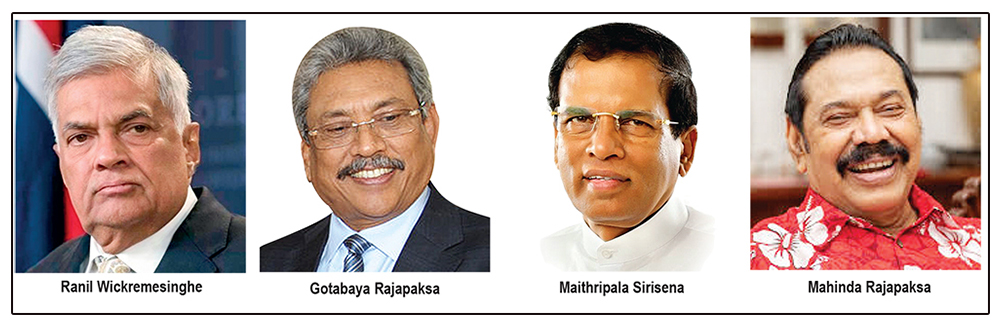
From the time the search for reconciliation began after the end of the war in 2009 and before the NPP’s victories at the presidential election and the parliamentary election in 2024, there have been four presidents and four governments who variously engaged with the task of reconciliation. From last to first, they were Ranil Wickremesinghe, Gotabaya Rajapaksa, Maithripala Sirisena and Mahinda Rajapaksa. They had nothing in common between them except they were all different from President Anura Kumara Dissanayake and his approach to reconciliation.
The four former presidents approached the problem in the top-down direction, whereas AKD is championing the building-up approach – starting from the grassroots and spreading the message and the marches more laterally across communities. Mahinda Rajapaksa had his ‘agents’ among the Tamils and other minorities. Gotabaya Rajapaksa was the dummy agent for busybodies among the Sinhalese. Maithripala Sirisena and Ranil Wickremesinghe operated through the so called accredited representatives of the Tamils, the Muslims and the Malaiayaka (Indian) Tamils. But their operations did nothing for the strengthening of institutions at the provincial and the local levels. No did they bother about reaching out to the people.
As I recounted last week, the first and the only Northern Provincial Council election was held during the Mahinda Rajapaksa presidency. That nothing worthwhile came out of that Council was not mainly the fault of Mahinda Rajapaksa. His successors, Maithripala Sirisena and Ranil Wickremesinghe as Prime Minister, with the TNA acceding as a partner of their government, cancelled not only the NPC but also all PC elections and indefinitely suspended the functioning of the country’s nine elected provincial councils. Now there are no elected councils, only colonial-style governors and their secretaries.
Hold PC Elections Now
And the PC election can, like so many other inherited rotten cans, is before the NPP government. Is the NPP government going to play footsie with these elections or call them and be done with it? That is the question. Here are the cons and pros as I see them.
By delaying or postponing the PC elections President AKD and the NPP government are setting themselves up to be justifiably seen as following the cynical playbook of the former interim President Ranil Wickremesinghe. What is the point, it will be asked, in subjecting Ranil Wickremesinghe to police harassment over travel expenses while following his playbook in postponing elections?
Come to think of it, no VVIP anywhere can now whine of unfair police arrest after what happened to the disgraced former prince Andrew Mountbatten Windsor in England on Thursday. Good for the land where habeas corpus and due process were born. The King did not know what was happening to his kid brother, and he was wise enough to pronounce that “the law must take its course.” There is no course for the law in Trump’s America where Epstein spun his webs around rich and famous men and helpless teenage girls. Only cover up. Thanks to his Supreme Court, Trump can claim covering up to be a core function of his presidency, and therefore absolutely immune from prosecution. That is by the way.
Back to Sri Lanka, meddling with elections timing and process was the method of operations of previous governments. The NPP is supposed to change from the old ways and project a new way towards a Clean Sri Lanka built on social and ethical pillars. How does postponing elections square with the project of Clean Sri Lanka? That is the question that the government must be asking itself. The decision to hold PC elections should not be influenced by whether India is not asking for it or if Canada is requesting it.
Apart from it is the right thing do, it is also politically the smart thing to do.
The pros are aplenty for holding PC elections as soon it is practically possible for the Election Commission to hold them. Parliament can and must act to fill any legal loophole. The NPP’s political mojo is in the hustle and bustle of campaigning rather than in the sedentary business of governing. An election campaign will motivate the government to re-energize itself and reconnect with the people to regain momentum for the remainder of its term.
While it will not be possible to repeat the landslide miracle of the 2024 parliamentary election, the government can certainly hope and strive to either maintain or improve on its performance in the local government elections. The government is in a better position to test its chances now, before reaching the halfway mark of its first term in office than where it might be once past that mark.
The NPP can and must draw electoral confidence from the latest (February 2026) results of the Mood of the Nation poll conducted by Verité Research. The government should rate its chances higher than what any and all of the opposition parties would do with theirs. The Mood of the Nation is very positive not only for the NPP government but also about the way the people are thinking about the state of the country and its economy. The government’s approval rating is impressively high at 65% – up from 62% in February 2025 and way up from the lowly 24% that people thought of the Ranil-Rajapaksa government in July 2024. People’s mood is also encouragingly positive about the State of the Economy (57%, up from 35% and 28%); Economic Outlook (64%, up from 55% and 30%); the level of Satisfaction with the direction of the country( 59%, up from 46% and 17%).
These are positively encouraging numbers. Anyone familiar with North America will know that the general level of satisfaction has been abysmally low since the Iraq war and the great economic recession. The sour mood that invariably led to the election of Trump. Now the mood is sourer because of Trump and people in ever increasing numbers are looking for the light at the end of the Trump tunnel. As for Sri Lanka, the country has just come out of the 20-year long Rajapaksa-Ranil tunnel. The NPP represents the post Rajapaksa-Ranil era, and the people seem to be feeling damn good about it.
Of course, the pundits have pooh-poohed the opinion poll results. What else would you expect? You can imagine which twisted way the editorial keypads would have been pounded if the government’s approval rating had come under 50%, even 49.5%. There may have even been calls for the government to step down and get out. But the government has its approval rating at 65% – a level any government anywhere in the Trump-twisted world would be happy to exchange without tariffs. The political mood of the people is not unpalpable. Skeptical pundits and elites will have to only ask their drivers, gardeners and their retinue of domestics as to what they think of AKD, Sajith or Namal. Or they can ride a bus or take the train and check out the mood of fellow passengers. They will find Verité’s numbers are not at all far-fetched.
Confab Threats
The government’s plausible popularity and the opposition’s obvious weaknesses should be good enough reason for the government to have the PC elections sooner than later. A new election campaign will also provide the opportunity not only for the government but also for the opposition parties to push back on the looming threat of bad old communalism making a comeback. As reported last week, a “massive Sangha confab” is to be held at 2:00 PM on Friday, February 20th, at the All Ceylon Buddhist Congress Headquarters in Colombo, purportedly “to address alleged injustices among monks.”
According to a warning quote attributed to one of the organizers, Dambara Amila Thero, “never in the history of Sri Lanka has there been a government—elected by our own votes and the votes of the people—that has targeted and launched such systematic attacks against the entire Sasana as this one.” That is quite a mouthful and worthier practitioners of Buddhism have already criticized this unconvincing claim and its being the premise for a gathering of spuriously disaffected monks. It is not difficult to see the political impetus behind this confab.
The impetus obviously comes from washed up politicians who have tried every slogan from – L-board-economists, to constitutional dictatorship, to save-our children from sex-education fear mongering – to attack the NPP government and its credibility. They have not been able to stick any of that mud on the government. So, the old bandicoots are now trying to bring back the even older bogey of communalism on the pretext that the NPP government has somewhere, somehow, “targeted and launched such systematic attacks against the entire Sasana …”
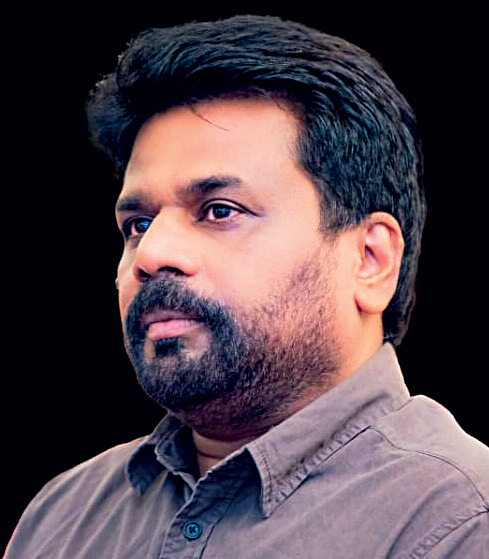
Anura Kumara Dissanayake
By using a new election campaign to take on this threat, the government can turn the campaign into a positively educational outreach. That would be consistent with the President’s and the government’s commitment to “rebuild Sri Lanka” on the strength of national unity without allowing “division, racism, or extremism” to undermine unity. A potential election campaign that takes on the confab of extremists will also provide a forum and an opportunity for the opposition parties to let their positions known. There will of course be supporters of the confab monks, but hopefully they will be underwhelming and not overwhelming.
For all their shortcomings, Sajith Premadasa and Namal Rajapaksa belong to the same younger generation as Anura Kumara Dissanayake and they are unlikely to follow the footsteps of their fathers and fan the flames of communalism and extremism all over again. Campaigning against extremism need not and should not take the form of disparaging and deriding those who might be harbouring extremist views. Instead, the fight against extremism should be inclusive and not exclusive, should be positively educational and appeal to the broadest cross-section of people. That is the only sustainable way to fight extremism and weaken its impacts.
Provincial Councils and Reconciliation
In the framework of grand hopes and simple steps of reconciliation, provincial councils fall somewhere in between. They are part of the grand structure of the constitution but they are also usable instruments for achieving simple and practical goals. Obviously, the Northern Provincial Council assumes special significance in undertaking tasks associated with reconciliation. It is the only jurisdiction in the country where the Sri Lankan Tamils are able to mind their own business through their own representatives. All within an indivisibly united island country.
But people in the north will not be able to do anything unless there is a provincial council election and a newly elected council is established. If the NPP were to win a majority of seats in the next Northern Provincial Council that would be a historic achievement and a validation of its approach to national reconciliation. On the other hand, if the NPP fails to win a majority in the north, it will have the opportunity to demonstrate that it has the maturity to positively collaborate from the centre with a different provincial government in the north.
The Eastern Province is now home to all three ethnic groups and almost in equal proportions. Managing the Eastern Province will an experiential microcosm for managing the rest of the country. The NPP will have the opportunity to prove its mettle here – either as a governing party or as a responsible opposition party. The Central Province and the Badulla District in the Uva Province are where Malaiyaka Tamils have been able to reconstitute their citizenship credentials and exercise their voting rights with some meaningful consequence. For decades, the Malaiyaka Tamils were without voting rights. Now they can vote but there is no Council to vote for in the only province and district they predominantly leave. Is that fair?
In all the other six provinces, with the exception of the Greater Colombo Area in the Western Province and pockets of Muslim concentrations in the South, the Sinhalese predominate, and national politics is seamless with provincial politics. The overlap often leads to questions about the duplication in the PC system. Political duplication between national and provincial party organizations is real but can be avoided. But what is more important to avoid is the functional duplication between the central government in Colombo and the provincial councils. The NPP governments needs to develop a different a toolbox for dealing with the six provincial councils.
Indeed, each province regardless of the ethnic composition, has its own unique characteristics. They have long been ignored and smothered by the central bureaucracy. The provincial council system provides the framework for fostering the unique local characteristics and synthesizing them for national development. There is another dimension that could be of special relevance to the purpose of reconciliation.
And that is in the fostering of institutional partnerships and people to-people contacts between those in the North and East and those in the other Provinces. Linkages could be between schools, and between people in specific activities – such as farming, fishing and factory work. Such connections could be materialized through periodical visits, sharing of occupational challenges and experiences, and sports tournaments and ‘educational modules’ between schools. These interactions could become two-way secular pilgrimages supplementing the age old religious pilgrimages.
Historically, as Benedict Anderson discovered, secular pilgrimages have been an important part of nation building in many societies across the world. Read nation building as reconciliation in Sri Lanka. The NPP government with its grassroots prowess is well positioned to facilitate impactful secular pilgrimages. But for all that, there must be provincial councils elections first.
by Rajan Philips
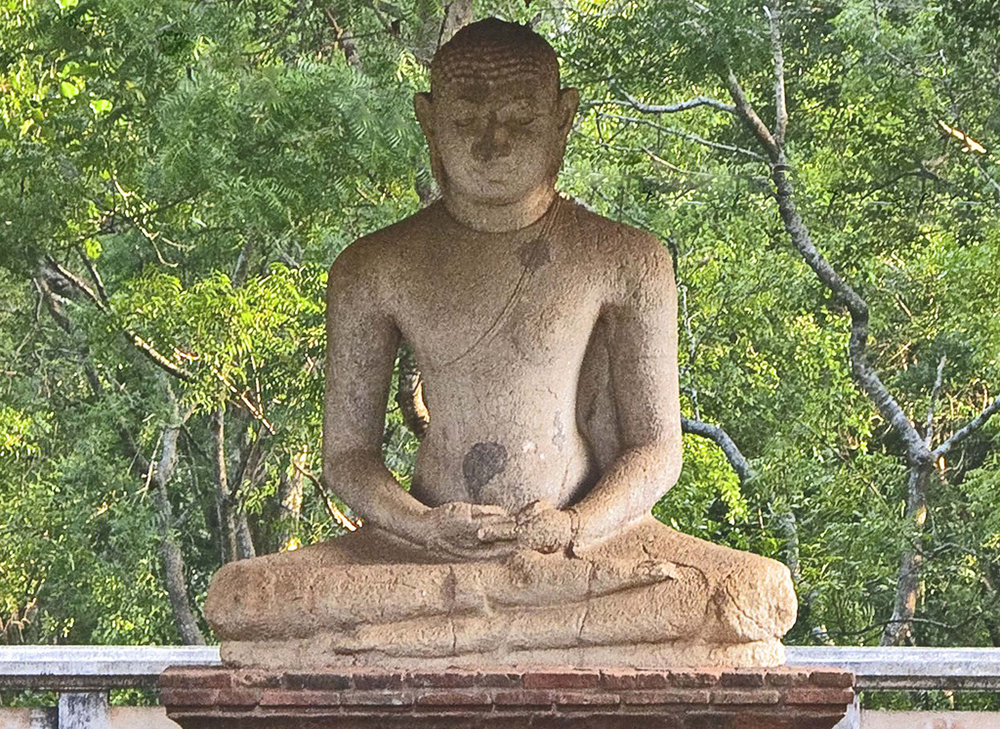
The idiom “Barking up the wrong tree” means pursuing a mistaken line of thought, accusing the wrong person, or looking for solutions in the wrong place. It refers to hounds barking at a tree that their prey has already escaped from. This aptly describes the current misplaced blame for young people’s declining interest in religion, especially Buddhism.
It is a global phenomenon that young people are increasingly disengaged from organized religion, but this shift does not equate to total abandonment, many Gen Z and Millennials opt for individual, non-institutional spirituality over traditional structures. However, the circumstances surrounding Buddhism in Sri Lanka is an oddity compared to what goes on with religions in other countries. For example, the interest in Buddha Dhamma in the Western countries is growing, especially among the educated young. The outpouring of emotions along the 3,700 Km Peace March done by 16 Buddhist monks in USA is only one example.
There are good reasons for Gen Z and Millennials in Sri Lanka to be disinterested in Buddhism, but it is not an easy task for Baby Boomer or Baby Bust generations, those born before 1980, to grasp these bitter truths that cast doubt on tradition. The two most important reasons are: a) Sri Lankan Buddhism has drifted away from what the Buddha taught, and b) The Gen Z and Millennials tend to be more informed and better rational thinkers compared to older generations.
This is truly a tragic situation: what the Buddha taught is an advanced view of reality that is supremely suited for rational analyses, but historical circumstances have deprived the younger generations over centuries from knowing that truth. Those who are concerned about the future of Buddhism must endeavor to understand how we got here and take measures to bridge that information gap instead of trying to find fault with others. Both laity and clergy are victims of historical circumstances; but they have the power to shape the future.
First, it pays to understand how what the Buddha taught, or Dhamma, transformed into 13 plus schools of Buddhism found today. Based on eternal truths he discovered, the Buddha initiated a profound ethical and intellectual movement that fundamentally challenged the established religious, intellectual, and social structures of sixth-century BCE India. His movement represented a shift away from ritualistic, dogmatic, and hierarchical systems (Brahmanism) toward an empirical, self-reliant path focused on ethics, compassion, and liberation from suffering. When Buddhism spread to other countries, it transformed into different forms by absorbing and adopting the beliefs, rituals, and customs indigenous to such land; Buddha did not teach different truths, he taught one truth.
Sri Lankan Buddhism is not any different. There was resistance to the Buddha’s movement from Brahmins during his lifetime, but it intensified after his passing, which was responsible in part for the disappearance of Buddhism from its birthplace. Brahminism existed in Sri Lanka before the arrival of Buddhism, and the transformation of Buddhism under Brahminic influences is undeniable and it continues to date.
This transformation was additionally enabled by the significant challenges encountered by Buddhism during the seventeenth and eighteenth centuries (Wachissara 1961, Mirando 1985). It is sad and difficult to accept, but Buddhism nearly disappeared from the land that committed the Teaching into writing for the first time. During these tough times, with no senior monks to perform ‘upasampada,’ quasi monks who had not been admitted to the order – Ganninanses, maintained the temples. Lacking any understanding of the doctrinal aspects of Buddha’s teaching, they started performing various rituals that Buddha himself rejected (Rahula 1956, Marasinghe 1974, Gombrich 1988, 1997, Obeyesekere 2018).
The agrarian population had no way of knowing or understanding the teachings of the Buddha to realize the difference. They wanted an easy path to salvation, some power to help overcome an illness, protect crops from pests or elements; as a result, the rituals including praying and giving offerings to various deities and spirits, a Brahminic practice that Buddha rejected in no uncertain terms, became established as part of Buddhism.
This incorporation of Brahminic practices was further strengthened by the ascent of Nayakkar princes to the throne of Kandy (1739–1815) who came from the Madurai Nayak dynasty in South India. Even though they converted to Buddhism, they did not have any understanding of the Teaching; they were educated and groomed by Brahminic gurus who opposed Buddhism. However, they had no trouble promoting the beliefs and rituals that were of Brahminic origin and supporting the institution that performed them. By the time British took over, nobody had any doubts that the beliefs, myths, and rituals of the Sinhala people were genuine aspects of Buddha’s teaching. The result is that today, Sri Lankan Buddhists dare doubt the status quo.
The inclusion of Buddhist literary work as historical facts in public education during the late nineteenth century Buddhist revival did not help either. Officially compelling generations of students to believe poetic embellishments as facts gave the impression that Buddhism is a ritualistic practice based on beliefs.
This did not create any conflict in the minds of 19th agrarian society; to them, having any doubts about the tradition was an unthinkable, unforgiving act. However, modernization of society, increased access to information, and promotion of rational thinking changed things. Younger generations have begun to see the futility of current practices and distance themselves from the traditional institution. In fact, they may have never heard of it, but they are following Buddha’s advice to Kalamas, instinctively. They cannot be blamed, instead, their rational thinking must be appreciated and promoted. It is the way the Buddha’s teaching, the eternal truth, is taught and practiced that needs adjustment.
The truths that Buddha discovered are eternal, but they have been interpreted in different ways over two and a half millennia to suit the prevailing status of the society. In this age, when science is considered the standard, the truth must be viewed from that angle. There is nothing wrong or to be afraid of about it for what the Buddha taught is not only highly scientific, but it is also ahead of science in dealing with human mind. It is time to think out of the box, instead of regurgitating exegesis meant for a bygone era.
For example, the Buddhist model of human cognition presented in the formula of Five Aggregates (pancakkhanda) provides solutions to the puzzles that modern neuroscience and philosophers are grappling with. It must be recognized that this formula deals with the way in which human mind gathers and analyzes information, which is the foundation of AI revolution. If the Gen Z and Millennial were introduced to these empirical aspects of Dhamma, they would develop a genuine interest in it. They thrive in that environment. Furthermore, knowing Buddha’s teaching this way has other benefits; they would find solutions to many problems they face today.
Buddha’s teaching is a way to understand nature and the humans place in it. One who understands this can lead a happy and prosperous life. As the Dhammapada verse number 160 states – “One, indeed, is one’s own refuge. Who else could be one’s own refuge?” – such a person does not depend on praying or offering to idols or unknown higher powers for salvation, the Brahminic practice. Therefore, it is time that all involved, clergy and laity, look inwards, and have the crucial discussion on how to educate the next generation if they wish to avoid Sri Lankan Buddhism suffer the same fate it did in India.
by Geewananda Gunawardana, Ph.D.
The Feminist Collective for Economic Justice (FCEJ) is outraged at the scheme of law proposed by the government titled “Protection of the State from Terrorism Act” (PSTA). The draft law seeks to replace the existing repressive provisions of the Prevention of Terrorism Act 1979 (PTA) with another law of extraordinary powers. We oppose the PSTA for the reason that we stand against repressive laws, normalization of extraordinary executive power and continued militarization. Ruling by fear destroys our societies. It drives inequality, marginalization and corruption.
Our analysis of the draft PSTA is that it is worse than the PTA. It fails to justify why it is necessary in today’s context. The PSTA continues the broad and vague definition of acts of terrorism. It also dangerously expands as threatening activities of ‘encouragement’, ‘publication’ and ‘training’. The draft law proposes broad powers of arrest for the police, introduces powers of arrest to the armed forces and coast guards, and continues to recognize administrative detention. Extremely disappointing is the unjustifiable empowering of the President to make curfew order and to proscribe organizations for indefinite periods of time, the power of the Secretary to the Ministry of Defence to declare prohibited places and police officers in the rank of Deputy Inspector Generals are given the power to secure restriction orders affecting movement of citizens. The draft also introduces, knowing full well the context of laws delays, the legal perversion of empowering the Attorney General to suspend prosecution for 20 years on the condition that a suspect agrees to a form of punishment such as public apology, payment of compensation, community service, and rehabilitation. Sri Lanka does not need a law normalizing extraordinary power.
We take this moment to remind our country of the devastation caused to minoritized populations under laws such as the PTA and the continued militarization, surveillance and oppression aided by rapidly growing security legislation. There is very limited space for recovery and reconciliation post war and also barely space for low income working people to aspire to physical, emotional and financial security. The threat posed by even proposing such an oppressive law as the PSTA is an affront to feminist conceptions of human security. Security must be recognized at an individual and community level to have any meaning.
The urgent human security needs in Sri Lanka are undeniable – over 50% of households in the country are in debt, a quarter of the population are living in poverty, over 30% of households experience moderate/severe food insecurity issues, the police receive over 100,000 complaints of domestic violence each year. We are experiencing deepening inequality, growing poverty, assaults on the education and health systems of the country, tightening of the noose of austerity, the continued failure to breathe confidence and trust towards reconciliation, recovery, restitution post war, and a failure to recognize and respond to structural discrimination based on gender, race and class, religion. State security cannot be conceived or discussed without people first being safe, secure, and can hope for paths towards developing their lives without threat, violence and discrimination. One year into power and there has been no significant legislative or policy moves on addressing austerity, rolling back of repressive laws, addressing domestic and other forms of violence against women, violence associated with household debt, equality in the family, equality of representation at all levels, and the continued discrimination of the Malaiyah people.
The draft PSTA tells us that no lessons have been learnt. It tells us that this government intends to continue state tools of repression and maintain militarization. It is hard to lose hope within just a year of a new government coming into power with a significant mandate from the people to change the system, and yet we are here. For women, young people, children and working class citizens in this country everyday is a struggle, everyday is a minefield of threats and discrimination. We do not need another threat in the form of the PSTA. Withdraw the PSTA now!
The Feminist Collective for Economic Justice is a collective of feminist economists, scholars, feminist activists, university students and lawyers that came together in April 2022 to understand, analyze and give voice to policy recommendations based on lived realities in the current economic crisis in Sri Lanka.
Please send your comments to – feministcollectiveforjustice@gmail.com
-

 Business6 days ago
Ministry of Brands to launch Sri Lanka’s first off-price retail destination
-

 Latest News1 day ago
New Zealand meet familiar opponents Pakistan at spin-friendly Premadasa
-

 Latest News1 day ago
Tariffs ruling is major blow to Trump’s second-term agenda
-

 Latest News1 day ago
ECB push back at Pakistan ‘shadow-ban’ reports ahead of Hundred auction
-

 Features6 days ago
Giants in our backyard: Why Sri Lanka’s Blue Whales matter to the world
-

 Sports3 days ago
Old and new at the SSC, just like Pakistan
-

 News5 days ago
IMF MD here
-
 Business5 days ago
Green Minds: A new platform to rethink environmental governance in Sri Lanka