
Features
Brother Basil hailed as country saver; snippets; tennis – wonderful graceful sport

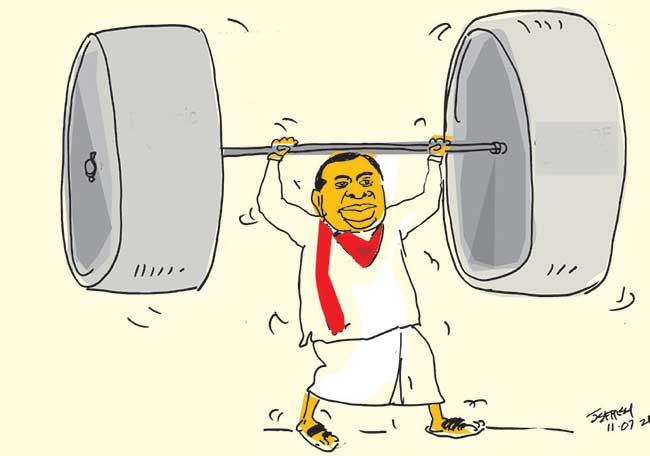
Ooh la la! Cheers and mourns Cass sorrowfully. We and our beloved country Sri Lanka (no longer Free) were much in the foreign news this last week. Reason for the sorrow and bitter tears shed by Cass? The news is negative, actually derogatory. Here quoted below is one such beginning of an article on our land which could easily be Paradise if not for some of its leaders, many politicians and most of its citizens.
In Sri Lanka, the Government Looks Increasingly Like a Family Firm
Three brothers of President Gotabaya Rajapaksa now hold top posts in his government. Two of his nephews have official positions, too.
by Muib Mashal, The New York Times 11 July 2021
“On Thursday, another brother, Basil, was sworn in as finance minister, a move that one analyst, Bhavani Fonseka, said “consolidated the Rajapaksa family rule.
“’We now have four brothers and several other members of the family holding key positions in government,’ said Ms. Fonseka, a senior researcher with the Center for Policy Alternatives, a research institute based in Colombo, the capital. ‘In the face of a weak opposition and no real checks and balances on the executive, prospects for Sri Lanka’s constitutional democracy are deeply troubling.’”
 Muib Mashal goes on to detail what’s negative to the foreign media about Sri Lanka, the main negative following the appointment of Basil Rajapaksa as Finance Minister and … even before he was sworn in as a national list Member of Parliament, as one local commentator said.
I suppose these international columnists/reporters/commentators do not know how eminently qualified Basil R is to hold that most important Cabinet post in the government with the Ministry transferred to him from his all mighty elder brother who held it so far. Does the foreign press not know how his advent was anticipated, welcomed and hossanahs sung by so many loud-mouthed MPs who even signed a long petition to get him back, double citizenship notwithstanding and his frequent trips to the US of A – his first home. To whom was the petition handed over? Elder brother the Prime Minister or elder brother President? Totally unnecessary as the brothers would bring him back. Wasn’t one important article in 20 A about eligibility granted to dual citizens to enter our August House by the Diyawanna and be Cabinet ministers. Those who rushed to sign the petition were of course seekers of brownie points and security, for no request was needed to bring Bonnie Basil back over the oceans!
Apart from the magic Basil R possesses or is bequeathed on him by loyalists, he must be holding pre-eminent qualifications in finance, the intricacies of economics: micro macro and all. Cass surmised he was modestly not using professorships and doctorates as they are so common now – a Prof from Rajarata University and Merve the Perve Silva holding a doctorate and using it; bestowed on him by some alternate medicine (read acupuncture) specialist via his institute.
Cassandra, apart from being a seer in the Trojan mould, is also a Curious Cat, whose nine lives however have saved her from death that invariably stalks curious cats. So, she continues prying and forecasting. Curious about higher qualifications she Googled the new Finance Minister; he had his secondary education at Isipathana College and Ananda College, both in Colombo. But a citation precedes the bio: “This biography of a living person needs additional citations for verification.” But as mentioned by the ex-Prez of the Bar Association and another PC in the Face the Nation MTV I programme on Monday 12 July night, he has really solid qualifications in the political field. They both quoted his creating the Pohottu Party – SLPP – and having it win provincial, presidential and general elections with such huge majorities even before, as the Sinhala saying goes: ‘the smell of milk left its mouth’.
So, we sit back and relax: all our country troubles will soon be over. As Cass mentioned in her previous article, he may use his skill/magic/organizing power over even natural disasters and send packing the pestilent C19 from our paradisial shores. Good luck to Basil R and a warm welcome back!
Recent headlines
1. (The Island 13/7)
“Rape of teenager: SJB alleges bid to suppress probe as nine suspects get bail”. “Govt insists inquiry on track, urges Opposition not to propagate lies” And “M P Rohini Kaviratne said that among those arrested over the rape of the teenager was a policeman … she intended to raise the issue at the next meeting of the Women Parliamentarions’ Caucus.” Great! All officers etc concerned, must not let the perpetrators of sexually abusing, nay raping an underage girl, go free or be inadequately punished. After all we were promised a saubagya future and our country holds high respect for women and protection of young girls. This poor thing’s mother was an accomplice in the crime. Punish her most severely is Cassandra’s earnest cry.
2. (The Island 13/7)
“Two out of every five of Modi’s ministers have criminal records … nine out of every 10 are multimillionaires.” Modi has a Cabinet of 15 Ministers and 28 Union Ministers and with others 78 total members in his Council of Ministers. In spite of monitoring vigilantes, corruption was rife in India, but seemed to be better controlled and lesser in criminality.
How does dear ole Sri Lanka compare with Big Brother? To Cass’ free lance reckoning, the Pearl Drop/ younger sibling seems to be far outpacing the Eye shedding the tear cum BB. Are our Ministers and State Ministers, even top bureaucrats, lily white? Most of them are donned in white kapati suits but hands are dirty. To get a non-corruptible among our leaders is akin to looking for a needle in a hay stack. Money is The Be-All and End-All, apparently with insatiable desire and limitless accumulation of black money.
3. (The Island 14/7)
“Easter Sunday carnage: Criminal proceedings against Sirisena demanded; PCol faulted for not making specific recommendations against Ranil; Criminal liability of CNI and SIS chief highlighted; Respond within month or face consequences.” This is the diktat of the National Catholic Committee for Justice in a letter to the President to implement recommendations of the Presidential Commission of Inquiry, reported by Norman Palihawadana and Shamindra Ferdinando.
The ire of the Catholic Bishops led by Archbishop of Colombo Malcolm Cardinal Ranjith is justified and understandable and to be commended. They are not giving up seeking justice on behalf of three of their churches and congregations for the carnage on Easter Sunday 2020; and their duty by their flock. One outstanding instance of ‘sticking to guns’ not swayed by wavering and regardless of pitting themselves against political clout.
Bright spot example
How wonderful to see centuries old traditions followed to the letter and fair play and superb sportsmanship. Cass refers to the recently concluded Wimbledon Tennis Championship – July 2021, in its 134th year and the Ladies Championship of 127 years.
The beginning of the game of tennis is traced to medieval times, named ‘jeu de pauma’ since a ball was struck by the palm and the game played indoors; a monastery pastime in France in the 12 th century. It moved to England and was adopted and became so popular that even King Henry VII and VIII became aficionados. Racquets were added in the 16th C. Vulcanised rubber was first used in 1850 and thus the tennis ball’s birth. In 1873 Londoner – Major Walter Wingfield – spread the game to other parts of the UK, and later the game came to the colonies.
Traditions are: players in white; games played in Wimbledon, London, since its start in 1877; on grass courts accused this year of being slippery with poor Novak Djokovic taking many tosses with Cass, an ardent fan, missing heart beats. The ball pickers and line watchers almost militant in precision and the games played so smoothly. Royalty is always present and gives away awards – The Duke of Kent for many years accompanied for many games and the finals this year by the Duchess of Cambridge with Prince William present on more than one day. Kate brought her father Michael Middleton to the men’s finals.
It was touching to see the more senior players place encouraging arms around young players as they met across the net at the completion of many games. Winners, in their interviews at the end of games, invariably praised their opponents and wished them well. Of the Big Three Nadal did not participate, Federer lost to a younger player in the quarter finals and the Serb at 34 won against mighty powerful 24 year old Italian Matteo Berrettini.
In contrast what’s with our cricket team? Going down the pallam not only in the game but in sportsmanship, moral behaviour and conduct – far from gentlemanly.


Representatives of almost all the main opposition parties were in attendance at the recent book launch by Pivithuru Hela Urumaya leader Udaya Gammanpila. The book written by the PHU leader was his analysis of the Easter bombing of April 2019 that led to the mass killing of 279 persons, caused injuries to more than 500 others and caused panic and shock in the entire country. The Easter bombing was inexplicable for a number of reasons. First, it was perpetrated by suicide bombers who were Sri Lankan Muslims, a community not known for this practice. They targeted Christian churches in particular, which led to the largest number of casualties. The bombing of Sri Lankan Christian churches by Sri Lankan Muslims was also inexplicable in a country that had no history of any serious violence between the two religions.
There were two further inexplicable features of the bombing. The six suicide bombings took place almost simultaneously in different parts of the country. The logistical complexity of this operation exceeded any previously seen in Sri Lanka. Even during the three decade long civil war that pitted the Sri Lankan military against the LTTE, which had earned international notoriety for suicide attacks, Sri Lanka had rarely witnessed such a synchronised operation. The country’s former Attorney General, Dappula de Livera, who investigated the bombing at the time it took place, later stated, upon retirement, that there was a “grand conspiracy” behind the bombings. That phrase has remained central to public debate because it suggested that the visible perpetrators may not have been the only planners behind the attack.
The other inexplicable factor was that intelligence services based in India repeatedly warned their Sri Lankan counterparts that the bombings would take place and even gave specific targets. Later investigations confirmed that warnings were transmitted days before the attacks and repeated again shortly before the explosions, yet they were not acted upon. It was these several inexplicable factors that gave rise to the surmise of a mastermind behind the students and religious fanatics led by the extremist preacher Zahran Hashim from the east of the country, who also blew himself up in the attacks. Even at the time of the bombing there was doubt that such a complex and synchronised operation could have been planned and executed by the motley band who comprised the suicide bombers.
Determined Attempt
The book by PHU leader Gammanpila is a determined attempt to make explicable the inexplicable by marshalling logic and evidence that this complex and synchronised operation was planned and executed by Zahran himself. This is a possible line of argumentation in a democratic society. Competing interpretations of public tragedies are part of political discourse. However, the timing of the intervention makes it politically more significant. The launch of the PHU leader’s book comes at a critical time when the protracted investigation into the Easter bombing appears to be moving forward under the present government.
The performance of the three previous governments at investigating the bombing was desultory at best. The Supreme Court held former President Maithripala Sirisena and several senior officials responsible for failing to act on prior intelligence and ordered compensation to victims. This judicial finding gave legal recognition to what victims had long maintained, that there was a grave dereliction of duty at the highest levels of the state. In recent weeks the investigation has taken a dramatic turn with the arrest and court production of former State Intelligence Service chief Suresh Sallay on allegations linked directly to the attacks. Whether these allegations are ultimately proven or disproven, they indicate that the present phase of the investigation is moving beyond negligence into possible complicity.
This is why the present moment requires political sobriety. There is a danger that the line of political division regarding the investigation into the Easter bombing can take on an ethnic complexion. The insistence that the suicide bombers alone were the planners and executors of the dastardly crime makes the focus invariably one of Muslim extremism, as the suicide bombers were all Muslims. This may unintentionally narrow public attention away from the unanswered questions regarding intelligence failures, possible political manipulation, and the allegations of a broader conspiracy that remain under active investigation. The minority political parties representing ethnic and religious minorities appear to have realised this danger. Their absence from the book launch was politically significant. It suggests an unwillingness to be drawn into a narrative that could once again stigmatise an entire community for the crimes of a handful of extremists and their possible handlers.
Another Tragedy
It would be another tragedy comparable in political consequence to the havoc wreaked by the Easter bombing if moderate mainstream political parties, such as the SJB to which the Leader of the Opposition belongs, were to subscribe to positions merely to score political points against the present government. They need to guard against the promotion of anti-minority sentiment and the fuelling of majority prejudice against ethnic and religious minorities. Indeed, opposition leader Sajith Premadasa in his Easter message said that justice for the victims of the 2019 Sri Lanka Easter Sunday attacks remains a fundamental responsibility of the state and noted that seven years on, both past and present governments have failed to deliver accountability. He added that building a society grounded in trust and peace, uniting all ethnicities, religions and communities, is vital to ensure such tragedies do not occur again.
Sri Lanka’s post war history offers too many examples of how unresolved security crises become vehicles for majoritarian mobilisation. The Easter tragedy itself was followed by waves of anti-Muslim suspicion and violence in some parts of the country. Responsible political leadership should seek to prevent any return to that atmosphere. There are many other legitimate issues on which the moderate and mainstream opposition parties can take the government to task. These include the lack of decisive action against government members accused of corruption, the passing of the entire burden of rising fuel prices on consumers instead of the government sharing the burden, and the failure to hold provincial council elections within the promised timeframe. These are issues that touch the daily lives of citizens and the health of democratic governance. They offer the opposition ample ground on which to build credibility as a government in waiting.
The search for truth and justice over the Easter bombing needs to continue until all those responsible are identified, whether they were direct perpetrators, negligent officials, or political actors who may have exploited the tragedy. This is what the victim families want and the country needs. But this search must not be turned into a partisan and religiously divisive matter such as by claiming that there are more potential suicide bombers lurking in the country who had been followers of Zaharan. If it is, Sri Lanka risks replacing one national tragedy with another. coming together to discredit the ongoing investigations into the Easter bombing of 2019 is an unacceptable use of ethno-religious nationalism to politically challenge the government. The opposition needs to find legitimate issues on which to challenge the government if they are to gain the respect and support of the general public and not their opprobrium.
by Jehan Perera
* The new duty-free regime for Africa, announced by Chinese President Xi Jinping in February, is the most generous unilateral nonreciprocal trade concession offered by any country to developing countries since the beginning of the modern rule based international trading system.
* Yet, it is a clear violation of the cornerstone of the multilateral trade law, the Most-Favoured-Nation (MFN) principle.
* Hence, its implications on developing countries, without duty-free access to China, will be extremely negative. Sri Lanka is one of the few developing countries without duty-free access to China.
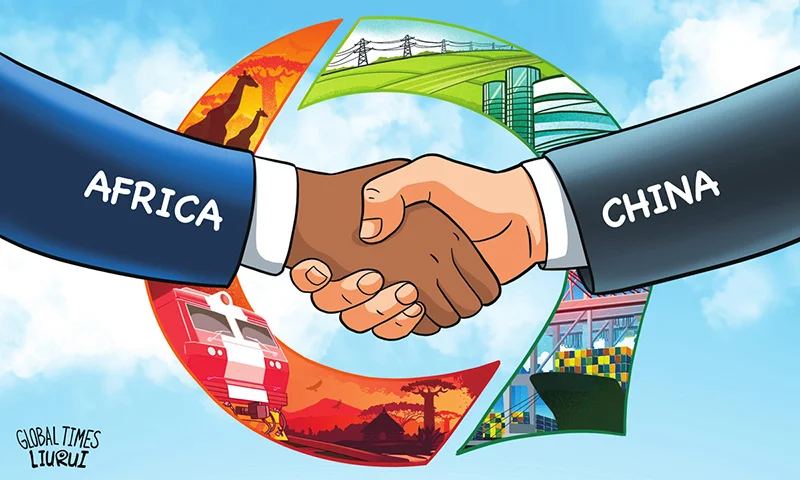
On 14 February, 2026, Chinese President Xi Jinping announced that China will grant zero-tariff treatment to 53 African nations, effective 01 May, 2026. Under this new unilateral policy initiative, China would eliminate all import tariffs on all goods imported from all the countries in Africa, except Eswatini. China already enforces a zero-tariff policy for 33 Least Developed Countries (LDCs) in Africa. Now this policy would be extended to non LDCs as well. This policy initiative clearly aims at reducing the continuously expanding trade deficit between China and Africa. In 2024, China’s trade surplus against Africa was recorded at US $ 61 billion.
This trade initiative, a precious gift amidst ongoing global trade tensions, is the most generous unilateral nonreciprocal trade concession given by any country to developing countries, since the beginning of the modern rule based international trading system.
Though this landmark announcement has far-reaching implications on global trade, as much as President Trump’s “Liberation Day” tariffs, it was almost overlooked by the global media.
Implications for Global Trade
This Chinese policy initiative, though very generous, is a clear violation of the Most-Favoured-Nation (MFN) principle and the “Enabling Clause” of the International Trade Law. The MFN principle is the cornerstone of the multilateral trading system under the World Trade Organisation (WTO) and is enshrined in Article I of the General Agreement on Tariffs and Trade (GATT). It mandates that any trade advantage, privilege, or immunity granted by a WTO member to any country must be extended immediately and unconditionally to all other WTO members. Though, the GATT “Enabling Clause” allows developed nations to offer non-reciprocal preferential treatment (lower tariffs) to developing countries without extending them to all WTO members, this has to be done in a non-discriminatory manner. By extending tariff concessions only to developing countries in Africa, China has also breached this requirement.
This deliberate violation of the MFN principle by China occurs less than 12 months after the announcement of “Liberation Day” tariffs by President Trump, which breached Article I (MFN) and Article II (bound rates) of the GATT. However, it is important to underline that the objectives of the actions by the two Presidents are poles apart; the US objective was to limit imports from all its trading partners, and China’s objective is to increase imports from African countries.
Though the importance of the MFN principle of the WTO law had eroded over the years due to the proliferation of preferential trade agreements and unilateral preferential arrangements, the WTO members almost always obtained WTO waivers, whenever they breached the MFN principle. Now the leaders of the main trading powers have decided to violate the core principles of the multilateral trading system so brazenly, the impact of their decisions on the international trading system will be irrevocable.
Implications for Sri Lanka
China’s unilateral decision to provide zero-tariff treatment to African countries will have a strong adverse impact on Sri Lanka. Currently, all Asian countries, other than India and Sri Lanka, have duty-free access, for most of their exports, into the Chinese market through bilateral or regional trade agreements, or the LDC preferences. Though Sri Lanka, India and China are members of the Asia Pacific Trade Agreement (APTA), preferential margins extended by China under APTA to India and Sri Lanka are limited.
The value of China’s imports from Sri Lanka had declined from US$ 650 million in 2021 to US$ 433 million by 2025. However, China’s exports to Sri Lanka increased significantly during the period, from US$ 5,252 million to US$ 5,753 by 2025. This has resulted in a trade deficit of US$ 5,320 million. Sri Lanka’s exports to China may decline further from next month when African nations with duty-free access start to expand their market share.
Let me illustrate the challenges Sri Lanka will face in the Chinese market with one example. Tea (HS0902) is Sri Lanka’s third largest export to China, after garments and gems. Sri Lanka is the largest exporter of tea to China, followed by India, Kenya and Viet Nam. During the last five years the value of China’s imports of tea from Sri Lanka had declined significantly, from US$76 million in 2021 to US$ 57 million by 2025. Meanwhile, imports from our main competitors had increased substantially. Most importantly, imports from Kenya increased from US$ 7.9 million in 2021 to US$ 15 million in 2025. For tea, the existing tariff in China for Sri Lanka is 7.5% and for Kenya is 15%. From next month the tariff for Kenya will be reduced to 0%. What will be its impact on Sri Lanka exports? That was perhaps explained by a former Ambassador to Africa, when he urged Sri Lankan exporters to “leverage duty free access from Kenya” to expand their exports to China!
(The writer is a retired public servant and a former Chairman of WTO Committee on Trade and Development. He can be reached at senadhiragomi@gmail.com)
by Gomi Senadhira
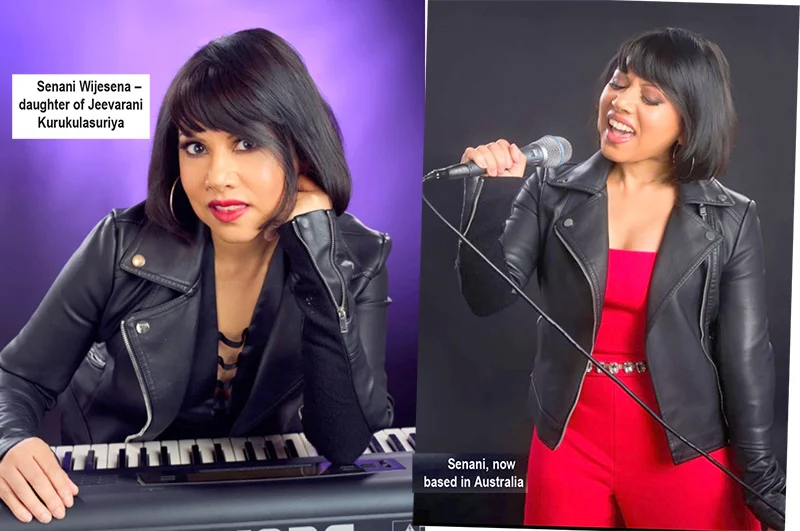
 Jeevarani Kurukulasuriya was a famous actress and her name still rings a bell with many. And now in the spotlight is her daughter Senani Wijesena – not as an actress but as a singer – and she has been singing, since the age of five!
The plus factor is that Senani, now based in Australia, is also a songwriter, plays keyboards and piano, dancer, and has filmed and edited some of her own music videos.
Says Senani: “I write the lyrics, melody and music and work with professional musicians who do the needful on my creations.”
Her latest album, ‘Music of the Mirror’, is made up of 16 songs, and her first Sinhala song, called ‘Nidahase’, is scheduled for release this month (April) in Colombo, along with a music video.
‘Nidahase’,
says Senani, is a song about Freedom … of life, movement, love and spirit. Freedom to be your authentic self, express yourself freely and Freedom from any restrictions.
In fact, ‘Nidahase’ is the Sinhala translated version of her English song ‘Free’ which made Senani a celebrity as the song was nominated for a Hollywood Music in Media Award in the RnB /Soul category and reached the Top 20 on the UK Music weekly dance charts, as well as No. 1 on the Yes Home grown Top 15, on Yes FM, for six weeks straight.
Senani went on to say that ‘Nidahase’ has been remixed to include a Sri Lankan touch, using Kandyan drums and the Thammattama drum, with extra music production by local music producer Dilshan L. Silva, and Australia-based Emmy Award winning Producer and Engineer Sean Carey … with Senani also in the scene.
The song was written (lyrics and melody) and produced by Senani and it features Australian musicians, while the music video was produced by Sri Lanka’s Sandesh Bandara and filmed in Sri Lanka.

First Sinhala song scheduled for release this month … in Colombo
Senani’s music is mostly Soul, Funk and RNB – also Fusion, using ethnic sounds such as the tabla, sitar, and sarod – as well as Jazz influenced.
“I also have Alternative Music songs with a rock edge, such as ‘New Day’, and upcoming releases ‘Fly High’ and ‘Whisper’“, says Senani, adding that she has also recorded in other languages, such as Hindi and Spanish.
“As much of my fan base are Sri Lankans, who have asked me to release a song in the Sinhala language, I decided to create and release ‘Nidahase’ and I plan to release other original Sinhala songs in the future.
Senani has a band in Australia and has appeared at festivals in Australia, on radio and TV in Australia, and Sri Lanka.
She trained as a vocalist, through Sydney-based Singing Schools, as well as private tuition, and she has 5th Grade piano music qualifications.
And this makes interesting reading:
“I graduated from the University of Newcastle in Australia with a Bachelor of Medicine and I work part time as a doctor (GP) and an Integrative Medicine practitioner, with a focus on nutrition, and spend the rest of the time dedicated to my music career.”
Senani hails from an illustrious family. In addition to her mum, Jeevarani Kurukulasuriya, who made over 40 films, including starring in the first colour movie ‘Ranmuthu Duwa’, her dad is Dr Lanka Wijesena (retired GP) and she has two sisters – all musical; one is a doctor, while the other is a dietitian/ psychotherapist.

Cabinet approves relief meaures to persons affected due to the War situation in the Middle East

Amendments to the Finance Act No. 35 of 2018 to be Gazetted

Value Added Tax (Amendment) Bill to be Gazetted

H.M.J.M.Herath appointed Commissioner General of Registration of Persons

Water Resources Board Act, No. 29 of 1964, to be amended

Securing public sector employment opportunities for Athletes demonstrating National-Level sporting excellence

‘Dates have the highest sugar content to fight Coronavirus’

Sunday Island 27 December – Headlines

#SundayIsland 17th December – Headlines

Sunday Island – 28th March

Sunday Island Headlines – 21 March

Sunday Island – 21st February – Headlines
-

 Features3 days ago
Ranjith Siyambalapitiya turns custodian of a rare living collection
-

 News6 days ago
2025 GCE AL: 62% qualify for Uni entrance; results of 111 suspended
-

 News3 days ago
Global ‘Walk for Peace’ to be held in Lanka
-
 Business7 days ago
Hour of reckoning comes for SL’s power sector
-

 Editorial6 days ago
Search for Easter Sunday terror mastermind
-
 Opinion5 days ago
Hidden truth of Sri Lanka’s debt story: The untold narrative behind the report
-
Editorial7 days ago
Ideological confusion and identity crisis
-

 Opinion6 days ago
Is there hope for Palestine?