
Latest News
British spies and SAS named in Afghan data breach


The identities of more than 100 British officials, including members of the special forces and MI6, were compromised in a data breach that also put thousands of Afghans at risk of reprisal, it can be reported.
The latest fallout from the breach was kept secret by an injunction until Thursday, when the order was lifted in part by a High Court judge.
That allowed media organisations to reveal that detailed case notes in the database contained secret personal data of special forces and spies.
The government had already admitted on Tuesday the data of nearly 19,000 Afghans who had worked with the British during the 20-year war in Afghanistan and had applied to resettle in the UK had been inadvertently leaked.
Many were judged to be at risk of serious harm or even death as the Taliban sought retribution against those who had worked with the British government during the conflict.
This was part of the reason the information was protected by a so-called “super-injunction” – a kind of gagging order that prevents the reporting of even the existence of the injunction.
The data breach occurred in February 2022 but was not discovered by the government until August 2023, when someone in Afghanistan who had obtained the data posted part of it on Facebook and indicated he could release the rest.
The BBC revealed on Wednesday that the Ministry of Defence (MoD) had offered to expedite a review of the individual’s application and brought him to the country after he posted the data – a sequence of events that government sources said was “essentially blackmail”.
The MoD declined to comment on the actions of the individual but said that “anyone who comes to the UK under any Afghan relocation schemes” must go through “robust security checks in order to gain entry”.
The discovery of the breach in 2023 forced the government to covertly set up the Afghanistan Response Route (ARR) – a resettlement scheme for those affected, who were not told about the breach despite the risk to their security.
The scheme has already allowed 4,500 Afghans and family members to move to the UK and a further 2,400 people are expected, at an estimated cost of £850m.
The accidental leak was the result of someone working at UK Special Forces headquarters in London inadvertently emailing more than 30,000 resettlement applications to an individual outside of government, thinking that he was sending data on just 150 people.
After the lifting of the super-injunction on Tuesday, a secondary injunction had prevented the revelations about special forces and security services personal being compromised.
But that was also lifted on Thursday that barristers representing both the MoD and a group of media organisations reached a compromise that meant journalists could report the additional facts.
Defence Secretary John Healey told Parliament on Tuesday that the breach was a “serious departmental error” and acknowledged that it was “just one of many data losses” relating to the Afghan relocation schemes.
The shadow defence secretary, James Cartlidge, apologised on behalf of the former Conservative government, which was in power when the leak was discovered.
The MoD has refused to say how many people in Afghanistan may have been harmed as a result of the data breach. The Taliban government said on Thursday that it had not arrested or monitored Afghans affected by the leak.
But relatives of Afghans named in the leak told BBC that they fear for their families still in the country, with one saying efforts by the Taliban to find their named relative intensified following the leak.
An MoD spokesperson said: “It’s longstanding policy of successive governments to not comment on special forces. “We take the security of our personnel very seriously, particularly of those in sensitive positions, and always have appropriate measures in place to protect their security.”

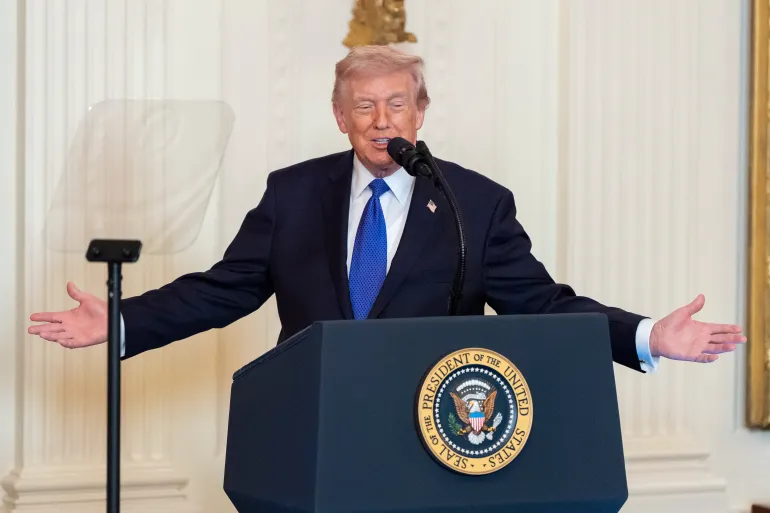
United States President Donald Trump has said the plan for the Iran war initially “projected four to five weeks”, adding the US military has the “capability to go far longer than that”.
Speaking on Monday from the White House, Trump outlined his administration’s justification for going to war against Iran alongside Israel, saying that Iran posed “grave threats” to the US, even as he again claimed that US strikes on Iran in June of last year led to the “obliteration of Iran’s nuclear programme”.
Trump also said that Iran’s ballistic missile programme was “growing rapidly and dramatically, and this posed a very clear, colossal threat to America and our forces stationed overseas”.
“The regime already had missiles capable of hitting Europe and our bases, both local and overseas, and would soon have had missiles capable of reaching our beautiful America,” Trump said, repeating a claim his administration has repeatedly made in the run-up to Saturday’s attack, for which US government officials have not provided any evidence.
The statements were significant, with Trump appearing to pivot from claims that Iran posed an immediate threat to the US. Instead, he characterised the Iranian government as potentially posing a longer-term threat.
“The purpose of this fast-growing missile programme was to shield their nuclear weapon development and make it extraordinarily difficult for anyone to stop them from making these – highly forbidden by us – nuclear weapons,” Trump said.
“An Iranian regime armed with long-range missiles and nuclear weapons would be an intolerable threat to the Middle East, but also to the American people,” Trump said.
“Our country itself would be under threat, and it was very nearly under threat,” Trump said.
Under both US domestic law and international law, attacks on a foreign country must be in response to an immediate threat. Under the US Constitution, only Congress can declare war, while the president can act unilaterally in response to an imminent threat.
Trump has released two video speeches since the US and Israel began their attacks, including saying in a recorded message released yesterday that Iran had waged a “war against civilisation”.
He also predicted there would likely be more US military personnel deaths after the Pentagon confirmed the first three members of the military killed in the Middle East on Sunday.
To date, at least 555 people have been killed in Iran, 13 have been killed in Lebanon, 10 killed in Israel, three killed in the United Arab Emirates, and two killed in Iraq, with Oman, Bahrain and Kuwait each reporting one death amid Iranian retaliations in the region.
On Monday, shortly after the Pentagon confirmed a fourth member of the US military had died, Trump did not give a clear timeline for the operations.
He said “Right from the beginning, we projected four to five weeks, but we have capability to go far longer than that.”
Trump added that the military had originally projected four weeks to “terminate the military leadership” of Iran.
To date, Iran’s Supreme Leader Ali Khamenei and several other top officials, including the head of Iran’s Islamic Revolutionary Guard Corps (IRGC), have been confirmed killed in US-Israeli strikes.
“We’re ahead of schedule there by a lot,” Trump said.
Trump spoke shortly after Pentagon chief Pete Hegseth took questions from reporters for the first time since the attacks began.
Hegseth appeared to respond to concerns from Trump’s own “Make America Great Again” (MAGA) movement about entering into a prolonged war.
Trump had vowed to end US interventionism during his presidential campaign, promising to focus on domestic needs over adventurism abroad.
“This is not Iraq. This is not endless,” Hegseth said.
“This operation is a clear, devastating, decisive mission. Destroy the missile threat, destroy the navy, no nukes,” he said.
“Israel has clear missions as well, for which we are grateful, capable partners,” he said, without defining Israel’s mission.
Israeli Prime Minister Benjamin Netanyahu has long called for the toppling of Iran’s government
Hegseth further vowed to fight the war “all on our terms, with maximum authorities, no stupid rules of engagement, no nation-building quagmire, no democracy building exercise, no politically correct wars”.
[Aljazeera]
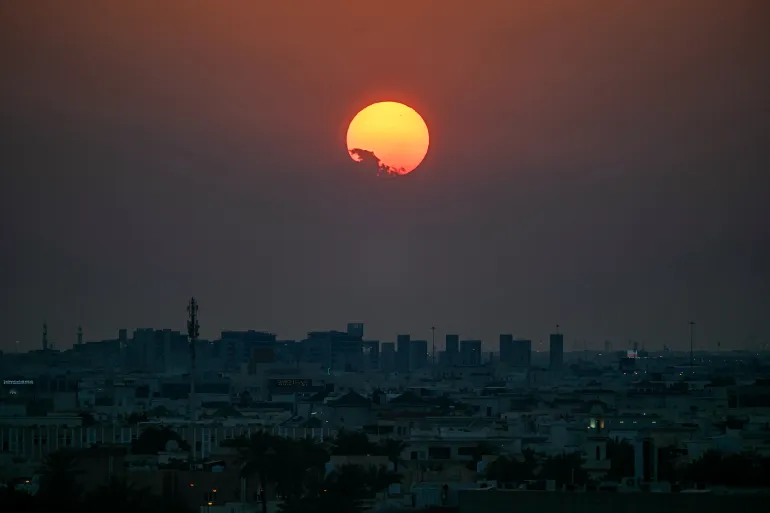
Qatar’s air force has “successfully shot down” two Iranian fighter aircraft, the country’s government says, as the fallout from the United States and Israeli attacks on Iran, and Iranian retaliation, grows across the wider Middle East.
The Qatari Defence Ministry said in a statement on Monday that the air force downed two SU-24 aircraft while seven ballistic missiles and five drones fired by Iran were also intercepted.
“The threat was addressed immediately upon detection, in accordance with the operational plan, as all missiles were shot down before reaching their targets,” the ministry said.
The Gulf country had condemned Iran for its “reckless and irresponsible” targeting of Qatari territory in response to US-Israeli attacks that have killed hundreds of people across Iran since Saturday.
Iran has launched a series of retaliatory strikes on targets in Qatar, Kuwait, the United Arab Emirates, Saudi Arabia and other countries in recent days.
[Aljazeera]
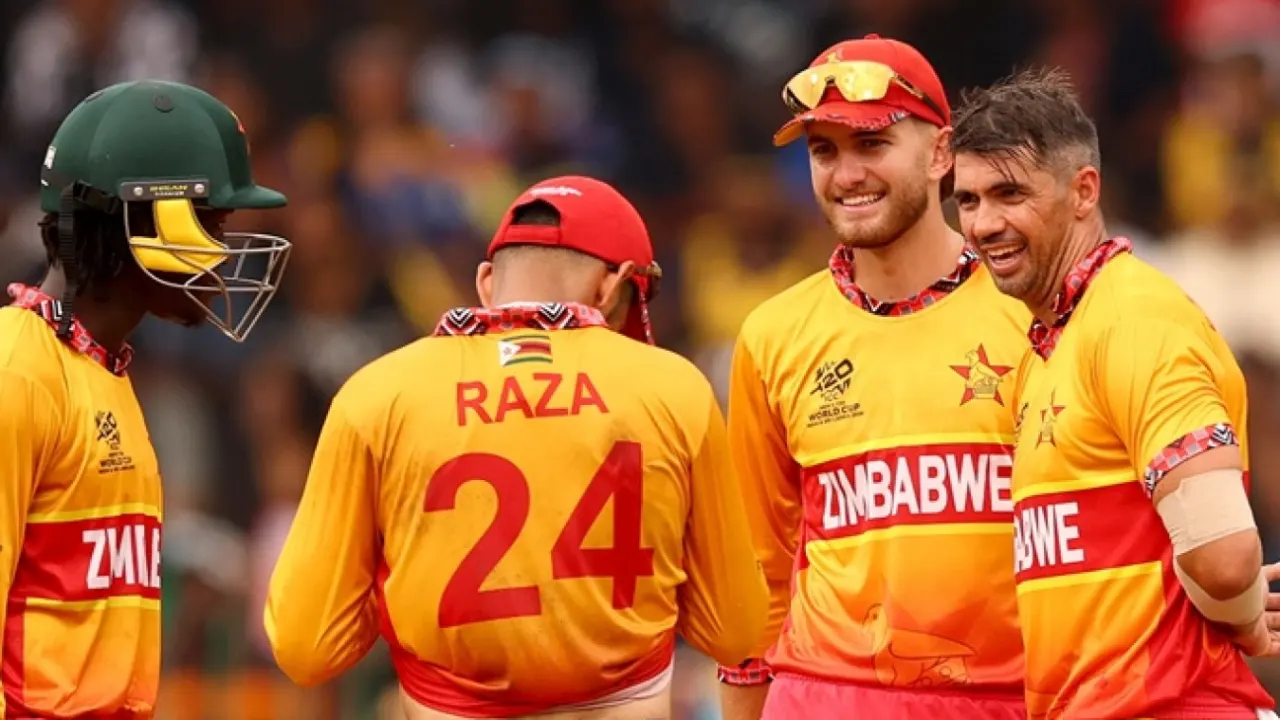
Zimbabwe have become the first team at the T20 World Cup to be affected by the closure of air spaces in West Asia, and will remain in India for the foreseeable future after their final match against South Africa on Sunday.
West Indies have also been forced to delay their departure from India*, due to “security threats posed by military action in the Gulf region”, CWI announced on Monday.
“CWI is working closely with the ICC, relevant governmental authorities and airline partners to secure the earliest possible safe travel arrangements for the squad and support staff,” the board said in a release. “The safety and wellbeing of our players, coaches, and officials remain our highest priority.
“The team is currently accommodated in India and remains safe and well. We continue to monitor the situation closely and will provide further updates as confirmed travel arrangements are finalised.”
Tournament organisers have been exploring alternative routes to get teams home as they finish their campaigns at the T20 World Cup in India and Sri Lanka. ESPNcricinfo understands that the Zimbabwe contingent was due to return home in batches, with some leaving as early as 4.30am on Monday morning and the rest to follow later in the day. They were booked on Emirates flights, which would take them from Delhi to Dubai and then on to Harare.
While it is understood that other airlines and routes are being considered, Zimbabwe are booked to stay at their Delhi hotel until March 4.
“No, not that I’ve heard of,” Zimbabwe’s coach Justin Sammons said when asked if there was clarity over the team’s travel plans. “When we started the game there wasn’t anything. And now we’ve just been focused on the game, so I’ve not heard anything since.”
Pakistan, who played their final Super Eight game on Saturday and were knocked out of the tournament, have returned to Lahore from Colombo via a Sri Lankan airlines flight.
On Saturday morning, the USA and Israel exchanged missile strikes with Iran, leading to the closure of airspace over several countries in West Asia, disrupting air travel to the region and also internationally, with several airlines having to cancel flights or change routes.
The ICC, in a statement on Saturday, said it had been monitoring the evolving situation and had “activated comprehensive contingency plans to safeguard the travel, logistics and well-being of all stakeholders” at the 2026 T20 World Cup.
“While the crisis in the Middle East has no direct bearing on the conduct of the tournament, the ICC acknowledges that a significant number of personnel – including players, team management, match officials, broadcast teams, and event staff – rely on Gulf hub airports, particularly Dubai (DXB), as key transit points for onward travel to their home countries upon concluding their commitments at the event,” the ICC said in a statement.
“The ICC Travel and Logistics team is actively working with major international carriers to identify and secure alternative routing options, including connections through European, South Asian and South-East Asian hubs. The ICC security consultants are liaising with relevant authorities and will provide real-time advisories as the situation develops. A dedicated ICC Travel Support Desk has also been activated.”
[Cricinfo]

SriLankan Airlines Update on Middle East Operations

Trump says Iran war projected to last 4 to 5 weeks, could go ‘far longer’

Qatar downs two Iranian fighter jets as conflict widens

Jammu and Kashmir’s long road to India cricketing glory

Rembrandt painting worth millions rediscovered after 65 years

Zimbabwe, West Indies delayed from returning home following West Asia airspace closure

‘Dates have the highest sugar content to fight Coronavirus’

Sunday Island 27 December – Headlines

#SundayIsland 17th December – Headlines

Sunday Island – 28th March

Sunday Island Headlines – 21 March

Sunday Island – 21st February – Headlines
-

 Opinion4 days ago
Jamming and re-setting the world: What is the role of Donald Trump?
-

 Features4 days ago
An innocent bystander or a passive onlooker?
-
 Features5 days ago
Ratmalana Airport: The Truth, The Whole Truth, And Nothing But The Truth
-

 Features6 days ago
Building on Sand: The Indian market trap
-

 Opinion6 days ago
Future must be won
-

 Business6 days ago
Dialog partners with Xiaomi to introduce Redmi Note 15 5G Series in Sri Lanka
-
 Business5 days ago
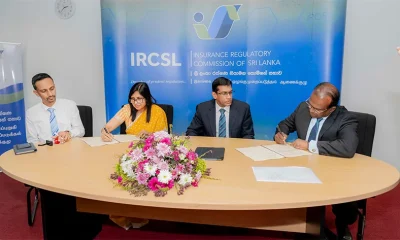
IRCSL transforms Sri Lanka’s insurance industry with first-ever Centralized Insurance Data Repository
-

 Opinion1 day ago
Sri Lanka – world’s worst facilities for cricket fans