
Business
BOI seals landmark US$ 171 Mn. investment with CEAT OHT Lanka

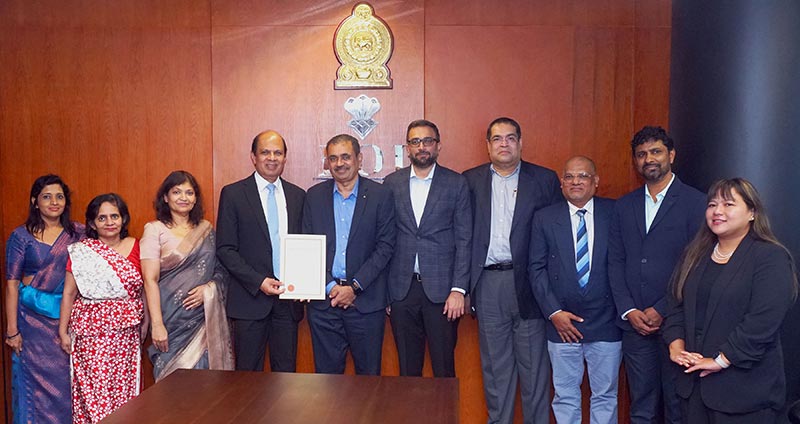
In a landmark development for Sri Lanka’s manufacturing and export sector, CEAT OHT Lanka (Private) Limited has signed an agreement with the Board of Investment of Sri Lanka (BOI) to formalise a US$ 171 million investment, one of the largest recent investments from India into the country.
This investment follows CEAT Ltd.’s acquisition of Michelin Group’s Construction Compact Line Business, including their Sri Lanka-based Midigama plant and Casting Product plant in Kotugoda. The transaction gives CEAT global ownership of the Camso brand, which will be permanently assigned across categories after a three-year licensing period. The acquisition closing process is ongoing.
The agreement strengthens Sri Lanka’s profile as a global hub for Off-Highway Tyres (OHT), positioning the country as a competitive centre for export-led growth.
In line with CEAT’s long-term commitment to Sri Lanka, a Tripartite Memorandum of Understanding has been signed between CEAT OHT Lanka, Michelin Lanka, and the Inter-Company Employees Union (ICEU), guaranteeing job security for approximately 1,483 employees. The MoU ensures full retention of past service, seniority, salaries and benefits, while safeguarding employment with no retrenchments, thereby ensuring stability and continuity as operations transition.
Commenting on the agreement, the Chairman of the BOI Mr. Arjuna Herath said: “We welcome CEAT’s significant investment into Sri Lanka, which is among the largest investments from India in recent times. This approval underlines our confidence in CEAT’s vision and will further elevate Sri Lanka’s position as a global manufacturing and export hub.”
Amit Tolani, Chief Executive, CEAT Specialty, noted: “BOI’s approval for CEAT OHT Lanka marks a new chapter in our partnership with Sri Lanka. With CEAT’s vision of expanding our global off-highway tyre business, we have great plans for this country. This investment will bring exciting new opportunities for Sri Lanka while playing a central role in our future growth.”
Kumar Subbiah, Chief Financial Officer, CEAT Ltd. added: “Our immediate priority is ensuring a seamless transition while safeguarding jobs and strengthening our operations in Sri Lanka. This investment reaffirms CEAT’s long-term commitment to our employees and to building Sri Lanka as a world-class hub for OHT manufacturing and exports.”
With this agreement, CEAT has reinforced its position as a global player in the high-margin OHT and tracks segment, while embedding Sri Lanka at the centre of its international expansion strategy. The move represents a convergence of industrial growth, export competitiveness and employee assurance, aligned with the BOI’s mandate to attract high-value foreign investment and drive sustainable economic development.



Western Province maintains its dominant position, accounting for 42.4% of nominal GDP
The 2024 provincial GDP data reaffirms the profound and enduring structural asymmetry in Sri Lanka’s economic geography. The Western Province continues to function as the nation’s overwhelming economic core, while the second and third runners-up, the North Western and Central Provinces respectively, operate on a markedly different scale and sectoral foundation.
The Western Province maintains its dominant position, accounting for 42.4% of the country’s nominal GDP. This preeminence is rooted in its commanding role across the high-value Services and Industry sectors, where it contributes 44.5% and 47.6% of national output, respectively. Its economy is distinctively modern, with a scant 2.3% reliance on agriculture and over 98% of its output derived from industry and services. This concentration of finance, trade, administration, and manufacturing creates an unmatched gravitational pull for investment and talent.
In stark contrast, the combined economic share of the North Western (11.5%) and Central (10.7%) Provinces is just over half that of the Western Province alone. Their paths to relevance are fundamentally different. The North Western Province has solidified its role as the nation’s agricultural heartland, contributing a full 20.0% of national agricultural activity. It also holds a significant, though secondary, position in industry at 12.0%. Its internal economic composition is more balanced across sectors than the west, with a notable reliance on industry (29.1% of its own GDP) alongside agriculture.
The Central Province, meanwhile, presents a more services-oriented profile among the runners-up, contributing 10.7% to the national services total. It also holds important shares in agriculture (13.9%) and industry (9.6%). Internally, its economy mirrors the national structure most closely among major provinces, with services constituting about 63% of its output. This suggests a diversified regional economy centered on urban hubs like Kandy, but one that lacks the concentrated high-end service power of Colombo.
The comparative analysis reveals a clear hierarchy. The Western Province is the integrated, metropolitan driver of the modern economy. The North Western Province serves as a vital agro-industrial base, and the Central Province as a diversified regional center. Despite a noted increase in the combined share of the other provinces, the gap remains vast. The economic landscape is thus characterized not by convergence, but by a persistent and specialized asymmetry, where the runners-up support the national economy through different, but essential, sectoral strengths, all while operating in the long shadow of the western province.
by Sanath Nanayakkare

Sri Lanka Insurance Life and Sri Lanka Insurance General, in collaboration with the National Disaster Relief Services Centre (NDRSC), extended vital assistance to 1,000 families affected by the recent ‘Ditwah’ cyclone. The relief initiative was carried out in two phases on 30th November and 2nd December 2025, reflecting the company’s continued commitment to supporting communities in times of distress.
Dry ration packs were distributed through the NDRSC to the Maharagama Urban Council and the Divulapitiya Pradeshiya Sabha, ensuring that aid reached the most affected households swiftly and efficiently. Both distribution programmes were held with the participation of local authorities and the management teams of SLIC Life and SLIC General, further strengthening the company’s close partnership with the communities it serves.
Speaking on the initiative, Chairman of Sri Lanka Insurance, Nusith Kumaaratunga, stated; “Sri Lanka Insurance has always placed community wellbeing at the heart of its purpose. In difficult times such as these, it is our responsibility to stand with the families who have been affected and offer meaningful support. This relief effort reflects our ongoing commitment to uplift communities and reinforces our role as a trusted national insurer focused on protection, care, and compassion.”
In addition to the relief programme, Sri Lanka Insurance has implemented extended operating hours at selected SLIC General branches in the affected areas to ensure uninterrupted service. Claims, customer care teams, and branch staff are working beyond regular hours to provide prompt assistance to policyholders impacted by the severe weather conditions.
Sri Lanka Insurance remains dedicated to safeguarding its customers and supporting communities across the nation, reaffirming its longstanding promise of protection, stability, and service excellence.

Jaffna Hindu College was named as one of the winners at the regional award ceremony of the prestigious AIA Healthiest Schools Competition, a flagship initiative by AIA Group aimed at promoting healthier habits among students across Asia-Pacific region through innovative school-based projects. The competition, which drew a record number of entries from eight regional markets, recognises schools that implement innovative and impactful initiatives in the areas of healthy eating, active living, mental wellbeing, and sustainability. Jaffna Hindu College stood out in the Active Lifestyles Award Category for its creative and community-focused project that introduced a bicycle rental system, ensuring greater access to physical activity for all students and encouraging healthier lifestyles across the region.
The winners of AIA Healthiest Schools programme were honoured at a vibrant regional awards ceremony in Da Nang, Vietnam, where the prize money was awarded to the respective schools to support the ongoing health and wellbeing initiatives.
The Cycling Club was introduced to make physical activity accessible and enjoyable for all students. The club introduced a bicycle rental system, managed via a custom software platform, ensuring equitable access regardless of financial background. Students participated in a cycle parade and three themed challenges focused on endurance, speed, and teamwork. The initiative quickly became popular, engaging over 100 students and receiving enthusiastic support from teachers, parents, and local businesses. Experienced cyclists from the community volunteered as coaches, while cycling organisations provided safety training and route planning.

Implementation of the loan scheme, “Sustainable Agriculture Program”

Cabinet nod to implement ‘Suraksha’ Student Insurance Programme in the year 2025 / 26
Establishment of Consultancy Boards for strengthening and promoting local production industries.

Match fees more than doubled for women’s domestic cricketers in India

National progress can be achieved only when everyone fulfills the responsibilities entrusted to them with steadfast determination, unity of purpose and resilience in the face of any challenge – President

Indonesia’s Gede Priandana becomes first to pick five wickets in an over in T20Is

‘Dates have the highest sugar content to fight Coronavirus’

Sunday Island 27 December – Headlines

#SundayIsland 17th December – Headlines

Sunday Island – 28th March

Sunday Island Headlines – 21 March

Sunday Island – 21st February – Headlines
-

 News19 hours ago
Members of Lankan Community in Washington D.C. donates to ‘Rebuilding Sri Lanka’ Flood Relief Fund
-

 Midweek Review7 days ago
How massive Akuregoda defence complex was built with proceeds from sale of Galle Face land to Shangri-La
-
 News6 days ago
Pope fires broadside: ‘The Holy See won’t be a silent bystander to the grave disparities, injustices, and fundamental human rights violations’
-

 News6 days ago
Pakistan hands over 200 tonnes of humanitarian aid to Lanka
-

 Business5 days ago
Unlocking Sri Lanka’s hidden wealth: A $2 billion mineral opportunity awaits
-
 News7 days ago
Burnt elephant dies after delayed rescue; activists demand arrests
-

 Editorial7 days ago
Colombo Port facing strategic neglect
-

 News5 days ago
Army engineers set up new Nayaru emergency bridge