
Business
Bogawantalawa Tea taking up a global leadership role in fighting climate change

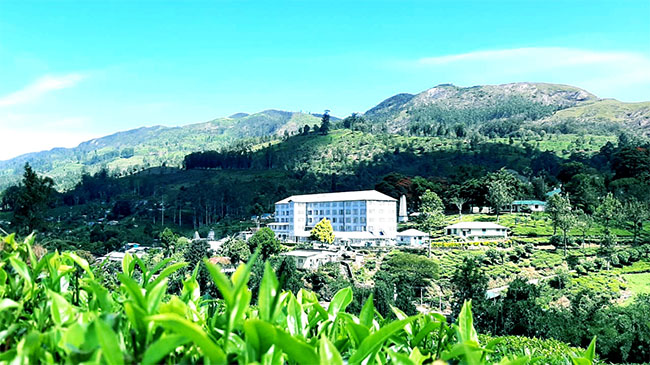
Many of Sri Lanka’s Regional Plantation Companies (RPCs) are breaking away from legacy practices of the sector by redefining themselves through innovation. In this week’s, ‘RPC Innovation Series,’ we explore the question: ‘can Pure Ceylon Tea help drive the fight against climate change?’ Having developed innovative, home-grown solutions and leveraged and adapted global best practices to local conditions, the team at Metrocorp subsidiary, Bogawantalawa Tea Estates PLC believe they can help lead the charge.
Renowned management consultant, Peter Drucker is famously quoted as saying that: “if you can’t manage what you can’t measure”. This timeless piece of wisdom emerged in the context of a post-World War II industrial boom, at a time when maximisation of productivity in pursuit of profit was the sole objective of free enterprise.
While this fundamental principle of management pre-dates formalised Environmental, Social and Governance (ESG) standards, it is perhaps more relevant than ever today. In the backdrop of what UN Secretary-General António Guterres has described as a “Code Red for humanity”, the need for a decisive global mobilisation against climate change has never been more urgent.
One Sri Lankan company that has taken responded most effectively to this challenge and is already proving that progress is possible is Metrocorp’s globally celebrated subsidiary, Bogawantalawa Tea Estates PLC. While its core business is in tea, Bogawantalawa is a truly diversified company that also manages managing Agroforestry, rubber, herbs, spices, oil palm and coconut, in addition to renewable energy, a growing eco-tourism business.
“It can certainly be daunting to consider the scale of the challenges we must overcome in order to effectively address the threat of climate change. However, we believe that in the face of such a truly global crisis, even smaller nations, economies and enterprises have the potential to make significant positive contributions. This in turn rests on the commitment of each firm to build a sincere top-to-bottom passion for sustainability in order to take their organisations far beyond the People, Planet, Profit model and into the realm of effective climate action,” says Bogawantalawa Tea Estates PLC Executive Director, Lalith Munasinghe.
“True to our motto, of being passionate growers with sustainability at heart, we have been able to embed these best practices at the core of all our operations, making them a way of life for all our employees,” he added.
Having gone beyond carbon neutral status in 2017, the company officially became Climate Positive in 2019, making Boagawantalawa the worlds’ first and only tea growing, manufacturing and marketing company to offer Gold Certified uncompensated Climate Positive Teas. This means that for every 1 kilogram of made tea purchased from Bogawantalawa Tea Estates, approximately 100g of carbon dioxide is sequestered in the soil.
While a remarkable achievement in its own right, Munasinghe believes that this is only just the beginning. Through a series of ambitious investments over the past decade, the company is also well on track to increase its sinking rate to 300g of carbon per kilo of made tea from Bogawantalawa by 2023; if not sooner.
Leading the implementation of Bogawantalawa Plantations’ pioneering efforts in sustainability is Bogawantalawa Tea Estates PLC Director of Sustainability, Research and Development Thusitha Bandara. “By pursuing innovation, leveraging new technologies, and implementing agricultural best practices, we are able to channel all of our operations towards ensuring the highest level of sustainability.
“As communicated at the last COP26, we know now that the window to keep within the 1.5 degree warming target is closing fast and we realize that our shared planet needs everyone to take responsibility to drive climate action.
“We believe that companies like ours can set the pace not just locally but globally as well. In this manner, we believe that all of us can effectively advance action against climate change. In order to drive change, we have to be able to measure ourselves as accurately and credibly as possible, in order to hold ourselves to the highest standard possible, so that we in turn can be accountable to all of our stakeholders.”
Measure, Verify, Mitigate
 Bogawantalawa Plantation is the world’s 1st tea growing, manufacturing, and marketing company to offer Climate Positive Teas, certified for 100% renewables
To that end, Bogawantalawa, set its sights on clearing the highest possible international standard for sustainability (Climate Positive, 100% Renewables, RA, Fairtrade, Organic…etc.) enabling the highest levels of environmental and social integrity aligned to all United Nations Sustainable Development Goals (UNSDGs).
“While adopting Climate Smart Agricultural practices across all Bogawantalawa estates and focusing on overall atmosphere, water, soil and quality of life of our people we are committed to bringing to the world the finest teas ethically produced with the highest level of sustainability. We are committed to making continuous improvements in the management of our social and environmental impacts to further enhance this legacy,” Bandara explained.
As part of the requirements for certification, Bogawantalawa had to accurately measure its carbon footprint across Scope I, Scope II and Scope III emissions. This meant careful, frequent, externally validated audits of the company’s entire carbon emissions. These calculations take into account the entire carbon footprint of all operations directly or indirectly connected to the company’s operations.
This includes everything from direct Green House Gas emissions from sources controlled directly by the company – such as fuel consumption for boilers – to total electricity consumption from the grid, emissions created from the packaging and transport of its produce to end-consumers.
“When pursuing Climate Positive Certifications, it is best to first attempt to optimize emissions as much as possible across the entire supply chain. Once that first round of mitigation was completed, we commenced the first in a series of continuous audits in order to accurately identify and measure our total GHG emissions.” While a difficult and painstaking task, especially on the first attempt, Bandara noted that the auditing processes gets much easier as the new processes get embedded into regular operations.
“By commencing such a detailed carbon footprint audit, we were able to understand what our highest sources of emissions were, and focus our efforts to further optimize critical processes, while offsetting the remaining emissions, leveraging global best practices on emissions mitigation,” Bandara noted.
Bandara stated that Bogawantalawa is also working towards the launch of a block-chain based solution to enable a new paradigm in transparent, real-time traceability across the value chain that goes well beyond traditional frameworks.
Based on the Climate Positive audits, the company identified that it’s largest sources of emissions were from electricity – which accounted for 45% of Bogawantalawa Tea Estates’ total carbon footprint, with the remainder being generated by the manufacture of fertiliser used by the company (18%), fuel (13%), packing materials (8%), fuel-wood transportation (6%) and electricity transmission loss (2%).
With its emissions footprint calculation completed, Bandara explained how the company that began to calculate, and then expand the carbon sinking capacity across its entire value chain. Given the significant contribution of the company’s electricity consumption from the grid, investments into renewable energy were among the first steps implemented by the company to cut down its footprint.
Through these efforts, Bogawantalawa is now generates a total of 15 GWh of clean, renewable energy – accounting for more than 100% of its total energy requirements, and saving GHG emissions equivalent to 11,000 MT annually, delivering social, environmental and financial returns to the company.
“The Sri Lankan experience with renewable energy dates back as far as the time of the British, when the nation’s first mini-hydro power plants were first established. In the subsequent decades, our company has continuously invested in harnessing these hydro resources to the point where today, we have built up 4 MW of internal hydro power capacity while our sister company Eco Power Pvt Ltd has built up a further 37 MW within the country and more than 20MW in overseas he stated.
Meanwhile, the company’s first trial for solar energy in upcountry conditions commenced in 2012 – at a time when few commercial solar power projects had been commissioned. Over the next decade, these efforts have also gathered significant momentum, with over Rs 280 million having been invested in the past 5 years towards the establishment of 2,500 kW of rooftop solar energy capacity, where all but one of the company’s factories are now supported with state-of-the-art solar power systems.
As part of its efforts to scale up renewable energy capacity and further expand its carbon sinking capacity, Bogawantalawa is also evaluating potential for the installation of a further 8.25 MW of wind power across two projects in the Bogawantalawa Valley.
Forestry for the future
Another significant tool in Bogawantalawa’s efforts to drive climate action is forestry. The company cultivates numerous species of commercial and native species, and annually plants thousands of diverse seedlings in order to increase forestry extents within its own plantations.
“There are some strategic locations which we have allocated purely for biodiversity enhancement, particularly in sensitive habitats near water bodies and grass lands. Depending on the unique conditions in each of these zones, we select suitable species for re-foresting or enrichment in order to improve the biodiversity and resilience of these ecosystems,” Bandara explained.
These initiatives have also been expanded out of estates, through partnerships with national organisations, Government agencies – including the Ministry of Environment – and Non-Governmental Organisations (NGOs). Most recently, Bogawantalawa has also signed on as a partner to a major conservation programme in Sri Lanka’s central hills through various initiatives.
Additionally, the company has also initiated a series of social forestry programmes with communities and schools in proximity to its estates. Through these initiatives, Bogawantalawa distributes seedlings and planting materials such as fertilizer, plant protective covers, and other equipment. These are distributed free of charge to school children, who are also educated on proper care of their plants. Each child is then given the responsibility to look after their own plant, thereby encouraging Sri Lanka’s future generations become active and enthusiastic stakeholders in the national effort to conserve the island’s rich natural heritage.
Powering climate smart agriculture
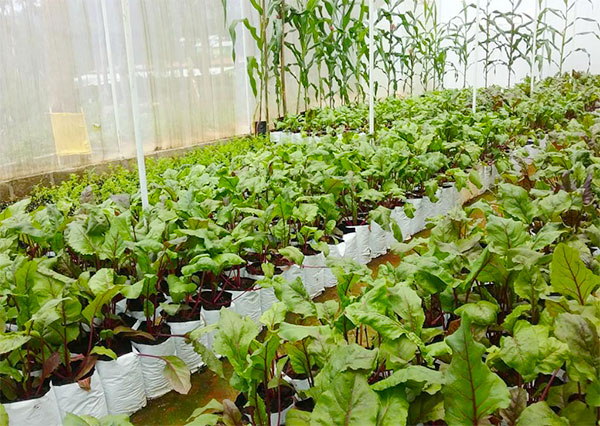 Bogawantalawa Tea Estates is one of several Sri Lankan RPCs that have steadily been scaling its expertise in organic agriculture
“In addition to social mobilisation, science, technology and data are essential in the battle to preserve our environment and drive action against climate change. Given our connection to communities, and our expertise in understanding agriculture and its relationship with nature, we realised we were also ideally positioned to help Sri Lanka improve its resilience to climate change through science,” Bandara notes.
It was with that understanding that Bogawantalawa established its own Climate Smart Agriculture Centre in order to gather vital data about rainfall , air temperature, solar radiation, relative humidity, wind speed, soil conditions, ground water levels, air quality, bio-diversity, and other essential metrics related to climate change. Through various analysis, using different tools / software, Bogawantalawa predicts and identify the trends of climate change and possible impacts the agriculture systems and accordingly alert the estate management to take necessary actions on short, medium and long term basis, to minimize the vulnerability and improve the resiliency of their farming units.
“Armed with this information, we are able to plan out our own operations in a more sustainable manner, while also sharing data so that all stakeholders to the agriculture sector can also have access to this information,” Bandara stated. This in turn enables more strategic interventions in commercial agriculture and animal husbandry, and responses to drought, high intensity rainfall, soil degradation, pest, disease and weed outbreaks.
Moving forward, Bandara stated that such initiatives would help to disseminate agricultural and environmental best practices, thereby improving resiliency of plantations and farming systems to face the challenges of climate change successfully.
Growing expertise in organic agriculture
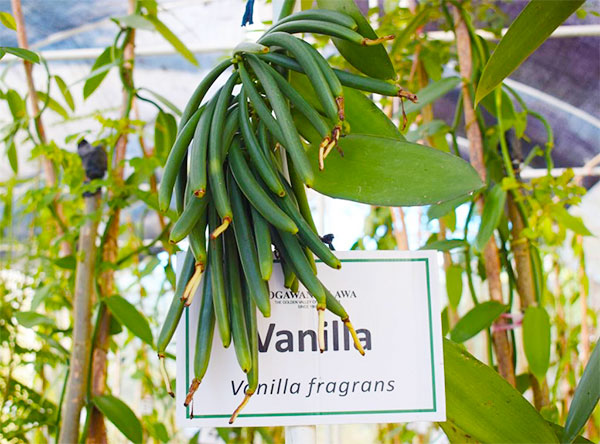 Bogawantalawa Tea Estates is also one of several Sri Lankan RPCs that have steadily been scaling up their expertise in organic agriculture over the past two decades. “Organic agriculture has been a topic that has gained a lot of positive and negative attention in the recent past. While there is still a lot of debate, we believe that most Sri Lankan RPCs have accumulated a great deal of invaluable knowledge and experience in both cultivation models, which can have a significant positive impact on the broader agriculture sector in future,” Bandara noted.
The Bogawantalawa approach augments conventional farming with strategic organic interventions that are based on four organic farming principles: health, fairness, ecology and care. Crucially, these models have to be geared towards profitable commercial scale cultivation, in order to ensure their continued economic sustainability.
As part of these initiatives, Bogawantalawa has invested Rs. 40 million per annum towards establishment and expansion of sustainable soil development programs. These initiatives leverage drone technology to conduct soil mapping, thereby identifying nutrient deficiencies, which in turn feed into the company’s fertility management, and erosion control strategies.
Additionally, the company also established its own conventional and organic fertilizer manufacturing and blending facilities to blend inorganic fertilizers according to the site specific requirements and production of organic fertilizers for organic projects and soil developments in other areas.
“These techniques help us to optimize use of chemical and organic inputs – which makes sense from an agricultural management perspective, as well as financially, and for the environment..
A sustainable future within reach
 The results of Bogawantalawa’s pioneering approach to modernized, climate-smart plantations management speak for themselves. Over the past year, the company recorded a significant increase in profits. These improvements were the result of the combined effect of the company’s holistic approach to plantations management. Since the company first took on management of its estates, its annual Yield Per Hectare (YPH) for tea has increased from 800 kg per hectare to 1,500 kg per hectare. Crucially, the company has continuously re-invested its profits back into the business.
In addition to its superior agricultural and environmental standards – which have enabled the company to charge a premium on its produce, Bogawantalawa has also undertaken ambitious diversifications, expanding to include non-traditional crops like lemongrass, vanilla, cinnamon, cardamom, cloves, turmeric, ginger, pepper and coffee.
Looking ahead, Bogawantalawa has ear-marked a further Rs. 6.2 billion towards such improvements.
“The combined impact of these R&D initiatives have the potential to revolutionize agriculture in Sri Lanka, and potentially around the world, Sustainability is a way of life at Bogawantalawa. We believe the essence of sustainability is encapsulated in a phrase penned century before the word sustainability itself was coined. That is when the Red Indian Chief Seattle conveyed to the American president, “Earth does not belong to us. We belong to Earth”.
“This is our creed at Bogawantalawa Tea Estates and we therefore consider sustainability as a core pillar of our day today business operations. Behind every action we take and each of our operations and processes our attention is on achieving stellar performances in the triple bottom line.” Munasinghe asserted.

Business
Iran war threatens Sri Lanka’s fragile recovery; SMEs face “Survival Crisis” – Prof. Rohan de Silva

Sri Lanka’s already fragile economic recovery—still reeling from the aftermath of the 2019 Sri Lanka Easter Bombings, the pandemic, and the 2022 financial collapse—is now under renewed strain as the ongoing Iran war sends shockwaves through global energy, trade, and financial systems, experts warn.
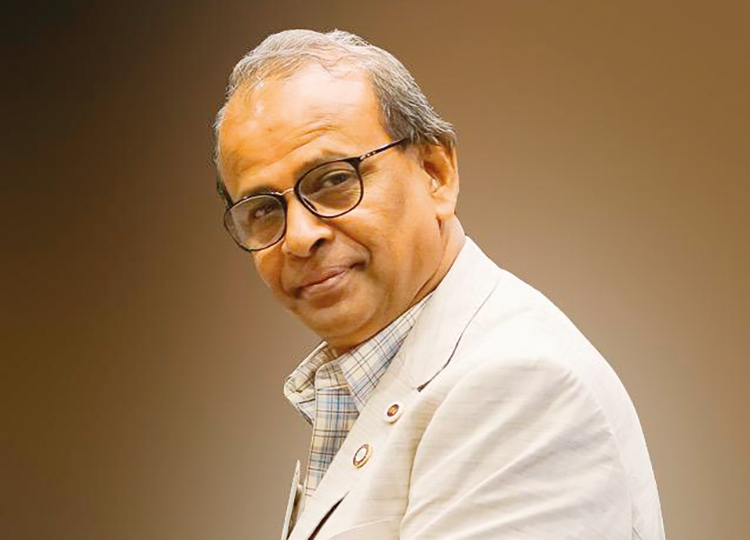
Chartered Interior Architect and economic commentator Prof. Rohan de Silva cautioned that the Iran conflict is not an isolated external shock but a “multiplier crisis” that could severely undermine Sri Lanka’s recovery trajectory—particularly for small and medium enterprises (SMEs), which form the backbone of the economy.
Energy Shock Rekindles Crisis Conditions
At the heart of the emerging pressure is the sharp escalation in global oil prices and supply disruptions linked to instability around the Strait of Hormuz—a critical artery for global energy flows.
“Sri Lanka, which already spends around USD 4 billion annually on fuel imports, is extremely vulnerable to such shocks,” Prof. de Silva said. “Any disruption in supply chains or price spikes will immediately translate into domestic inflation and reduced economic activity.”
The situation, he noted, could force authorities to revisit emergency measures reminiscent of the 2022 crisis, including fuel rationing, restricted working days, and reduced transport services—directly impacting productivity.
Inflation Surge and Currency Pressures
Rising oil prices are expected to trigger a fresh wave of cost-push inflation, affecting transport, food, and essential goods. Increased war-risk insurance and shipping delays are further inflating import costs, placing additional pressure on the Sri Lankan rupee and already strained foreign reserves.
“The real danger is a re-triggering of balance of payments stress,” Prof. de Silva warned. “Higher fuel import bills, combined with potential declines in remittances from the Middle East and weaker export earnings, could destabilize external accounts once again.”
Sri Lanka’s export sectors are also facing mounting challenges. Tea exports to Iran and Gulf markets risk disruption, while apparel shipments are being delayed due to rerouted shipping lanes and rising freight costs.
“Transit times are increasing by up to two weeks in some cases. That erodes competitiveness and reliability—two key pillars for export markets,” Prof. de Silva explained.
Industrial supply chains are similarly under strain, with delays in raw materials and petroleum-based inputs threatening production continuity across sectors.
However, the most severe impact is being felt by SMEs, which Prof. de Silva described as “financially exhausted after enduring repeated shocks since 2019.”
“These businesses have not fully recovered from the Easter attacks, COVID-19 shutdowns, and the 2022 economic collapse. Now, they are facing a fresh crisis that is simultaneously increasing costs and reducing demand,” he said.
Operating expenses—including fuel, electricity, and logistics—have surged sharply, while constrained transport and reduced working days are limiting both customer access and employee attendance.
“This is a classic margin squeeze. For many SMEs, profits are not just shrinking—they are disappearing,” he added.
Compounding the crisis is tightening access to finance. With interest rates remaining elevated to control inflation, banks are becoming increasingly risk-averse, leaving SMEs struggling to secure working capital.
At the same time, declining household purchasing power is dampening demand, particularly in non-essential sectors such as retail, interior design, and construction-related services.
“Consumers are cutting back. SMEs are losing revenue streams. It’s a dangerous cycle,” Prof. de Silva said.
Export-oriented SMEs are also facing order cancellations and payment delays from Middle Eastern buyers, further squeezing foreign exchange inflows.
Employment and Social Pressures Mount
The SME crisis is already spilling over into the labour market. Businesses are reducing staff, cutting working hours, or halting expansion plans altogether.
“If this trend continues, we could see rising unemployment and underemployment, particularly among youth,” Prof. de Silva warned.
He also highlighted the risk of returning migrant workers due to instability in Gulf economies, which could intensify domestic job market pressures.
A Multi-Shock Economy on Edge
Prof. de Silva stressed that Sri Lanka is now grappling with a cumulative “multi-shock cycle”:
2019 Easter attacks → Tourism collapse
COVID-19 pandemic → Prolonged shutdowns
2022 economic crisis → Currency and fuel collapse
Iran war → External energy, trade, and financial shock
“Each crisis has weakened the resilience of SMEs. What we are seeing now is not recovery, but survival,” he said.
Without targeted intervention, Prof. de Silva warned of widespread SME closures, job losses, and a prolonged delay in national economic recovery.
“The Iran war is amplifying every existing vulnerability in Sri Lanka’s economy. SMEs are at the frontline of this crisis—and without immediate policy support, the consequences could be severe and long-lasting,” he cautioned.
By Ifham Nizam

The International Centre for Ethnic Studies (ICES) will premiere its latest documentary, ‘The Saint of the Islands’ on 28th March. The 72-minute documentary, directed by Anomaa Rajakaruna, will be screened at the Tharangani Theatre of the National Film Corporation in Colombo, Bauddhaloka Mawatha, Colombo 7, starting at 4 pm on the 28th.
The film explores the shared devotional traditions surrounding St Anthony of Padua, the patron saint of sailors and fishermen, against the backdrop of the annual feast on the island of Kachchateevu. In Sri Lanka, devotion to St Anthony often crosses religious and cultural boundaries, bringing together different communities that unite across practices of prayer and veneration. At the centre of the story is the annual gathering of devotees from Sri Lanka and India at the St. Anthony’s Shrine on the island of Kachchatheevu, located near the maritime border between the two countries.
Filmed during the annual feast at Kachchatheevu and on the nearby island of Neduntheevu (Delft Island), the documentary reflects on the intersection of faith, livelihood, and geopolitics in the Palk Strait. Kachchatheevu itself is a small, uninhabited island that remains deserted for most of the year.
Yet for two days every year, during the annual feast of St Anthony, it is transformed into a vibrant pilgrimage site as thousands of devotees brave the rough seas, and arrive by boat from both Sri Lanka and India. This year alone, almost 12,000 people from India and Sri Lanka, gathered on the island for prayer, worship, and community.
The film also captures the nearby island of Neduntheevu (Delft Island), one of the northernmost inhabited islands of Sri Lanka. Known for its distinctive landscape, coral-stone architecture, and long maritime history, Delft serves as an important point of departure for pilgrims travelling to Kachchatheevu. Through scenes of travel, pilgrimage, and worship, the documentary reflects on how the sea shapes the lives of coastal communities while also connecting people across national borders and across different religions.
More information can be found on the ICES website, www.ices.lk or by emailing uvini.ices@gmail.com

The American Chamber of Commerce in Sri Lanka concluded its flagship CEO Forum 2026 on 25 February with government officials outlining an ambitious plan to achieve 7% annual economic growth and progress toward a LKR 200 billion economy. The day-long summit, held under the theme “Accelerating Sri Lanka’s Rebuild,” brought together more than 200 C-level executives, senior policymakers, and international partners at Cinnamon Grand Colombo.
Dr. Harsha Suriyapperuma, Secretary to the Treasury, outlined priority reforms including strengthening fiscal stability, maintaining inflation at 5%, improving governance to attract foreign investment, upgrading port infrastructure, supporting IT and pharmaceutical sectors, accelerating digitization, and consolidating the banking sector. The government aims to double the economy within a decade while creating a more predictable business environment.
Opening the Forum, Her Excellency Jayne Howell, Chargé d’Affaires at the U.S. Embassy, called for expanded two-way trade and highlighted opportunities for Sri Lankan buyers to access American technology and energy solutions. She emphasized that growth in trade and logistics, including Port of Colombo expansion, strengthens supply chains and drives economic growth in both countries.
Deputy Minister Chathuranga Abeysinghe announced the establishment of the Industrial Transformation and Innovation Agency (ITIA), with LKR 300 million allocated for capacity-building and a “Level Up” program targeting 6,000 SMEs. Currently, only 20% of financial sector credit is accessible to SMEs, a constraint the new initiatives aim to address through simplified registration, expanded financial literacy, and improved equity financing access.

Our objective is to ensure the continuous functioning of essential services, public services, and industries even amidst this crisis — PM

Devine’s all-round masterclass hands New Zealand 2-1 series lead

Senegal and Morocco tied by religion and trade but divided by AFCON fallout

Showers expected in the Central, Sabaragamuwa and Uva provinces and in Galle, Matara, Mannar, Anuradhapura and Vavuniya districts after 2.00 pm.

CIABOC tells court Kapila gave Rs 60 mn to MR and Rs. 20 mn to Priyankara

Opposition moves no-faith motion against Energy Minister Kumara Jayakody

‘Dates have the highest sugar content to fight Coronavirus’

Sunday Island 27 December – Headlines

#SundayIsland 17th December – Headlines

Sunday Island – 28th March

Sunday Island Headlines – 21 March

Sunday Island – 21st February – Headlines
-

 Business5 days ago
Browns EV launches fast-charging BAW E7 Pro at Rs. 5.8 million
-

 Life style6 days ago
From culture to empowerment: Indonesia’s vision for Sri Lanka
-

 News3 days ago
CIABOC questions Ex-President GR on house for CJ’s maid
-
 Business7 days ago
Sri Lanka Institute of Information Technology raises the bar for academic excellence
-

 Life style6 days ago
Ranjith Fernando celebrates cricketing journey with Hob Nails to Spikes
-

 Features5 days ago
Achievements of the Hunduwa!
-

 News4 days ago
Sri Lankan marine scientist Asha de Vos honoured at UNGA opening
-

 Latest News6 days ago
QR code system will be implemented for fuel with effect from 06.00 a.m. today (15th)