
Business
Bogawantalawa Tea taking up a global leadership role in fighting climate change

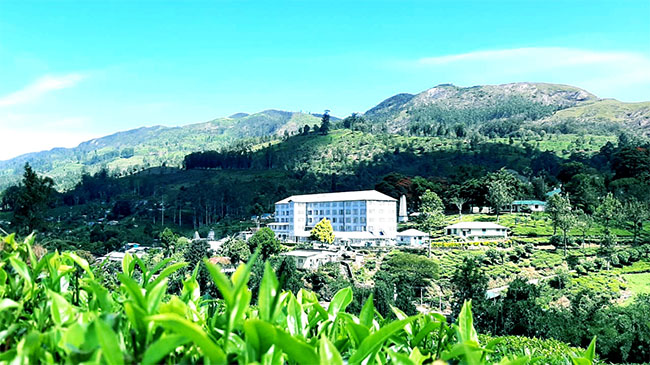
Many of Sri Lanka’s Regional Plantation Companies (RPCs) are breaking away from legacy practices of the sector by redefining themselves through innovation. In this week’s, ‘RPC Innovation Series,’ we explore the question: ‘can Pure Ceylon Tea help drive the fight against climate change?’ Having developed innovative, home-grown solutions and leveraged and adapted global best practices to local conditions, the team at Metrocorp subsidiary, Bogawantalawa Tea Estates PLC believe they can help lead the charge.
Renowned management consultant, Peter Drucker is famously quoted as saying that: “if you can’t manage what you can’t measure”. This timeless piece of wisdom emerged in the context of a post-World War II industrial boom, at a time when maximisation of productivity in pursuit of profit was the sole objective of free enterprise.
While this fundamental principle of management pre-dates formalised Environmental, Social and Governance (ESG) standards, it is perhaps more relevant than ever today. In the backdrop of what UN Secretary-General António Guterres has described as a “Code Red for humanity”, the need for a decisive global mobilisation against climate change has never been more urgent.
One Sri Lankan company that has taken responded most effectively to this challenge and is already proving that progress is possible is Metrocorp’s globally celebrated subsidiary, Bogawantalawa Tea Estates PLC. While its core business is in tea, Bogawantalawa is a truly diversified company that also manages managing Agroforestry, rubber, herbs, spices, oil palm and coconut, in addition to renewable energy, a growing eco-tourism business.
“It can certainly be daunting to consider the scale of the challenges we must overcome in order to effectively address the threat of climate change. However, we believe that in the face of such a truly global crisis, even smaller nations, economies and enterprises have the potential to make significant positive contributions. This in turn rests on the commitment of each firm to build a sincere top-to-bottom passion for sustainability in order to take their organisations far beyond the People, Planet, Profit model and into the realm of effective climate action,” says Bogawantalawa Tea Estates PLC Executive Director, Lalith Munasinghe.
“True to our motto, of being passionate growers with sustainability at heart, we have been able to embed these best practices at the core of all our operations, making them a way of life for all our employees,” he added.
Having gone beyond carbon neutral status in 2017, the company officially became Climate Positive in 2019, making Boagawantalawa the worlds’ first and only tea growing, manufacturing and marketing company to offer Gold Certified uncompensated Climate Positive Teas. This means that for every 1 kilogram of made tea purchased from Bogawantalawa Tea Estates, approximately 100g of carbon dioxide is sequestered in the soil.
While a remarkable achievement in its own right, Munasinghe believes that this is only just the beginning. Through a series of ambitious investments over the past decade, the company is also well on track to increase its sinking rate to 300g of carbon per kilo of made tea from Bogawantalawa by 2023; if not sooner.
Leading the implementation of Bogawantalawa Plantations’ pioneering efforts in sustainability is Bogawantalawa Tea Estates PLC Director of Sustainability, Research and Development Thusitha Bandara. “By pursuing innovation, leveraging new technologies, and implementing agricultural best practices, we are able to channel all of our operations towards ensuring the highest level of sustainability.
“As communicated at the last COP26, we know now that the window to keep within the 1.5 degree warming target is closing fast and we realize that our shared planet needs everyone to take responsibility to drive climate action.
“We believe that companies like ours can set the pace not just locally but globally as well. In this manner, we believe that all of us can effectively advance action against climate change. In order to drive change, we have to be able to measure ourselves as accurately and credibly as possible, in order to hold ourselves to the highest standard possible, so that we in turn can be accountable to all of our stakeholders.”
Measure, Verify, Mitigate
 Bogawantalawa Plantation is the world’s 1st tea growing, manufacturing, and marketing company to offer Climate Positive Teas, certified for 100% renewables
To that end, Bogawantalawa, set its sights on clearing the highest possible international standard for sustainability (Climate Positive, 100% Renewables, RA, Fairtrade, Organic…etc.) enabling the highest levels of environmental and social integrity aligned to all United Nations Sustainable Development Goals (UNSDGs).
“While adopting Climate Smart Agricultural practices across all Bogawantalawa estates and focusing on overall atmosphere, water, soil and quality of life of our people we are committed to bringing to the world the finest teas ethically produced with the highest level of sustainability. We are committed to making continuous improvements in the management of our social and environmental impacts to further enhance this legacy,” Bandara explained.
As part of the requirements for certification, Bogawantalawa had to accurately measure its carbon footprint across Scope I, Scope II and Scope III emissions. This meant careful, frequent, externally validated audits of the company’s entire carbon emissions. These calculations take into account the entire carbon footprint of all operations directly or indirectly connected to the company’s operations.
This includes everything from direct Green House Gas emissions from sources controlled directly by the company – such as fuel consumption for boilers – to total electricity consumption from the grid, emissions created from the packaging and transport of its produce to end-consumers.
“When pursuing Climate Positive Certifications, it is best to first attempt to optimize emissions as much as possible across the entire supply chain. Once that first round of mitigation was completed, we commenced the first in a series of continuous audits in order to accurately identify and measure our total GHG emissions.” While a difficult and painstaking task, especially on the first attempt, Bandara noted that the auditing processes gets much easier as the new processes get embedded into regular operations.
“By commencing such a detailed carbon footprint audit, we were able to understand what our highest sources of emissions were, and focus our efforts to further optimize critical processes, while offsetting the remaining emissions, leveraging global best practices on emissions mitigation,” Bandara noted.
Bandara stated that Bogawantalawa is also working towards the launch of a block-chain based solution to enable a new paradigm in transparent, real-time traceability across the value chain that goes well beyond traditional frameworks.
Based on the Climate Positive audits, the company identified that it’s largest sources of emissions were from electricity – which accounted for 45% of Bogawantalawa Tea Estates’ total carbon footprint, with the remainder being generated by the manufacture of fertiliser used by the company (18%), fuel (13%), packing materials (8%), fuel-wood transportation (6%) and electricity transmission loss (2%).
With its emissions footprint calculation completed, Bandara explained how the company that began to calculate, and then expand the carbon sinking capacity across its entire value chain. Given the significant contribution of the company’s electricity consumption from the grid, investments into renewable energy were among the first steps implemented by the company to cut down its footprint.
Through these efforts, Bogawantalawa is now generates a total of 15 GWh of clean, renewable energy – accounting for more than 100% of its total energy requirements, and saving GHG emissions equivalent to 11,000 MT annually, delivering social, environmental and financial returns to the company.
“The Sri Lankan experience with renewable energy dates back as far as the time of the British, when the nation’s first mini-hydro power plants were first established. In the subsequent decades, our company has continuously invested in harnessing these hydro resources to the point where today, we have built up 4 MW of internal hydro power capacity while our sister company Eco Power Pvt Ltd has built up a further 37 MW within the country and more than 20MW in overseas he stated.
Meanwhile, the company’s first trial for solar energy in upcountry conditions commenced in 2012 – at a time when few commercial solar power projects had been commissioned. Over the next decade, these efforts have also gathered significant momentum, with over Rs 280 million having been invested in the past 5 years towards the establishment of 2,500 kW of rooftop solar energy capacity, where all but one of the company’s factories are now supported with state-of-the-art solar power systems.
As part of its efforts to scale up renewable energy capacity and further expand its carbon sinking capacity, Bogawantalawa is also evaluating potential for the installation of a further 8.25 MW of wind power across two projects in the Bogawantalawa Valley.
Forestry for the future
Another significant tool in Bogawantalawa’s efforts to drive climate action is forestry. The company cultivates numerous species of commercial and native species, and annually plants thousands of diverse seedlings in order to increase forestry extents within its own plantations.
“There are some strategic locations which we have allocated purely for biodiversity enhancement, particularly in sensitive habitats near water bodies and grass lands. Depending on the unique conditions in each of these zones, we select suitable species for re-foresting or enrichment in order to improve the biodiversity and resilience of these ecosystems,” Bandara explained.
These initiatives have also been expanded out of estates, through partnerships with national organisations, Government agencies – including the Ministry of Environment – and Non-Governmental Organisations (NGOs). Most recently, Bogawantalawa has also signed on as a partner to a major conservation programme in Sri Lanka’s central hills through various initiatives.
Additionally, the company has also initiated a series of social forestry programmes with communities and schools in proximity to its estates. Through these initiatives, Bogawantalawa distributes seedlings and planting materials such as fertilizer, plant protective covers, and other equipment. These are distributed free of charge to school children, who are also educated on proper care of their plants. Each child is then given the responsibility to look after their own plant, thereby encouraging Sri Lanka’s future generations become active and enthusiastic stakeholders in the national effort to conserve the island’s rich natural heritage.
Powering climate smart agriculture
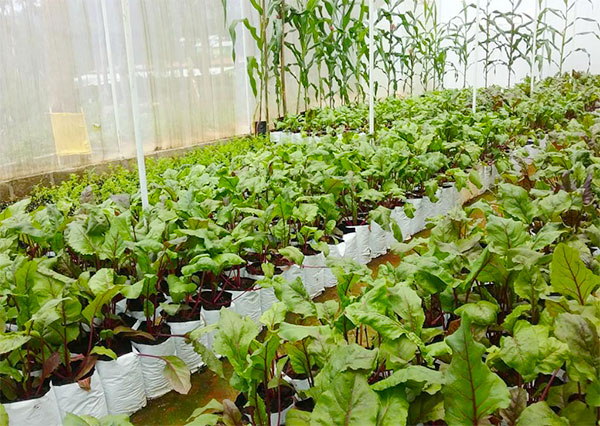 Bogawantalawa Tea Estates is one of several Sri Lankan RPCs that have steadily been scaling its expertise in organic agriculture
“In addition to social mobilisation, science, technology and data are essential in the battle to preserve our environment and drive action against climate change. Given our connection to communities, and our expertise in understanding agriculture and its relationship with nature, we realised we were also ideally positioned to help Sri Lanka improve its resilience to climate change through science,” Bandara notes.
It was with that understanding that Bogawantalawa established its own Climate Smart Agriculture Centre in order to gather vital data about rainfall , air temperature, solar radiation, relative humidity, wind speed, soil conditions, ground water levels, air quality, bio-diversity, and other essential metrics related to climate change. Through various analysis, using different tools / software, Bogawantalawa predicts and identify the trends of climate change and possible impacts the agriculture systems and accordingly alert the estate management to take necessary actions on short, medium and long term basis, to minimize the vulnerability and improve the resiliency of their farming units.
“Armed with this information, we are able to plan out our own operations in a more sustainable manner, while also sharing data so that all stakeholders to the agriculture sector can also have access to this information,” Bandara stated. This in turn enables more strategic interventions in commercial agriculture and animal husbandry, and responses to drought, high intensity rainfall, soil degradation, pest, disease and weed outbreaks.
Moving forward, Bandara stated that such initiatives would help to disseminate agricultural and environmental best practices, thereby improving resiliency of plantations and farming systems to face the challenges of climate change successfully.
Growing expertise in organic agriculture
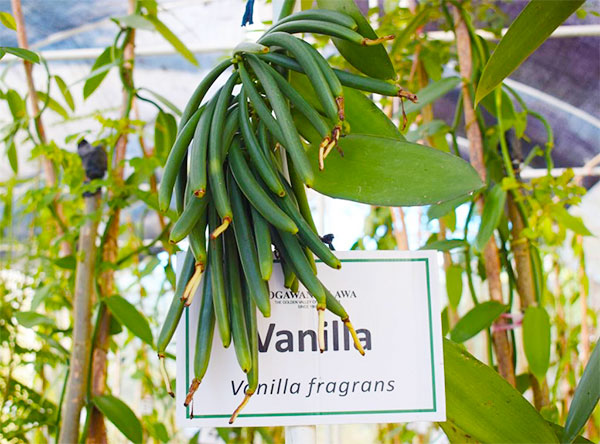 Bogawantalawa Tea Estates is also one of several Sri Lankan RPCs that have steadily been scaling up their expertise in organic agriculture over the past two decades. “Organic agriculture has been a topic that has gained a lot of positive and negative attention in the recent past. While there is still a lot of debate, we believe that most Sri Lankan RPCs have accumulated a great deal of invaluable knowledge and experience in both cultivation models, which can have a significant positive impact on the broader agriculture sector in future,” Bandara noted.
The Bogawantalawa approach augments conventional farming with strategic organic interventions that are based on four organic farming principles: health, fairness, ecology and care. Crucially, these models have to be geared towards profitable commercial scale cultivation, in order to ensure their continued economic sustainability.
As part of these initiatives, Bogawantalawa has invested Rs. 40 million per annum towards establishment and expansion of sustainable soil development programs. These initiatives leverage drone technology to conduct soil mapping, thereby identifying nutrient deficiencies, which in turn feed into the company’s fertility management, and erosion control strategies.
Additionally, the company also established its own conventional and organic fertilizer manufacturing and blending facilities to blend inorganic fertilizers according to the site specific requirements and production of organic fertilizers for organic projects and soil developments in other areas.
“These techniques help us to optimize use of chemical and organic inputs – which makes sense from an agricultural management perspective, as well as financially, and for the environment..
A sustainable future within reach
 The results of Bogawantalawa’s pioneering approach to modernized, climate-smart plantations management speak for themselves. Over the past year, the company recorded a significant increase in profits. These improvements were the result of the combined effect of the company’s holistic approach to plantations management. Since the company first took on management of its estates, its annual Yield Per Hectare (YPH) for tea has increased from 800 kg per hectare to 1,500 kg per hectare. Crucially, the company has continuously re-invested its profits back into the business.
In addition to its superior agricultural and environmental standards – which have enabled the company to charge a premium on its produce, Bogawantalawa has also undertaken ambitious diversifications, expanding to include non-traditional crops like lemongrass, vanilla, cinnamon, cardamom, cloves, turmeric, ginger, pepper and coffee.
Looking ahead, Bogawantalawa has ear-marked a further Rs. 6.2 billion towards such improvements.
“The combined impact of these R&D initiatives have the potential to revolutionize agriculture in Sri Lanka, and potentially around the world, Sustainability is a way of life at Bogawantalawa. We believe the essence of sustainability is encapsulated in a phrase penned century before the word sustainability itself was coined. That is when the Red Indian Chief Seattle conveyed to the American president, “Earth does not belong to us. We belong to Earth”.
“This is our creed at Bogawantalawa Tea Estates and we therefore consider sustainability as a core pillar of our day today business operations. Behind every action we take and each of our operations and processes our attention is on achieving stellar performances in the triple bottom line.” Munasinghe asserted.

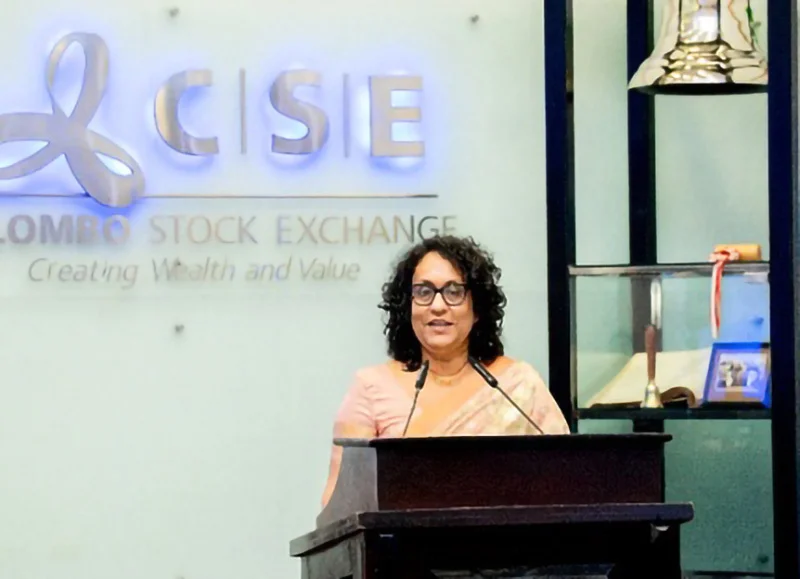
As part of World Investor Week (WIW) 2026, the Securities and Exchange Commission of Sri Lanka (SEC) and the Colombo Stock Exchange (CSE) joined stock exchanges around the world in ringing the market opening bell for financial literacy on 5 October 2026, under the patronage of Dr. Harini Amarasuriya, Prime Minister of the Democratic Socialist Republic of Sri Lanka.
World Investor Week is an annual global campaign led by the International Organization of Securities Commissions (IOSCO) to raise awareness of the importance of investor education and investor protection. The “Ring the Bell for Financial Literacy” initiative, pioneered by the World Federation of Exchanges (WFE), brings together stock exchanges and other stakeholders worldwide to promote greater financial literacy and encourage individuals to make informed financial decisions.
The ceremony also marked the 40th anniversary of the CSE and the joint launch by the SEC and the CSE of the Stock Market Game, an online stock market simulation based on the ATrad trading system.
The Stock Market Game enables participants to gain practical experience of how the stock market works, make investment decisions and construct portfolios of listed shares without using real money. The platform is accessible through the websites of the SEC and CSE and is expected to serve as an important practical tool for promoting financial education. It is envisaged that the Stock Market Game will also be used to conduct simulation competitions among universities and the 100 Capital Market Clubs established in schools across the country.
The ceremony also featured the commemorative issuance of a stamp and First Day Cover to mark the 40th anniversary of the CSE. Issued in collaboration with the Department of Posts and the Philatelic Bureau of Sri Lanka, the commemorative stamp and First Day Cover were presented to Prime Minister Dr. Harini Amarasuriya, by the SEC Chairman Snr. Prof. D.B.P.H. Dissabandara and Ray Abeywardena, Director CSE and Chairman of Central Depository Systems (CDS).
Welcoming the gathering, Rajeeva Bandaranaike, Chief Executive Officer of the CSE, highlighted the importance of obtaining reliable information when making investment decisions.
“We operate in a digital world where a vast amount of information and data is disseminated through social media. While some of this information is factual, some may be inaccurate or misleading. When investing in the stock market, it is essential to make informed and prudent investment decisions. Therefore, investors should obtain information and data from reliable and responsible sources and persons before making investment decisions.”
Addressing the gathering, SEC Chairman Snr. Prof. D.B.P.H. Dissabandara emphasised that the SEC’s role extends beyond regulation to facilitating the further development of the capital market.
“The SEC needs to determine how best to introduce the stock market to Generation Alpha, Generation Beta and generations beyond. When it comes to investors, we need to build confidence in the market, because people will invest only when they have confidence in the market.’’
Business
Rs. 5 million worth of prizes to be given at 8th edition of CSE Masterminds Quiz Competition

The Colombo Stock Exchange (CSE) has announced that the eighth edition of the CSE Masterminds Quiz will be held on 9th October 2026, from 3.00 p.m. onwards, at the Main Ballroom, Shangri-La Colombo.
Recognised as Sri Lanka’s premier capital market quiz competition, CSE Masterminds brings together teams from the public and private sectors. Participants will be tested across international business, global markets, current affairs, the Sri Lankan economy and business, the Sri Lankan stock market, and sports and entertainment, before a concluding rapid-fire round.
This year the winning team can win up to Rs. 2,000,000, the runners-up up to Rs. 1,000,000, and the second runners-up Rs. 750,000. Sector awards will also be presented to the highest-performing team from each participating sector. Guest participants will also be able to compete in rounds of Audience questions, and will have the opportunity to participate a raffle draw for three free return tickets provided by Fits Aviation (Pvt) Ltd.
The evening will also include an exclusive after-party with live music provided by the band ‘Doctor’ featuring guest performer Umara Sinhawansa, fine food and beverages, providing an opportunity for networking and celebration. Every participant will receive a premium goodie bag made possible by the support of the event’s sponsorship partners. Collectively, the event will feature over Rs. 5 million worth of prizes, rewards, and giveaways, encompassing championship prizes, sector awards, audience engagement prizes, raffle draw offerings, and goodie bags.
Sponsorship partners include:
Platinum Sponsors: Hatton National Bank PLC and Bartleet Religare Stockbrokers (Pvt) Ltd.
Gold Sponsors: Ex-Pack Corrugated Cartons PLC, Asha Securities Ltd., and Lanka Securities (Pvt) Ltd.
Silver Sponsors: Barista Coffee Lanka (Pvt) Ltd., Capital Trust Holdings (Pvt) Ltd., LOLC Holdings PLC, Arpico Ataraxia Asset Management (Pvt) Ltd., IronOne Technologies (Pvt) Ltd., and LankaPay (Pvt) Ltd.
Co-Sponsors: Access Engineering PLC, Bank of Ceylon, Commercial Bank of Ceylon PLC, CryptoGen (Pvt) Ltd., Deloitte Lanka (Private) Limited, Dialog Finance PLC, Efutures (Pvt) Ltd., People’s Leasing & Finance PLC, Senfin Asset Management (Pvt) Ltd., and Softlogic Stockbrokers (Pvt) Ltd.
Business
NCCSL to conduct practical workshop on food labelling and advertising regulations in Sri Lanka

The National Chamber of Commerce of Sri Lanka (NCCSL) is organizing a one-day practical workshop on “Food Labelling & Advertising Regulations in Sri Lanka” on Thursday, 8th October 2026 from 9.00 a.m. to 4.30 p.m. at the National Chamber of Commerce, Colombo 10. The workshop has been organised to provide a practical understanding of the latest regulatory requirements governing the food products labelling and advertising of food products in Sri Lanka, with particular attention to regulatory developments applicable in 2026, compliance requirements, and the potential legal and financial implications of non-compliance.
As food products increasingly compete not only with quality and price but also on packaging, labelling and promotional claims, businesses must ensure the information they communicate to consumers is accurate, transparent and consistent with applicable regulatory requirements. Understanding these requirements is therefore essential for businesses seeking to protect their brands, maintain consumer confidence, and minimize regulatory and legal risks.
The practical workshop will go beyond an overview of regulations and focus on how businesses can apply regulatory requirements in their day-to-day operations. Participants will be guided through key areas of food regulatory compliance, including the national food regulatory framework, recent food labelling regulations and key changes, mandatory approvals and prohibitions relating to food labelling, and the litigation process associated with regulatory violations. The programme will also cover several areas of growing importance to the food industry, including the EU EMPCO Directive, food colour coding regulations, regulations relating to food trans-fatty acids and the importance of compliance in the use of food additives. Practical exercises will further enable participants to apply their knowledge to real-world compliance situations and strengthen their ability to identify potential regulatory concerns.
For further information and registration, please contact the National Chamber of Commerce of Sri Lanka on 011 4741788 – Nethmi or Udula – 071 403 4775.

Ronaldo apologizes for Portugal walkout; says Jesus broke promise

Showers in the Western, Sabaragamuwa, Central, Uva, North-western and Southern provinces and in Anuradhapura and Mannar districts

Fuel crunch looms

Gnansara Thera to be assigned to prison printing section: Officials

Speaker rejects Ajith Perera’s privilege complaint

OIC of FCID summoned before Maligakanda Magistrate

‘Dates have the highest sugar content to fight Coronavirus’

Sunday Island 27 December – Headlines

#SundayIsland 17th December – Headlines

Sunday Island – 28th March

Sunday Island Headlines – 21 March

Sunday Island – 21st February – Headlines
-

 News6 days ago
US-assisted ‘Ice’ detection: NPC to examine IGP’s move to transfer drug-busting team
-

 Editorial5 days ago
Colombo Port drug bust: The plot thickens
-

 Editorial6 days ago
Drug busting, transfers and trust deficit
-

 Features3 days ago
The first woman in the foreign service or Ceylon Overseas Service it was then called
-

 Editorial4 days ago
Fuelling discontent and protest
-

 News6 days ago
Sri Lankan facing death penalty in Saudi Arabia: Mano G appeals to Crown Prince
-

 Latest News4 days ago
Tharindu Rathnayake, bowlers secure Asian Games Bronze for Sri Lanka
-

 News5 days ago
ADB-backed virtual net metering project faces policy contradiction