
Business
BOC new chairman vows to have important, difficult discussions with management staff and trade unions


By Sanath Nanayakkare
President’s Counsel Ronald C. Perera, who assumed duties as Chairman of Bank of Ceylon for the third time last Friday said that he would be having important yet difficult discussions with the Bank’s GM/CEO, the director board, the institutional management staff and trade union representatives.
He said that based on these discussions, he would see how best the Bank can resolve existing issues and continue to engage in the task of reviving SMEs and providing substantial support to strengthen the country’s economy.
“The biggest asset BOC has is its staff; not its buildings or its cash reserves. I appeal to you to collaborate with me in harnessing your talent and commitment to its fullest potential in order to take our Bank forward and enhance its contribution to the national economy at this crucial time,” he noted.
Further speaking the Chairman said, “In 2020, the whole world changed due to the pandemic and the lockdowns. And our country changed not only because of the consequences of the pandemic but also due to its rash decisions such as on chemical fertilizer. The Galle Face Green and the Presidential Secretariat became the site of a new political movement in April 2022 and the rest is history. President Ranil Wickremesinghe who was elected by parliament in terms of the constitution had to bite the bullet and take very unpopular decisions. If you think back to July 2022, you’ll recall how tough life was due to various scarcities. Today, the lives of the people are back into some semblance of order, but we still have a lot of things to criticize. I can tell you one thing; whoever becomes the President of Sri Lanka, whoever forms a government, there is no alternative route to take other than deal with the issues as they are now being dealt with. There is no other way. We have to get out of our debt crisis. And the government is planning to privatize certain state owned enterprises such as SLT, SLI, Sri Lankan Airlines for one sole reason; that is to sell these assets and get a substantial amount of US dollars to ease the pressure on the Sri Lanka rupee. At the moment, the USD is selling at over Rs. 370. If we get USD 3-4 billion in cash from the sale of such enterprises, it will have an immediate positive impact on the exchange rate of the USD. The USD will drop by at least Rs.100. That will lead to the lowering of the cost of living. The President has emphasized that the government should get out of all commercial sectors except for the financial sector. He has said that the financial sector and the State Banks especially would be strengthened to face the new challenges.”
“Very high interest rates have to be charged when giving out new loans today. For this reason, many people are unwilling to take out loans. Some of our existing borrowers are struggling to repay their loans in the current economic conditions. There is no point in auctioning their properties or instituting legal action. We must try and see how we can revive those enterprises so that we can also join the mainstream of business and carry out expansions in our business, and help the country get out of its financial crisis. Profitability is important to keep the BOC’s banking business thriving but that shouldn’t be our core objective, so there are a lot of things to be done. I am keen to work with the board of directors, the young corporate management , all employees and trade unions to help the country and the Bank of Ceylon prosper, “he said.
Welcoming the new Chairman, Bank’s General Manager/CEO Russel Fonseka said that BOC staff and customers were happy about him being appointed as chairman of BOC.
“Honestly speaking, we know that the Chairman is a stalwart of a certain political party. But he never brought that into the Bank. That is why the staff as a whole is happy about his appointment. During his past tenure, he meted out equal treatment to all staff and employees and looked after their wellbeing without any discrimination.”
He recalled that under Ronald C. Perera’s guidance in the past, the Bank had a lot of international transactions including a successful international bond transaction.
GM/CEO said that in the recent past, a larger share of mature BOC employees in institutional management roles were replaced by talented, customer-driven young officers with about 10-15 years of experience, and the task upon the Chairman and the GM to steer the Bank through these difficult times could be spurred by the efficiency of this young talent pool. Presently, President’s Counsel Ronald C. Perera is serving as Chairman of Sri Lanka Insurance Corporation Limited and as Acting Chairman of National Lotteries Board.

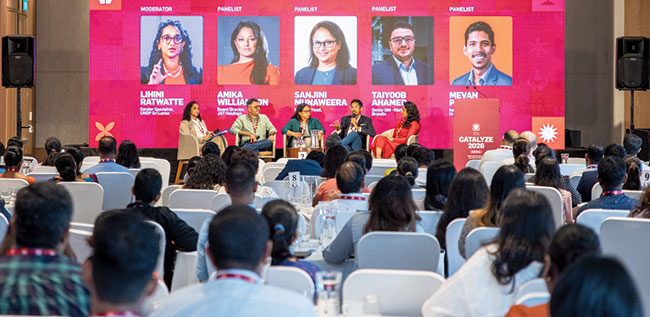
As businesses navigate an increasingly complex operating environment shaped by workforce transformation, evolving stakeholder expectations, technological disruption and shifting market demands, strengthening performance requires more than new strategies. It requires new ways of thinking, leading, and collaborating.
It was against this backdrop that UN Global Compact Network Sri Lanka convened CATALYZE 2026: Social, bringing together business leaders, sustainability practitioners, policymakers, development partners and industry experts to mobilize collective action and equip businesses with the knowledge, partnerships and practical approaches needed to strengthen performance through responsible business.
More than a forum for dialogue, CATALYZE 2026 was designed to help businesses think differently about performance. It reinforced that long-term success is increasingly shaped by how organizations lead, uphold human rights, foster inclusive workplaces, strengthen ethical governance, and build cultures that enable innovation, resilience and trust. Responsible business is no longer separate from business performance — it is fundamental to it.
Aligned with the UN Global Compact’s 2026–2030 Global Strategy, the Forum reflected its three strategic pillars — Equip, Catalyze and Advance — by strengthening business capability, fostering collaboration and mobilizing leadership to accelerate progress on social sustainability.
UN Global Compact Network Sri Lanka’s approach to social sustainability centres on driving this change — recognizing that meaningful progress comes not only through policies and commitments, but through the everyday decisions, leadership behaviours and organizational cultures that shape how businesses operate. CATALYZE 2026: Social encouraged participants to move beyond intention towards implementation, embedding responsible business practices into strategy, governance and organizational culture.
Opening the CATALYZE 2026: Social, Rathika de Silva, Executive Director of UN Global Compact Network Sri Lanka, spoke to the role of responsible business leadership in strengthening Sri Lanka’s global competitiveness:
“Sri Lanka has the workforce, resilience, and opportunity to compete not by being the cheapest producer, but by becoming the most trusted. As global expectations evolve, compliance is no longer simply a cost of doing business — it is the foundation of market access, and the decisions we make today will determine how strongly we compete in the markets of the future.”
The Forum featured keynote addresses, leadership dialogues and technical sessions on the issues shaping the future of business, including business integrity and anti-corruption, human rights, neurodiversity and inclusive workplaces, artificial intelligence and the future of jobs, the Women’s Empowerment Principles (WEPs), responsible sustainability communications, and workforce resilience. Together, these discussions highlighted how responsible leadership, inclusive practices, and strong governance contribute to organizational resilience, innovation, and long-term performance.
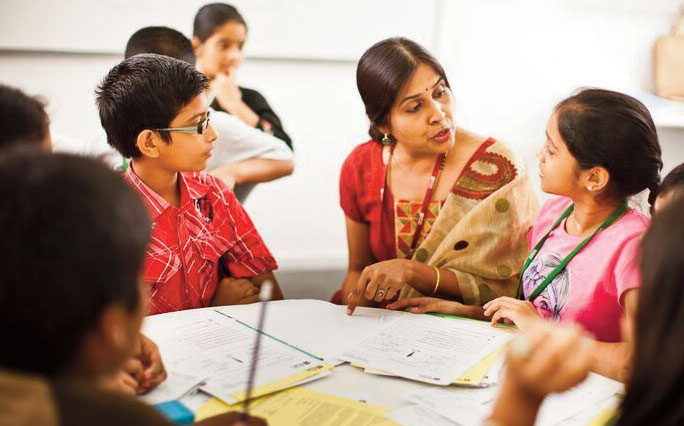
Free British Council online conference brings together leading educators from across South Asia to explore how creativity, inclusion and technology can help prepare learners for a rapidly changing world
The British Council has announced the South Asia TeachingEnglish Online Conference 2026, a free three-day event that will convene educators, researchers and teacher educators from across the region to examine one of the most pressing questions facing education today: how can schools equip learners with the creativity, adaptability and communication skills needed to thrive in an increasingly complex world?
Taking place from 23–25 July 2026, the online conference comes at a time when education systems across South Asia are grappling with the challenge of balancing curriculum demands, assessment pressures and evolving learner needs. While English remains a critical gateway to academic and professional opportunities, educators are increasingly seeking approaches that move beyond language acquisition alone to foster critical thinking, collaboration, learner agency and participation.
Business
The Ceylon Chamber convenes dialogue on energy security and standards for Sri Lanka’s energy transition

The Ceylon Chamber of Commerce recently hosted a discussion titled “Energy Transition in Sri Lanka: Strategic Insights from Global Markets”, bringing together representatives from the public and private sectors, industry experts, academics, and other stakeholders to examine the opportunities and challenges associated with Sri Lanka’s evolving energy landscape.
Held at a time when countries around the world are accelerating their transition towards cleaner, more resilient, and technology-driven energy systems, the event provided a timely platform to examine renewable energy not only as an environmental priority but as a strategic pillar of national energy security, with implications for economic growth and long-term competitiveness. The discussion also considered the increasing importance of reliable energy infrastructure in meeting the growing demands of digital transformation, including emerging technologies such as artificial intelligence, electric mobility, and data centres.
The programme covered a wide range of topics relevant to Sri Lanka’s energy future, including renewable energy development, energy security, regulatory and policy frameworks, electricity sector reforms, energy storage systems, grid modernization, investment and financing considerations, and international experiences in energy transition. Particular attention was given to the need for creating an enabling environment that supports innovation, attracts investment, including the technical and safety standards required to protect consumers and businesses as storage and solar adoption scales nationally.

India A grow lead after Sai Sudharsan hits 168

Boys among men – Sooryavanshi joins Tendulkar, Aaqib and Hasan Raza

Brutal heat cancels Fourth of July events, from DC to Philadelphia

Arias sends Colombia into World Cup last-16 with 1-0 win over Ghana

Messi scores again but Argentina given World Cup upset fright by Cape Verde

Anguished families left to identify Venezuela quake victims at makeshift morgue

‘Dates have the highest sugar content to fight Coronavirus’

Sunday Island 27 December – Headlines

#SundayIsland 17th December – Headlines

Sunday Island – 28th March

Sunday Island Headlines – 21 March

Sunday Island – 21st February – Headlines
-
 News6 days ago
LAWASIA warns against ad hoc initiative to increase judges’ retirement ages
-

 Features5 days ago
Climate action to bring South Asia together
-
 News5 days ago
Chamuditha to seek removal of injunction on Youtube programme
-

 Features7 days ago
People’s Bank expands digital banking network with 125th cheque deposit kiosk
-

 News18 hours ago
Freedom 250: US Embassy celebrates America’s 250th Independence Day through magic of American cinema
-

 News2 days ago
CIABOC to question Harak Kata on Rs. 200 mn bribery allegation
-
 News2 days ago
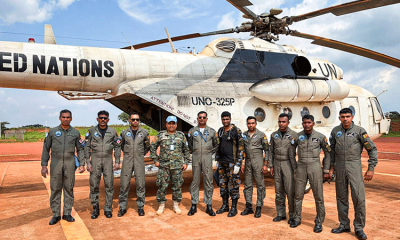
SLAF conducts successful rescue mission under UN command in Central African Republic
-

 News5 days ago
CPRP alleges another death in custody, seeks protection for witness