
Business
BOC floats bold business revival scheme to uplift loyal customers


Bank of Ceylon (BOC) adopts a novel humanitarian approach in debt recoveries through a special recovery unit. In Sri Lanka, all commercial banks are governed by a set of rules and regulations in lending and recoveries set out by the Central Bank.
However recent unexpected happenings globally as well as locally, affected activities in the Sri Lankan economic landscape causing major setbacks to domestic as well as other investments in an unprecedented manner.
In this backdrop the Sri Lankan economy faced severe hardships due to the stand still and the crippling effect on the vital economic indicators of the country. This occurred due to the extraordinary spread of new COVID – 19 Pandemic which affected nations across the world and the Easter Sunday terror attack two years ago in Sri Lanka.
Deputy General Manager – Recovery Provinces, Business Revival & Rehabilitation, of BOC Rohana Kumara explained the novel mechanism which the bank adopts to recover advances made to the bank’s loyal business customers in an amicable and more prudent manner. This was very difficult than the stringent recovery policy which banks are normally supposed to adopt in recovery of advanced money from the so called past-due or defaulted customers.
Rohana noted that as a government sector institution the bank’s recovery policy took a new turn from the conventional banking practices and adopted a different approach by viewing the business in a more progressive manner.
Explaining further Mr Rohana noted, most of the corporate businesses which were affected very badly by the Easter Sunday terror attack and the Covid-19 outbreak were helpless. They faced a situation where they could not recover due to the sinking nature, they face in the economy with either curtailed or limited avenues to pursue in their normal activities- the situation was forcing them into insolvency. Many among these were well to do businesses which had generated employment opportunities to many and all those were faced with a debacle that would become a burden to the economy.
The Government and the Central bank introduced many concessionary loan schemes to uplift these falling businesses. However, considering the losses incurred by these businesses, it was essential to assist the Government with its economic revival agenda going beyond the assistance provided by working capital loans under ” Saubhagya” scheme.
Customers with long lasting unblemished relationships with BoC cannot be left alone “it is prudent to think outside the box and help them” Rohana said. BoC decided to review these customers’ businesses and help them to get into the main track of profitability, Mr Rohana stressed.
Adhering to normal banking procedure in such a scenario these businesses will be considered as defaulters and face the inevitable end of extinction. “As a responsible bank we do not want that to happen to the loyal and long-standing customers hence the main intent of the bank is to revive them where both parties will be benefited”.
With this unique vision in mind bank decided to establish a special unit separate from the regular banks’ recovery division and transferred all these selected corporate level business customers with a view of to reviving them. These businesses are not viewed as past due customers with defaulters’ intent but businesses with genuine recovery ability and intent.
The Bank of Ceylon has commenced activities of this unit in January 2021, and in March ’21, about 14 categories were identified for revival and more than 10 are within the final phase of recovery. Total debt with direct and indirect facilities so far revived is over Rs. 30 billion. Mr.Rohana further stressed that the bank has plans of extending these services to provinces and small and medium scale business as well in the future and the indication is this is getting more popular day by day among genuine customers.
At present a new credit policy to accommodate special concessions and terms is completed and presented for the approval he said. Once the approval is granted the bank intends expanding this business revival policy to many sectors and accommodates the regions. These reviews do not offer total interest waivers but some possible waivers and some other special concessions Mr Rohana explained.
The prerequisite in the revival scheme is the businesses should be able to submit to the bank an acceptable business plan. However, if any business needs guidelines and help to provide such a plan the bank is willing to help them to do so. Rohana was very positive about the success of this revival scheme and quipped customers revived during the last couple of months have paid their dues on time and this is a very positive indicator towards this scheme’s success.
“the industries for revival are selected through a very stringent review process following all the financial guidelines, also the credit committee of the bank which is headed by the General Manager and consisting of many DGMs have the final review on all the credit concessions and revival decisions this unit takes.” Rohana noted. “The Chairman of the Bank and the members of the Board of Directors too are very keen on the progress of the revival plans approved and regularly review the position of the reviewed businesses. Most of the selected revivers’ balance sheets and debt ratios are not within normal banking norms but if our review indicates going by their past behavior pattern, a revival is possible within a two to three years’ period, the bank considers them as a suitable business for revival” he further explained.


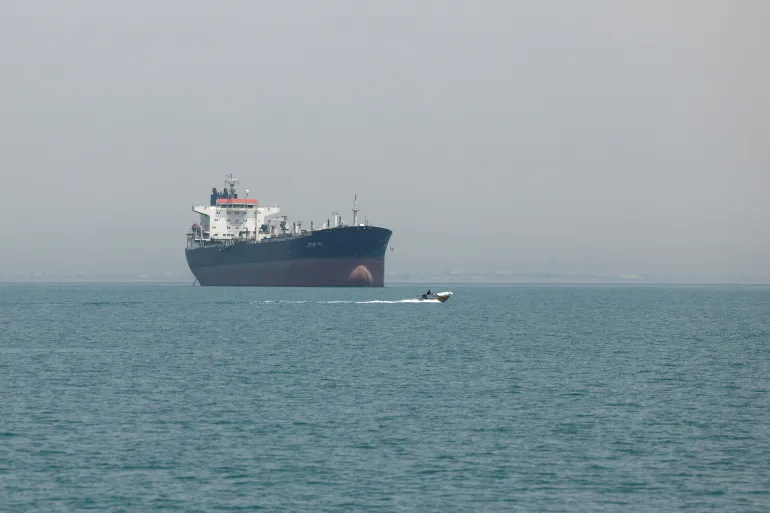
Oil prices have fallen sharply amid tentative hopes for a deal to end the US-Israel war on Iran.
Brent crude, the primary benchmark for global oil prices, fell about 5 percent on Sunday as US President Donald Trump gave mixed signals on the prospects for a permanent end to the conflict.
Brent futures for July stood at $98.47 a barrel as of 01:05 GMT, down about 9 percent from a month ago but still up by more than a third compared with before the start of the war.
Japan’s benchmark stock index, the Nikkei 225, surged more than 3 percent in morning trading, hitting an all-time high after closing at a record peak on Friday.
Trump said in a social media post on Sunday that negotiations with Tehran were proceeding in an “orderly and constructive manner”, but he had instructed officials “not to rush into a deal”.
“Both sides must take their time and get it right. There can be no mistakes!” Trump wrote on Truth Social.
Trump’s remarks came after he raised hopes for a breakthrough on Saturday by announcing that a deal had been “largely negotiated,” with the terms including the reopening of the Strait of Hormuz.
“Fundamentally, there is no change to the underlying picture, where 10-11 million barrels per day of crude oil continue to be shut-in for every day the Strait of Hormuz remains shut,” June Goh, a senior oil market analyst at Sparta in Singapore, told Al Jazeera.
“However, markets are expecting a gush of 100 million barrels of crude oil from the stranded ships to flow out once the deal is in place.”
Goh said markets are likely to remain on edge for some time after any deal is finalised.
“Sparta estimates still about three to six months required to get everything back to status quo, including time to bring production and refineries back online,” Goh said.
Iran has effectively blockaded the strait since the start of the war in late February, disrupting about one-fifth of the global oil trade.
The US has imposed its own blockade of Iranian ports since mid-April, further disrupting commercial shipping in the waterway.
In his Truth Social post on Sunday, Trump said the US blockade would remain “in full force and effect until an agreement is reached, certified, and signed”.
[Aljazeera]


Investor appetite for Sri Lanka’s government securities strengthened sharply during the week ending May 22, with the Treasury Bill auction attracting bids amounting to about 1.7 times the offered volume, while secondary market transactions in Treasury Bills and Bonds surged 22.8 percent from the previous week, according to the latest weekly report of the Central Bank of Sri Lanka.
The renewed demand for government securities appears to reflect a growing preference among investors for safer and more liquid assets at a time when several segments of the economy are showing signs of uncertainty despite the broader macroeconomic recovery.
A market analyst told The Island Financial Review that the rise in demand for Treasury securities is likely driven by a combination of factors including rising inflation expectations, weakening equity market sentiment, currency depreciation pressures and investors may be attempting to lock in currently attractive yields before any further decline in market interest rates.
“The National Consumer Price Index-based headline inflation accelerated to 4.7 percent in April from 2.4 percent in March, while core inflation also rose to 4.4 percent. Such inflationary pressures may have encouraged institutional investors to lock into relatively attractive government yields before any future market volatility emerges,” he said.
At the same time, the Colombo stock market came under pressure during the week, with the All Share Price Index falling 4.26 percent and the S&P SL20 Index declining 3.55 percent.
The analyst said that part of the funds flowing into government securities may have shifted away from equities as investors sought more predictable returns.
“Another important factor supporting government securities is the persistent surplus liquidity in the banking system. The outstanding market liquidity remained in surplus at Rs. 141.27 billion by May 22, although slightly lower than the previous week’s Rs. 156.8 billion. Excess liquidity typically pushes banks and large institutional investors toward government debt instruments, particularly when private sector credit expansion remains subdued,” he noted.
“According to the data, foreign holdings of Treasury Bills and Bonds declined by 3.32 percent during the week. This suggests the recent demand surge was driven largely by domestic investors rather than foreign inflows, underscoring strong local institutional confidence in government-backed instruments,” he added.
In conclusion, he noted that the strong oversubscription at Treasury auctions reflects growing market confidence that Sri Lanka’s domestic debt market remains one of the few relatively stable investment avenues amid external vulnerabilities and domestic realities.
By Sanath Nanayakkare

INSEE Lanka, Sri Lanka’s fully integrated cement manufacturer and market leader, took center stage as the Corporate Sponsor of the Build Sri Lanka Housing & Construction Exhibition 2026, organised by the Chamber of Construction Industry of Sri Lanka (CCI). The partnership showcases INSEE’s commitment to advancing the country’s construction sector through quality, sustainability, and industry collaboration.
The exhibition was held from 22-24 May 2026 at BMICH. Stakeholders representing different sectors of the Construction Industry and international participants will be present.
As Sri Lanka’s construction sector enters a new era, the need to unite, innovate, and collaborate has never been greater. Build Sri Lanka is recognized as one of the industry’s most influential events and brings together the full construction value chain including manufacturers, suppliers, architects, engineers, developers, and homeowners into one dynamic platform.
Build Sri Lanka also plays a vital role in bridging industry knowledge with public understanding, enabling informed decision‑making for the construction ecosystem.
For INSEE Lanka, the exhibition is an opportunity to showcase capabilities to contribute to shaping the future of construction in Sri Lanka. Participation also highlights a dedication to drive progress to benefit the sector and the country, creating lasting value for communities and the environment.

Sri Lanka name Kusal Mendis as ODI and T20I captain for West Indies tour

Cambodia’s former opposition leader receives royal pardon for 27-year sentence

Death toll rises to four in Philippines building collapse; 17 missing

India gifts 134 cabs to Sri Lanka Police

Landslide Early Warnings issued to the Districts of Colombo, Gampaha, Kalutara, Kegalle, Nuwara Eliya and Ratnapura extended till 1600 hrs on Tuesday [26]

Attacks on Ebola centres intensify in eastern DRC amid outbreak fears

‘Dates have the highest sugar content to fight Coronavirus’

Sunday Island 27 December – Headlines

#SundayIsland 17th December – Headlines

Sunday Island – 28th March

Sunday Island Headlines – 21 March

Sunday Island – 21st February – Headlines
-

 Features6 days ago
Octopus, Leech, and Snake: How Sri Lanka’s banks feast while the nation starves
-

 Sports6 days ago
Sri Lanka women’s volleyball team ready for Central Asian challenge
-
 Opinion5 days ago
Murder of Ehelepola family, Bogambara Wewa and Sightings of Wangediya
-
 News5 days ago
Steps underway to safeguard Sri Lanka’s maritime heritage
-

 Business4 days ago
Historic launch of CCWE Fashion Week & International Summit 2026
-

 Features2 days ago
The NPP’s pivot to the past
-

 Editorial5 days ago
A play without its protagonist
-
 News22 hours ago
Police probe underway to ascertain links between criminals deported from UAE and local politicians