
Life style
Being single in your thirties shouldn’t make you feel guilty


It is a truth universally acknowledged that a single woman in possession of ‘good’ moral character must be in search of a husband. That is, it was a truth rather universally echoed by a society hell-bent on maintaining the dubiously constructed integrity of its hetero-patriarchial power structure. Although the parameters of what is acceptable and what is embraced on a societal level have begun to show a little malleability, there is still an inherent rigidness when it comes to the idea of the single woman. A single woman is not merely thought to be undesired or unlovable but is also broadly and openly labelled a failure for not having been able to secure the all-important husband.
If I had a penny for every time I was subjected to an interrogation that aimed to investigate the root cause of my singleness, I would be a rich woman on a sun-drenched seashore and not a writer chasing invoices. And it is this wanton curiosity—from family, friends, loved ones and more than the occasional impertinent stranger—that offends me the most. Within South Asian circles especially, it is considered routine, if not entirely loving, to lambast a single woman for not having found a husband, and while it can sometimes adopt the desperately teasing lilt of a joke destined to fail, familial pressure only adds another voice to the already haunting chorus questioning your right to exist while single in your thirties. It gives rise to a fight-or-flight reflex within me wherein I invariably choose the ‘fight’ option and am cornered into making a defensive rebuke of the question-asker, while also trumpeting my single and content status—like a deer in the headlights, if that deer were slightly rabid.
I could tell you that I love living alone and being responsible for nobody but myself, I could wax rhapsodically about the unbearably tender intimacy of nurturing yourself or the astounding clarity that can sometimes come with solitude. But the truth is that being single in your thirties isn’t all self-care Sundays and group hugs with your best girlfriends and bell hooks quotes come to life. It can be frustrating, lonely and embarrassingly full of yearning. But single women of a certain age are rarely, if ever, given the space to feel the full spectrum of emotions that being unattached can inspire. There is a pop-culture push, à la Sex and the City, to trumpet your singleness as a badge of pride. Anything resembling unhappiness in single women over thirty is perceived as an admittance of guilt; a silent concurrence with the school of thought that labels you an ‘overeducated and undersexed’ member of the brigade of career-focussed women who have sacrificed lifelong companionship at the altar of personal ambition.
What lies beneath the probing questions from ostensibly well-meaning aunties and terrifying offers from friends to set you up with a degenerate cousin is that society, broadly—and Indian families, specifically—have no idea what to do with or how to react to single women. The life trajectory of a woman is so intrinsically tied to the idea of marriage within the South Asian context that a woman living her life without a man baffles the public imagination. There is a burden of expectation that comes with being a good daughter from a good family, and that expectation consists almost entirely of finding a similarly well-positioned husband and creating good little children to perpetuate this cycle of alleged goodness. There is a prevailing air of disappointment and disapproval that surrounds single Indian women in their thirties, and it is sometimes thick and putrid enough to pierce even the happiest single-by-choice bubbles of existence.
This is not to say anything of the plight faced by people who fall outside the gender binary or heterosexuality. For those who are not waiting for a “mister” at all, the task of trying to live life without bowing to the pressures of mainstream society adopts a Sisyphean quality. There is a plurality of gender and sexual identities that help weave the fabric of society, and suppressing these identities in favour of strict hetero-patriarchy not only fails those that need to be the most supported, BBCbut also quashes any hope of social progress in favour of keeping up with the Joneses.
Even for those that do fall into the narrow confines of what is socially acceptable, the path for single adult women is fraught, hostile and littered with indignities. From apartment buildings in Mumbai refusing to rent to single women (citing their alleged immorality as the cause) to the dismal statistic that working women who state their preference to continue their careers post-marriage receive 22% fewer matches on matchmaking websites or the fact that arranged marriage—which constitutes 97% of the marriages in India—creates an imbalanced power structure that favours men and allows for both the extortion of money from women’s families via dowry and the perpetuation of caste politics.
If I am told one more time to “put myself out there”, I will stage a violent revolt. Every single woman in her thirties has a Rolodex of unsolicited advice that she has received in response to her singledom. For a time following the release of Lori Gottlieb’s 2008 self-help tome, Marry Him: The Case for Settling for Mr. Good Enough, grown women could be convinced that attraction could be sacrificed in lieu of someone who “would make a good father and husband,” if that woman were “running out of time.” Although we have seemingly graduated from that enlightened school of thought, it doesn’t stop people from telling you to go on more dates or married friends asking if you have “tried Bumble” or your parents emotionally blackmailing you by referring to hypothetical grandchildren. It does not stop people from having the audacity to label you “too picky” or “too introverted” or “too opinionated” or the kind of person that just hasn’t put enough effort into The Cause.
The truth is, I would love to be set up with the right person or to have them magically glide into my life determined to present me with a happily-ever-after. I would love for a serendipitous run-in to turn into the relationship of a lifetime. I would love to swipe right and find Mr. Better-Than-You-Ever-Thought-It-Could-Be. But I am not willing to settle or saddle myself with a person who does not add love or intimacy or emotional value to my life. And I would like to spend the time between now and the moment I meet the inevitable One in peace and not languishing in shame, as prescribed by society.– BBC


Last chapter in Colombo
Elegant, articulate and amiable, U.S. Ambassador to Sri Lanka Julie Chung reaches the end of her term, with the quiet confidence of a woman who has shaped diplomacy across continents.
In this interview, she speaks with emotional clarity and stately restraint, offering insights shaped by memory, responsibility and a deep respect for the human stories behind public life.
A diplomat of distinction and a fashion icon in her own right, she embodies a modern elegance where intellect meets instinct and presence becomes power. She speaks of her time in Sri Lanka not as a posting, but as a chapter of memory, reflecting with grace on the experiences she will carry forward—memories woven with diplomacy, style and a deep affection for a place that became more than a destination.
As she says goodbye, Julie Chung carries with her not just memories but the very essence of the island: the warmth of its people, the quiet beauty of its moments, and a grace that will remain long after she has left. With an international career spanning Asia, Latin America, the Middle East and Washington D.C., she embodies modern diplomacy—polished, perceptive and quietly powerful. She leaves Colombo shaped by its people, moments and connections.
Q: Ambassador, as your tenure in Sri Lanka comes to a close, what moments during your posting stand out the most for you personally and professionally?
A: Celebrating the 75th anniversary of our bilateral relationship was a watershed moment and a time to reflect upon all that we’ve accomplished together- from maritime security partnerships to trade to youth engagement. Opening a beautiful, new U.S. Embassy building was also a highlight, a place where we could really come together and build a community, host our American Centre, and a physical symbol of our efforts to deepen our presence in Sri Lanka. A personal highlight was scuba diving at various wreck sites, including the Godawaya shipwreck from which artifacts were preserved through the U.S. Ambassadors Fund for Cultural Preservation, and marveling at the underwater heritage of Sri Lanka.
Q: How would you describe your overall experience living and working in Sri Lanka?
A: I’ve seen many challenges and difficulties that Sri Lanka has gone through during my tenure, but so much joy, resilience, and pride too. Sri Lankans are very proud of their tourism sites, foods, and cultural heritage- and rightfully so! I saw my role as a bridge builder between our two countries professionally, and I absorbed everything I could personally as well to delve into Sri Lankan culture. And the food–anyone who knows me knows that I have traversed the island trying and loving the amazing food here. From Jaffna crab to lamprais, I am going to go through serious spice withdrawal when I leave. My family enjoyed exploring so much of Sri Lanka with me, and even Martha, my dog loved her walks around Colombo!
-

- At the top of Pidurutalagala enjoying the amazing view of Sigiriya

Batik U.S. flag created by U.S. Embassy staff
Q What challenges did you face in strengthening US-Lanka relations and how were they overcome?
A: One of the challenges was to overcome misperceptions and misinformation about the United States and personal attacks on me. Holding this position invites a lot of attention and scrutiny, and I got my fair share of that while navigating through the public spotlight. I tried to share my personal stories, relay official positions clearly, and be authentic to the Sri Lankan public, not just as an ambassador but as a human being, a wife, and mother. I sought to engage directly with many communities across the island, not just government-to-government but truly people-to-people, speaking directly with farmers, entrepreneurs, students, speaking to them on my role and the United States role in Sri Lanka. It was not always easy, but I appreciated the candidness of everyone I met. As a Christian, it was also important for me to find places of worship to have fellowship which helped me stay faithful and resilient during the challenging times.
Q: Can you share an example of a cultural exchange, a people-to-people initiative that particularly resonated with you?
A: The return of the Peace Corps to Sri Lanka after a long hiatus was one of my proudest moments. I met young Americans willing to put in the work to learn Sinhala and Tamil, assimilate with local families, teach English at local schools—and in the process, learn from their students, too. It goes to the heart of what the Peace Corps was created to do–bringing Americans and communities together through service, learning, and shared understanding.
Q: Sri Lanka is known for its vibrant culture. Did your experience here influence your personal life or style?
A: I loved learning about the arts in Sri Lanka. I’ve attended the annual Kala Pola art fair where I could interact with both seasoned and up and coming artists and made a few purchases myself. I learned about Sri Lanka’s unique batik making culture and integrated various modern takes to batik design in clothes I wear. Our embassy community visited Sonali Dharmawardena’s batik workshop to learn first-hand about batik making and created a beautiful American flag artwork that hangs inside our embassy now.
-

- Selfie with Sri Lankan student basketball players during the U.S. Embassy sports envoy program
-
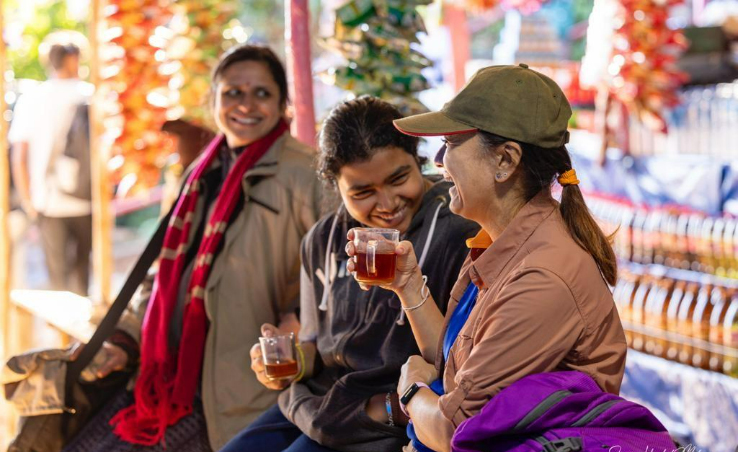
- Enjoying a cup of tea with fellow climbers at Sri Pada
-
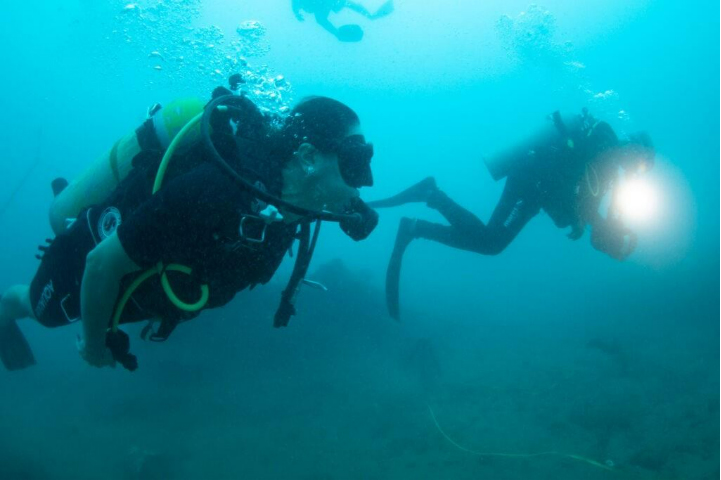
- Diving at the Godawaya shipwreck which was conserved through U.S. support
Q: Who were your favourite designers or fashion experiences that stood out to you during your time here?
A I’ve loved admiring and showcasing so many talented local designers here, who also became my close friends. I consider them artists more than designers because it really is artistry and it comes from their hearts, reflecting who they are as individuals. Sonali Dharmawardhana, Charini Suriyage, Darshi Keerthisena, Kamil Hewavitharana, and Sammani Pathiranagama have been some of my favorites! I leave with a very full suitcase and I can’t wait to share my love of Sri Lankan design with Americans.
Q How did participating in Sri Lanka’s cultural and social events help in strengthening diplomatic relationships?
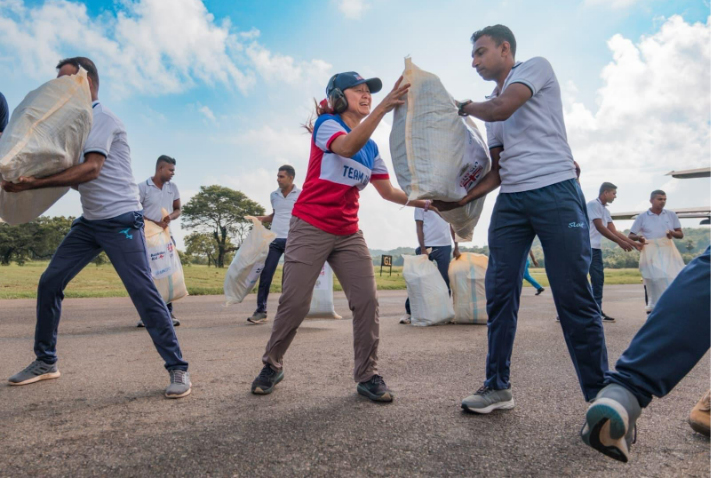
Two U.S. C-130s supported cyclone Ditwah response by transporting donated goods across the country
A Diplomacy is not just about having official meetings but diving into a country’s culture and personality; it provides us a deeper understanding and at the same time offers an opportunity to share the immense richness of American culture as well. When we invited our sports diplomacy ambassadors and arts envoys to come to Sri Lanka, it created avenues for more people-to-people connections. Every conversation I had, every trip I took, and every photo I snapped created that tapestry that led to my love for Sri Lanka. I took part in Sri Lanka’s social and cultural events while also creating opportunities for others to engage with American arts and culture.
Q: Were there moments in Colombo’s social scene that brought you joy or surprise?
A: I really enjoyed attending the Royal Thomian cricket match! It was my first ever cricket match and was so exciting to see the fans, the festive mood, and I joined along with the dancing, too. It was nice to see people from all walks of life and political factions come together in such a way for the love of the game.
Q: What memory of Sri Lanka will you carry with you forever?
A: One memory I will always carry with me is how Sri Lankans came together to support one another during the tragic period following Cyclone Ditwah. I was deeply moved by the compassion and solidarity shown at the community level. When we were able to offer $2 million in humanitarian aid and bring two C130 airplanes to deliver supplies, it really made me proud. Personally taking part in some of those flights and talking to the military forces and local communities was memorable. As a diplomat, I believe it’s important we get involved hands-on and not just watch from afar. Seeing Americans and Sri Lankans working side by side, physically unloading goods off of our planes was a powerful reminder that in difficult moments, our partnership is strongest, and that the friendship between our two countries is built on ordinary people and shared values.
Q: If you could relive one day of your tenure here, which day would it be and why?
A: It would be to climb back up to the peak of Sri Pada again with my husband and see the sun rising above the mountains and the shadows of the temple, and take in the natural glory of that moment in such a special cultural place. It was not just the natural beauty, but the friendliness of the pilgrims and fellow climbers who encouraged each other, even me, as I took on that climb. Moments along the journey—sharing a cup of tea or listening to someone’s story—kept me energized.
Q: What are the strongest impressions of Sri Lanka that you will take back with you?
A: Sri Lanka is such a diverse island- from its landscape and tourism sites to its religions, ethnicities, and cuisines. I say this often, it is a magical island that bursts with passion, energy, and a richness that makes every part of the country feel distinct yet deeply connected. I travelled throughout Sri Lanka, by boats, cars, planes, and trains – the sounds, smells, and beauty will stay with me forever.
Q: How would you describe the spirit of the Sri Lankan people to friends and colleagues abroad?
A: The spirit of Sri Lankans is definitely something I’ve come to learn about and admire so much – it goes beyond resilience during tough periods and is reflected in the humor and creativity of its people and traditions. That can be seen through the arts, literature, and even political cartoons. The Sri Lankan people are amazing and have given me memories that will last a lifetime. I am grateful for my time here and will carry it with me always.
By Zanita Careem ✍️
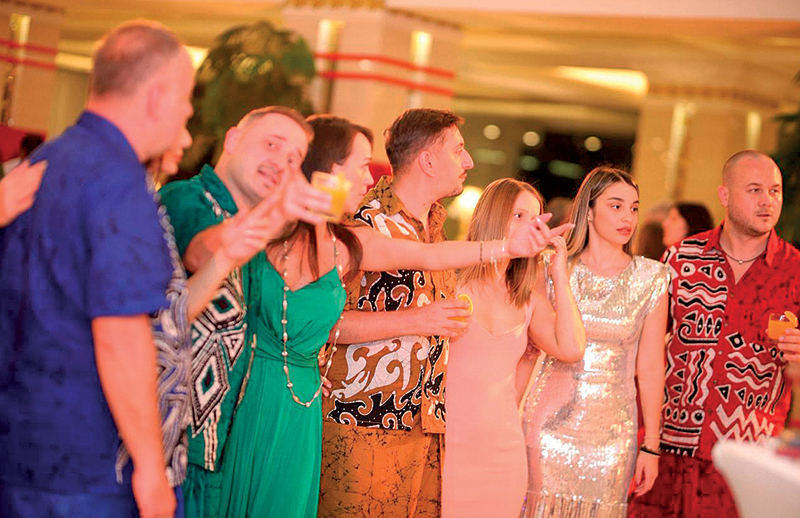
The Grand Kandyan transformed into a sanctuary of elegance this past New Year’s Eve, hosting a spectacular gala dinner dance that seamlessly blended tradition with high-energy celebration.
From the moment guests arrived, they were swept into a world of luxury. The hotel and ballroom were meticulously decorated, setting a festive tone that promised an unforgettable night. The evening commenced with a sophisticated cocktail hour in the lobby, where guests mingled before being ushered into the majestic Royal Peacock Ballroom for the main event.
A Symphony of Black and Gold
The ballroom was a sight to behold, draped in a striking theme of black and gold. The color palette exuded sophistication, providing a glittering backdrop for the night’s festivities.
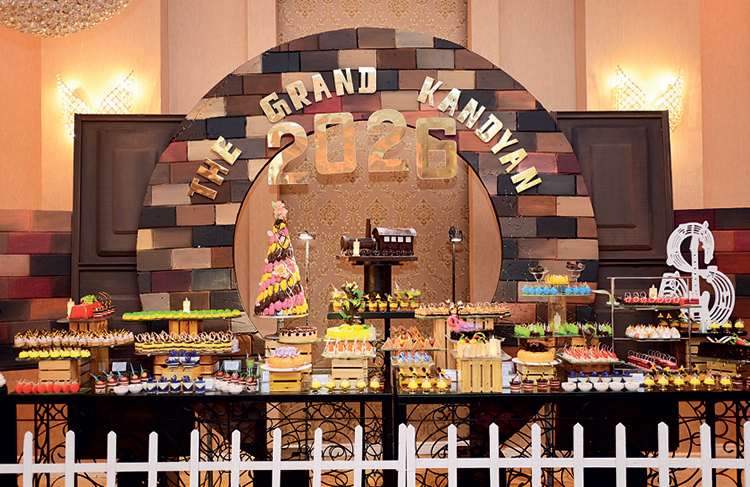
Lavish international buffet
Taking charge of the evening’s proceedings was the charismatic Javed Bongso, whose expert compering kept the energy high. The musical heartbeat of the night was provided by the popular band Lunu Dehi, whose infectious performance immediately filled the dance floor. As the night progressed, DJ Harsha took over the decks, keeping the crowd moving with a seamless mix of floor-fillers.
Prizes and Pageantry
The gala was punctuated by moments of excitement and engagement. Beyond the music, guests participated in:
Multiple Raffle Draws: Featuring a variety of high-value prizes.
Interactive Games: Engaging the audience and adding a touch of playful competition.
Grand Giveaways: Ensuring many guests walked away with more than just memories.
A highlight of the evening was the prestigious crowning of the “Grand Kandyan Queen,” a moment of true pageantry that added a layer of classic glamour to the night’s program.
A Culinary Masterpiece
No celebration at The Grand Kandyan would be complete without a culinary showcase. Guests were treated to a lavish international buffet, specifically decorated for the occasion.
A Global Family Celebration
The Grand Kandyan hotel General Manager, . Thusith Samaraweera, remarked on how wonderful it was to see a vibrant mixture of local and foreign guests coming together. He noted that seeing everyone ushering in the New Year alongside the “Grand Kandyan family” was the perfect embodiment of the hotel’s spirit of hospitality.
The night concluded as a resounding success, marking the start of 2026 with style, spirit, and community.

Jetwing Saman Villas, part of Jetwing Luxury Reserves, has been awarded “Best International Hotel for Weddings” at the 14th edition of Travel+Leisure India & South Asia’s Best Awards, held on December 16, 2025, in New Delhi. This prestigious accolade celebrates the resort’s exceptional ability to create unforgettable wedding experiences, placing Sri Lanka firmly on the global map as a leading destination for romance.
The annual India’s Best Awards, driven by reader votes, honours excellence across the travel spectrum, from hotels and destinations to wellness retreats and culinary experiences. This year’s theme, “Passports to Possibility,” highlighted the transformative power of travel and brought together global hospitality leaders for an evening of recognition and inspiration.
Perched on a dramatic cliff overlooking the Indian Ocean, the 27-suite resort is Sri Lanka’s pioneering luxury boutique hotel and a haven for intimate celebrations. The property offers one of the most unique settings on the island: a garden on a rock surrounded by nothing but incredible ocean views. From pre-wedding rituals to gourmet receptions, the property specializes in intimate weddings that feel truly exclusive and deeply personal. Beyond the ceremony, Jetwing Saman Villas doubles as an idyllic honeymoon retreat, offering luxurious private-pool suites, indulgent spa rituals, and romantic dining experiences under starlit skies, making it the perfect beginning to a lifelong journey together.
“We are truly honoured to bring this recognition to Sri Lanka,” said Hashan Cooray, Director of Marketing and Development at Jetwing Hotels. “As the country’s first and leading boutique hotel, this award reinforces Sri Lanka’s true potential as a premier destination for romance and weddings.”
Farrel Blom, General Manager of Jetwing Saman Villas, added, “Weddings are deeply personal, and for us, it’s never just about one evening, but it’s about creating an experience that feels like home. Many couples stay with us for several days, allowing us to be part of their story. Seeing them return for holidays and hearing their heartfelt feedback is the greatest reward.”
With a legacy spanning over half a century in the tourism industry, Jetwing Hotels has established itself as a pioneer in curating unique experiences and offering the best of legendary Sri Lankan hospitality, with the values of passion, humility, tenacity, and the spirit of family being at its core. As a family-owned brand, Jetwing Hotels continues to be a leading advocate for sustainability and responsible tourism, with ongoing initiatives focused on community upliftment, environmental conservation, and resource efficiency. With over 35 properties across the island, the brand’s diverse portfolio includes a range of Luxury Reserves, Premium Hotels, Select Hotels, and Essentials, each offering a unique perspective on Sri Lanka’s rich cultural heritage and natural beauty.

BCB removes Nazmul Islam as head of finance committee

Another crane collapses in Thailand, killing two, after 32 die previous day

India shuts Kashmir medical college – after Muslims earned most admissions

Singapore’s opposition leader stripped of title after conviction for lying

BCB issues show cause notice to Nazmul Islam but Bangladesh players firm on boycott

From behind bars, Aung San Suu Kyi casts a long shadow over Myanmar

‘Dates have the highest sugar content to fight Coronavirus’

Sunday Island 27 December – Headlines

#SundayIsland 17th December – Headlines

Sunday Island – 28th March

Sunday Island Headlines – 21 March

Sunday Island – 21st February – Headlines
-

 Business19 hours ago
Koaloo.Fi and Stredge forge strategic partnership to offer businesses sustainable supply chain solutions
-

 Business5 days ago
Dialog and UnionPay International Join Forces to Elevate Sri Lanka’s Digital Payment Landscape
-

 News5 days ago
Sajith: Ashoka Chakra replaces Dharmachakra in Buddhism textbook
-

 Features5 days ago
The Paradox of Trump Power: Contested Authoritarian at Home, Uncontested Bully Abroad
-

 Features5 days ago
Subject:Whatever happened to (my) three million dollars?
-

 News5 days ago
Level I landslide early warnings issued to the Districts of Badulla, Kandy, Matale and Nuwara-Eliya extended
-

 Business2 days ago
New policy framework for stock market deposits seen as a boon for companies
-

 Opinion7 days ago
The minstrel monk and Rafiki, the old mandrill in The Lion King – II