
Life style
Be confident at all times, and walk the talk!


Trail blazing leadership
by Zanita Careem

In the ever evoving landscape of hospitality,there exists an exciting realm of possibilities for women to leave an indelible mark,extending from the heartfelt greetings offered at the hotel’s thresthold to the pinnacle of leadership and pivotal decision making forums.
Gitanjali Chakravarthy is the first Sri Lankan woman to become a General Manager for a global hospitality brand. As a woman hotelier, her journey has been a tapestry of diverse experiences, challenges and triumphs. Undoubtedly, the hospitality industry is demanding, characterized by its ever changing nature yet, it is precisely this dynamism that fuels her passion.
On this international Women’s Day week let’s celebrate, the resilience, tenacity and ingenuity of women in the hospitality and beyond. Together let’s continue paving the way for future generations empowering women to thrive in every facet of the industry. For in unity there lies our greatest strength, and in diversity, our boundless potential.
In a candid chat, Gitanjali Chakravathy tells what drives her passion for hospitality, the challenges of being a hotel GM, and her vision for the brand.
What triggered your interest in the hospitality industry?
Growing up, my fascination with the hospitality industry was deeply rooted in my childhood experiences. My father was the key influence, as he served as a General Manager for several hotels back then. Our family holidays were often spent in their welcoming embrace.
It was during these trips that I discovered the enchanting world of hospitality — where good food, comfort, and beautiful surroundings intertwined.
I was inspired by my father’s passion for delivering seamless guest experiences and his commitment to ensuring every guest felt not only welcomed but cherished. It made me see that the hotel industry is more than just a job — it is a dedication to creating memorable and meaningful experiences for your guests.
Having spent most of my childhood adventures in hotels, coupled with my father’s influence, it ignited in me a genuine love for an industry that revolves around making people feel at home, even when they are miles away. I knew I wanted to play a role in turning moments into memories and providing a haven for those seeking a home away from home.
Some key highlights of your career, awards accolades etc.
Throughout my career, I have always strived not just personal excellence, but to embody the hospitality industry’s ethos of leadership and service excellence. I apply that same principle to the teams I lead to foster a culture where we have been able to deliver high-performing results in a positive and highly-motivated environment.
Throughout my career, I have had the privilege of receiving several accolades that have also marked key milestones in my professional journey. Some of these include:
Pioneering Woman Leader:
Awarded at the 7th Edition of the World Women Leadership Congress in 2020, at the Taj Lands End in Mumbai.
Leadership Excellence in the Hospitality Industry, Gold Category:
Awarded at the 9th Edition Top 50 Professional Career Woman Awards in 2019, at Shangri-La in Colombo.
Sri Lanka World Woman Leadership Award:
Recognized at the 6th Edition of the World Women Leadership Congress in 2019, at the Taj Samudra in Colombo.
To me, these accolades not only represent personal achievements but also reflect the collective efforts of the teams that I had the privilege of leading.
What are your challenges of being a woman in a male dominated segment?
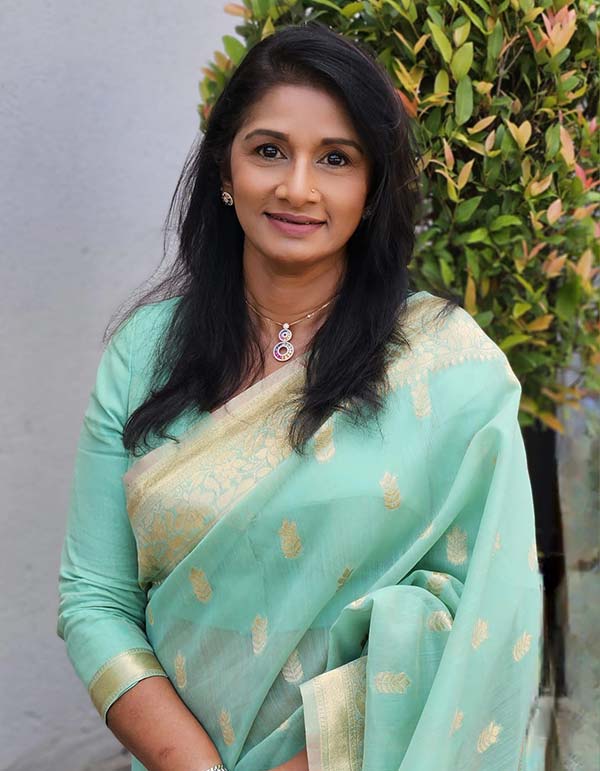
Gitanjali Chakravarthy
While I have been fortunate to work in environments where I have been able to thrive regardless of my gender, I recognize the need for ongoing efforts to support gender equality and equity.
I firmly believe that inclusivity and diversity is a strength that fosters innovation and contributes to a richer organizational culture. Overcoming stereotypes and unconscious biases has been a part of my journey, and I am dedicated to creating pathways for more women to excel in leadership roles within the hospitality industry.
In my experience, the key to breaking down gender barriers lies in emphasizing meritocracy and knowing that talent knows no gender. At Hilton, we have continually fostered an inclusive environment so women as well as men are able to thrive and grow into leadership roles. This includes investing in a range of leadership and training programmes that enable and empower women in their career planning and to be the best version of themselves. Earlier this year, we launched the South East Asia iteration of Hilton’s Women in Leadership programme, where junior female professionals have direct access to senior leader mentors and a guided training pathway to help them build their career paths.
Your comments – low participation of women in the hospitality sector.
Within Sri Lankan hospitality sector men are found to outnumber women in occupational category? Your opinion?
I strongly believe that everyone, regardless of their gender or background, deserves equal opportunity. As a business of people serving people, we recognize that our Team Members are at the heart of everything we do. We are strongly invested in creating a culture of inclusion, wellness, growth and purpose, so that every Team Member — no matter their gender — can have a successful career in the hospitality industry. To this end, Hilton has in place several initiatives. For example, Thrive@Hilton is Hilton’s employer value proposition that cultivates meaningful opportunities and a workplace culture where all team members can thrive regardless of background, role and location.
Careers@Hilton, for instance, provides guidance and highlights opportunities for young people in the hospitality industry through annual awareness campaigns. There are also region-specific initiatives, such as the Hilton South East Asia Management Trainee program, which aims to produce the next generation of hospitality leaders. A total of 46 trainees across 7 countries, including Sri Lanka, are participating in this year’s program. Another resource is Lead@Hilton, an industry-leading learning platform that offers a suite of learning resources on management and leadership, including a Leadership Unscripted video series where senior leaders share career advice and virtual development programs created in partnership with Harvard.
We believe that providing the best professional development support we can is key to cultivating an inclusive workplace culture that enables women and men from all backgrounds to thrive at work and contribute to a stronger hospitality industry.
Your inspirational journey is an example to many others?
My career journey has been fulfilling and transformative, something I’m honored to share as inspiration. As a trainee, my dedication to the hospitality industry motivated me to pursue a professional qualification. Throughout my career, I had the opportunity to grow in various capacities, gradually progressing from junior management roles to senior management positions.
Having worked for globally renowned brands and gaining invaluable experience in over ten countries, my journey has been characterized by continuous learning and growth. It was also a tremendous privilege to have been able to contribute to the development of aspiring hoteliers during my tenure as a senior lecturer at the Ceylon Hotel School, now known as the Sri Lanka Institute of Tourism and Hotel Management.
Becoming the first Sri Lankan female General Manager for Hilton in the country is a significant achievement. I see this not only as a key milestone in my career, but also an encouraging sign of the evolving inclusivity and diversity in the hospitality industry.
Reflecting on my journey, I am thankful for the many opportunities that have allowed me to break barriers and open doors for others. I genuinely hope my experiences inspire other women who are looking to join the vibrant realm of hospitality.
. Being in the dynamic world of travel and reaching the top position of honour and responsibility how difficult or challenging has been for you? Being a woman has ever added to the difficulties?
Throughout my career, I have always approached challenges with resilience and optimism. I see setbacks as opportunities to learn and grow, and a chance to reshape and deepen my perspective. Maintaining optimism during tough times has helped make me stronger and to face any situation with confidence.
Are you implementing any strategies to drive occupancy and revenue?
The key drivers in our strategy to drive growth at Hilton Yala Resort include the resort’s unique location and distinct design that showcases Yala’s natural wonders, as well as the breadth of immersive experiences and our exceptional hospitality.
At Hilton Yala Resort, we aim to create immersive and memorable experiences for guests looking to fully connect with nature. Situated just outside Sri Lanka’s Yala National Park and surrounded by lush greenery, the resort provides an elevated escape for guests seeking adventure and relaxation Guests can also choose to go on a full-day safari excursion with a bush dining experience where they can enjoy customized menus that showcase the freshest and highest quality ingredients, as well as a range of activities such as accompanied nature walks, lake fishing, and visits to archaeological sites such as Sithulpawwa Rajamaha Viharaya within Yala National Park, to soak in the rich biodiversity and history that the region has to offer.
How is the demand for sustainability affecting your work?
Travellers today seek sustainable experiences, and this is shaping how we work. Our team is committed to making sustainability a part of everything we offer. We aim to match the values of environmentally conscious travellers, making sure our operations and experiences are memorable and enriching for guests while also contributing positively to the local community and the broader goal of sustainability.
Hilton Yala Resort has been meticulously designed to ensure the utmost care for the surrounding environment, ecosystem, and local communities. We collaborate with local partners to advance efforts to preserve and protect local habitats and biodiversity as part of our destination stewardship efforts. With the support of microgrant funding provided by the Hilton Global Foundation, we have initiated an on-site animal research program in collaboration with the Wildlife and Nature Protection Society (WNPS) Small Cat Advisory, Leopard Diary and the Wilderness and Wildlife Conservation Trust (WWCT) to monitor wildlife in and near the resort to better inform local conservation efforts.
How do you foresee the future of travel sector in Sri Lanka?
The future of Sri Lanka’s travel sector is promising, driven by a strong recovery of the tourism sector in South East Asia. As tourism continues to pick up, we are prepared to meet the evolving preferences of our guests in this new era of travel.
Travellers also show an eagerness to explore lesser-known destinations, where they can slow down and enjoy authentic, once-in-a-lifetime experiences without having to jostle with the crowds. To that end, Yala’s natural wonders and abundant bio diversity make it an ideal destination for travellers seeking off-the-beaten-path experiences, to fully connect with nature, or a unique and authentic holiday. As one of the most beautiful destinations in Sri Lanka known for its natural beauty and rich biodiversity, Yala has been growing in popularity among travellers . Sri Lanka’s tourism appeal has not been missed, with the country ranked among “Top Countries in the World: Readers’ Choice Awards 2022” by Condé Nast Traveller. This makes us confident of Yala and Sri Lanka’s growth and appeal as a sought-after travel destination for travelers all over the world.
Would you say that confidence has returned to the tourist sector?
Absolutely, I would say that confidence has returned to the tourism sector. This positive shift is underscored by the increase in travel frequency around the world and a growing optimism within the industry.
What does Yala Hilton’s future entail?
Hilton Yala Resort is Hilton’s first safari hotel in the region, as we expand our presence in one of the most sought-after destinations in the country. The resort is poised to be a key destination hotel in Sri Lanka, providing guests with a unique and up-close experience with Yala’s wildlife and natural landscapes.
We are continuously seeking new ways to meet the evolving needs of travelers, and we look forward to bringing more immersive, unique and memorable experiences.
What about your expectation when it comes to service and value?
At Hilton, our service not only meets but we are always striving to exceed industry standards. We aim to offer experiences that are unparalleled in quality, to create lasting impressions and deliver exceptional value, all of which are hallmarks of the Hilton brand, to all our guests.
What is your approach to identifying, nurturing and motivating talent?
At Hilton, we are constantly taking innovative approaches to hiring and recruiting, partnering with our hotels to support their needs through virtual hiring events and shortened application processes to identify the right individuals. From earned wage access to new ways of scheduling, we are looking at how to increase flexibility across the full team member experience.
Hilton offers Hilton university programs and campus recruitment to enable individuals to explore the possibilities and rewards of a career in hospitality. We also have undergraduate and graduate opportunities offered in each region around the globe.
How do you achieve consistency when it comes to service?
I believe that consistent service is achieved through strategic hiring, continuous training and fostering a positive and enabling workplace culture. Hilton’s focus on these areas ensures that we maintain our high standards of service that our guests have come to expect. Our team members also undergo regular training programmes to ensure they are equipped and empowered with the skill sets and resources needed to deliver consistently excellent service to our guests.
Which are the activities and experience guests can enjoy?
At Hilton Yala, guests can indulge in a diverse array of activities that enable them to immerse in the abundant biodiversity that Yala has to offer. Guests can enjoy the most intimate and enriching encounters with the region’s rich flora and fauna through activities such as environmentally responsible safari tours with locally trained rangers dedicated to helping guests experience the best of Yala National Park and bring about a stronger sense of awareness and appreciation of the wildlife and ecosystem through impactful educational sessions.
Guests can also choose to go on a full-day safari excursion with a bush dining experience where they can enjoy customized menus that showcase the freshest and highest quality ingredients. They can also extend their safari tour with a drive from Kirinda to Kumana to explore shipwrecks and a massive 40km reef brimming with marine life.
Beyond wildlife safaris, guests can enjoy accompanied nature and bush walks, lake fishing, photography safaris, and cultural excursions to archaeological sites such as Sithulpawwa Rajamaha Viharaya within Yala National Park and Kirinda Nimalawa Aranya, located in Nimalawa Sanctuary, which promise an educational and enriching experience for the whole family. Parents can also enroll their child in the Junior Ranger program.
Hilton Yala Resort offers endless adventures to choose from. In addition to the exciting safari tours and bush walks, guests seeking immersive moments in nature can discover the magic of the night sky through the Stargazing Adventure, enjoying enchanting views spanning both the Northern and Southern Hemispheres near the equator.
Guests can go from sky to sea with a dive and snorkeling excursion in the Great Basses reef, exploring the abundant marine life, stunning coral formations, shipwrecks, majestic sea turtles and gray sharks in the depths of Sri Lanka’s coastal waters.
Hilton Yala also features exceptional gastronomic experiences. From the flavors of contemporary Asia at Dhira to Sandali, a premier dining destination known for its Western cuisine, guests can also indulge in delicious cocktails at Vanya. For a truly memorable meal, guests can venture into the wild to experience Lanthaaruma, the resort’s bespoke dining experience set between Yala’s lush jungle and the lapping waves of the Indian Ocean, where a fully customized menu of the freshest and highest quality ingredients is accompanied by sommelier-selected wines.
Those looking to relax can enjoy the outdoor pool at the heart of the resort, which blends seamlessly with its breathtaking surroundings. Ground floor rooms also feature private pools, which span from eight to 16 square meters, while those on the level above offer private hot tubs, providing a serene space for guests to unwind. We also have a state-of-the-art spa providing relaxing treatments in a beautifully designed space. As a resort, we are also flexible and can tailor many other activities based on the preferences of our guests, ensuring a personalized and enriching stay.

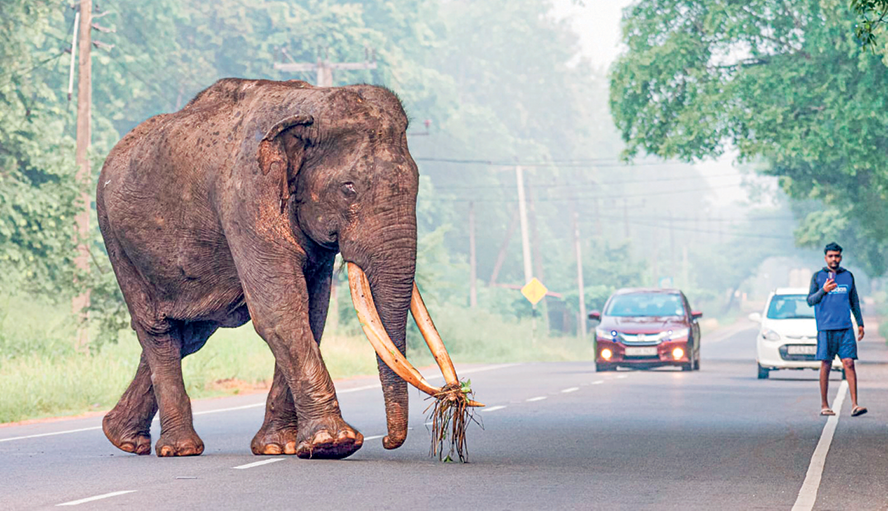
In the vast dry-zone wilderness of Sri Lanka, where ancient reservoirs mirror crimson sunsets and monsoon winds whisper through forests untouched for centuries, there still roams a giant who has become both legend and symbol.
His name is Mahasen — perhaps the most celebrated wild tusker Sri Lanka has ever known.
To wildlife enthusiasts, photographers, researchers, and villagers across the North Central Province, Mahasen is not merely an elephant. He is the living embodiment of Sri Lanka’s ancient wilderness, a reminder of a time when giant tuskers ruled the forests that surrounded the island’s great hydraulic civilisation.
Secretary and Chief Coordinator of Wild Tuskers of Sri Lanka, Chandika Lakmal, describes Mahasen as “one of the greatest living treasures of Sri Lanka’s natural heritage.”
“When people see Mahasen, they are not simply looking at a wild elephant,” he said.
“They are witnessing history, culture, ecology, and wilderness all combined into one magnificent animal. Tuskers like Mahasen are extremely rare, and losing such an elephant would mean losing a part of Sri Lanka’s identity itself.”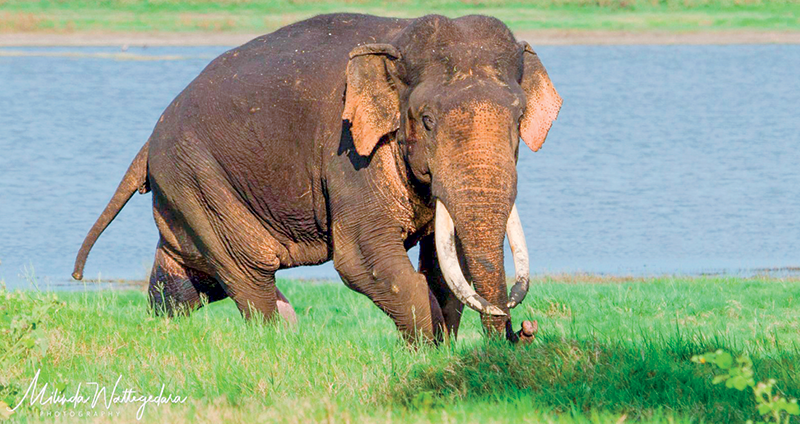
Sri Lanka has long shared a sacred bond with elephants. Ancient kings regarded tuskers as symbols of sovereignty and divine authority.
From the kingdoms of Anuradhapura and Polonnaruwa to the Kandyan era, elephants marched beside rulers during ceremonies and wars alike. Within Buddhist culture, elephants became revered symbols of strength, wisdom, and spiritual purity.
Yet among all elephants, the tusker has always occupied a special place.
Unlike African elephants, only a very small percentage of male Asian elephants develop tusks. This makes Sri Lankan tuskers exceptionally rare. Over centuries, they became deeply embedded in folklore, temple art, and village legends.
Mahasen stands today as perhaps the finest surviving example of that ancient legacy.
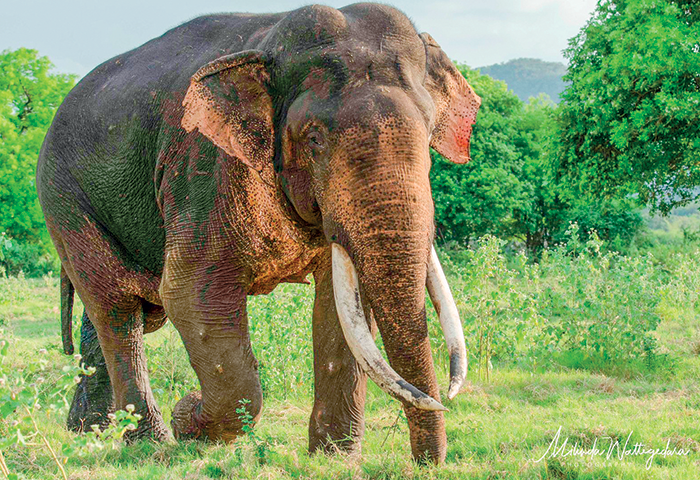
Mahasen, one of Sri Lanka’s most iconic wild tuskers, photographed during his majestic prime in 2014 and in 2025 as the ageing giant continues his struggle for survival in the island’s shrinking wilderness
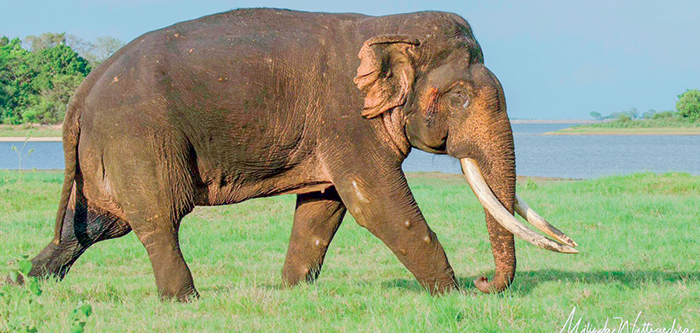 The legendary tusker was first photographed in 2002 by renowned wildlife photographer Vajira Wijegunawardena. During those early years, wildlife enthusiasts referred to him as the “Somawathiya Tusker” because he was frequently sighted around the floodplains near Somawathiya before travelling towards Minneriya and Kaudulla during the season of the great elephant gathering.
Later, the giant elephant was named Mahasen in honour of the ancient King Mahasen, the visionary ruler who built the magnificent Minneriya Tank. The name reflected not only strength and majesty, but also a deep connection to the same historic landscape shaped by kings, forests, and elephants thousands of years ago.
Today, Mahasen is believed to be around 60 years old, making him one of the oldest surviving wild tuskers in Sri Lanka. Towering above most elephants, he possesses perhaps the largest pair of tusks ever documented among Sri Lanka’s wild elephants, stretching beyond six feet in length.
For decades, Mahasen became one of the greatest attractions of the famous elephant gathering at Minneriya National Park and Kaudulla National Park — one of the largest congregations of Asian elephants anywhere in the world.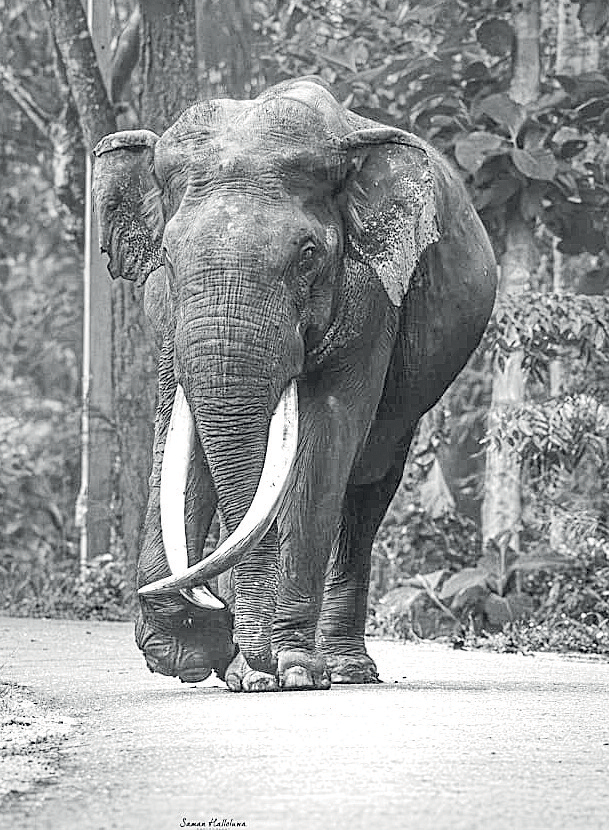
Photographers from across the globe waited patiently for hours hoping to capture the old king emerging from the dusty grasslands, at dusk, his enormous tusks glowing beneath the golden evening light. For many wildlife lovers, witnessing Mahasen in the wild became an unforgettable experience.
“Mahasen carries an extraordinary presence,” Chandika Lakmal explained. “Even among large elephants, he stands apart. There is a certain calmness, confidence, and dignity in the way he moves. You immediately understand why ancient people considered tuskers sacred.”
Yet beyond his beauty and fame, Mahasen also represents the fragile future of Sri Lanka’s elephants.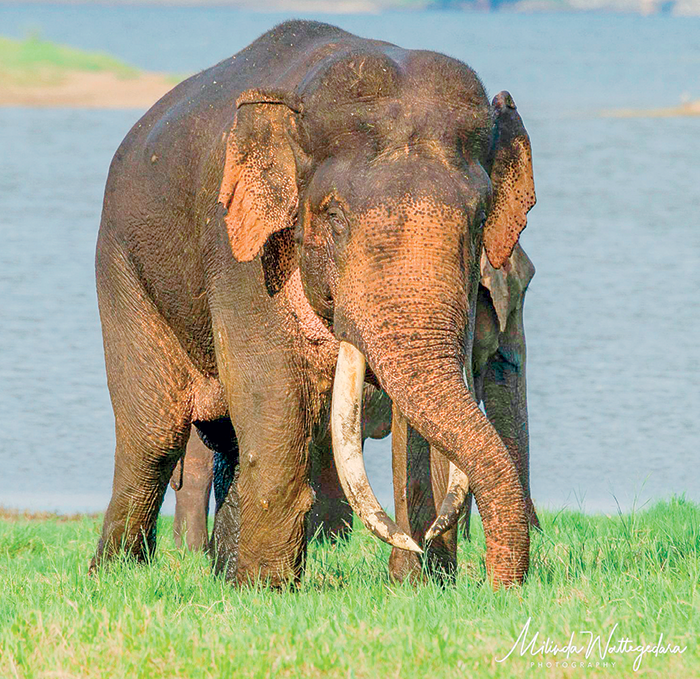
Modern conservation science identifies elephants as “keystone species” and “umbrella species,” meaning their survival protects entire ecosystems. Elephants create pathways through forests, disperse seeds, maintain grasslands, and help sustain biodiversity across vast landscapes.
“Elephants are ecosystem engineers,” Chandika Lakmal said. “The forest itself depends on them. Without elephants, the structure of these ecosystems begins to change. Protecting tuskers, like Mahasen, means protecting entire habitats and countless other species.”
Sadly, Sri Lanka’s wild elephants now face mounting threats.
Habitat fragmentation, shrinking forests, electric fences, roads, railway accidents, illegal shootings, and human-elephant conflict continue to endanger their survival.
Nearly 60 percent of Sri Lanka’s wild elephants live outside protected national parks, surviving within fragmented forests and ancient tank ecosystems increasingly surrounded by human settlements.
Traditional elephant migration corridors that existed for centuries have now been blocked by agriculture and development projects. As elephants lose access to food and water, they are increasingly forced into villages and farmlands, creating dangerous encounters between humans and wildlife.
Even Mahasen has not escaped these pressures.
In recent years, the ageing tusker’s movements have become increasingly restricted. Wildlife observers believe the enormous weight of his tusks, combined with old age, has forced him into smaller forest patches between Kakirawa and Maradankadawala where food and water are available within shorter distances.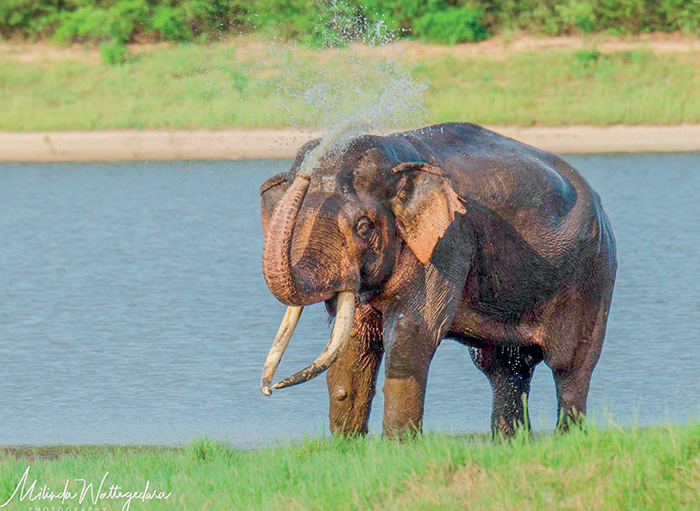
Several months ago, Mahasen was discovered with a serious wound on his back believed to have been caused either by a gunshot injury or a clash with another elephant. Wildlife officials intervened quickly and treated the giant tusker, offering hope that he would recover once again.
However, concern continues to grow among conservationists and wildlife enthusiasts as sightings of Mahasen have become increasingly rare in recent months.
For many Sri Lankans, the thought of losing Mahasen is deeply emotional.
“Mahasen is not just another elephant,” Chandika Lakmal said quietly. “He is one of the last living symbols of Sri Lanka’s ancient wilderness. Future generations deserve the chance to see such animals alive in our forests, not only in photographs or history books.”
Despite his immense ecological and cultural importance, many villagers living near elephant habitats still struggle with fear and economic hardship caused by crop raids and property damage.
Conservationists stress that long-term coexistence can only be achieved through proper land-use planning, protection of elephant corridors, community awareness, and sustainable conservation policies.
Across the forests of Yala National Park, Wilpattu National Park, Gal Oya National Park, and Wasgamuwa National Park, Sri Lanka’s remaining tuskers continue their silent struggle against an uncertain future.
But among them all, Mahasen remains special.
He is more than an old tusker wandering through fading forests.
He is the last king of a vanishing wilderness.
And as long as Mahasen still walks beneath the ancient trees of Sri Lanka’s dry zone, the spirit of the island’s wild heritage continues to survive majestic, untamed, and unforgettable.
By Ifham Nizam
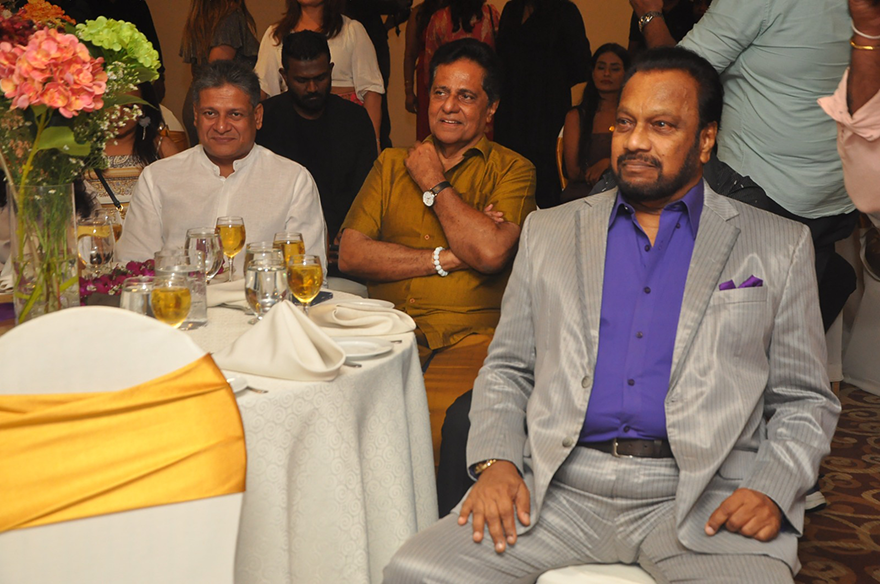
An auspicious beginning for ‘Tharulya’
The Muhurath ceremony of ‘Tharulya’ the newest teledrama directed by Sudarma Jayewardena, was held in a graceful setting at Waters Edge recently, bringing together artistes, television personalities and invited guests from the entertainment industry.
The auspicious occasion marked the official beginning of the much-awarded teleseries, with the lighting of the traditional oil lamp adding colour and glamour to the evening.
Cast members and crew joined Sudarma in celebrating the launch while industry well-wishers extended their support for the production.
Sudarma is known for her emotionally rich story telling and distinctive creative touch. When asked about her new tele-serial, she expressed optimism ‘Tharulya’ is expected to bring a fresh narrative to the local television audiences. For her ‘Tharulya’ can be described as a reflection of dreams, emotions and human relationships, woven into meaningful teledrama narratives. The word ‘Tharulya’ evokes a poetic sense of stars, hope and destiny, symbolising the journeys and emotional bonds explored through the story.
Sudarma Jayewardena is known for her work as a actress, director, producer and creative visionary behind several acclaimed teledramas. Over the years she has build a reputation for presenting emotionally layered stories that explore family dynamics, social realities, women’s experiences and human relationships with sensitivity and depth .
Her teledramas are known for strong story telling, refined casting and cinematic production.
The teledrama, ‘Ganga Adare’, directed by Sudarma, is among the well known television production.
This tele-series became popular on the small screen for its emotional story telling, strong character development and family centred narrative style that resonated with Sinhala TV audiences.
Sudarma’s involvement in musical events, like ‘Sonu Nigam,’ highlighted her versatility beyond teledramas, showcasing her ability to create large scale entertainment events that combined glamour, culture and audience appeal.
Sudharma, who is no stranger in the entertainment industry, is the Managing Director of Star Events. ‘Tharulya’ was produced by Saranga Mendis. This much talked about teleserial is all set to unspool on Derena TV.
Beyond teledramas , Sudarma also contributed to musical and entertainment programmes, expanding her influence within Sri Lanka’s media industry. Her productions are often noted for their polished presentation and emotional story telling. (Zanita) Pix by Thushara Attapathu
-

- Smile,glamour and anticipation for the young star
-
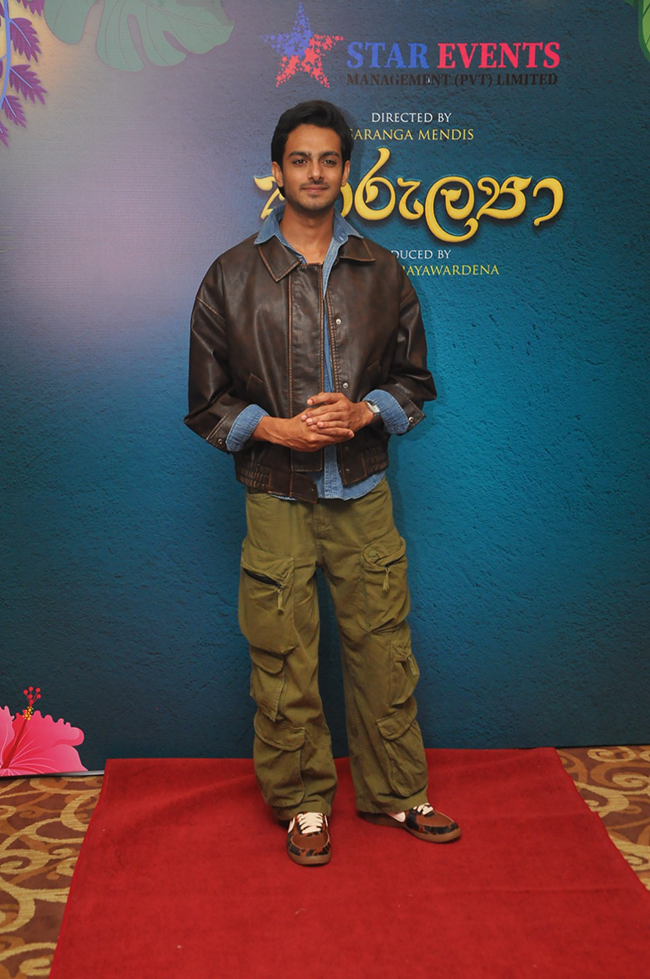
- Powerful performances expected as he steps into a key role
-

- Moments from the launch
-

- Soulful voice adds magic
-
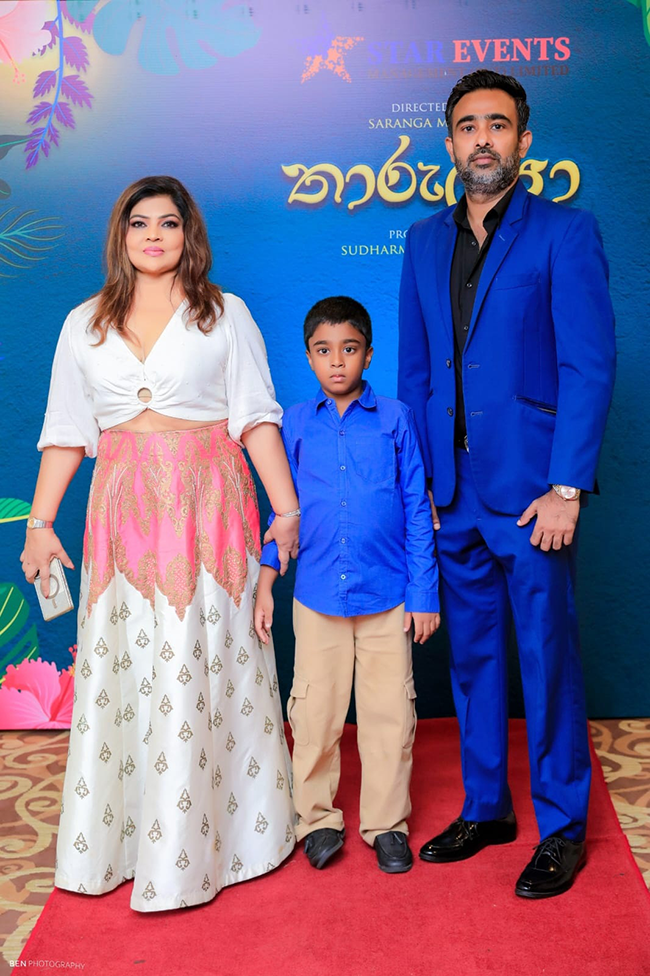
- Creativity in motion as Director Sudarma Jayewardena leads the cast with her spouse
-
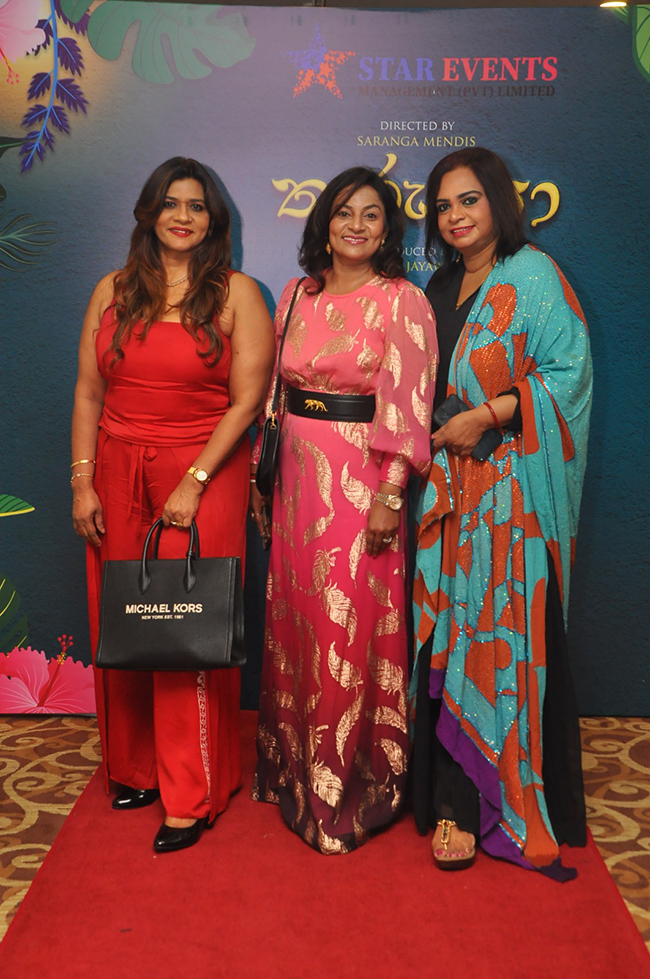
- Invited guests marked the launch
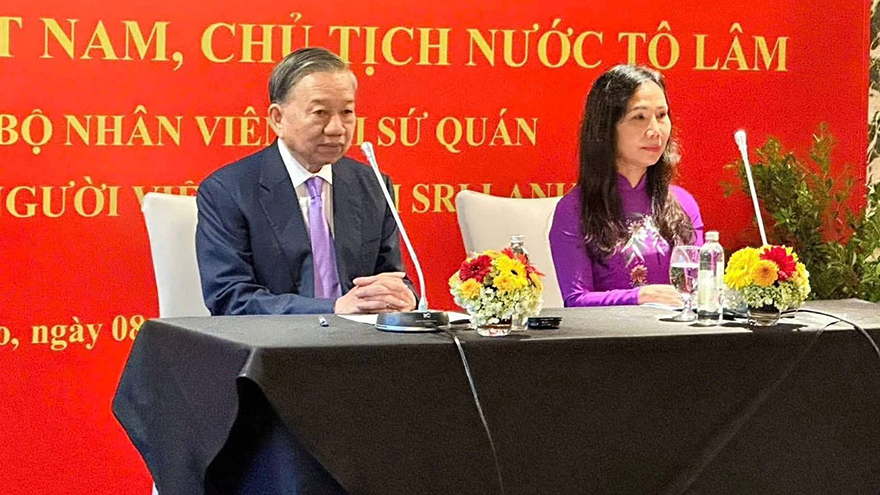
Air Bridge of Friendship
 The state visit of the Party Secretary and State President, To Lam of Viet Nam, to Sri Lanka, heralds a defining moment in bilateral relations, where diplomacy and aviation converge in a new era of connectivity. With the launch of Viet Nam air services, linking the two nations, the partnership soars behind traditional statecraft -opening a seamless corridors for tourism, trade and cultural exchange between South and South East Asia.
My interview with the Ambassador for Viet Nam in Sri Lanka, Trinh Thi Tam, went as follows:
(Q) How significant is the State visit to Sri Lanka by Party General Secretary and State President To Lam?
(A)Party General Secretary and State President To Lam’s visit to Sri Lanka is highly significant as it takes place when the two countries have just celebrated 55 years of diplomatic relations in 2025. Viet Nam is the first ASEAN members to visit Sri Lanka, and is also the first ASEAN country that President Anura Kumara Dissanayake visited after assuming office. More, importantly, both sides agreed to elevate bilateral ties to a Comprehensive Partnership on this occasion, opening a new chapter for cooperation in politics, trade, tourism, culture, education, and connectivity. The visit reflects the strong mutual trust and the shared determination to deepen cooperation in the years ahead.
(Q) Viet Nam and Sri Lanka share centuries old Buddhist links. How can these spiritual and cultural ties be transformed into stronger people-to-people tourism?
(A) Viet Nam and Sri Lanka share centuries-old Buddhist and cultural links, which create a very strong foundation for closer people-to-people relations. These spiritual ties can be transformed into stronger tourism cooperation through Buddhist pilgrimage tours, exchanges between temples and universities, cultural festivals, and tourism promotion programmes. Increased air connectivity and easier travel arrangements will also encourage more visitors to explore each other’s cultural heritage and strengthen mutual understanding between the two peoples.
(Q) Direct flights between Colombo and Ho Chi Minh City has generated great excitement in Sri Lanka. How important is this milestone for tourism and bilateral relations?
(A) The launch of direct flights between Colombo and Ho Chi Minh City by Viet Nam Airlines (national carrier) and Viet Jet (a private airline) is a historic milestone for bilateral relations. It not only shortens travel time but also creates new opportunities for tourism, trade, investment, business cooperation as well as people-to-people and cultural exchange. This achievement comes at a very meaningful moment, following the establishment of the Comprehensive Partnership, demonstrating the commitment of both countries to enhance practical cooperation and strengthen connectivity between Southeast Asia and South Asia.
(Q) Do you think this direct flight will significantly increase Vietnamese tourist arrivals to Sri Lanka within the next few years?
(A) Yes, we believe the direct flights will significantly increase Vietnamese tourist arrivals to Sri Lanka over the next few years. Sri Lanka is becoming increasingly attractive to Vietnamese travellers because of its beautiful beaches, Buddhist heritage, natural landscapes, and hospitality. Easier connectivity and tourism promotion activities will help more Vietnamese people discover Sri Lanka. We also expect stronger two-way tourism exchanges, contributing positively to economic cooperation and people-to-people relations between the two countries.
(Q) Do you see Colombo becoming a stronger regional hub connecting Viet Nam with the Indian Ocean region?
(A) Colombo has great potential to become a stronger regional hub connecting Viet Nam with South Asia and the Indian Ocean region. Sri Lanka’s strategic geographic location, combined with improving connectivity and growing economic cooperation, can help facilitate trade, tourism, logistics, and maritime cooperation. Following the establishment of the Comprehensive Partnership, Viet Nam sees many opportunities to work more closely with Sri Lanka in regional connectivity initiatives and strengthen economic links between Southeast Asia and the Indian Ocean region.
(Q) Viet Nam and Sri Lanka have enjoyed decades of friendly relations. What makes this partnership unique in Asia?
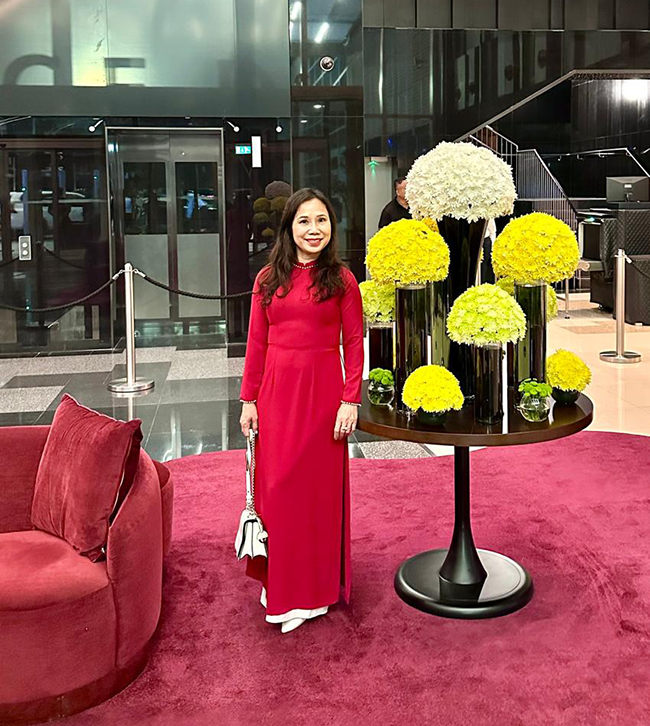
Proud moment for Ambassador Trinh Thi Tam
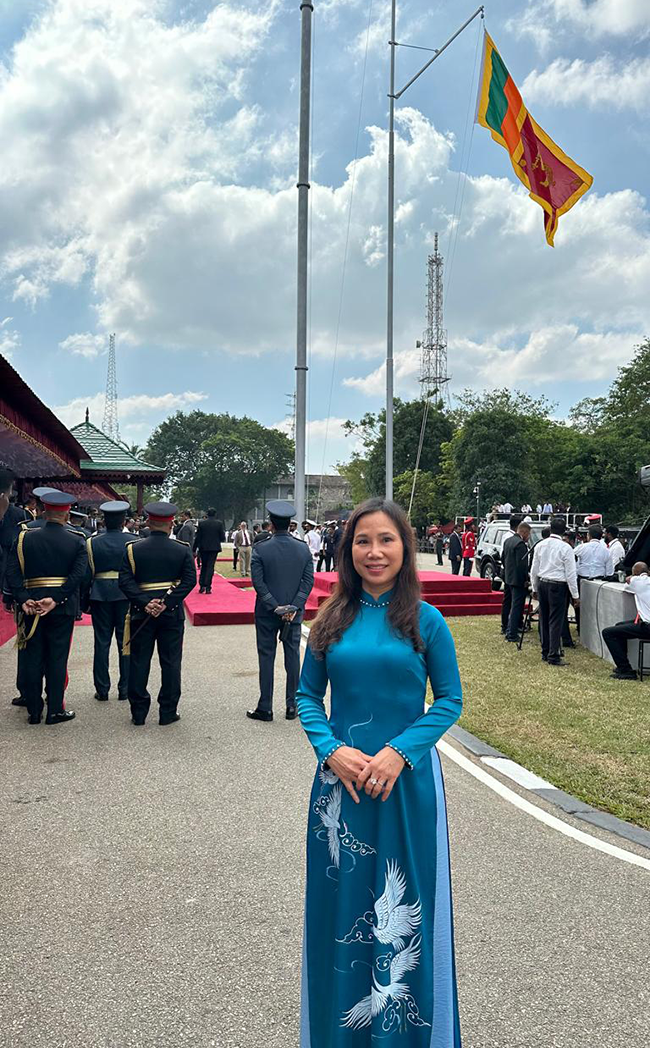
Trinh Thi Tam played a key role in celebrating the historic visit
(A) The Viet Nam–Sri Lanka partnership has been built on longstanding friendship, mutual trust, and deep cultural connections rather than only economic interests. The two countries have consistently supported each other over many decades and share common values regarding independence, peace, and international cooperation. President Ho Chi Minh, Viet Nam’s Nation Father, stopped over in Sri Lanka on three occasions. Vietnamese people has always treasured the strong, unconditional support offered by Sri Lankan people during our hard struggle against imperialism and colonialism. The recent elevation of bilateral ties reflects the maturity of this relationship and the shared vision to expand cooperation across many sectors in a sustainable and balanced manner.
(Q) How does Viet Nam view Sri Lanka’s role with South Asia and the Indian Ocean together?
(A) Viet Nam highly values Sri Lanka’s important role in South Asia and the Indian Ocean region. Sri Lanka’s strategic location and historical role as a maritime and commercial centre make it an important partner for regional connectivity and economic cooperation. With Sri Lanka’s keen interest in engaging more with ASEAN (Regional Comprehensive Economic Parnership ) Viet Nam believes Sri Lanka can play an even stronger role in connecting South Asia and Southeast Asia, especially in trade, tourism, logistics and maritime cooperation.
(Q) How would you describe the current diplomatic relationship between Viet Nam and Sri Lanka after the Party General Secretary and State President’s visit?
(A) Following the visit, the diplomatic relationship between Viet Nam and Sri Lanka can be described as stronger, more dynamic, and more future-oriented. The establishment of the Comprehensive Partnership demonstrates the high level of political trust and creates a solid framework for expanding cooperation in many important sectors, including trade, investment, tourism, education, digital transformation, agriculture, and cultural exchanges between the two countries.
(Q) After the Party General Secretary and State President, what is your vision for Viet Nam-Sri Lanka relations over the next decade?
(A) Over the next decade, we hope Viet Nam–Sri Lanka relations will develop into a stronger, broader, and more practical partnership under the framework of the Comprehensive Partnership. We expect deeper cooperation in trade, tourism, connectivity, digital economy, education, renewable energy, agriculture, and maritime cooperation. At the same time, people-to-people exchanges and cultural cooperation will continue to grow, creating a solid foundation for long-term friendship and mutual prosperity between the two countries.
(Q) What message does Viet Nam wish to send to Sri Lanka and South Asian Region through the visit?
(A) Through the Party General Secretary and State President’s visits to India and Sri Lanka, Viet Nam wishes to send a strong message of friendship, cooperation, and shared development to Sri Lanka and the wider South Asian region. The visits demonstrates Viet Nam’s commitment to strengthening partnerships in South Asia and promoting peace, stability, connectivity, and economic cooperation in the Indo-Pacific region.
-
 Features6 days ago
Octopus, Leech, and Snake: How Sri Lanka’s banks feast while the nation starves
-
 Sports6 days ago
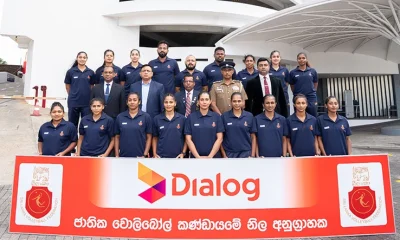
Sri Lanka women’s volleyball team ready for Central Asian challenge
-
 Opinion5 days ago
Murder of Ehelepola family, Bogambara Wewa and Sightings of Wangediya
-

 Business4 days ago
Historic launch of CCWE Fashion Week & International Summit 2026
-
 News5 days ago
Steps underway to safeguard Sri Lanka’s maritime heritage
-
 Features2 days ago
The NPP’s pivot to the past
-
 News1 day ago
Police probe underway to ascertain links between criminals deported from UAE and local politicians
-

 Editorial5 days ago
A play without its protagonist