
Features
Baurs’ coconut properties, early married life and Ceylon in the 40’s and 50’s

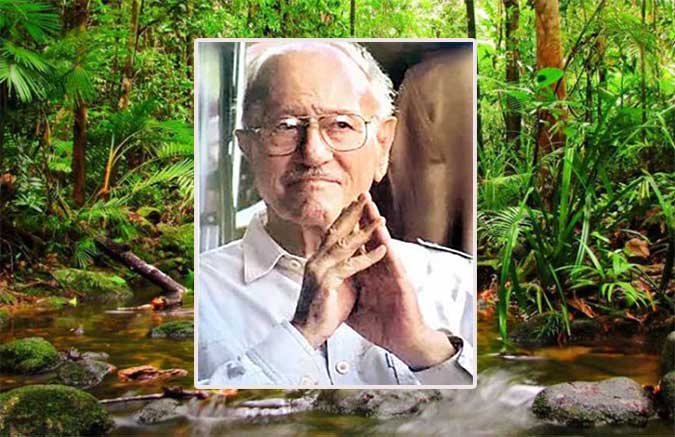
Excerpted from the authorized biography of Thilo Hoffmann by Douglas. B. Ranasinghe
(Continued from last week)
Mr Jobin (the Swiss superintendent) devoted most of his working life to Palugaswewa Estate and the people of the area. He established a fibre mill, produced large quantities of coconut shell charcoal, grew rice and introduced sheep rearing. The estate’s large herd of Mura water buffaloes yielded milk, curd and other products. Many thousands of selected coconut seedlings were raised and sold. Palugaswewa was the model of a modern and profitable coconut property, with much of the profits being ploughed back, until the takeover by the government.
Thilo and Mae often spent weekends here with the Jobins. ‘The property was then on the edge of the vast extent of dry zone jungle which stretched away northward and inland. He recalls the hot evenings when the hosts and guests would sit on the screened-in veranda of the Superintendent’s bungalow. Seasonally in the nearby large mara trees thousands of cicadas would fill the air with their peculiar ‘music’, coming in waves so loud that one could not hear oneself and conversation was almost impossible. A myriad fireflies illuminated the dark night. Packs of jackals would roam the area, and at night their wild howling was heard far and near. There were crocodiles in the surrounding tanks. Of course, there were mosquitoes.
Herds of elephants would move through the estate regularly, and often cause heavy damage especially to young palms and in new or replanted sections of it. The famous Deduru Oya herd, with its mystical connection to the Munesswaram temple, had its home range in the vicinity. This was until the herd was decimated in an attempt to trans-locate it to the Wilpattu National Park in the late 1960s, combined with the first immobilization experiments in Sri Lanka.
Thilo believes that the project was ill-conceived, and that the Wildlife Department organized it at the suggestion of a foreign wildlife movie-maker, who obtained dramatic footage. Sometime later several of the translocated animals returned to their home range, a distance of nearly 100 km.
In 1953 Baurs bought the mostly undeveloped Polontalawa Estate, at Kadigawa on the Deduru Oya some miles inland. This provided both Xavier and Thilo with many opportunities for wilderness adventures. It was here that Thilo’s friend Geoffrey Bawa with Ulrik Plesner later built a unique bungalow complex, its various units fitting among a group of large rocks and boulders with jungle trees between.
One Saturday evening in the 1950s Shirley Corea, the MP for Chilaw threw a party at the Sports Club grounds in the town. The Jobins and Thilo were invited. There was a large crowd, which included Bernard Soysa and Colvin R. de Silva.
Thilo was introduced to Colvin, and soon a friendly discussion took place between them about the merits of State ownership. Colvin asked him why he would not join and manage for the State a fertilizer business like Baurs, on terms and conditions equal to or better than those prevailing in the private sector. Thilo replied: “Because I would not be allowed to run it according to my best knowledge and ability; there would always be people to interfere.”
De Silva was apparently not convinced as, decades later, he used the same reasoning in connection with the State take-over of all agricultural lands of over 50 acres in extent (Land Reform), as the Minister in charge. Thilo recalls that a proprietary planter who thought he would play an important role in the scheme greeted the suggestion with enthusiasm only to find himself disillusioned in no time.
In later years Thilo tried to establish some new crop plants in Sri Lanka. Most successful was the macadamia nut. With difficulty he obtained a few dozen seeds from abroad and had them raised at the four up-country estates owned by Baurs. Then nationalisation intervened. Some years later the new Superintendent of Clarendon Estate sent him sample nuts from the first few harvests, and they were of good quality.
A fairly large trial was carried out with Hibiscus sabdariffa, the dried calyx of which is extensively used in herbal tea mixtures. Several hundredweights of it were exported. Thilo also experimented with soil-less culture and with minor element deficiencies.
MARRIAGE
After his early sojourn in the hill country, young Thilo Hoffmann returned to Colombo and lived in a bungalow belonging to Baurs named ‘Suramma’ at No. 14 Bagatelle Road. It had a large garden with a swimming pool, and in front stood a balsa tree, the ultra-light timber of which had been in great demand during the recent war for the construction of fighter planes. It was run as a chummery by young bachelors employed by Baurs. For one month in rotation each resident would be responsible for the household, supervise the servants and the kitchen, and do the marketing, as well as watch over the expenditure and income. This was a useful exercise for most of them.
At this time Thilo bought his first car, an MG TC, a brand new sports two-seater with a folding hood, bearing registration number CY 1406. He describes it as “hot and sticky” during rain but otherwise a joy to drive.
In late 1947 his fiancee, Mae Klauenbosch, came over from Switzerland. In England she boarded the Empire Brent, a converted passenger ship. She was in an inner cabin with 14 wives of European residents in India who came out to rejoin their husbands after the war. On the return trip to the UK these ships repatriated British soldiers. They were packed with people in both directions. Still, she enjoyed the voyage. Thilo recounts:
“At that time executives were not allowed to marry during the first contract of four years. I somehow managed to break this rule, which did not further endear me to the CEO. In the presence of a small crowd of friends and colleagues we were married by a registrar at the Grand Oriental Hotel.
“The ‘GOH’ then had a Swiss manager and a Swiss chef, and was much larger than today, comprising the entire building, now owned by the Bank of Ceylon. It was known all over the world because the Colombo port was a transit point for thousands of passengers travelling to and from Australia and ports in South East and East Asia. The ships had to stop here for bunkering, and they sailed on strict schedules. Almost all passengers came ashore and frequented the hotel.
“As was then the custom Mae stayed for about ten days, between arrival and wedding, with the family of the CEO of Baurs, who thus acted as substitute for her parents. She was introduced to the basic matters of life in Ceylon such as shopping and handling of servants.
“The newlyweds’ home was a small flat in Baurs building, which stood by the seashore in the Colombo Fort area, at Upper Chatham Street.”
Thilo was given one week off for the honeymoon. Their first stop was Kandy. In the evening they visited the Temple of the Tooth Relic and watched the puja. The next day they drove to Nuwara Eliya via Padiyapelella and Maturata. He recalls the railway line which connected Ragala via Nuwara Eliya to Nanu Oya, as they had to criss-cross its bumpy track between Brookside and Nuwara Eliya a number of times in their hard-sprung MG, an annoying experience. This railway, which today would have been a major tourist attraction, was removed a few years later.
They spent a day or two at Welimada, and then drove home via Bandarawela – Haputale – Koslanda – Wellawaya, with one night at the resthouse in Hambantota. This was then a small, romantic fishing town on the jungle-clad blue bay, with a population of mainly Malays and Burghers. The large ‘forest’ of palmyra palms on the dunes to the west was a special attraction of the place and a protection for it. It is now replaced by Casuarina trees, “alien and ugly” as Thilo says, planted by the Forest Department.
The couple returned home from their brief honeymoon to a room which had only a few pieces of furniture, by a then leading designer Terry Jonklaas. They had to unpack a new mattress and bed linen from Mae’s trunk before they were able to lie down for the night.
LIFE IN CEYLON
Colombo was then a beautiful and clean town, with numerous large gardens and trees. For instance, the Galle Road was entirely residential. Colombo was called the “Garden City” and Ceylon the “Switzerland of the East”. Since then, great changes have not only affected the rural areas of Sri Lanka, as noted often in this book, but, of course, the ever-growing towns, particularly the capital city.
The air was clean, and a myriad stars were visible in the night sky above the city.
Today a permanent haze blots out all but the most prominent of them. Vision throughout the country has become very restricted, with strong haze a normal feature. No longer is it possible to regularly see the southern sea coast from the Haputale area or Adam’s Peak from Colombo city. During his time in Sri Lanka Thilo could observe in the best viewing conditions three “fabulous” comets, namely Ikeya-Seki, Bennett and Kohoutek, a total eclipse of the sun and several of the moon.
There was no air conditioning in those days. Office papers on the desk got stuck to sweaty forearms. During the greatest heat in April and May the Hoffmanns used to drag their large double bed onto the open veranda and sleep in relative coolness under the stars or the moonlit sky. Thilo recalls:
“Our flat was on the fifth floor of Baur’s building. Lying on our stomachs looking over the edge of the veranda 50 feet above Flagstaff Street we used to watch in fascination the seasonal mass migration of butterflies, said to end at Sri Pada. From the ground up to our level millions of butterflies would flutter and fly northward for hours and days, rather like a cloud of large snowflakes. This happened at regular intervals for years, but later the migrations became fewer and the number of butterflies decreased greatly. I have not seen a real migration here for many years now.”
The crows of the whole area roosted at night in Crow Island off Mattakkuliya and their numbers were thus limited. This site is now no more. Today, as Thilo remarks, the population of crows in Colombo has increased out of all proportion, nesting and roosting all over the town, an unfailing indication of unsanitary conditions. They are now a pest and a menace to all other birds.
The Colombo Fort was the business and administrative centre of the country. All the big shops were there, too. There were impressive government buildings, many of which have, in the meantime, been demolished after falling into disrepair and decay. Only a few have been restored. From Baurs building, which stands at a prime location in the Fort, one had a fine view along the west coast as far as Mount Lavinia; this was blocked when the Hotel Intercontinental was built in the 1970s.
There was a wide space at Echelon Square, where now the country’s tallest buildings stand. Gordon Gardens was a public park, the breakwater a recreation area. All roads and buildings were well maintained. Thilo also notes:
“For a long time the tallest structure on the island was the Ceylinco Building at Queen’s Street (now Janadhipathi Mawatha). It was initiated by Senator Justin Kotelawala, who added a helicopter pad to set the height record. The plans for the building were purchased in the USA. But the local builders misread them and it stands with its back to the front. In 1996 it was severely damaged by the devastating LTTE bomb attack on the nearby Central Bank (which I witnessed and which also damaged Baur’s building). Some years later it was reconstructed and the original error corrected to some extent.
The Pettah was an attractive place with hundreds of shops, clean and well-organized roads, the old buildings pretty and colourful with country tiles on the roofs. Now, says Thilo, it is a mixture of mostly tasteless new buildings, and stalls on the pavements.
The city was also run differently, as he observes:
“Unlike today Colombo was subdivided politically and administratively into wards each of which had an elected member in the Municipal Council. The ward member was known to his voters and held personally responsible for the proper functioning of all amenities. Complaints were promptly looked into and rectified in a system far superior to the present anonymity.”
“There were no traffic jams anywhere in the country. Most people found driving a pleasure, even during the hottest season, as it was customary to have trees on both sides of all main roads. Driving on a trunk road in any direction from Colombo was like passing through a tunnel of massive rain trees (pare mara). Today, continues Thilo, only parts of Bauddhaloka Mawata (then Buller’s Road) and a few others in Colombo give an impression of how it was then throughout the country.”
There were tramways. One ran from the Fort through Pettah and Grandpas to Totalanga (just south of the Victoria Bridge) and another to Borella. Mae Hoffmann regularly used the first for shopping at the Pettah market, the fare being five cents one way.
The rupee, of course, had much greater value then. It was worth 1.30 Swiss francs; today one Swiss franc is worth well over 100 rupees. Thilo recalls:
“I had my haircut for one rupee plus a ten cent tip at the Lord Nelson Saloon on Chatham Street, which is still there. The cheapest local cigarette (‘Driving Girl’) cost 40 cents for a tin of 50, and an egg one cent.During the war as metals of all kinds were used to make arms none could be spared for coins, which were replaced by paper money, and even years after the war there were still small banknotes of 25 and 50 cent denominations.”
(To be continued)



The stage was set, the lights were bright, and the air was filled with pure musical magic!
The Ernest Soysa Music Academy Musical Show 2026 was celebrated as a vibrant, soul-stirring evening of music, passion, and performance, showcasing the brilliant students of the academy. The grand celebration was hosted at the elegant Grand Monarch Hotel in Thalawathugoda.
More than just a concert, this annual programme serves as a cherished talent platform, highlighting the remarkable musical dedication, vocal abilities, and instrumental skills so lovingly nurtured at the Ernest Soysa Music Academy.
With their sheer versatility, confidence, and charm, 42 talented students of the Academy took centre stage in this grand show, captivating an audience of over 350 enthralled spectators.
Adding glitter to this spectacular evening, the spectators also had the rare opportunity of seeing beloved stars Edward Jayakody, Coreen Almeda, Ranil Mellawarachchi, Pradeep Darmadasa, Luke Hendricks and Tharanga Nelson in action!
The Ernest Soysa Music Academy is a premier music education institute, led by the veteran, and much-respected Sri Lankan musician, composer, and director, Ernest Soysa — a maestro who continues to inspire generations through the universal language of music.
A truly unforgettable evening that struck all the right chords!

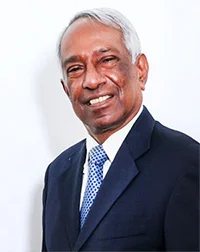 by Dr B. J. C. Perera
MBBS(Cey), DCH(Cey), DCH(Eng), MD(Paediatrics), MRCP(UK), FRCP(Edin), FRCP(Lond), FRCPCH(UK), FSLCPaed, FCCP, Hony. FRCPCH(UK), Hony. FCGP(SL)
Specialist Consultant Paediatrician and Honorary Senior Fellow, Postgraduate Institute of Medicine, University of Colombo, Sri Lanka.
An independent freelance medical correspondent.
When a family first receives a diagnosis of Autism Spectrum Disorder (ASD) in a child, the immediate reaction is often a mixture of confusion, sorrow, anguish, overwhelming uncertainty and the terrible feeling of total helplessness. In Sri Lanka, where cultural perceptions and societal expectations around child development run ever so deep, parents of autistic children frequently ask themselves: “What did we do wrong?” or “Whose fault is it?” or “What will become of our child’s future?” etc.
The short answer to those sentiments is: you did nothing wrong. Autism is not an illness to be cured; nor is it the result of poor parenting. It is due to a developmental disturbance in the unique neurological wiring of the affected child’s brain. While clinical interventions, speech therapy, and occupational therapy play essential roles, the most profound transformations should occur where the child spends the vast majority of their time: at home, surrounded by close family and loved ones.
To support a child on the spectrum of ASD effectively, families must understand that autism is not a one-size-fits-all condition. As the very name suggests, it manifests along a broad continuum, from mild (Level 1) to severe (Level 3). Navigating this path requires specifically tailored strategies for home care, an understanding of local resources, inspiration from proven global approaches, and a clear awareness of some practices that can do more harm than good.
Understanding the Spectrum of ASD and Tailoring Home Care
Every child with autism has a distinct profile of strengths, sensory sensitivities, and developmental challenges. Matching your home environment to your child’s specific position on the spectrum is crucial for their growth and further development.
The Three Severity Levels
These levels measure how much daily help a person needs. They look at two main areas: social communication and restricted or repetitive behaviour.
* Level 1 (Requiring support): It is the mildest level. Affected children have trouble starting social interactions or organising tasks without help. They have fluent speech but struggle with distinction and gradation. They need subtle social cues in everyday life.
* Level 2 (Requiring substantial support):
It is a moderate level. The affected patients show clear social communication issues and strict routines that interfere with daily life even with help. Their speech is phrase-limited; they have significantly high sensory overload and often require visual schedules.
* Level 3 (Requiring quite extensive support):
This is the most severe form of the disorder. Those affected have severe communication impairments with minimal coherent speech and extreme resistance to change, needing constant and intensive help. They show marked behaviour problems, severe distress and meltdowns.
The Mild Stage (High-Functioning / Level 1)
Children on the mild end of the spectrum often speak fluently and could even excel academically or in specific interest areas. However, they may struggle significantly with subtle social cues, emotional regulation, and adapting to unexpected changes.
* Home Strategy to Follow: The family members need to focus on explicit social coaching and emotional literacy. Use “social stories”, like short, illustrated narrative scripts to explain everyday scenarios like taking turns during family games, handling losing, or starting a conversation with a cousin.
* Behavioural Pattern:
They may talk incessantly about a narrow passion such as train timetables or marine life while failing to notice when a listener has lost interest. Rather than hushing them, family members can set structured “sharing windows” (e.g., “We will talk about trains for 10 minutes, and then we will talk about dinner”). Genuinely responding to them and paying intense attention to what they say is of paramount importance.
The Moderate Stage (Level 2)
Children at this stage exhibit more pronounced communication delays, repetitive behaviour, such as hand-flapping or pacing, and have noticeable difficulties in shifting focus from one task to another.
* Home Strategy to Follow: Implement visual schedules. Children with moderate autism tend to process visual information far better than spoken words. Use picture cards affixed to a board to show the daily routine: Brush Teeth, Eat Breakfast, School, Play Time, Bath, Bed.
* Behavioural Pattern:
They may experience distress during routine shifts, such as leaving the house for a family visit. Providing a 10-minute and 5-minute visual timer countdown before a transition helps to ease anxiety dramatically. They need to be kept informed about what is going to happen.
The Severe Stage (Level 3)
Children on the severe end of the spectrum are often non-verbal or use very limited functional words. They frequently experience intense sensory sensitivities and may engage in self-injurious behaviour, such as head-banging, biting or severe meltdowns when overwhelmed.
* Home Strategy to Follow: Prioritise safety, basic communication, and sensory regulation. Set up a dedicated “calm-down corner” in the house, stocked with soft pillows, weighted blankets, and sensory toys. Communication should rely on Picture Exchange Communication Systems (PECS) or basic hand sign gestures for fundamental needs like “water”, “food”, or “toilet”.
* Behavioural Pattern:
Sensory meltdowns in these children are not temper tantrums. They are involuntary neurological overloads caused by bright lights, loud noises, or internal distress. During a meltdown, lower the room lights, reduce noise, ensure physical safety, and family members need to sit quietly nearby without overwhelming the child with verbal demands and specific instructions to follow.
Lessons from the West: The “Son-Rise” Connection
In Western cinema and literature, stories like “Son-Rise: The Miracle Continues”, which documents how Raun Kaufman’s parents helped him overcome severe autism, offer valuable insights for Sri Lankan homes. While some historical claims in early literature about “total cures” should be viewed through a modern scientific lens, the core philosophy of the Son-Rise Programme remains profoundly effective: “Join the child in his or her world before you ask them to join yours.”
In traditional settings, adults often try to stop a child’s repetitive behaviour, such as spinning wheels or rocking. The Son-Rise approach flips this paradigm upside down, so to speak:
* Joining: If your child is sitting on the floor spinning a saucer, sit beside the child and gently spin a saucer, too. This non-judgmental validation builds an unexpected bridge of trust. The child realises, “You are not trying to change me; you are interested in what I am doing.“
* Capitalising on Eye Contact:
The moment the child turns to look at you in surprise, use that brief window of shared attention to offer a warm smile, a soft word of encouragement, or a gentle toy exchange.
* Parental Attitude:
The most crucial element from these Western frameworks is changing the emotional tone of the home from one of anxiety, desperation and pity to one of unconditional acceptance, love, and hopeful facilitation.
Mobilising the Extended Sri Lankan Family
One of Sri Lanka’s greatest cultural strengths is the extended family support system, consisting of grandparents, aunts, uncles, and domestic helpers living under one roof or nearby. When mobilised correctly, this network provides an extraordinary support system.
* Educating Grandparents: Older generations may view autism through traditional lenses, misinterpreting it as bad karma, spiritual affliction, or spoiled behaviour. Parents must gently educate elders using simple medical concepts. It is necessary to explain that the child’s brain is like a radio tuned to a different frequency. It is not broken; it just hears and sees the world differently.
Assigning Role-Based Support:
* Grandparents can offer calm, unhurried companionship, reading structured storybooks or tending a home garden alongside the child.
* Aunts and Uncles
can assist with transportation to clinical appointments or provide respite care, giving the primary parents a necessary break to prevent “caregiver burnout”.
* Siblings
should be taught how to act as play-partners rather than secondary parents. Encouraging games, such as building blocks, painting or water play that do not rely heavily on complex verbal rules, is a very useful and productive strategy to adopt.
Utilising Local Facilities and Community Services in Sri Lanka
While specialised services were once concentrated solely in major medical hubs, Sri Lanka has made noticeable strides in multidisciplinary care for developmental conditions such as ASD. Families should actively tap into both state and non-governmental resources.
* State Healthcare Infrastructure: Most of our tertiary care hospitals offer specialised Autism Assessment Clinics, speech and language therapy, as well as occupational therapy units. District General Hospitals across the island increasingly feature Developmental Clinics supported by the Sri Lanka Association for Child Development (SLACD).
* Primary Health Network:
Public Health Midwives (PHMs) and local Medical Officers of Health (MOHs) are often the first line of early detection. Parents who notice some lack of eye contact, speech delay, or absence of social smiling by 12 to 18 months of age in their child should request an evaluation through their local MOH Clinic.
* Non-Governmental and Foundation Support:
Organisations such as the MJF Charitable Foundation (Rainbow Centre) provide holistic therapy, inclusive education, and vocational training facilities. Regional charities, such as ECSAT in the Southern Province, offer community-based outreach, one-to-one educational support, and even home visitation programmes for families unable to travel daily.
* Community Integration:
Encourage participation in inclusive community settings. Local religious centres, such as temples, churches, and mosques, as well as community parks, can serve as gentle environments for social exposure during off-peak, quiet hours.
What NOT to Do: Some Counterproductive Measures
In their eagerness to help, well-meaning family members can inadvertently hinder progress or cause emotional regression. Families must consciously avoid several common pitfalls:
* Forced and Prolonged Eye Contact – For an autistic child, forcing direct eye contact can trigger physical anxiety akin to a threat response. It is much better to look at a shared object or toy together. Eye contact will improve naturally and progressively as trust grows. Improved eye contact is a definitive sign of progress.
* Punishing “Stimming”
(short for self-stimulatory behaviour) is the repetition of physical movements, sounds, words, or object manipulations used to self-regulate emotions and process sensory input. Flapping, rocking or humming are vital self-regulatory mechanisms for processing stress or joy for affected children. It is necessary to allow safe stimming freely and to gently intervene only if the behaviour has the potential to cause physical self-harm.
* Excessive Screen Time –
Handing a child a smartphone or TV screen to keep them quiet suppresses human-to-human social neural networks. It is far better to replace passive screen consumption with tactile sensory performance such as playing with sand, playdough, or pouring water.
* Hiding the child –
Keeping the child isolated out of fear of social stigma (“What will the neighbours say?“) robs them of essential social learning opportunities. It is necessary to introduce the child to community environments gradually during calm, low-density hours.
* Inconsistent discipline
– Allowing a behaviour one day (perhaps due to tiredness) and scolding for it the next day creates severe confusion for a child with ASD who generally tends to thrive on predictability. Ideally, it is desirable to maintain firm, calm, and uniform boundaries across all household members.
Light at the End of the Tunnel: Hope Begins at Home
Although many parents are devastated by the diagnosis, ASD is not the end of the world. Autism presents a unique developmental journey, but it is not a complete dead end. When a home environment shifts from a focus of intense frustration to one of structured acceptance, remarkable progress is most likely to unfold. The intense efforts put into such an endeavour will provide tangibly positive results. That platitude has been shown repeatedly and proven to be quite true, over and over, again and again, in very many scientific studies.
By blending modern behavioural strategies, leveraging some of the Western philosophies of unconditional joining, drawing strength from Sri Lanka’s extended family networks, and utilising available local clinical services, affected families can transform their homes into safe anchorages. In doing so, they give every affected child, regardless of where they sit on the Autism Spectrum, the opportunity to bloom into their fullest potential. It can be a fruitful and deeply satisfying journey of achievement. The secret to success is not to be miserably dejected, but to be hopeful and optimistic. Easier said than done sometimes, but it is the only axiom that will show clearly perceptible and improved results.
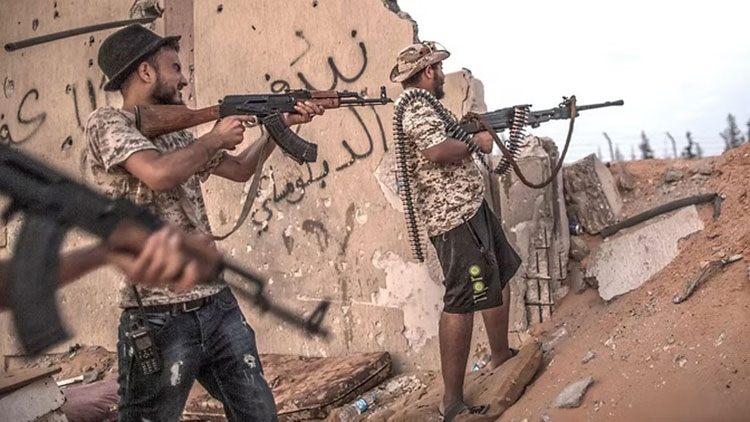
by Col. (R) Nalin Herath
There is a question that the international community must periodically ask itself: What happens to a State after its regime has been ousted?
The question is particularly relevant when examining Iraq and Libya. Saddam Hussein and Muammar Gaddafi were authoritarian rulers. Their governments were associated with political repression, human-rights violations and the suppression of political opposition. None of this should be ignored or excused. But recognising the failures of authoritarian rule does not prevent us from asking another, equally important strategic question:
Did the removal of these regimes adequately prepare for what came next?
The experience of Iraq and Libya suggests that removing a ruler is considerably easier than replacing the political, administrative and security architecture around that ruler.
Danger of confusing regime change with State reconstruction
A state is more than its leader. It consists of institutions, security forces, civil servants, courts, political structures, infrastructure, economic systems and, perhaps most importantly, an accepted monopoly over the legitimate use of force. When an authoritarian system has concentrated enormous power around one individual, removing that individual can expose weaknesses that were previously hidden. The strategic mistake is to assume that once the dictator has gone, a democratic and stable state will naturally emerge. History does not support such an assumption. The aftermath of Iraq demonstrates this particularly clearly. Following the 2003 invasion, the Coalition Provisional Authority issued Order No. 2, formally dissolving the Iraqi Ministry of Defence and the Iraqi Army, among other security institutions. A US congressional report later documented the enormous consequences of this decision, including the disappearance of hundreds of thousands of military personnel from the institutional framework of the state. Whatever the intentions behind the decision, the strategic consequence was that an established security structure had to be rebuilt while the country was simultaneously experiencing political upheaval and growing violence. That is a dangerous combination.
Iraq: Removing the structure before building the replacement
Saddam Hussein’s government was unquestionably authoritarian. It also reflected a complicated sectarian and political structure in which members of the Sunni minority occupied disproportionate positions of power despite being a demographic minority. But the question for strategic planners should not simply be whether Saddam deserved to remain in power. The question should have been:
What institutional structure would replace the system once he was removed?
An army can be politically controlled without being politically representative. A bureaucracy can serve an authoritarian government while still providing essential state functions. A security institution can be reformed without necessarily being destroyed. The distinction between reforming institutions and eliminating institutions is therefore critical. The post-2003 experience demonstrated the consequences of institutional disruption. Security vacuums contributed to insurgency and instability, while the process of rebuilding Iraq’s security forces took place amid an increasingly deteriorating security environment. The lesson is not that authoritarian institutions should never be reformed. The lesson is that state capacity should not be casually destroyed without a credible replacement.
Libya: prosperity, authoritarianism and institutional fragility
Libya presents an even more complicated case. Gaddafi’s government was authoritarian and deeply personalised. Political freedom was severely restricted, and the security apparatus was deliberately structured around regime survival. Yet Libya, under Gaddafi, also used substantial oil revenues to fund education, healthcare, infrastructure and social services. World Bank data from around the end of the Gaddafi era show life expectancy reaching approximately 75 years by 2011, skilled attendance at birth at 100 percent and measles immunisation at 98 percent. This does not prove that Gaddafi’s system was politically legitimate. It demonstrates something different: economic and social outcomes can coexist with authoritarian political structures.
The Great Man-Made River illustrates the scale of Libya’s investment ambitions. The World Bank described the project as one of the world’s largest engineering schemes, involving thousands of kilometres of planned pipelines to transport water from deep desert aquifers toward the populated coastal belt. The original project was estimated at approximately US$ 25 billion over several phases. Again, this should not become nostalgia for dictatorship. It should become a lesson in state capacity.
What happened after Gaddafi?
The post-2011 experience is perhaps the clearest illustration of the vacuum problem. Libya did not simply move from dictatorship to a consolidated democratic state. Instead, competing armed groups, political factions and institutions emerged. A UN economic and social affairs analysis concluded that the fall of the Gaddafi regime exposed weak state institutions and that the post-Gaddafi period was characterised by the proliferation of armed militias and institutional fragmentation.
The World Bank has similarly described how the security vacuum allowed armed groups to expand, while attempts to integrate them into the formal security apparatus produced a hybrid system in which state institutions and powerful armed groups operated alongside one another. This is the heart of the lesson. The consequences of regime change were also evident in Libya. The 2012 Benghazi attack, later portrayed in 13 Hours: The Secret Soldiers of Benghazi, illustrated the security vacuum that emerged after Gaddafi’s fall. The collapse of central authority allowed militias and competing armed groups to fill the space left by weakened state institutions. The lesson is clear: removing a regime may achieve military victory, but without a credible plan to rebuild the state, victory can quickly become a security vacuum.
When the state withdraws, something else occupies the space. If the replacement is not a legitimate national institution, the vacuum can be filled by militias, tribes, ideological movements, criminal networks or competing political authorities. The vacuum does not remain empty.
Terrorism question
There is another uncomfortable issue. Authoritarian regimes frequently suppress political and armed movements through coercive security systems. When those systems disappear abruptly, previously contained organisations can find new operating space. This does not mean that dictatorship is an appropriate method of counterterrorism. It means that counterterrorism cannot be separated from State capacity. The international community therefore needs to distinguish between defeating a particular terrorist organisation and maintaining the institutional conditions that prevent multiple armed actors from competing for power. The destruction of one regime does not automatically eliminate the forces that created insecurity. Sometimes it creates an environment in which those forces multiply.
Strategic mistake: winning the war but losing the peace
Military intervention can have a clearly defined operational objective. State reconstruction does not. A military campaign may successfully remove a government in weeks or months. Building legitimate institutions can take decades.This creates a fundamental strategic asymmetry. The shorter the planning horizon for intervention, the greater the danger of a long-term vacuum. The international community therefore needs to think beyond the first question: How do we remove the regime?
It must ask: Who governs the country the next morning? Who controls the borders? Who controls the security forces? Who pays government employees? Who maintains electricity, water and hospitals? Who protects critical infrastructure? Who administers justice? Who prevents armed groups from becoming alternative governments? Who provides political legitimacy? And perhaps most importantly: Who possesses the authority to enforce the decisions of the new state? If there are no convincing answers, regime change is only the beginning of the problem.
The lesson should not be that the United States or its allies should never intervene. Nor should it be that Saddam Hussein or Muammar Gaddafi should be rehabilitated as models of governance. The lesson is more practical. Regime change must never be confused with state-building.
Before dismantling an established political order, external powers need a credible understanding of the institutions that will replace it. Security-sector reform should normally distinguish between individuals who must be removed and institutions that must be preserved. A national army may need reform. A ministry may need restructuring. A security service may need accountability and civilian oversight. But destroying institutional capacity without having an operational replacement can create consequences far beyond the original objective.
Wider geopolitical lesson
The consequences of Iraq and Libya did not remain within their borders. State fragmentation affects neighbouring countries, migration, organised crime, arms trafficking, terrorism, energy markets and regional power competition. In today’s interconnected world, a failed transition in one country can become a security problem for an entire region. That is why intervention planning should include not only military objectives but also political, economic, humanitarian and security-sector objectives. The most important planning document may therefore not be the operational plan for removing the regime. It may be the plan for Day One after the regime has disappeared.
History should not be written as a simple choice between dictatorship and democracy. The real strategic challenge is more complicated. Saddam Hussein and Muammar Gaddafi were dictators. Their governments committed serious abuses, and their populations had legitimate grievances. But the failures of authoritarian rule do not automatically justify the destruction of state institutions without a credible plan for rebuilding them. The experience of Iraq and Libya demonstrates a fundamental principle of international security: A political vacuum is not neutral space. Someone will fill it. If legitimate national institutions cannot fill that space, armed groups, sectarian interests, extremist organisations or foreign-backed factions may do so. The ultimate lesson for the United States, its allies and the wider international community is therefore straightforward:
Removing a regime may win the immediate battle. Building a legitimate, functioning and secure state determines whether the intervention succeeds in the long term. The world should learn to ask not only “How do we remove the dictator?”. It must also ask:
“What happens to the country when he is gone?”
That may be the most important strategic question of all.
(The writer is the Secretary General of the Ceylon Chamber of Shipping, former Director General of the Institute of National Security Studies (INSS), and former Spokesman of the Ministry of Defence. He is also a Non-Resident Fellow at the London Dialogue. His areas of expertise include international relations, geopolitics, maritime affairs, national security, economic policy, and strategic governance. He is a consultant at JITT Group and a member of World Pace Board.).

Fairway Colombo named Official Accommodation Partner of Manhunt International 2026

Police uncover key financial link connecting several underworld figures

Old Bens and Old Mazenodians renew football rivalry after 13 years

Ernest Soysa Musical Talent Show 2026 shines bright

From food truck to homegrown success: Street Burger celebrates 10 years

Chamara remanded

‘Dates have the highest sugar content to fight Coronavirus’

Sunday Island 27 December – Headlines

#SundayIsland 17th December – Headlines

Sunday Island – 28th March

Sunday Island Headlines – 21 March

Sunday Island – 21st February – Headlines
-

 Features5 days ago
The Sri Lankan who made Scottish history
-

 Features7 days ago
Preventing grievances from becoming communal
-

 Sports5 days ago
Nissanka absence opens door for Sri Lanka’s young guns
-

 News6 days ago
Gnansara Thera to be assigned to prison printing section: Officials
-

 News4 days ago
NDB fraud Rs 60mn more than reported
-

 News4 days ago
Removing monk’s robes matter for Sangha to decide: Mahanayake Theras
-

 Features5 days ago
Future of Sri Lanka’s state university system: Should it be shut down and reopened?
-

 News6 days ago
OIC of FCID summoned before Maligakanda Magistrate