
Features
Bala Tampoe’s resistance lives on


By Devana Senanayake
Bala Tampoe may have died in 2014, but his commitment to the social transformation of society and his need to combat the exploitation the proletariat faced, can be felt even ten years later. His contributions are particularly important because the “means of social (re)production” have been upended and reoriented by the pandemic and the economic crisis.
Social reproduction is the labor needed to maintain a labor force and includes intimate labor such as mental and emotional labor. Women’s lives, in the household or in their field, be it formal or informal, have been impacted. But it is in the existence of individuals, collectives and unions—forces of quiet resistance—in this realm that Bala’s spirit lives on in.
Born into an aristocratic Tamil family, Bala’s family had a deep impact on his life choices. His father, a coconut planter and civil servant for the colonial government, used to ride both horses and cars. Bala in a profile recalled his father’s tendency to lash out with his whip at people and bullocks who blocked his path on the road.
His mother, the child of a former Chief Post Master, was a fan of the Indian Nationalist movement and admired leaders such as Gandhi and Nehru. Familial tensions plagued his household and his father used to beat his mother which inspired his desire to defend the oppressed.
Bala studied in Royal College and started his activism early as he joined the Suriya Mal Movement and then the LSSP’s anti-imperialist movement in the early 1940s. Once he received his undergraduate degree from the University of Peradeniya, he lectured students about botany and horticulture, before his dismissal for participation in the Public Workers Strike in 1947.
Nevertheless, Bala’s passion for education did not stop there. Workers, students and children learned about history, philosophy, economics and even feminism, as he touched on texts such as Simone De Beauvoir’s The Second Sex and Kate Millett’s Sexual Politics, in his lectures.
In 1948, Bala became General Secretary of the Ceylon Mercantile Union (CMU) and held his post for 67 years until his death. He participated in the Hartal in 1953—an iconic moment in the country’s history as trade unions and the proletariat opposed the removal of the rice subsidy by the Prime Minister, Dudley Senanayake.
Workers took to the streets, smashed buses, uprooted rail-lines and stopped public transport. Their militancy paralyzed the state apparatus and this resulted in the reduction of the price of rice and the prime minister’s resignation. Bala also led numerous other strikes such as the Lake House strike 1959 and the SLBC strike 1966.
Women’s concerns also received his support, primarily the 600 day strike at Lucky Industries and Polytex strike 1981-1982. Kumudini Samuels, for instance, remembers her participation in the strikes in the 1970s as an employee at Carsons.
Bala also advocated for labor reform such as a bill to limit the unfair termination of employees. He met Dudley Senanayake, proposed state intervention to combat unfair dismissal and laid the foundations for the Termination of Employment Act in 1971. He helped draft a National Workers’ Charter which successive governments have failed to initiate and recommended the ratification of ILO Convention 87 (Freedom of Association and Protection of the Right to Organize) and 98 (Right to Organize and Collective Bargaining Convention).
The CMU moved from a union which represented white collar members of the mercantile sector to those at the factory-floor level. It has promptly been re-named the Ceylon Mercantile Industrial and General Workers Union.
“Today, our union is only one-fifth our original size. We have some 7,000-8,000 members today, but at one point we had 35,000 workers. We could paralyze the Colombo Port,” Bala told Meera Srinivasan in 2013. One such example is the strike in Colombo Port in 1963. At present, the CMU has a membership of only 3,000.
Bala also ran for Parliament in 1960 and 1965 but lost in both instances. He opposed the LSSP, CP and SLFP formation of the United Left Front (ULF) coalition in 1964 and left the party to form the LSSP-R, the ‘R’ standing for revolutionary. He led the LSSP-R, entered it into the Fourth International and renamed it as the Revolutionary Marxist Party (RMP).
Under Upali Cooray, the RMP mobilized women, published a women’s manifesto, and tried to kickstart a women’s liberation movement.
As a lawyer, he defended the young men of the JVP insurrection in 1971. He defended their right to political expression in the Criminal Justice Commission in 1972. The CMU protested the detention of nearly 4,000 comrades, many of them tortured under police custody. They also opposed the State of Emergency which permitted the disposal of dead bodies without the need for a post-mortem examination.
“In 1971 and 1972, comrade Bala’s brilliant knowledge and understanding of Marxism and law brought another dimension to the whole Criminal Justice Commission trial in that a holistic class perspective of the April 1971 insurrection could be presented to the world,” Lionel Bopage said in his article about Bala in 2014.
Women were also unfairly snared in the violence of the counter-insurrection in 1971-72. Former beauty queen in Kataragama, Premavathi Manamperi was arrested, tortured and paraded naked in the Holy City for suspicions of JVP sympathies. She was then shot and buried alive. She had only attended some Marxist classes, but reports later revealed the incident to be an act of revenge by a rejected military officer. Bala mobilized people to protest about her unjust death.
He also advocated a political solution to the National Question as an active member of the Movement for Inter-Racial Justice and Equality (MIRJE), founded by Fr. Paul Caspersz. Of Bala’s romantic partners, unionists and activists fondly recall May Wickramasuriya. May joined the CMU in 1951 and their Executive Committee in 1953.
She played a vital role in the CMU and Employers Federation of Ceylon’s Collective Bargaining Agreement to provide administrators, clerks and executives in British-led companies benefits such as 42 days of leave, a dispute resolution mechanism and retirement at 60. She also helped the CMU secure its premises in Kollupitiya and it is one of the only trade unions in the country to have a property in its name.
May became Assistant-General Secretary of the CMU in 1957 and stayed on until 1998. “May was an institution at CMU. She held the CMU together. She was very supportive of us, women. Bala would listen to May. At that time, none of the trade unions were pro-women. They had no notion of women’s demands and rights in the labor movement and were very male-centric,” Kumudini told me. May experienced a stroke in November 1995 and died three years later in 1998.
After Bala’s demise in 2014, the CMU’s membership and relevance has also disappeared. When I contacted the CMU, they declined to comment and a former member at the last minute refused the publication of his responses. This behavior is indicative of the present state of trade unions, which are primarily male-dominated.
Many of them, led by fossilized men, are embroiled in interpersonal tensions and battles of succession. The tendency to familiarize relationships and political movements means that the consensus and solidarity needed to respond to the moment is lost.
In the meantime, the economic crisis has completely upended the country. Welfare and social services, such as universal healthcare and free education, are underfunded and in-decline. Women and children have been disproportionately hit. The inflation of food has led to severe child malnutrition. Mothers subsist on one meal a day. Girls have dropped out of school as the prices of stationery, uniforms and transport have risen. A number of houses have had their electricity disconnected and are in voluntary blackout. Families in the North, East and Central provinces are in-debt for basic essentials such as food and medicine.
Workers in feminized and invisible roles in the formal and informal sector are burdened by their material realities, exploitation in their realms of labor and inside their households. Women in the plantation sector, apparel sector and domestic labor have set up unions in the past couple of years.
Collectives in the LGBTQIA+ community have distributed mutual aid and resources in times of crisis. Activists continue to bail out LGBTQIA+ folks and sex workers arbitrarily arrested under the Vagrants Ordinance. Women in the Muslim community have protested the institution of marriage under the Muslim Marriage and Divorce Act which impacts poor and rural-based women and children in particular.
These are just a handful of responses to the crisis of “social (re)production” in place.
At present, a dual response which considers formal and informal labor and the intricacies of intimate life, an invisible realm of labor, is the playground for resistance.
While he did not directly champion these causes, the essence of Bala’s spirit can be seen in these quiet but consistent acts of resistance, as the men he inspired are consumed by their personal vices, paper-thin egos and abject mediocrity.


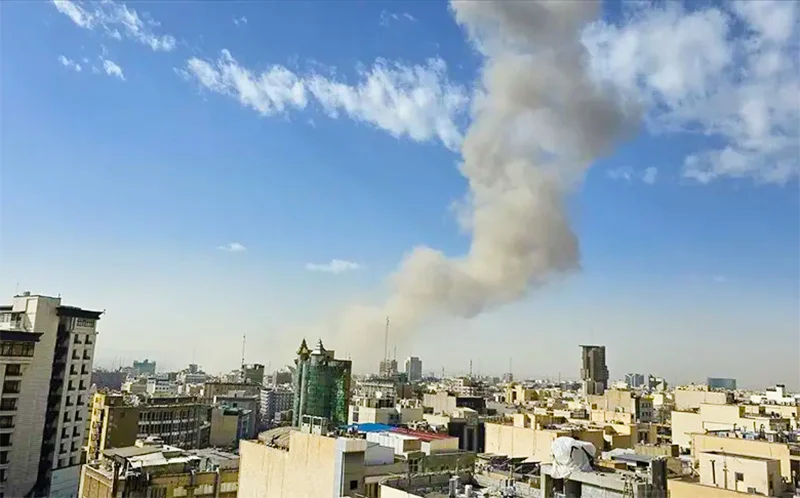
 The recent humanly costly torpedoing of an Iranian naval vessel in Sri Lanka’s Exclusive Economic Zone by a US submarine has raised a number of issues of great importance to international political discourse and law that call for elucidation. It is best that enlightened commentary is brought to bear in such discussions because at present misleading and uninformed speculation on questions arising from the incident are being aired by particularly jingoistic politicians of Sri Lanka’s South which could prove deleterious.
As matters stand, there seems to be no credible evidence that the Indian state was aware of the impending torpedoing of the Iranian vessel but these acerbic-tongued politicians of Sri Lanka’s South would have the local public believe that the tragedy was triggered with India’s connivance. Likewise, India is accused of ‘embroiling’ Sri Lanka in the incident on account of seemingly having prior knowledge of it and not warning Sri Lanka about the impending disaster.
It is plain that a process is once again afoot to raise anti-India hysteria in Sri Lanka. An obligation is cast on the Sri Lankan government to ensure that incendiary speculation of the above kind is defeated and India-Sri Lanka relations are prevented from being in any way harmed. Proactive measures are needed by the Sri Lankan government and well meaning quarters to ensure that public discourse in such matters have a factual and rational basis. ‘Knowledge gaps’ could prove hazardous.
Meanwhile, there could be no doubt that Sri Lanka’s sovereignty was violated by the US because the sinking of the Iranian vessel took place in Sri Lanka’s Exclusive Economic Zone. While there is no international decrying of the incident, and this is to be regretted, Sri Lanka’s helplessness and small player status would enable the US to ‘get away with it’.
Could anything be done by the international community to hold the US to account over the act of lawlessness in question? None is the answer at present. This is because in the current ‘Global Disorder’ major powers could commit the gravest international irregularities with impunity. As the threadbare cliché declares, ‘Might is Right’….. or so it seems.
Unfortunately, the UN could only merely verbally denounce any violations of International Law by the world’s foremost powers. It cannot use countervailing force against violators of the law, for example, on account of the divided nature of the UN Security Council, whose permanent members have shown incapability of seeing eye-to-eye on grave matters relating to International Law and order over the decades.
The foregoing considerations could force the conclusion on uncritical sections that Political Realism or Realpolitik has won out in the end. A basic premise of the school of thought known as Political Realism is that power or force wielded by states and international actors determine the shape, direction and substance of international relations. This school stands in marked contrast to political idealists who essentially proclaim that moral norms and values determine the nature of local and international politics.
While, British political scientist Thomas Hobbes, for instance, was a proponent of Political Realism, political idealism has its roots in the teachings of Socrates, Plato and latterly Friedrich Hegel of Germany, to name just few such notables.
On the face of it, therefore, there is no getting way from the conclusion that coercive force is the deciding factor in international politics. If this were not so, US President Donald Trump in collaboration with Israeli Rightist Premier Benjamin Natanyahu could not have wielded the ‘big stick’, so to speak, on Iran, killed its Supreme Head of State, terrorized the Iranian public and gone ‘scot-free’. That is, currently, the US’ impunity seems to be limitless.
Moreover, the evidence is that the Western bloc is reuniting in the face of Iran’s threats to stymie the flow of oil from West Asia to the rest of the world. The recent G7 summit witnessed a coming together of the foremost powers of the global North to ensure that the West does not suffer grave negative consequences from any future blocking of western oil supplies.
Meanwhile, Israel is having a ‘free run’ of the Middle East, so to speak, picking out perceived adversarial powers, such as Lebanon, and militarily neutralizing them; once again with impunity. On the other hand, Iran has been bringing under assault, with no questions asked, Gulf states that are seen as allying with the US and Israel. West Asia is facing a compounded crisis and International Law seems to be helplessly silent.
Wittingly or unwittingly, matters at the heart of International Law and peace are being obfuscated by some pro-Trump administration commentators meanwhile. For example, retired US Navy Captain Brent Sadler has cited Article 51 of the UN Charter, which provides for the right to self or collective self-defence of UN member states in the face of armed attacks, as justifying the US sinking of the Iranian vessel (See page 2 of The Island of March 10, 2026). But the Article makes it clear that such measures could be resorted to by UN members only ‘ if an armed attack occurs’ against them and under no other circumstances. But no such thing happened in the incident in question and the US acted under a sheer threat perception.
Clearly, the US has violated the Article through its action and has once again demonstrated its tendency to arbitrarily use military might. The general drift of Sadler’s thinking is that in the face of pressing national priorities, obligations of a state under International Law could be side-stepped. This is a sure recipe for international anarchy because in such a policy environment states could pursue their national interests, irrespective of their merits, disregarding in the process their obligations towards the international community.
Moreover, Article 51 repeatedly reiterates the authority of the UN Security Council and the obligation of those states that act in self-defence to report to the Council and be guided by it. Sadler, therefore, could be said to have cited the Article very selectively, whereas, right along member states’ commitments to the UNSC are stressed.
However, it is beyond doubt that international anarchy has strengthened its grip over the world. While the US set destabilizing precedents after the crumbling of the Cold War that paved the way for the current anarchic situation, Russia further aggravated these degenerative trends through its invasion of Ukraine. Stepping back from anarchy has thus emerged as the prime challenge for the world community.

A Living Legend of the Peradeniya Tradition:
(First part of this article appeared yesterday)
H.L. Seneviratne’s tenure at the University of Virginia was marked not only by his ethnographic rigour but also by his profound dedication to the preservation and study of South Asian film culture. Recognising that cinema is often the most vital expression of a society’s aspirations and anxieties, he played a central role in curating what is now one of the most significant Indian film collections in the United States. His approach to curation was never merely archival; it was informed by his anthropological work, treating films as primary texts for understanding the ideological shifts within the subcontinent
The collection he helped build at the UVA Library, particularly within the Clemons Library holdings, serves as a comprehensive survey of the Indian ‘Parallel Cinema’ movement and the works of legendary auteurs. This includes the filmographies of directors such as Satyajit Ray, whose nuanced portrayals of the Indian middle class and rural poverty provided a cinematic counterpart to H.L. Seneviratne’s own academic interests in social change. By prioritising the works of figures such as Mrinal Sen and Ritwik Ghatak, H.L. Seneviratne ensured that students and scholars had access to films that wrestled with the complex legacies of colonialism, partition, and the struggle for national identity.
These films represent the ‘Parallel Cinema’ movement of West Bengal rather than the commercial Hindi industry of Mumbai. H.L. Seneviratne’s focus initially cantered on those world-renowned Bengali masters; it eventually broadened to encompass the distinct cinematic languages of the South. These films refer to the specific masterpieces from the Malayalam and Tamil regions—such as the meditative realism of Adoor Gopalakrishnan or the stylistic innovations of Mani Ratnam—which are culturally and linguistically distinct from the Bengali works. Essentially, H.L. Seneviratne is moving from the specific (Bengal) to the panoramic, ensuring that the curatorial work of H.L. Seneviratne was not just a ‘Greatest Hits of Kolkata’ but a truly national representation of Indian artistry. These films were selected for their ability to articulate internal critiques of Indian society, often focusing on issues of caste, gender, and the impact of modernisation on traditional life. Through this collection, H.L. Seneviratne positioned cinema as a tool for exposing the social dynamics that often remain hidden in traditional historical records, much like the hidden political rituals he uncovered in his early research.
Beyond the films themselves, H.L. Seneviratne integrated these visual resources into his curriculum, fostering a generation of scholars who understood the power of the image in South Asian politics. He frequently used these screenings to illustrate the conflation of past and present, showing how modern cinema often reworks ancient myths to serve contemporary political agendas. His legacy at the University of Virginia therefore encompasses both a rigorous body of writing that deconstructed the work of the kings and a vivid archive of films that continues to document the work of culture in a rapidly changing world.
In his lectures on Sri Lankan cinema, H.L. Seneviratne has frequently championed Lester James Peries as the ‘father of authentic Sinhala cinema.’ He views Peries’s 1956 film Rekava (Line of Destiny) as a watershed moment that liberated the local industry from the formulaic influence of South Indian commercial films. For H.L. Seneviratne, Peries was not just a filmmaker but an ethnographer of the screen. He often points to Peries’s ability to capture the subtle rhythms of rural life and the decline of the feudal elite, most notably in his masterpiece Gamperaliya, as a visual parallel to his own research into the transformation of traditional authority. H.L. Seneviratne argues that Peries provided a realistic way of seeing for the nation, one that eschewed nationalist caricature in favour of complex human emotion.
However, H.L. Seneviratne’s praise for Peries is often tempered by a critique of the broader visual nationalism that followed. He has expressed concern that later filmmakers sometimes misappropriated Peries’s indigenous style to promote a narrow, majoritarian view of history. In his view, while Peries opened the door to an authentic Sri Lankan identity, the state and subsequent commercial interests often used that same door to usher in a simplified, heroic past. This critique aligns with his broader academic stance against the rationalization of culture for political ends.
Constitutional Governance:
H.L. Seneviratne’s support for independent commissions is best described as a hopeful pragmatism; he views them as essential, albeit fragile, instruments for diffusing the hyper-concentration of executive power. Writing to Colombo Page and several news tabloids, H.L. Seneviratne addresses the democratic deficit by creating a structural buffer between partisan interests and public institutions, theoretically ensuring that the judiciary, police, and civil service operate on merit rather than political whim. However, he remains deeply aware that these commissions are not a panacea and are indeed inherently susceptible to the ‘politics of patronage.’
In cultures where power is traditionally exercised through personal loyalties, there is a constant risk that these bodies will be subverted through the appointment of hidden partisans or rendered toothless through administrative sabotage. Thus, while H.L. Seneviratne advocates for them as a means to transition a state from a patron-client culture to a rule-of-law framework, his anthropological lens suggests that the success of such commissions depends less on the law itself and more on the sustained pressure of civil society to keep them honest.
Whether discussing the nuances of a film’s narrative or the complexities of a constitutional clause, H.L. Seneviratne’s approach remains consistent in its focus on the spirit behind the institution. He maintains that a healthy democracy requires more than just the right laws or the right symbols; it requires a citizenry and a clergy capable of critical self-reflection. His career at the University of Virginia and his continued engagement with Sri Lankan public life stand as a testament to the idea that the intellectual’s work is never truly finished until the work of the people is fully realized.
In the context of H.L. Seneviratne’s philosophy, as discussed in his work of the kings ‘the work of the people’ is far more than a populist catchphrase; it represents the practical application of critical consciousness within a democracy. Rather than defining ‘work’ as labour or voting, H.L. Seneviratne views it as the transition of a population from passive subjects to an active, self-reflective citizenry. This means that a democracy is only truly ‘realized’ when the public possesses the intellectual autonomy to look beyond the ‘right laws’ or ‘right symbols’ and instead engage with the underlying spirit of their institutions. For H.L. Seneviratne, this work is specifically tied to the ability of the people—including influential groups like the clergy—to perform rigorous self-critique, ensuring that they are not merely following tradition or authority, but are actively sustaining the ethical health of the nation. It is a perpetual process of civic education and moral vigilance that moves a society from the ‘paper’ democracy of a constitution to a lived reality of accountability and insight.
This decline of the ‘intellectual monk’ had a catastrophic impact on the political landscape, particularly surrounding the watershed moment of 1956 and the ‘Sinhala Only’ movement. H.L. Seneviratne posits that when the Sangha exchanged their role as impartial moral advisors for that of political kingmakers, they became the primary obstacle to ethnic reconciliation. He suggests that politicians, fearing the immense grassroots influence of the monks, entered a state of monachophobia, where they felt unable to propose pluralistic or fair policies toward minority communities for fear of being branded as traitors to the faith. In H.L. Seneviratne’s framework, the monk’s transition from a social servant to a political vanguard effectively trapped the state in a cycle of majoritarian nationalism from which it has yet to escape.
H.L. Seneviratne’s work serves as a multifaceted critique of the modern Sri Lankan state and its cultural foundations. Whether he is dissecting what he sees as the betrayal of the monastic ideal or celebrating the humanistic vision of an Indian filmmaker, his goal remains the same: to champion a world where intellect and compassion are not sacrificed on the altar of political power. His legacy at the University of Virginia and his continued voice in Sri Lankan discourse remind us that the work of the intellectual is to provide a moral compass even, indeed especially, when the nation has lost its way.
(Concluded)
by Professor
M. W. Amarasiri de Silva

 Nilanka Anjalee Wickramasinghe is, in fact, a reputed doctor, but the plus factor is that she has an awesome singing voice, as well., which stands as a reminder that music and intellect can harmonise beautifully.
Well, our spotlight today is on ‘Nilanka – the Singer,’ and not ‘Nilanka – the Singing Doctor!’
Nilanka’s journey in music began at an early age, nurtured by an ear finely tuned to nuance and a heart that sought expression beyond words.
Under the tutelage of her singing teachers, she went on to achieve the A.T.C.L. Diploma in Piano and the L.T.C.L. Diploma in Vocals from Trinity College, London – qualifications recognised internationally for their rigor and artistry.
These achievements formally certified her as a teacher and performer in both opera singing and piano music, while her Performer’s Certificate for singing attested to her flair on stage.
Nilanka believes that music must move the listener, not merely impress them, emphasising that “technique is a language, but emotion is the message,” and that conviction shines through in her stage presence –serene yet powerful, intimate yet commanding.
Her YouTube channel, Facebook and Instagram pages, “Nilanka Anjalee,” have become a window into her evolving artistry.
Here, audiences find not only her elegant renditions of local and international pieces but also her original songs, which reveal a reflective and modern voice with a timeless sensibility.
Each performance – whether a haunting ballad or a jubilant interpretation of a traditional hymn – carries her signature blend of technical finesse and emotional depth.
Beyond the concert hall and digital stage, Nilanka’s music is driven by a deep commitment to meaning.
Her work often reflects her belief in empathy, inner balance, and the beauty of simplicity—values that give her performances their quiet strength.
She says she continues to collaborate with musicians across genres, composing and performing pieces that reflect both her classical discipline and her contemporary outlook.
Widely acclaimed for her ability to adapt to both formal and modern stages, with equal grace, and with her growing repertoire, Nilanka has become a sought-after soloist at concerts and special events,
For those who seek to experience her artistry, firsthand, Nilanka Anjalee says she can be contacted for live performances and collaborations through her official channels.
Her voice – refined, resonant, and resolutely her own – reminds us that music, at its core, is not about perfection, but truth.
Dr. Nilanka Anjalee Wickramasinghe also indicated that her newest single, an original, titled ‘Koloba Ahasa Yata,’ with lyrics, melody and singing all done by her, is scheduled for release this month (March)

PM Visits the International Rice Research Institute (IRRI)

Heat Index at ‘Caution level’ at some places in the Western, Sabaragamuwa, Southern and North-western provinces and in Monaragala and Mannar districts

Showers or thundershowers will occur at several places in the Western and Sabaragamuwa provinces and in Galle, Matara, Kandy and Nuwara-Eliya districts after 2.00 pm.

Power sector reforms jolted by 40% pay hike demand

UN scientific research ship here amidst ban on such vessels

Prez assures energy supplies for the time being

‘Dates have the highest sugar content to fight Coronavirus’

Sunday Island 27 December – Headlines

#SundayIsland 17th December – Headlines

Sunday Island – 28th March

Sunday Island Headlines – 21 March

Sunday Island – 21st February – Headlines
-

 News6 days ago
University of Wolverhampton confirms Ranil was officially invited
-

 News5 days ago
Peradeniya Uni issues alert over leopards in its premises
-

 News6 days ago
Female lawyer given 12 years RI for preparing forged deeds for Borella land
-

 News3 days ago
Repatriation of Iranian naval personnel Sri Lanka’s call: Washington
-
 News6 days ago
Library crisis hits Pera university
-

 News5 days ago
Wife raises alarm over Sallay’s detention under PTA
-

 News6 days ago
‘IRIS Dena was Indian Navy guest, hit without warning’, Iran warns US of bitter regret
-
 Latest News6 days ago
Sri Lanka evacuates crew of second Iranian vessel after US sunk IRIS Dena