
Features
Back to familiar territory


Job Offers
Within a day or two of our arrival in Sri Lanka, I received a telephone call from Mr. S.B. Herat, Minister of Food and Cooperatives. He asked me to come and see him. I had neither known nor met Mr. Herat before. But I knew him by sight. When I saw him at the Campbell Place residence, where he stayed with his brother, after asking a few questions, he invited me to become the Secretary to his Ministry. Mr. K.B. Dissanayke of whom I had written about in a previous chapter, was retiring from service. I inquired from Mr. Herat as to whether my present Minister Mr. D.B. Wijetunge was aware that he was going to make this offer to me.
He said “No”, but he would be speaking to him. I told him I was sorry, but if my present Minister had not been informed, it was not possible for me to continue with this conversation. This was the tradition we were brought up in. One did not discuss a matter like this behind the back of one’s Minister. In fact, I remember the instance in the 1960’s when Mr. D.G. Dayaratne, a senior civil servant who was then functioning as the Port Commissioner when called by the Prime Minister Mrs. Bandaranaike and offered the post of Secretary to the Cabinet declined to discuss the issue, because she had not informed his Minister Mr. Michael Siriwardena. Mr. Dayaratne was later appointed, after the formalities had been concluded.
In my case, Mr. Herat was apologetic and said he would not discuss the matter further, but only wished to know whether I would serve if there was general agreement. I said, “Yes” and that this was based on a principle I followed, of taking up whatever assignment the government of the day wished me to undertake. Mr. Herat appreciated this, and we parted. As I was leaving he said “Please don’t mention this conversation to anybody. I will be clearing matters with your Minister and the Prime Minister.” (Mr. Jayewardene was not President yet.)
I promised not to. Matters rested at this for two days. On the morning of the third day which was a holiday, where I had decided to go to the station later than usual, the telephone at home rang at about 9.30 a.m. The Minister of Lands and Irrigation Mr. Gamini Dissanayake was on the line. He said “Dharmasiri, what are you wasting your time at SLBC for? We are forming a new Ministry of Mahaweli Development. Join me and become its Secretary.
” I was now in a serious quandary. I couldn’t tell him that the Food Minister had already spoken to me. I had promised to keep that conversation secret. I therefore rather lamely told Mr. Dissanayake that I knew nothing about irrigation systems or river diversions, and that it was best for him to look for someone with some experience in that area. I suggested Mr. Sivaganam, who was his Secretary in the Ministry of Lands. But Mr. Dissanayake was not to be so easily diverted. He merely said, “No, you will pick it up in three months. It’s going to be an enormous challenge and a great creative endeavour. Please come. I will speak to the Prime Minister.
” I reminded him that he should speak to my Minister first. He promised to do so. To my relief, he did not request me to keep this conversation confidential. I therefore, rang Mr. Herat and was fortunate to find him at home. I requested an immediate appointment. I said that the matter was urgent. He asked me to come. When I told him what happened, he was visibly upset. He thought that Mr. Dissanayake knew that he was interested in getting me. I told Mr. Herat that the last thing I wanted was to be in the middle of a tug of war between two Ministers and to please understand that the present situation was none of my seeking. He was very understanding. He agreed that I should not be misunderstood by anyone. Mr. Herat told me later that the matter was finally resolved in Cabinet. Both Ministers had argued for me.
What had finally clinched the issue had been my previous experience as Deputy Food Commissioner. The government was about to launch a major food policy reform, and they finally concluded that my presence in the Food Ministry was more important at the time. Thus it was, that one afternoon, when I had just finished seeing off the French Cultural Attache, who had come to present some recordings of French music, an envelope bearing the seal of President’s House was hand delivered to me. It contained a letter from the Secretary to the President intimating to me that the President was pleased to appoint me as Secretary to the Ministry of Food and Co-operatives “with immediate effect.” One could not however, abandon responsibilities involved in the only national broadcasting facility “with immediate effect.
” What I did “with immediate effect” was to call a series of emergency meetings with all the relevant parties including Heads of Divisions, Trade Unions, and other important persons. The news of my imminent departure spread rapidly, and large numbers of employees sought to see me to express their shock and regret. In between meetings, I had to find the time to speak to them, however briefly. I had enjoyed good relations with everyone and I felt somewhat sad at the prospect of this sudden departure.
I had to dissuade employees and trade unions going in delegation to see the Minister to protest at my going. Amongst the Unions, one of the most affected seemed to be the JSS, the same Union that protested at my appointment. Now they wanted to protest at my departure. This too, I successfully stopped. The SLFP Union was extremely unhappy. They had felt secure because of my presence. Now they felt quite insecure. They did not know what type of person would succeed me. My Directors of Divisions were very upset. One of the problems was that to everyone this was a sudden blow. They did not possess my knowledge of the background to all this and I was of course sworn to secrecy.
My meetings went on till near midnight. I myself had not anticipated that my new appointment would come so fast.
Therefore, there was much to discuss and decide on, particularly fairly urgent and important matters that would come up during the following few weeks. Then there were important matters to be pursued, both of a bilateral and international nature, consequent to the Non-Aligned Broadcasting conference. I had virtually just come back from that meeting. Responsibilities for follow up action had to be allocated. It turned out to be an exhausting day, and finally when I left the station for the last time another day had dawned.
***
CHAPTER VI
BACK TO FAMILIAR TERRITORY, SECRETARY TO
THE MINISTRY OF FOOD & CO-OPERATIVES 28TH
NOVEMBER 1977 17TH FEBRUARY 1989
Work of New Assignment Starts at Home
My last day at SLBC was the 24th of November 1977. There was then the weekend. Mr. P.M. Hassen, the Food Commissioner telephoned me and dropped in at home on Sunday morning, with a few of his senior officials. The reason for this team to see me on a Sunday, even before I had physically gone to the new Ministry was their anxiety about the vast changes contemplated by the new government on the whole area of food policy.
The ultimate aim was to abolish the rice-rationing scheme, which had been in existence for several decades. The officials were nervous about the impact of such a change, as well as the enormous difficulties involved in managing the reform and the transition. Mr. Hassen showed me reports and memoranda on which they had already been working. We discussed the issues and possible alternatives. We also discussed certain important aspects of implementation. Amongst other matters, we realized the importance of the role the government agents in the districts would have to play. I was therefore, quite upto date on developments when I walked into the Ministry next day, the 28th of November.
I am aware that many people look to some auspicious time to assume duties in a new job or to have themselves blessed through some religious function, such as the chanting of Seth Pirith. For some reason, these practices never obtained a hold on me. As to auspicious times, I tended to agree with the renowned Ayurvedic Physician of the Gampaha School, Dr. Senasekera of Kesbewa whom we used to consult occasionally. He was a fine gentleman.
One day, he told me to my great astonishment that he did not look for any auspicious times when he got married. I could not believe that a traditional Ayurvedic Physician who wore cloth and banian Would act like that, and I asked him whether what he said was true. He said “Yes”, and went on to say “Look, there are three occasions of major importance in a person’s life, birth, marriage and death.
Now, there are no auspicious times for birth and death. Then why on earth must you have an auspicious time for marriage?” The logic was irrefutable.
As to religious functions in public places, everytime someone gets appointed somewhere, my position is that religion is essentially a private matter, and that it was more important to observe it than to display it. I therefore in my career avoided both practices of seeking auspicious times and having public religious displays. I walked in at the due time and got down to work. Of course, in the case of some appointments such as Secretary to the Prime Minister and Chairman and Director-General of Broadcasting, there was no time for any such practices even if I wanted to follow them. In the first instance, I was yanked out of bed and appointed and in the second, I was sped into controlling a seriously deteriorating situation.
The Ministry and The Minister
The Ministry of Food and Co-operatives situated in Union Place, Colombo was a familiar place. Previously, in the 1960’s, I had spent almost four years as Deputy Food Commissioner in the same premises. I now occupied the room then occupied by the Permanent Secretary Baku Mahadeva. From this room, a connecting door led to the Minister’s room. The Minister himself was a genial personality, holding the Parliamentary seat of Hiriyala, in the North-Western Province. He never lost this seat, and it was easy to see why.
Educated at Wesley College, Colombo and coming from a professional family background, Mr. Herat was short, chubby and energetic. He had been a motorcycle-racing rider on the Katukurunda circuit, a hockey player and a lover of sports. Above all, he was honourable and humane. He was refreshingly free from pettiness, a condition common to many politicians, and possessed a mischievous sense of humour.
At times, his whole body shook with laughter. Sometimes, when he thought, the occasion demanded, he tried to get angry, but not very successfully. I remember one such occasion, when he was irritated with Mr. Hassen, the Food Commissioner, over some matter. One could see that lie was striving to get angry and give the Food Commissioner a telling off, but not with greatsuccess. His efforts to generate some visible degree of anger was so funny that the intended victim of his wrath, burst into laughter. “Why are you laughing?” asked the Minister. “Because you look so funny trying to get angry” replied the Food Commissioner, and both burst out laughing.
Such was the temperament of the Minister. It was small wonder that the people of Hiriyala liked him, and kept on re-electing him through every political swing. Mr. Herat’s work habits were also unique. He was always available to the people, and the people made a habit of thronging the premises of the Ministry. He did not see them singly. At any given time over fifty people were in his room, so that everybody heard everybody else’s request to the Minister and the ensuing dialogue. graduating sometime to a public discussion, with the Minister himself referring the matter to the assembled multitude, by asking them for instance, “Do you think this is a fair request?” However, with all this, he was also available to his officers.
Sometimes. I have had to wade through the crowd in order to discuss some urgent matters with him. On such occasions, much to my embarrassment, he used to clear the whole room the moment he saw me. He used to announce, “My Secretary is coming to see me on important official matters. Please wait outside, until he finishes.” I had told him several times, that it was not necessary to clear the room, each time I come in, and that I Would tell him if I had to discuss something confidential which would make this necessary.
But he persisted with the practice, which later I was given to understand was due to his respect for the Secretary. This situation made me reluctant to lightly walk into his room when there was a crowd. I walked in only if a matter was very urgent. Other matters, I noted down and kept for discussion later when the crowd had thinned, or sometimes for the following day.
(Excerpted from In the Pursuit of Governance, autobiography of MDD Pieris)
(Continued from last week)


During a recent panel discussion titled “Security Environment in the Indo-Pacific and Sri Lankan Diplomacy”, organised by the Embassy of Japan in collaboration with Dr. George I. H. Cooke, Senior Lecturer and initiator of the Awarelogue Initiative, the keynote address was delivered by Prof Ken Jimbo of Kelo University, Japan (Ceylon Today, February 15, 2026).
The report on the above states: “Prof. Jimbo discussed the evolving role of the Indo-Pacific and the emergence of its latest strategic outlook among shifting dynamics. He highlighted how changing geopolitical realities are reshaping the region’s security architecture and influencing diplomatic priorities”.
“He also addressed Sri Lanka’s position within this evolving framework, emphasising that non-alignment today does not mean isolation, but rather, diversified engagement. Such an approach, he noted, requires the careful and strategic management of dependencies to preserve national autonomy while maintaining strategic international partnerships” (Ibid).
Despite the fact that Non-Alignment and Neutrality, which incidentally is Sri Lanka’s current Foreign Policy, are often used interchangeably, both do not mean isolation. Instead, as the report states, it means multi-engagement. Therefore, as Prof. Jimbo states, it is imperative that Sri Lanka manages its relationships strategically if it is to retain its strategic autonomy and preserve its security. In this regard the Policy of Neutrality offers Rule Based obligations for Sri Lanka to observe, and protection from the Community of Nations to respect the territorial integrity of Sri Lanka, unlike Non-Alignment. The Policy of Neutrality served Sri Lanka well, when it declared to stay Neutral on the recent security breakdown between India and Pakistan.
Also participating in the panel discussion was Prof. Terney Pradeep Kumara – Director General of Coast Conservation and Coastal Resources Management, Ministry of Environment and Professor of Oceanography in the University of Ruhuna.
He stated: “In Sri Lanka’s case before speaking of superpower dynamics in the Indo-Pacific, the country must first establish its own identity within the Indian Ocean region given its strategically significant location”.
“He underlined the importance of developing the ‘Sea of Lanka concept’ which extends from the country’s coastline to its 200nauticalmile Exclusive Economic Zone (EEZ). Without firmly establishing this concept, it would be difficult to meaningfully engage with the broader Indian Ocean region”.
“He further stated that the Indian Ocean should be regarded as a zone of peace. From a defence perspective, Sri Lanka must remain neutral. However, from a scientific and resource perspective, the country must remain active given its location and the resources available in its maritime domain” (Ibid).
Perhaps influenced by his academic background, he goes on to state:” In that context Sri Lanka can work with countries in the Indian Ocean region and globally, including India, China, Australia and South Africa. The country must remain open to such cooperation” (Ibid).
Such a recommendation reflects a poor assessment of reality relating to current major power rivalry. This rivalry was addressed by me in an article titled “US – CHINA Rivalry: Maintaining Sri Lanka’s autonomy” ( 12.19. 2025) which stated: “However, there is a strong possibility for the US–China Rivalry to manifest itself engulfing India as well regarding resources in Sri Lanka’s Exclusive Economic Zone. While China has already made attempts to conduct research activities in and around Sri Lanka, objections raised by India have caused Sri Lanka to adopt measures to curtail Chinese activities presumably for the present. The report that the US and India are interested in conducting hydrographic surveys is bound to revive Chinese interests. In the light of such developments it is best that Sri Lanka conveys well in advance that its Policy of Neutrality requires Sri Lanka to prevent Exploration or Exploitation within its Exclusive Economic Zone under the principle of the Inviolability of territory by any country” ( https://island.lk/us- china-rivalry-maintaining-sri-lankas-autonomy/). Unless such measures are adopted, Sri Lanka’s Exclusive Economic Zone would end up becoming the theater for major power rivalry, with negative consequences outweighing possible economic gains.
The most startling feature in the recommendation is the exclusion of the USA from the list of countries with which to cooperate, notwithstanding the Independence Day message by the US Secretary of State which stated: “… our countries have developed a strong and mutually beneficial partnership built on the cornerstone of our people-to-people ties and shared democratic values. In the year ahead, we look forward to increasing trade and investment between our countries and strengthening our security cooperation to advance stability and prosperity throughout the Indo-Pacific region (NEWS, U.S. & Sri Lanka)
Such exclusions would inevitably result in the US imposing drastic tariffs to cripple Sri Lanka’s economy. Furthermore, the inclusion of India and China in the list of countries with whom Sri Lanka is to cooperate, ignores the objections raised by India about the presence of Chinese research vessels in Sri Lankan waters to the point that Sri Lanka was compelled to impose a moratorium on all such vessels.
CONCLUSION
During a panel discussion titled “Security Environment in the Indo-Pacific and Sri Lankan Diplomacy” supported by the Embassy of Japan, Prof. Ken Jimbo of Keio University, Japan emphasized that “… non-alignment today does not mean isolation”. Such an approach, he noted, requires the careful and strategic management of dependencies to preserve national autonomy while maintaining strategic international partnerships”. Perhaps Prof. Jimbo was not aware or made aware that Sri Lanka’s Foreign Policy is Neutral; a fact declared by successive Governments since 2019 and practiced by the current Government in the position taken in respect of the recent hostilities between India and Pakistan.
Although both Non-Alignment and Neutrality are often mistakenly used interchangeably, they both do NOT mean isolation. The difference is that Non-Alignment is NOT a Policy but only a Strategy, similar to Balancing, adopted by decolonized countries in the context of a by-polar world, while Neutrality is an Internationally recognised Rule Based Policy, with obligations to be observed by Neutral States and by the Community of Nations. However, Neutrality in today’s context of geopolitical rivalries resulting from the fluidity of changing dynamics offers greater protection in respect of security because it is Rule Based and strengthened by “the UN adoption of the Indian Ocean as a Zone of peace”, with the freedom to exercise its autonomy and engage with States in pursuit of its National Interests.
Apart from the positive comments “that the Indian Ocean should be regarded as a Zone of Peace” and that “from a defence perspective, Sri Lanka must remain neutral”, the second panelist, Professor of Oceanography at the University of Ruhuna, Terney Pradeep Kumara, also advocated that “from a Scientific and resource perspective (in the Exclusive Economic Zone) the country must remain active, given its location and the resources available in its maritime domain”. He went further and identified that Sri Lanka can work with countries such as India, China, Australia and South Africa.
For Sri Lanka to work together with India and China who already are geopolitical rivals made evident by the fact that India has already objected to the presence of China in the “Sea of Lanka”, questions the practicality of the suggestion. Furthermore, the fact that Prof. Kumara has excluded the US, notwithstanding the US Secretary of State’s expectations cited above, reflects unawareness of the geopolitical landscape in which the US, India and China are all actively known to search for minerals. In such a context, Sri Lanka should accept its limitations in respect of its lack of Diplomatic sophistication to “work with” such superpower rivals who are known to adopt unprecedented measures such as tariffs, if Sri Lanka is to avoid the fate of Milos during the Peloponnesian Wars.
Under the circumstances, it is in Sri Lanka’s best interest to lay aside its economic gains for security, and live by its proclaimed principles and policies of Neutrality and the concept of the Indian Ocean as a Zone of Peace by not permitting its EEC to be Explored and/or Exploited by anyone in its “maritime domain”. Since Sri Lanka is already blessed with minerals on land that is awaiting exploitation, participating in the extraction of minerals at the expense of security is not only imprudent but also an environmental contribution given the fact that the Sea and its resources is the Planet’s Last Frontier.
by Neville Ladduwahetty

Far beneath the waters surrounding Sri Lanka lies a largely unseen frontier, a deep seabed that may contain cobalt, nickel and rare earth elements essential to modern technologies, from smartphones to electric vehicles. Around the world, governments and corporations are accelerating efforts to tap these minerals, presenting deep-sea mining as the next chapter of the global “blue economy.”
For an island nation whose ocean territory far exceeds its landmass, the question is no longer abstract. Sri Lanka has already demonstrated its commitment to ocean governance by ratifying the United Nations High Seas Treaty (BBNJ Agreement) in September 2025, becoming one of the early countries to help trigger its entry into force. The treaty strengthens biodiversity conservation beyond national jurisdiction and promotes fair access to marine genetic resources.
Yet as interest grows in seabed minerals, a critical debate is emerging: Can Sri Lanka pursue deep-sea mining ambitions without compromising marine ecosystems, fisheries and long-term sustainability?
Speaking to The Island, Prof. Lahiru Udayanga, Dr. Menuka Udugama and Ms. Nethini Ganepola of the Department of Agribusiness Management, Faculty of Agriculture & Plantation Management, together with Sudarsha De Silva, Co-founder of EarthLanka Youth Network and Sri Lanka Hub Leader for the Sustainable Ocean Alliance, shared findings from their newly published research examining how Sri Lankans perceive deep-sea mineral extraction.
The study, published in the journal Sustainability and presented at the International Symposium on Disaster Resilience and Sustainable Development in Thailand, offers rare empirical insight into public attitudes toward deep-sea mining in Sri Lanka.
Limited Public Inclusion
“Our study shows that public inclusion in decision-making around deep-sea mining remains quite limited,” Ms. Nethini Ganepola told The Island. “Nearly three-quarters of respondents said the issue is rarely covered in the media or discussed in public forums. Many feel that decisions about marine resources are made mainly at higher political or institutional levels without adequate consultation.”
The nationwide survey, conducted across ten districts, used structured questionnaires combined with a Discrete Choice Experiment — a method widely applied in environmental economics to measure how people value trade-offs between development and conservation.
Ganepola noted that awareness of seabed mining remains low. However, once respondents were informed about potential impacts — including habitat destruction, sediment plumes, declining fish stocks and biodiversity loss — concern rose sharply.
“This suggests the problem is not a lack of public interest,” she told The Island. “It is a lack of accessible information and meaningful opportunities for participation.”
Ecology Before Extraction
Dr. Menuka Udugama said the research was inspired by Sri Lanka’s growing attention to seabed resources within the wider blue economy discourse — and by concern that extraction could carry long-lasting ecological and livelihood risks if safeguards are weak.
“Deep-sea mining is often presented as an economic opportunity because of global demand for critical minerals,” Dr. Udugama told The Island. “But scientific evidence on cumulative impacts and ecosystem recovery remains limited, especially for deep habitats that regenerate very slowly. For an island nation, this uncertainty matters.”
She stressed that marine ecosystems underpin fisheries, tourism and coastal well-being, meaning decisions taken about the seabed can have far-reaching consequences beyond the mining site itself.
Prof. Lahiru Udayanga echoed this concern.
“People tended to view deep-sea mining primarily through an environmental-risk lens rather than as a neutral industrial activity,” Prof. Udayanga told The Island. “Biodiversity loss was the most frequently identified concern, followed by physical damage to the seabed and long-term resource depletion.”
About two-thirds of respondents identified biodiversity loss as their greatest fear — a striking finding for an issue that many had only recently learned about.
A Measurable Value for Conservation
Perhaps the most significant finding was the public’s willingness to pay for protection.
“On average, households indicated a willingness to pay around LKR 3,532 per year to protect seabed ecosystems,” Prof. Udayanga told The Island. “From an economic perspective, that represents the social value people attach to marine conservation.”
The study’s advanced statistical analysis — using Conditional Logit and Random Parameter Logit models — confirmed strong and consistent support for policy options that reduce mineral extraction, limit environmental damage and strengthen monitoring and regulation.
The research also revealed demographic variations. Younger and more educated respondents expressed stronger pro-conservation preferences, while higher-income households were willing to contribute more financially.
At the same time, many respondents expressed concern that government agencies and the media have not done enough to raise awareness or enforce safeguards — indicating a trust gap that policymakers must address.
“Regulations and monitoring systems require social acceptance to be workable over time,” Dr. Udugama told The Island. “Understanding public perception strengthens accountability and clarifies the conditions under which deep-sea mining proposals would be evaluated.”
Youth and Community Engagement
Ganepola emphasised that engagement must begin with transparency and early consultation.
“Decisions about deep-sea mining should not remain limited to technical experts,” she told The Island. “Coastal communities — especially fishers — must be consulted from the beginning, as they are directly affected. Youth engagement is equally important because young people will inherit the long-term consequences of today’s decisions.”
She called for stronger media communication, public hearings, stakeholder workshops and greater integration of marine conservation into school and university curricula.
“Inclusive and transparent engagement will build trust and reduce conflict,” she said.
A Regional Milestone
Sudarsha De Silva described the study as a milestone for Sri Lanka and the wider Asian region.
“When you consider research publications on this topic in Asia, they are extremely limited,” De Silva told The Island. “This is one of the first comprehensive studies in Sri Lanka examining public perception of deep-sea mining. Organizations like the Sustainable Ocean Alliance stepping forward to collaborate with Sri Lankan academics is a great achievement.”
He also acknowledged the contribution of youth research assistants from EarthLanka — Malsha Keshani, Fathima Shamla and Sachini Wijebandara — for their support in executing the study.
A Defining Choice
As Sri Lanka charts its blue economy future, the message from citizens appears unmistakable.
Development is not rejected. But it must not come at the cost of irreversible ecological damage.
The ocean’s true wealth, respondents suggest, lies not merely in minerals beneath the seabed, but in the living systems above it — systems that sustain fisheries, tourism and coastal communities.
For policymakers weighing the promise of mineral wealth against ecological risk, the findings shared with The Island offer a clear signal: sustainable governance and biodiversity protection align more closely with public expectations than unchecked extraction.
In the end, protecting the ocean may prove to be not only an environmental responsibility — but the most prudent long-term investment Sri Lanka can make.
By Ifham Nizam

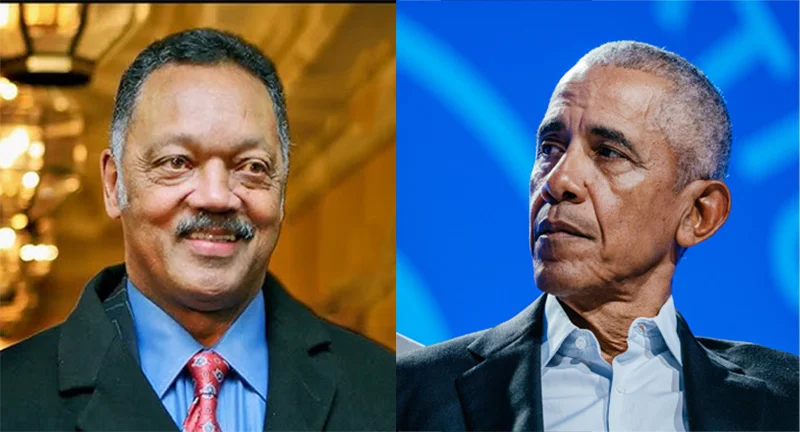
 On being elected US President in 2008, Barack Obama famously stated: ‘Change has come to America’. Considering the questions continuing to grow out of the status of minority rights in particular in the US, this declaration by the former US President could come to be seen as somewhat premature by some. However, there could be no doubt that the election of Barack Obama to the US presidency proved that democracy in the US is to a considerable degree inclusive and accommodating.
If this were not so, Barack Obama, an Afro-American politician, would never have been elected President of the US. Obama was exceptionally capable, charismatic and eloquent but these qualities alone could not have paved the way for his victory. On careful reflection it could be said that the solid groundwork laid by indefatigable Black Civil Rights activists in the US of the likes of Martin Luther King (Jnr) and Jesse Jackson, who passed away just recently, went a great distance to enable Obama to come to power and that too for two terms. Obama is on record as owning to the profound influence these Civil Rights leaders had on his career.
The fact is that these Civil Rights activists and Obama himself spoke to the hearts and minds of most Americans and convinced them of the need for democratic inclusion in the US. They, in other words, made a convincing case for Black rights. Above all, their struggles were largely peaceful.
Their reasoning resonated well with the thinking sections of the US who saw them as subscribers to the Universal Declaration of Human Rights, for instance, which made a lucid case for mankind’s equal dignity. That is, ‘all human beings are equal in dignity.’
It may be recalled that Martin Luther King (Jnr.) famously declared: ‘I have a dream that one day this nation will rise up, live out the true meaning of its creed….We hold these truths to be self-evident, that all men are created equal.’
Jesse Jackson vied unsuccessfully to be a Democratic Party presidential candidate twice but his energetic campaigns helped to raise public awareness about the injustices and material hardships suffered by the black community in particular. Obama, we now know, worked hard at grass roots level in the run-up to his election. This experience proved invaluable in his efforts to sensitize the public to the harsh realities of the depressed sections of US society.
Cynics are bound to retort on reading the foregoing that all the good work done by the political personalities in question has come to nought in the US; currently administered by Republican hard line President Donald Trump. Needless to say, minority communities are now no longer welcome in the US and migrants are coming to be seen as virtual outcasts who need to be ‘shown the door’ . All this seems to be happening in so short a while since the Democrats were voted out of office at the last presidential election.
However, the last US presidential election was not free of controversy and the lesson is far too easily forgotten that democratic development is a process that needs to be persisted with. In a vital sense it is ‘a journey’ that encounters huge ups and downs. More so why it must be judiciously steered and in the absence of such foresighted managing the democratic process could very well run aground and this misfortune is overtaking the US to a notable extent.
The onus is on the Democratic Party and other sections supportive of democracy to halt the US’ steady slide into authoritarianism and white supremacist rule. They would need to demonstrate the foresight, dexterity and resourcefulness of the Black leaders in focus. In the absence of such dynamic political activism, the steady decline of the US as a major democracy cannot be prevented.
From the foregoing some important foreign policy issues crop-up for the global South in particular. The US’ prowess as the ‘world’s mightiest democracy’ could be called in question at present but none could doubt the flexibility of its governance system. The system’s inclusivity and accommodative nature remains and the possibility could not be ruled out of the system throwing up another leader of the stature of Barack Obama who could to a great extent rally the US public behind him in the direction of democratic development. In the event of the latter happening, the US could come to experience a democratic rejuvenation.
The latter possibilities need to be borne in mind by politicians of the South in particular. The latter have come to inherit a legacy of Non-alignment and this will stand them in good stead; particularly if their countries are bankrupt and helpless, as is Sri Lanka’s lot currently. They cannot afford to take sides rigorously in the foreign relations sphere but Non-alignment should not come to mean for them an unreserved alliance with the major powers of the South, such as China. Nor could they come under the dictates of Russia. For, both these major powers that have been deferentially treated by the South over the decades are essentially authoritarian in nature and a blind tie-up with them would not be in the best interests of the South, going forward.
However, while the South should not ruffle its ties with the big powers of the South it would need to ensure that its ties with the democracies of the West in particular remain intact in a flourishing condition. This is what Non-alignment, correctly understood, advises.
Accordingly, considering the US’ democratic resilience and its intrinsic strengths, the South would do well to be on cordial terms with the US as well. A Black presidency in the US has after all proved that the US is not predestined, so to speak, to be a country for only the jingoistic whites. It could genuinely be an all-inclusive, accommodative democracy and by virtue of these characteristics could be an inspiration for the South.
However, political leaders of the South would need to consider their development options very judiciously. The ‘neo-liberal’ ideology of the West need not necessarily be adopted but central planning and equity could be brought to the forefront of their talks with Western financial institutions. Dexterity in diplomacy would prove vital.

Tariffs ruling is major blow to Trump’s second-term agenda

New Zealand meet familiar opponents Pakistan at spin-friendly Premadasa

Bowlers, Marsh orchestrate consolation Australia win

Development activities in schools within plantation areas should be carried out in coordination with District Coordinating Committees – PM

Asos co-founder dies after Thailand apartment block fall

BCB central contracts: Taskin, Mushfiqur demoted; no player in A+ category

‘Dates have the highest sugar content to fight Coronavirus’

Sunday Island 27 December – Headlines

#SundayIsland 17th December – Headlines

Sunday Island – 28th March

Sunday Island Headlines – 21 March

Sunday Island – 21st February – Headlines
-
 Life style6 days ago
Marriot new GM Suranga
-

 Business5 days ago
Ministry of Brands to launch Sri Lanka’s first off-price retail destination
-
 Features6 days ago
Monks’ march, in America and Sri Lanka
-
 Features6 days ago
The Rise of Takaichi
-
 Features6 days ago
Wetlands of Sri Lanka:
-
 News6 days ago
Thailand to recruit 10,000 Lankans under new labour pact
-
 News6 days ago
Massive Sangha confab to address alleged injustices against monks
-
 Sports2 days ago
Old and new at the SSC, just like Pakistan