
Life style
Back pain- a lifestyle disease


Back pain is common and is prevalent even among young children in this pandemic situation triggered by prolonged sitting before screens. While most cases of back pain episodes improve with self-care and lifestyle modifications, in certain rare cases they could signal a serious medical problem. In an interview with the Sunday Island, Consultant Rheumatologist and Specialist in Sports Medicine from Nawaloka Hospital, Dr. Harindu Wijesinghe throws light on multiple causes of back pain and management strategies.
BY RANDIMA ATTYGALLE
The human back is made of a complex structure of bones, muscles, ligaments, tendons and disks which work together to support the body and enable us to move around. Problems with any of these components can lead to back pain. Although back pain could be felt anywhere along the spine- from the neck down to the hips, pain in the lower back or lumbago is the commonest.
 “The reason why the pain is common in this region is because all the load in the spine when we sit, bend, do exercises etc. is felt on the lower back and this region is most prone to be damaged,” explains Dr. Wijesinghe.
Commonest cause of back pain is what is known as ‘non-specific’ back pain which occurs when the muscles and ligaments which surround the spine are overstretched. Next comes back pain caused by the disc bulging or herniation in the spine. In between the bones of the spine (vertebrae) is the intervertebral disc. The gel-like substance inside the disk can sometimes come out of the disk and press on the nerves in the spine which causes back pain and a pain down the leg called ‘sciatica’.
Fractures in people with osteoporosis could also lead to back pain says the Rheumatologist. “Although osteoporosis per se doesn’t cause back pain, a fracture could trigger a back pain.”
Certain types of arthritis (where the immune system starts attacking the spine) could damage the spine. ‘Ankylosing spondylitis’ is such a condition. This condition, Dr. Wijesinghe explains, causes back pain which is worst upon waking up in the morning and mainly occurs in young people below the age of 40 years. “Very often this condition is missed and unless treated on time, one could end up with a fixed immobile spine and a stooped posture due to the calcium formation around the spine,” he warns.
Infections of the spine such as tuberculosis and cancers in the spine too can cause back pain, although they are not common.

Risk factors
*Ageing –
wear and tear of cartilage and weakness of muscles is common in old age
*Being overweight
*Weak core muscles
“If your muscles in the stomach are weak, you are more prone to wear and tear of the disk. Exercises which are done while keeping the spine in the neutral position are encouraged.”
*Wrong posture
Sitting or standing in a wrong posture for prolonged hours is one of the most significant risk factors for back pain. “Sometime ago there was an issue with heavy school bags children carried. Today in this pandemic situation even in young children back pain is very common as they tend to spend a considerable time before screens. A lot of children and adults also tend to work in beds and sofas which is a bad habit,” remarks Dr. Wijesinghe.

Neutral Spine position or correct spine posture
Neutral spine is the position in which your back and neck are placed under the least amount of stress and strain. In this position, the natural curves of the spine are maintained. “Try to maintain this position while sitting, standing, lifting or doing exercise. There are many methods to find the exact neutral position. However the easiest way is to maintain your ears, shoulders and hips in one line.”
When sitting for prolonged hours, make sure:
*
You sit in a proper ergonomically designed chair- preferably an office chair
*
When using laptops, that the top of the screen is at eye level.
*
Your ears, shoulders and hips are in one line
*
Your feet touch the ground and your knee and hip are in 90
degrees
*
You take a break every 15 -20 minutes. Standup for a few minutes or walk a short distance. Use an alarm or a computer programme which reminds you to take breaks.
Lifting objects
Avoid lifting heavy objects. You should always be assisted by someone and also use proper lifting techniques (such as bending the knees while lifting heavy objects) or using machinery meant for lifting such objects.
*Smoking
*Regular use of high heels
“These could be worn once in a way but not recommended for daily wear as they could alter the posture. Shoes with a good ‘arch support’ are recommended and whenever you need a raised shoe to wear on a regular basis, a platform shoe is recommended so the angle between the heel and the ball of the foot is reduced and your posture is not changed that much,” explains the physician.

When to see a doctor
*
When back pain is not settled in a few weeks
*
When the pain is severe and doesn’t improve with rest
*
When there is a feelings of numbness tingling going into legs
You need to see your doctor urgently when there is
*
Back pain with fever or weight loss.
*
Causes new bowel or bladder problems
*
weakness of legs
How to treat back pain
Although back pain is common, the good news is that more than 90% of them can be managed with certain short-term drugs, injections and local applications for pain relief. This is followed by posture correction, weight reduction, core strengthening exercise and low impact cardiovascular exercise to prevent recurrence.
Back pain is a lifestyle disease which can be managed with a healthy routine, observes Dr. Wijesinghe. “There are no quick fixes here. It is important that one religiously and diligently does core strengthening exercises which helps in strengthening the muscles in the back, stomach and buttocks. Combine these with low impact cardiovascular exercises such as walking, cycling, swimming and elliptical training. We don’t encourage too much of bending, twisting and jumping when a person is over 40 or in someone with back pain because such vigorous movements could cause damage to the spine.”

Maintaining a healthy weight could also ease the load on the spine for which dietary discipline is required, he says. “Exercise alone can’t help one maintain body weight, one need to be conscious of the diet as well.”
Other lifestyle changes such as using proper chairs, a firm mattress and a soft pillow which enable the spine to be kept in the neutral position are also recommended by the physician. “We encourage people to sleep looking up so that the spine is kept straight and if at all they sleep to a side, it is important not to curl up.”
Myths to be busted
Since back pain is so common there are so many products in the market claiming to cure back pain and consumers should be cautious of these, warns Dr.
Wijesinghe. “Many believe that local applications, medicine and certain milk powders and formulas can bring your cartilage back to normal. It is like asking a person to reverse his age which cannot be done,” he remarks.
A lot of women think that the epidural given in pregnancy causes back pain. “This too is false. The reason for back pain after delivery or later is usually due to weak muscles, weight gain and poor posture.”



In the quiet, rain-washed village of Boralugoda, where narrow streams slip silently through thick green undergrowth and the air carries the scent of wet earth, a remarkable story of science, persistence, and quiet resistance has been unfolding for decades.
At its centre is Research Scientist and artist Shantha Jayaweera—a man who has spent nearly 40 years studying, documenting, and defending one of the richest freshwater ecosystems in the island. His life’s work is not just about fish, but about a fragile world that exists beneath the surface of flowing water—often unseen, frequently misunderstood, and increasingly under threat.
“Sri Lanka holds a very special place in global freshwater biodiversity,” Jayaweera says, reflecting on decades of fieldwork. “But even within the island, there are pockets that are extraordinarily rich. Boralugoda is one of them.”
A Global Context, A Local Wonder
Sri Lanka is part of the Oriental region—one of the most biologically diverse freshwater zones in the world. Within the island, the lowland wet zone stands out as the most species-rich area, nurtured by year-round rainfall and dense vegetation.
But Boralugoda, located within this wet zone, is exceptional even by those standards.
“Out of about 94 true freshwater fish species recorded in the country, around 84 are found in the lowland wet zone,” Jayaweera explains. “What is remarkable is that Boralugoda alone supports 53 species. That is the highest number recorded in any inland location.”
He pauses before adding a sobering detail.
“Of those 53 species, 26 are endemic. And 23 are threatened—ranging from vulnerable to critically endangered. That’s a very serious signal.”
-

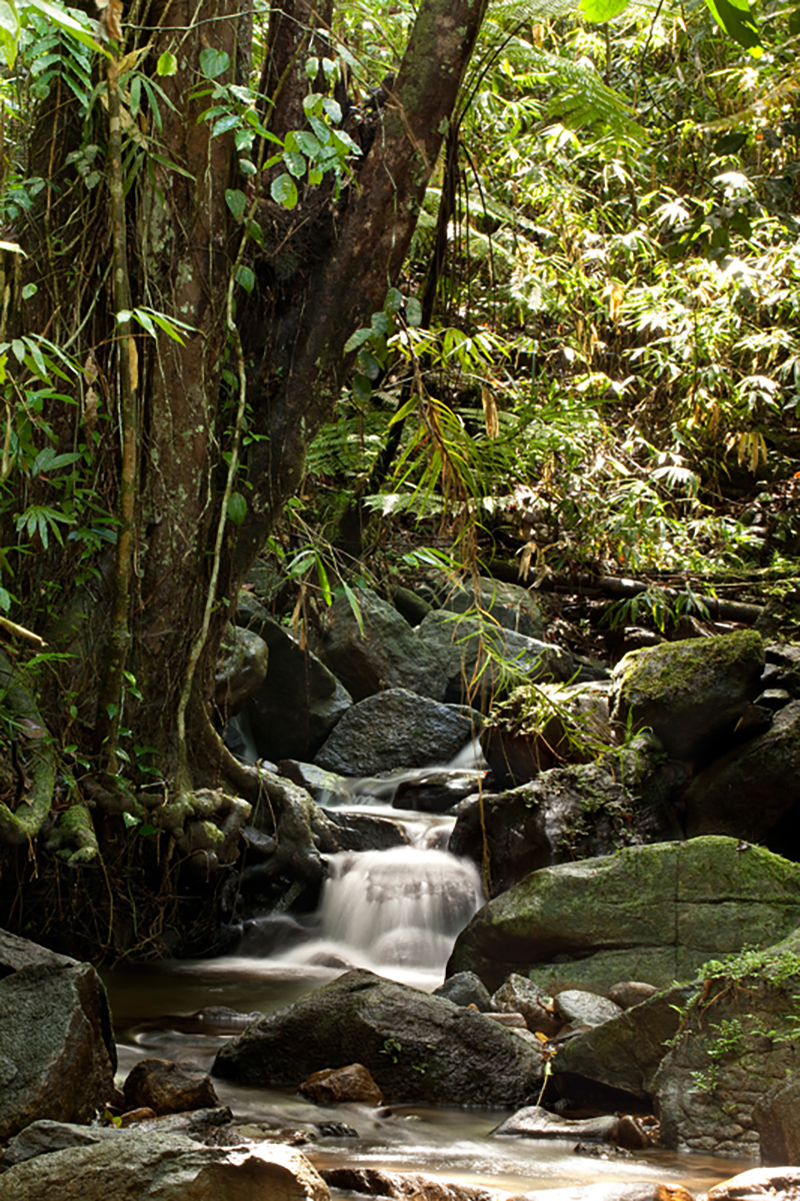
- Boralugoda Ella
The Secret of the Maguru
Flowing through this biodiversity hotspot is the Maguru River—a relatively small river with an outsized ecological role. Originating in the rainforest-covered Morapitiya area, it carries with it the ecological signature of its pristine beginnings.
“What makes the Maguru unique is its clarity,” Jayaweera says. “Most rivers turn brown as they carry sediment downstream. But this river remains clear, which allows sunlight to penetrate and sustain aquatic life.”
The river’s structure adds another layer of ecological complexity.
“It starts with fast-flowing, rocky sections and then gradually shifts to sandy, slow-moving areas,” he explains. “Different species are adapted to each of these habitats. Some are highly specialised and cannot survive outside the rocky zones.”
This diversity of microhabitats is one of the key reasons for the area’s richness.

Banded mountain loach

Red neck goby – endangerd now extinct from the area due to sand mining
“Fish like certain gobies and barbs are restricted to fast-flowing rocky areas,” he notes. “If those habitats are disturbed, the species simply disappear.”
Streams That Sustain Life
Beyond the main river, Boralugoda is crisscrossed by an intricate network of streams—fed by rainfall, forest cover, and underground springs.
“This area has one of the highest stream densities in the Western Province,” Jayaweera says. “These streams act as nurseries, refuges, and migration pathways for many species.”
The surrounding landscape further enhances this ecological mosaic.
“You have a mix of rainforest patches, home gardens, tea estates, and cultivated lands,” he explains. “Each of these contributes in some way to the overall habitat diversity.”
However, this delicate balance is increasingly being pushed to its limits.
Sand Mining: A River Reshaped
One of the most destructive forces to hit the Maguru River has been large-scale sand mining, particularly since the early 2000s.
“The riverbed has been completely altered,” Jayaweera says, his tone turning grave. “We’ve lost aquatic plants, native riverbank trees, and entire habitats.”
The ecological consequences have been severe.
“The endangered Red Neck Goby has become locally extinct,” he reveals. “And the Ocellated Pipefish has not been recorded for years, largely due to the loss of specific aquatic plants it depends on.”
The physical damage to the river is equally alarming.
“Sand mining has deepened the river unnaturally,” he explains. “This leads to bank erosion, collapse, and long-term instability. It changes the entire character of the river.”
Although recent policy changes have halted new permits, the damage done over decades cannot be easily reversed.
-
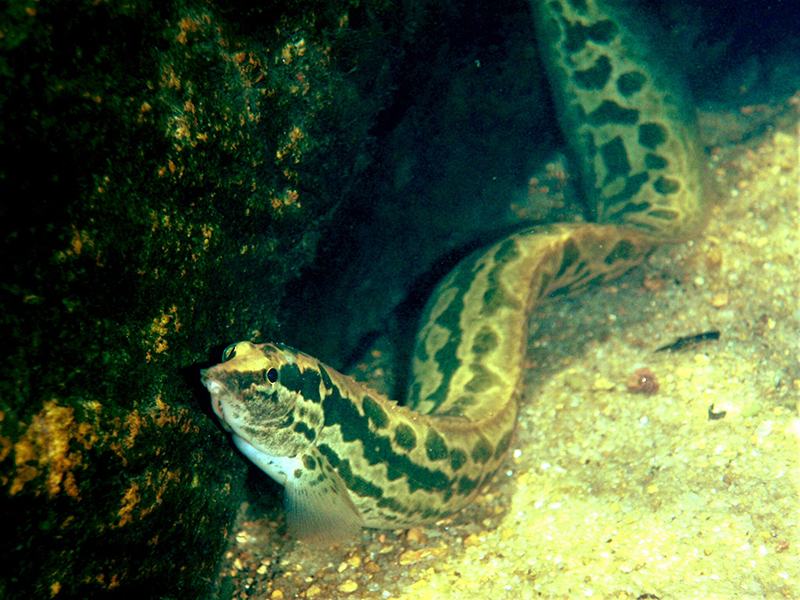
- Marbled spiny eel
-
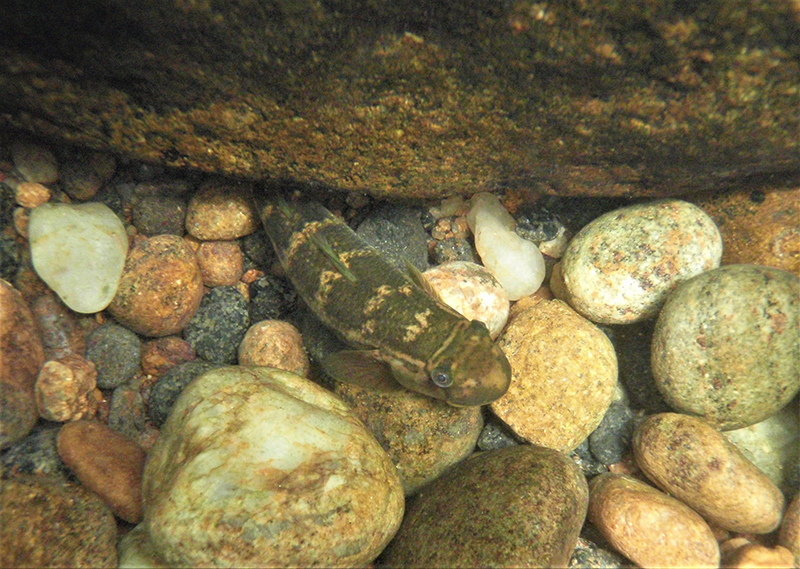
- Red tailed goby – endangered
Tea Expansion and Vanishing Buffers
Another major pressure comes from agricultural expansion—particularly the spread of lowland tea cultivation.
“Since the 1990s, we’ve seen a steady conversion of home gardens and even forest patches into tea plantations,” Jayaweera says. “In some cases, even rubber lands have been cleared.”
This transformation has not only reduced biodiversity on land but has also affected water systems.
“Riverbank vegetation is often cleared to make way for cultivation,” he explains. “But these trees are critical—they stabilise banks, filter runoff, and provide shade.”
What is particularly troubling is the disregard for existing environmental regulations.
“There are clear laws requiring buffer zones along rivers and streams,” he says. “But many local authorities are either unaware or do not enforce them. As a result, these protective areas are disappearing.”
A Life Dedicated to Observation and Action
For Jayaweera, these changes are not abstract trends—they are deeply personal.
“I’ve been observing this ecosystem for nearly four decades,” he says. “I’ve seen species decline, habitats shrink, and patterns change.”
But his work has never been limited to observation alone.
Through the Organisation for Aquatic Resources Management (OARM), he has led numerous conservation and restoration efforts.
“We’ve worked on replanting rainforest species in degraded areas, restoring stream banks, and raising awareness among local communities,” he explains. “In some places, we’ve seen encouraging signs of recovery.”
His approach combines science with grassroots engagement.
“Conservation cannot happen in isolation,” he says. “You need the community to be involved.”
Where Science Meets Art
What sets Jayaweera apart is his ability to translate science into art.
As an accomplished artist, he uses illustrations and visual storytelling to bring freshwater ecosystems to life.
“Art can reach people in ways that science sometimes cannot,” he says. “It creates an emotional connection.”
His paintings often depict the intricate beauty of fish species, aquatic plants, and flowing streams—capturing not just their form, but their essence.
“When people see what is at stake, they are more likely to care,” he adds.
A Community at a Crossroads
Despite decades of work, challenges remain at the community level.
“Some people still treat rivers as dumping grounds,” Jayaweera says with frustration. “Plastic and waste continue to find their way into these waters.”
Yet, there are also signs of hope.
“A group of committed individuals regularly organise clean-up campaigns,” he notes. “They collect waste and display it publicly to raise awareness. It’s a simple but powerful act.”
These grassroots efforts, he believes, are crucial.
“Real change begins at the local level,” he says.
A Fragile Future
For Jayaweera, Boralugoda is more than just a field site—it is a symbol of what is at stake.
“If we lose ecosystems like this, we lose something irreplaceable,” he warns. “These species are found nowhere else in the world.”
His message is both urgent and measured.
“We need stronger enforcement of environmental laws, better awareness, and a genuine commitment to conservation,” he says.
“Otherwise, the damage will become irreversible.”
As the clear waters of the Maguru River continue to flow through Boralugoda—past rocks, roots, and remnants of a once-pristine landscape—they carry with them a quiet story of resilience.
And alongside that flow stands Shantha Jayaweera—scientist, artist, and guardian of a hidden world—still watching, still working, and still hoping that it is not too late.
By Ifham Nizam
Pictures by Shantha Jayaweera
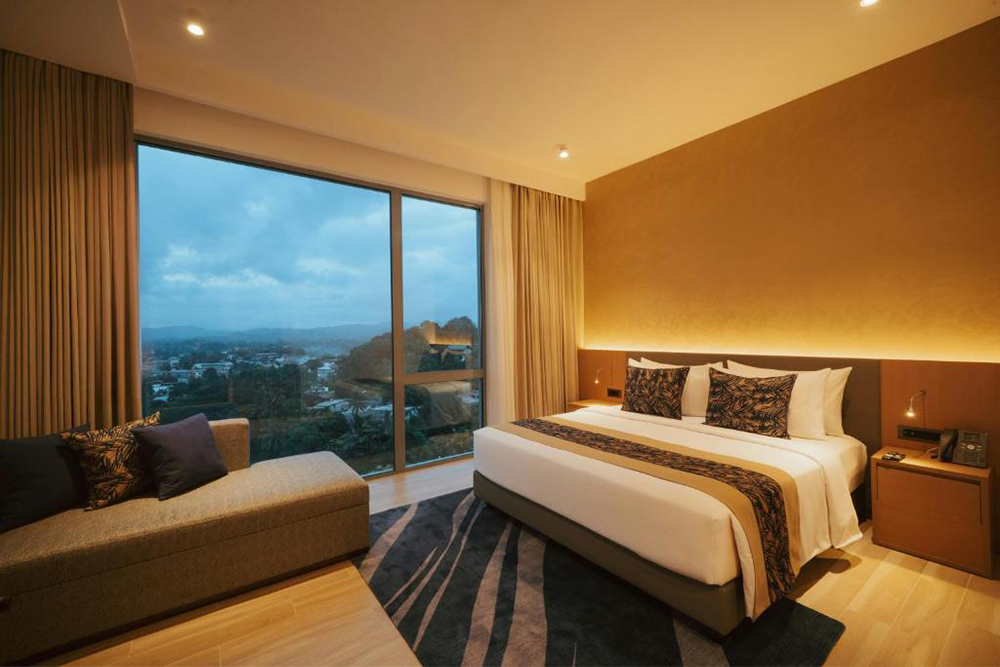
Perched in the heart of Sri Lanka’s hill capital, Kandy Myst by Cinnamon recently marked its first anniversary, celebrating a year of redefining modern hospitality in the historic City of Kandy. Since opening its doors on February 12, 2025, the hotel has quickly established itself as a vibrant lifestyle destination that blend contemporary comfort with the cultural charm of the region.
This property was designed to bring a fresh energy to the city’s hospitality scene with 215 modern rooms, the largest room inventory in Kandy. The hotel caters to both leisure and business travellers seeking comfort, convenience and stylish surrounding close to the city’s key attraction.
Within the first year, the hotel has achieved notable milestones, including become the first hotel in Kandy to receive Leed Gold Certificate reflecting its commitment to sustainable and responsible development. Beyond accommodation and dining, the property has also emerged as a hub for cultural events.
As Kandy Myst by Cinnamon enters its second year, the hotel continues to position itself as more than a place to stay. With its lively dining venues, social spaces and commitment to sustainability and community engagement, it is steadily shaping a new chapter in Kandy’s evolving hospitality landscape – one where tradition meets contemporary style.


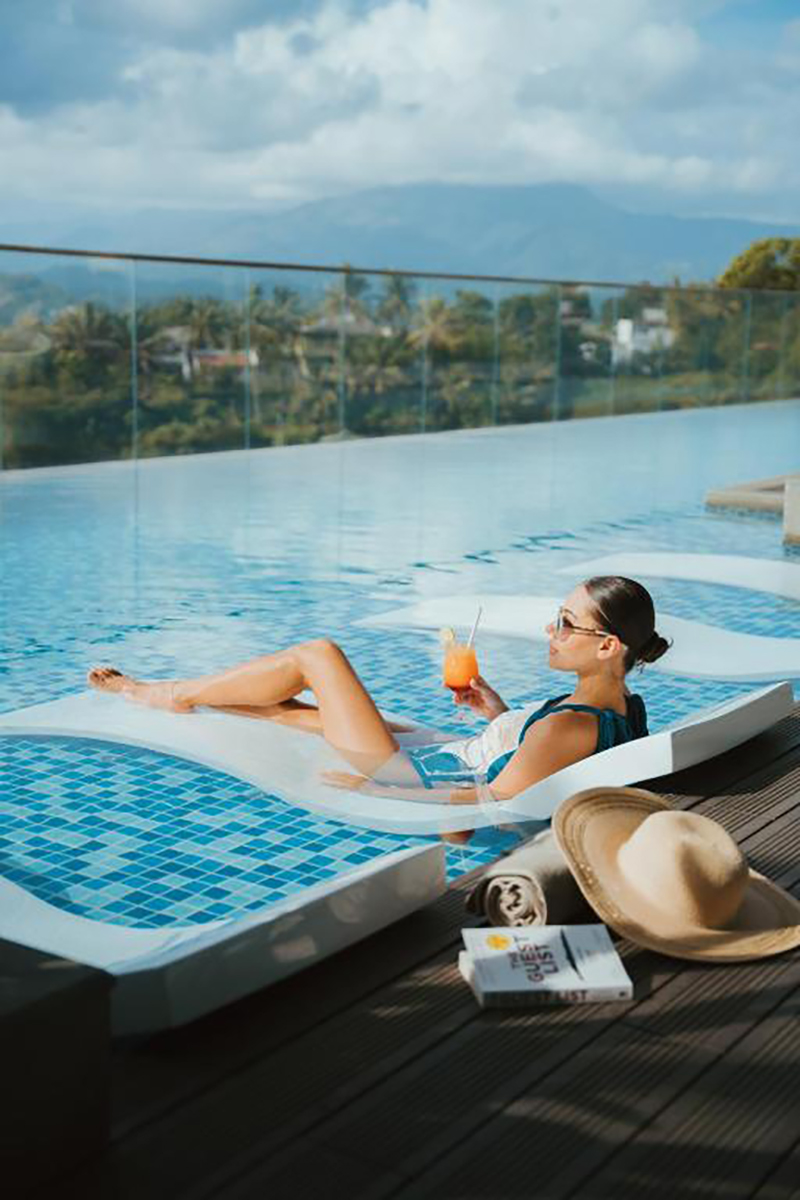
Over the months the restaurant has hosted themed culinary events, special promotions and vibrant social evenings, further strengthening its place as a lively hub in Kandy’s hospitality scene. Guests have been drawn not only by the flavours on the plate but also by the inviting atmosphere that captures the essence of city’s elegance.
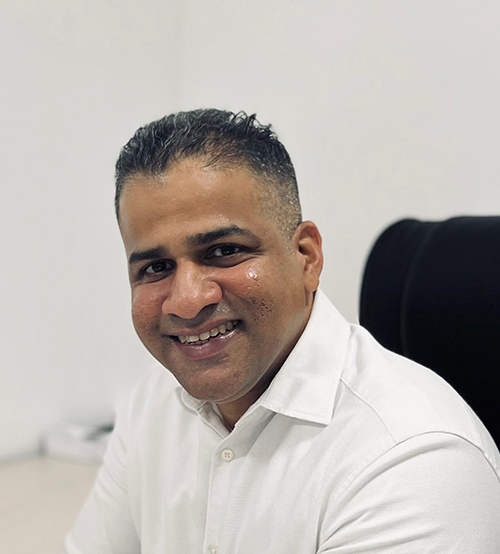
General Manager – Dhinal Perera
Kandy Myst by Cinnamon celebrates its first anniversary, marking a year as Kandy’s contemporary hospitality destination that brings energy, culture, and lifestyle experiences to the city. Opened through a partnership between Cinnamon Hotels & Resorts and Indra Traders (Pvt) Ltd, the hotel blends hospitality expertise with local insight to deliver a modern, energetic and lifestyle driven offering.
With the highest room inventory in Kandy, comprising 215 contemporary rooms, Kandy Myst by Cinnamon caters to both leisure and business travellers, offering modern comfort in close proximity to the city’s key attractions and transport routes. Its dynamic dining and social spaces; Grains Dining, Terra Lounge, and the rooftop Kosmos Sky Bar with heated infinity pool, invite guests and locals to engage, with panoramic city views, curated entertainment, and vibrant social experiences. Grains Dining, the buffet restaurant, serves an extensive selection of local and international cuisine, while Terra Lounge provides a welcoming café-style hub for casual meetups and social gatherings.
In its inaugural year, the hotel achieved significant milestones, becoming the first hotel in Kandy to receive LEED Gold certification, demonstrating a commitment to responsible, future-ready development. Reinforcing its culturally connected and globally relevant positioning, Kandy Myst by Cinnamon hosted globally celebrated icons such as Alpha Blondy and a series of high-profile local and international events, including the official trophy unveiling of the inaugural New Zealand U85kg Rugby Tour of Sri Lanka in May 2025.
Throughout the year, the hotel brought guests and the community together through seasonal activations, curated experiences, and loyalty-driven offers, contributing to strong engagement while supporting Kandy’s tourism economy through local partnerships and community initiatives.
As it enters its second year, Kandy Myst by Cinnamon continues to invite international and local guests alike to experience its vibrant dining, social, and lifestyle spaces, while reinforcing its role in shaping Kandy’s modern hospitality and cultural landscape. (Zanita )

Internationally renowned luxury Maison Montblanc has introduced its latest fragrance, Montblanc Explorer Extreme, to the Sri Lankan market through Exclusive Lines, the sole authorised agent for the brand in the country.
The launch event was hosted at Virticle by Jetwing, where guests were invited to experience the newest addition to the bestselling Explorer line in a setting that reflected the Maison’s enduring themes of adventure, refinement and craftsmanship.
Montblanc Explorer Extreme represents a significant evolution of the Explorer franchise and is the first Parfum concentration within the collection. Conceived as an ode to vast landscapes and the world’s most remote desert terrains, the fragrance delivers a deeper, more intense interpretation of the original Explorer Eau de Parfum. Its woody, ambery and leathery composition is crafted to embody courage, ambition and the drive to push beyond limits.
Hiru Surtani, Managing Director and CEO of Exclusive Lines, said the launch reinforces the company’s commitment to bringing globally celebrated luxury brands to Sri Lanka. “Montblanc Explorer Extreme Parfum stands for courage, ambition and the determination to surpass boundaries, values that strongly resonate with us at Exclusive Lines. We are proud to present this remarkable fragrance to Sri Lanka’s discerning consumers, offering a scent that captures the essence of adventurous living,” he stated.
-

- Treshan and Senuri
-

- Thiyasha
-

- Roshan Ranawana
Inspired by dramatic desert landscapes such as Saudi Arabia’s AlUla, the fragrance reflects the bold spirit of modern exploration. It opens with fresh green notes of bergamot blended with clary sage, creating an immediate sense of vitality. The heart reveals patchouli layered with Ambrofix™, delivering warmth and depth, while the base combines rich amber, leather accords and refined vetiver to leave a powerful and lasting impression.
The bottle design draws inspiration from the Montblanc Extreme 3.0 Collection, echoing its distinctive textured motif associated with modern travel and dynamism. Crafted from fully black lacquered glass and topped with a polished black cap, the design underscores the intensity of the parfum. Production and assembly take place at Montblanc’s dedicated Pelleteria workshop in Florence, Italy, with elements crafted across Germany and France, a testament to the Maison’s European craftsmanship.
The global campaign features American actor, model and musician Justice Joslin as the contemporary Explorer, set against striking desert landscapes that symbolise ambition and achievement.
Montblanc Explorer Extreme joins Montblanc Explorer and Montblanc Explorer Platinum in the line-up and is now available exclusively in Sri Lanka through Exclusive Lines outlets and authorised retail partners nationwide.

Police look for male partner of Chinese woman found stabbed to death at an apartment in Kohuwala

Chamber delegation completes trade training in India

Lanka, Cuba move to boost ties

MPs put on cyber alert at CERT programme

Unit Trust industry remains stable in February

Import price shocks of the Hormuz Crisis 2026: How will this affect Sri Lanka?

‘Dates have the highest sugar content to fight Coronavirus’

Sunday Island 27 December – Headlines

#SundayIsland 17th December – Headlines

Sunday Island – 28th March

Sunday Island Headlines – 21 March

Sunday Island – 21st February – Headlines
-

 News3 days ago
Senior citizens above 70 years to receive March allowances on Thursday (26)
-

 Features5 days ago
Trincomalee oil tank farm: An engineering marvel
-

 News24 hours ago
Energy Minister indicted on corruption charges ahead of no-faith motion against him
-

 News2 days ago
US dodges question on AKD’s claim SL denied permission for military aircraft to land
-

 Features5 days ago
The scientist who was finally heard
-

 Business2 days ago
Dialog Unveils Dialog Play Mini with Netflix and Apple TV
-

 News3 days ago
CEB Engineers warn public to be prepared for power cuts after New Year
-

 Sports1 day ago
SLC to hold EGM in April