
News
Average life expectancy of Sri Lankans will drop unless NCDs are controlled


By Nimal Bandara Herath
There will be a drastic reduction in the average life expectancy of Sri Lankans by 2045 if steps are not taken to control Non Communicable Diseases (NCDs), Dr. Sunil Bowattage, consultant physician, Kandy General Hospital, told The Island on Friday.He added that until a few decades ago the world was struggling to contain communicable diseases.
“If you look at Sri Lanka, many died of cholera, smallpox, etc. However, with the advances in medical sciences we have been able to reduce the deaths, by communicable diseases, significantly. This is a main reason why life expectancy went up in the 20th century,” he said.
Dr. Bowattage added that in the past few decades, NCDs have become the main cause of deaths. Due to the prevalence of NCDs, life expectancy, in certain countries, has dropped, he said.
“However, according to the World Health Organization (WHO), we can prevent 2/3 of NCD deaths by taking necessary action.”
Dr. Bowattage said a massive campaign must be carried out by those in power, with the help of the media, to educate the public on NCDs, how to avoid them and how to control them.
“We see many people with heart issues, diabetes, high cholesterol, high blood pressure, obesity and cancers. We must not be afraid of these. Modern science can address most of these. Bad food habits, sedentary lifestyle, obesity, smoking, etc., are the main reasons why people get NCDs. A lot can be achieved with behavioral changes,” he said.
Non-communicable diseases, including diabetes, cardiovascular diseases, strokes and cancers, account for nearly 90 percent of the disease burden in Sri Lanka, according to the World Bank.
A large number of persons, with NCD, are not taking prescribed medicines, due to economic difficulties, and thus hospitals are filling up due to complications, Dr. Palitha Rajapaksha, the assistant secretary of the Government Medical Officers Association (GMOA) says.
There were about three million people, over 60 years, and they were the most affected by NCDs, Dr. Rajapaksha said, adding that Sri Lanka had very weak social safety nets and many were at the risk of being reduced to poverty.
Dr. Rajapaksha added that he was attached to the Provincial General Hospital, Badulla, and that all wards there were full of patients with diabetes, high blood pressure, heart conditions, etc.
“All wards are full. I don’t know what we would do if the number of dengue cases go up. I have been a doctor for many years, but I have never seen such a large number of patients, with NCDs, in hospitals,” he said.









Approval has been granted at the Cabinet meeting held on 22.07.2024 to publish the draft bill of State Assets Management Act in the government gazette notification and thereby present it to the Parliament for its concurrence.
However, the draft bill couldn’t be passed in Parliament as a result of the Parliament being dissolved in the month of October 2024.
Thereafter, the draft bill was subject to further inspection by a
committee appointed which comprised of officials and authorities on the subject.
The said Committee has recognized the amendments to be made and a fundamental draft has been prepared including the proposed amendments.
Accordingly, the Cabinet of Ministers approved the resolution furnished by the President in his capacity as the Minister of Finance, Planning and Economic Development to suspend further activities regarding the draft bill of State Assets Management Act published in the extraordinary gazette of 02.08.2024, and to direct the Legal Draftsman to prepare a draft bill based on the fundamental draft prepared by the subject specialists’ committee.
Considering the compliance of the Cooperative Societies’ operations with the concurrent socio – economic circumstances as well as the changes in the common law, the requirement of amending the Cooperative Employees Commission Act No. 12 of 1972 has been recognized.
A fundamental draft including proposed amendments based on the experience gained by that Commission as well as the opinions and proposals of Cooperative societies, their director board members, cooperative employees and other interested parties has been prepared.
Accordingly, the Cabinet of Ministers granted approval to the resolution furnished by the Minister of Trade, Commerce, Food Security and Cooperative development to provide instructions to the Legal draftsman to prepare a draft bill to amend the Cooperative Employees Commission Act No. 12 0f 1972, based on the said fundamental draft.
Latest News
Dilki Wathsala Marambage appointed as Director General of the Department of Technical Education and Training

The Cabinet of Ministers granted approval to the proposal forwarded by the Prime Minister in her capacity as the Minister of Education, Higher Education and Vocational Education to appoint Mrs. Dilki Wathsala Marambage to the post of Director General of the Department of Technical Education and Training.

Cabinet approves redrafting of State Assets Management Act
Cooperative Employees Commission Act No. 12 of 1972 to be amended
Dilki Wathsala Marambage appointed as Director General of the Department of Technical Education and Training
Declaration of Naakolagane Sanctuary under the Fauna and Flora Protection Ordinance
Cabinet approves transfer and maintenance of selected roads presently under PC’s and Local Authorities to the RDA
Obtaining financial facilities for the Water Supply and Sanitation Improvement Program (Sub-program 2) from the ADB

‘Dates have the highest sugar content to fight Coronavirus’

Sunday Island 27 December – Headlines

#SundayIsland 17th December – Headlines

Sunday Island – 28th March

Sunday Island Headlines – 21 March

Sunday Island – 21st February – Headlines
-

 Features6 days ago
The Sri Lankan who made Scottish history
-

 Sports6 days ago
Nissanka absence opens door for Sri Lanka’s young guns
-

 News5 days ago
NDB fraud Rs 60mn more than reported
-

 News7 days ago
Gnansara Thera to be assigned to prison printing section: Officials
-

 News5 days ago
Removing monk’s robes matter for Sangha to decide: Mahanayake Theras
-
 News7 days ago
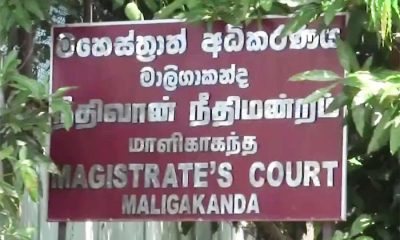
OIC of FCID summoned before Maligakanda Magistrate
-

 Features6 days ago
Future of Sri Lanka’s state university system: Should it be shut down and reopened?
-
 News6 days ago
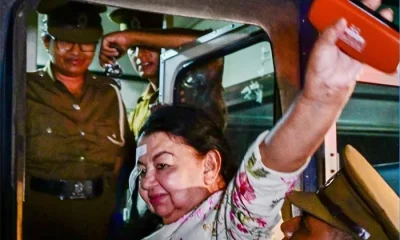
Shiranthi R remanded until 13 Oct.