
News
Author V.V. Ganeshananthan goes beyond labels to tell the story of war, terrorism and Lanka’s Tamil community in Brotherless Night

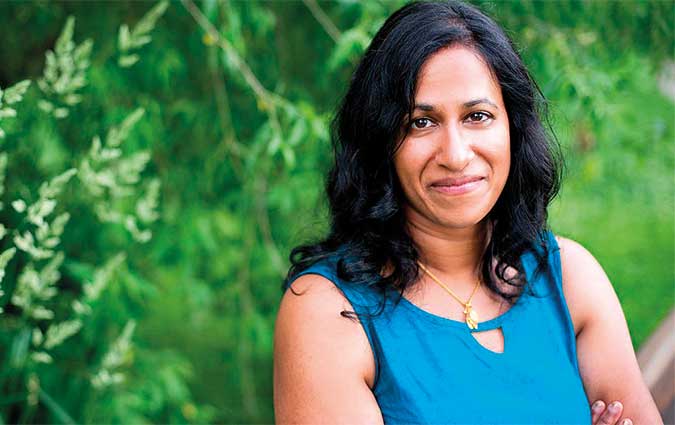
The opening line of V.V. Ganeshananthan’s sophomore novel, Brotherless Night, will give you pause. Maybe you’ve settled down in an armchair with a cup of tea, or maybe you’re leaning against a shelf in a bookstore, on the prowl for your next big read. Either way, the opening line will disarm you.
“I recently sent a letter to a terrorist I used to know.” In a way, the line speaks to the specific challenges of documenting the Sri Lankan civil war. Thousands of narratives clamour for precedence, and no single strand of politics, empathy or logic can do justice to them all. What Ganeshananthan, 43, American writer and journalist of Lankan Tamil descent, seeks to do is bring obscured voices back into the conversation. And for that, she first dismantles the very language of terrorism.
“I recently sent a letter to a terrorist I used to know.” In a way, the line speaks to the specific challenges of documenting the Sri Lankan civil war. Thousands of narratives clamour for precedence, and no single strand of politics, empathy or logic can do justice to them all. What Ganeshananthan, 43, American writer and journalist of Lankan Tamil descent, seeks to do is bring obscured voices back into the conversation. And for that, she first dismantles the very language of terrorism.
“One of the things that the rhetoric of terrorism seeks to do is to make the terrorist unintelligible,” says the author over a Zoom call from Minneapolis, where she teaches creative writing at the University of Minnesota. “The majority of people who have been referred to in that way are not unintelligible. Discussing their motivation doesn’t justify it, it just tries to understand it and to think about how someone might have arrived at that point
Ganeshananthan had been working on her first novel, Love Marriage (2008), about a Sri Lankan family fractured by the civil conflict, when she stumbled upon a significant piece of research. In 1987, a Tamil Tiger had gone on a widely-publicised hunger strike at the Nallur Kandaswamy Temple in northern Sri Lanka. His speeches were broadcast on some TV channels, and people from all over the Jaffna peninsula came to watch and to participate. After 12 days of abject theatricality, he died.
“The incongruity of that setting, the broad spectrum of people who were in attendance, the different stories that people were attempting to tell, and the way that those stories argued with each other… It was one of the first ways that I found my path to the point of view that I eventually used in Brotherless Night,” Ganeshananthan says.
Even though her book isn’t really about the hunger strike, it does manifest a lot of its broader themes. What motivates someone to become a militant? What makes them a martyr? And what happens, then, to the people they love and who love them? The character of Sashi, an aspiring doctor, coming of age during the first years of the war, was initially conceived to be the vantage point from which Ganeshananthan could question the events surrounding the hunger strike. Eventually, she emerged as a quiet but resolute protagonist in her own right.
“Sashi sometimes doesn’t actually know if she is doing things of her own volition or not,” says Ganeshananthan. “Sometimes she is and people think she is not, and sometimes she isn’t and people think she is and sometimes she herself can’t tell the difference.”
As the novel progresses, Sashi’s expression of her free will grows stronger, nurtured by University of Jaffna professor Anjali Premachandran. This character was inspired by real-life professor and activist Dr. Rajani Thiranagama, who was assassinated allegedly by the LTTE for speaking out against their atrocities, and was most recently commemorated by Shehan Karunatilaka in his Booker-winning novel The Seven Moons of Maali Almeida. Interestingly Thiranagama’s sister, Nirmala Rajasingam, narrates the audiobook for Brotherless Night.
The book is the product of over a decade of research into the Sri Lankan civil war, which saw Ganeshananthan poring over written accounts, unearthing old photographs, and speaking to those who had lived through it first-hand. Over the course of her conversations with survivors of the war, she repeatedly came across narratives that hadn’t often been documented.
In one chapter in the book, a militant comes to Sashi’s neighbour’s house and asks her to prepare food for his battalion. “How generous of you to say ‘ask’ when she has no choice,” Sashi’s brother Aran responds, articulating the sort of coded coercion that was often imposed on the civilian community.
“Some of that coded language is easier to represent in fiction,” Ganeshanthan says. “The form itself has an elasticity that allows me to represent truths of the community without subjecting them to a kind of verification that might be painful. I don’t think the people who went through this should have to prove it.”
In another chapter, the government requests all Tamil boys of a certain age to come in for what they claim will be a simple security check, necessitated by the increase in anti-state violence. Citizens are made to believe that if they comply, they will be absolved of all suspicion. Instead, all the boys who present themselves for checking are detained without cause, and released only after the women of Jaffna protest.
“There have been stories of women in the war, but the ones that have taken centrestage have by and large been of women who took up arms,” says Ganeshananthan. “The stories I grew up with were of women civilians who were doing things like helping their elderly move homes every time they got displaced, or studying by candlelight, or waiting it out in their houses when there was shelling. I have a lot of respect for these women.”
In many ways, Brotherless Night is a feminist novel, one that centres on women, students and civilians whose lives have been disrupted by war. It is a novel that exalts domestic labour and caregiving as valiant war-time efforts, and especially honours the sacrifices made by the medical fraternity.
It is also, in a way, a coming-of-age novel dedicated to young people whose lives have been defined by a conflict they had no choice but to respond to. “I’m not interested in justifying atrocities committed by either the state or non-state actors. What I am interested in, is restoring all people to the conversation,” Ganeshananthan signs off. (The Hindu)

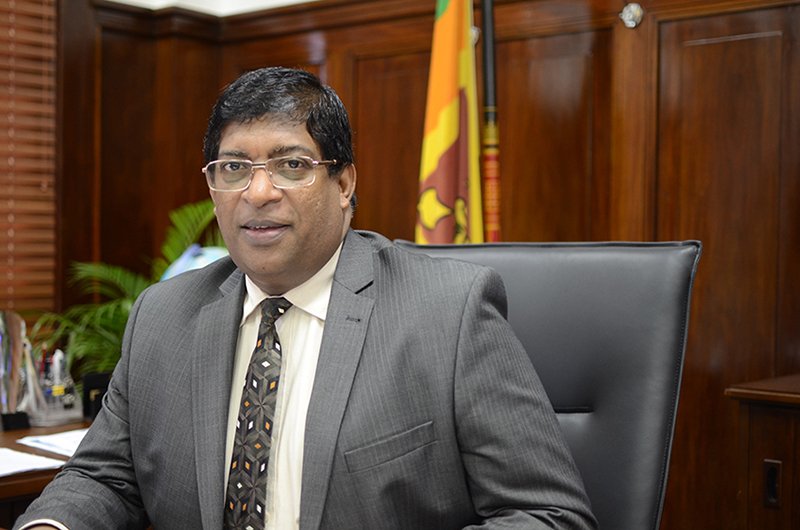
Opposition MP Ravi Karunanayake on Wednesday called for an urgent government statement to Parliament on the integrity and usability of Sri Lanka’s Gross Official Reserves (GOR), raising concerns over foreign exchange leakages and regulatory consistency under the Foreign Exchange Act No. 12 of 2017.
Raising the issue under Standing Order 27 (i), Karunanayake urged the Government to provide a comprehensive disclosure on the composition, encumbrances and deployability of the country’s reserves, as well as on the Central Bank’s oversight of foreign currency transactions.
“Reserve credibility depends not merely on headline numbers, but on transparency, enforceability and consistency in regulation,” the MP told the House.
He sought clarification on the latest reported GOR figure and the net usable reserves after excluding encumbered assets, swaps and pledged balances. He also requested details of annual revenue earned on reserves from 2023 to 2025.
Following are the questions raised by MP Karunanayake:
1. What is the latest reported GOR figure, and what is the net usable reserve after excluding encumbered assets, swaps, and pledged balances? What is the revenue earned on are GOR 23-25 per year?
2. Provide a separate and detailed breakdown of GOR, including: (a) Monetary gold (quantity and valuation basis) is it real gold or gold paper? (b) Foreign currency assets by major currency and instrument; (c) SDR holdings; (d) IMF reserve position; (e) Foreign currency swaps, specifying counterparty type, principal amount, tenure, maturity profile, and all-in cost; (f) Domestic swaps, specifying amount, tenure, rollover terms, collateralisation, and effective cost.
3. Of the total reserves reported, how much is encumbered, swap-backed, or otherwise not immediately deployable for debt servicing or currency stabilisation?
4. What SLR spread, fee, or margin does the Central bank apply when buying or selling USD to the Government for reserve accumulation and external debt servicing and what total profit or gain has the C.bank realised from such transactions during the past three financial years? Advice per year.
5. Is the Central Bank subject to continuous and statutory audit by the Auditor General? If so, will the Government table the most recent audit report, specifying audit scope, sample size, reserve confirmations, swap verification and gold custody validation?
6. What triggered the recent circular warning domestic institutions on foreign currency transactions?
7. Has the C.bank quantified foreign exchange and tax revenue losses resulting from Sri Lanka-based businesses routing credit card and commercial payments through overseas payment gateways?
8. If domestic entities are regulated strictly, why has a binding circular not been issued against noncompliant business entities using foreign payment gateway arrangements that divert foreign exchange outside Sri Lanka’s regulated banking system?
The government asked for two weeks’ time to respond to the queries.
by Saman Indrajith
News
Sajith exposes highly questionable coal imports from South Africa in 25 vessels; calls for independent probe
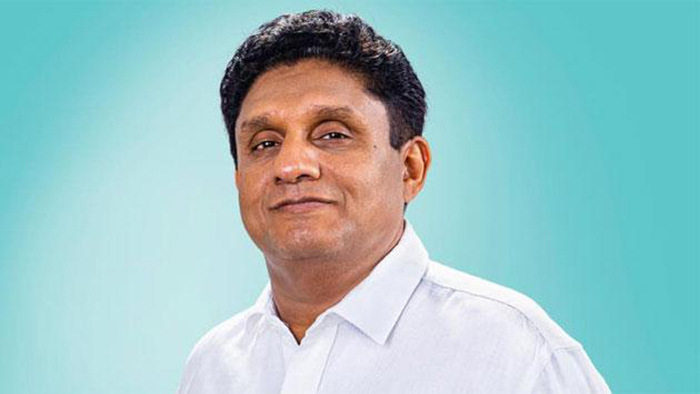
Opposition Leader Sajith Premadasa yesterday alleged in Parliament that eight recently imported coal shipments were substandard and called for an independent probe into the matter.Speaking in the House, Premadasa said Sri Lanka typically requires 36–38 coal shipments annually. While 11 Russian shipments received so far had raised no concerns, he claimed that 25 vessels ordered from South Africa under a new tender were facing quality issues.
He cited combustion reports from the Norochcholai Coal Power Plant showing that the eight shipments already received under the new tender failed to generate the expected 300 megawatts per unit. According to the MP, the outputs were: 285 MW, 290 MW, 260 MW, 295 MW, 285 MW, 270 MW, 275 MW, and 255 MW.
“These are scientific data generated automatically through boiler combustion reports that cannot be altered,” Premadasa said, asserting that the figures indicate the coal supplied was below required standards.
He warned that low-quality coal could increase fuel consumption, raise operational costs, and damage equipment. Any shortfall in power generation, he said, would necessitate additional coal imports or greater reliance on diesel power, ultimately driving up electricity tariffs for consumers.
“The loss will have to be borne by the electricity consumer,” Premadasa said, urging the government to clarify whether the shipments met required specifications.
He also criticized delays and changes in tender requirements, alleging that supplier eligibility criteria had been relaxed to allow non-standard providers.
by Saman Indrajith
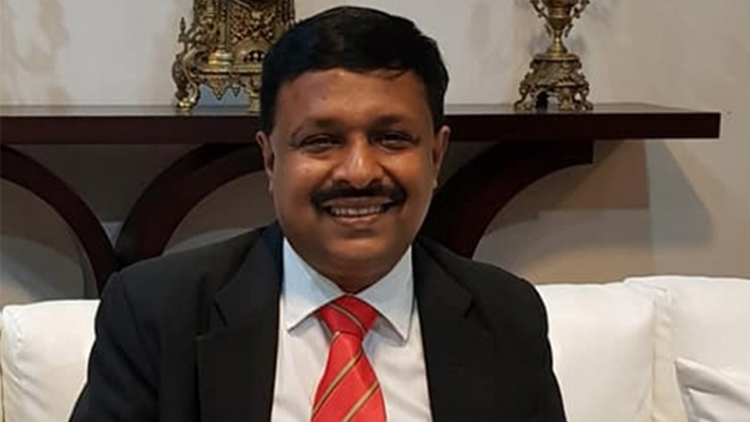
Former Mass Media Ministry Secretary and former Telecommunications Regulatory Commission of Sri Lanka (TRCSL) Chairman Anusha Palpita was yesterday released on bail by the Colombo Chief Magistrate’s Court.Colombo Chief Magistrate Asanga S. Bodaragama granted bail after considering submissions made by officials of the Bribery Commission and counsel for the defence.
The Magistrate ordered the suspect’s release on two personal surety bonds of Rs. 5 million each and imposed a foreign travel ban.
When the case was taken up, Bribery Commission officials informed court that a report had been called regarding alleged investments made by the suspect in the stock market. They sought a further date to present facts pertaining to those reports.
Appearing for the suspect, Attorney-at-Law Kanchana Ratwatte submitted that his client had been in remand custody for nearly a month and was prepared to extend full cooperation to investigators. He moved for bail on that basis.
After hearing both sides, the Magistrate observed that no reasonable grounds had been placed before court to further remand the suspect and ordered his release on bail. The case was fixed for 29 May.
Palpita was arrested on 23 January in connection with an investigation initiated by the Bribery Commission over the alleged failure to disclose the source of assets amounting to Rs. 46 million.
The Commission stated that he had arrived at its office on the day of his arrest to give a statement and was taken into custody thereafter.
He was arrested on allegations of amassing assets and property disproportionate to his declared income during a specified period, following a probe into wealth allegedly accumulated beyond his lawful earnings.

Atmospheric conditions are favorable for thundershowers over most parts of the island

Trump brings in new 10% tariff as Supreme Court rejects his global import taxes

Ravi demands full disclosure on Lanka’s usable reserves, flags forex leakages

Sajith exposes highly questionable coal imports from South Africa in 25 vessels; calls for independent probe

Ex-TRCSL Chairman Palpita enlarged on bail

NWSDB GM, two others granted bail in corruption case

‘Dates have the highest sugar content to fight Coronavirus’

Sunday Island 27 December – Headlines

#SundayIsland 17th December – Headlines

Sunday Island – 28th March

Sunday Island Headlines – 21 March

Sunday Island – 21st February – Headlines
-
 Life style6 days ago
Marriot new GM Suranga
-

 Business5 days ago
Ministry of Brands to launch Sri Lanka’s first off-price retail destination
-
 Features6 days ago
Monks’ march, in America and Sri Lanka
-

 Features6 days ago
The Rise of Takaichi
-
 Features6 days ago
Wetlands of Sri Lanka:
-

 News6 days ago
Thailand to recruit 10,000 Lankans under new labour pact
-
 News6 days ago
Massive Sangha confab to address alleged injustices against monks
-
 Sports2 days ago
Old and new at the SSC, just like Pakistan