
Sports
Australia– a land like no other


Rex Clementine in Geelong
On the eve of a game at MCG, a young Sri Lankan team Manager was busy running around. A former Sri Lanka cricketer domiciled in Australia wanted to visit the nets and give some tips to the players, but the Manager had failed to get clearance and a pass for the ex-cricketer. He walked up to the steward at the gate at the practice nets and informed him that he wanted the ex-player in. The steward was firm. He said that he had identified the ex-cricketer but had to adhere to the law, which is you cannot enter the practice nets without a pass. When the Manger tried to push his weight around, the steward, maybe in his 60s, told him in no uncertain terms, ‘Mate, even if the Prime Minister of Australia turns up here and wants to go through, I’ll have to stop him if he hasn’t got a pass. In Australia, it doesn’t matter who you are. You need to respect the law.’
That incident left a lasting impression on us young reporters who were covering the series. You need to respect the law. Talking of Prime Ministers, John Howard was the Australian PM for 11 years from 1996 to 2007 and he’s known as bit of a cricket buff. During the tsunami fundraiser in Sydney, the Sri Lankan players had visited the Australian dressing room and a message came along that the Prime Minister was on his way to greet the players. The Sri Lankan players were on their feet. As Howard entered the dressing room and was shaking hands with Chaminda Vaas, there was a loud noise, ‘Hey John, how are you mate? Come mate, have a beer.’ That was Matthew Hayden. He was in his underpants.
You may be the Prime Minister of Australia, but it’s a country where all citizens are equal. There’s no ‘Honourable’, ‘His Excellency’, or ‘Sir’ over here. A few years later, when Howard was done with his premiership, he expressed his desire to become the President of the International Cricket Council. India used SLC as cat’s paw to kill the proposal. In the end, Howard had to pull out as Sri Lanka opposed his appointment vehemently, on flimsy grounds.
Some Prime Ministers have invited Sri Lankan teams to their residence in Canberra. Julia Gillard welcomed the Sri Lankan team in 2012. The team manager was introducing the players and upon reaching a certain player she asked, ‘How are you keeping.’ To which our man replied, ‘I’m not a wicketkeeper, I am a fast bowler.’
Australia is the home for many ex-Sri Lankan cricketers. The sporting visa system allows those who have represented the country to migrate to Australia and many are the players who have benefited from the system and most of them are based in Melbourne. The Australian cricket board has also immensely helped other developing cricket nations including Sri Lanka.
After Sri Lanka’s bid for Test status had been turned down repeatedly, in 1981, Gamini Dissanayake decided to bring down the Australian cricket officials to Colombo before the ICC vote to give them a firsthand experience of the quality of cricket in the island. Generous host Killi Rajamahendran, Vice-President of the board, was entrusted to look after the visitors and by the end of the tour, the delegation had promised their support at the ICC meeting and had recommended some of the upgradings that the venues needed.
At the ICC meeting, Australia voted for Sri Lanka to be granted Test status after India and Pakistan proposed and seconded the motion. England abstained from voting. Once Australia were supporting, the Brits got cold feet to veto the motion.
The Australian board did not stop there. By providing constant opportunities for local coaches and curators to train in Australia, they helped lift the standard of cricket back in Sri Lanka. Australia played a three-match Test series against Sri Lanka ten years before England committed to multiple Tests. England had played in one-off Tests against Sri Lanka from 1982 to 2001.
The hiring of Dav Whatmore in 1995 proved to be a turning point in Sri Lankan cricket history. While the board was keen to hire then Victoria coach, they didn’t have the money. It was the Australian board that came to their aid by parting away with 100,000 US$ that were spent on hiring the World Cup-winning coach. Ironically, it was the Aussies that Sri Lanka beat in the 1996 World Cup finals.
From 1987 to 1992 when there was no cricket in the island, then Board President Ian Peiris and Secretary S. Skandakumar during the ICC meeting in June 1991 appealed to the member boards to visit Sri Lanka. Australia was the first team to tour a few months later and every other cricket team followed in the next 18 months. Even the recent trip that was undertaken by the Australian team in the backdrop of the nation’s worst economic crisis and civil unrest was applauded by all and sundry. Given the fact that Asia Cup was shifted when the situation had improved vastly, what the Aussies did during long hours of power cuts and uncertainty was truly remarkable.


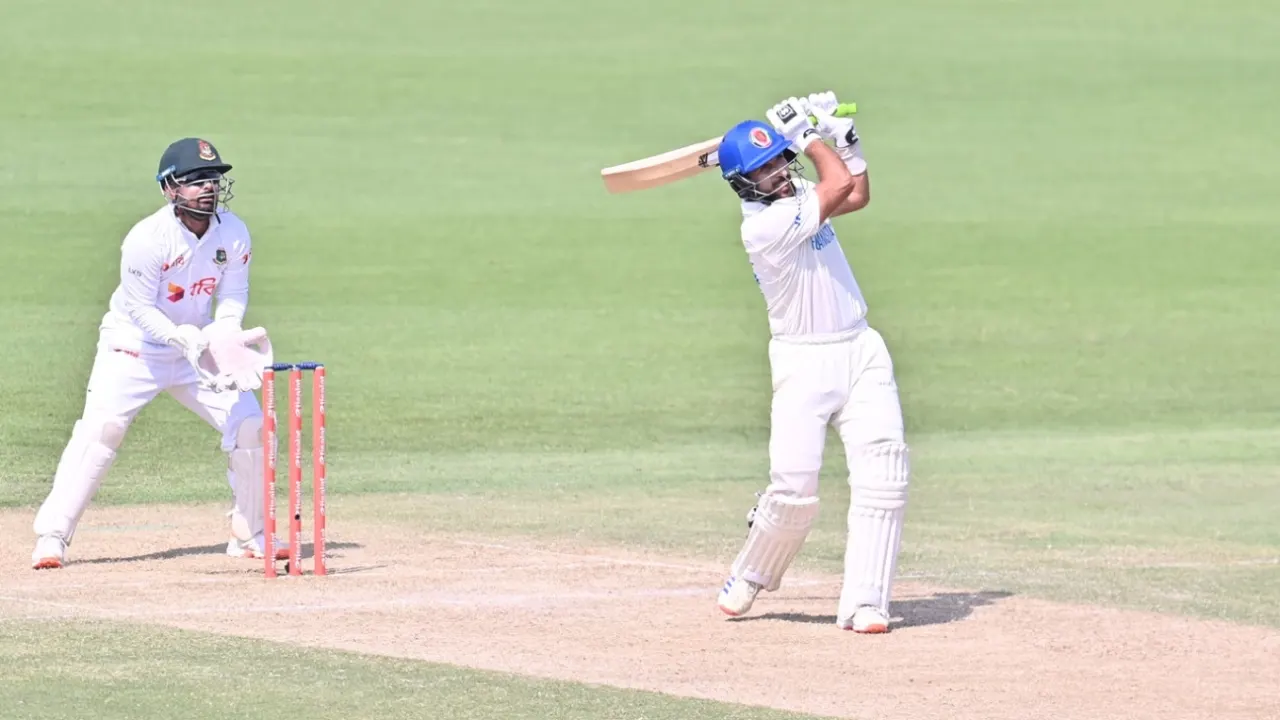
Captain Rahmat Shah played a crucial knock as he held Afghaniistan together on the second day in Abu Dhabi. He blunted Bangladesh’s threat by adding 72 runs for the unbroken fifth wicket with his deputy Ikram Alikhil.
Rahmat was unbeaten on 84 off 186 balls with eight fours and a six, while Alikhil’s 26 came off 91 balls. Ebadot Hossain was Bangladesh’s best bowler of the day.
Bangladesh wicketkeeper Litton Das got his side back into the contest shortly after the tea break. He first took a brilliant diving catch to his right, when the set Abdul Malik edged Ebadot five balls into the third session. Malik made 62 off 120 balls, with five boundaries including a six.
Next over, Litton completed a fine stumping when a Mehidy Hasan Miraz delivery turned and bounced sharply against Hashmatullah Shahidi. The former Afghanistan captain lasted just two balls as he fell for a duck.
Alikhil started with two well-timed boundaries before reining himself in for the next nine overs. Rahmat broke the boundary drought with two fours off Nayeem Hasan in the 60th over. He first pumped the offspinner through midwicket before finding the gap through mid-off for the second four.
Afghanistan then held off the Bangladesh bowling for the next 17 overs without a single boundary. Finally in the 77th over, Rahmat struck Mehidy for two fours in a row, both superb shots through extra cover, as he brought up Afghanistan’s 200.
The day began with the Afghanistan pace bowlers removing the two remaining Bangladesh wickets. It took them 8.3 overs, with Mohammad Saleem picking up his fourth wicket, having Taijul Islam caught behind and Yamin Ahmadzai removing Ebadot with a slower delivery.
Saleem finished with 4 for 82, having taken 6 for 140 against India in Afghanistan’s previous Test in June. Ahmadzai took three and Ismat Alam two wickets. This was the first time a fast bowling attack took nine wickets in a Test innings in Abu Dhabi.
After bowling out Bangladesh for 346, Afghanistan went to lunch on 34 for 1. Sediqullah Atal edged Hasan Mahmud to first slip. Atal struck three fours in his knock but also survived a caught-behind appeal in the third over. Replays showed that he had inside-edged it but Bangladesh did not use the review.
After lunch, Afghanistan batted positively. Shahidullah swept Mehidy while Mahmud conceded two fours early. Malik played the ball confidently, but Bangladesh kept things tight from both ends. It created a wicket when Shahidullah top-edged a hook against Ebadot in the 21st over. Mahmud took a good tumbling catch running in from fine-leg, as Shahidullah fell for 20 off 44 balls.
Rahmat though immediately stamped his authority with a crunchy cover drive in the same over. He hit Taijul for a straight six shortly afterwards, with Malik repeating the dose to the same bowler after a few more overs. Malik also cover-drove Nayeem before reaching his maiden Test half-century in the 34th over.
Scores:
Afghanistan 211 for 4 in 80.5 overs (Abdul Malik 62, Rahmat Shah 84*, Ikram Alkhi 32*; Ebadot Hossain 2-50) trail Bangladesh 346 in 92.3 overs (Shadman Islam 67, Tanzid Hasan 83, Litton Das 53; Mohammad Saleem 4-82, Yamim Ahmadzai 3-79, Ismat Alam 2-20) by 135 runs
[Cricinfo]
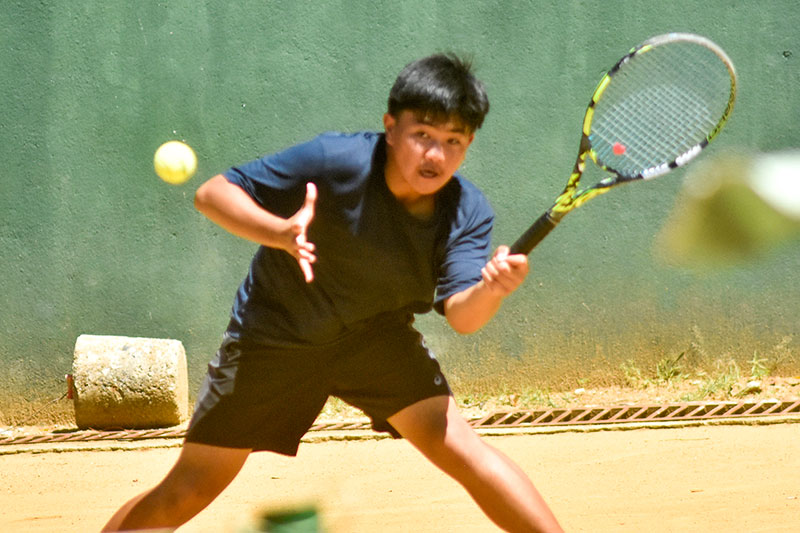
Risindi Hewawasam of Sri Lanka and Anthony Castigador of the Philippines won the girls’ and boys’ singles titles at the ATF 16 & Under Colombo 2026 – Week 1 tournament concluded at the Sri Lanka Tennis Association courts on Friday.
Castigador produced a dominant performance in the boys’ singles final, defeating India’s Gurshaan Chahal 6-2, 6-2 to secure the title. The Filipino maintained his advantage throughout the match, winning in straight sets to cap an impressive campaign.
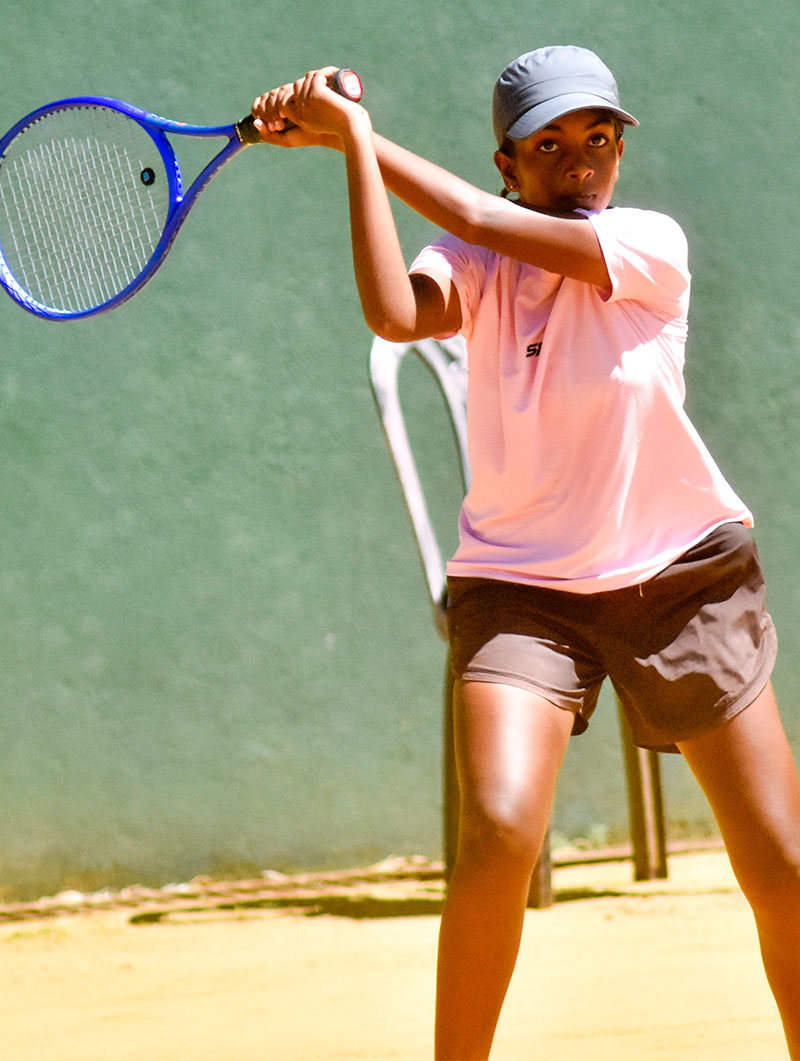
Risindi Hewawasam (Pix by Kamal Wanniarachchi)
In the girls’ singles final, Risindi delivered an equally dominant display to beat compatriot Kiara Jayamanne 6-1, 6-1. (RF)
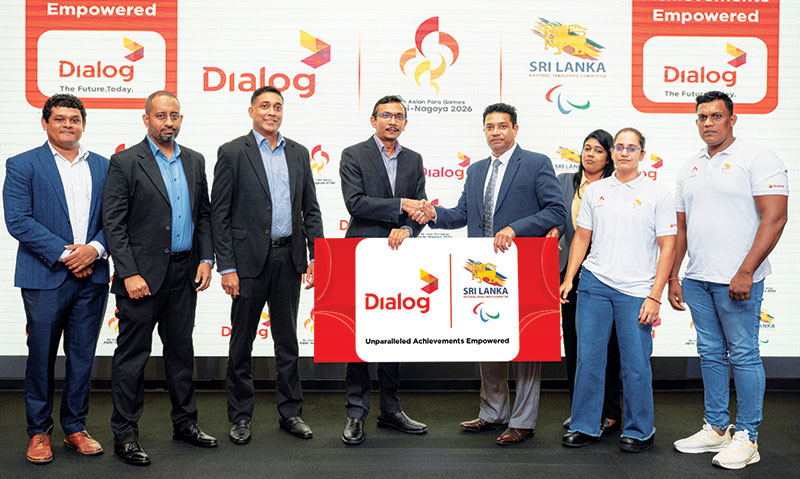
Dialog Axiata PLC is supporting Sri Lanka’s national contingent at the 2026 Asian Para Games in Achi Nagoya Japan, continuing its long standing commitment to supporting Sri Lankan athletes and helping them compete at the highest levels of international sport.
As the team sponsor, Dialog is backing a group of 21 athletes whose journeys have been shaped by determination, discipline and a strong desire to represent their country on the international stage. For Dialog, however, the value of this team goes well beyond the medal tally.
Each athlete has taken a different path into elite sport. Their physical abilities may differ, as do their individual stories, challenges, and ambitions. What they share is the commitment and determination required to train, compete, and continue pushing themselves to achieve their goals.
Dialog’s support reflects its wider commitment to creating opportunities for Sri Lankans to pursue their ambitions and represent the country with pride. For 26 years, Dialog has supported Paralympic sport in Sri Lanka, helping athletes compete at national and international level. Its continued support for the Asian Para Games contingent is part of that long-standing commitment to creating opportunities for athletes and recognizing sporting talent.
Among them is javelin thrower Samitha Dulan, a silver medalist at the 2022 Hangzhou Asian Para Games. Palitha Bandara, another experienced member of the athletics team, has also won medals at both the 2018 Jakarta and 2022 Hangzhou Games.
Nuwan Indika arrives with an impressive record after winning gold in the 100 meters and silver in the long jump at Hangzhou, while Pradeep Somasiri returns as an Asian Para Games champion after winning gold in the 1,500 metres.
Dhananjana Wickramasingha will also be looking to build on her silver medal winning performance in the women’s long jump at Hangzhou, while Madhuranga Subasinghe, who won bronze in the 400 metres, is also back in the squad.
Sri Lanka’s medal winning experience extends beyond athletics. Swimmer Naveed Rasheen won bronze in the 400 metre freestyle at Hangzhou, while Nadin Basnayake claimed silver in the women’s event.
The squad also includes Buddika Indrapala, who won bronze at the 2018 Asian Para Games.
Together, the contingent includes nine athletes who have previously won medals at the Asian Para Games, bringing valuable experience to the 2026 campaign.

Rahmat, Malik fifties lead Afghanistan’s strong reply

Showers above 75 mm are likely at some places in the Western, Sabaragamuwa, Central, Uva and North-Western provinces and in Galle, Matara, Anuradhapura and Mannar districts.

Iranian ships stranded, Lanka fears US sanctions

Sri Lanka CERT warns of overseas university admission scams

Navi Pillay’s Lankan affairs in focus as she wins 2026 Nobel Peace Prize

Lanka welcomes Indian SC remarks on Katchatheevu dispute

‘Dates have the highest sugar content to fight Coronavirus’

Sunday Island 27 December – Headlines

#SundayIsland 17th December – Headlines

Sunday Island – 28th March

Sunday Island Headlines – 21 March

Sunday Island – 21st February – Headlines
-

 News7 days ago
Geneva takes up Sallay’s case and govt. ignores opportunity to answer accusations
-

 Features6 days ago
Preventing grievances from becoming communal
-

 Features4 days ago
The Sri Lankan who made Scottish history
-

 Sports4 days ago
Nissanka absence opens door for Sri Lanka’s young guns
-

 News5 days ago
Gnansara Thera to be assigned to prison printing section: Officials
-

 Features7 days ago
Sri Lanka Cricket Bill: Governance reform is not yet a cricket strategy
-

 News3 days ago
NDB fraud Rs 60mn more than reported
-

 Features4 days ago
Future of Sri Lanka’s state university system: Should it be shut down and reopened?