
Features
As I remember, from 50 years ago: the 75-80 Katubedda Engineering Batch

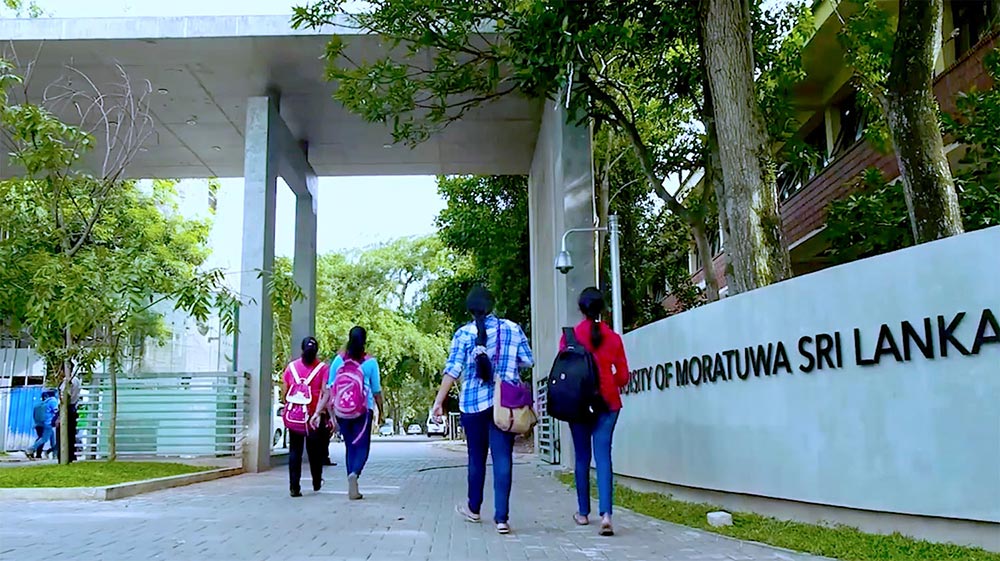
On a wonderful morning in May in the year 1975, a group of around 140 young men and women entered the engineering faculty at the Katubedda Campus of the University of Sri Lanka. Only around 12% of them were women, a statistic that has improved slightly to around 20% over the past 50 years! There appeared little to differentiate us from previous entrants to this campus. However, Dr L.H. Sumanadasa, who had previously been instrumental in setting up both the Institute of Practical Technology and the Ceylon College of Technology at Katubedda, had become the Vice-Chancellor of the (entire) University of Sri Lanka in 1974. Whether through his personal offices or through government policy or both, it had been deemed that all engineering entrants in 1975 from the Colombo District be sent to Katubedda.
I myself had wanted to go to Peradeniya, at that time undisputedly the more established faculty; not least because Professor E.O.E. Pereira, the former Engineering Dean and Vice-Chancellor at Peradeniya, had told me in no unmistakable terms that I should head to the Hanthane hills, when I was sent to meet him by the head of my school. Only three physical science entrants in our year had obtained four A grades at the A-level examinations. Getting an A grade was a significant achievement in those days – recently some 1300 had obtained 3 (out of 3) As for the same stream!! Anyway, all three with 4 As in our year were at Katubedda. One of them went, as I recall, to the University Grants Commission (UGC) to effect for himself a transfer to Peradeniya, but had been told not to be a fool. This may have been prophetic, because from our batch onwards, the intake quality to Katubedda increased significantly, or so I like to think.
The engineering faculty in those days had seven departments – civil, mechanical, electrical, electronics, chemical, materials and mining. The latter three disciplines were termed ‘applied sciences’ but are now all engineering programmes at Moratuwa. In addition, the faculty now has computer science, earth resources (a rebranding of mining), textile technology and transport management departments. We did experience our share of ragging at the hands of seniors, perhaps the most vociferous of whom went by the intimidating nickname of ‘Boo Bamba’ – rumour has it that he was later a professor of artificial intelligence at some U.S. University.
One of our batch nearly fainted at a rather physically demanding phase of the rag, and had to be escorted home by a few seniors – inadvertently creating history by being probably the first fresher to rag the seniors! Tales of exponential curves (‘e to the power x’) being drawn on cement floors using bare bums at the ‘Aachchi Palace’ also circulated during this rag period.
In spite of being in an institution that taught only professionally oriented programmes (engineering, architecture and technology) with almost guaranteed employment for its products, our university life was not devoid of the student activism that is such a major feature of state universities in Sri Lanka. The country had just seen the quelling of the first JVP uprising in 1971, surprisingly during an essentially socialist SLFP regime; which itself was toppled unceremoniously in 1977 by the avowedly market oriented UNP. Student activism was not viewed benevolently by the powers that be, whatever government was in office.
In our second year, a confrontation between students and the police at the Peradeniya campus had resulted in a student being shot dead. In our final year, an internal confrontation between the student union and the administration led to a hunger strike at Katubedda, causing our final examinations to be postponed from 1979 to 1980. There was no graduating batch in 1979, but two in 1980 – one in February (ourselves) and the other in November (for our junior batch, as scheduled). Political violence became much worse in the late 1980s, with the then vice-chancellor and a security guard being shot dead while in campus; and the entire Sri Lankan university system shut down for around two years.
Another issue in the background of our university life was the government policy on university admission. In 1971, the government introduced language-wise standardization, seen as a corrective against the perceived disproportionate numbers of Tamil students entering university, mainly to medical and engineering faculties. This ‘corrective’ was clearly repugnant to Tamil citizens, and may have been a factor in the formation of the LTTE in 1976. Such standardization was done away with in 1977, but a district quota system, also introduced in 1972, continues albeit with some modifications to this day. The district quota system is widely considered to deliver compensatory justice in our under-resourced education system, but also seen as a mechanism that continues to reduce university entrants from large population centres, including the Jaffna District. At any rate, the 1970s probably sowed the seeds of the two most disruptive social upheavals in our country, namely the LTTE uprising and second JVP one, both in the 1980s.
Just before we entered our specialization streams in the second year, the student union held a meeting to discuss the student response to the proposed introduction of calculators. Calculations in the first year were tackled using logarithmic tables, but we were about to graduate to (and invest in) slide rules in the next. The need to substitute slide rules with scientific calculators may appear to be a ‘no brainer’ today, but in the very real context of students from deprived backgrounds, the outcome of the discussion was by no means one sided. Anyway, we ended up using calculators from our second year onwards, and may in fact have been deprived for not having a ‘slide rule experience’ – slide rules were considered to be almost synonymous with an engineering outlook, if nothing else because they required users to keep track of orders of magnitude in their minds; the discipline of which is perhaps less developed in users of calculators!
The university administration too tried to provide cheap food and drink to cater to student poverty in these deprived 1970s. As I recall, a kahata (only tea) was just 3 cents but if one wanted a small piece of hakuru (jaggery) with it, it was a cent more. A ‘plain tea’ (i.e. tea with sugar added) was 5 cents, while a kiri kahata (tea with milk only) was 6 cents; a kiri kahata with hakuru was a cent more, while the priciest brew, i.e. ‘milk tea’ (tea, milk and sugar) was 8 cents. So the kahata was as cheap as it could get, but additions relatively pricey!! Imagine my surprise when I was studying in London in the early 1980s that one could add any amount of milk and sugar to one’s heart’s content after paying (of course around two orders of magnitude more than the above rates) for the basic cup of what we would have called kahata!!
The nature of the student union also changed during our student days. When we entered, the students were represented by the Engineering Students Scientific and Cultural Organization (ESSCO in short). All proceedings were conducted in English, and any contributions in other languages required translation. When an irate student once referred to the administration as “Waathayo”, the then President of ESSCO himself had to translate it as “Air guys”. By the time we graduated, ESSCO was no more, and had been replaced by a student union as in all state universities, with election outcomes based on proportional representation of competing groups; and Sinhala being the predominant language of discourse.
English vis-à-vis the vernacular languages is a struggle that continues to date. All programmes at Moratuwa were and are taught in English, with complete endorsement by students, who continue to see it as a passport to the world. However, everyday conversations were conducted largely in Sinhala or Tamil; especially in Sinhala, which was seen as part of the student ‘culture’, at least at campuses in the south like Moratuwa. This meant that even students with greater English language proficiency tended to hide that fact and converse in the lingua franca of the campus.
As I recall, only a few students tried deliberately to improve their English language skills by practising it with others more competent than they. Tamil students had the additional challenge that vendors and traders in the vicinity of the campus spoke largely in Sinhala; however, many such students ended up being trilingual after their campus experience! Language, in my opinion, continues to be a vexation in various ways in Sri Lanka. We need a way to find the best way forward that preserves our culture while being open to the world at large, and does not leave anyone behind.
Another significant change in our time, brought about by the Universities Act No. 16 of 1978, was the splitting up of the single University of Sri Lanka into six separate universities at the time (Sri Lanka now has seventeen state universities). In addition, our name changed from Katubedda to Moratuwa – i.e. from being the Katudebba Campus of the University of Sri Lanka we became the University of Moratuwa. There were mixed feelings regarding this, as I recall.
Some felt that we would lose the identity we had been trying to create (for the engineering faculty, one that was distinct from Peradeniya), an identity linked to the name Katubedda; someone even opined that ‘Katubedda’ had a more pleasing or aesthetic ‘ring’ to it compared to ‘Moratuwa’. Others however felt that the new ‘Moratuwa’ name would help the fledgling institution to break away from its lowlier ‘practical technology’ beginnings associated with the ‘Katubedda’ name. At any rate, the university community at Katubedda in Moratuwa had little say in the change, since it was the prerogative of the Minister in charge, in consultation with the University Grants Commission (UGC); and it was from the University of Moratuwa that we graduated.
In our final year, it was mostly our batchmates who were in the Sports Council as captains of the various sports, and a musical evening was arranged by them featuring a very well-known musical band. The unfortunate band leader was unable to comprehend the campus culture, because whatever he sang, whether Sinhala or English, slow or fast, every song was greeted with loud hooting. Although the organizers tried to explain that this was the student way of expressing appreciation, and in spite of trying to mollify the man with cups that cheer, he stalked off in disgust, leaving the rest of the band to entertain us!
One of the most colourful personalities in our batch was an old Anandian, who had acquired a reputation for teaching A-level physics tuition classes even before he entered. He maintained this avocation right through his university career, juggling examination timetables with his class schedules – other students have done such multi-tasking as well, but very few if any actually taught the classes they attended outside of university.
The fact that he was able to commute in a white Volkswagen car, purchased from the proceeds of his enterprise, no doubt helped in the balancing act. At any rate, it is his business and entrepreneurial skills in education that he made a career of – no doubt based on sound (mechanical) engineering instincts; and he ended up by establishing an enviable network of ‘international’ schools (named after the one set up by Aristotle himself) that were eminently affordable to middle class parents. Not content with being limited to such endeavours, he ventured into politics as well, serving for a while as the State Minister of University Education.
These reminiscences would not be complete without mentioning a few charismatic teachers as well. Most of us would remember the one who at times devoted 10% of his lecture time to thermodynamics, and the rest to politics; this same teacher had returned to Sri Lanka after his PhD in London, driving a Morris Oxford all the way. We may recall too, a mathematics professor who asked us “How much is one plus one?”; and proceeded to gaze out of the window in deep thought, counting on his fingers and saying “Let me think”, as if to search for an answer – I think he was trying to teach us the notion of correspondence; or have I got it wrong? Let me think… Then there was a Dean whom all of us quaked to meet one-on-one. One of our batchmates who had to so do, had reportedly persuaded another to exchange shirts and footwear, so that he would appear more presentable to the irascible administrator.
We should not forget the Department Head who managed to get a new car with 10 Sri 1 as its registration plate; and then proceeded to convert it (probably in our Auto Lab) to run on LP gas – soon after we graduated he was named one of Ten Outstanding Young Persons by the Sri Lanka Jaycees. Finally, there was this teacher in charge of a somewhat snake-infested survey camp (for our junior batch), who when interrogated by a student representative as to who would be responsible if a student was bitten by a reptile, replied without batting an eyelid that “the snake will be responsible”. Jokes apart however, we are who we are because of the dedication and sacrifice of especially our academic staff. They had to teach in a relatively unknown institution at the time, and consistently put the institution and its students first; that is, ahead of developing their own academic careers. We were the beneficiaries of their labours, which by no means were in vain.
And so we graduated in early 1980, with around 15 first class holders among us. Almost as a symbol that the university was having a new beginning with our batch, we were the first to have a convocation (probably of course because we were the first to graduate after the 1978 Act under a University of Moratuwa banner) – and that too at the impressive new BMICH, under the chancellorship of Arthur C. Clarke, the eminent science fiction writer. We later produced over 20 doctoral degree holders, maybe 10 full professors, a few engineering deans and authors of scholarly books, and even some researchers in the so-called Stanford-Elsevier database of top 2% scientists (based on citation impact).
Others have become organizational leaders, and hence ‘movers and shakers’. Apart from the gentleman mentioned earlier, we have another who has been CEO of both a bank and a manufacturing company; and at least two entrepreneurs – one in furniture and the other in high tech start-ups (based in the U.S. but back-ending his operation with Moratuwa students and graduates); also a lady CEO of a large state-owned utility provider. Some are working in high tech environments in developed countries, pushing the boundaries of disciplines such as aerospace and nuclear and biomechanical engineering. Others have put Sri Lanka on the map through their involvement in signature projects; or coordinating multi-nation initiatives, for example in disaster mitigation. There is one of us still playing representative cricket! I am doubtless unaware of other significant contributions – our batch, while not large, is not small either.
More importantly, we have all, in different ways and contexts, been helping to “direct the great sources of power in nature for the use and convenience of humans” – and nowadays safeguarding the environment while doing so as well. Our degrees from Moratuwa have brought us socio-economic mobility, and I suppose all of us have been trying to ‘give back’ to family, community or country (motherland or adopted) in various ways and degrees, whether through technical or humanitarian ventures.
Most if not all of us contributed to a Moratuwa University scholarship scheme in the memory of a batchmate who tragically perished in the 2004 Boxing Day tsunami. Some of us have already gone the way of all the world, while the rest are awaiting our calls; probably trying to become better human beings, whether in the interests of the hereafter, or just to make life easier for those who will care for us in the bard’s seventh act of life!
But what of the university itself? If I may be permitted a personal reflection, I was one of five batchmates who returned to the university to serve on its academic staff. As a young staff member, I used to envy Peradeniya’s stature – many of its engineering faculty staff had Cambridge PhDs (for example) and their graduates seemed to have an open door to that ancient seat of learning. However, by the time I retired, some 40 years after joining the academic staff, our own graduates had been regularly accepted for PhDs not only at Cambridge but also at Oxford, Imperial, Caltech, MIT, Princeton and ETH Zurich. In addition, it goes without saying that Moratuwa is undisputedly the first choice now (from among seven engineering faculties) of the majority of those 1300 university aspirants with 3 As at their A-levels. I like to think that 1975-80 (our batch, in fact!!) was the turning point for Moratuwa University’s fortunes.
Written by a member of the 75-80 Katubedda Engineering batch who was later a Moratuwa University teacher for 40 years (with apologies for any inadvertent errors or omissions).

Features
Sri Lankan Airlines Airbus Scandal and the Death of Kapila Chandrasena and my Brother Rajeewa
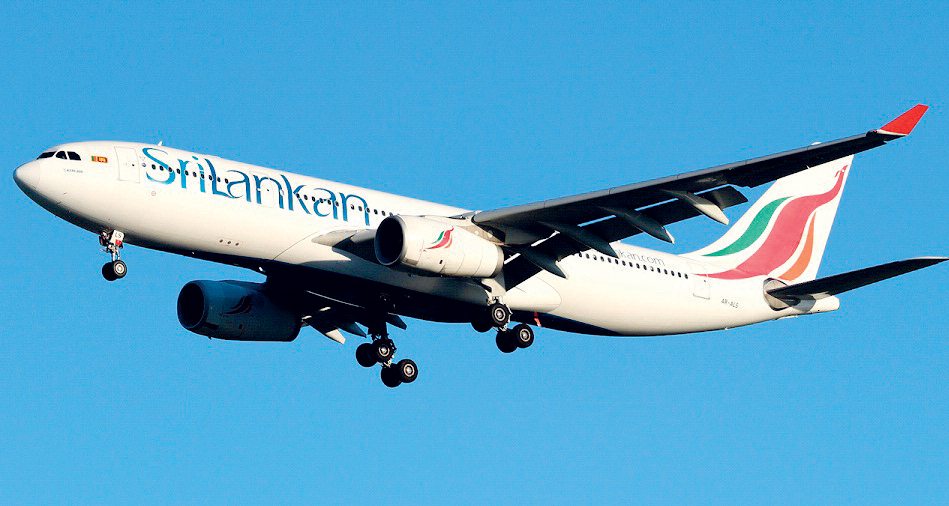
The death of Mr Kapila Chandrasena (KC), the former CEO of SriLankan Airlines, caused quite a stir in the country. A few politicians, particularly from the opposition, tried to take advantage of the confusion surrounding his death, whilst social media went into a frenzy, with everyone having a theory as to the cause of death.
Even Transparency International Sri Lanka (TISL), the independent anti-corruption watchdog, issued a public statement urging the Government to ensure a full, transparent, and credible investigation into the circumstances surrounding Kapila Chandrasena’s (KC’s) death. TISL further emphasized that the Government bears a responsibility to protect the integrity of the judicial process and to ensure that individuals connected to high-profile investigations are able to participate in proceedings in a safe and secure environment.
While such concerns are understandable, I strongly believe that it is necessary to await the findings of the magisterial inquiry before reaching conclusions regarding the cause of death. To speculate irresponsibly, particularly to fit pre-existing political beliefs, is unfair not only to the deceased but also to his grieving family and loved ones.
First and foremost, I wish to convey my sincere condolences to the family of KC. I understand personally the trauma and anguish associated with losing a loved one unexpectedly and under tragic circumstances.
My brother’s death
Unfortunately, the death of KC also resulted in renewed interest in the death of my brother, Rajeewa Jayaweera, in June 2020. Some individuals on social media attempted to link his death to the newspaper article he published on the Airbus scandal involving SriLankan Airlines, KC and his wife.
Some people even circulated photographs of my brother’s body at the site of the incident across social media platforms. This was deeply insensitive and extremely distressing to my sisters and me. The loss of a sibling under tragic circumstances is something from which one never fully recovers. It took our family years to come to terms with his passing, and to have those painful images resurfaced in connection with an entirely unrelated event reopened old wounds unnecessarily.
On behalf of my sisters and myself, I wish to state unequivocally that my brother, Rajeewa Jayaweera, took his own life in June 2020 due to personal circumstances. His death had absolutely no connection whatsoever to his writings regarding the Airbus scandal. Neither the Rajapaksas, nor any political actor, nor any state agency was involved in his death. The magisterial inquiry into the matter returned a verdict of suicide.
Those who know me personally are aware of my forthright and combative nature. Had there been even the slightest credible suspicion surrounding my brother’s death, I would never have rested until justice was pursued. Since this was clearly established as a case of suicide, I sincerely hope that those who continue to circulate unfounded theories will finally allow the matter to rest with dignity.
The Sri Lankan Airbus scandal
The alleged payment of a USD 2 million bribe by Airbus SE to a shell company established in Brunei by the wife of a senior SriLankan Airlines official came to light following the approval of a Deferred Prosecution Agreement (DPA) between the UK Serious Fraud Office (SFO) and Airbus SE.
The DPA was approved on January 31, 2020 by Dame Victoria Sharp, President of the Queen’s Bench Division, sitting at the Crown Court in Southwark. The award represented one of the largest global anti-corruption settlements in modern corporate history.
The Airbus investigation by the SFO extended far beyond Sri Lanka. It involved allegations of bribery and corrupt practices linked to aircraft purchases by AirAsia and AirAsia X in Malaysia, SriLankan Airlines, TransAsia Airways in Taiwan, PT Garuda Indonesia, Citilink Indonesia, and military aircraft transactions involving the Government of Ghana.
The approved judgment contained specific references to the SriLankan Airlines transaction (page 12, points 41 to 44). It alleged that Airbus employees, contrary to Section 7 of the UK Bribery Act 2010, failed to prevent bribery involving individuals connected to the airline’s aircraft procurement process between July 2011 and June 2015.
According to the Statement of Facts, Airbus engaged the wife of an individual connected to the aircraft acquisition process through a shell entity described as “Company Intermediary 1”. Airbus employees allegedly offered up to USD 16.84 million in commissions in relation to SriLankan Airlines’ purchase of ten Airbus aircraft and the lease of four additional aircraft. Ultimately, only USD 2 million was allegedly paid.
The judgment further stated that Airbus employees sought to disguise the identity of the beneficial owner behind the intermediary company and misled the United Kingdom Export Finance Agency (UKEF) regarding the intermediary’s qualifications, aviation experience, and role in the transaction.
The smoking gun from Sri Lanka that commenced the UK SFO investigation
The matter became particularly significant because it was the concerns raised by UKEF regarding the SriLankan Airlines intermediary that ultimately triggered the wider SFO investigation into Airbus. UKEF questioned why an individual with little aviation experience and who was domiciled outside Sri Lanka had been engaged as a business partner in such a major transaction.
Airbus reportedly provided misleading and inaccurate responses to those concerns in February 2015. Unsatisfied with the explanations provided, UKEF escalated the matter, which subsequently contributed to the formal investigation launched by the SFO in July 2016.
Ironically, what appears to have been a poorly concealed and amateurishly structured bribe involving SriLankan Airlines ultimately became one of the catalysts for a global corruption investigation that resulted in Airbus paying penalties approaching EUR 4 billion across the United Kingdom, France, and the United States.
Under the settlement approved in the UK, Airbus agreed to pay approximately EUR 991 million into the UK Consolidated Fund, including disgorgement of profits and financial penalties. Simultaneously, French and American authorities imposed additional penalties amounting to nearly EUR 3 billion.
Aircraft procurement and corruption
The Airbus matter once again highlighted a longstanding global reality: aircraft procurement has historically been highly vulnerable to corruption. The purchase of aircraft involves enormous financial values, complex financing arrangements, confidential negotiations, intermediaries, export credit agencies, and political influence. These factors create conditions for improper payments and abuse of authority.
Globally, there have been numerous allegations over several decades involving commissions, hidden intermediaries, and questionable consultancy agreements linked to aircraft purchases by both commercial airlines and governments. It is generally believed that the average commissions paid are between 3% to 5% of the order value.
The cost to Sri Lankan taxpayers
One of the most undesirable aspects of the Airbus affair is the financial burden ultimately borne by ordinary Sri Lankan taxpayers.
In 2015, the Government of Sri Lanka decided to cancel the order for four Airbus A350 aircraft as they were deemed unsuitable. As a consequence of that cancellation, SriLankan Airlines incurred penalties estimated at approximately USD 140 million, equivalent to roughly Rs. 19.2 billion at the time.
While Sri Lankan taxpayers absorbed these enormous losses, the United Kingdom taxpayers benefited financially from the Airbus settlement. The UK Consolidated Fund received almost EUR 1 billion arising from the penalties imposed on Airbus.
The contrast is stark. Sri Lanka suffered substantial financial losses as a result of a transaction tainted by allegations of corruption, while foreign governments received the benefit of the resulting fines and penalties.
The questions raised by my brother
My late brother, Rajeewa Jayaweera, wrote an article about the Airbus scandal in an article published in the Sunday Island on February 16, 2020, titled “SriLankan Airlines Airbus Deal”. In the article, he referred to a SriLankan Airlines Board meeting held on October 27, 2016.
According to his article, Board Minute 7.3 dealt specifically with reports that Airbus was under investigation in Europe for bribery-related offences. Rajan Brito, who was then a director of the airline, reportedly informed fellow board members about the investigations and tabled draft letters intended for Airbus, Rolls-Royce, and AerCap.
Those draft letters reportedly suggested that the aircraft transactions may not have been based solely on commercial considerations and sought information regarding the role of facilitators and intermediaries.
However, according to my brother’s article, Brito’s proposal to send those letters was reportedly ignored on the basis that the airline was negotiating favourable terms to cancel aircraft purchase commitments and that sending such letters might sour relations and disadvantage the airline.
However, my brother believed that the decision not to proceed with Brito’s letters was controversial and highly questionable, and that the airline could have sought the assistance of the PNF (Parquet National Financier) to investigate the deal and seek financial restitution, given that the order was allegedly tainted by corruption, particularly given the emerging evidence of corruption surrounding the transaction.
Even today, an important question remains unanswered: did the Government of Sri Lanka or any subsequent board of SriLankan Airlines seriously attempt to recover the USD 140 million cancellation penalty, along with any inflated amounts paid after the global corruption findings against Airbus became public?
The slow pace of Sri Lankan justice
Following the public release of the UK judgment on January 31, 2020, Sri Lankan authorities moved relatively quickly to initiate legal proceedings against KC and his wife.
On February 4, 2020, arrest warrants were reportedly sought. On February 6, 2020, KC and his wife surrendered to the Criminal Investigation Department (CID) and were remanded until March 4, 2020, when they were released on bail.
The allegations reportedly related to accepting a USD 2 million bribe and engaging in money laundering activities. Press reports also indicated that travel restrictions had been imposed.
However, six years later, the matter still appears unresolved. Based on publicly available information, indictments were reportedly filed before the Colombo High Court in 2022. Since then, several hearings dealing with procedural and preliminary issues have reportedly taken place, but the substantive trial itself has yet to properly commence. With KC now deceased and reports suggesting that his wife may have absconded, the prospects of successfully prosecuting the matter appear increasingly uncertain.
Many Sri Lankans understandably feel frustrated by the slow pace at which corruption-related cases proceed through the judicial system. This frustration is particularly acute where allegations involve politically connected individuals or transactions involving massive losses to the public.
The public perception is that investigations move slowly, prosecutions are delayed for years, and accountability is often ultimately avoided through procedural delays, political changes, or the passage of time.
To be fair, corruption cases involving international financial transactions are inherently complex. They require cooperation between multiple jurisdictions, access to banking records, mutual legal assistance processes, forensic accounting, and substantial documentary evidence. Nevertheless, the extraordinary delays contribute to growing public cynicism regarding the administration of justice.
It is also worth noting that the UK proceedings against Airbus did not publicly identify KC by name. Much of the public discussion in Sri Lanka has therefore relied on local investigations and media reporting rather than the UK judgment itself.
According to information available in the public domain, the alleged funds connected to the USD 2 million payment ultimately found their way into an Australian bank account linked to KC. Given the reputation of Australian authorities for cooperating with international law enforcement investigations, many members of the public expected a faster and more decisive legal process in Sri Lanka.
In that context, a detailed public explanation by the Attorney General’s Department regarding the legal and evidentiary challenges affecting the case may help improve public understanding and confidence.
SriLankan Airlines: A continuing national burden
The Airbus controversy cannot be viewed in isolation from the broader failures surrounding SriLankan Airlines over several decades.
The national carrier has accumulated debts estimated at approximately USD 1.2 billion, equivalent to nearly Rs. 350 billion. This translates to a burden of roughly Rs. 16,000 per Sri Lankan citizen, including millions who have never travelled on the airline.
Successive governments have interfered extensively in the airline’s operations. Political appointments, weak governance, lack of commercial discipline, and poor strategic decision-making have contributed significantly to the airline’s decline.
Far too often, individuals lacking meaningful aviation expertise have been appointed to key board and management positions. Political loyalty has frequently taken precedence over competence and experience.
The decision to terminate the management and ownership partnership with Emirates remains one of the most controversial episodes in the airline’s history. Many industry observers believe that decision alone cost Sri Lanka billions of rupees in lost opportunities and operational deterioration.
Despite repeated financial losses and mounting taxpayer burdens, very few individuals have ever been held accountable for the disastrous decisions that contributed to the airline’s decline.
The current Government faces an unavoidable reality. SriLankan Airlines cannot continue indefinitely as a financially unsustainable state enterprise funded by taxpayers already struggling under severe economic hardship. Decisions regarding the future of the airline must be guided by commercial reality rather than political ideology or emotional nationalism.
Ultimately, the Airbus scandal is not merely about one individual or one alleged bribe. It reflects deeper structural weaknesses involving governance, political interference, accountability, and institutional failure within Sri Lanka.
Sadly, a relatively young man has now lost his life amidst these events and controversies. Regardless of the allegations against him, that remains a human tragedy. At the same time, the country must continue to demand transparency, accountability, and institutional reform so that such scandals are never repeated.
(The views and opinions expressed in this article are solely those of the author and do not necessarily reflect the policy or position of any organization or institution with which the author is affiliated).
By Sanjeewa Jayaweera

Electronic or digital financial fraud is the current, extremely distasteful description of a blight that has hit the entire globe; a menace that is perpetrated through an unbelievable labyrinth of interconnected dishonourable and nasty manoeuvres. In an era where our financial lives are increasingly becoming digital, the “perfect financial crime” no longer requires a getaway car. It just needs a high-speed internet connection and stupendously brilliant, depraved and Machiavellian minds.
Modern scams have advanced far beyond the poorly spelt emails of the past. They are now extremely sophisticated operations exploiting psychological manipulation and deep-fake technology. Financial fraud has evolved from simple street-level deception into a complex, multi-billion-dollar industry. It has been manipulated through many different currencies in different parts of the world. In Sri Lanka, the landscape of scams has shifted from traditional “pyramid” schemes to sophisticated digital heists and institutional bond scandals that threaten the very fabric of our national economy. From an international outlook, financial fraud is becoming increasingly transnational. Sri Lanka is currently under intense scrutiny by the FATF (Financial Action Task Force). Sri Lanka falling onto the “Grey List” again would have severe repercussions, potentially causing international banks to suspend payments to the island, severely upsetting our exporters.
The financial fraud profile of Sri Lanka has gone from “Bonds” to “Glitches”. Our country has been rocked by high-profile financial irregularities that serve as a stark warning about institutional integrity. First was the Treasury Bond Scandal. Often cited as the largest financial scam in the nation’s history, the Central Bank bond issuance of 2015 highlighted the risks of Insider Trading and the manipulation of government securities. The fallout cost the public billions of rupees, demonstrating how high-level collusion can bypass traditional safeguards.
The recent problem where the Treasury remitted a very large amount of foreign currency to a different portal to which money should not have been sent is a special type of Financial Fraud problem that seems to have been instigated by a deceptive email. It is under investigation at present, and it appears that it is the money that had been earmarked for foreign debt reconciliation. It is the taxpayers’ money that has been allowed to be swindled by unscrupulous crooks.
Then there is the National Development Bank (NDB) “Glitch” Controversy.
The entire banking sector was shaken to its roots by reports of a massive multi-billion-rupee fraud at the NDB. This incident, often referred to in local circles as “The Glitch,” involved the alleged diversion of funds through a sophisticated manipulation of the bank’s internal accounting systems.
Then there are the perceived Guardians, who often serve as Whistleblowers. The fight against such deep-seated corruption rarely begins with a regulator; it often starts with an individual. It is just someone who smells a rat. Maya Senanayake, a forensic expert at NDB, has emerged as a symbol of integrity in this landscape by identifying anomalies that others chose to ignore. Whistleblowers like Senanayake face immense personal and professional risks. Their role is a “Herculean effort”, very often battling institutional stonewalling to bring the truth to light. Without such individuals, “Suspense Account” spikes and “shell-company diversions” would remain invisible to the public eye.
Having mentioned just two of the buzz phrases in circulation, given in Italics above, it is pertinent to provide definitions for some of these phrases that are being bandied about very frequently in articles on the main subject of this article.
· SCAM – It is a fraudulent scheme or deceptive act performed by an individual or group to trick a victim into giving up something of value, typically money, personal information, or assets. It is a blatant lie or a misrepresentation of the truth. Unlike theft (where something is taken by force), a scam usually involves the victim “willingly” handing over assets because they believe the fraudster’s story. Scams often rely on psychological manipulation, such as creating a sense of urgency, fear, or the promise of a “too good to be true” reward.
· HACKERS –
The term has evolved significantly and carries different meanings depending on the context. In the broadest sense, a hacker is someone who uses technical skills to overcome a problem or bypass a system’s limitations. The cybersecurity industry generally classifies hackers by their intent, often using a “hat” colour system.
The White Hat Hackers are an ethical group that is hired to detect vulnerabilities. They are legal and helpful as they improve security by reporting bugs.
The Black Hat Group are cybercriminals who break into systems illegally. They are malicious, steal data, plant malware, or disrupt services.
The Grey Hats Individuals who may break laws to access a system, but without malicious intent. They are individuals who might find a bug without permission and then offer to fix it for a fee.
· MONEY LAUNDERING – It is the process of “cleaning” illicitly-earned money by passing it through complex bank transfers or commercial transactions.
· TREASURY BOND –
A government debt security that provides a fixed interest rate. Manipulating these affects the nation’s debt and interest rates.
· WHISTLEBLOWER –
It is an “insider” who reports and even makes public, concealment of illegal or unethical activities within an organisation to the public or relevant authorities.
· SUSPENSE ACCOUNT –
A temporary account used to hold funds while their final destination is determined. These are frequently used in fraud to “hide” money during transfers.
· SHELL COMPANY –
No., NO…, it is not the Shell Company that deals with fuel. This terminology refers to a company that exists only on paper and has no active business operations. It is very frequently used to obscure the identity of those moving money. They become “Ghosts”.
· FORENSIC AUDIT –
An examination of financial records to find evidence that can be used in a court of law or for legal proceedings.
When one examines some of these frauds and scams, it becomes clear that at the bottom of the distasteful occurrences lie systemic inadequacies. Scrupulous attention to all details of financial transactions, trustworthy and fool-proof systems dealing with financial transactions, utmost vigilance and a very high degree of suspicion are the incontrovertible needs of the hour. The powers-that-be in all things that deal with financial transactions must consist of people with unblemished honesty, unbridled integrity and honour.
International best practices now emphasise a shift from “rules-based” to “risk-based” oversight, even going to the extent of utilising Artificial Intelligence (AI) to detect suspicious patterns in money laundering and financial fraud that a human eye might miss.
For individuals and the general public, the Three Golden Rules for Protection are as follows”
· Demand Transparency:
Whether you are an investor or a depositor, always ask for the audited financial statements of the institution.
· Verify the Chain:
In government securities, ensure you are dealing through registered primary dealers.
· Support Protections:
Advocate for stronger Whistleblower Protection Acts to ensure that those who speak the truth are not penalised by the system they seek to save.
The trick is to protect ourselves from the Invisible Thief by protecting ourselves from Modern Scams. Here is a breakdown of the most prevalent threats today and how to safeguard your assets.
A. The “Urgent Authority” Tactic
Scammers often impersonate trusted institutions such as banks, financial institutions, tax offices, or law enforcement. They create a sense of artificial urgency, claiming your account has been compromised or you owe an immediate fine.
· The Red Flag: Any request to move money to a “safe account” or pay via untraceable methods like gift cards or cryptocurrency.
· The Defence:
Hang up immediately or delete the message if it is on email. Contact the institution using a verified phone number from their official website or the back of your bank card to check the veracity of the request.
B. Investment and “Get Rich Quick” Schemes
With the rise of digital assets, “pig butchering” scams have become rampant. Fraudsters build a relationship with the victim over weeks (the “fattening”) before suggesting a “guaranteed” investment opportunity in crypto or forex (the “slaughter”).
· The Red Flag: Returns that consistently outperform the market with “zero risk.”
· The Defence:
If an investment opportunity sounds “too good to be true”, it almost always is. Professional financial advisors do not solicit clients via WhatsApp or dating apps.
C. Phishing and Smishing (SMS Phishing)
These are deceptive messages designed to steal login credentials. You might receive a text stating a package delivery failed, or your Netflix subscription has lapsed, followed by a link to a “login” page that looks identical to the real thing.
· The Red Flag: Unusual URLs (e.g., wellsfarg0.net instead of wellsfargo.com) and unexpected attachments.
· The Defence:
Never click links in unsolicited messages. Use Multi-Factor Authentication (MFA) on all sensitive accounts; even if a thief gets your password, they won’t get the secondary code.
4. The AI Impersonation (The Grandparent Scam)
Advancements in AI voice cloning allow scammers to mimic the voice of a loved one in distress. They may call claiming to be in a car accident or legal trouble, begging for immediate funds.
· The Red Flag: High emotional pressure and a demand for secrecy.
· The Defence:
Establish a “family password” – a unique word or phrase only your inner circle knows. If the caller cannot provide it, they are not who they say they are.
The Three Golden Rules for Financial Safety are
· Slow Down and Do Not Get Frightened:
Scammers rely on panic. Taking five minutes to think or consult a friend usually breaks the spell of the scam. It is also important to realise that some scammers try repeatedly.
· Verify the Source:
Never trust Caller ID, as numbers can be easily “spoofed” to look local or official.
· Protect Your Data:
Be wary of how much personal information you share on social media. Scammers use these details to make their impersonations more convincing.
Your bank will NEVER EVER ask for your Personal Identification Number (PIN), your Account Password, One-Time-Password (OTP) or request you to transfer money to an entirely new, unknown account. If any such request comes, do not fall for it and immediately contact the institution through their standard publicised telephone lines to check on the veracity of the request.
If you suspect you have been targeted, report it to the bank or financial institution, your local authorities and the legal investigative portals…, IMMEDIATELY.
(Some of the material presented
in this article was extracted with the help of AI.)
by Dr B. J. C. Perera
MBBS(Cey), DCH(Cey), DCH(Eng), MD(Paediatrics), MRCP(UK), FRCP(Edin), FRCP(Lond), FRCPCH(UK), FSLCPaed, FCCP, Hony. FRCPCH(UK), Hony. FCGP(SL)
Specialist Consultant Paediatrician and Honorary Senior Fellow, Postgraduate Institute of Medicine, University of Colombo, Sri Lanka.
An independent free-lance correspondent.
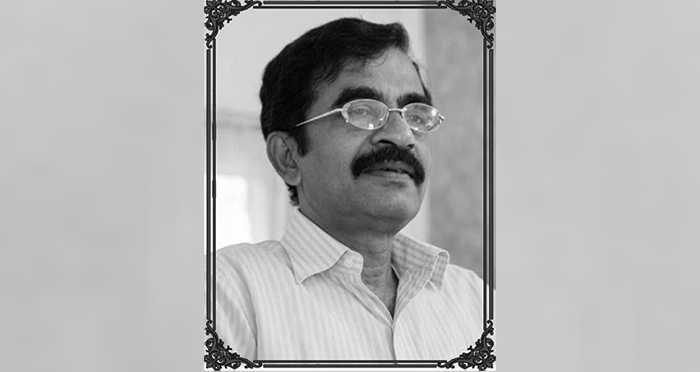
The passing of Professor M S M Mookiah is a great loss to the National Peace Council of Sri Lanka and to all who knew him. He was a steadfast supporter of our mission of peacebuilding and our commitment to inclusion and justice for all communities. Since 2006 he has served loyally as a member of the NPC Governing Council and Board, bringing to our work the benefit of his long experience in public life and academia. He believed deeply in the possibility of healing divisions through dialogue and understanding. What gave him satisfaction was participation, service, and the opportunity to contribute to a better future.
Professor Mookiah was an alumnus of the University Peradeniya, a Commonwealth Scholar at the University of Wales, Institute of Science and Technology, Cardiff and returned to Peradeniya and served and Head Geography at the University of Peradeniya. Subsequently he served as Vice Chancellor of Eastern University, Sri Lanka and later as a member of the Public Service Commission of Sri Lanka. He carried these responsibilities with dignity and humility. Even after retirement, there was nothing he enjoyed more than travelling to distant parts of the country to meet people and discuss the challenges of reconciliation and post war reconstruction. He believed strongly in dialogue, coexistence, and the possibility of building a more just society focusing on subjects such as Pluralism, Transitional Justice, Social Cohesion and Reconciliation.
His scholarly contributions were not merely academic but deeply rooted in social justice. He acted as a catalyst and inspiration for thousands of students, particularly helping students from Hill Country enter higher education. He mentored thousands of students and stood as a primary source of inspiration for students from Hill Country to break barriers and enter the sphere of higher education. He remained deeply loyal to the hill country where he was born and to the Malaiyaha Tamil community whose advancement he quietly supported throughout his life.
He understood the hardships faced by plantation families and the barriers confronting young people seeking higher education. One of his most meaningful contributions was the scholarship scheme he initiated in 2014 together with his brother Dr S. Kanapathyraja. Through the support of the Rotary Club of Carmarthen in Wales and later other well-wishers abroad, the scheme enabled university students from plantation communities to pursue higher education. It continues to this day and stands as a lasting part of his legacy.
Professor Mookiah was also a warm and gracious friend. He and his wife welcomed us into their home with generosity and kindness and shared the chocolates his sons brought when they visited from abroad. In later years he spent long periods with family in Switzerland, the United States, and India, where his ashes now lie. But his life’s work belongs to Sri Lanka, to its universities, to the students he inspired, to the communities he served, and to the cause of peace and reconciliation to which he remained committed throughout his life. His presence will remain with us at NPC in his work of peacebuilding, in the scholarship scheme he helped create, and in the memories of all who had the privilege of knowing him.
We offer our prayers for his soul to rest in peace and extend our heartfelt condolences to his family, friends, and the thousands of students grieving this great loss.
By National Peace Council of Sri Lanka

Pakistan name Iram Javed in Womens T20 World Cup squad

Expansion of PayPal services in Sri Lanka officially announced

Showers expected in the Western, Sabaragamuwa, Central, North-western and Northern provinces and in Galle and Matara districts

Rupee slide rekindles 2022 crisis fears as inflation risks mount

Kapila Chandrasena case: GN phone records under court scrutiny

Sri Lankan Airlines Airbus Scandal and the Death of Kapila Chandrasena and my Brother Rajeewa

‘Dates have the highest sugar content to fight Coronavirus’

Sunday Island 27 December – Headlines

#SundayIsland 17th December – Headlines

Sunday Island – 28th March

Sunday Island Headlines – 21 March

Sunday Island – 21st February – Headlines
-
 News4 days ago
Ex-SriLankan CEO’s death: Controversy surrounds execution of bail bond
-
Features5 days ago
High Stakes in Pursuing corruption cases
-
 Features5 days ago
When University systems fail:Supreme Court’s landmark intervention in sexual harassment case
-
 Midweek Review4 days ago
A victory that can never be forgotten
-
 News6 days ago
150th anniversary celebrations of Ave Maria Convent, Negombo
-
 News1 day ago
Lanka’s eligibility to draw next IMF tranche of USD 700 mn hinges on ‘restoration of cost-recovery pricing for electricity and fuel’
-
 Features2 days ago
Mysterious Death of United Nations Secretary General Hammarskjöld
-
 Business3 days ago
Lime trees to crack HEC conundrum