
Sports
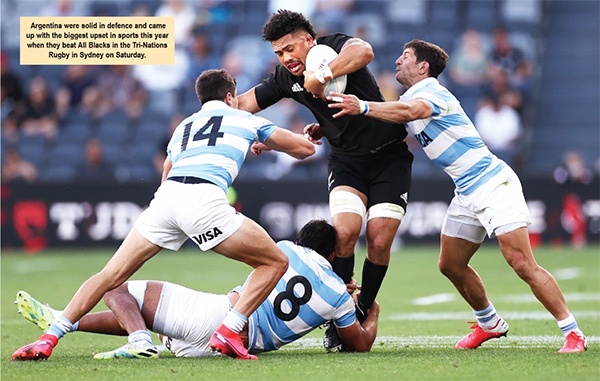
Argentina creates History

by Rajitha Ratwatte
Under 10,000 spectators at Bankwest stadium in Sydney. Argentina undercooked said the experts, they had not played as a team for 13 months (since the last World Cup) 12 players had caught the virus and even the coach had been a victim. Argentina would have watched the last game played by the Wallabies and also the world cup semi-final and learned that the All Blacks are beatable, if their plan ‘A’ is disrupted, they don’t seem to have a plan ‘B’. The general opinion of all the experts with the exception Andrew Mhertens, the former All Black no10 was that the All Blacks would win easily, and the reason was that Argentina hadn’t played for over a year. What about fresh legs, I thought to myself and doesn’t commitment and attitude have anything to do with it?
Argentina kicked off with Angus Gardiner refereeing. Right from the start it was obvious that the Argentina Pumas had come to play, and they meant business. A deliberate knock on by All Blacks no11 Caleb Clark in the second minute could have been yellow carded by a lesser referee, but a penalty was awarded instead. The Pumas no10 Sanchez tried an early drop goal in the third minute but missed. Argentina was giving no quarter and in fact they tackled relentlessly and gave no room for the All Blacks three-quarters to run with any room throughout the match. The rough house tactics paid off, a penalty was awarded against the All Blacks in the fourth minute on the 50-meter line right in front of the posts. No problem for Sanchez and the Pumas straight into a 0- 3 lead. Another deliberate knock on but this time well inside the Argentina territory was awarded just a penalty (no yellow card) and since it was right in front of the posts Ritchie Muanga kicked it over 3 – 3, 13th minute.
The rough house tactics and untidy play continued with penalties awarded willy-nilly. In the 18th minute an Argentinian attacking move resulted in a try and they were playing under a penalty advantage as well. As soon as the referee’s hand went out giving the penalty advantage, Sanchez the brilliant Puma stand-off, chip kicked over New Zealand line, picked the ball up and scored under the posts. No question of missing maximum points and the score 3 -10.
A penalty awarded to the All Blacks was reversed when their hooker slapped an Argentinian player right under the referee’s eyes! This reflected the extent to which the All Blacks had been rattled by the Argentinian tactics. Totally unprofessional behaviour from Dane Coles, of all people! Penalties were being milked by both sides, in the 14th minute Aaron Smith in the no 9 jersey for the All Blacks, deliberately passed the ball onto an Argentinian player who was trying to get onside, Argentina retaliated with a player running onto Jodie Barret of the All Blacks after a challenge in the air. Again, this second incident could have been escalated to a tackle without arms and even resulted in a red card, but good sense prevailed. Angus Gardiner is one of the better referees around, but I wish he wouldn’t try to tell the props how to bind in the front row. He has obviously never been anywhere near a front row when playing the game and theory alone, doesn’t suffice in the front row!
All Blacks’ mistakes continued and in the 25th minute another kick able penalty was awarded, mid-left around 32 meters out and Sanchez obliged 3 -13 to the Pumas. The intensity was such that Pablo Matera of the Pumas and Lennert – Brown of the All Blacks both went off for HIA checks in the 28th and 30th minutes. Lennert- Brown’s departure saw Ricco Ioane come on at center for the All Blacks much to my dismay.
It was proved to be a mistake with Ioane dropping a vital pass on a move that looked like a certain try at a crucial stage of the game. In the 36th minute, Argentina crossed the New Zealand line once more but desperate defence from Aaron Smith and Ritchie Muanga saved the day. It took 32 minutes before the first scrum was held and Argentina gained a very kick able penalty straight away, 3 – 16 to the Pumas. At this stage it was clear that the All Blacks were being upstaged by the sheer determination and commitment of the Pumas. It was only a question of if they could handle the pace of the game for the full 80 minutes. Half-time came with the Pumas leading by the same margin of 13 points.
The scrappy play continued as far as the All Blacks went but it seemed to be a carefully orchestrated plan by the Pumas. A penalty was awarded to Argentina 35 meters out and mid-left and the lead was extended, score reading 3 – 19.
The All Blacks started to bring on the bench in the 48th minute with Codie Taylor at hooker, Ricco Ioane (this time officially at center, he was on earlier briefly as Lennert- Brown went for a HIA) and Hoskins Sotutu in the third row.
In the 52nd minute, the All Blacks after two successive penalties scored far left. A straight throw to Aardie Savea standing at the front of the line out caught the Pumas defence napping and Sam Cane the All Blacks skipper scrambled over the line. Muanga converted brilliantly and the score was 10 -19. Ritchie Muanga was caught off-side in the 56th minute and the result penalty was converted by Sanchez 10 -22. More changes from the bench for the All Blacks, Brad Webber came on at half -back for Smith and Damien McKenzie for Goodhue. This was the point at which Ricco Ioane dropped the ball at center from a move that looked like certain points and would have made the margin much smaller and possibly even changed the result of the game. Ritchie Muanga joined in the mayhem and tried a chip kick that resulted in giving the ball straight back to a blue and white player.
In the 69th minute, a kick able penalty was awarded to New Zealand and this was the first sign of lack of on field thinking and ability to adapt showing its ugly face, something that has dogged the All Blacks in recent times. At this stage the on field thinkers, or ‘brains trust’ (yes, such things do exist in Rugby Union!) in the team should have realised that this game was no cake walk. The margin was such that multiple scoring was needed, three points should have been taken. However, a kick for touch was the preferred option.
Two more kick able penalties were also discarded for a scrum and a short tap respectively. Argentina’s defence was unyielding and of course in retrospect it was obvious that all kicks should have been taken to keep the margin at reasonable levels.
Hoskins Sotutu made a nice break from no 8 off an attacking scrum but threw the ball wide without running for the line. Argentina was dominating at this stage and turnovers in loose play were almost par for the course. A penalty against the All Blacks around 55 meters out, with the angle to the posts was kicked over by Sanchez and the score read 10 -25 and Argentina was poised on their first ever victory over the All Blacks in the history of the game.
The full-time hooter sounded and just afterwards, Caleb Clark scored his first try for the All Blacks after back to back penalties. A tough kick was missed by Muanga and the full-time score read 15 – 25, a historic win for Argentina, against all odds and thoroughly deserved.
One thing for sure, there is no such thing as an expert in the game of Rugby football. Undercooked they said, All Blacks to win by 40 points said John Kirwan, to use an Argentinian beef-based analogy, underdone they may have been but it was still a prime rib eye steak.



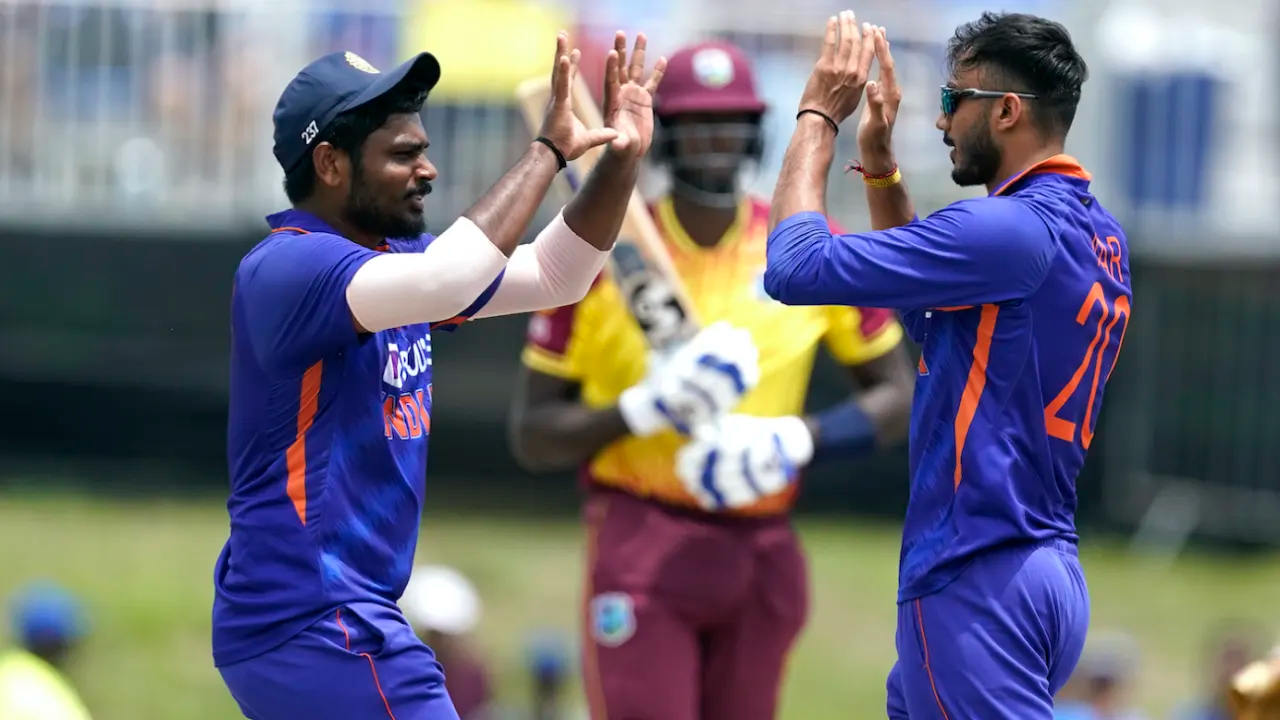
Zimbabwe won the toss and asked India to bat first in what was practically a must-win match for both sides. Thanks to South Africa’s win over Weszt Indies minutes before the toss, India now need to just win. Zimbabwe, though, need to win big.
Sikandar Raza, the Zimbabwe captain, said there was grass and moisture on the surface, and that he wanted his seamers to use it early. Raza didn’t even go for an X-ray on his injured hand lest it show a fracture and force him out of the big match.
Thanks to Raza’s call to field, we were to soon find out the batting position of SanjunSamson, whose inclusion brought about a huge cheer from the stands in Chennai, which will now be his home during the IPL. A Chennai boy, though, went out. Washington Sundar made way for the vice-captain Axar Patel, who had been left out for tactical reasons against South Africa.
Samson replaced a lower middle-order hitter Rinku Singh, who might or might not have his mind on other things. He made a quick visit to Delhi with his ailing father before rejoining the squad on the eve of this match. How Samson would fit in the batting was intriguing, but one thing was made clear: he was going to take the big gloves behind the wicket later in the night.
Zimbabwe made one change to go with their reading of the conditions. Legspinner Graeme Cremer went out for fast bowler Tinotenda Maposa.
India: Abhishek Sharma, Sanju Samson (wk), Ishan Kishan, Suryakumar Yadav (capt.), Tilak Varma, Hardik Pandya, Shivam Dube, Axar Patel, Arshdeep Singh, Varun Chakravarthy, Jasprit Bumrah
Zimbabwe: Tadiwanashe Marumani (wk), Brian Bennett, Dion Myers, Ryan Burl, Sikandar Raza (capt.), Tony Munyonga, Tashinga Musekiwa, Brad Evans, Tinotenda Maposa, Blessing Muzarabani, Richard Ngarava
[Cricinfo]
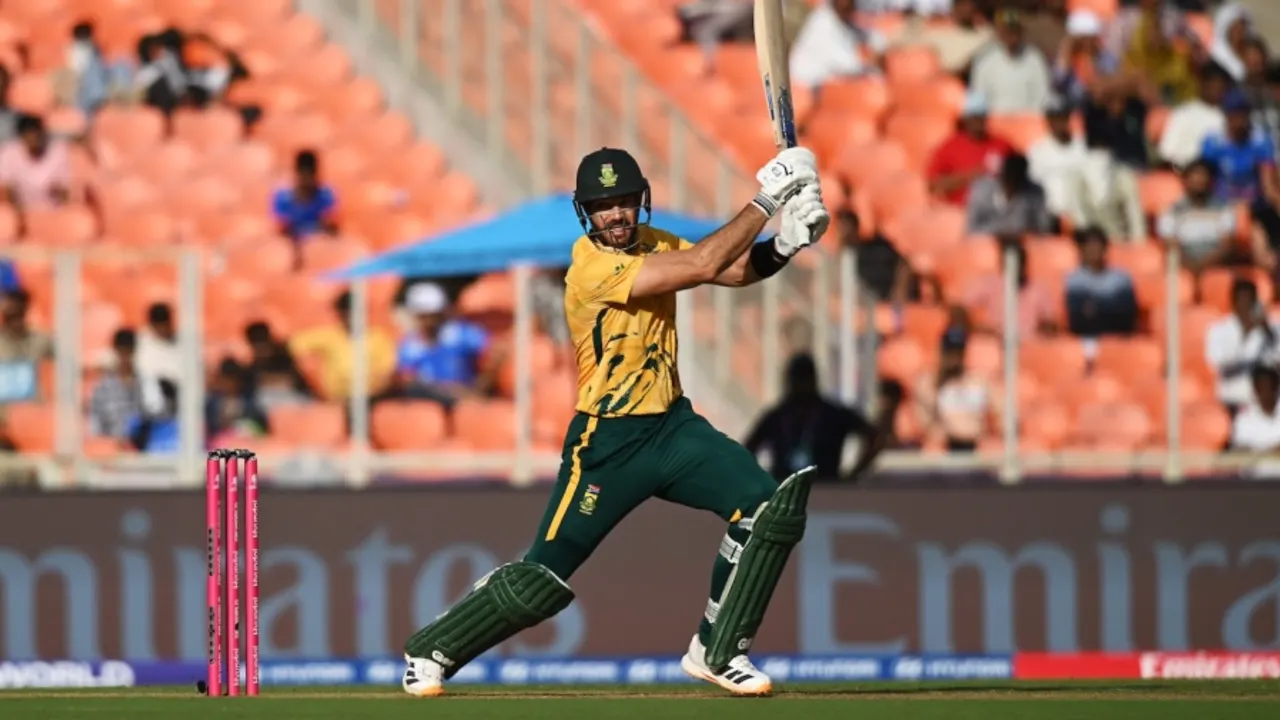
Aiden Markram’s 82 not out led South Africa to a nine wicket victory over West Indies that, while not confirming his side’s semi-final place just yet, underlined why many believe the Proteas could finally lift the T20 World Cup. In this meeting of the last two unbeaten sides at this tournament, South Africa were ruthless, maintaining their 100 per cent record with 23 balls to spare.
Markram’s third half-century of the tournament – his 22nd fifty-plus score in T20Is – made light work of a 177 chase. He and Quinton de Kock put on 95, their highest opening stand of the tournament, skewering whatever belief West Indies had picked up at the back end of a first innings that started disastrously.
Inserted on a tacky-looking Ahmedabad surface, West Indies were 83 for 7 in the 11th over, before a record T20I stand of 89 for the eighth wicket between Jason Holder and Romario Shepherd.
Lungi Ngidi (3 for 30) and Kagiso Rabada’s (2 for 22) were the chief architects of the early stages of that collapse, with Corbin Bosch (2 for 31) also chiming in, profiting from batters’ unrelenting pursuit of boundaries.
Shepherd’s unbeaten 52 – a maiden T20I half-century, sealed with an inside edge for four off the final ball of the innings – and a well-managed 49 from Holder was a part change of tact. But even they focused on finding the fence throughout their 57 deliveries together rather than ticking over to bat time, even if West Indies were able to use all 20 overs.
South Africa were far from perfect, dropping four catches and being a little passive in the field. But they took it to West Indies’s bowlers. All six used by Shai Hope ended up wearing economy rates in double figures, as de Kock’s 47 off 24) and then Ryan Rickleton’s unbeaten 45 off 28 dovetailed neatly as left-handed foils to Markram’s belligerent march to the finish line.
Brief scores:
South Africa 177 for 1 in 16.1 overs (Aiden Markram 82*, Quinton de Kock 47, Ryan Rickelton 45*; Roston Chase 1-46) beat West Indies 176 for 8 in 20 overs (Brandon King 21, Shai Hope 16, Sherfane Rutherford 12, Romario Shepherd 52, Jason Holder 49, Mathew Forde 11; Lungi Ngidi 3-20, Kagiso Rabada 2-22, Corbin Bosch 2-31) by nine wickets
[Cricinfo]
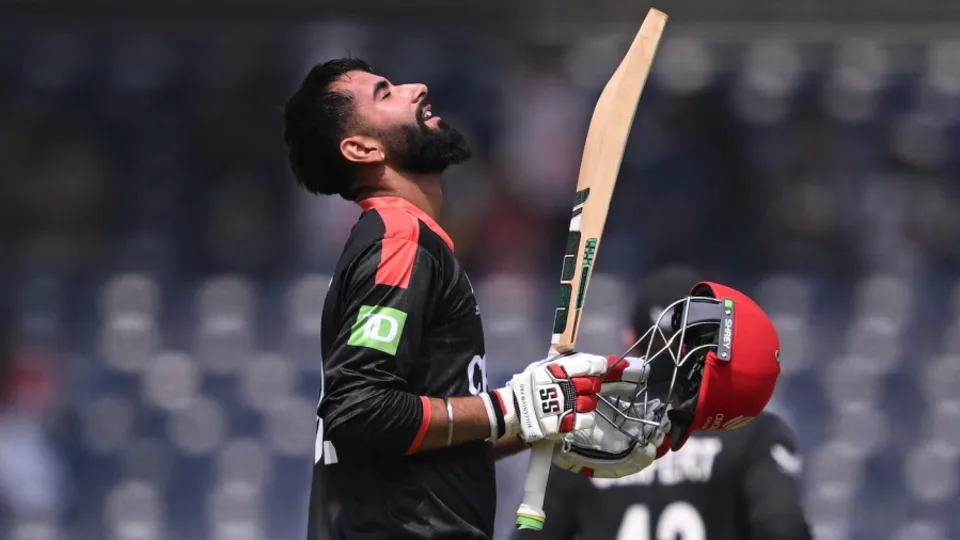
The 2026 T20 World Cup was one where the Associate teams shone the brightest, often pushing the Full Members to their limits. Who are the players that stood out at the World Cup? Here’s the Associate’s team of the tournament.
Yuraj Samra
Canada (144 runs at 36.00; strike rate 156.52)
The 19-year-old opener became the first Associate batter to score a T20 World Cup century against New Zealand. In his tournament-defining innings, he stepped down to Matt Henry, took apart James Neesham and dispatched Cole McConchie. But beyond the 110, he couldn’t cross 17 in the other three outings.
Shayan Jahangir
USA, wk (91 runs at 30.33; strike rate 137.87)
This wasn’t a great tournament for the Associate glovemen, so wicketkeeper Jahangir takes the other opener’s spot. Against Pakistan, with six team-mates falling for single-digit scores, Jahangir gave USA hope of a win with his 34-ball innings that fell one run short of a half-century. On the spin-friendly SSC surface, he dominated Saim Ayub, Mohammad Nawaz and Abrar Ahmed, but failed to replicate the same form in the other games.
Bas de Leede
Gerhard Erasmus
Namibia, capt (seven wickets at 11.85; economy 7.54)
The Namibia captain and allrounder did not have a productive time with the bat but he stood up with the ball, taking seven wickets. His best performance was 4 for 20, where the variations in his delivery stride helped maintain an economy of 5.00, even as India posted a strong 209. He dismissed Ishan Kishan, Tilak Varma, Hardik Pandya and Axar Patel. He also took 2 for 27 against USA and 1 for 25 against Pakistan.
Shubham Ranjane
USA (141 runs at 70.50; strike rate 180.76)
Ranjane produced multiple impact knocks against big teams. Facing mobility issues against India, Ranjane launched a 22-ball 37 by counterattacking against Pandya, Varun Chakravarthy and Mohammed Siraj. Then, against Pakistan, his 30-ball 51 didn’t let Pakistan rest easy. His 24-ball 48 against Netherlands gave USA an imposing 196. His medium-pace bowling also gave USA a crucial sixth-bowling option.
Ben Manenti
Italy (138 runs at 46.00; five wickets at 20.60)
The elder Manenti brother was an X-factor in Italy’s maiden campaign. His 2 for 9 in four overs deflated Nepal’s hopes and earned Italy their maiden World Cup win. His 25 – ball 60 against England kept his opponents on their toes. His 31-ball 52 against Scotland was another standout. Add in the two-for against West Indies and Ben Manenti has the highest impact-per-match numbers according to ESPNcricinfo’s metrics.
Michael Leask
Scotland (nine wickets at 13.55; economy 7.62)
Against Italy, Leask produced an explosive five-ball unbeaten 22 in the 20th over to take Namibia past 200 in Kolkata and then returned figures of 4 for 17 with his offspin. He wasn’t a big turner of the ball, but came from around the wicket to strangle right-hand batters, dismissing Harry Brook against England, too. Leask also took all three Nepal wickets, against right-handers, in Scotland’s final World Cup game.
The right-arm seamer from USA started the World Cup with a bang. A three-wicket over in the powerplay against India sent the Wankhede stadium into silence as he eventually finished with 4 for 25. That spell left India feeling very uncomfortable at halftime. Then against Pakistan, he went 4 for 25 again, relying on his hard-length deliveries that forced attacking shots into mis-hits. A further five scalps against fellow Associates left him with 13 wickets in four games, which, at the time of writing, remains the most in this tournament.
Aryan Dutt

US and Iran hold talks seen as crucial to prevent conflict

Zimbabwe opt to bowl, include Maposa; Samson, Axar back for India

Markram, bowlers lead South Africa’s rout of West Indies

Samra, Airee headline Associates’ team of the tournament

Maharoof expects ‘some hard decisions’ after Sri Lanka’s T20 World Cup exit

Matthews’ century leads West Indies to six-wicket victory

‘Dates have the highest sugar content to fight Coronavirus’

Sunday Island 27 December – Headlines

#SundayIsland 17th December – Headlines

Sunday Island – 28th March

Sunday Island Headlines – 21 March

Sunday Island – 21st February – Headlines
-

 Features5 days ago
Why does the state threaten Its people with yet another anti-terror law?
-

 Features5 days ago
Reconciliation, Mood of the Nation and the NPP Government
-

 Features5 days ago
Victor Melder turns 90: Railwayman and bibliophile extraordinary
-

 Features4 days ago
LOVEABLE BUT LETHAL: When four-legged stars remind us of a silent killer
-
 Features5 days ago
Victor, the Friend of the Foreign Press
-
 Latest News6 days ago
New Zealand meet familiar opponents Pakistan at spin-friendly Premadasa
-

 Latest News6 days ago
Tariffs ruling is major blow to Trump’s second-term agenda
-
 Latest News6 days ago
ECB push back at Pakistan ‘shadow-ban’ reports ahead of Hundred auction