
News
“Are you planning to replace CB Governor?”: Imthiaz

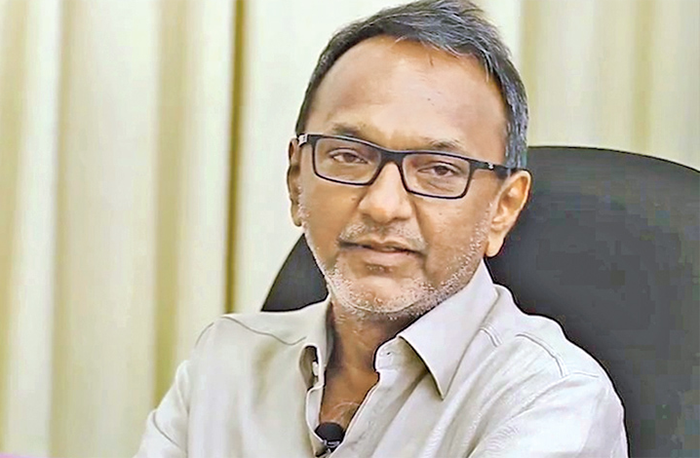
The main opposition SJB demands to know from the government whether it is planning to remove the current Central Bank Governor, Dr. Nandalal Weerasinghe, a senior SJB MP asked in parliament last week.
Participating in the debate on interim budget, SJB Parliamentarian Imthiaz Bakeer Markar said: “During the speech by MP Vajira Abeywardena, a reasonable suspicion rose in my mind if this was an attempt to get rid of the Governor of the Central Bank and appoint Dinesh Weerakkody in his stead. When the Governor met with MPs to update them on the current situation, one particular SLPP MP had accused him of being a dual citizen. These are early signs,” he said.
Markar pointed out that if the Government is politicizing the Central Bank and other independent institutions in this manner to achieve their narrow ends, such a process is neither fair nor just. He described the current Parliament is a distortion of reality saying he believes the people must soon be given an opportunity to elect a Parliament of their choice.
“A new Parliament with a people’s mandate must be elected within a short period of time,” he stressed calling on the Government to be genuine and sincere in its efforts.
“The Government, however is saying one thing, but doing the opposite. Words do not matter. What matters are our intentions. Our intentions must be genuine and sincere,” he added.
Sri Lanka must work towards implementing political reforms along with economic reforms., the MP said, “The people who took to the streets in protest asked the traditional political system to be scrapped. They wanted this country to be rid of dirty politics. But what is happening now? While promises are being made, the opposite of that is being done.”
While suggestions of all-party unity and working together are fine, such proposals must come in a spirit of sincerity. Quoting Winston Churchill, Markar said a good crisis must not be allowed to go to waste. “Our efforts must not be to ensure Sri Lanka recovers to where it was prior to the crisis but to ensure it is in a much better place than before.”




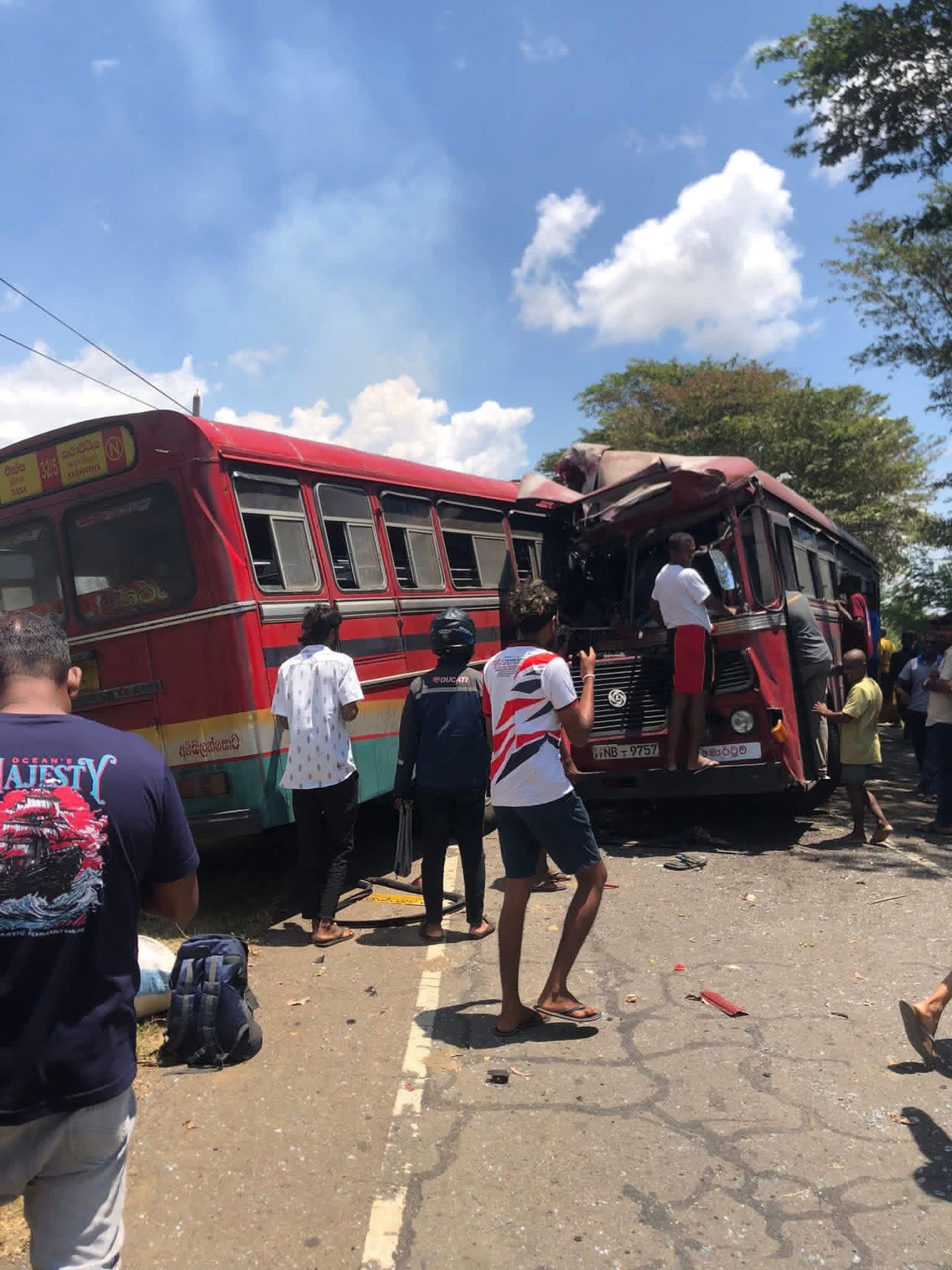
Four persons including a Budhist monk died and 32 others were injured when two SLTB buses collided head on at Weerawila at arond 12 noon today (18).
Three of the deceased were women. 22 of the injured were admitted to the Hambanthota Hospital while 10 others have been admitted to the Debarawewa hospital.
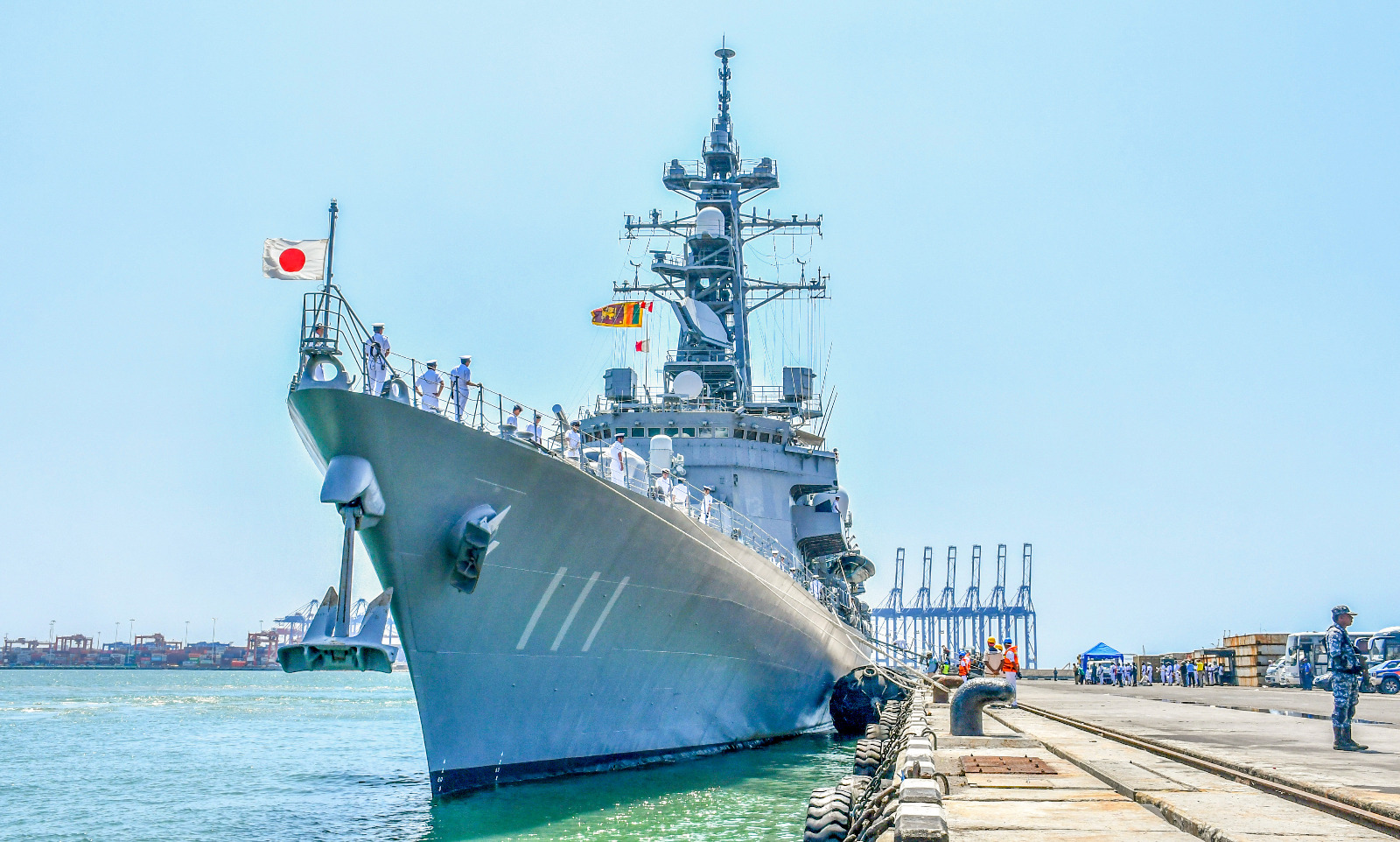
The Japan Maritime Self-Defence Force (JMSDF) ship OONAMI which arrived at the port of Colombo on a goodwill and replenishment visit on 09 Mar 26 departed on 11 March.
The departing ship was given a formal farewell from the Sri Lanka Navy, in keeping with naval traditions at the Port of Colombo.
The 150.5m long JMSDF OONAMI is commanded by Commander IIO Hiromasa.
During the stay in the island, crew members of the ship explored some tourist attractions in Colombo. The itinerary also included a coastal clean-up drive participated by naval personnel of both countries and engagements with the Sri Lanka Navy, designed to strengthen the bonds of friendship and cooperation.
The Central Cultural Fund established under the provisions of the Central Cultural Fund Act No. 57 of 1980 is responsible for development of cultural and religious monuments in Sri Lanka, settling the expenditure borne for development, renovation and conservation of local and foreign cultural monuments, awarding financial donations for artisans as well as awarding those who served the nation in the fields of culture and religious sectors.
The said act has been passed in Parliament 45 years back and, the requirement to revise the provisions of the act according to the contemporary requirements haa been recognized.
Accordingly, the Cabinet of Ministers granted their policy
approval to amend the said act, considering the resolution furnished by the Minister of Buddhasashana, Religious and Cultural Affairs.

SriLankan Airlines Alerts Customers to Social Media Scams

Four dead 32 injured in head on collision at Weerawila

JMSDF ship OONAMI concludes goodwill visit

Cabinet nod to amend Central Cultural Fund Act No. 57 of 1980
’National Namal Uyana’ declared as a National Heritage
Establishment of Supervisory Committees for restoring economic activities.

‘Dates have the highest sugar content to fight Coronavirus’

Sunday Island 27 December – Headlines

#SundayIsland 17th December – Headlines

Sunday Island – 28th March

Sunday Island Headlines – 21 March

Sunday Island – 21st February – Headlines
-

 News7 days ago
Historic address by BASL President at the Supreme Court of India
-

 Sports7 days ago
The 147th Royal–Thomian and 175 Years of the School by the Sea
-

 Business3 days ago
Browns EV launches fast-charging BAW E7 Pro at Rs. 5.8 million
-

 Life style4 days ago
From culture to empowerment: Indonesia’s vision for Sri Lanka
-
 News7 days ago
Power sector reforms jolted by 40% pay hike demand
-
 Opinion6 days ago
M. D. Banda: Memories of Appachchi – II
-
 Latest News4 days ago
QR code system will be implemented for fuel with effect from 06.00 a.m. today (15th)
-

 News2 days ago
Australian HC debunks misleading travel risk claims for Sri Lanka