
Sports
Angelo Mathews : Game over, class forever


It’s been a week since Angelo Mathews called time on his Test career, and with the dust now almost settled, we can fully appreciate the mark he left on Sri Lankan cricket. Mathews wasn’t just part of a side that etched its name into the record books – he was the ink in the pen that scripted history.
A career spanning 17 years, Mathews walks away as Sri Lanka’s third-highest run-getter in Tests. But numbers alone don’t capture the essence of his contribution. For those who had the privilege to watch his journey unfold, certain knocks leap off the page – Melbourne 2010 and Headingley 2014. Moments not just of personal triumph, but of national glory. The kind of innings that linger in memory like Aravinda’s epic in Lahore or Kusal Janith’s miracle in Durban.
Melbourne was magic. In a land where cricket is played hard and victories for visiting teams are few and far between, Sri Lanka were staring down the barrel after a batting collapse. But Mathews, batting with the tail, held firm. He stitched together priceless partnerships and dragged the team from the jaws of defeat to their first-ever series win in Australia. It was gutsy, gritty, and glorious cricket at its purest.
Then came Headingley, four years on. By now, Mathews had the captain’s armband and was leading a seasoned side into English conditions. After a battling hundred at Lord’s, he arrived in Headingley with Sri Lanka behind the eight ball. England had secured a 100-run lead, and another familiar collapse had the Sri Lankans on the ropes.
What followed was a masterclass in crisis management. Mathews, once again shepherding the tail, farmed the strike with surgical precision and notched up a captain’s hundred. His knock turned the tide, giving his bowlers enough runs to work with – and they delivered. Sri Lanka ran through England’s second innings like a hot knife through butter to seal a historic, first-ever series win on English soil. Any cricketer who plays a leading role in landmark wins in both Australia and England deserves a place in the pantheon. That’s what makes Angelo Mathews a giant among men.
His ascent to the national team was swift. After making waves during Sri Lanka ‘A’ team’s successful tour of South Africa in 2007, where coach Chandika Hathurusinghe tipped him as a future star, the selectors wasted no time. With backing from heavyweights like Kumar Sangakkara, Trevor Bayliss, and Ashantha de Mel, Mathews was fast-tracked into the big league.
And while he carved a name with the bat, his early impact came with the ball. In the 2009 T20 World Cup semi-final at The Oval, he tore through the West Indies top order in a blistering first over – clean bowling Xavier Marshall, Lendl Simmons and Dwayne Bravo before the scoreboard had time to move. It was the perfect set-up for Muttiah Muralitharan and Ajantha Mendis to tighten the screws and seal a spot in the final.
As captain, Mathews wore many hats – mentor, mediator and sometimes, lone warrior. His tenure coincided with a tricky period for Sri Lanka, one where unity was frayed and egos loomed large. But Mathews didn’t shy away from the hard yards. He stood his ground, made the tough calls and in doing so, ruffled a few feathers. Strong leadership often comes at a cost, and Mathews paid it in full. There were whispers, barbs, and attempts to smear his name. But through it all, he remained steadfast – a good man playing a straight bat in a game that sometimes threw him googlies.
On and off the field, he was the glue that held the team together. Whether it was pushing back against poor decisions or being the voice of the dressing room in times of crisis, Mathews didn’t duck the bouncers. He fronted up, spoke out and stood tall.
Now, as he walks back to the pavilion one final time, he leaves behind not just a pair of boots too big to fill – but a legacy built on courage, commitment, and class.
by Rex Clementine ✍️




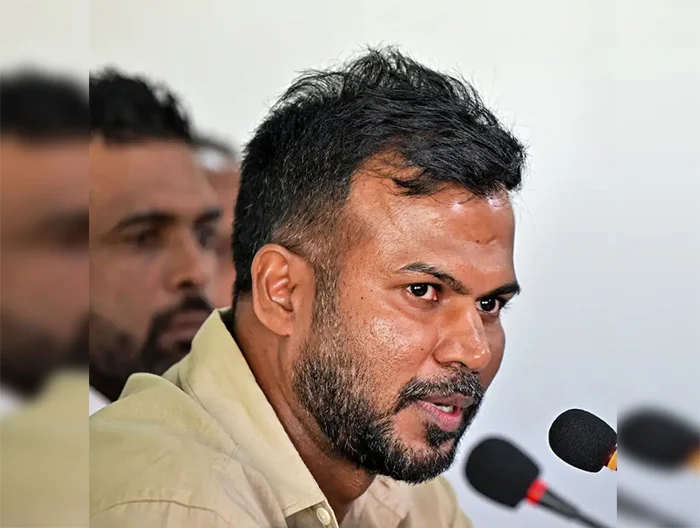
With just six weeks to go for the World Cup that Sri Lanka will co-host, the ground appears to be shifting under the selectors’ feet. Moves are underway to replace former opening batter Upul Tharanga as Chairman of Selectors, the latest in a series of shake-ups that have gathered pace alarmingly close to the showpiece event.
First came the reshuffling of the coaching staff. Then there were strong signals that captain Charith Asalanka could be moved aside. Now the selection panel itself is set for an overhaul. One is tempted to ask whether all this chopping and changing is really necessary with the tournament looming large on the horizon.
It is true that the selectors’ term will expire by the book, a new panel must take guard. But with less than two months left before the World Cup, common sense would suggest to let the status quo remain.
Tharanga’s panel has not been flawless, but it has hardly been a basket case either. Recent weeks have produced some sobering results, including a 3-0 ODI whitewash in Pakistan and an embarrassing T20 loss to Zimbabwe. Yet the team showed resilience, regrouped and fought their way into the finals, where they eventually went down to Pakistan.
There were tangible gains too. Sri Lanka climbed to fourth in the ODI rankings and even pulled off a Test victory over England. The wheels came off mainly in the T20 format, where they failed to progress beyond the first round of the last World Cup — a shortcoming that cannot be pinned on selection alone.
If there must be a changing of the guard, logic dictates that it should wait until after the World Cup. Midstream changes at the top rarely help steady a ship already sailing in choppy waters.
What is more troubling is the prospect of a familiar face returning to the hot seat — someone under whose watch Sri Lanka endured disastrous returns. During that previous tenure, selections were muddled and knee-jerk. A poor series often meant wholesale culling, with players axed almost as soon as they were drafted in, leaving no room for continuity or confidence.
There were baffling calls too: Maheesh Theekshana fast-tracked into Test cricket on the strength of his white-ball exploits, while Dunith Wellalage was handed a Test debut before even playing a T20 International. Such horses-for-courses thinking, taken to extremes, left Sri Lanka without a clear road map.
The end result was grim. Sri Lanka finished ninth at the 2023 World Cup, failed to qualify for the Champions Trophy and for the first time in their history, missed out on an ICC event altogether.
Sri Lanka Cricket’s deeper problem is a lack of willing candidates. Few former players are keen to step into the firing line of selection, a role that guarantees brickbats regardless of results. Cornered, the board has repeatedly turned to recycled hands — men who have done the job before, with precious little to show for it.
With the World Cup just around the bend, Sri Lanka can ill afford to keep moving the goalposts. Stability, not another roll of the dice, may yet be their best play.
by Rex Clementine
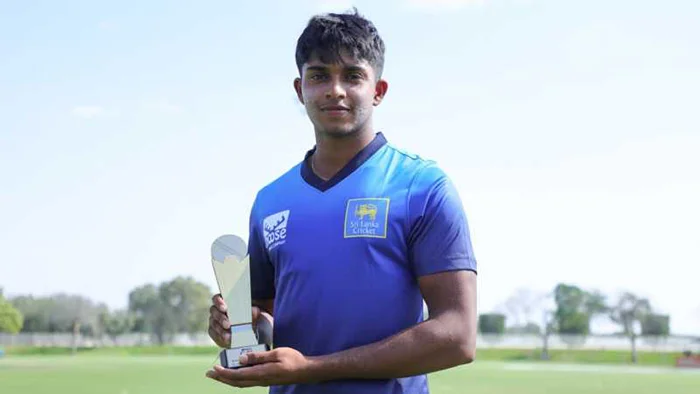
It was a run-out that started it all after Sri Lanka Under-19s captain Vimath Dinsara asked Nepal Under-19s to bat first in their Group B game at the Under-19s Asia Cup. Nepal were steady at 30 without loss, but come the eighth over, Dinsara combined with wicketkeeper Aadham Hilmy to run Niraj Kumar Yadav out for 10. That started a slide, and Nepal never recovered thereafter.
Sethmika Seneviratne had Sahil Patel caught for 12 in the ninth over, bowled Vansh Chhetri for a duck in the 11th, and then had Dilsad Ali caught without scoring in the 13th. Sri Lanka reduced Nepal to 37 for 4, with the four wickets gone for the addition of just seven runs within six overs.
At that stage, Nepal’s captain Ashok Dhami joined Cibrin Shrestha. Just when they looked set to help Nepal find a way back, Rasith Nimsara broke the 24-run stand by having Dhami caught behind for 9 to start the 21st over. Soon, 61 for 4 became 82 all out. Vigneshwaran Akash struck next to dismiss Shrestha for 18, which was Nepal’s highest score.
No Nepal batter after Shreshta even got into double figures, while Seneviratne got two lower-order batters to complete his five-for. Seneviratne finished with 5 for 25, and left Sri Lanka’s batters with little to do.
Although Nepal had Sri Lanka at 25 for 2 in the 83 chase, that only seemed like consolation. Dimantha Mahavithana (39*) and Kavija Gamage (24*) wiped Nepal out with an unbroken stand of 59, as Sri Lanka won with eight wickets and a massive 35.1 overs to spare.
Scores
Sri Lanka U-19s 84 for 2 (Mahavithana 39n.o., Kavija Gamage 24n.o., Mandal 1-16)
Nepal U-19s 82 (Shrestha 18, Seneviratne 5-25, Sigera 1-3)


India reclaimed the series lead by bowling South Africa out for 117 in seam-friendly conditions in Dharamsala. Arshdeep Singh and Harshit Rana, the latter playing in the absence of Jasprit Bumrah, who was on leave for personal reasons, set the tone with three early wickets, and the support bowlers never let up. Aiden Markram kept South Africa in the fight with a half-century, but they were at least 20 runs short of what could have been a fighting total, keeping in mind their strong seam attack. Once Abhishek Sharma scored 35 off 18 balls, India could afford a wobble in the rest of the chase.
Hardik Pandya and Shivam Dube cashed in on the conditions with a wicket each in their first overs, but it was Varun Chakravarth’s four overs for 11 runs and two wickets that denied South Africa any chance of creeping back into the match. One of his victims was Donovon Ferreira, the only other recognised batter to reach double digits.
Arshdeep went for 0 for 54 in the last match, bowled an unending over, and was now without Bumrah. His first over was an example of how to bowl if you get that rare pitch that helps you in T20 cricket. He bowled three balls to Reeza Hendricks, all on a similar good length on middle and leg. Two of them seamed away to beat his outside edge, and the third nipped back in to trap him in front.
Rana swung the ball late, got some seam movement as well, but his wickets were slightly inexplicable. Quinton de Kock missed a straight and full delivery, and Dewald Brevis dragged on a long wide half volley, making it 7 for 3 in 3.1 overs.
Markram and Tristan Stubbs saw through the rest of the powerplay, but Stubbs never looked at home. In his first over, Pandya drew just enough nibble to take Stubbs’ outside edge to make it 30 for 4. Corbin Bosch, one of the three batters dropped in the field, missed the first ball from Dube by a long way: a 124kph length ball that nipped back to hit the top of middle.
In the 12th over of the innings, Ferreira hit a Kuldeep wrong’un for a no-look six, the first boundary of the innings by a batter not named Markram. This was the first time India had to deal with two threatening batters. The sixth wicket added 25 runs, but Varun got rid of Ferreira with a wrong’un that he missed by a mile. Varun repeated that dismissal in his next over, this time to a defensive push from Marco Jansen.
Dube had two catches missed off his bowling. While Ferreira couldn’t cause much damage, Markram went on to punish Rana in the 18th over, thus bringing up his fifty and taking South Africa past 100. It was all on Markram’s bat now to take South Africa to 140, a total they could have been competitive with. However, he ended up edging a slot ball from Arshdeep in the 19th over, leaving Kuldeep two tailend wickets to feast on in the last over.
Swivelling inside the line of the first ball and pulling Lungi Ngidi over fine leg for a six, Abhishek set the tone for the chase. He charged at Ngidi for a four in the same over, and went one better with a six off Jansen in the next. When Abhishek hit Ottneil Baartman for a six in the fifth over, he brought up India’s fifty and went to 44 sixes in the first six overs of T20I innings, level with KL Rahul, who did so in more than twice than the matches. Rohit Sharma is the only Indian with more sixes in the first six overs.
The low target allowed Abhishek’s opening partner Shubman Gill time to play himself in, but neither he nor Tilak Varma ever looked set with plenty of seam movement available. Suryakumar Yadav hit two fours, but managed only 12 off 11 balls. When Abhishek was at the wicket, 60 runs came in 5.2 overs; the rest of the match featured 177 in 30.3 overs. Twenty more runs for South Africa, and/or an early departure for Abhishek could have made this a much closer affair.
Brief scores:
India 120 for 3 in 15.5 overs (Abhishek Sharma 35, Shubman Gill 28, Tilak Varma 26*, Suryakumar Yadav 12, Shivam Dube 10*; Lungi Ngidi 1-23, Marco Jansen 1-24, Corbin Bosch 1-18) beat South Africa 117 in 20 overs (Aiden Markram 61, Donovan Ferreira 20, Anrich Nortje 12; Varun Chakravarthy 2-11, Kuldeep Yadav 2-12, Arshdeep Singh 2-13, Harshit Rana 2-34, Hardik Pandya 1-23, Shivam Dube1-21) by seven wickets
(Cricinfo)

Several spells of showers will occur in the Northern, North-Central, Eastern, Uva and Central provinces

Bondi Beach gunmen who killed 15 after targeting Jewish celebration were father and son, police say

Govt. urged to take action against deputy minister

India sends stock of life-saving medicines

George Keyt Foundation contributes to national disaster relief efforts

New Ambassador to South Korea appreciates job opportunities for Lankans

‘Dates have the highest sugar content to fight Coronavirus’

Sunday Island 27 December – Headlines

#SundayIsland 17th December – Headlines

Sunday Island – 28th March

Sunday Island Headlines – 21 March

Sunday Island – 21st February – Headlines
-

 Features5 days ago
Finally, Mahinda Yapa sets the record straight
-
 News6 days ago
Cyclone Ditwah leaves Sri Lanka’s biodiversity in ruins: Top scientist warns of unseen ecological disaster
-

 Features5 days ago
Handunnetti and Colonial Shackles of English in Sri Lanka
-
 Business4 days ago
Cabinet approves establishment of two 50 MW wind power stations in Mullikulum, Mannar region
-
 News4 days ago
Gota ordered to give court evidence of life threats
-

 Features6 days ago
An awakening: Revisiting education policy after Cyclone Ditwah
-

 Features4 days ago
Cliff and Hank recreate golden era of ‘The Young Ones’
-
 Opinion5 days ago
A national post-cyclone reflection period?