
Sports
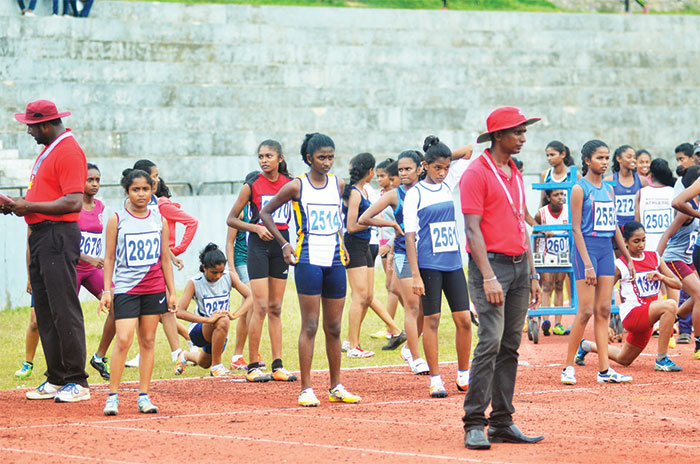
An approach to improve school athletes’ present and future performance

by Nagalingam Ethirveerasingam. Ph.D.
Increasing Opportunities for Competition
Athletes in schools and those out-of-school do not currently have enough opportunities to participate in competitions. Scheduling competitions between schools within districts, and between districts for those who are out-of-school, will provide athletes with more opportunities to develop their skills and achieve a higher standard of performance. Factors that may present an obstacle to competitions include: 1) cost of ground preparation; 2) availability of qualified officials to conduct weekly dual athletic/sports meets between schools within the Education Zones; 3) lack of space for a 400m or 200m track in many schools; and 4) tradition requires the expensive practice of awarding certificates and trophies/medals in a formal presentation soon after the competition.
Many students now compete in the Inter-House athletic meets during the first term. Potential future athletes are identified at this time. The first three in an event compete in the Zonal or District meet. The first three from those meets are selected to compete in the Provincial school meet and those who place in the first three move on to compete in the National School Meet. Such an arrangement gives only one chance for an athlete to compete at the next level. The athlete who fails at the Inter-House meet or at any of the next levels has to wait another year to demonstrate his talent.
The National and the Public Schools athletic meets are conducted during the Second and Third Term. In effect a school athlete will at most have only three or four athletic meets a year. In the 1940’s and 1950’s I had only 4 meets per year. Those were: the Inter-House, the Jaffna School Sports Association meet, the Junior National meet, and the Open National meet.
In contrast school athletes in California (USA), then and now, have track meets between schools every week from February to April each year. That is about 12 meets during their track season. During the off-season they engage in conditioning and strengthening activities.
All schools in Sri Lanka have the traditional yearly Inter-House sports meet. Students engage in erecting and decorating sheds for their houses. It is a fun-filled school function where teachers and students interact outside the classroom. It includes the awarding of medals and certificates for winners and a lot of long speeches by dignitaries. Students get the experience oforganising an event and executing it by cooperating with fellow students and teachers.
Such a large-scale event and festive atmosphere is not needed for‘Dual Meets’ between schools. In secondary schools two school teams can compete, the results of the events are recorded, announced, and published. There is no need for speeches, certificates, medals, or trophies. The important thing is for the student to test his skills in competition with others of his age.
A New Approach
It is important for schools in the provinces to prepare Dual/Triangular athletic meet schedules for all schools including 1AB schools in their province at least twoyears in advance. The provinces should also prepare such a sports schedule for schools in other sports within their province. Any sports schedule prepared by the National Associations in sports such as cricket, athletics, or football should be in consultation with the Provincial Departments of Education and the schools. Provincial Departments of Education should ensure that the schedule of travel outside their provinces for sports events by school teams is structured in such a way to ensure that student class attendance is maximised and that classroom learning is not negatively affected.
Advent of Professionalism in sports
Since the time professional sportspersons were permitted to compete in the Olympic Games, athletes of national and international standard have been paid to take part and compete for prize money in their sports. The term “amateur” was dropped from international and national organizations names. The Sri Lanka Amateur Athletic Association, for example, was renamed Sri Lanka Athletics.
Athletes can now also receive sponsorship from shoe, clothing, or equipment manufacturers.
Although athletes in school are not currently permitted to lend their names to sporting goods and apparel manufacturers, the school/team can receive such sponsorship in the form of equipment and uniforms or monetary compensation. Schools also are able to garner funds by allowing businesses to advertise their products or services on the school grounds for a recurrent fee. Such income supplements the meagre allocation for sports from the Ministry of Education.
Athletes over 18 do not earn any income unless they are performing at national level. Many national level athletes in Sri Lanka can join the Sri Lanka Army, Air Force, or Police teams and get paid a monthly stipend of approximately Rs. 30,000. The only requirement is that the athlete regularly trains three to four hours per day and competes for them. The Sri Lanka Athletic Association provides similar monetary grants for selected national level athletes who are not paid by the armed forces. The three organisations depend on government funding for such programs. Some organisations in the business sector also sponsor athletes with varied requirements.
Promotion of Athletics at District Level
To promote District Athletics, it is important for District Athletic Associations to be funded by the government or the private sector. They could sponsor the first two athletes, in each event, who have potential to achieve national standing but do not have any sponsorship or other means of support. Payment of a monthly living allowance for the first two performers in each event in the district, similar to what the Army and Air Force pays the athletes who are enrolled with them, will help the district athlete to continue to develop their skills. This will allow the district level athlete to practice three to four hours a day and also attend job oriented tertiary courses. Such practice will ensure more opportunities for district level athletes to achieve National, South Asian, and Asian level standards. In exceptional cases the athlete may also be able to attain Olympic standards. It will also give opportunities for district level athletic coaches, who should also receive a stipend, to improve their coaching skills. An additional benefit is that the number of athletic officials will increase and they will acquire higher levels of organisational and officiating skills.
Promotion of Athletics at School Level
Since 2017, those who are not successful at the GCE O/L at age 16 and are thus not able to enter Grade 12, are required to continue in the Vocational Technical Program in 1AB schools. That is, a student who fails GCE O/L cannot dropout or be ‘Pushed Out’ at age 16. In effect education is compulsory for all until they are 19 years old. The above requirement was a recommendation made by the 2014 Northern Education System Review (NESR) and was adopted by the Northern Provincial Council. It was also adopted by the National Education Commission as a National Education Policy and accepted by the National Institute of Education (NIE). All athletes can now stay in school until they are 19 and benefit from continuing education while developing their skills in their respective sports. The NIE has prepared an excellent Vocational Technical Education Program for such students enrolled in Grade 12 and 13. Some 1AB schools have already adopted it. Others should do so in the near future. School age sportspersons can now continue their sports activities, even if they fail GCE O/L, and acquire skills to make them more employable.
School sports and athletic competitions are the responsibility of the Assistant Director of Education in the Provincial Department of Education. The Sri Lanka Athletic Association and the National Olympic Committee have no direct responsibility. However, they can provide advice, guidance, and distribute the funding that they receive from their respective international organisations such as the IAAF and International Olympic Committee.
(The writer Nagalingam Ethirveerasingam represented Sri Lanka at the 1952 and 1956 Olympic Games and is the first Sri Lankan to win an Asian Games gold)



Sri Lanka speedster Matheesha Pathirana has passed his fitness tests with Sri Lanka Cricket and linked up with Kolkata Knight Riders, ready to steam in again after a frustrating spell on the sidelines.
The Knight Riders are propping up the table without a win, their campaign already wobbling placed last. Injuries and indifferent form have left their bowling attack looking toothless and Pathirana’s return could be just the spark they need to stop the rot.
The slinger will undergo further assessment by the franchise’s medical staff, but is tipped to be in the mix for Sunday’s clash against Rajasthan Royals at Eden Gardens.
“It’s been a challenging few months for me following an unfortunate injury, but I’m grateful for the support throughout this period,” Pathirana said. “I’m now focused on regaining my confidence during the ongoing IPL, contributing to Kolkata Knight Riders and performing to the best of my abilities. I’m looking forward to making a strong comeback and earning my place back in the national team.”
Pathirana, who fetched close to USD 2 million at the auction after being released by CSK, had his progress stalled by a calf injury picked up during Sri Lanka’s T20 World Cup campaign, a tournament where the co-hosts were forced to juggle their resources as injuries ripped through their bowling ranks.
Sri Lanka Cricket, tightening the screws on player fitness, made it mandatory for players to pass tests before being granted No Objection Certificates. While the likes of Wanindu Hasaranga and Nuwan Thushara failed to clear the bar, Pathirana ticked all the boxes and got the green light to join the IPL.
Still only 23, the fast bowler with the slingy, Lasith Malinga-esque action has been a handful for batters worldwide, firing in yorkers at will when on song. But his career has been a stop-start affair, with niggles halting his run just when he seemed to be hitting top gear.
KKR, meanwhile, are in desperate need of a breakthrough. Their bowling unit has struggled with Akash Deep and Harshit Rana ruled out with injuries, while seasoned campaigner Mustafizur Rahman had to pull out before the tournament. To make matters worse, mystery spinner Varun Chakravarthy, the world’s number two-ranked bowler, has struggled to find his rhythm.
If Pathirana can hit his straps early, KKR might just find a way to drag themselves back into the contest. For now, though, they are staring down the barrel and hoping the new arrival can deliver a match-winning spell.
Telecom Asia Sport


Rwanda will host the inaugural Women’s Challenge Trophy, which starts on April 18 in Kigali with Rwanda taking on Italy, in the first game and Nepal facing USA in the second game later in the day. The tournament, which will run till May 1, also features Vanuatu, and has a total of 20 games over ten match days.
The tournament is a new one in the ICC’s calendar, organised to provide match exposure to the second rung of Associate women’s teams. The eight-team Emerging Nations Trophy, introduced last year, featured the highest-placed teams from the ICC’s five regions, and this one pits the next-highest-placed teams. The teams were confirmed based on their positions at the regional T20 World Cup qualifiers last year.
“A double round-robin format assures maximum match exposure for teams, so that participants are better prepared to play stronger opposition in the years to come,” the ICC said in a statement. “This falls in line with the ICC’s commitment to deliver competitive cricket with context for all its members as it moves to continuously grow the women’s game.”
The matches will be played at Gahanga Cricket Stadium, a facility that has two adjoining grounds which host international cricket – Gahanga Cricket Stadium Main Oval and Gahanga Cricket Stadium Oval B.
“This tournament is a testament to the growth of Rwandan cricket and would not be possible without the unwavering support of our stakeholders, partners, and the ministry of sports,” president of Rwanda Cricket Association Stephen Musaale said. “To our incredible fans: we call on you to fill the stands at Gahanga with your energy and passion. Let us show the world the warmth of Rwandan hospitality as we cheer on our team in this historic chapter of our sporting journey.”
Schedule of matches
April 18: Rwanda vs Italy and Nepal vs USA
April 19: Rwanda vs Vanuatu and Italy vs Nepal
April 21: Rwanda vs USA and Vanuatu vs Italy
April 22: Rwanda vs Nepal and USA vs Vanuatu
April 24: Nepal vs Vanuatu and Italy vs USA
April 26: Rwanda vs Vanuatu and USA vs Nepal
April 27: Rwanda vs Italy and USA vs Vanuatu
April 28: Rwanda vs Nepal and Italy vs Vanuatu
April 30: Italy vs USA and Nepal vs Vanuatu
May 1: Rwanda vs USA and Italy vs Nepal
(The first matches will start at 9am local time and the second at 1pm local time)
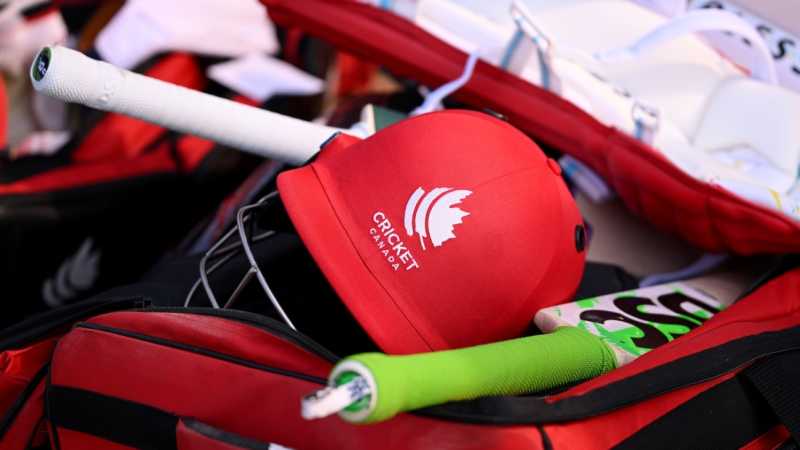
The ICC’s Anti-Corruption Unit (ACU) is investigating allegations of corruption involving Cricket Canada, one of which focuses on a game involving Canada from the recent men’s T20 World Cup in India and Sri Lanka.
ESPNcricinfo understands the ACU has two active investigations that span elements of Cricket Canada and allegations of breaches of the ICC’s anti-corruption code at international and domestic level as well. The existence of the allegations emerged in a documentary ‘Corruption, Crime and Cricket’, produced by the fifth estate, a Canadian investigative documentary programme. The 43-minute film, aired by the public broadcaster CBC (Canadian Broadcasting Corporation) on Friday, makes wide-ranging accusations of corruption and governance at Canada Cricket.
According to the documentary the claim of corruption at the World Cup comes from Canada’s game against New Zealand. Under scrutiny is the fifth over of New Zealand’s chase when the captain Dilpreet Bajwa came on to bowl. Bajwa, then 22, was appoi ted captain three weeks before the tournament began.
Primarily a batting allrounder who bowls offspin, Bajwa took the ball with New Zealand 35 for 2. Canada had opened the bowling with pace in Jaskaran Singh and Dilon Heyliger, but in a poor start they conceded 15 and 14 runs respectively. They switched to spin as early as the third over, when Saad bin Zafar came on and bowled a wicket maiden. Heyliger took a wicket in the next over – the fourth – and then Bajwa came on. He began the over with a no-ball, bowled a wide down the leg side and ended up conceding 15 off the over.
The other investigation stems from a recording of a telephone call involving then Canada coach Khurram Chohan, in which he claims that senior (now former) Cricket Canada board members put pressure on him to select certain players to the national side. The audio was leaked last year and has been under ACU investigation since. The recording also contains claims of attempts to fix in matches, though those involve challenges in corroborating with actionable evidence.
“The ACU is aware of the programme broadcast by CBC,” Andrew Ephgrave, interim General Manager of the ICC’s Integrity Unit, said in a statement to ESPNcricinfo. “Consistent with its established operating procedures, the ACU is not in a position to comment on the substance of any allegations contained within it.
“Governance matters in relation to ICC Members are considered by the ICC, where they fall under its jurisdiction, in accordance with the ICC’s standard constitutional processes.
“The ICC’s Anti-Corruption Unit operates across three core functions: intelligence, prevention and education, and investigation. These functions operate concurrently and are applied wherever there is a credible basis to believe the integrity of the sport may be at risk.”
The documentary also interviews another former coach, Pubudu Dassanayake, who makes a similar claim on undue influence being applied on him in squad selections, in his case for the 2024 T20 World Cup. The fifth estate said the board tried “to force” Dassanayake to select certain players and when he didn’t, he was told his contract would be terminated. Dassanayake is suing Cricket Canada for wrongful dismissal.
Canada’s players faced delayed payment of prize money due to them from the 2024 T20 World Cup and the documentary claims that national players were uncontracted from July 2025 and then put on small retainers for four months leading up to this year’s T20 World Cup.
The documentary also explores the links of organised crime after a former player claimed he was threatened. That investigation, Ephgrave told the fifth estate is beyond the ACU’s remit. “I am aware of some allegations. That very much is a domestic matter for whenever that is taking place. And very much a law enforcement responsibility,” Ephgrave said in the documentary.
(Cricinfo)

Showers expected in the Western, Sabaragamuwa and Southern provinces and in Nuwara-Eliya district after 1.00 pm.

Ex-lawmakers group calls for IPU’s intervention to check “irregularities” in Parliament

Power and Energy Minister, Ministry Secy resign over coal probe

President appoints Commission to probe irregularities in coal imports from inception of Norochcholai

Heroin haul transported on 50-million-rupee contract

Kongahage and another released on bail

‘Dates have the highest sugar content to fight Coronavirus’

Sunday Island 27 December – Headlines

#SundayIsland 17th December – Headlines

Sunday Island – 28th March

Sunday Island Headlines – 21 March

Sunday Island – 21st February – Headlines
-

 News6 days ago
CEB orders temporary shutdown of large rooftop solar systems
-
 Features6 days ago
From Royal College Platoon to National Cadet Corps: 145 years of discipline, leadership, and modern challenges
-
 Latest News5 days ago
PNS TAIMUR & ASLAT arrive in Colombo
-

 Features6 days ago
CIA’s hidden weapon in Iran
-
 Latest News5 days ago
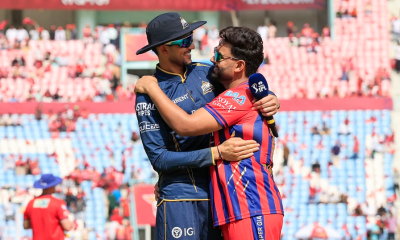
Prasidh, Buttler set up comfortable win for Gujarat Titans
-

 News3 days ago
PNS TAIMUR & ASLAT set sail from Colombo
-

 Features6 days ago
A Fragile Ceasefire: Pakistan’s Glory and Israel’s Sabotage
-

 Latest News6 days ago
Heat index likely to increase up to ‘Caution level’ at some places in the Northern, North-central, North-western, Western, Sabaragamuwa, Southern and Eastern provinces and Monaragala district