
Sports
An all girls cricket team in India breaks with tradition

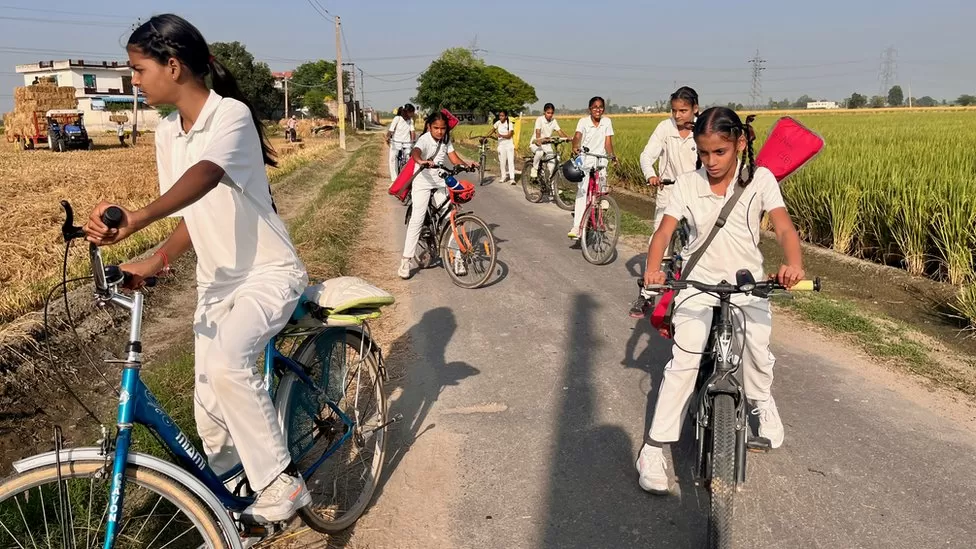
More than a dozen young girls from a small village cycle through farmland in the Indian state of Punjab.
Moving along a dirt pathway, dressed all in white, their excitement starts to build. Amid the miles of wheat fields, emerges the source of their joy: two cricket pitches, with plastic wickets and strip of concrete from where they can bat.
If it conjures images of the 1989 Hollywood film, Field of Dreams, it wouldn’t be too far from the truth. These 18 girls make up the Gulab Singh Cricket Team.
Cricket is the most popular sport in India, akin to a religion many would say. While it continues to remain a male-dominated game, things are changing.
Earlier this year, India started a women’s cricket premier league (WPL), a female version of the Indian Premier League (IPL). It has quickly become one of the world’s most lucrative women’s franchises, second only to the Women’s National Basketball Associate in the US.
Women in India have been active – and high performing – in cricket for many years. The WPL has catapulted them into mainstream popularity. Now they get the kind of media attention only reserved for men’s teams.
In October, the Board of Control for Cricket in India (BCCI), the governing body of Indian cricket. said all contracted female cricketers would be paid the the same match fee as men – a historic decision to promote “gender equality” in the country’s most-loved game.
Despite the changes on the national level, it can still be difficult for girls to be afforded the opportunity to play, especially in rural towns. “I created this cricket team to make their lives better,” says Gulab Singh Shergill, 35, who started this plucky little league four years ago.
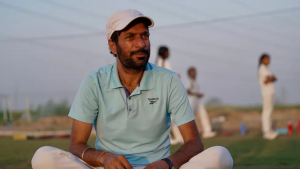
Gulab Singh Shergill started the little league four years ago (pic BBC)
Partly to live out his failed dreams of playing cricket professionally and mostly because he really believes the girls in the village deserve a shot. “They don’t get permission to get a higher education, only getting to tenth class,” he says. After that, it’s a life of cooking and cleaning until they are married and sent to live with their in-laws.
His players are being exposed to something different. Every day, they come here, park their bikes under a tree behind the batting area and head to the grassy field where they start warming up.
Simranjit Kaur, 13, is learning to bowl. She runs down the pitch, rotates her arm and lets the leather ball out of her hand. Her height allows her to get speed and she says her accuracy is starting to improve. She is quiet and soft spoken, still very much the frame of a child but has had to grow up fast. After her mother died suddenly three years ago, her grandmother has become her primary caretaker, along with her two younger sisters, aged 10 and three. She joined the team a few years ago after seeing them play in a tournament in a neighbouring village with her father, a cricket enthusiast. “My father asked me if I would like to play,” she said in the courtyard of her house. “I said yes. So he asked the coach if I could join. And he said to come the next day.”
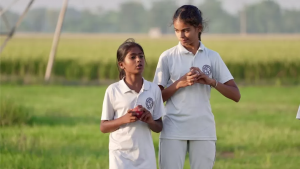
Simranjit Kaur (right) is learning to bowl (pic BBC)
In the morning before going to school, Simranjit crouches by a stove next to her grandmother, making rotis for the family. After school, instead of being stuck inside like many girls her age, with the support of her father and grandmother, she throws on her cricket whites and heads to practice, her sister in tow.
“There’s an ill thinking in villages,” says Baljeet Kaur, Simran’s grandmother. “They say that girls should be married and sent off to her in-laws, as if they have got no life. Sometimes people in village tell us why are you sending girls for playing. This is our wish and we want them to play.”
When asked how she feels when people discourage her, Simranjit says, “I don’t want to stop playing, this is my life. I feel really bad because I really like cricket, I really like playing.”
Cricket is not Shergill’s full-time job; he works as a constable in the local police force.
The players pay for nothing, he says. His entire salary goes to the girls’ team: paying for a part time coach, getting uniforms and equipment. He has donated a part of his land for the cricket pitch and hopes to build an office with a toilet one day.
It’s only been four years but in that time he’s been able to expose these girls to a life beyond the bounds of their village.
“Now we are also able to have matches between girls and boys,” he says. “That makes them proud of themselves. Now they are able to tell their parents that ‘I can do it.'”
For these girls, playing cricket is a break from the societal duties that come with being a girl. For a few hours a day, they shed gender norms and are able to be kids.
“When we are playing a match, I feel like I am wearing a jersey for Team India,” says 10-year-old Harsimrit Kaur. “When I hit a six, I know I did it for India. When I play I feel only one thing, that I am not playing for India now but I will play for India’s cricket team someday.”
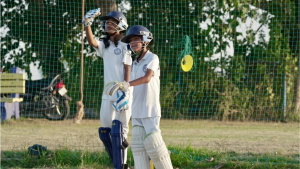
Harsimrat Kaur, 10, says playing a match feels like ‘I am wearing a jersey for Team India’ (pic BBC)
Shergill has the support of strong women too. His eldest sister, Jasveer Kaur, affectionately called Bua, is one of Shergill’s biggest champions. She comes to the pitch at least once a week to comfort players that get hurt or just to watch. She knows too well the pressures of being a woman in this society.
Married at 19, becoming a mother shortly thereafter, Jasveer cries at the thought of any of these girls meeting the same fate. “All my feeling and hopes were suppressed because I was a woman,” she says. “I was asked to work at home and cook also. Now I want that if I can help girls to do something I don’t need anything else in life. I want to use all my power to help girls grow.”
Shergill may be selling a dream to become a professional cricket player and represent India around the world. But the lessons he is teaching the these young women is so much more valuable.
“There is no difference between a girl and a boy,” says Simranjit. “Whatever boys can do, girls can do too.”
(BBC)




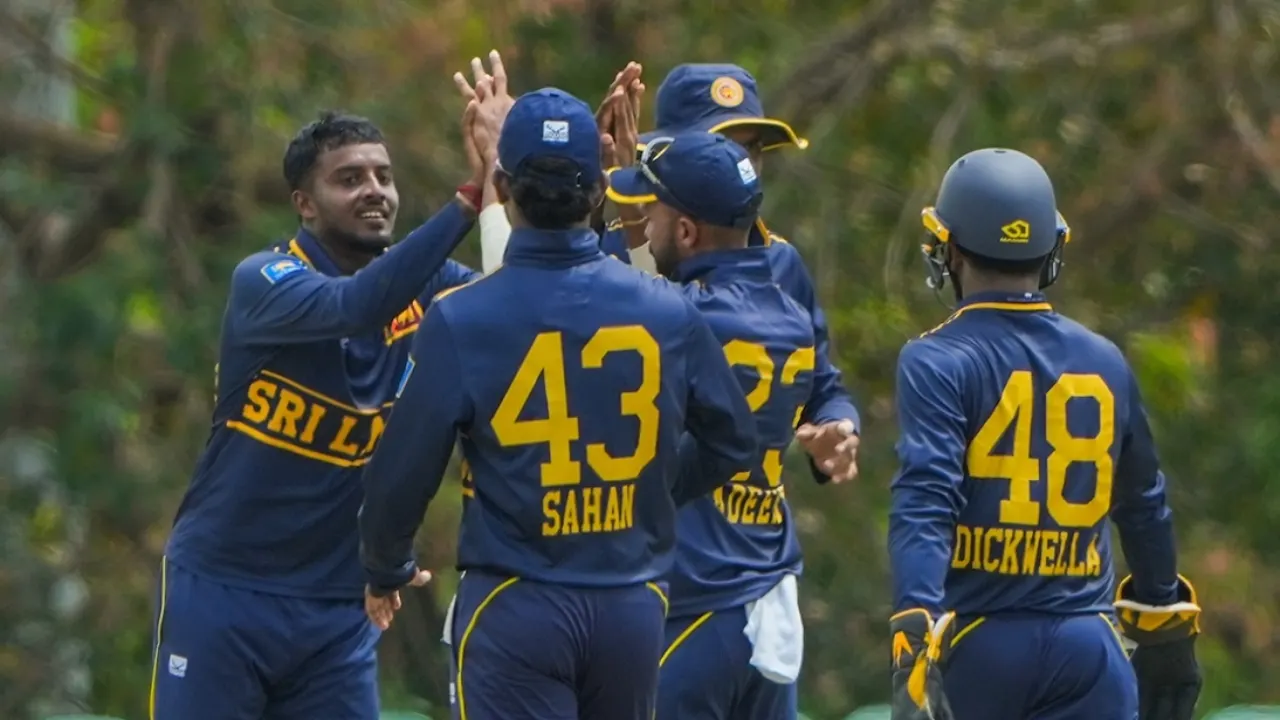
Opening batter Sineth Jayawardena has charged into the Sri Lanka T20I squad for the series against Pakistan, while Vijayakanth Viyaskanth has claimed the legspinner’s spot in the absence of the injured Wanindu Hasaranga. Seam-bowling allrounder Chamindu Wickremesinghe has also been named, as has batter Sahan Arachchige, while seamer Binura Fernando makes a return.
Omitted from the the squad were the likes of batter Charith Asalanka, fast bowler Dilshan Madushanka, ambidextrous spinner Tharindu Rathnayake, and batting allrounder Janith Liyanage.
Fast bowler Dushmantha Chameera was named in the squad, but his participation is subject to fitness.
Jayawardena, 21, has got his call-up because of an outstanding recent run in domestic T20s. In the past month, he has struck 101 off 52 and 82 off 32 for Tamil Union Cricket Club in the club T20 competition. He has played a single T20I, at the ongoing Asiad, but otherwise has never been part of a full-strength Sri Lanka side.
Others, such as Wickramasinghe, Arachchige, and Viyaskanth have earned their call-ups through years of performance at domestic level. Each of these players has appeared in T20 internationals for Sri Lanka before, but with the national team having had little success in this format in 2026, this inclusion represents their best chance yet to embed themselves within the side.
The three T20Is, which are all set to be played in Rawalpindi, will begin on October 9.
Sri Lanka squad :
Kamil Mishara, Sineth Jayawardena, Kusal Mendis (capt.), Lahiru Udara, Sahan Arachchige, Kamindu Mendis, Dasun Shanaka, Chamindu Wickramasinghe, Dunith Wellalage, Maheesh Theekshana, Vijayakanth Viyaskanth, Binura Fernando, Nuwan Thushara, Eshan Malinga, Dushmantha Chameera (subject to fitness)
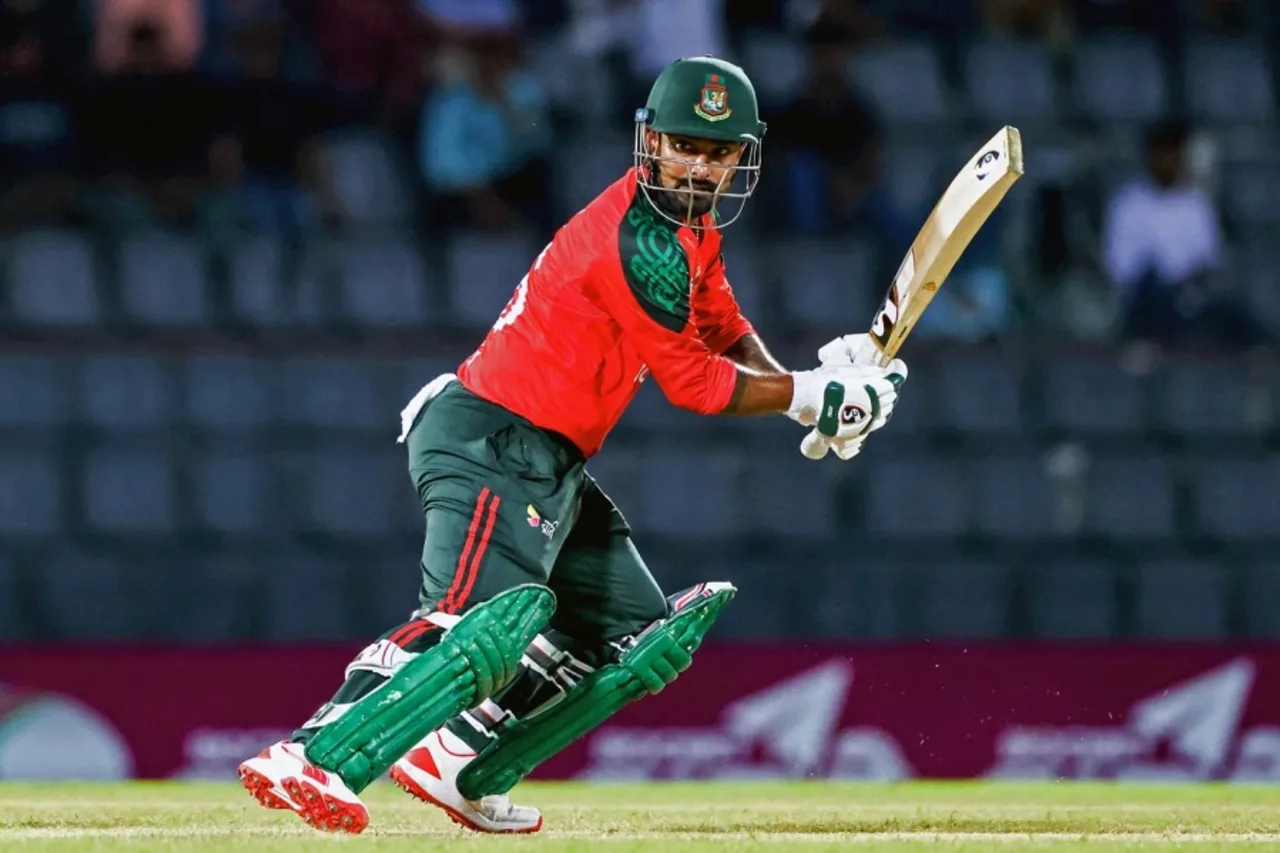
At the end of a wretched week in Nisshin, Bangladesh and Sri Lanka have something real to play for: an Asian Games bronze.
Both teams have a point to prove. Bangladesh recovered well from a poor start in their semi-final against Pakistan, thanks to Towhid Hridoy’s efforts with the bat, but their bowlers couldn’t defend 111 in a 13-overs-a-side game, and Mustafizur Rahman was taken to the cleaners in one of his rare poor outings in T20Is.
But at least they ran Pakistan close. In the other semi-final, India ran riot over Sri Lanka, bowling them out for 45. Sri Lanka had a second-string side on the field, but they wouldn’t have bargained for the basic mistakes they made, like the three run-outs in their innings.
Bangladesh, who can call on most of their first-choice players, start the third-place match as clear favourites, but the testing conditions at Nisshin can even up contests that look one-sided on paper. And both teams will have the motivation of bringing joy to contingents that have endured mostly barren Asian Games campaigns.
After a run-less Australia tour where Litton Das made three ducks in a row in the Test series, he was out for 2 against Pakistan. Litton faced just three balls, off which he attempted two reverse-sweeps, the second of them costing him his wicket. It was a perplexing innings on a pitch that offered a lot of turn and awkward bounce. Sometimes it’s hard to say if a batter is really out of form when he’s made a string of low scores, but Litton, who has led Bangladesh impressively in this format over the last couple of years, will want to break out of this run quickly.
Sahan Arachchige couldn’t quite muster up a captain’s performance against India, especially after his top three batters fell for ducks. He scored 9 before falling to a sweep shot against Axar Patel. He had earlier taken two wickets with his offbreaks. The 30-year-old allrounder now has the chance to put together a better show and inspire his team to the bronze.
Both teams could test their bench strength in the bronze-medal match.
Sri Lanka (probable): Sineth Jayawardena, Lasith Croospulle, Sohan de Livera (wk), Nuwanidu Fernando, Sahan Arachchige (capt), Ashen Bandara, Chamika Karunaratne, Wanuja Sahan, Tharindu Ratnayake, Vijayakanth Viyaskanth, Binura Fernando.
Bangladesh (probable): Tanzid Hasan, Saif Hassan, Litton Das (capt), Parvez Hossain Emon (wk), Towhid Hridoy (c), Mosaddek Hossain, Mahedi Hasan, Rishad Hossain, Aliss Al Islam/Nasum Ahmed, Shoriful Islam, Mustafizur Rahman/Hasan Mahmud.
[Ceicinfo]

The Wanderers Stadium in Johannesburg will host the 2027 ODI World Cup final, as it did in 2003, as well as the marquee match between India and Pakistan on October 10 at next year’s tournament. Wanderers, South Africa’s biggest ground with a capacity of over 30,000, has been preferred over Newlands in Cape Town, an iconic ground because of its mountain backdrop.
Newlands will instead host the opening match between India and defending champions Australia on October 7. So, a re-match of the 2023 final kicks off the group stage of the 14th edition of the tournament. Prior to that, the Namibia Cricket Ground in Windhoek will stage the Super Series, a three-team preliminary round which will decide which side makes it to the 12-team main event. Newlands gets a semi-final as well on November 17, with the other knockout game scheduled to take place in SuperSport Park in Tshwane (Centurion) on November 18. Zimbabwe, the co-hosts, are getting five games in the World Cup group stage and they play all of them at home.
The 12 teams – two of whom have yet to be decided – will be divided into two groups of six. Afghanistan, Australia, India, Pakistan, Zimbabwe and one of the qualifiers make up Group A. Bangladesh, England, South Africa, Sri Lanka, New Zealand and the other qualifier make up Group B. The two qualifiers will come from a 10 team tournament early next year, with the winner advancing to the group stage and the losing finalist and two losing semi-finalists to play the Super Series. A venue for the qualifiers has yet to be established but it is likely to be played either in South Africa or Namibia. The top eight teams besides the co-hosts in the ICC rankings on September 30 this year gained automatic qualification to the World Cup.
The World Cup will be staged between October 2 – to commemorate the birthday of Mahatma Gandhi, who spent two decades working as a lawyer in South Africa – and will conclude on November 21. The semi-finals and the final will have a reserve day.
South Africa, the co-host in group B, begin their campaign against New Zealand – a re-match of the 2026 T20 World Cup semi-final – at Newlands on October 9. Zimbabwe, the co-host in group A, will face Afghanistan in Bulawayo on October 11 to start their journey.
The top three teams of each group will move into the Super 7 phase, with the better fourth-place finisher across the two groups taking the seventh spot. Several teams already have their designations for the Super 7 phase and there is a chance of a second India vs Pakistan game in Cape Town on November 7.
- A1: India
- A2: Australia
- A3: Pakistan
- AB4: England
- B1: New Zealand
- B2: South Africa
- B3: Sri Lanka
If either Bangladesh or Afghanistan or any other team who are not seeded, get through their groups, they will assume seeding of the seeded team that gets knocked out.
In addition to hosting the preliminary round of the World Cup, Windhoek will host three group games, two of them involving 2019 champions England. The newly constructed Mosi-oa-Tunya Stadium in Victoria Falls, Zimbabwe got the final game of the group stages – India vs Zimbabwe on October 24 and three Super 7 matches. According to the ICC’s pre-seeding, these will be India vs Australia on October 28, Pakistan vs England on October 30 and Australia vs New Zealand on November 1.
There will be five matches played at Durban, including the final one of the Super 7 between A1 (India) and B3 (Sri Lanka) on November 14. In all there are 12 venues – Windhoek in Namibia, Victoria Falls, Harare and Bulawayo in Zimbabwe and Cape Town, Paarl, Johannesburg, Tshwane (Centurion), Bloemfontein, Durban, KuGompo City (East London) and Gqeberha (Port Elizabeth).
[Cricinfo]

Ambassador of the UAE to Sri Lanka meets with the Prime Minister

EU rejects Trump’s diesel demand amid Iran war shortages

Sineth Jayawardena, Vijayakanth Viyaskanth in Sri Lanka squad for Pakistan T20Is

Bronze at stake as Bangladesh, Sri Lanka look to bring cheer to Asian Games contingents

Wanderers to host 2027 men’s ODI World Cup final as well as India vs Pakistan

Prime Minister joins Gandhi Jayanti Commemoration

‘Dates have the highest sugar content to fight Coronavirus’

Sunday Island 27 December – Headlines

#SundayIsland 17th December – Headlines

Sunday Island – 28th March

Sunday Island Headlines – 21 March

Sunday Island – 21st February – Headlines
-

 Editorial7 days ago
Birth of a bad law
-

 News5 days ago
Police remove Thileepan statue in Jaffna
-

 News7 days ago
TIN mandatory for key transactions from Nov. 1
-

 Features5 days ago
The 22nd Amendment, constitutional recovery and illiberal slippage
-

 Features5 days ago
Of foreigners as CEOs of Lankan ventures
-

 Latest News3 days ago
Gold winner Tharanga gets brand-new Honda Vezel from SLAAJ
-

 News5 days ago
Sajith rejects Jt. Opp. protest sabotage claim; SJB TU chief demands remedial action
-

 Features4 days ago
Thailand’s biggest new global star …