
Latest News
IPL 2024: South Africa, West Indies and New Zealand confirm full participation; limited availability of English players

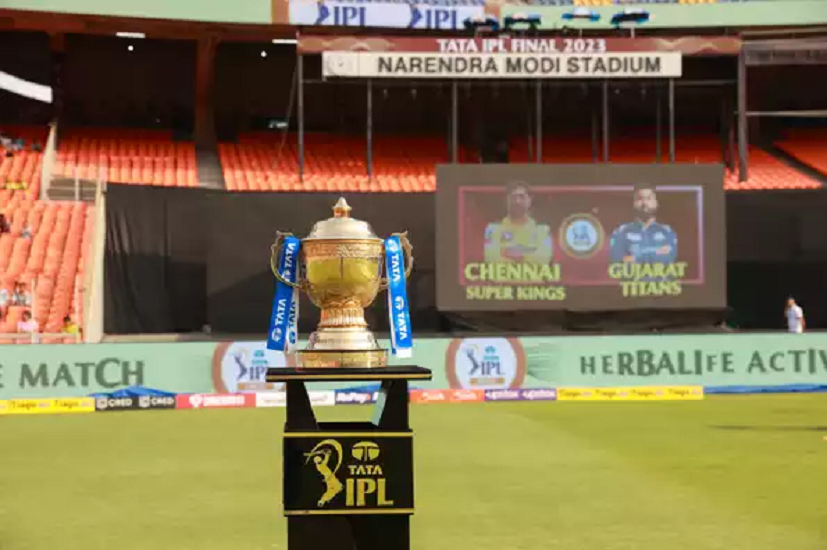
The Board of Control for Cricket in India (BCCI) has decided that the official window for the Indian Premier League (IPL) will be from March 22 till the end of May. Finalizing the exact dates is pending due to the upcoming general elections in the country next summer, with the schedule contingent on the election program.
Based on this information conveyed to the franchises ahead of the IPL auction in Dubai on Tuesday (December 19), the Australian, South African, Afghanistan, New Zealand, and West Indies boards have made their players available fully, with minor or no riders. However, England, Ireland, Sri Lanka, and Bangladesh boards have given conditional approval.
Most Australian players will be available for the IPL, except Josh Hazlewood, who will participate in the league only from the first week of May. Cricket Australia (CA) has informed the BCCI that its players will be fully available, except for Hazlewood, and those playing in the final of the Sheffield Shield. The CA has assured the BCCI that all players will be available unless injured. Regarding the Sheffield Shield final, players have the option to choose IPL over the domestic event, which takes place from March 21 to 25.
The England and Wales Cricket Board (ECB) has said its players can participate in the league unless unfit or have international duties. The availability of English players is subject to the ECB’s summer international program surrounding the Twenty20 World Cup, which is yet to be finalized. Rehan Ahmed has withdrawn from the auction. The Twenty20 World Cup is from June 4 to 30 in the Caribbean and the US.
The BCCI communication to the teams on the status of the English player states: “ECB is prepared to make their players available for the duration of the Tournament, subject to fitness and international duty, and any periods of unavailability that players submitted on their auction applications. ECB are still in the process of finalising their schedule for the World T20 in June and if any individual players require specific management in the build-up to the World T20, Rob Key will liaise directly with the player and his franchise to make the necessary arrangements.”
Elsewhere, the Bangladesh Cricket Board (BCB) and Cricket Ireland (CI) have made their players available only partially, but special permissions have been granted to Mustafizur Rahman and Joshua Little. While the Ireland pacer has been permitted to take part in the league fully, the BCB has stated that Rahman can participate in the league from March 22 to May 11.
Sri Lanka has the scheduled second (and last) Test against Bangladesh from March 30 to April 3, which raises questions about the availability of some Sri Lankan players. However, Maheesh Theekshana, Wanindu Hasaranga, Matheesha Pathirana, and Dushmantha Chameera will be available for the full duration of the IPL, as they do not participate in the Test format.
The BCB has also informed the BCCI that “Taskin Ahmed and Md. Shoriful Islam, who have been listed for the auction, will not be available for the IPL 2024 edition.” Only three Bangladesh players (including Rahman) had featured in the auction register from Bangladesh.
Afghanistan Cricket Board (ACB), Cricket West Indies (CWI), Cricket South Africa (CSA), New Zealand Cricket (NZC) and Zimbabwe Cricket (ZC) have informed the BCCI that their players will be available for the entire duration of the IPL.







Latest News
Showers above 100 mm are likely at some places in the Western, Sabaragamuwa, Central, Uva and Southern provinces and in Anuradhapura district

WEATHER FORECAST FOR 08 OCTOBER 2026
Issued at 05.30 a.m. on 08 October 2026 by the Department of Meteorology
Misty conditions can be expected at some places in the Western, Sabaragamuwa, Central and Uva provinces and in Galle and Matara districts during the early hours of the morning.
Showers or thundershowers will occur in the most part of the island after 1.00 p.m. Heavy showers above 100 mm are likely at some places in Western, Sabaragamuwa, Central, Uva and Southern provinces and in Anuradhapura district.
The general public is kindly requested to take adequate precautions to minimize damage caused by temporary localized strong winds and lightning during thundershowers.

Former first lady Shiranthi Rajapaksa, wife of former President Mahinda Rajapaksa was produced before the Hulftsdorp court, after being arrested by officers of the Commission to Investigate Allegations of Bribery or Corruption (CIABOC) and produce
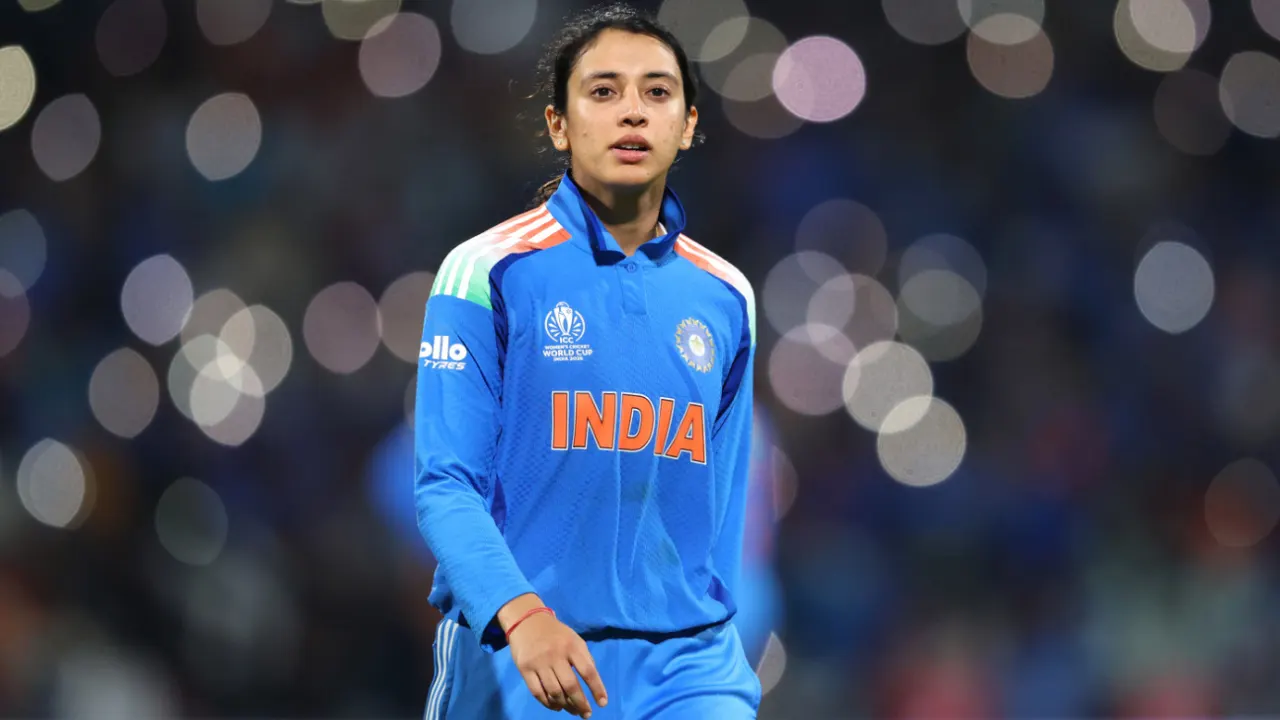
Smriti Mandhana has been named India’s all-format women’s captain on the same day Harmanpreet Kaur stepped down from the role after nearly a decade since she first took over.
Mandhana – vice-captain to Harmanpreet for much of this period – has previously led India in four ODIs and 18 T20Is, apart from captaining Maharashtra in domestic cricket and Royal Challengers Bengaluru in the Women’s Premier League.
Mandhana’s first assignment will be the limited-overs series against Zimbabwe beginning with the three T20Is in Raipur from October 16. On Tuesday, Mandhana was part of the selection meeting chaired by Amita Sharma to pick the squad for the tour.
Terming the appointment a “special honour”, Mandhana also acknowledged the contributions of her predecessor in her welcome note.
“I would also like to acknowledge Harmanpreet and the contribution she has made as captain over the years,” she was quoted as saying by the BCCI. “She has led the team with great commitment and has been an important part of our journey.
“I understand the responsibility that comes with this role and look forward to working with the team, learning along the way and giving my best to take Indian cricket forward.”
Mandhana’s appointment comes on the back of a review meeting held on Monday in Guwahati. Chaired by secretary Devajit Saikia, the meeting was also attended by Mandhana, Harmanpreet and head coach Amol Muzumdar to chart a roadmap forward, with an eye on next year’s inaugural Women’s Champions Trophy in February as well as the T20 World Cup and Los Angeles Olympics in 2028.
Mandhana, India’s best all-format batter, has been knocking on the doors for a while. Earlier this year, she led RCB to their second WPL title, in which she also top-scored in the final.
In September, she overtook Mithali Raj to become the leading run-scorer in women’s international across formats. Her 18 international hundreds are also the most in women’s cricket. She is also the first Indian woman to score centuries in all formats.
[Cricinfo]

Removing monk’s robes matter for Sangha to decide: Mahanayake Theras

NDB fraud Rs 60mn more than reported

President orders review of laws on treatment of imprisoned monks

BHC, Colombo: “LTTE remains a proscribed org. in the UK”

Sri Lanka runs out of essential anti-TB medicines, India comes to rescue

Opp signs no-faith motion against Speaker

‘Dates have the highest sugar content to fight Coronavirus’

Sunday Island 27 December – Headlines

#SundayIsland 17th December – Headlines

Sunday Island – 28th March

Sunday Island Headlines – 21 March

Sunday Island – 21st February – Headlines
-

 Features5 days ago
The first woman in the foreign service or Ceylon Overseas Service it was then called
-

 Editorial6 days ago
Fuelling discontent and protest
-

 News4 days ago
Geneva takes up Sallay’s case and govt. ignores opportunity to answer accusations
-

 Foreign News6 days ago
Ten injured after car crashes into rugby supporters in Australia
-

 Latest News6 days ago
Tharindu Rathnayake, bowlers secure Asian Games Bronze for Sri Lanka
-

 News5 days ago
Nearly 20 Iranian tankers stranded off Lanka amid US sanctions
-

 Features4 days ago
Sri Lanka Cricket Bill: Governance reform is not yet a cricket strategy
-

 News5 days ago
Lanka enters new phase of prosecutions as hurdles clear