
Opinion
American rulers’ hatred for Venezuela and its leaders


The long-standing desire of the United States to subjugate, control, or overthrow the Venezuelan government has been driven primarily by two interconnected factors. The first is Venezuela’s vast mineral wealth, and the second is the emergence of anti-Imperialist and leftist political leadership that has consistently challenged US dominance in the region.
This hostility intensified dramatically in 1999, when Hugo Chávez—an outspoken leftist leader inspired by the legacy of Simón Bolívar, the father of Latin American independence from Spanish colonial rule—came to power. Chávez initiated a historic process of reclaiming Venezuela’s natural resources from US corporations and returning them to the Venezuelan people. From that moment onward, Venezuela became a central target of US imperial strategy.
Venezuela was one of the five founding members of the Organisation of the Petroleum Exporting Countries (OPEC) and became the world’s eighth-largest oil producer. The country possesses the largest proven oil reserves globally, estimated at 303 billion barrels. Beyond oil, Venezuela also plays a major role in heavy industries such as steel, aluminum, and cement. Its total mineral wealth is estimated at nearly US$14 trillion, and approximately 95 percent of its exports are derived from mineral resources.
Prior to the Chávez era, more than 500 US companies operated in Venezuela, dominating its extractive industries and using the country as a captive market for American exports. This economic dominance was directly challenged under Chávez and later under his political and ideological successor, President Nicolás Maduro. As a result, Venezuela increasingly came into conflict with US strategic and corporate interests.
Over the past two decades, the United States has directly, or indirectly, intervened in several oil-producing nations, including Iraq, Iran, Kuwait, and Libya. In some cases, rulers were assassinated and replaced with pro-American puppet regimes. Saudi Arabia, by aligning itself completely with US interests, has avoided invasion and survives as a compliant client state.
Venezuela, however, has stood firm for more than 20 years as a major obstacle to US efforts to dominate the global oil market. In this resistance, President Nicolás Maduro has emerged as one of the region’s most prominent anti-imperialist leaders.
After assuming office in 2013, President Maduro took decisive measures to counter the impact of long-standing US sanctions. Despite sanctions that disrupted nearly 50 percent of essential medicine supplies, Venezuela succeeded in rebuilding its pharmaceutical sector. By 2016, the country was producing approximately 80 percent of its essential medicines domestically. This policy of resistance and non-submission prompted the United States to escalate its pressure through new mechanisms, including direct restrictions on oil exports—which was called “oil quarantine.”
One notable incident in this campaign was the seizure of a commercial vessel by the US Coast Guard on December 10, while it was transporting Venezuelan petroleum to Cuba.
Simultaneously, the US intensified military provocations in Venezuelan maritime zones, including attacks on small naval vessels under the pretext of combating drug trafficking. US Senator Chris Coons himself acknowledged that more than 20 Venezuelan vessels had been destroyed and over 80 people killed under those operations, allegedly on the grounds of drug interdiction.
Beginning in early 2020, Venezuela and its leadership were formally accused of involvement in drug trafficking. In October of that year, a US federal court conducted a one-sided trial and convicted President Nicolás Maduro of “narco-terrorism” and conspiracy to import cocaine into the United States. This legal farce culminated in August 2025 with the announcement of a US$50 million bounty for the capture of President Maduro.
Many political analysts warned that these measures were designed to pave the way for a direct invasion and the arrest of Venezuela’s legitimate head of state. These warnings proved accurate, when On September 6, a Bill introduced in the US Senate, ostensibly to require congressional approval for military action against Venezuela, was defeated. Its rejection effectively granted the US president the authority to launch military operations against Venezuela without congressional consent.
Yet the central justification for these actions—drug trafficking—has been contradicted by official US sources themselves. According to reports by the US Drug Enforcement Administration, neither Venezuela nor President Maduro appears on the list of countries, or leaders, posing a drug-trafficking threat to the United States. Furthermore, the 2025 World Drug Report identifies the United States as the world’s largest drug market and distribution hub. Drug consumption, trafficking, and profit circulation are deeply embedded within the American economy itself.
It is, therefore, evident that the accusations against President Nicolás Maduro are false and politically motivated. Their real purpose is to legitimize invasion, regime change, and the arrest of a leader of a sovereign country. Parallel to this strategy, the US has consistently attempted to destabilise Venezuela internally. Opposition figures such as María Corina Machado were promoted to incite unrest using the “colour revolution” model. Her subsequent international recognition for these actions reveals the extent to which violence and destabilisation have been repackaged as “democracy promotion.”
These destabilisation efforts have been partly facilitated by unresolved structural weaknesses in Venezuela’s socio-economic system. Nearly 88 percent of the population resides in urban areas, while agriculture contributes only about 4 percent to the national economy. During periods of high inflation, low-income urban populations are the most vulnerable and, consequently, the most susceptible to manipulation for political unrest.
Another decisive factor behind US hostility is Venezuela’s strategic partnership with China. Under both Chávez and Maduro, Venezuela became China’s fourth-largest oil supplier. The China–Venezuela Joint Fund, established with the China Development Bank, financed major infrastructure projects. China extended a US$10 billion concessional loan during the 2010 financial crisis and later signed a US$16 billion agreement for joint oil venture for 450,000 barrels of oil per day. These developments significantly intensified American opposition.
The culmination of this entire process marks an unprecedented moment in world history: a powerful sovereign state invading another sovereign state without provocation, attacking civilian and military targets, killing more than 80 civilians, and forcibly removing the legitimate president from the country. While previous regime-change operations in Iraq and Libya followed prolonged military invasions justified by fabricated narratives, the arrest of President Nicolás Maduro represents an even more dangerous precedent.
Even more alarming is the paralysis of the United Nations, which has failed to convene either the Security Council or the General Assembly to address this blatant violation of international law.
Although China and Russia have publicly opposed US aggression, the silence and inaction of global institutions threaten to erode faith in international law itself.
This situation sets a grave precedent and poses a serious danger to world peace. It underscores the urgent need to build global public opinion in favor of sovereignty, non-intervention, and the formation of a new international anti-imperialist alliance.
by Dr. Wasantha Bandara
General Secretary
Patriotic National Movement



A few days ago, we heard the sad news of the passing on of Capt. Dinham Suhood. Born in 1929, he was the last surviving Air Ceylon Captain from the ‘old guard’.
He studied at St Joseph’s College, Colombo 10. He had his flying training in 1949 in Sydney, Australia and then joined Air Ceylon in late 1957. There he flew the DC3 (Dakota), HS748 (Avro), Nord 262 and the HS 121 (Trident).
I remember how he lent his large collection of ‘Airfix’ plastic aircraft models built to scale at S. Thomas’ College, exhibitions. That really inspired us schoolboys.
In 1971 he flew for a Singaporean Millionaire, a BAC One-Eleven and then later joined Air Siam where he flew Boeing B707 and the B747 before retiring and migrating to Australia in 1975.
Some of my captains had flown with him as First Officers. He was reputed to have been a true professional and always helpful to his colleagues.
He was an accomplished pianist and good dancer.
He passed on a few days short of his 97th birthday, after a brief illness.
May his soul rest in peace!
To fly west my friend is a test we must all take for a final check
Capt. Gihan A Fernando
RCyAF/ SLAF, Air Ceylon, Air Lanka, Singapore Airlines, SriLankan Airlines

The cause of global warming, they claim, is due to ever increasing levels of CO2. This is a by-product of burning fossil fuels like oil and gas, and of course coal. Environmentalists and other ‘green’ activists are worried about rising world atmospheric levels of CO2. Now they want to stop the whole world from burning fossil fuels, especially people who use cars powered by petrol and diesel oil, because burning petrol and oil are a major source of CO2 pollution. They are bringing forward the fateful day when oil and gas are scarce and can no longer be found and we have no choice but to travel by electricity-driven cars – or go by foot. They say we must save energy now, by walking and save the planet’s atmosphere.
THE DEMON COAL
But it is coal, above all, that is hated most by the ‘green’ lobby. It is coal that is first on their list for targeting above all the other fossil fuels. The eminently logical reason is that coal is the dirtiest polluter of all. In addition to adding CO2 to the atmosphere, it pollutes the air we breathe with fine particles of ash and poisonous chemicals which also make us ill. And some claim that coal-fired power stations produce more harmful radiation than an atomic reactor.
STOP THE COAL!
Halting the use of coal for generating electricity is a priority for them. It is an action high on the Green party list.
However, no-one talks of what we can use to fill the energy gap left by coal. Some experts publicly claim that unfortunately, energy from wind or solar panels, will not be enough and cannot satisfy our demand for instant power at all times of the day or night at a reasonable price.
THE ALTERNATIVES
It seems to be a taboo to talk about energy from nuclear power, but this is misguided. Going nuclear offers tried and tested alternatives to coal. The West has got generating energy from uranium down to a fine art, but it does involve some potentially dangerous problems, which are overcome by powerful engineering designs which then must be operated safely. But an additional factor when using URANIUM is that it produces long term radioactive waste. Relocating and storage of this waste is expensive and is a big problem.
Russia in November 2020, very kindly offered to help us with this continuous generating problem by offering standard Uranium modules for generating power. They offered to handle all aspects of the fuel cycle and its disposal. In hindsight this would have been an unbelievable bargain. It can be assumed that we could have also used Russian expertise in solving the power distribution flows throughout the grid.
THORIUM
But thankfully we are blessed with a second nuclear choice – that of the mildly radioactive THORIUM, a much cheaper and safer solution to our energy needs.
News last month (January 2026) told us of how China has built a container ship that can run on Thorium for ten years without refuelling. They must have solved the corrosion problem of the main fluoride mixing container walls. China has rare earths and can use AI computers to solve their metallurgical problems – fast!
Nevertheless, Russia can equally offer Sri Lanka Thorium- powered generating stations. Here the benefits are even more obviously evident. Thorium can be a quite cheap source of energy using locally mined material plus, so importantly, the radioactive waste remains dangerous for only a few hundred years, unlike uranium waste.
Because they are relatively small, only the size of a semi-detached house, such thorium generating stations can be located near the point of use, reducing the need for UNSIGHTLY towers and power grid distribution lines.
The design and supply of standard Thorium reactor machines may be more expensive but can be obtained from Russia itself, or China – our friends in our time of need.
Priyantha Hettige
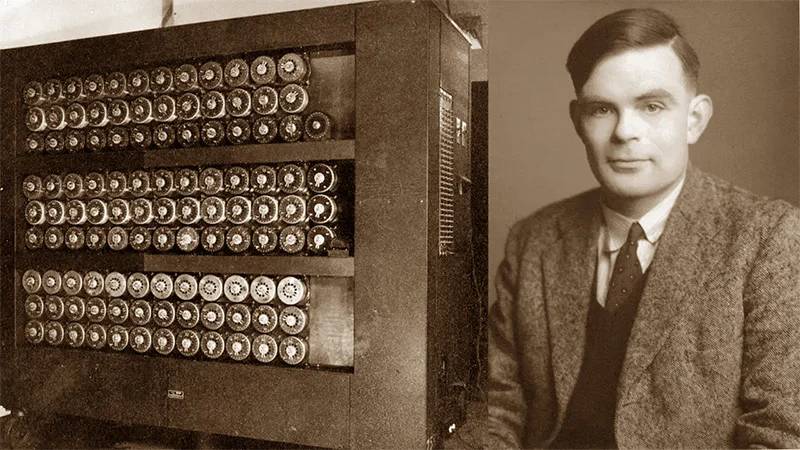
The Island has recently published various articles on AI, and they are thought-provoking. This article is based on a paper I presented at a London University seminar, 22 years ago.
Will computers ever be intelligent? This question is controversial and crucial and, above all, difficult to answer. As a scientist and student of philosophy, how am I going to answer this question is a problem. In my opinion this cannot be purely a philosophical question. It involves science, especially the new branch of science called “The Artificial Intelligence”. I shall endeavour to answer this question cautiously.
Philosophers do not collect empirical evidence unlike scientists. They only use their own minds and try to figure out the way the world is. Empirical scientists collect data, repeat and predict the behaviour of matter and analyse them.
We can see that the question—”Will computers ever be intelligent?”—comes under the branch of philosophy known as Philosophy of Mind. Although philosophy of mind is a broad area, I am concentrating here mainly on the question of consciousness. Without consciousness there is no intelligence. While they often coincide in humans and animals, they can exist independently, especially in AI, which can be highly intelligent without being conscious.
AI and philosophers
It appears that Artificial Intelligence holds a special attraction for philosophers. I am not surprised about this as Al involves using computers to solve problems that seem to require human reasoning. Apart from solving complicated mathematical problems it can understand natural language. Computers do not “understand” human language in the human sense of comprehension; rather, they use Natural Language Processing (NLP) and machine learning to analyse patterns in data. Artificial Intelligence experts claim certain programmes can have the possibility of not only thinking like humans but also understanding concepts and becoming conscious.
The study of the possible intelligence of logical machines makes a wonderful test case for the debate between mind and brain. This debate has been going on for the last two and a half centuries. If material things, made up entirely of logical processes, can do exactly what the brain can, the question is whether the mind is material or immaterial.
Although the common belief is that philosophers think for the sake of thinking, it is not necessarily so. Early part of the 20th century brought about advances in logic and analytical philosophy in Britain. It was a philosopher (Ludwig Wittgenstein) who invented the truth table. This was a simple analytic tool useful in his early work. But this was absolutely essential to the conceptual basis of early computer science. Computer science and brain science have developed together and that is why the challenge of the thinking machine is so important for the philosophy of mind. My argument so far has been to justify how and why AI is important to philosophers and vice versa.
Looking at computers now, we can see that the more sophisticated the computer, the more it is able to emulate rather than stimulate our thought processes. Every time the neuroscientists discover the workings of the brain, they try to mimic brain activity with machines.
How can one tell if a computer is intelligent? We can ask it some questions or set a test and study its response and satisfy ourselves that there is some form of intelligence inside this box. Let us look at the famous Alan Turing Test. Imagine a person sitting at a terminal (A) typing questions. This terminal is connected to two other machines, (B) and (C). At terminal (B) sits another person (B) typing responses to the questions from person (A). (C) is not a human being, but a computer programmed to respond to the questions. If person (A) cannot tell the difference between person (B) and computer(C), then we can deduce that computer is as intelligent as person (B). Critics of this test think that there is nothing brilliant about it. As this is a pragmatic exercise and one need not have to define intelligence here. This must have amused the scientists and the philosophers in the early days of the computers. Nowadays, computers can do much more sophisticated work.
Chinese Room experiment
The other famous experiment is John Sealer’s Chinese room experiment. *He uses this experiment to debunk the idea that computers could be intelligent. For Searle, the mind and the brain are the same. But he warns us that we should not get carried away with the emulative success of the machines as mind contains an irreducible subjective quality. He claims that consciousness is a biological process. It is found in humans as well as in certain animals. It is interesting to note that he believes that the mind is entirely contained in the brain. And the empirical discovery of neural processes cannot be applied to outside the brain. He discards mind-body dualism and thinks that we cannot build a brain outside the body. More commonly, we believe the mind is totally in the brain, and all firing together and between, and what we call ‘thought’ comes from their multifarious collaboration.
Patricia and Paul Churchland are keen on neuroscientific methods rather than conventional psychology. They argue that the brain is really a processing machine in action. It is an amazing organ with a delicately organic structure. It is an example of a computer from the future and that at present we can only dream of approaching its processing speed. I think this is not something to be surprised about. The speed of the computer doubles every year and a half and in the distant future there will be machines computing faster than human beings. Further, the Churchlands’, strongly believe that through science one day we will replicate the human brain. To argue against this, I am putting forward the following true story.
I remember watching an Open University (London) education programme some years ago. A team of professors did an experiment on pavement hawkers in Bogota, Colombia. They were fruit sellers. The team bought a large number of miscellaneous items from these street vendors. This was repeated on a number of occasions. Within a few seconds, these vendors did mental calculations and came out with the amounts to be paid and the change was handed over equally fast. It was a success and repeatable and predictable. The team then took the sample population into a classroom situation and taught them basic arithmetic skills. After a few months of training they were given simple sums to do on selling fruit. Every one of them failed. These people had the brain structure that of ordinary human beings. They were skilled at their own jobs. But they could not be programmed to learn a set of rules. This poses the question whether we can create a perfect machine that will learn all the human transferable skills.
Computers and human brains excel at different tasks. For instance, a computer can remember things for an infinite amount of time. This is true as long as we don’t delete the computer files. Also, solving equations can be done in milliseconds. In my own experience when I was an undergraduate, I solved partial differential equations and it took me hours and a lot of paper. The present-day students have marvellous computer programmes for this. Let alone a mere student of mathematics, even a mathematical genius couldn’t rival computers in the above tasks. When it comes to languages, we can utter sentences of a completely foreign language after hearing it for the first time. Accents and slang can be decoded in our minds. Such algorithms, which we take for granted, will be very difficult for a computer.
I always maintain that there is more to intelligence than just being brilliant at quick thinking. A balanced human being to my mind is an intelligent person. An eccentric professor of Quantum Mechanics without feelings for life or people, cannot be considered an intelligent person. To people who may disagree with me, I shall give the benefit of the doubt and say most of the peoples’ intelligence is departmentalised. Intelligence is a total process.
Other limitations to AI
There are other limitations to artificial intelligence. The problems that existing computer programmes can handle are well-defined. There is a clear-cut way to decide whether a proposed solution is indeed the right one. In an algebraic equation, for example, the computer can check whether the variables and constants balance on both sides. But in contrast, many of the problems people face are ill-defined. As of yet, computer programmes do not define their own problems. It is not clear that computers will ever be able to do so in the way people do. Another crucial difference between humans and computers concerns “common sense”. An understanding of what is relevant and what is not. We possess it and computers don’t. The enormous amount of knowledge and experience about the world and its relevance to various problems computers are unlikely to have.
In this essay, I have attempted to discuss the merits and limitations of artificial intelligence, and by extension, computers. The evolution of the human brain has occurred over millennia, and creating a machine that truly matches human intelligence and is balanced in terms of emotions may be impossible or could take centuries
*The Chinese Room experiment, proposed by philosopher John Searle, challenges the idea that computers can truly “understand” language. Imagine a person locked in a room who does not know Chinese. They receive Chinese symbols through a slot and use an instruction manual to match them with other symbols to produce correct replies. To outsiders, it appears the person understands Chinese, but in reality, they are only following rules. Searle argues that similarly, a computer may process language convincingly without genuine understanding or consciousness.
by Sampath Anson Fernando

High risk of rain in marquee India vs Pakistan T20 World Cup game in Colombo

New Zealand and South Africa look ahead to Super Eights in low-pressure contest

Teacher recruitment examinations will be conducted in accordance with the relevant court decisions – PM

Low-pressure area is likely to form over the southeastern Bay of Bengal around 15th February

Kolkata the stage as England, Scotland resume auld rivalry

Showers will occur at times in the Central, Uva, Eastern, Northern and North-central provinces and in Hambantota district

‘Dates have the highest sugar content to fight Coronavirus’

Sunday Island 27 December – Headlines

#SundayIsland 17th December – Headlines

Sunday Island – 28th March

Sunday Island Headlines – 21 March

Sunday Island – 21st February – Headlines
-

 Features6 days ago
My experience in turning around the Merchant Bank of Sri Lanka (MBSL) – Episode 3
-

 Business6 days ago
Remotely conducted Business Forum in Paris attracts reputed French companies
-

 Business6 days ago
Four runs, a thousand dreams: How a small-town school bowled its way into the record books
-

 Business6 days ago
ComBank and Hayleys Mobility redefine sustainable mobility with flexible leasing solutions
-

 Business3 days ago
Autodoc 360 relocates to reinforce commitment to premium auto care
-

 Midweek Review3 days ago
A question of national pride
-
 Opinion2 days ago
Will computers ever be intelligent?
-

 Midweek Review3 days ago
Theatre and Anthropocentrism in the age of Climate Emergency