
News
America dumps “toxic” Trump!


BY S VENKAT NARAYAN,
Our Special Correspondent
NEW DELHI, January 23: He fooled some people for some time. He also fooled almost all the people for some time. He tried to fool all the people all the time, and failed miserably.
Former United States President Donald Trump returned to Mar-a-Lago in Florida and to his company last week as an ordinary citizen at a time when it faces a deepening crisis, with key properties bleeding revenue and its bankers, lawyers and customers fleeing the company.
His neighbours at Mar-a-Lago do not want to have him around on a permanent basis! Proud Boys and other outfits who invaded the Capitol in Washington on January 6 after he incited them are now mad with him. They thought he would defend them. But he denounced them even as they were on the rampage.
Financial disclosure forms, filed by the former president as he left office, revealed that his hotels, resorts and other properties had lost more than $120 million in revenue last year, as the Covid-19 pandemic forced long-term closures and kept customers home. Those losses were worst in the places where Trump could least afford it: His Washington hotel, which has a $170 million loan outstanding, saw revenue drop more than 60 percent. His Doral resort in Miami — also carrying a huge debt load — saw a 44 percent drop.
Barely 24 hours after he left the White House oh-so-reluctantly, his company’s troubles appeared to multiply: One of its banks and one of its law firms said they would cut their ties with the Trump Organization. They are the latest in a string of vendors and customers who severed their relationships with the company after Jan. 6, when a mob of Trump supporters attacked the U.S. Capitol directly after he addressed them at a rally.
The picture emerging shows the inversion of Trump’s fortunes since 2015, when he entered politics promising to remake the country in the image of his growing, swaggering business.
Now, Trump returns to a business remade in the image of the country he led: beleaguered, indebted and toxically politicized, The Washington Post reported on Friday.
“He faces some very serious problems that have been building in recent years and I think are going to come to a head now that he’s left office,” said Bert Ely, a banking consultant who has testified before Congress on financial matters.
The Trump Organization is a relatively small operation. It relies heavily on the work of others — lawyers and real estate brokers, and investors who paid to have Trump’s name on their buildings. Now, some of those outsiders are pulling away. “He’s done enormous reputational damage to himself,” Ely said. Trump still owns his company. But it is unclear when — or even if — he will return to his old role as the company’s day-to-day leader.
The new financial disclosures, filed routinely by an outgoing president, show that the company is facing one of its darkest hours, as the coronavirus hammers the tourism industry.
Overall, Trump listed specific revenue figures for 47 different companies, including his golf clubs, hotels and New York City park properties. Combined, revenue at those companies declined more than 35 percent last year, according to a Washington Post analysis.
There were sharp declines at three of Trump’s most important properties: his D.C. hotel, his Doral resort in Florida, and his Turnberry resort in Scotland. Their combined revenue fell from $149 million in 2019 to $71 million last year, a drop of more than half. Trump faces more than $400 million in outstanding loans, including more than $290 million on Doral and the D.C. hotel.
The New York Times reported last week that he has to cough up nearly half a billion dollars in the next three years: $395 million in loans that fall due during 2022-24, and $100 million he owes in taxes which had dodged all these years.
And Trump’s company continued to lose key partners — including banks and lawyers that had stuck with it through the lowest points of Trump’s political career. “We no longer have any depository relationship with him,” said a spokesperson for BankUnited, a Florida-based bank where Trump had kept more than $5 million in money-market accounts. On Thursday, BankUnited said it was closing those accounts.
The decision meant that, since the attack on the Capitol, Trump had lost three of the four banks that held his largest deposits. Signature Bank and Professional Bank cut their ties earlier this month. The fourth bank, Capital One, has declined to comment.
The backlash to Trump’s actions has even hit the smallest of Trump’s business partners, including the organizers of a triathlon — the Tri at the Trump — held at Trump’s golf course outside Charlotte.
“It was all on track before the Capitol,” said Chuck McAllister, the founder of the event, which he expected to attract 450 athletes and 1,000 spectators.
But then, McAllister said, the Capitol attack caused sponsors and vendors to pull out. He had to cancel the event. “It is deja vu. It’s like Groundhog Day,” McAllister said. He said he was unsure whether he would come back in 2022. “The name’s toxic. It’s toxic to some people. That’s never going to change.”


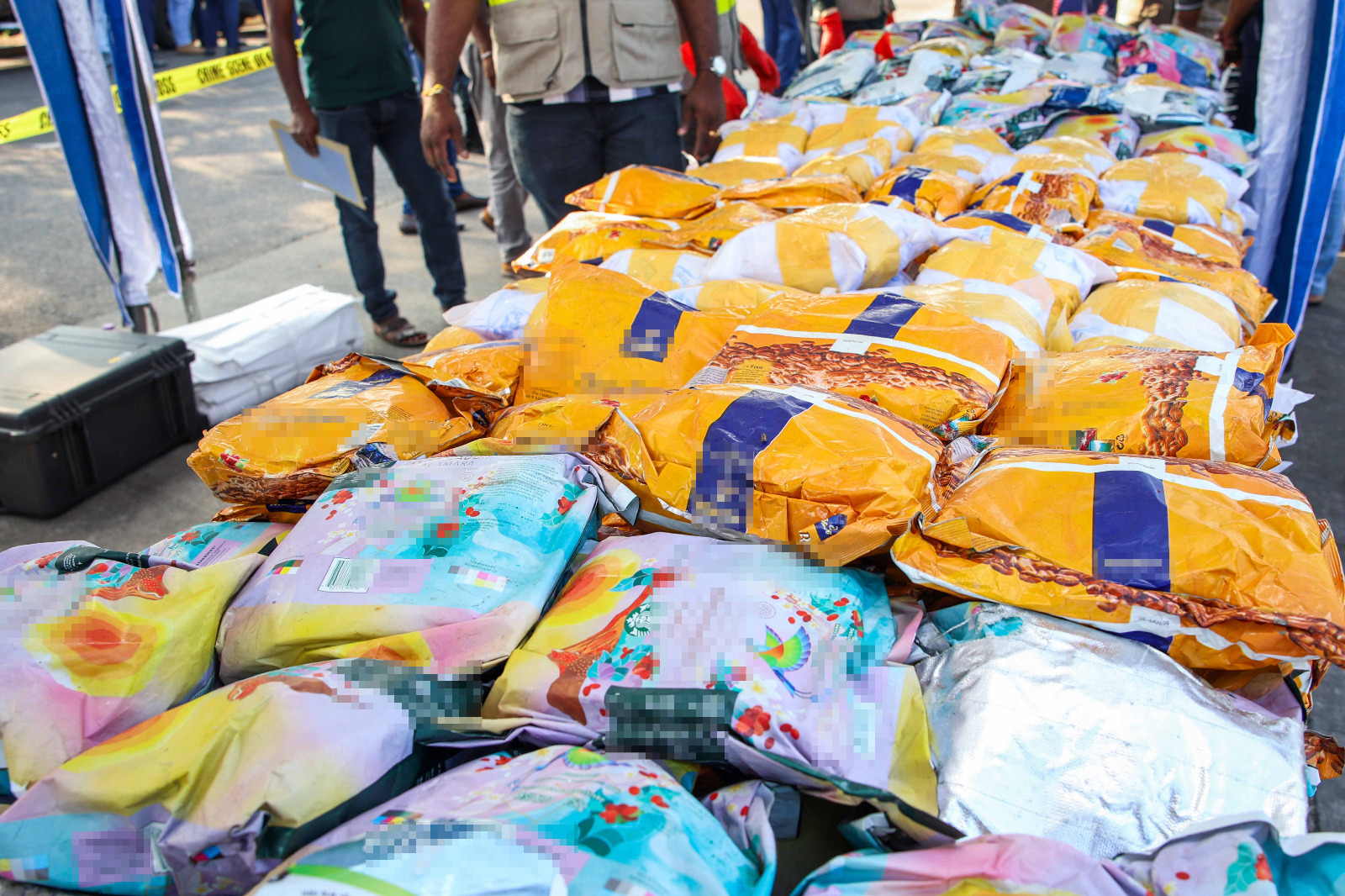
In a decisive strike against the drug menace, the Sri Lanka Navy intercepted a local multiday fishing trawler carrying a staggering haul of suspected narcotics in the seas southwest of the island.
This operation, carried out under the national mission “A Nation United”, resulted in the apprehension of six suspects (06) and the seizure of the trawler used to smuggle the illicit substance.
Following the mid-sea interception, the trawler was escorted to the Dikkowita Fisheries Harbour on the morning of 01 Apr 2026. A meticulous inspection conducted by the Police Narcotic Bureau (PNB) subsequently confirmed that the sacks (19) aboard contained more than 323kg of heroin.
The Commander of the Navy, Vice Admiral Kanchana Banagoda, accompanied by the Commander Western Naval Area and the Director General Operations, visited the Dikowita harbour to personally inspect the drug haul.
Addressing the media, the Navy Commander emphasized that these intensified surveillance efforts are carried out under the direct guidance of the Ministry of Defence. He highlighted that the Navy and the Sri Lanka Coast Guard have strategically coordinated operations across the island’s maritime zones to disrupt trafficking routes and ensure national security.
The Commander of the Navy stated that through surveillance operations conducted this year, the Navy has intercepted local multi-day fishing trawlers attempting to bring illegal substances. This has enabled the seizure of a large quantity of narcotics intended to be smuggled into Sri Lanka.
Furthermore, based on foreign intelligence received by the Sri Lanka Navy, continuous surveillance operations carried out off the Beruwala sea area over the past few days led to the recent (01 April) successful operation, he opined.
The Naval Chief stated that so far this year, 07 local multi-day fishing trawlers have been apprehended by the Navy. The street value of the narcotics seized from these boats is estimated to be approximately Rs. 40 billion.
The 06 suspects, the fishing trawler, and the seized heroin were handed over to the Police Narcotic Bureau for comprehensive investigation and onward legal proceedings.
News
PM opens ‘Silver Age Center,’ an Elder Care, Training and Research Centre built with modern facilities in Kataragama


Prime Minister Dr. Harini Amarasuriya stated that a society must be built where all senior citizens can lead lives of safety, freedom, happiness, health, mobility, and spiritual well-being, with their rights safeguarded. She further emphasized that this is a responsibility shared by both the government and society.
The Prime Minister made these remarks on Tuesday (31st of March) while virtually participating in the opening of the ’Silver Age Center,’ an Elder Care, Training and Research Centre constructed with modern facilities in Kataragama. The event was held at the Ministry of Rural Development, Social Security and Community Empowerment, located in the new Sethsiripaya building.
During the event, the Prime Minister was presented with a draft of regulations and guidelines related to the regulation of institutions that provide residential care for senior citizens, by representatives of the National Council for Senior Citizens.
Expressing her views further, the Prime Minister stated:
“This project, which commenced in 2022, had been halted due to various reasons. However, we have now resumed the project and are pleased to hand it over to the public today.
One of the key commitments of our policy is to create a society that ensures safety and protects the rights of all. Everyone, from the young to the elderly, deserves to enjoy these rights, freedom, and happiness.
A significant portion of our population is rapidly transitioning into senior age. However, the age of 60 still represents an active stage of life where individuals can contribute meaningfully to society and the economy. Senior citizens have needs, as well as abilities and valuable experience. We must recognize that they can continue to engage with society and remain active contributors.
Institutions that provide services for senior citizens play a vital role, and maintaining them is a social responsibility. It is essential to ensure the rights and provision of necessary services for all senior citizens, whether they live within families, independently, or in institutional settings.
We must ensure access to healthcare, transportation, lifelong learning, freedom, happiness, and spiritual well-being for senior citizens, while safeguarding their rights.
We should move beyond the traditional concept of ’elders homes’ and instead develop institutions that cater to the diverse needs of senior citizens, enabling them to spend their later years with dignity and respect.”
The opening of the ’Silver Age Center,’ Elder Care, Training and Research Centre, was carried out by Deputy Minister of Trade, Commerce, Food Security and Cooperative Development, R. M. Jayawardhana, along with regional public representatives and government officials. The occasion was attended virtually by the Minister of Rural Development, Social Security and Community Empowerment, Dr. Upali Pannilage; Secretary to the Ministry, Sampath Manthrinayake; and other ministry officials.
(Prime Minister’s Media Division)
Latest News
Heat Index at Caution Level in the Western, Sabaragamuwa, Southern, Eastern, North-western, Northern and North-central provinces and in Monaragala district

Warm Weather Advisory
Issued by the Natural Hazards Early Warning Centre
Issued at 3.30 p.m. on 01 April 2026, valid for 02 April 2026.
The Heat index, the temperature felt on human body is likely to increase up to ‘Caution level’ at some places in the Western, Sabaragamuwa, Southern, Eastern, North-western, Northern and North-central provinces and in Monaragala district.
The Heat Index Forecast is calculated by using relative humidity and maximum temperature and this is the condition that is felt on your body. This is not the forecast of maximum temperature. It is generated by the Department of Meteorology for the next day period and prepared by using global numerical weather prediction model data.
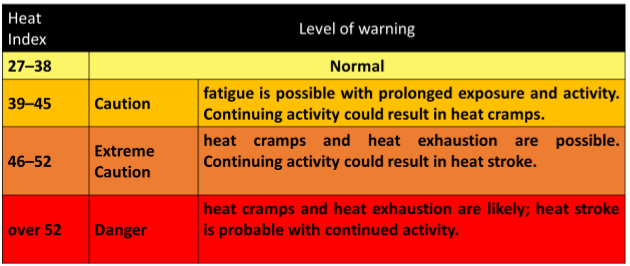
Effect of the heat index on human body is mentioned in the above table and it is prepared on the advice of the Ministry of Health and Indigenous Medical Services.
ACTION REQUIRED
Job sites: Stay hydrated and takes breaks in the shade as often as possible.
Indoors: Check up on the elderly and the sick.
Vehicles: Never leave children unattended.
Outdoors: Limit strenuous outdoor activities, find shade and stay hydrated.
Dress: Wear lightweight and white or light-colored clothing.
Note:
In addition, please refer to advisories issued by the Disaster Preparedness & Response Division, Ministry of Health in this regard as well. For further clarifications please contact 011-7446491.

Navy seize 323kg of heroin from fishing vessel in southwestern seas

Magnitude 7.4 quake hits off Indonesia’s Ternate, tsunami warning lifted

NASA successfully launches historic Artemis II moon mission

Sameer Rizvi arrives in the IPL to guide Delhi Capitals home in low-scoring chase

Trump to give primetime address on Iran war as questions swirl over his next move

PM opens ‘Silver Age Center,’ an Elder Care, Training and Research Centre built with modern facilities in Kataragama

‘Dates have the highest sugar content to fight Coronavirus’

Sunday Island 27 December – Headlines

#SundayIsland 17th December – Headlines

Sunday Island – 28th March

Sunday Island Headlines – 21 March

Sunday Island – 21st February – Headlines
-

 Features5 days ago
A World Order in Crisis: War, Power, and Resistance
-

 News6 days ago
Energy Minister indicted on corruption charges ahead of no-faith motion against him
-

 Sports6 days ago
SLC to hold EGM in April
-

 Opinion6 days ago
When elephants fight, it is the grass that suffers
-

 Latest News7 days ago
A strong Technical and Vocational Education and Training (TVET) system equips individuals with practical, relevant, and future-oriented skills helping to innovate responsibly towards a greener and sustainable future – PM
-
 Features6 days ago
Lest we forget
-

 News2 days ago
Tariff shock from 01 April as power costs climb across the board
-

 Business6 days ago
Pan Asia Bank empowers export sector as Strategic Partner of NCE Export Awards