
Opinion
Alternative methods to enhance tree cover at national level


by Eng. Mahinda Panapitiya
M Sc, (Department of Agriculture and Biological Engineering) Utah State University, Utah, USA,
When we talk about new forestry programs we think planting trees only in isolated locations in rural areas. However reservations along streams and roads in urban areas are also potential locations for planting trees. Following pictures show how similar interventions were done in Mahaweli Areas in 80s.
Concept behind the Proposal
Road Reservations & Stream corridors which extend to about 10 to 20 Meters in either side are not actively protected in Sri Lanka though it is very common in other countries. Reservations of roads and streams are owned by the government. Therefore public use of this land can be considered as a fair use of the land. Main purpose of this proposal is to introduce an intervention to connect the Forest Patches in urban areas using the reservations of streams and roads by planting trees so that those strips act also as Bio Corridors while enhancing the tree cover at national level.
Hidden Benefits
In addition to forest cove at national level, other ecological benefits are as follows
1. It serves as a roof for pedestrians using public roads while adding aesthetic value. In developed countries this is a specialised job done professionals called Arborist
2. It is also possible to develop stream banks as cycle tracks to use as Environmental Sustainable Transport (EST) system. This is very relevant to Sri Lanka because our road designs have not included such tacks in their design.
3. Those tree belts also play the role of corridors connecting isolated forest patches in urban areas supporting enhancement of urban wild life which is being badly detonated due to unplanned Land Use practices
4. It is also possible to develop stream banks as nature trails for people who enjoy the nature. Those tracks could be developed even to attract eco tourists like in other countries.
Historical Background of similar interventions
In Sri Lanka, the concept of Bio Corridor was introduced in 1988 under a Project called Mahaweli Agriculture and Rural Development project implemented in System B under an USAID funded program. Similar to highways which connect main cities, in this case the Bio Corridors were introduced as “Bio Highways” connecting fragmented forest patches (“Bio Cities”). At the same time those corridors were improved as Cycle Tracks for local farmers. In 2010, similar intervention was introduced in Gampaha District in parallel with a 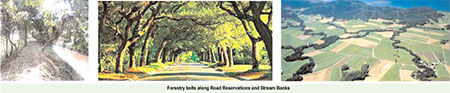 flood mitigation project implemented by the Provincial Road Development Authority (WP). For example when Uruwal Oya running adjacent to Gampaha Urban Area was improved to mitigate floods, when it runs adjacent to urban areas, those riparian tree belt areas were introduced. In this project while streams were improved to mitigate floods, riparian tree belt was also introduced using Bio Engineering Technologies to strengthen the stream banks structurally, instead of using gabions. Latter, part of that stream running adjacent to Gampaha Town was improved as Recreational purposes such as Jogging Track for urban communities. According to this intervention, as an additional benefit, it was expected that the shades provided by riparian tree cover would discourage growth of invasive plants such as Japan Jabara which clogs the drainage outlets resulting in floods in Urban Areas. Note that a technical paper published highlighting those achievements under Uruwal Oya, won the First Prize in a competition held by the Institution of Engineers Sri Lanka (IESL)-2012 on Water Related Bio Engineering Interventions in Urban Areas.
Costing
Based on measurement from Google Maps indicated above the Total Length of selected streams and roads are about 36 KM. Data available with the PRDA in implementing already completed similar interventions in 2010 was used for estimation. Assuming 500 Trees / KM, Planting & Maintaining a tree including fertilizing at least for 1 year till it reaches a height of at least 8 Ft is 3000. Therefore the Rough cost estimate is about 1.5 MRs/ KM.
References
Mahinda Panapitiya – Envisioning Respect for Natural Environment – Published under Member Profile in the Monthly Journal of American Society of Agriculture Engineers. May 1995 edition
Widyarathna. H.M.P.B, Dr. Hemanthi Ranasinghe, M.Sc Dissertation submitted to University of Sri Jayawardenepura, 1996 Survey of existing bank reservations of major natural streams in System B of Mahaweli Project
“
Establishment of Urban Recreational areas with Flood Mitigation Programs, presented at IESL Authors: Suniil Bnadaranayak (GM of PRDA of WP_
Hidden benefits related to Bio Diversity aspects of jogging track project
http://youtu.be/qWISFspNB74

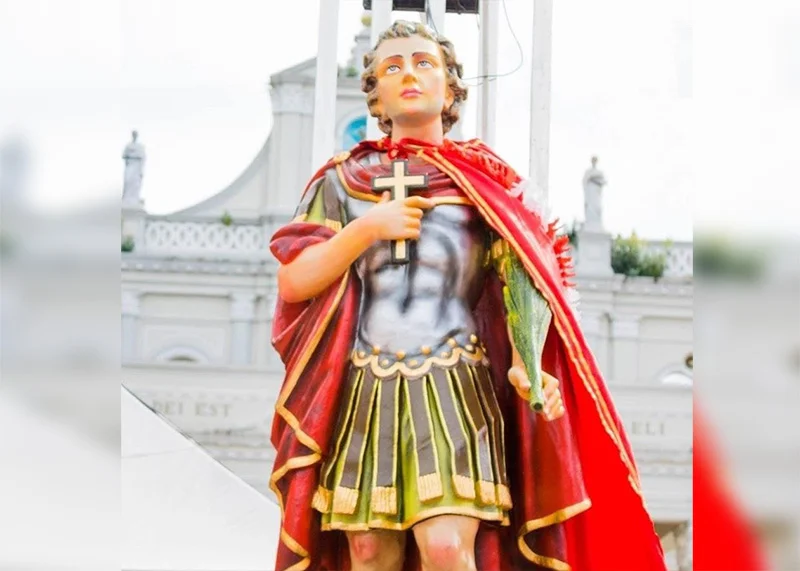
According to legend, St. Sebastian was born at Narbonne in Gaul. He became a soldier in Rome and encouraged Marcellian and Marcus, who were sentenced to death, to remain firm in their faith. St. Sebastian made several converts; among them were master of the rolls Nicostratus, who was in charge of prisoners, and his wife Zoe, a deaf mute whom he cured.
Sebastian was named captain in the Roman army by Emperor Diocletian, as by Emperor Maximian when Diocletian went to the east. Neither knew that Sebastian was a Christian. When it was discovered that Sebastian was indeed a Christian, he was ordered to be executed. He was shot with arrows and left to die but when the widow of St. Castulas went to recover his body, she found out that he was still alive and nursed him back to health. Soon after his recovery, St. Sebastian intercepted the Emperor; denounced him for his cruelty to Christians and was beaten to death on the Emperor’s order.
St. Sebastian was venerated in Milan as early as the time of St. Ambrose. St. Sebastian is the patron of archers, athletes, soldiers, the Saint of the youths and is appealed to protection against the plagues. St. Ambrose reveals that the parents that young Sebastian were living in Milan as a noble family. St. Ambrose further says that Sebastian, along with his three friends, Pankasi, Pulvius and Thorvinus, completed his education successfully with the blessing of his mother, Luciana. Rev. Fr. Dishnef guided him through his spiritual life. From his childhood Sebastian wanted to join the Roman army. With the help of King Karnus, young Sebastian became a soldier and within a short span of time he was appointed as the Commander of the army of King Karnus. The Emperor Diocletian declared Christians the enemy of the Roman Empire and instructed judges to punish Christians who have embraced the Catholic Church. Young Sebastian, as one of the servants of Christ, converted thousands of other believers into Christians. When Emperor Diocletian revealed that Sebastian had become a Catholic, the angry Emperor ordered for Sebastian to be shot to death with arrows. After being shot by arrows, one of Sebastian supporters, Irane, treated him and cured him. When Sebastian was cured he went to Emperor Diocletian and professed his faith for the second time disclosing that he is a servant of Christ. Astounded by the fact that Sebastian is a Christian, Emperor Diocletian ordered the Roman army to kill Sebastian with club blows.
In the liturgical calendar of the Church, the feast of the St. Sebastian is celebrated on the 20th of January. This day is indeed a mini Christmas to the people of Kandana, irrespective of their religion. The feast commenced with the hoisting of the flag staff on the 11th of January at 4 p.m. at the Kandana junction, along the Colombo-Negombo road. There is a long history attached to the flag staff. The first flag staff, which was an areca nut tree, 25 feet tall, was hoisted by the Aththidiya family of Kandana, and today their descendants continue hoisting of the flag staff as a tradition. This year’s flag staff, too, was hoisted by the Raymond Aththidiya family. Several processions, originating from different directions, carrying flags, meet at this flag staff junction. The pouring of milk on the flag staff has been a tradition in existence for a long time. The Nagasalan band was introduced by a well-known Jaffna businessman that had engaged in business in Kandana in the 1950s. The famous Kandaiyan Pille’s Nagasalan group takes the lead, even today, in the procession. Kiribath Dane in the Kandana town had been a tradition from time immemorial.
According to available history from the Catholic archives and volume III of the Catholic Church in Sri Lanka, the British period of vicariates of Colombo, written by Rev. Ft. Vito Perniola SJ, in 1806, states that the British government granted the freedom of conscious and religion to the Catholics in Ceylon and abolished all the anti-Catholic legislation enacted by the Dutch.
The proclamation was declared and issued on the 3rd of August 1796 by Colonel James Stuart, the officer commanding the British forces of Ceylon stated “freedom granted to Catholics” (Sri Lanka national archives 20/5).
Before the Europeans, the missioners were all Goans from South India. In the year 1834, on the 3rd of December, XVI Gregory the Pope, issued a document Ex Muwere pastoralis ministeric, after which the Ceylon Catholic Church was made under the South Indian Cochin diocese. Very Rev. Fr. Vincent Rosario, the Apostolic Vicar General, was appointed along with 18 Goan priests (The Oratorion Mission in Sri Lanka being a history of the Catholic Chruch 1796-1874 by Arthur C Dep Chapter 11 pg 12). Rev Fr. Joachim Alberto arrived in Sri Lanka as missionary on the 6th of March 1830 when he was 31 years old and he was appointed to look after the Catholics in Aluthkuru Korale, consisting Kandana, Mabole, Nagodaa and Ragama. There have been one Church built in 1810 in Wewala about three miles away from Kandana. The Wewala Chruch was situated bordering Muthurajawela which rose to fame for its granary. History reveals that the entire area was under paddy cultivation and most of them were either farmers or toddy tappers. History further reveals that there has been an old canal built by King Weera Parakrama Bahu. Later it was built to flow through the Kelani River, and Muthurajawela, up to Negombo, which was named as the Dutch Canal (RL Brohier historian). During the British time this canal was named as Hamilton Canal and was used to transport toddy, spices, paddy and tree planks of which tree planks were stored in Kandana. Therefore, the name Kandana derives from “Kandan Aana”.
Rev. Fr. Joachim Alberto purchased a small piece of land, called Haamuduruwange watte, at Nadurupititya, in Kandana, and put up a small cadjan chapel and placed a picture of St. Sebastian for the benefit of his small congregation. In 1837, with the help of the devotees, he dug a small well where the water was used for drinking and bathing and today this well is still operative. He bought several acres of land, including the present cemetery premises. Moreover, he had put up the Church at Kalaeliya in honour of his patron St. Joachim where his body has been laid to rest according to his wish of the Last Will attested by Weerasinghe Arachchige Brasianu Thilakaratne. Notary Public, dated 19th July 1855. The present Church was built on the property bought on the 13th of August 1875 on deed no. 146 attested by Graciano Fernando. Notary Public of the land Gorakagahawatta Aluthkuru Korale Ragam Pattu in Kandana within the extend ¼ acre from and out of the 16 acres. According to the old plan number 374 made by P.A. H. Philipia, Licensed surveyor on the 31st of January 195, 9 acres and 25 perches belonged to St. Sebastian Church. However, today only 3 acres, 3 roods and 16.5 perches are left according to plan number 397 surveyed by the same surveyor, while the rest had been sold to the villagers. According to the survey conducted by Orithorian priest on the 12th of February 1844 there were only 18 school-going Catholic students in AluthKuru Korale and only one Antonio was the teacher for all classes. In 1844 there was no school at Kandana (APF SCG India Volume 9829).
According to Sri Lanka National Archives (The Ceylon Almanac page 185) in the year 1852 there were 982 Catholics Male 265, female 290, children 365, with a total of 922. According to the census reports in 2014, prepared by Rev. Ft. Sumeda Dissanayake TOR, the Director Franciscan Preaching group, Kadirana Negombo a survey revealed that there are 13,498 Catholics in Kandana.
According to the appointment of the Missionaries in the year 1866-1867 by Bishop Hillarien Sillani, Rev. Fr. Clement Pagnani OSB was sent to look after the missions in Negoda, Ragama, Batagama, Thudella, Kandana, Kala Eliya and Mabole. On the 18th of April 1866, the building of the new Church commenced with a written agreement by and between Rec. Fr. Clement Pagnani and the then leaders of Kandana Catholic Village Committee. This committee consisted of Kanugalawattage Savial Perera Samarasinghe Welwidane, Amarathunga Arachchige Issak Perera Appuhamy, Jayasuriya Arachchige Don Isthewan Appuhamy, Jayasuriya Appuhamylage Elaris Perera Muhuppu, Padukkage Andiris Perera Opisara, Kanugalawattage Peduru Perera Annavi and Mallawa Arachchige Don Peduru Appujamy. The said agreement stated that they will give written undertaking that their labour and money will be utilised to build the new Church of St. Sebastian and if they failed to do so they were ready to bear any punishment which will be imposed by the Catholic Church.
Rev. Fr. Bede Bercatta’s book “A History of the Vicariate of Colombo page 359” says that Rev. Fr. Stanislaus Tabarani had problems of finding rock stones to lay the foundation. He was greatly worried over this and placed his due trust in divine providence. He prayed for days to St. Sebastian for his intercession. One morning after mass, he was informed by some people that they had seen a small patch of granite at a place in Rilaulla, close to the Church premises, although such stones were never seen there earlier, and requested him to inspect the place. The parish priest visited the location and was greatly delighted as his prayers has been answered. This small granite rock amount provided enough granite
blocks for the full foundation of the present church. This place still known as “Rilaulla galwala”. The work on the building proceeded under successive parish priests but Rev. Fr. Stouter was responsible for much of it. The façade of the Church was built so high that it crashed on the 2nd of April of 1893. The present façade was then built and completed in the year 1905. The statue of St. Sebastian, which is behind the altar, had been carved off a “Madan tree”. It was done by a Paravara man, named Costa Mama, who was staying with a resident named Miguel Baas a Ridualle, Kandana. This statue was made at the request of Pavistina Perera Amaratunge, mother of former Member of Parliament gatemuadliyer D. Panthi Jayasuirya. The Church was completed during the time of Rev. Fr. Keegar and was blessed by then Archbishop of Colombo Dr. Anthony Courdert OMI on the 20th of January 1912. In 1926, Rev. Fr. Romauld Fernando was appointed as the parish priest to the Kandana Church. He was an educationalist and a social worker. Without any hesitation he can be called as the father of education to Kandana. He was the pioneer to build three schools in Kandana: Kandana St. Sebastian Boys School, Kandana St. Sebastian English Girls School and, the Mazenod College Kandana. Later he was appointed as the Principal of the St. Sebastian Boys English School. He bought a property at Kandana, close to Ganemulla Road, and started De Mazenod College. Later, it was given officially to the Christian Brothers of Sri Lanka, by then Archbishop of Colombo, Peter Mark. In 1931, there were 300 students (history of De Lasalle brothers by Rev. Fr. Bro Michael Robert). Today, there are over 3,500 students and is one of the leading Catholic schools in Sri Lanka. In 1924, one Karolis Jayasuriya Widanage donated two acres to build De Mazenod College for its extension.
The frist priest from Kandana to be ordained was Rev. Fr. William Perera in 1904. With the help of Rev. Fr. Marcelline Jayakody, he composed the famous hymn “the Vikshopa Geethaya”, the hymn of our Lady of Sorrow.
The Life story of St. Sebastian was portrayed through a stage play called “Wasappauwa” and the world famous German passion play Obar Amargavewchi whichwas a sensation was initiated by Rev. Fr. Nicholas Perera. Legend reveals that in the year 1845 a South Indian Catholic, on his way to meet his relatives in Colombo, had brought down a wooden statue of St. Sebastian, one and half feet tail, to be sold in Sri Lanka. When he reached Kalpitiya he had unexpectedly contracted malaria. He had made a vow at St. Anne’s Church, Thalawila, expecting a full recovery. En route to Colombo, he had come to know about the Church in Kandana and dedicated to St. Sebastian. In the absence of the then parish Priest Rev. Fr. Joachim Alberto, the Muhuppu of the Church, with the help of the others, had agreed to by the statue for 75 pathagas (one pahtaga was 75 cent). Even though the seller had left the money in the hands of the “Muhuppu” to be collected later, he never returned.
On the 19th of January 2006, Archbishop Oswald Gomis declared St. Sebastian Church as “St. Sebastian Shrine” by way of a special notification and handed over the declaration to Rev. Fr. Susith Perera, the Parish Priest of Kandana.
On the 12th of January 2014, Catholics in Sri Lanka celebrated the reception of a reliquary containing a fragment of the arm of St. Sebastian. The reliquary was gifted from the administrator of the Basilica of St. Anthony of Padua and was brought to Sri Lanka by Monsignor Neville Perera. His Eminence Malcolm Cardinal Ranjit, Archbishop of Colombo, accompanied by priests and a large gathering, received the relic at the Katunayake International Airport, and brought it to Kandana, led by a procession, and was enthroned at the St. Sebastian Shrine.
Rev. Fr. Srinath Manoj Perera, the present administrator of the shrine, and assistant Priest Rev. Fr. Asela Mario, have finalised all arrangements to conduct the feast of St. Sebastian in a grand scale.
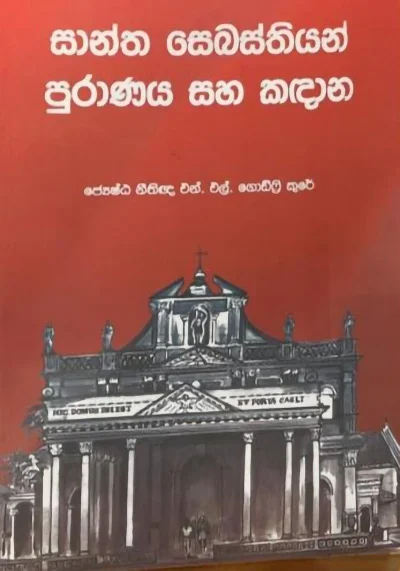
The latest book, written by Senior Lawyer Godfrey Cooray, named “Santha Sebastian Puranaya Saha Kandana” (The history of St. Sebastian and Kandana), was launched at De La Salle Auditorium, De Mazenod College, Kandana.
The Archbishop of Colombo His Eminence Most rev. Dr. Malcolm Cardinal Ranjith was the Chief Guests at the event.
The book discusses about the buried history of Muthurajawela and Aluth Kuru Korale civilisation, the history of Kandana and St. Sebastian. The author discusses the historical and archaeological values and culture.
158th Annual Feast of St. Sebastian’s National Shrine, Kandana, will be held on 20th of January 2026. On the 19th of January, Monday, Solemn Vespers were presided by His Lordship most Rev. Dr. Maxwell Silva Auxiliary Bishop of Colombo.
Festive High Mass will be presided by His Lordship Most Rev. Dr. J. D. Anthony, The Auxiliary Bishop of Colombo, on the 20th of January at 8pm.
By Godfrey Cooray
Senior Attorney -at -Law,
Former Ambassador to Norway and Finland
President, National Catholic Writers’ Association
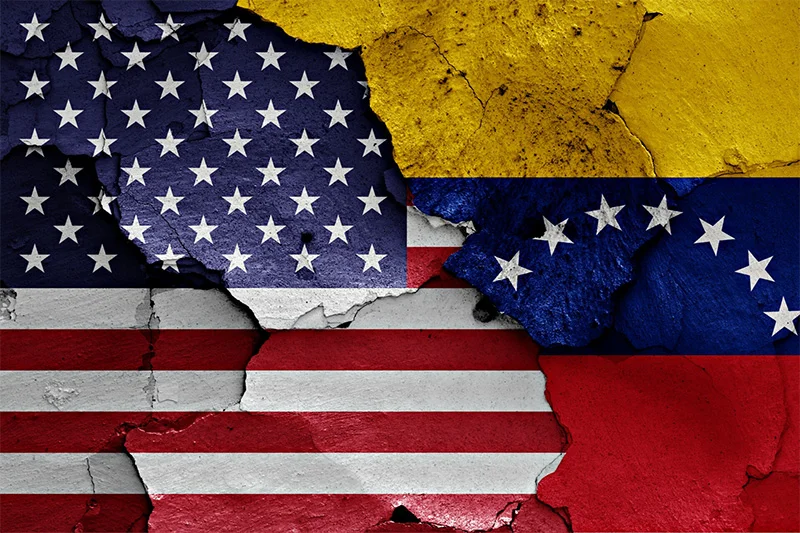
The long-standing desire of the United States to subjugate, control, or overthrow the Venezuelan government has been driven primarily by two interconnected factors. The first is Venezuela’s vast mineral wealth, and the second is the emergence of anti-Imperialist and leftist political leadership that has consistently challenged US dominance in the region.
This hostility intensified dramatically in 1999, when Hugo Chávez—an outspoken leftist leader inspired by the legacy of Simón Bolívar, the father of Latin American independence from Spanish colonial rule—came to power. Chávez initiated a historic process of reclaiming Venezuela’s natural resources from US corporations and returning them to the Venezuelan people. From that moment onward, Venezuela became a central target of US imperial strategy.
Venezuela was one of the five founding members of the Organisation of the Petroleum Exporting Countries (OPEC) and became the world’s eighth-largest oil producer. The country possesses the largest proven oil reserves globally, estimated at 303 billion barrels. Beyond oil, Venezuela also plays a major role in heavy industries such as steel, aluminum, and cement. Its total mineral wealth is estimated at nearly US$14 trillion, and approximately 95 percent of its exports are derived from mineral resources.
Prior to the Chávez era, more than 500 US companies operated in Venezuela, dominating its extractive industries and using the country as a captive market for American exports. This economic dominance was directly challenged under Chávez and later under his political and ideological successor, President Nicolás Maduro. As a result, Venezuela increasingly came into conflict with US strategic and corporate interests.
Over the past two decades, the United States has directly, or indirectly, intervened in several oil-producing nations, including Iraq, Iran, Kuwait, and Libya. In some cases, rulers were assassinated and replaced with pro-American puppet regimes. Saudi Arabia, by aligning itself completely with US interests, has avoided invasion and survives as a compliant client state.
Venezuela, however, has stood firm for more than 20 years as a major obstacle to US efforts to dominate the global oil market. In this resistance, President Nicolás Maduro has emerged as one of the region’s most prominent anti-imperialist leaders.
After assuming office in 2013, President Maduro took decisive measures to counter the impact of long-standing US sanctions. Despite sanctions that disrupted nearly 50 percent of essential medicine supplies, Venezuela succeeded in rebuilding its pharmaceutical sector. By 2016, the country was producing approximately 80 percent of its essential medicines domestically. This policy of resistance and non-submission prompted the United States to escalate its pressure through new mechanisms, including direct restrictions on oil exports—which was called “oil quarantine.”
One notable incident in this campaign was the seizure of a commercial vessel by the US Coast Guard on December 10, while it was transporting Venezuelan petroleum to Cuba.
Simultaneously, the US intensified military provocations in Venezuelan maritime zones, including attacks on small naval vessels under the pretext of combating drug trafficking. US Senator Chris Coons himself acknowledged that more than 20 Venezuelan vessels had been destroyed and over 80 people killed under those operations, allegedly on the grounds of drug interdiction.
Beginning in early 2020, Venezuela and its leadership were formally accused of involvement in drug trafficking. In October of that year, a US federal court conducted a one-sided trial and convicted President Nicolás Maduro of “narco-terrorism” and conspiracy to import cocaine into the United States. This legal farce culminated in August 2025 with the announcement of a US$50 million bounty for the capture of President Maduro.
Many political analysts warned that these measures were designed to pave the way for a direct invasion and the arrest of Venezuela’s legitimate head of state. These warnings proved accurate, when On September 6, a Bill introduced in the US Senate, ostensibly to require congressional approval for military action against Venezuela, was defeated. Its rejection effectively granted the US president the authority to launch military operations against Venezuela without congressional consent.
Yet the central justification for these actions—drug trafficking—has been contradicted by official US sources themselves. According to reports by the US Drug Enforcement Administration, neither Venezuela nor President Maduro appears on the list of countries, or leaders, posing a drug-trafficking threat to the United States. Furthermore, the 2025 World Drug Report identifies the United States as the world’s largest drug market and distribution hub. Drug consumption, trafficking, and profit circulation are deeply embedded within the American economy itself.
It is, therefore, evident that the accusations against President Nicolás Maduro are false and politically motivated. Their real purpose is to legitimize invasion, regime change, and the arrest of a leader of a sovereign country. Parallel to this strategy, the US has consistently attempted to destabilise Venezuela internally. Opposition figures such as María Corina Machado were promoted to incite unrest using the “colour revolution” model. Her subsequent international recognition for these actions reveals the extent to which violence and destabilisation have been repackaged as “democracy promotion.”
These destabilisation efforts have been partly facilitated by unresolved structural weaknesses in Venezuela’s socio-economic system. Nearly 88 percent of the population resides in urban areas, while agriculture contributes only about 4 percent to the national economy. During periods of high inflation, low-income urban populations are the most vulnerable and, consequently, the most susceptible to manipulation for political unrest.
Another decisive factor behind US hostility is Venezuela’s strategic partnership with China. Under both Chávez and Maduro, Venezuela became China’s fourth-largest oil supplier. The China–Venezuela Joint Fund, established with the China Development Bank, financed major infrastructure projects. China extended a US$10 billion concessional loan during the 2010 financial crisis and later signed a US$16 billion agreement for joint oil venture for 450,000 barrels of oil per day. These developments significantly intensified American opposition.
The culmination of this entire process marks an unprecedented moment in world history: a powerful sovereign state invading another sovereign state without provocation, attacking civilian and military targets, killing more than 80 civilians, and forcibly removing the legitimate president from the country. While previous regime-change operations in Iraq and Libya followed prolonged military invasions justified by fabricated narratives, the arrest of President Nicolás Maduro represents an even more dangerous precedent.
Even more alarming is the paralysis of the United Nations, which has failed to convene either the Security Council or the General Assembly to address this blatant violation of international law.
Although China and Russia have publicly opposed US aggression, the silence and inaction of global institutions threaten to erode faith in international law itself.
This situation sets a grave precedent and poses a serious danger to world peace. It underscores the urgent need to build global public opinion in favor of sovereignty, non-intervention, and the formation of a new international anti-imperialist alliance.
by Dr. Wasantha Bandara
General Secretary
Patriotic National Movement

A recent tragedy of a young audit professional has prompted a nationwide conversation on Sri Lanka’s audit work culture. What was initially described as an untimely passing has since raised serious concerns about excessive workloads, workplace responsibility, and the well-being implications of the professional pressure. Accordingly, this article seeks to explore prevailing audit culture and professional practices in Sri Lanka, and highlights areas where thoughtful reform may be considered
The Evolution of Accounting and Finance Education in Sri Lanka
Over the past several decades, accounting and finance education in Sri Lanka has evolved from a narrowly technical field into a recognised professional discipline. Universities and professional institutions now offer specialised programmes aligned with international standards, covering accounting, finance, auditing, taxation, and corporate governance.
Professional bodies have modernised curricula by incorporating international accounting and auditing standards, ethics, and governance related content. As a result, Sri Lankan accounting graduates develop both technical competence and professional judgment, enabling them to compete successfully in multinational corporations, international audit networks, and global financial institutions, both locally and overseas.
This progress reflects a broader national commitment to professional excellence. Accounting and finance are now recognised as disciplines central to economic governance, market transparency, investor confidence, and public trust.
Why Professional Qualifications Matter
Professional qualifications often act as gateways to the corporate world. Professional pathways in Sri Lanka include qualifications offered by the Institute of Chartered Accountants of Sri Lanka (ICASL), the Association of Chartered Certified Accountants (ACCA), the Chartered Institute of Management Accountants (CIMA), the Institute of Chartered Professional Managers (ICPM), and the Association of Accounting Technicians (AAT).
For employers, these qualifications signal technical competence, ethical compliance, and completion of structured practical training. For students, they represent professional legitimacy, career security, and upward mobility.
Therefore, families and students invest significant time and resources in this pathway, reflecting its importance, often exceeding the practical value of a degree alone. Qualified professionals trained through this system contribute to both Sri Lanka’s domestic financial sector and overseas markets.
The Growth and Public Role of the Audit Sector
Alongside educational development, Sri Lanka’s audit sector has expanded in scale and influence as businesses have become more complex and globally connected. Audit firms now operate across the listed companies.
Audit firms perform an important public interest function by assuring the credibility of financial information, supporting investor confidence, and underpinning regulatory compliance and corporate governance. Beyond service delivery, they also act as professional institutions that determine norms and train future leaders in accounting and finance.
As a result, internal practices within audit firms, including organisational culture, workload expectations, remuneration, and supervision, have implications that extend beyond individual workplaces, influencing professional judgment, audit quality, and long-term public trust.
The Dream of Becoming a Chartered Accountant
For thousands of young Sri Lankans, becoming a Chartered Accountant represents one of the most respected professional ambitions. It is widely viewed as a symbol of discipline, resilience, and upward mobility. Students enter the pathway with the expectation that years of study, sacrifice, and perseverance will ultimately lead to professional recognition and stability.
A defining feature of this pathway is mandatory practical training. To qualify, students must complete a prescribed period of supervised training, most commonly within audit firms. This requirement is designed to bridge theory and practice, ensuring that academic knowledge is reinforced through real world exposure, professional supervision, and ethical decision making.
In practice, securing a training position is often the most decisive and competitive stage of the journey. Without completing this training, the qualification remains unattainable regardless of examination success. Therefore, audit firms are not only employers but also essential gatekeepers to professional advancement, controlling access to qualifications, experience, and future career opportunities.
Where the System Begins to Strain
This structure, while well intentioned, creates a significant imbalance of power. Trainees depend on audit firms not only for income, but also for the completion of their professional qualification. In such circumstances, questioning workloads, working hours, or basic welfare provisions can feel risky. Many trainees remain silent, fearing that concerns could delay qualification or affect future career prospects.
Audit work is demanding worldwide, particularly during peak reporting periods. Long hours, tight deadlines, and intense fieldwork are widely recognised features of the profession. However, the concern arises when these pressures become normalised without sufficient regard for rest, safety, remuneration, or minimum working conditions.
Training allowances and entry-level remuneration in audit firms are often modest relative to workloads and expectations, with trainee allowances typically ranging from LKR 10,000 to 20,000 per month, despite daily working hours that frequently extend 8 to 12 hours. Many trainees accept low pay and long hours as temporary sacrifices in pursuit of long-term professional goals. Over time, when such conditions are justified as “part of training,” unhealthy practices risk becoming normalised and embedded within professional culture.
Such environments may still produce technically competent professionals, but at the cost of burnout, ethical fatigue, and reduced long term engagement with the profession.
A Regulatory Blind Spot
In Sri Lanka, audit firms are regulated by CA Sri Lanka with respect to professional standards, ethical conduct, examinations, and prescribed training requirements, thereby playing an important role in maintaining the profession’s credibility and international standing. This is a professional regulation.
However, professional regulation serves a different purpose from organisational or workplace oversight. While audit firms are subject to general labour laws, there is no audit specific public oversight mechanism that systematically reviews audit firms’ internal governance, remuneration structures, or training environments.
This creates a regulatory asymmetry. Audit firms scrutinise others under detailed regulatory frameworks, yet their own internal systems are not subject to equivalent public review. Given the large population of trainees with limited bargaining power, this gap may affect professional sustainability, audit quality, and public trust.
Following a recent tragedy involving a trainee, CA Sri Lanka issued a public condolence statement acknowledging stakeholder concerns and confirming that the circumstances are under review.
Looking Ahead
To strengthen the long-term sustainability of the audit profession, Sri Lanka may consider the following measures:
* Establish a dedicated public oversight body for audit firms, with responsibility for monitoring firm level governance, training environments, and organisational practices, complementing existing professional regulation.
* Introduce transparency reports for audit firms, requiring disclosure of governance structures, quality control systems, training arrangements, and continuing professional education practices.
* Apply modern labour governance principles, drawing on modern slavery frameworks used internationally that emphasise prevention, transparency, and early identification of labour related risks.
* Improve visibility of trainee remuneration and workload practices, particularly where mandatory training creates structural dependency.
* Strengthen coordination between professional self-regulation and public oversight, ensuring that professional excellence is supported by sustainable and accountable organisational environments.
These measures do not imply illegality or misconduct. Rather, they reflect an opportunity to align Sri Lanka’s audit profession with evolving global norms that prioritise transparency, dignity, and long-term public confidence. If audit firms are entrusted with holding others accountable, the systems governing them must also reflect responsibility toward the people who sustain the profession.
by Sulochana Dissanayake
Senior Lecturer at Rajarata University of Sri Lanka | Sessional Academic & PhD Candidate at Queensland University of Technology (QUT)
and
by Prof. Manoj Samarathunga
Faculty of Management Studies
Rajarata University of
Sri Lanka Mihintale

Red-hot Royal Challengers Bengaluru stay perfect ain 20nd march into playoffs

Zadran, Rasooli power Afghanistan to commanding win over West Indies

Italian fashion designer Valentino dies aged 93

U – 19 World Cup: Sri Lanka beat Ireland by 106 runs

U – 19 World Cup: Rowles, Bulbulia star in South Africa’s big win over Tanzania

U – 19 World Cup: Raza, Usman steer Pakistan to victory over Scotland

‘Dates have the highest sugar content to fight Coronavirus’

Sunday Island 27 December – Headlines

#SundayIsland 17th December – Headlines

Sunday Island – 28th March

Sunday Island Headlines – 21 March

Sunday Island – 21st February – Headlines
-

 Editorial3 days ago
Illusory rule of law
-
 News4 days ago
UNDP’s assessment confirms widespread economic fallout from Cyclone Ditwah
-

 Business6 days ago
Koaloo.Fi and Stredge forge strategic partnership to offer businesses sustainable supply chain solutions
-
 Editorial4 days ago
Crime and cops
-
 Features3 days ago
Daydreams on a winter’s day
-

 Editorial5 days ago
The Chakka Clash
-
 Features3 days ago
Surprise move of both the Minister and myself from Agriculture to Education
-

 Features2 days ago
Extended mind thesis:A Buddhist perspective