
News
All party group plus Karu J urges immediate re-negotiation with creditors

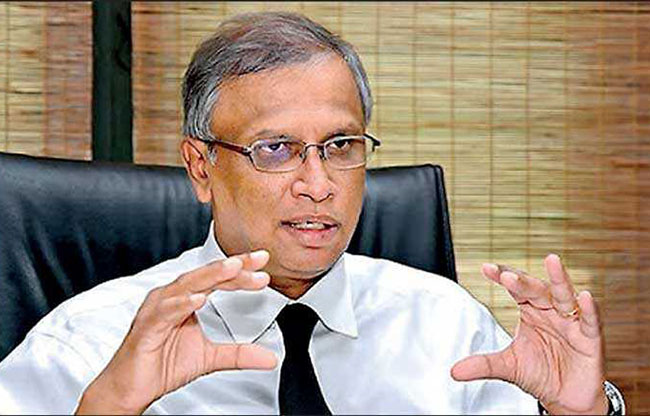
Three watchdog committee heads join talks with opposition MPs
In the wake of Finance Minister Basil Rajapaksa announcing his willingness to go to the IMF seeking financial support to solve the current crisis, the government and opposition MPs on Thursday agreed at a closed-door meeting convened by TNA Parliamentarian MA Sumanthiran to urge government to start renegotiating with the country’s creditors without further delay.
“We have agreed that the government should commence renegotiating with our creditors before we run out of our existing foreign reserves so that we could reschedule our loan settlements. It was also seen in the discussion that the renegotiation would be a multi-step process. We also discussed similar experiences by other countries such as Argentina and Uruguay.
“We also discussed that any solution that should come out in those negotiations should ensure that the continuous flow of essential goods to the market and the ensuring that the poor and vulnerable sectors of our society are never compromised. We also agreed that there should be a condition from our side that the welfare and social protection measures should continue without any pruning,” Convenor of the meeting MP Sumanthiran told the Sunday Island.
The meeting was attended by TNA leader R Sampanthan, SJB leader Sajith Premadasa, former Speaker Karu Jayasuriya, SLMC leader Rauf Hakim, Leader of the Tamil Progressive Alliance Mano Ganesan, SJB MPs Dr Harsha de Silva and Eran Wickremaratne, TNA MP Shanakiyan Rasamanikam, COPE Chairman Prof Charitha Herath, COPA Chairman Prof Tissa Vitarana and COPF Chairman Anura Priyadarshana Yapa.
It was the second of a series of meeting convened by MP Sumanthiran. It was held at Waters Edge in Battaramulla and lasted for over one and half hours. The first meeting was held on Jan 27 at Cinnamon Grand and attended by UNP leader Ranil Wickremesinghe, MP Kabir Hashim and JVP MP Dr Harini Amarasuriya.
“Both were closed-door meetings to save time and considering the prevailing situation. They were not secret meetings, because they were open to MPs and political leaders concerned with finding a collective response for the economic crisis our nation is confronted with. Our main objective was to to brainstorm ways to tide over the crisis, given the responsibility we have towards people,” Sumanthiran said.
“We will convey our agreements to the government in the coming days,” he said.
A paper signed by Sumanthiran after the first meeting said: “Sri Lanka is in the midst of an unprecedented economic crisis, causing severe hardship to all segments of our society, especially our working people and the poor.
“Undoubtedly, the government has a daunting task ahead, and as a country there is a need for us all to come together to overcome this challenge.
At the same time, the government’s approach to resolving the crisis raises some serious questions. Its focus, almost solely on meeting foreign debt obligations, is draining the country of dollars needed for importing essentials for our people. The government’s emphasis on avoiding a default at any cost appears to be downplaying a fundamental question – can our people eat? After all, a country’s pride rests not only in repaying its loans, but also in ensuring no citizen goes to bed hungry.
“I approached parliamentary colleagues and party leaders, in my capacity as a former chairman of the Committee on Public Finance in Parliament. MPs came together in the knowledge that Parliament is expected to have full control of public finance, and that each MP, therefore, also has a fiduciary responsibility to ensure the proper management of public finances in Sri Lanka.
“The crisis, we noted, is of a proportion that is historically unprecedented for many reasons:
(1) The country’s ratings have fallen to the level of being blacklisted in international credit markets.
Since April 2020, Sri Lanka has been locked out of borrowing using International Sovereign Bonds (ISBs) in the international market
(2) Repaying US dollar debt in this context means that the usable foreign reserves are down to below one month of imports – the lowest on record since independence.
(3) The ratio of interest on debt to government revenue was above 70% in 2020, a historical high for Sri Lanka, and amongst the highest in the world.
(4) The ratio of public debt compared to the value of Sri Lanka’s domestic production (GDP) is also the highest on record, at 120%. It skyrocketed, by almost 25 percentage points, in the last two years.”



News
Establishment of an Institutional Framework to Inagurate Upper Hydro Catchment Areas Management Authority

Policy approval of the Cabinet of Ministers was granted at their meeting held on 08.06.2026 to establish the Upper Hydro Catchment Areas Management Authority for identification and
execution of a formal and long – lasting remedy to secure the central hills including the upper hydro catchment areas enabling them to sustain amidst extreme weather conditions
due to natural calamities and human activities as well as to be used for the sustainable development of the country.
Accordingly, a concept paper has been prepared including
institutional structure, activities, powers, active subject area as well as administrative and coordination mechanism for the proposed authority by an expert technical committee appointed by the Secretary to the President.
Based on the said concept paper, the Cabinet of Ministers granted approval to the resolution furnished by the President to instruct the Legal Draftsman to prepare a draft bill including legal provisions required for the establishment of Upper Hydro Catchment Areas Management Authority.
News
Introduction of Flora and Fauna (Regulation of actions of the Indigenous Community within the nominated areas) Regulations
With the objective of securing the traditional livelihood and the eco system of the indigenous community, it has been recognized the necessity of introducing a formal regulation methodology to secure their engagement in livelihood activities by being more sensitive to the existing laws.
Thereby, the Fauna and Flora (regularizing) regulations under the Fauna and Flora Protection Ordinance (Authority 469) have been prepared so that nominated activities within the prescribed area to a member of the indigenous community
who has been registered for securing the rights acquired from law or custom or usage or traditional stance to execute an act within a certain state land that is fundamental to the survival of the indigenous community permission can be granted
Accordingly, the Cabinet of Ministers granted approval to the resolution furnished by the Minister of Environment to publish the said regulations in the government gazette notification and thereby submit to the Parliament for its concurrence.
Latest News
M. M. D. J. Senarathne, appointed Director General of the Department of National Botanical Gardens
The Cabinet of Ministers approved the resolution furnished by the Minister of Environment to appoint M. M. D. J. Senarathne, who is the senior most officer in Grade I of Sri Lanka Scientific Service se

Establishment of an Institutional Framework to Inagurate Upper Hydro Catchment Areas Management Authority
Introduction of Flora and Fauna (Regulation of actions of the Indigenous Community within the nominated areas) Regulations
M. M. D. J. Senarathne, appointed Director General of the Department of National Botanical Gardens

Harmanpreet Kaur steps down as India captain

Turkiye, Pakistan agree Saudi Arabia military deployment under Mecca pact

Rumesh Tharanga among nominees announced for World Athlete of the Year 2026

‘Dates have the highest sugar content to fight Coronavirus’

Sunday Island 27 December – Headlines

#SundayIsland 17th December – Headlines

Sunday Island – 28th March

Sunday Island Headlines – 21 March

Sunday Island – 21st February – Headlines
-

 Latest News7 days ago
Gold winner Tharanga gets brand-new Honda Vezel from SLAAJ
-

 News6 days ago
US-assisted ‘Ice’ detection: NPC to examine IGP’s move to transfer drug-busting team
-

 Features7 days ago
Why Sri Lanka needs an Inclusive Civic Nationalism – urgently
-

 Editorial5 days ago
Colombo Port drug bust: The plot thickens
-

 News7 days ago
Civil society activist accuses govt. of favouring Ven. Gnanasara
-
 Midweek Review7 days ago
Dappula’s Easter Sunday ‘grand conspiracy’ claim demolished
-

 Editorial7 days ago
When crime bosses rise above law and shrines
-
Editorial6 days ago
Drug busting, transfers and trust deficit