
Business
Aligning private capital with public purpose: The role of banks in driving a true Sri Lankan revival


Sri Lanka stands at crossroads. After five years of multiple crises and many hardfought reforms, our economy made its first tentative steps back to growth in 2025. Following successive contractions, GDP growth has reached a commendable 4.8 percent in 1Q25.
Deflation early in the year offered consumers welcome relief, while an 800basispoint policyrate reduction since 2023 has reignited private credit growth. This monetary easing is expected to nudge inflation back into positive territory—an outcome that, if kept moderate, will support business investment and planning and underpin sustainable economic expansion.
The steady resumption of infrastructure spending, robust remittance inflows and prudent management of foreignexchange reserves have quietly restored confidence that a genuine revival is within reach.
Macro-stabilization yet to reach the household
Yet even as these macroeconomic fundamentals strengthen—anchored by disciplined fiscal policies and decisive monetary easing—daily life remains a stark struggle for a significant majority of Sri Lankans.
Poverty remains high at nearly 25 percent, household incomes still lag behind precrisis levels, and underemployment persists. Rural communities in particular – which are heavily dependent on agriculture – face regular hardships due to variable farm income, crop failures, and food wastage.
Together with erratic weather patterns, rising costs of fertilizer and other inputs, Sri Lanka’s agriculture sector remain state in 2025, even as manufacturing, construction and export‑oriented industries collectively drove growth rates close to double digits, while services—buoyed by more than 1 million tourists to Sri Lanka in the first 6 months alone registered healthy gains.
While the national economy is regaining strength, we cannot lose sight of the tectonic shifts reshaping the global economy. From the ongoing renegotiation of global trade architectures, the fragmentation and potential disruptions of supply chains, and the prospect of radical technological transformations —from artificial intelligence to advanced automation—current developments have the potential to radically redefine competitive advantages on the global stage.
In rebuilding the Sri Lankan economy, we must prepare for this emerging paradigm. We must be bold in identifying new avenues for securing our place in this emerging global order while consolidating and leveraging the unique strengths we already possess.
From high value agricultural products to specialized apparel, and an agile and adaptable new generation of young professionals and entrepreneurs, and of course a geographic location that continues to act as a global nexus for trade, Sri Lanka has many different avenues from which to pursue development.
Banks will be indispensable in this endeavor, acting as both intermediaries and strategic mobilisers of capital. By actively channeling capital into innovation, digital services and high‑value manufacturing, and by reinforcing the institutions that support a new and ambitious generation of exporters and service providers, the banking sector can ensure that investment flows align with national priorities.
The ultimate aim must be threefold: to rebuild livelihoods by connecting entrepreneurs, enterprises, and MSMEs to sustainable credit and skills; to strengthen national economic resilience with strategic underwriting of projects with disproportionate growth potential; and to drive broad‑based, bottom‑up growth that harnesses the unique advantages of every region of the island to the benefit of the whole.
Rebuilding livelihoods at the grassroots
Presently, several important initiatives are being led by the Government to support poverty alleviation including through the expansion of the Awesuma programme. We believe these essential protections must be paired with proactive efforts to rebuild livelihoods, empowering beneficiaries and communities to achieve lasting economic self-sufficiency.
To unlock the full potential of these initiatives, banks must adopt a more ambitious role as strategic intermediaries—bridging savers and investors with the businesses that require growth capital. By streamlining capital flows into priority sectors and tailoring financing solutions to the unique cashflow dynamics of enterprises and communities, the banking industry can ensure that savings are channelled into productive, inclusive investments that underpin sustainable development.
As part of our agrimodernisation drive to create 30,000 Agripreneurs across the country under HNB Sarusara, we encounter countless innovators who are rewriting the rules of rural enterprise. Take, for example, a young potato farmer who had long sold his crop at wholesale prices. After teaching himself about a natural potatochip processor, he approached HNB with a bold proposal: finance the machine, and he would develop a valueadded snack business. We backed his plan, and within two years his operation turned profitable, giving him the confidence to pursue new market opportunities.
Across Sri Lanka, we meet many other spirited entrepreneurs—from spice farms, and fisheries to young designers, software engineers, and even creative professionals – who each possess the drive and local insight to build vibrant businesses that can empower themselves financially, and create quality employment for others.
Our role as a bank is to spot these visionaries early, to tailor financing and advisory support to their specific needs, and to partner with them as they scale. By doing so, we rebuild livelihoods and catalyse a new wave of valueadded enterprises that can compete nationally and even internationally.
At its core, Sarusara seeks to help Sri Lankan farmers understand, integrate and adapt to technology in their work. Confronted with yields well below global benchmarks, rural communities remain tethered to traditional practices not out of preference but because of entrenched knowledge and resource gaps.
We begin by introducing basic laboursaving implements—hand tractors, threshers and minicombine harvesters—but swiftly moves participants towards advanced systems such as droneassisted crop monitoring and mobile soilmapping services. Through pilot schemes set to scale in the coming year, we are laying the groundwork for precision agriculture practices to be scaled across the island, optimising fertilisers, herbicides and pesticides, curbing waste while driving meaningful productivity gains and improving margins for farmers.
In time, the full integration of precision agriculture and automation will free up valuable labour, creating a new imperative: supporting communities as they transition to different forms of employment. As routine tasks become automated, fresh opportunities will emerge for higherskilled roles in equipment maintenance, data analysis and agritechnology entrepreneurship across regional hubs.
Strengthening national economic resilience
To seize these gains, Sri Lanka must invest now in education and vocational training, ensuring that future generations are equipped to thrive in an increasingly technologydriven agrarian economy.
While these technological and agricultural transitions are vital, we cannot expect them alone to deliver game‑changing results in the short term. In the interim, further structural reforms are essential—most notably in our export sector. The crisis laid bare how critical exports are as a growth engine for Sri Lanka, and with thousands of SMEs and abundant natural resources at our disposal, we have the raw ingredients for a robust export renaissance. Yet to truly elevate our global standing, we must cultivate a small cadre of large, home‑grown exporters capable of anchoring entire value‑chain ecosystems.
While capital must continue to be channeled into the grassroots, simultaneously we must also follow the example of Asia’s most dynamic economic success stories – from India and China to Vietnam and South Korea. In each, they were able to focus investment into substantial enterprises, around which vibrant ecosystems were then built.
Sri Lanka too must seek to build a new generation of national champion export brands that can emulate and build on the success of the nation’s current leaders while competing in entirely new markets. Those focused on export manufacturing need to be incentivized to scale themselves up within our Export Processing Zones. Their scale and ambition would not only generate direct export revenues but also spur demand for upstream suppliers, logistics providers and support services, creating a virtuous circle of growth.
From a macroeconomic standpoint, building these national champions must be a strategic priority. Banks have a crucial role to play—designing bespoke financing structures, co‑investing alongside foreign, private and public partners, and underwriting the large‑scale capital commitments that these export leaders require.
To align private capital with public purpose, we must harness our collective expertise and deploy our resources where they will have the greatest impact. In doing so, we will not only restore trust in our economy but also chart a course towards a Sri Lankan revival that is both resilient and inclusive—one in which every citizen can take pride and share in our nation’s success.
To be Continued
By Damith Pallewatte, Managing Director/CEO, HNB PLC


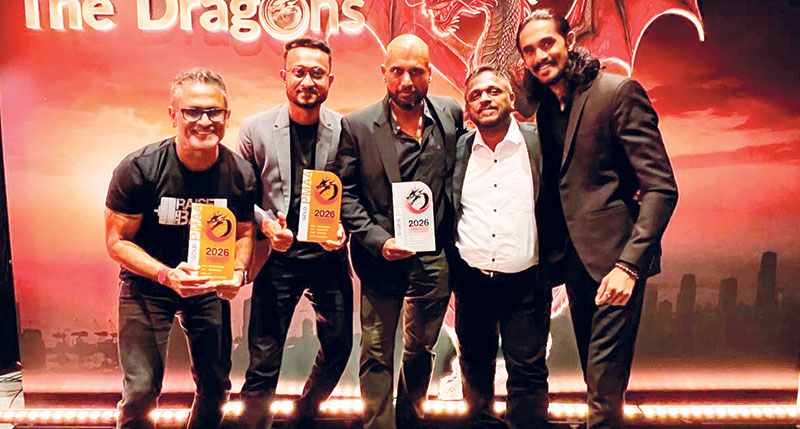
Nine awards, including two Golds, across disciplines recognise business-driven creativity
Ogilvy Group Sri Lanka delivered a standout performance at the recently concluded Dragons of Sri Lanka 2026 Awards, securing a total of nine awards comprising two Gold Dragons, one Silver Dragon and six Black Dragons, among the festival’s highest overall award tallies, a company news release said.
Gold Dragon wins for Phoenix Ogilvy and Ogilvy Digital, together with the seven additional recognitions across multiple categories, highlighted Ogilvy’s ability to combine creativity, strategic thinking and commercial effectiveness to deliver business results.
Organised by the 4As Sri Lanka, the third edition of Dragons of Sri Lanka shortlisted more than 50 agencies and corporates, making it one of the country’s most competitive marketing communications awards. These local awards, along with the chapters in Malaysia and Pakistan are part of the Dragons of Asia platform, one of the region’s leading programmes for marketing communications effectiveness, with entries being judged on strategy, originality, execution and measurable results.
Ogilvy Digital accounted for eight awards in total, including a Gold Dragon in the Business & Trade Marketing category, and a Silver Dragon in the Innovative Idea or Concept category. The Agency additionally received six Black Dragons across the categories of Innovative Idea or Concept, Business & Trade Marketing, Content Creation, Small Budget, Event or Experiential, and Brand Trial or Sales Generation.
Commenting on the achievement, Sajith Weerasinghe, Chief Operating Officer of Ogilvy Digital, said, “These recognitions reflect the breadth of capabilities we’ve built across strategy, creative, content, experience design, technology and performance marketing. The fact that the work was recognised across so many different disciplines demonstrates our ability to apply creativity to a wide range of business challenges and objectives. We’re proud that this achievement spans multiple clients, categories and types of work, reflecting both the versatility of our people and our commitment to delivering results.”
The Ogilvy Group’s second Gold Dragon win was Phoenix Ogilvy’s recognition in the Product Launch or Re-Launch category for the relaunch of American Premium Water. It was a multi-dimensional campaign which refreshed the identity and rejuvenated the positioning of one of Sri Lanka’s pioneering bottled drinking water brands, bolstering its 30-year heritage while connecting with a new generation of consumers.
Commenting on the win, Siddhartha Roy, Chief Operating Officer at Phoenix Ogilvy, said, “There’s always something special about reimagining a brand with a rich heritage. American Premium Water has been a trusted name in Sri Lanka for more than three decades, but the challenge was to make it relevant and compelling for a new generation of consumers. We created a new blueprint for growth for the brand’s positioning, proposition and visual identity, and manifested it through design, packaging and storytelling. To see that transformation recognised with a Gold Dragon, and more importantly reflected in the brand’s renewed momentum in the market, makes this a particularly rewarding achievement.”
The Ogilvy Group Sri Lanka operates across multiple marketing communication disciplines and comprises over 290 staff in creative, strategy, digital, media, public relations and integrated communications. As part of the global Ogilvy network, the Group partners with leading local and international brands to create integrated campaigns that build brands, influence behaviour and drive business growth.

A musical tribute celebrating the life and legacy of Rev. Fr. Marcelline Jayakody, OMI, renowned for his contribution to Sri Lankan arts, music, culture and religious harmony, was held in California with the participation of a large gathering of Sri Lankans.
Titled “Sri Lanka Rani Maniye,” the event was organised by the Sri Lankan Catholic Community in California (SLCCC) under the guidance of Rev. Fr. Rashmi M. Fernando, S.J.
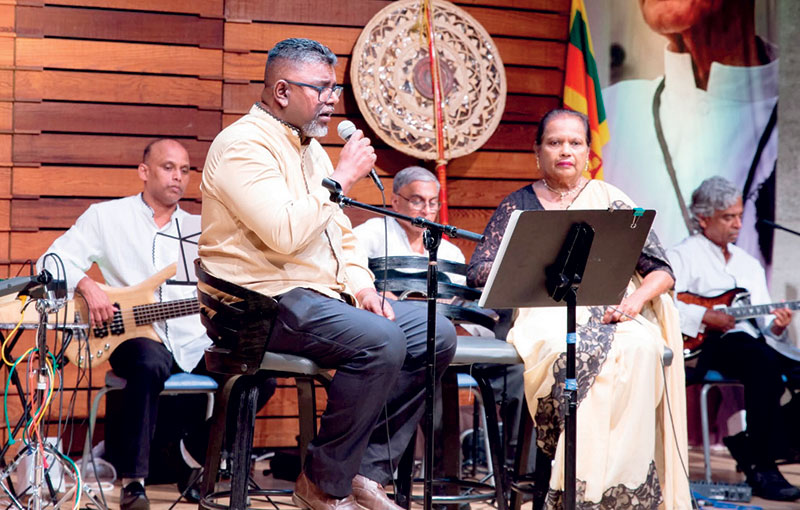
Shalika Perera singing at the event
The programme honoured Fr. Jayakody, affectionately known as “Pansale Piyathuma” (The Priest of the Temple), for his efforts to promote Buddhist-Catholic understanding, interfaith dialogue and a shared Sri Lankan identity.
The event brought together members of the Maha Sangha, the Consul General of Sri Lanka in Los Angeles, musicians, singers, donors, parents, children and members of the Sri Lankan community from Los Angeles and other parts of Southern California.
Music, song and Sri Lankan cultural traditions featured prominently, with organisers placing particular emphasis on introducing the country’s artistic and cultural heritage to younger generations of Sri Lankans growing up overseas.
The programme also highlighted the importance of community unity, religious harmony and mutual respect among Sri Lankans living abroad.
Rev. Fr. Fernando told the gathering that the event marked only the beginning of efforts that could achieve more through unity “for the pride and greater good of our motherland, Sri Lanka.”
The organisers thanked the performers, volunteers, donors and well-wishers who contributed to the event, which concluded as a celebration of Fr. Jayakody’s enduring cultural legacy and the Sri Lankan diaspora’s continuing connection with its homeland.
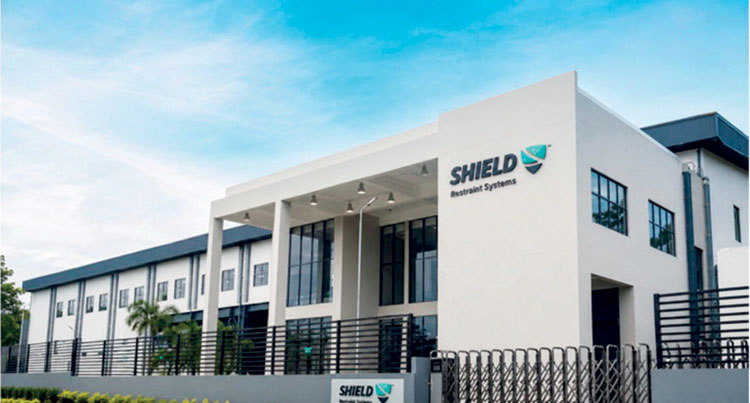
Hayleys Fentons Limited has completed construction of a state-of-the-art manufacturing facility for Shield Restraint Systems (Pvt) Ltd at the Wathupitiwala Export Processing Zone, with the project completed on schedule within approximately 14 months.
The project, valued at more than Rs. 1 billion, commenced with the laying of the foundation stone on January 7, 2025. It was undertaken by the project arm of Hayleys Fentons, with Design Consortium International (Pvt) Ltd serving as the principal design consultant.
The facility has been designed to meet international industry standards and incorporates advanced safety and energy-efficiency features. A pre-engineered building structural system was used to facilitate faster construction and optimise project costs.
The new facility will manufacture safety restraint systems for the international automotive industry through Shield Restraint Systems.
Hayleys Fentons Deputy Managing Director – Projects Sujith De Alwis said the timely completion of the project demonstrated the company’s engineering and project management capabilities and the ability of Sri Lankan construction expertise to meet stringent international standards.
Hayleys Mobility Executive Director Roshani Dharmaratne said the project required detailed planning, quality management and coordination across multiple disciplines.
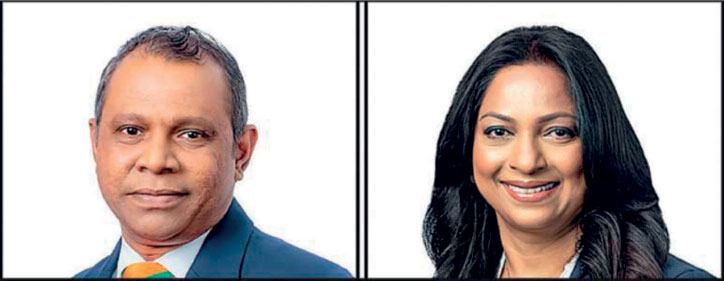
Sujith De Alwis, Deputy Managing Director – Projects of Hayleys Fentons Limited and Roshani Dharmaratne, Executive Director of Hayleys Mobility Limited
Chairman Design Consortium Migara Alwis said the project further strengthens its portfolio in specialised industrial construction and supports investment linked to Sri Lanka’s participation in the global automotive supply chain.

Shree Charani, Prema Rawat spin Pakistan out for 55 in one-sided contest

Sun directly overhead Bentota, Thiniyawala, Iththakanda, Udawalawe, and Kataragama about 12.08 noon t9day (06)

Showers above 75 mm are likely at some places in the Uva and Eastern provinces.

Tharanga creates history with Diamond League crown in Brussels

UN welcomes Lanka’s anti-graft drive, seeks end to impunity

Dispute which triggered listed company director being detained at BIA resolved

‘Dates have the highest sugar content to fight Coronavirus’

Sunday Island 27 December – Headlines

#SundayIsland 17th December – Headlines

Sunday Island – 28th March

Sunday Island Headlines – 21 March

Sunday Island – 21st February – Headlines
-

 Features7 days ago
When Sri Lankan stories find their own voice
-

 News7 days ago
BASL takes exception to Justice Ganepola being denied a place in SC
-

 News4 days ago
Denied of promotion to SC despite vacancies, justice Gurusinghe retires
-

 Latest News4 days ago
Grade 5 scholarship exam results released
-

 News4 days ago
22A: SC urged to suspend hearing, appoint full bench
-

 Midweek Review5 days ago
The local and global dynamics of Sri Lanka’s 22nd Amendment
-

 News4 days ago
Govt. seeks NATO assistance
-

 Business7 days ago
ADB-funded Thalaiyadi plant serves as blueprint for vulnerable dry zones in Sri Lanka