
Sports
Alex Marshall’s war on corruption

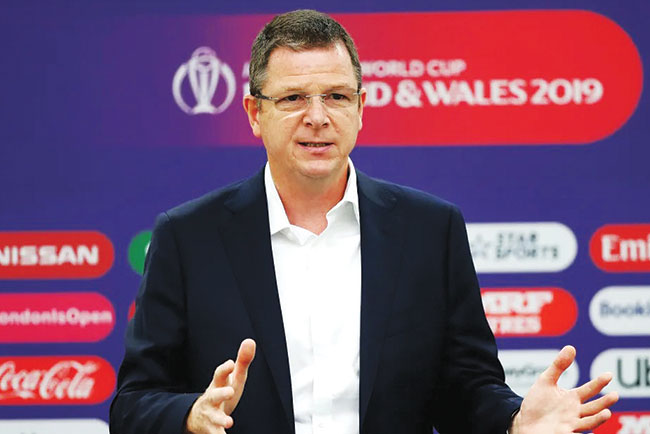
Rex Clementine in Dubai
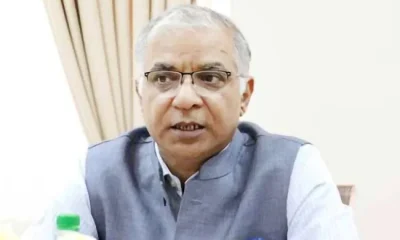
With the immense popularity of T-20 cricket and mushrooming franchise leagues all over the world, the game of cricket was under the threat of corruption. When the International Cricket Council was on the lookout to rope in someone to head its Anti Corruption Unit, they went for a high profile Scotland Yard police officer in Alex Marshall.
Marshall (59) is someone who is held in high esteem in the UK. Since joining the ICC, he has gone about his business meticulously and 22 individuals (five Sri Lankans) had been charged for breaching the Code of Conduct by the Anti Corruption Unit. What is important is that of all individuals the ICC charged, except one all others either accepted sanctions or the tribunal found them guilty. You can assume that the corruptors have been kept at arm’s length to a large extent, but eagle-eyed Marshall doesn’t take the foot off the gas. His war on corruption in cricket is very much fiercely focused.
“The participants who have been charged include franchise team owners, team managers, coaches and players,” Marshall said in an interview with a group of Sri Lankan journalists.
“Our effort is to keep the corruptors away. One of the ways to do it is to find out how the corruptors work. If they are going to approach you how are they going to do it? What are your weaknesses? What would you do in social media? Would you like to go to night clubs? Do you like going to casinos? Will 10,000 Dollars work or 30,000 Dollars work?
ICC’s vibrant Anti Corruption Unit has done well to educate players and Marshall gave a glimpse to the public how corruptors work during our interaction. “The most common way is that players get a strange social media exchange which goes like ‘I would like to sponsor your bat’ or ‘we are having an event and you can come along’ or ‘there is a franchise tournament coming along why don’t you come to Dubai and meet the owners’.
A few years ago, the Anti Corruption Unit had been heavily focusing on Sri Lanka investigating quite a few cases and Marshall was pleased with the way players have responded. “In Sri Lanka players have become very good at spotting and understanding how the corruptors are likely to get at you. It is hard for corruptors to get to the players if they phone us in the first sniff when they sense something dodgy. But if the corruptors go through an ex-player, whom they (current players) get on with and trust, they will get a conversation with them.”
It has been a real embarrassment for Sri Lanka as a nation to have so many corruption investigations going on but Marshall commended the tremendous improvement the country is making in fighting corruption.
“There is a big improvement. At one point it was 22 live cases. All I ever said was that is the highest number of investigations among all the cricket nations. I never said that Sri Lanka is the most corrupt.. But that has tumbled. Sri Lanka is not the leading number of investigations at the moment by a long way. We have seen a significant difference. As we have got through all those cases. Players have got better and better in reporting any sort of suspicions.”
One of the good things done by the previous government is making corruption in sport a criminal offence and a person can go to jail. Harin Fernando as Sports Minister put in a lot of effort to introduce the bill to the Parliament in 2019 and it was passed without any delay.
“Sri Lanka brought in legislation to make match fixing a crime. Top effort! They are the first country in the sub-continent to bring in that legislation. I think that message has gone across to most people. Anyone who is trying to ignore that legislation goes to prison. In England people have gone to prison for fixing cricket matches. In Sri Lanka, we have seen a shift where it’s considered a serious thing with the Police and government getting involved. The government has taken it seriously. My view is that playing group is switched on. The playing group is a good group. If someone tells them to play badly, they’ll tell us. They have been coming along to tribunal and giving evidence which is what they are supposed to do. Across the world of cricket, people are quite scared of doing it. They don’t like doing it. But in Sri Lanka, players have started doing it. So there is a massive improvement in Sri Lanka.”
Franchise cricket seems to be the most vulnerable of all formats with unknown owners coming through and there is a strong need for proper vetting of these entities. SLC initiated the Lanka Premier League last year and the dates for the second edition has been already announced this year.
“What we do know is where a franchise tournament goes wrong, it is very often through the franchise owners. So if we get the wrong people in charge of a team, you will get corrupt approaches. We have been working with IPG and SLC to say that we give them a list and ask them to go through this with every franchise owner. That process is going on at the moment. We don’t give anyone a clean chit. But if they share the details with us, we will say that person is a person of interest to Anti Corruption Unit. But they have to do the due diligence. SLC sanctioned it and it has been played under their code. IPG is the company that is running it. They both have to do diligence properly,” Marshall noted.
With legal implications involved, ICC has to be cautious about the process that they follow from the moment an individual is under the spotlight to where he is sanctioned. Marshall explained the process. “We name someone when someone is charged. We have investigated certain individuals in Sri Lanka for two years but we don’t mention the name to anyone. We don’t even tell the Sri Lankan board. When we complete an investigation, I might say that’s all the evidence we have gathered. Looks like they may be involved with something but I don’t have enough to recommend charges. Or when we have lots of evidence, we send a report to our lawyers saying we recommend that a person is charged for breaching the code. If the general counsel agrees, he consults with other people and we send a letter saying that we believe you have breached the code in these places. You can now go to a tribunal or you can accept and agree a sanction. That’s the first time we ever publicize that person’s name. We publish a statement but we don’t give any comments. Then we tell the whole story when the tribunal is finished or we reach a point where a sanction has been agreed.”
SLC has two individuals now working full time on their Anti Corruption Unit and there’s scope to recruit more people to make it a vibrant one given the challenges the sport has faced in the last five years. “The boards that are better off have the biggest and strongest Anti Corruption units. So Australia, England and India have pretty big anti corruption departments. Sri Lanka has two people. Zimbabwe has one, part time. We have a good relationship with them all. Pakistan actually has a good anti corruption unit too. It is variable across the world. It’s about what they can afford to spend on having people working in those roles.”
Several ex-Sri Lankan cricketers have featured in unsanctioned cricket events all over the world and Marshall warned the dangers of getting involved in these competitions. “To run a league it has to be approved by the cricket board. If you are an associate member and if it is going to involve some international players – more than four –then you need to get ICC approval to run the event. There have been events that we have refused to sanction. Then it is called unsanctioned cricket. If any player takes part in unsanctioned cricket, they can be banned from cricket. Mauritius had an unsanctioned league last year. Some Sri Lankan players went and played unsanctioned cricket. Those players when they came to thr T-10 tournament, they were thrown out. They were told you have been playing unsanctioned cricket without an NOC. Therefore you are thrown out of the tournament.”
After Parliament passed legislation, a police unit was established at Sugathadasa Stadium to investigate corruption in sports. ICC has been educating local police officers how to go about things. “We have sent two people to Sri Lanka to work with them. My chief investigator and another investigator spent a few days training them. We shared with them how we approach because they are not coming from a sports corruption background. They come from a police background. We come from a police background as well but we have been doing corruption in sport for many years. We have been working with them. Where we lost was because of COVID. We spent less time working with them than what we wanted. As soon as we can travel, we will be in Sri Lanka more often.”



by Rex Clementine
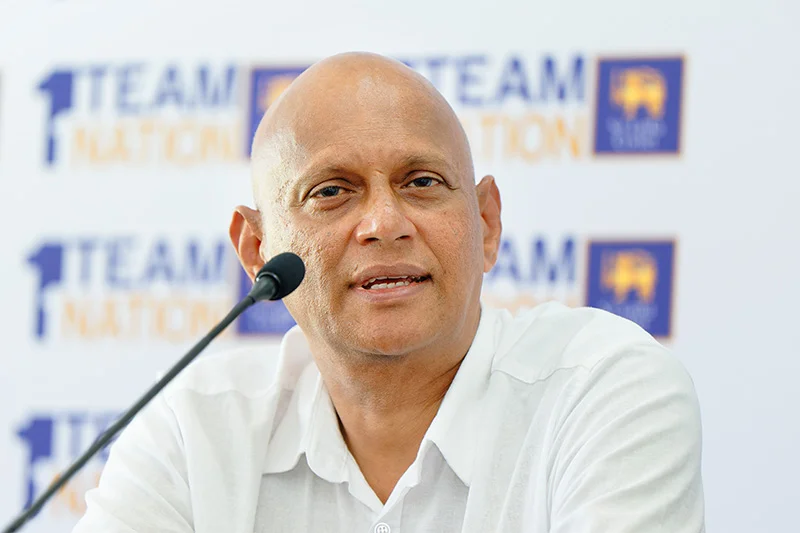
Sri Lanka’s Chairman of Selectors Kapila Wijegunawardene held his first media briefing yesterday since assuming office four months ago, a period in which several decisions have left the cricketing fraternity scratching their heads.
To his credit, the Chief Selector admitted that picking Lahiru Kumara for the tour of the Caribbean without first proving his fitness had been a mistake. It proved a costly one too, with the fast bowler breaking down after sending down just one over.
The former medium pacer was considerably more guarded when confronted with other contentious issues, including Dhananjaya de Silva’s defensive captaincy and the decision to recall Niroshan Dickwella after more than three years in the wilderness.
“We learned a tough lesson after what happened in the Caribbean with Lahiru Kumara and now we have made it mandatory for players to prove their fitness in domestic cricket when they come back from injuries,” Wijegunawardene told reporters.
That perhaps summed up the philosophy of this selection panel. Having burned their fingers once, caution appears to be the watchword. There seems little appetite for bold calls – the sort Duleep Mendis made when he gave Sanath Jayasuriya and Romesh Kaluwitharana licence to tear into attacks during the field restrictions, or Sidath Wettimuny when he entrusted the vice-captaincy to a 22-year-old Mahela Jayawardene.
Ironically, as Wijegunawardene addressed the media, NCC were taking on Moors in a domestic T20 quarter-final right in front of his eyes at the SSC. One of those making an impression was seam bowling all-rounder Milan Rathnayake, who dismissed Dickwella for a second ball duck.
Wijegunawardene was duly asked why Milan had not been considered for the forthcoming tour of England.
Until now, the impression had been that the selectors were investing in Milan, giving the all-rounder sufficient international exposure with an eye on next year’s World Cup in South Africa. Suddenly, however, it appears to be back to square one, with Wijegunawardene indicating that the selectors have turned again to Dasun Shanaka for the all-rounder’s slot.
Shanaka has not played an ODI for more than two and a half years and has earned his recall largely on the strength of his T20 form. Yet he has repeatedly struggled to convince in the 50 over format, particularly if the selectors view him primarily as a batting all rounder.
This is where the selectors appear to have failed to do their homework. A proper analysis of Shanaka’s record would tell them that his batting has seldom been reliable enough in ODI cricket. The numbers tell that story quite clearly.
What the numbers will not tell you is that Dasun has instigated more bloodless coups than General Zia-ul-Haq and General Pervez Musharraf put together.
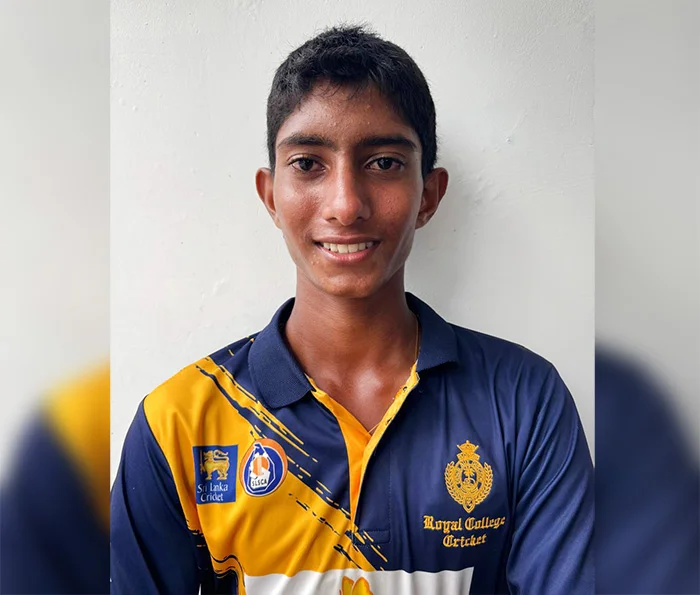
Royal College Colombo ‘B’ team reached the Under-17 Division II Inter-Schools Limited Overs Cricket Tournament final with a convincing 125-run win over Sir John Kothalawala College, Kurunegala as Manish Wijesundera excelled with a century at Ananda Mawatha.
Wijesundera produced a match-defining innings, hitting an unbeaten 114 off 129 balls, with 15 fours and four sixes for Royal to post 235 for seven in 50 overs.
Chasing 236 for victory, Sir John Kothalawala never threatened the target and were bowled out for 110 in 33 overs as Dinuja Wellahewage led the way with a superb four for 25 in nine overs.
While Dulna Nimnal took two wickets, Sithuka Alwis, Binara Kulasekara and Senuth Perera took a wicket each.
Vihaga Chamalsha offered the main resistance with an attacking 43 off 37 balls, including six fours and two sixes, while Pulina Methmal scored 25.
Earlier, Manish Wijesundera’s decisive knock provided the backbone of Royal’s total after the side had slipped to 31 for two.
Sithuka Alwis added 25, while Thumindu Somasiri made 21 as Royal steadily built their total before finishing strongly.
Sir John Kothalawala’s bowlers found it difficult to contain Wijesundera, although Indeepa Udesh impressed with two for 26 from 10 overs. Pulina Methmal also claimed two wickets.
Royal will now meet Wadduwa Central in the final.
Scores
Royal 235 for 7 in 50 overs (Manish Wijesundera 114n.o., Sithuka Alwis 25, Thumindu Somasiri 21; Indeepa Udesh 2/26, Pulina Methmal 2/64)
Sir John Kothalawala
110 all out in 33 overs (Vihaga Chamalsha 43, Pulina Methmal 25; Dinuja Wellahewage 4/25, Dulna Nimnal 2/36)
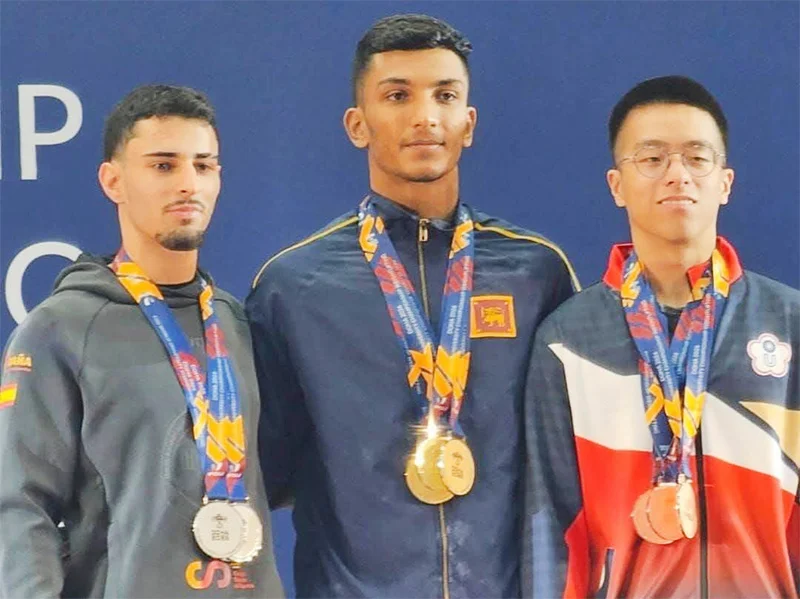
University of Sri Jayewardenepura weightlifter Avindu Liyanagedara made history on Tuesday (08) by becoming the first Sri Lankan university student to win a gold medal at a World University sports event, as Sri Lanka made a spectacular start to the 2026 World University Weightlifting Championship in Doha, Qatar.
Liyanagedara won the men’s 60kg title, while Sabaragamuwa University’s Nipun Dissanayake added a bronze medal in the 65kg category on the opening day of the championship.
Liyanagedara lifted 105kg in the snatch and 132kg in the clean and jerk for an impressive combined total of 237kg.
Spain’s Gomez Martinez took the silver with 228kg, while Chun-Yen Tang of Chinese Taipei won bronze with 227kg.
Dissanayake also secured a podium finish in the 65kg class with a total of 220kg, comprising a 100kg snatch and a 120kg clean and jerk.
Iran’s Mohhadov Tehran won the gold with 289kg, with Moldova’s Ion Badanev taking silver with 288kg.
Liyanagedara’s achievement represents a landmark breakthrough for Sri Lankan university sport. His gold is the first gold medal won by a Sri Lankan university student at a World University sports event, while Dissanayake’s bronze further strengthened the country’s historic opening-day showing.
The Sri Lanka University Sports Association has entered five male and two female athletes for the championship, with University of Colombo’s Sujan Walgampaya serving as team manager and coach.
The championship continues in Doha until September 12, with Sri Lanka already assured of a memorable place in the history of World University sport through Liyanagedara’s historic gold medal.

Showers will occur in the Western and Sabaragamuwa provinces and in Kandy, Nuwara-Eliya, Galle and Matara districts.


Sri Lanka reiterates its territory won’t be used against India

UK-led Core Group calls Jaffna mass graves a ‘stark reminder’ but stops short of calling for international accountability

India underscores security and defence in overall partnership with SL

If Sri Lanka wants ‘real’ stability, only one way to achieve it, in a short time

‘Dates have the highest sugar content to fight Coronavirus’

Sunday Island 27 December – Headlines

#SundayIsland 17th December – Headlines

Sunday Island – 28th March

Sunday Island Headlines – 21 March

Sunday Island – 21st February – Headlines
-

 News5 days ago
Namal remanded until Sept. 18 over Airbus deal investigation
-

 Latest News4 days ago
Tharanga creates history with Diamond League crown in Brussels
-

 News4 days ago
Dispute which triggered listed company director being detained at BIA resolved
-

 Features3 days ago
After the parade: What a traffic OIC’s walk-out tells us
-
 Opinion6 days ago
In Memory of Dr Upatissa Pethiyagoda
-

 Editorial5 days ago
Power vs Equality
-
 Latest News6 days ago
SLPP MP Namal Rajapaksa arrested by CIABOC
-
Editorial3 days ago
Arrests as theatre