
Opinion
Alan Henricus- A Stalwart Sportsman Of Yesteryear Passes Away

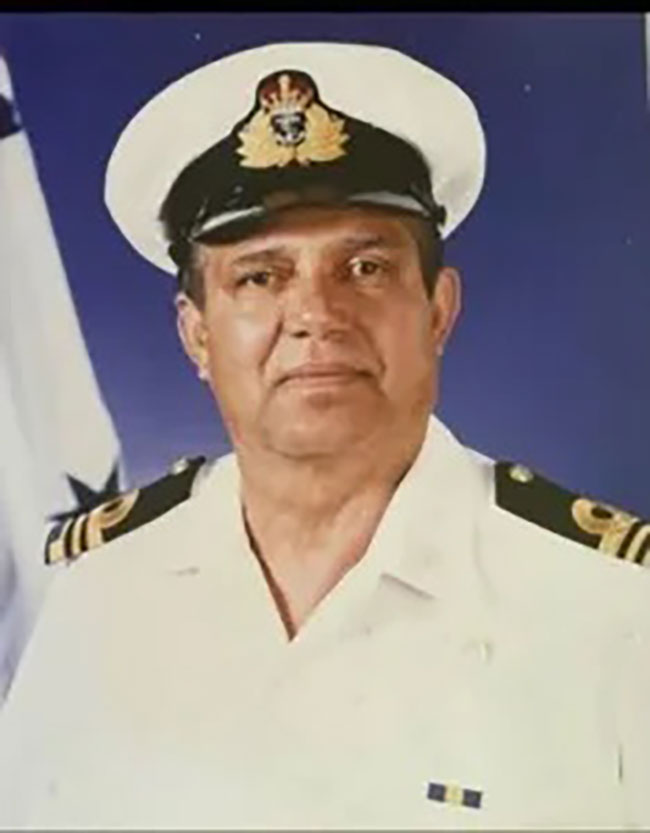
Alan Henricus (10-Feb 1933 – 26 Nov 2022)
by Hugh Karunanayake
Alan Henricus the youngest of five outstanding sporting brothers who represented their school Royal College, and their country then known as Ceylon, passed away a few days ago. He would have been 90 years of age if he survived up to his birthday in February next year.
The Henricus brothers grew up in Kohuwela where their father a former Feather Weight Boxing Champion of Ceylon lived. He served as an administrator of the sport first as Hony Secretary of the Amateur Boxing Association of Ceylon and later as its President. He helped build the Baptist Church in Nugegoda and was its Treasurer for 25 years. The road leading to their property was named Henricus Mawatha in honour of this outstanding family.
Alan represented Royal in Boxing, Athletics and Rugby, and won school colours in all three sports. He was also a school prefect, highly respected and regarded by both his schoolmates and staff. The family consisting of five brothers and two sisters were all nurtured in the best sporting traditions of colonial Ceylon. Eldest brother Barney represented Ceylon in boxing at the Empire Games and won a gold medal winning the feather weight title. The next, Basil, held the national record for 100 yards sprint and I believe his record still stands. He also represented the Havelocks Sports Club and All Ceylon at Rugby. The next brother George, for many years the Master Attendant in the Colombo Port was also a champion boxer, as was Derrick the fourth in line.
Remarkable sportsmen such as Alan reached their great heights from a base of raw innate talent fostered by regular training and a disciplined approach to life. When I was a 10-year old schoolboy I used to watch with awe and admiration Alan doing his training run at 6 a.m in the morning, jogging all the way from his home in Kohuwela to the Havelock Park and back on most weekends. Alan was senior to me in school by about three years and in those days that was an age gap filled with respect and admiration for a senior student. To us younger kids the high achieving Alan was a hero.
I recall in one Public Schools Athletics meet for the Tarbat Cup, either in 1950 or 1951,Royal College was able to obtain a total of 15 points only, and were never serious contenders for the trophy. However the 15 points that Royal earned was almost single handedly collected through Alan’s efforts. He won the pole vault event, was first in the 120 metres hurdles, and was a member of the 4 X 400 metre relay team which won the event. Although the Tarbat Cup was won by another school, the assembled gathering of Royalists carried Alan shoulder high around the grounds!
From school he was selected for training as a Naval officer cadet in Dartmouth in Devonshire in England. Fellow Royalists the late Norman Gunawardena, and Humphrey Wijesinghe were among the cadets who were selected for Dartmouth together with Alan. On returning to Ceylon after his naval training at Dartmouth, he served the Royal Ceylon Navy and its successor Sri Lanka Navy for several years until retirement. On retirement from the Navy he served for a short period as an Executive in a Mercantile firm in Colombo, before migrating with his family to Australia.
The stint at Dartmouth would carry many precious memories for him, as that was where he met Maureen the love of his life. On migrating to Australia in the 1970s Alan joined the Royal Australian Navy which he served with distinction as Lieut Commander. On my migrating to Australia in 1984 I met Alan and Maureen at a Sunday luncheon hosted by the late Brendon Goonratne. It was the beginning of a beautiful friendship, and Alan and Maureen remained very close friends of ours.
Over the years we used to meet every three months at lunch at the Rosehill Bowling Club organized for old Royalist Seniors through the initiative of Chandra Senaratne. Other social engagements over the years have strengthened our friendship, and it is with deep distress that I heard of his terminal illness about two months ago. I rang him immediately and he was stoic as ever, the brave naval officer that he was. He said in no uncertain terms that he was not seeking to extend his life on this earth, and that he would wait in his home until the final call.
Alan’s departure marks another severance with the old Ceylon we knew, and its traditions and honorable ways. The Last Post will be played at his funeral at the Baptist Church, Epping on Friday December 2 at 3pm. He is survived by his dear wife Maureen, sons Andrew and Richard,, daughter in law Caroline, and grandson Ryan.
“The song is ended but the melody lingers on “
Farewell dear Alan.


There is an unofficial bus halt at Gate Number 11 of the National Hospital at the 90-degree bend at the Prof. Nandadasa Kodagoda Mawatha (Old Norris Canal Road) which creates traffic jams at peak hours. Especially at the school opening and closing times at Carey College and hospital visiting hours.
Prospective passengers stand by the bend and then the busses stop suddenly on the middle of the road. The motorcycle in the picture is put into danger. The next bus halt is a few yards further near Carey College and Medical College Junction.
The problem is that illegal practices such as these, end up as approved procedure in our neck of the woods!
It must be nipped in the bud.
G. Fernando
Opinion
Naval hostilities close to a neutral coastal state: Legal assessment of a submarine attack on an Iranian warship near Sri Lanka
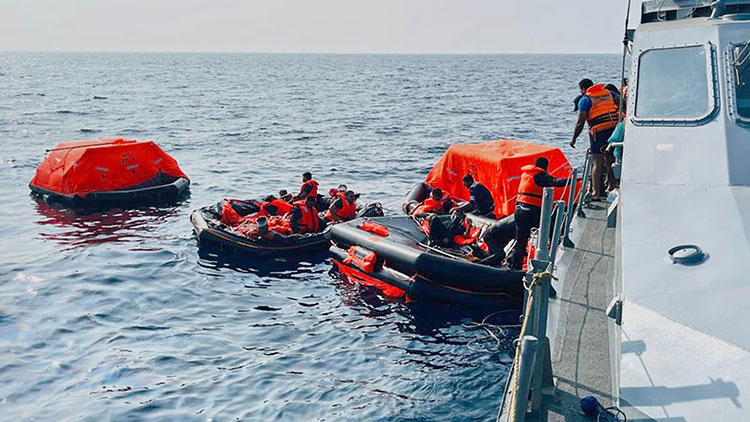
A submarine attack on an Iranian destroyer proximate to Sri Lanka represents more than a discrete naval engagement; it signals a potential horizontal escalation of conflict into the wider Indian Ocean Region (IOR). Historically, confrontations between Iran and Western powers have been largely confined to the Persian Gulf and adjacent regional waters. A strike near Sri Lanka, however, shifts the operational theatre from a semi-enclosed regional sea into the open Indian Ocean. This globally vital maritime space encompasses critical trade routes, energy supply corridors, and strategically sensitive naval zones.
This geographic expansion carries multiple strategic implications. First, it demonstrates the long-range maritime strike capabilities and blue-water operational reach of the belligerent forces. Second, it functions as a form of deterrence signalling, conveying a willingness to project force beyond traditional conflict zones. Third, it widens the theatre of operations, increasing the probability of third-party entanglement and amplifying regional instability.
Beyond its immediate military and strategic dimensions, the incident raises complex legal questions under both jus ad bellum—the body of law governing the use of force between states—and jus in bello, encompassing international humanitarian law applicable to armed conflict at sea. The central questions addressed in this paper are:
a. Lawfulness of Force:
Whether the use of force against the Iranian warship was lawful under the United Nations Charter, including considerations of self-defence and Security Council authorisation.
b. Compliance with International Humanitarian Law:
Whether the attack adhered to the principles and norms of international humanitarian law governing naval warfare, including the lawfulness of the target, proportionality, distinction, and obligations toward shipwrecked personnel.
c. Neutrality and Coastal State Rights:
Whether Sri Lanka’s rights and obligations as a neutral coastal state were violated, particularly within its territorial sea and Exclusive Economic Zone (EEZ).
d. Operational and Geostrategic Implications:
The broader implications of conducting military operations within or near neutral maritime zones, and the interplay between legal permissibility, maritime security, environmental obligations, and regional stability.
These questions form the analytical framework that will guide the discussion throughout this paper, providing a structured lens for examining the legal, humanitarian, and strategic dimensions of the incident.
Jus ad Bellum and Jus in Bello:
Legality of the Use of Force
The legality of a submarine attack against a commissioned warship during an armed conflict must be assessed within a structured framework of international law comprising the jus ad bellum regime under the United Nations Charter, the corpus of international humanitarian law (IHL), and customary principles of naval warfare as reflected in the San Remo Manual on International Law Applicable to Armed Conflicts at Sea.
At the threshold level, the UN Charter governs the lawfulness of the use of force between states. Article 2(4) establishes a general prohibition on the threat or use of force against the territorial integrity or political independence of any state, subject only to narrow exceptions. These exceptions include the inherent right of self-defence under Article 51 and actions authorised by the United Nations Security Council under Chapter VII.
Accordingly, if an Iranian warship were torpedoed by a submarine, the attacking state would be required to demonstrate that the action was undertaken either pursuant to a valid claim of self-defence, necessitated by an armed attack or imminent threat, or as part of an already existing international armed conflict. Absent such justification, the attack could constitute an unlawful use of force in violation of the Charter’s collective security framework.
Where an international armed conflict is already in existence, the analysis shifts from jus ad bellum to Jus in bello, namely the rules governing the conduct of hostilities.
Jus in bello
: Naval Warfare and Attack Against an Iranian Naval Ship
Where an international armed conflict exists between the United States and Iran, the analysis shifts to jus in Bello. Commissioned warships form part of a state’s armed forces and constitute lawful military objectives. Under customary naval warfare law, as reflected in the San Remo Manual on International Law Applicable to Armed Conflicts at Sea, enemy warships may be attacked, including by submarine-launched torpedoes, without prior warning. An Iranian destroyer operating as part of Iran’s navy would therefore constitute a legitimate military objective in principle.
However, the legality of a torpedo attack by a United States submarine remains subject to the foundational principles of international humanitarian law, including distinction, proportionality, military necessity, and precautions in attack. The principle of distinction requires that the target be military in nature; proportionality prohibits attacks expected to cause incidental harm excessive in relation to the anticipated military advantage; and military necessity demands that the force employed be directed toward achieving a legitimate military objective.
These obligations are particularly significant in maritime theatres characterised by dense commercial traffic, such as the sea lanes south of Sri Lanka. Incidental harm to neutral merchant vessels, offshore installations, or third-state interests must therefore be carefully assessed in relation to the anticipated concrete and direct military advantage.Submarine warfare, though technologically sophisticated and strategically consequential, remains subject to these enduring normative constraints, which seek to balance operational effectiveness with humanitarian considerations in the maritime domain.
Customary humanitarian law further requires that feasible measures be taken to search for and rescue the shipwrecked, wounded, and dead following an engagement. In this respect, any action by the Sri Lanka Navy to rescue surviving sailors and recover bodies from the destroyed vessel represents a prudent and legally consonant exercise of humanitarian responsibility. Such conduct reflects long-standing maritime tradition and aligns with the duties recognised under the law of armed conflict and the broader law of the sea, without compromising Sri Lanka’s neutral status.
Sri Lanka’s Legal Position Concerning the Torpedoed Iranian Vessel
Sri Lanka’s legal position is largely determined by the maritime location in which the submarine attack occurred. Should the hostilities have taken place within Sri Lanka’s territorial sea, defined as extending up to 12 nautical miles from the baseline, such conduct would constitute a breach of Sri Lanka’s sovereignty and a violation of the law of neutrality, which forbids belligerent states from engaging in hostilities within neutral waters and imposes a duty on the coastal state to prevent such actions within its jurisdiction. In that circumstance, Sri Lanka would be entitled to issue a diplomatic protest and potentially pursue reparative claims.
By contrast, as the engagement took place within Sri Lanka’s Exclusive Economic Zone (EEZ), the analysis is more nuanced under the United Nations Convention on the Law of the Sea. The EEZ confers sovereign rights for resource exploitation rather than full sovereignty, and prevailing state practice accepts that military operations, including naval manoeuvres, are not per se unlawful in another state’s EEZ. While such an engagement would not automatically breach international law, it would nonetheless generate significant security concerns, including risks to navigational safety, potential environmental damage, and heightened regional instability. Should the sinking result in oil discharge, hazardous material release, or debris affecting shipping lanes, obligations under UNCLOS to protect and preserve the marine environment would be engaged.
Although the Rio Declaration on Environment and Development does not explicitly regulate armed conflict, its principles highlight an increasing expectation for states to protect the environment during hostilities. Similarly, UNCLOS mandates that states protect and preserve the marine environment. Consequently, should the sinking of the Iranian destroyer cause an oil spill, the release of hazardous materials, or navigational hazards, specific environmental liabilities would be triggered. Strategically, a submarine strike near Sri Lanka signals more than a discrete tactical engagement. It reflects the projection of great-power naval capabilities into a strategically sensitive maritime space through which a substantial proportion of global trade transits.
Sri Lanka occupies a pivotal geostrategic position astride the principal East–West Sea Lines of Communication linking Gulf energy supplies, East Asian manufacturing centres, and European markets via the Suez Canal. A substantial proportion of global container traffic transits south of the island, rendering these waters acutely sensitive to instability. Even a limited naval engagement can elevate war-risk insurance premiums, disrupt commercial routing, and indirectly affect port operations in Colombo and Hambantota.
From a jus ad bellum perspective, geographic expansion does not in itself render hostilities unlawful; yet it complicates assessments of necessity and proportionality and increases the risk of escalation affecting neutral states.
The torpedoing of an Iranian naval vessel in maritime zones proximate to Sri Lanka necessitates a carefully layered legal assessment situated at the confluence of jus ad bellum, jus in bello, and the law of the sea. As this paper has demonstrated, the legality of the incident ultimately turns on four interrelated determinations:
(a) whether a lawful basis for the use of force existed under Article 51 of the Charter of the United Nations, grounded in self-defence;
(b) whether the attack complied with the principles of distinction, proportionality, and military necessity under international humanitarian law;
(c) whether the engagement occurred within Sri Lanka’s territorial sea, thereby infringing its sovereignty and violating the law of neutrality; and
(d) whether the obligations owed to survivors, shipwrecked personnel, and the marine environment were respected in accordance with the law of armed conflict at sea and relevant maritime conventions.
If the attack did not occur within Sri Lanka’s territorial sea, it would not amount to a violation of sovereignty or a breach of the law of neutrality capable of engaging state responsibility on that ground.
By contrast, where the engagement occurred beyond the territorial sea whether within the Exclusive Economic Zone or on the high seas prevailing interpretations of the law of naval warfare, reinforced by consistent state practice, suggest that the operation may be regarded as legally defensible, provided that the cumulative requirements of necessity, proportionality, distinction, and humanitarian obligation were satisfied.
Nevertheless, legal permissibility does not equate to strategic prudence. The deployment of a United States submarine to conduct kinetic operations in proximity to a neutral coastal state within the Indian Ocean underscores the increasingly complex convergence of naval power projection, humanitarian norms, environmental obligations, and coastal state rights within the contemporary maritime domain.
Even where consistent with international law, the extension of submarine warfare into the wider Indian Ocean carries destabilising implications for regional security, commercial shipping, and the safety of neutral coastal states situated along critical sea lines of communication. The geographic expansion of hostilities into this maritime space heightens the risks of miscalculation, escalation, and unintended third-party involvement.
For Sri Lanka, the incident underscores the delicate equilibrium between maintaining neutrality, safeguarding maritime security, and upholding the international legal order. The actions undertaken by the Sri Lanka Navy in conducting rescue and recovery operations for surviving sailors and deceased personnel reflect the discharge of well-established humanitarian duties under international law and exemplify responsible conduct at sea.
Ultimately, this episode illustrates the increasingly complex convergence of naval power projection, international humanitarian norms, and coastal state rights within the contemporary maritime domain. In an era marked by intensifying great-power competition and expanding operational reach in the Indian Ocean, the preservation of legal clarity, strategic restraint, and respect for neutral maritime spaces remains essential to sustaining regional stability and safeguarding the integrity of the international maritime order.
by REAR ADMIRAL (RTD.) JAGATH RANASINGHE
VSV, USP, psc, MSc (DS) Mgt, MMaritimePol (Aus),
PG Dip in CPS, DIP in CR, FNI (Lond), Former Govt Fellow GCSP

These last few months have given us vivid demonstrations of the power of the Rule of Law. A brother of the reigning monarch in Great Britain has been arrested by the local police and questioned. This is reported to be the first time since 1647 (Charles I) that a person so close in kin to the reigning monarch was arrested by the police in England. An ambassador of the United Kingdom who also was a member of the House of Lords has been questioned by the police because of alleged abuse of office. In US, the Supreme Court has turned back orders of a President who imposed new tariffs on imports into that might trading nation. A nation that was made by law (the Constitution) again lived by the rule of law and not by the will of a ruler, so avoiding the danger of dictatorship.
In Sri Lanka, once high and mighty rulers and their kith and kin have been arrested and detained by the police for questioning. A high ranking military official has been similarly detained. Comments by eminent lawyers as well as by some cantankerous politicians have cited the services rendered by these worthies as why they should be treated differently from other people who are subject to the rule of laws duly enacted in that land. In Sri Lanka governments, powerful politicians and bureaucrats have denied the rule of law by delaying filing cases in courts of law, until the physical evidence is destroyed and the accused and witnesses are incapacitated from partaking in the trial. These abuses are widely prevalent in our judicial system.
As the distinguished professor Brian Z. Tamanaha, (On the Rule of Law, 2004.) put it “the rule of law is ‘an exceedingly elusive notion’ giving rise to a ‘rampant divergence of understandings’ and analogous to the notion of Good in the sense that ‘everyone is for it, but have contrasting convictions about what it is’. The clearest statement on the rule of law, that I recently read as a layman, came in Tom Bingham (2010), The Rule of Law (Allen lane). Baron Bingham of Cornhill was Lord Chief Justice of England from 1996 until his retirement. For the benefit of your readers, I reproduce a few excerpts from his short book of 174 pages.
“Dicey (A.V.Dicey, 1885) gave three meanings to the rule of law. ‘We mean, in the first place… that no man is punishable or can be made to suffer in body or goods except for a distinct breach of law established in the ordinary legal manner before the ordinary courts of the land.’…If anyone -you or I- is to be penalized it must not be for breaking some rule dreamt up by an ingenious minister or official in order to convict us. It must be for proven breach of the established law and it must be a breach established before the ordinary courts of the land, not a tribunal of members picked to do the government’s bidding, lacking the independence and impartiality which are expected of judges.
” We mean in the second place, when we speak of ‘the rule of law’ …..that no man is above the law but that every man, whatever his rank or condition, is subject to the ordinary law of the realm and amenable to the ordinary tribunals.’ Thus no one is above the law, and all are subject to the same law administered in the same courts. The first is the point made by Dr Thomas Fuller (1654-1734) in 1733: ‘Be you ever so high, the law is above you.’ So, if you maltreat a penguin in the London Zoo, you do not escape prosecution because you are Archbishop of Canterbury; if you sell honours for a cash reward, it does not help that you are Prime Minister. But the second point is important too. There is no special law or court which deals with archbishops and prime ministers: the same law, administered in the same courts, applies to them as to everyone else.
“The core of the existing principle is, I suggest, that all persons and authorities within the state, whether public or private, should be bound by and entitled to the benefits of laws publicly made, taking effect (generally) in the future and publicly administered in the courts. … My formulation owes much to Dicey, but I think it also captures the fundamental truth propounded by the great English philosopher John Locke in 1690 that ‘Wherever law ends, tyranny begins’. The same point was made by Tom Paine in 1776 when he said ‘… in America THE LAW IS KING’. For, as in absolute governments the King is law, so in free countries the law ought to be King; and there ought to be no other.’
“None of this requires any of us to swoon in adulation of the law, let alone lawyers. Many people occasion share the view of Mr. Bumble in Oliver Twist that ‘If the law supposes that ….law is a ass -a idiot’. Many more share the ambition of expressed by one of the rebels in Shakespeare’s Henry VI, Part II, ‘The first thing we do, let’s kill all the lawyers. ….’. The hallmarks of a regime which flouts the rule of law are, alas, all too familiar: the midnight knock on the door, the sudden disappearance, the show trial, the subjection of prisoners to genetic experiment, the confession extracted by torture, the gulag and the concentration camp, the gas chamber, the practice of genocide or ethnic cleansing, the waging of aggressive war. The list is endless. Better to put up with some choleric judges and greedy lawyers.”
Tom Bingham draws attention to a declaration on the rule of law made by the International Commission of Jurists at Athens in 1955:
=The state is subject to the law;
=Government should respect the rights of individuals under the Rule of Law and provide effective means for their enforcement;
=Judges should be guided by the Rule of Law and enforce it without fear or favour and resist any encroachment by governments or political parties in their independence as judges;
=Lawyers of the world should preserve the independence of their profession, assert the rights of an individual under the Rule of Law and insist that every accused is accorded a fair trial;
The final rich paragraph of the book reads as follows: ‘The concept of the rule of law is not fixed for all time. Some countries do not subscribe to it fully, and some subscribe only in name, if that. Even those who subscribe to it find it difficult to subscribe to all its principles quite all the time. But in a world divided by differences of nationality, race, colour, religion and wealth it is one of the greatest unifying factors, perhaps the greatest, the nearest we are likely to approach to a universal secular religion. It remains an ideal, but an ideal worth striving for, in the interests of good government and peace, at home and in the world at large.’
by Usvatte-aratchi ✍️

Language: The symbolic expression of thought

Drifting lubricant barrels trigger oil spill on southern coast; 99% of clean-up completed

Chamuditha shines with all-round brilliance as St. Servatius’ beat Lumbini

SIMPSON’S … set to carve a distinct sonic identity

Support for psychological well-being: Launch of telemedicine psychology program in response to Ditwa Cyclone

Sajin remanded over alleged illegal accumulation of assets worth Rs. 243 mn

‘Dates have the highest sugar content to fight Coronavirus’

Sunday Island 27 December – Headlines

#SundayIsland 17th December – Headlines

Sunday Island – 28th March

Sunday Island Headlines – 21 March

Sunday Island – 21st February – Headlines
-

 News4 days ago
University of Wolverhampton confirms Ranil was officially invited
-

 News5 days ago
Legal experts decry move to demolish STC dining hall
-

 News4 days ago
Female lawyer given 12 years RI for preparing forged deeds for Borella land
-

 News3 days ago
Peradeniya Uni issues alert over leopards in its premises
-

 Business5 days ago
Cabinet nod for the removal of Cess tax imposed on imported good
-

 News4 days ago
Library crisis hits Pera university
-

 News3 days ago
Wife raises alarm over Sallay’s detention under PTA
-

 Business6 days ago
War in Middle East sends shockwaves through Sri Lanka’s export sector