
Opinion
Alan Henricus- A Stalwart Sportsman Of Yesteryear Passes Away

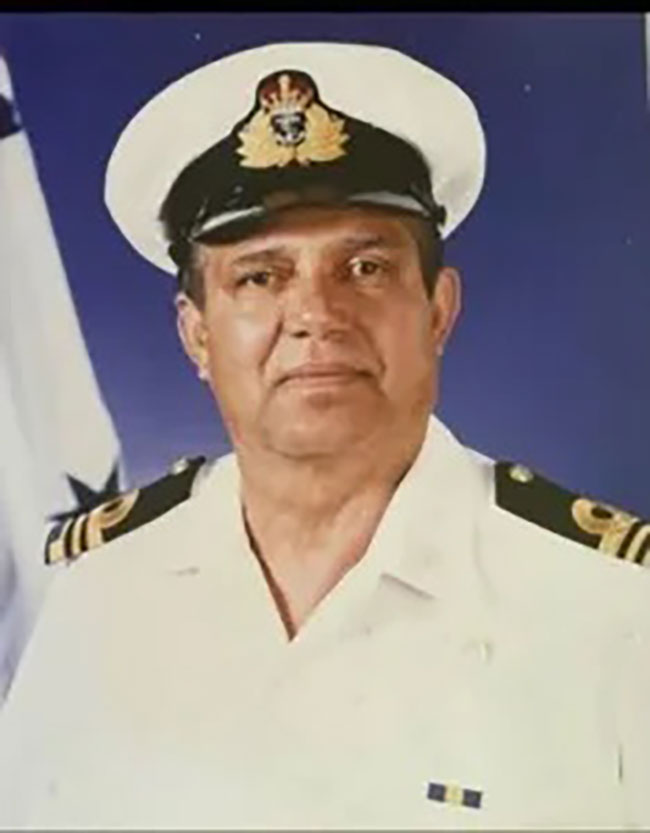
Alan Henricus (10-Feb 1933 – 26 Nov 2022)
by Hugh Karunanayake
Alan Henricus the youngest of five outstanding sporting brothers who represented their school Royal College, and their country then known as Ceylon, passed away a few days ago. He would have been 90 years of age if he survived up to his birthday in February next year.
The Henricus brothers grew up in Kohuwela where their father a former Feather Weight Boxing Champion of Ceylon lived. He served as an administrator of the sport first as Hony Secretary of the Amateur Boxing Association of Ceylon and later as its President. He helped build the Baptist Church in Nugegoda and was its Treasurer for 25 years. The road leading to their property was named Henricus Mawatha in honour of this outstanding family.
Alan represented Royal in Boxing, Athletics and Rugby, and won school colours in all three sports. He was also a school prefect, highly respected and regarded by both his schoolmates and staff. The family consisting of five brothers and two sisters were all nurtured in the best sporting traditions of colonial Ceylon. Eldest brother Barney represented Ceylon in boxing at the Empire Games and won a gold medal winning the feather weight title. The next, Basil, held the national record for 100 yards sprint and I believe his record still stands. He also represented the Havelocks Sports Club and All Ceylon at Rugby. The next brother George, for many years the Master Attendant in the Colombo Port was also a champion boxer, as was Derrick the fourth in line.
Remarkable sportsmen such as Alan reached their great heights from a base of raw innate talent fostered by regular training and a disciplined approach to life. When I was a 10-year old schoolboy I used to watch with awe and admiration Alan doing his training run at 6 a.m in the morning, jogging all the way from his home in Kohuwela to the Havelock Park and back on most weekends. Alan was senior to me in school by about three years and in those days that was an age gap filled with respect and admiration for a senior student. To us younger kids the high achieving Alan was a hero.
I recall in one Public Schools Athletics meet for the Tarbat Cup, either in 1950 or 1951,Royal College was able to obtain a total of 15 points only, and were never serious contenders for the trophy. However the 15 points that Royal earned was almost single handedly collected through Alan’s efforts. He won the pole vault event, was first in the 120 metres hurdles, and was a member of the 4 X 400 metre relay team which won the event. Although the Tarbat Cup was won by another school, the assembled gathering of Royalists carried Alan shoulder high around the grounds!
From school he was selected for training as a Naval officer cadet in Dartmouth in Devonshire in England. Fellow Royalists the late Norman Gunawardena, and Humphrey Wijesinghe were among the cadets who were selected for Dartmouth together with Alan. On returning to Ceylon after his naval training at Dartmouth, he served the Royal Ceylon Navy and its successor Sri Lanka Navy for several years until retirement. On retirement from the Navy he served for a short period as an Executive in a Mercantile firm in Colombo, before migrating with his family to Australia.
The stint at Dartmouth would carry many precious memories for him, as that was where he met Maureen the love of his life. On migrating to Australia in the 1970s Alan joined the Royal Australian Navy which he served with distinction as Lieut Commander. On my migrating to Australia in 1984 I met Alan and Maureen at a Sunday luncheon hosted by the late Brendon Goonratne. It was the beginning of a beautiful friendship, and Alan and Maureen remained very close friends of ours.
Over the years we used to meet every three months at lunch at the Rosehill Bowling Club organized for old Royalist Seniors through the initiative of Chandra Senaratne. Other social engagements over the years have strengthened our friendship, and it is with deep distress that I heard of his terminal illness about two months ago. I rang him immediately and he was stoic as ever, the brave naval officer that he was. He said in no uncertain terms that he was not seeking to extend his life on this earth, and that he would wait in his home until the final call.
Alan’s departure marks another severance with the old Ceylon we knew, and its traditions and honorable ways. The Last Post will be played at his funeral at the Baptist Church, Epping on Friday December 2 at 3pm. He is survived by his dear wife Maureen, sons Andrew and Richard,, daughter in law Caroline, and grandson Ryan.
“The song is ended but the melody lingers on “
Farewell dear Alan.



by Gomi Senadhira
Sri Lanka’s former ambassador to the United States Mahinda Samarasinghe is back in Sri Lanka lobbying for speedier finalisation of a new tariff deal with the United States. According to news reports, delivering the keynote address at the Sri Lanka Institute of Directors’ Annual Meeting last week, he stated, “I have recommended very strongly to the government that we need to conclude the agreement so that we can lock in the very favourable tariff rate that Sri Lanka has got up to now“.
I do not understand why the former ambassador is urging the government to expedite the finalisation of a new tariff deal or what is “the very favourable tariff rate” he refers to in his speech. However, given the ongoing terrible tariff turbulence in the United States and the fragile economic situation in Sri Lanka, I believe, this is not the right time to rush into finalising any trade agreement with the United States. I am also of the opinion that at this juncture Sri Lanka should maintain strategic patience and explore all available options.
Lessons from the countries that rushed for trade deals
To better comprehend this, let’s look at experiences of the countries that rushed to conclude tariff deals with the United States after President Donald Trump declared his “reciprocal tariffs” under the International Emergency Economic Powers Act (IEEPA) in April 2025. As Samarasinghe stated in his keynote, “The bottom line on all these negotiations was that every country that finally agreed to sign the agreement had to give either complete duty-free access for American exports into those markets, or near complete duty-free access.” In exchange for these tariff concessions and other market access commitments these countries managed to get the newly introduced country specific “reciprocal tariffs” reduced.
However, in February 2026, the Supreme Court of the United States (SCOTUS) struck down these “reciprocal tariffs” under the IEEPA. With that, the market access gains these countries received in exchange for complete duty-free access for American exports into their markets evaporated under U.S. domestic law. By moving too fast to conclude bilateral tariff agreements with the United States these countries are now bound to strict obligations whereas the benefits they bargained from the U.S. administration are not worth the paper those were written on.
Sri Lanka’s experience
In April 2025, President Trump declared his “reciprocal tariffs” and labelled Sri Lanka as the worst offender, imposing one of the highest additional duties at 44%. Since then, Ambassador Samarasinghe and other negotiators have managed to negotiate this down to 20%. I do not know what the deal was through which Sri Lanka managed to reduce the 44% tariff to 20% or what we gave in return for this “concession.” However, what we received in return has absolutely no value after the decision by the SCOTUS.
Current state of US tariffs
After the decision by SCOTUS, the U.S. administration introduced a temporary 10% additional tariff on all countries for 150 days. At the end of that period, this 10% tariff was replaced by a new “forced labor tariff ” of 10% to 12.5% on all trading partners under Section 301 of U.S. trade law. Twenty-five U.S. states and several small businesses have already filed lawsuits against these tariffs in U.S. courts. This new “forced labour tariff ” on Sri Lanka was first fixed at 12.5%. Later, after President Anura Kumara Dissanayake issued a gazette notice prohibiting the importation of goods produced using forced labour, it was reduced to 10%. That means Sri Lanka has already made a substantial commitment to receive this “tariff concession,” and I presume our negotiators understand the implications of this commitment.
Make haste slowly
After President Trump imposed 44% “reciprocal tariffs” on Sri Lanka, through an article published in The Island on 25th April 2026 (), I urged the government to engage immediately with the US administration on these tariffs. However, I also emphasised that the best way to move forward was to make haste slowly.
Two millennia ago, Augustus Caesar, the first emperor of Rome, frequently used the phrase, “make haste slowly”, because he detested rashness and haste in his military commanders. It was the recurring guiding maxim that he emphasised throughout his 40-year imperial rule. After 2000 years, this classical oxymoron remains a definitive golden rule for professional trade negotiators. More importantly it is the exact blueprint required when navigating turbulence in trade negotiations with the Trump administration.
The endgame – The most dangerous moment in trade negotiation
Samarasinghe has also stated the agreement is 90% complete. Any experienced trade negotiator should know that the final 10% contains high-stakes provisions and is the most dangerous moment in a trade negotiation. A single misplaced comma or ambiguous product description in a tariff schedule can cost millions through unintended loopholes. Rushing this last stretch to secure a deal can permanently expose Sri Lanka to sudden shifts in American trade policy, heavy compliance costs, or strict enforcement under Section 301 regarding supply-chain labour standards. Hence, this is the time for strategic patience.
(The writer can be reached at senadhiragomi@gmail.com)
Upon reading the article titled “Prof. Pieris says Buddha Dhamma recognized as source of law under Constitution” (Island, September 12, 2026), the classical Sinhala idiom “Yanne Koheda? Malle Pol” immediately comes to mind. The expression, translating literally to answering “I have coconuts in my bag” when asked “Where are you going?”, underscores a complete disconnect in logic. Because it is uncertain whether the article accurately represents the professor’s precise words, the following critique addresses the contents of the report rather than the speaker himself.
The central premise of the report concerns a statement delivered by the Chief Justice regarding a petition filed against the 22nd Amendment to the Constitution. According to the report, the Chief Justice’s observation that the determination would be made strictly on the basis of established law rather than Buddhist teachings was characterised as a “cavalier dismissal” of the Buddha Dhamma. This assertion carries a host of unexamined assumptions. Had the writer specified precisely which tenets of the Buddha Dhamma were violated, a direct legal or philosophical evaluation could take place. However, no specific Buddhist tenet or law was identified as having been transgressed, and for good reason: no such statutory legal framework exists within the Buddha’s teachings.
To understand the flaw in this argument, one must examine the constitutional context alongside the canonical meaning of the terms involved. Article 9 of the 1978 Constitution of Sri Lanka mandates that the Republic shall give Buddhism the foremost place and that it shall be the duty of the State to protect and foster the Buddha Sasana, while guaranteeing the fundamental rights of all religions under Articles 10 and 14(1)(e).
While “Buddhism” and “Buddha Dhamma” are frequently used as interchangeable terms in casual dialogue, they represent distinct concepts. “Buddhism” is an umbrella term coined by 19th-century Western scholars to classify the global institutionalised religion, incorporating its diverse sects, cultural traditions, rituals, and socio-political histories. Conversely, Sasana is the ancient term designating the structural framework established by the Buddha to preserve and transmit his teachings, comprising the monastic order (Sangha) and its supporting institutions.
In classical Theravada commentarial literature, the Sasana operates as a functional three-tiered structure. It encompasses Pariyatti Sasana, the preservation and study of sacred texts; Paṭipatti Sasana, the practical execution of the doctrine through ethical conduct and meditation; and Paṭivedha Sasana, the direct experiential realization of ultimate truth, or enlightenment. This structural breakdown raises fundamental questions about state capacity. While a state can readily support Pariyatti Sasana through academic institutions, textual preservation, and educational funding, it cannot legislate or enforce Paṭipatti or Paṭivedha. Practical engagement and spiritual realisation are inherently internal, first-person experiences. Expecting the state to codify or guarantee enlightenment is a conceptual impossibility.
Furthermore, the Buddha Dhamma refers specifically to the unconditioned truths of existence and the teachings imparted to realize them, including the Four Noble Truths, the Eightfold Path, and Dependent Origination. As the late Venerable Professor Kotagama Wachissara Thera observed, there is no rigid ideologue or “ism” in the core Dhamma. The teachings do not constitute a system of divine commandments or a legal statute enforced through reward and punishment. Rather, Buddhist ethics function as self-directed guidelines for psychological clarity and moral inquiry. Even the Vinaya Pitaka, which contains explicit rules of conduct, functions as an internal monastic code rather than a civil or criminal law intended for the laity.
Throughout the Pali Canon, guidance regarding governance focuses on the moral character of leadership and the social duties of statecraft rather than rigid legal codification. In discourses such as the Cakkavatti Sihanada Sutta (DN 26), the Buddha observes that social instability and crime cannot be eliminated solely through punitive measures, emphasising instead that states must provide economic opportunities, fair wages, and resource distribution to maintain societal balance. Crucially, in the Maha Parinibbana Sutta (DN 16), the Buddha explicitly highlights the importance of respecting established laws and traditions rather than enacting arbitrary regulations.
The natural laws articulated in the Dhamma, such as the law of cause and effect or the three characteristics of existence, govern all phenomena universally, regardless of legal statutes or personal belief. They are not human laws to be applied or suspended by a court of law. Therefore, characterizing the Chief Justice’s adherence to constitutional jurisprudence over religious doctrine as a “cavalier dismissal” lacks logical and textual foundation. Framing the judiciary’s adherence to legal precedent as an attack on the Dhamma distracts from fundamental constitutional principles and risks misguiding the public for political ends.
Geewananda
Gunawardana,
Ph.D.

by Usvatte
My friend, Sena Thoradeniya, has summoned up energy to raise two questions about my observations in your newspaper on 14 September, 2026. They both referred to comments I made about President Dissanayake and Prime Minister Amarasuriya.
I observed that President Dissanayake, having graduated in physics at Kelaniya, would be familiar with elementary calculus: differentiation and integration. It is a misapprehension to believe that one needs any knowledge of theoretical physics to be familiar with elementary calculus. Nor is it necessary that one needs to have published research for the same purpose. Those were the first lessons in calculus that our Mathematics Master and Principal, Mr. D. A. Devendra taught five of us in the first term 1952 at Hikkaduva Central School. Of the five, two still live and recall those lessons vividly. Dissanayake would surely have learnt them at his school in Anuradhapura. At Kelaniya his teachers probably included Dr. H. Somadasa, two years my junior at Hikkaduva, with a Ph.D. in number theory at Aberytswyth, Wales and Professor (physics) Charles Dahanayke, a renowned teacher of physics and my neighbour in Colombo. Dissanayake is unlikely to have been admitted to Physics at Kelaniya unless he had scored well in mathematics and physics with other subjects. Those elements of calculus have been learnt by millions of young men (and later women) since Isaac Newton and Gottfried Leibnitz. That Dissanayake from a school in Anuradhapura scored high enough to gain admission to Kelaniya to study physics is commendation enough for his intellectual capacity.
All of us know, some personally, the barriers to learning in places like Anuradhapura and Kuliyapitiya, compared to the facilities in Colombo, Galle. Jaffna and Kandy. I used that information to press the point that he was, in learning, entirely different from his predecessors and present competitors. One does not need to research in theoretical physics to know something as simple as the first lesson in calculus. Dirac made his momentous discovery sometime in the 1930s and by 1950 it must have been solidly in the teaching material in schools and universities. Dissanayake graduated in 1995 and, at least, must have heard of Dirac and the ‘God Particle’.
Paul Dirac was a legendary figure among graduate students when I was at Cambridge. He had written the shortest Fellowship and Ph.D. theses. He had had an interesting relationship with his father who was a French speaking Swiss and had insisted that he speaks French at table. Amrtya Sen, who was in 1965 a young Fellow of Trinity College and a teacher in the Economics and Politics Faculty at that time, had also written very short theses and not several volumes as many do.
I read about Higgs Boson in a wonderful book Inward Bound written by physicist Abraham Pais and, in The Science Times (Tuesdays) edited by Gina Kolata of the New York Times, and occasionally in Nature and other popular writings.
I was on the editorial board of Samskrti for some time. Amaradasa Virasinghe and Gananath Obeysekera had started that literary review in 1953 when I was in school and many of us read it avidly. Together with Susil Sirivardana, we decided to expand the scope of the journal to include social studies and science, which effort Sena knew well. The probable readership had increased manifold. In order to help prospective writers to pick up themes to write on, we held a popular lecture, one Saturday a month. I invited Dr. Harini Amarasuriya, then teaching at the Open University, Nawala, to speak to us on the scope and nature of sociology. She made a short fine introduction. That is where I learnt of August Compte. She was invited to a Seminar in Britain on the sociology of education, where I had strayed into from 1971. I did not read her paper, although she had promised to let me have it. I had good reason to respect her scholarship. It would be shocking had she not read Le`vy-Strauss. Many besides anthropologists read Le`vy-Strauss.
Sena stressed the obvious when he said that in public speeches made by these two politicians, there was no evidence of their expertise in physics and sociology. It would have been completely out of place to speak about elementary particles to a crowd in Beruvala or Anuradhapura. But one’s education, in subtle ways, informs the material and the ways that the material is presented in public speeches. Simply listen to Members of Parliament speak and you can guess roughly the level of education each had achieved: grade 2 in primary school or Quondam Professor of Law at Oxford.
I am sorry that Sena identified ‘an exaggerated parade of claims and sheer implausible boasts’ in what I wrote. It is entirely plausible, indeed certain, that an undergraduate in the Department of Physics in any university would be familiar with differentiation and integration.
An unprejudiced reading of my text will demonstrate that it contained no such claims and boasts. Mine was a pretty simple statement of the nature of differences between the present lot in government and the lots that were in power earlier. I related those differences to help understand the line up for and against the 22nd Amendment to the Constitution. and not to build false images of any politician, man or woman. I am too old to set out, even in the formidable company of Sena, on the ‘long march’ to Mao.

Muhammad Shahzad smashes fastest first-class hundred by a Pakistani batter

Gul, Kharote spin Afghanistan to victory over Japan in Asian Games opener

Showerss above 100 mm are likely at some places in the Western, Sabaragamuwa, Central and North-western provinces and in Galle and Matara Districts

Mirabai Chanu wins Asian Games silver as Ri breaks weightlifting record

Trump greets China’s Xi Jinping on arrival for three-day US

BASL calls for conscience vote on 22nd Amendment

‘Dates have the highest sugar content to fight Coronavirus’

Sunday Island 27 December – Headlines

#SundayIsland 17th December – Headlines

Sunday Island – 28th March

Sunday Island Headlines – 21 March

Sunday Island – 21st February – Headlines
-

 News6 days ago
Shanakiyan urges urgent action over reported death sentence for Lankan in Saudi Arabia
-

 News7 days ago
Bid for Basil’s extradition nears final stage: Police
-

 News5 days ago
Namal Rajapaksa Buddhist gambit fails, bail denied
-
 Features5 days ago
Why the spelling Sri Lankan names in English vary
-

 Features5 days ago
Three bands, a new identity: Sri Lankan wolf snake recognised as distinct species
-
 Business5 days ago
SLIIT holds largest-ever convocation
-
 News5 days ago
Govt monitors reported Saudi death sentence – Foreign Ministry
-

 News5 days ago
Vehicle prices drop by up to Rs. 1 mn, says importers’ body