
Latest News
Air India says one engine on crashed plane was new

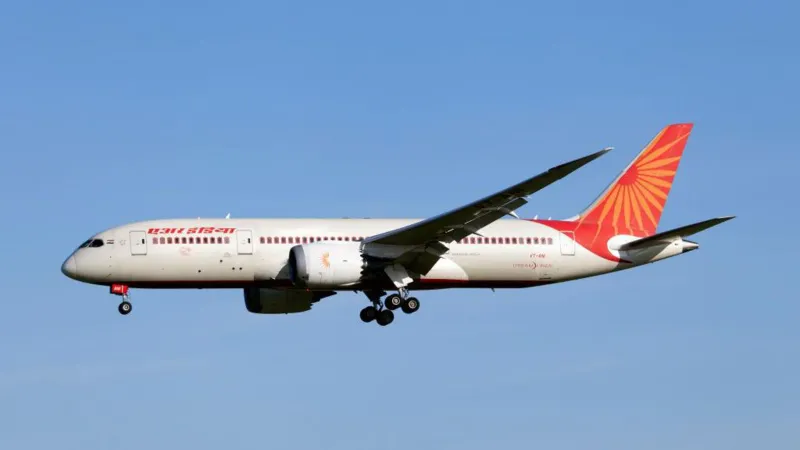
One of the engines of the Air India plane that crashed last week was new, while the other was not due for servicing until December, the airline’s chairman has said.
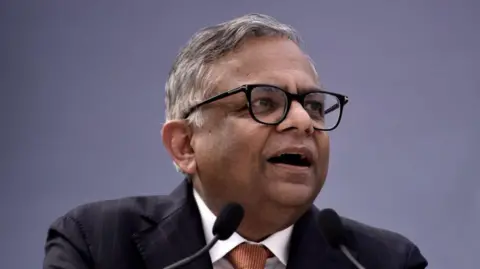
In an interview with an Indian news channel, N Chandrasekaran said that both engines of the aircraft had “clean” histories.
“The right engine was a new engine put in March 2025. The left engine was last serviced in 2023 and due for its next maintenance check in December 2025,” he told Times Now channel.
At least 270 people, most of them passengers, were killed last Thursday when AI171, a London-bound Boeing 787-8 Dreamliner, crashed less than a minute after taking off from Ahmedabad airport in western India.
Investigators are now sifting through debris and decoding recorded flight data and cockpit audio – from the aircraft’s black boxes which have been found – to reconstruct the flight’s final moments and determine the cause of the incident.
“There are a lot of speculations and a lot of theories. But the fact that I know so far is this particular aircraft, this specific tail, AI171, has a clean history,” Mr Chandrasekaran said, cautioning people against jumping to conclusions.
“I am told by all the experts that the black box and recorders will definitely tell the story. So, we just have to wait for that,” he added.
Kishore Chinta, a former investigator with India’s Aircraft Accident Investigation Bureau, told the BBC that the condition of an aircraft engine is not necessarily linked to its age – particularly in the case of the Genx-1B engines used on the Boeing 787-8.
“The age of the engine has no bearing on the health of the engine, especially for the Genx-1B engines,” Mr Chinta said. In other words just because an engine is new, does not necessarily mean it is healthy, or vice versa.
Unlike older models, the Genx-1B engines, which are made by GE Aerospace, don’t follow a fixed overhaul or maintenance schedule. Instead, they are equipped with a system called the Full Authority Digital Engine Control or FADEC that continuously monitors engine health and performance. The decision to service or replace the engine is based on this data and physical inspections.
However, Mr Chinta pointed out that certain components of the engine, known as Life Limited Parts (LLPs), still have a fixed lifespan typically between 15,000 and 20,000 cycles.
“Every start and switch-off of the engine counts as one cycle,” he explained.
While the investigation continues, Air India has also announced a 15% cut in its international operations on wide-body aircraft until mid-July as it grapples with the fallout from the crash.
In a statement issued on Wednesday, the airline said the decision was driven by “compounding circumstances” – including enhanced safety checks, increased caution by crew and ground staff and tensions in the Middle East.
Separately, the airline said that inspections have been completed on 26 of its 33 Boeing 787-8 and 787-9 aircraft, all of which have been “cleared for service”.
India’s aviation regulator had ordered additional safety checks on Air India’s Boeing 787 fleet after the deadly crash as a “preventive measure”.
The remaining aircraft are expected to be examined in the coming days, Air India said, adding that the airline’s Boeing 777 fleet would also “undertake enhanced safety checks”.
“The curtailments are a painful measure to take, but are necessary following a devastating event which we are still working through and an unusual combination of external events,” it said.
Meanwhile some experts say the crash will likely have an impact on Air India as it tries to transform from a troubled state-owned carrier to a privately-owned company.
Tata Sons, a conglomerate which also owns big brands like Tetley Tea and Jaguar Land Rover, bought the airline – formerly India’s national carrier – from the Indian government in 2022.
(BBC)

Missiles and drones have been intercepted over Riyadh after the Saudi-led coalition fighting in Yemen struck a fuel depot near the Houthi-controlled capital, Sanaa, its spokesperson says.
Maj Gen Turki al-Maliki said several projectiles targeting the Saudi capital and other cities were intercepted after the coalition carried out a strike on the Yemen Petroleum Company’s al-Sabaha facility on Tuesday night.
The Houthis warned they would target the airport and Aramco refinery in Saudi Arabia’s capital, Riyadh, and Aramco’s headquarters in the eastern city of Dammam.
Al-Maliki later said missiles targeting cities including Dammam had been intercepted, while shrapnel had fallen in a residential area in Dhahran.
It came as the Saudi cabinet, chaired by Crown Prince Mohammed bin Salman, said the Iran-backed group would “bear the consequences” of its recent deadly attacks on the kingdom.
Thirteen people were killed when a missile hit King Khalid International Airport in Riyadh on Saturday, while another person was killed in a similar attack there the following day.
On Tuesday, the coalition said its forces had destroyed three drones north of Riyadh.
The Houthis have said they are targeting airports, oil and gas facilities, and military bases in Saudi Arabia with missiles and drones in response to deadly Saudi strikes on territory that they control in western Yemen, including Sanaa.
The Saudi-led coalition has been providing air support for Yemeni pro-government forces mounting an offensive on Yemen’s Red Sea coast and several other front lines.

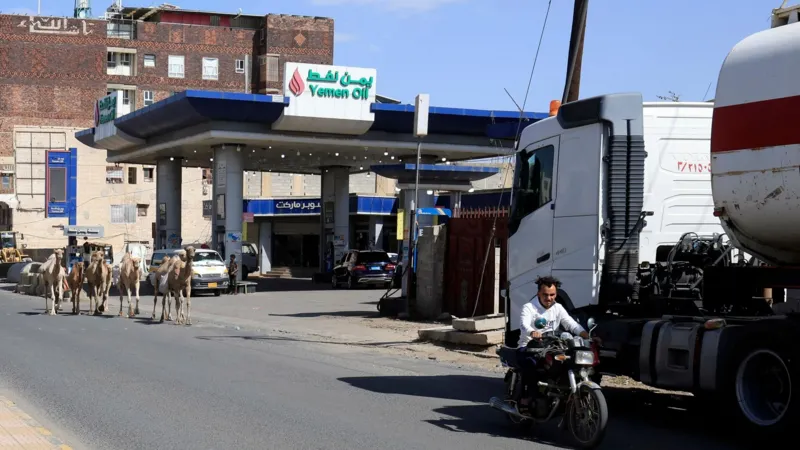
A correspondent for AFP news agency reported that queues formed at petrol stations in Sanaa on Tuesday afternoon following the coalition’s warning of an impending operation against the al-Sabaha oil facility, with many residents worried about shortages.
The Yemen Petroleum Company, which is run by the Houthis, issued a statement that sought to reassure them, saying the facility “does not contain any stock of petroleum products”.
The company also said it had “taken all necessary precautionary measures to address any emergency, ensuring the stability of the supply situation and the continued meeting of citizens’ needs in a normal manner”.
After al-Maliki confirmed the strike, first reported by Houthi media, explosions were heard over Riyadh and other Saudi cities, with al-Maliki reporting four missiles and two drones had been intercepted near the capital.
Yemen has been devastated by a civil war that began in 2014, when the Houthis ousted the internationally-recognised government from Sanaa. The conflict escalated in 2015, after the Saudi-led coalition of Arab states intervened in an attempt to restore the government’s rule.
A four-year-old informal ceasefire began to unravel in July, when the Houthis announced a “maritime embargo” against Saudi Arabia and began missile and drone attacks on Saudi airports, oil facilities and tankers in the Red Sea.
The Houthis said they were retaliating for what they call a Saudi blockade of their territory, as well as an air strike on Sanaa airport that they blamed on the kingdom.
The conflict escalated in September after the Houthis seized part of Yemen’s south-western Red Sea coast near the Bab al-Mandab Strait, a chokepoint for global shipping. Their advance contributed to a rise in oil prices following six months of war between the US, Israel and Iran.
US President Donald Trump said on Truth Social on Tuesday the Houthis were “behaving very badly… and purposefully trying to drive up Oil Prices”.
Speaking to reporters, he did not answer a question on whether he’d made a decision to help the Saudis retaliate against them, but said he “might” ask Turkish President Tayyip Erdogan to intervene.
Last week, pro-government forces said they had regained control of territory overlooking Bab al-Mandab after launching a major counter-offensive with the support of Saudi air strikes.
Hundreds of people have reportedly been killed in Yemen since August. The UN’s human rights office says they include at least 54 civilians, half of them children.
More than 216,000 people have also been displaced across the country, and suspected cholera cases have tripled in three weeks, rising from 217 to 647, according to the UN.
[BBC]
Pope Leo XIV has been diagnosed with lung cancer but had successful surgery to remove a lower lobe of his right lung, the Vatican has said in a medical bulletin.
The 71-year-old underwent a 90 minute surgery on Tuesday at Rome’s Gemelli Hospital and was subsequently diagnosed with lung adenocarcinoma.
“After the operation, the Pope awoke normally and returned after a brief period of observation to his room on the 10th floor,” the Vatican said in a statement.
The lump was first detected during what the Vatican has described as “routine checks”.
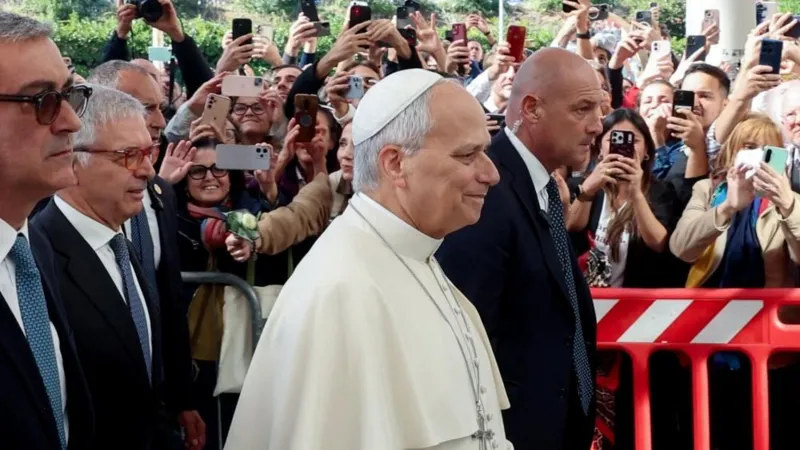
Earlier, large crowds gathered outside the hospital to greet the Pope, with some waiting for several hours.
They cheered greetings and well wishes as he passed, while he waved and smiled back through the lowered back window of his car.
He was then met by staff on the hospital steps. “I’m sorry,” one of them commiserated, to which the Pope gave a smile and a shrug. “We’re here for you,” he was assured.
In its statement, the Vatican said the whole lower lobe of the Pope’s right lung was removed “to ensure the procedure was radical”.
A Vatican source told Agence France-Presse news agency further tests were being carried out to see if there was any sign the cancer had spread.
It was Leo XIV himself who on Sunday announced news of his operation to the world, speaking from the balcony in St Peter’s Square after delivering the traditional Angelus blessing.
He said the nodule, or growth, on his lung was “contained” and had been found “at a very early stage”, but that doctors had advised him to have it removed.
Gemelli’s thoracic surgery team operated on the Pope, whose schedule has already been cleared until 20 October to give him time to recover.
Nodules are quite common and not necessarily cancerous, but after it was examined the medical team confirmed it was pulmonary adenocarcinoma, “as suspected by pre-operative tests”, the Vatican said.
The Vatican has stressed that the pontiff, who is generally thought to be fit, had no symptoms of infection or illness.

Cardinal Kikuchi Tarcisio Isao of Tokyo wrote on social media that he’d had an audience with Pope Leo on Monday, and said the pontiff felt “nothing wrong” physically.
He said the Pope had decided to check in for surgery as soon as possible because he was due to travel to Latin America in early November, and was keen to stick to that plan.
The trip is particularly significant because it includes a visit to Peru, where the pontiff was a missionary and then a Bishop for many years.
Despite all the reassurances, the news has shaken Catholics all over the world.
“Am I worried? Yes, because I certainly wasn’t expecting anything like this,” Vatican Secretary of State Cardinal Parolin told journalists on Tuesday.
He agreed that the news was like a “bolt from the blue”, but said the cardinals had been struck by the Pope’s “serenity” and were confident in his recovery.
Outside Gemelli Hospital, which has treated several popes and is home to a large statue of John Paul II, a few Catholics lingered after the pontiff was admitted.
Carla had come specially, wanting to be close.
“He seems calm, so we are calm too – even though illness is always unpleasant,” she told the BBC. “We will wait here and pray.”
[BBC]
Latest News
Expedite the cleaning of Colombo’s canals and drainage systems within the next two weeks – PM instructs officials
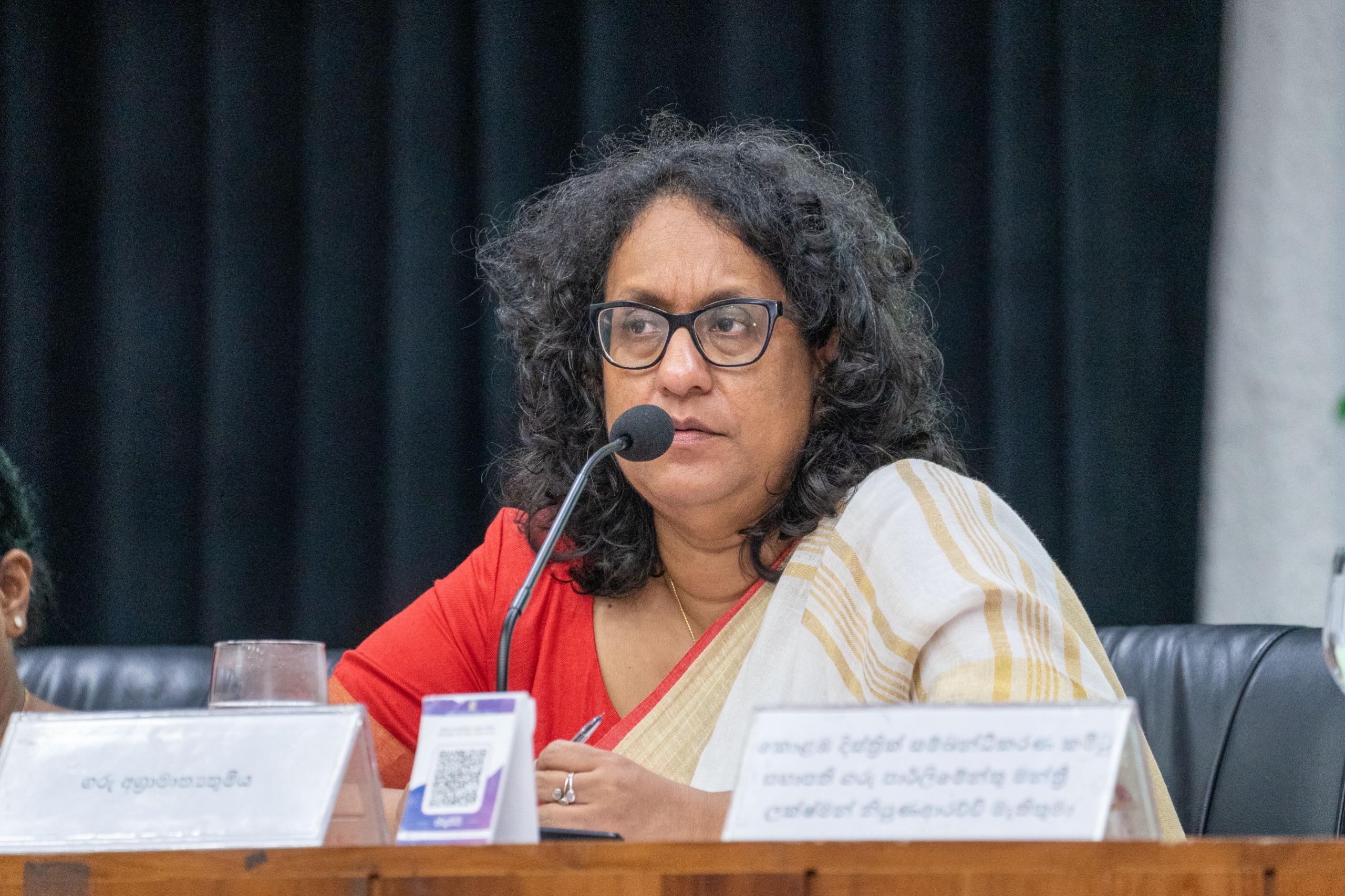
[Prime Minister’s Media Division]

Missiles intercepted near Riyadh after Saudi coalition hits Yemen fuel depot

MI5 chief warns of threats to UK from Russia, Iran and AI

Pope diagnosed with lung cancer but had successful surgery, Vatican says

Expedite the cleaning of Colombo’s canals and drainage systems within the next two weeks – PM instructs officials

Kusal Mendis’ unbeaten 87 hands Sri Lanka consolation win

Cabinet approves redrafting of State Assets Management Act

‘Dates have the highest sugar content to fight Coronavirus’

Sunday Island 27 December – Headlines

#SundayIsland 17th December – Headlines

Sunday Island – 28th March

Sunday Island Headlines – 21 March

Sunday Island – 21st February – Headlines
-

 Features6 days ago
The Sri Lankan who made Scottish history
-

 Sports6 days ago
Nissanka absence opens door for Sri Lanka’s young guns
-

 News5 days ago
NDB fraud Rs 60mn more than reported
-

 News7 days ago
Gnansara Thera to be assigned to prison printing section: Officials
-

 News5 days ago
Removing monk’s robes matter for Sangha to decide: Mahanayake Theras
-

 News7 days ago
OIC of FCID summoned before Maligakanda Magistrate
-

 News6 days ago
Shiranthi R remanded until 13 Oct.
-

 Features6 days ago
Future of Sri Lanka’s state university system: Should it be shut down and reopened?