
Features
Air Force days …


BY GEORGE BRAINE
In 1978, needing a change from teaching English, I applied to join the Sri Lanka Volunteer Air Force. After facing an interview and passing a medical exam, I was asked to report in a few days to the Air Force HQ in Colombo, before departure by train, to Diyatalawa, for training.At HQ, I first met my fellow trainees, about 20 in all. We were taken to the office of the Commander, Air Vice-Marshall Harry Goonetilleke, in groups of five, where we were sworn-in and commissioned.
On the night mail train, to Diyatalawa, I got to know the other trainees better. We ranged in age, from the early 20s to the late 30s, and were a motely lot, coming from varied educational and occupational backgrounds: teachers, agricultural officers, technical officers, budding accountants and bankers, an engineer, a veterinarian, and a dentist, a mix of public servants and mercantile employees. Sgt. Silva, our drill instructor, accompanied us on the train. He chatted with everyone, amiably, and seemed like an easy going person.
Diyatalawa, at an altitude of 5000 feet, is salubrious. It was a garrison town, established by the British during colonial times, and had the Air Force’s ground combat training camp. When the train reached Diyatalawa, an Air Force truck took us to the camp, where we were shown to a long, dormitory-style billet, the beds and lockers lined up on each side. After breakfast, uniforms and combat boots were issued. The sight of fellow trainees in ill-fitting, baggy uniforms brought much fun.

Our training began soon after. Assisting Sgt. Silva was a ramrod-straight, ever smiling, Corporal Gamini. Both addressed us as Mister (Mr. Whatmore, Mr. Ratnapala, Mr. Jeyapalan, etc). First, we were trained to march, and I soon realized that some of us were not meant for any type of military training. In all shapes and sizes, some in good physical shape, but a portly few who found even the marching exhausting. We must have been a hilarious sight for everyone else in camp.
I had seen enough war movies to recall how foul-mouthed and brutal drill sergeants could be, but Sgt. Silva’s meanest word to us was “slovenly”. He was strict, he had a clear objective – to train us within a month – so he gave no respite; we marched endlessly, back and forth, all morning, and came back for more in the afternoon. After a few days, we had casualties: the heavy, ill-fitting combat boots were a torture, and all that marching was taking a toll on a couple of us, who began limping with sprained ankles.
During my time at Diyatalawa, about eight officer cadets were also undergoing training, prior to being commissioned. These cadetships were coveted positions those days, and I was surprised to learn that two of the cadets were the Air Force commander’s sons! Their training began early morning at the parade grounds, and, in full combat gear, they would be drilled till noon. They were punished for the slightest infringement, and we saw one or two cadets being made to jog endlessly or perform other forms of physical exercises, well into the afternoon.
In the evening, after a shower and dinner, we chatted, back at our billet. One story I recall came from the engineer, who was from the north. The infamous Murunkan massacre, in which some police officers had been ambushed and shot dead, has occurred a few months earlier. The engineer had visited the site after the horribly mutilated bodies had been recovered from a well. What we did not realize was that the killings were a prelude to the civil war that tore Sri Lanka apart for the next 30 years.
The dentist slept across the aisle from me. He had been a boxer at school and was fighting fit. He also slept spread eagled on his bed, a posture I had never seen in another person. A technical officer, Jeyapalan, was perhaps the most popular trainee. He mingled easily with everyone and was full of stories and jokes.
In addition to foot drill (all that marching!), we also had regular inspections, obstacle training, lectures, and weapons training. Before going to bed, we polished our boots to a mirror shine, and soon after waking up, we made our beds – a practice I have continued to date – ready for inspection during which “slovenly” would reverberate around our billet.
Obstacle training was the hardest. We crawled under strands of low-slung barbed wire, unable to raise our heads, scrambled over 10-foot walls, swung on a rope to cross a muddy ditch. We practiced charges, running up with fixed bayonets and repeatedly stabbing sacks filled with straw. Some went to hilarious extremes to avoid obstacle training: although the medical post opened only at 8 in the morning, a few trainees were seen lining-up at 6.
The lectures on military strategy were conducted by Flight Lieutenant Atapattu, who did his best to make them interesting. But, what I looked forward to was weapons training, conducted by Cpl. Dharmaratne. When the JVP insurrection, in 1971, broke out, the Sri Lankan armed forces mainly had World War I vintage 303 rifles, so China had rushed planeloads of carbines, pistols, and other weapons. Before target practice, we were trained to take these weapons apart and reassemble them. At the firing range, we used Chinese carbines and pistols, and my favourite, the Sterling sub machine gun, with its distinctively perforated barrel casing. I had read a ton of war comics and seen enough war movies in which the Sterling SMG figured, so I took extra pleasure in the SMG, which was fired in short bursts till the magazine emptied.
The crowning event of our training was a route march from Diyatalawa to World’s End, on Horton Plains, a height of around 7000 feet. Geared up in uniforms, heavy knapsacks, and combat boots, we started early morning from the camp, accompanied by Sgt. Silva and Cpls. Gamini and Dharmaratne. We trekked cheerfully in the morning mist, following narrow, rocky paths, fording streams, climbing and descending the rugged, mountainous terrain. I walked with the gentle, soft-spoken veterinarian, who narrated growing up in the north and his experiences in treating field animals. We went through a couple of villages and the children and women came out to smile knowingly at us, because they must have seen many hapless route marchers before.
After pausing for lunch, which we had carried, we started again and the going became gruelling. The scenery was beautiful – pine forests, eucalyptus trees, distant mountains shrouded in a bluish sheen, the occasional water fall – but we barely noticed them, because we had to watch our step on the narrow, slippery paths.
I was walking along with Cpl. Gamini when a fellow trainee came up with a hangdog expression, tears pouring down his face, pleading “Corporal, mata bae” (I can’t); he couldn’t go on. I was both surprised and amused. How could a young man, in the prime of his life, weep at such a trivial matter? The corporal hung back, talked to the trainee kindly, and I later saw them following us.
Eventually, at dusk, we reached Horton Plains, a high plateau with tall grasses and winding streams, and the going got easier. But I was exhausted, my feet felt like lead, and I was stumbling more than walking. As we neared World’s End (so named because it has a sheer drop of about 4000 ft.), we could see some lights ahead. Suddenly, someone sprinted past me, and I was amazed to see it was the trainee who had wept and pleaded earlier in the day, saying he was unable to go on. Obviously, he wanted to be the first to finish the march! I wasn’t impressed.
The lights turned out to be a field kitchen set-up by cooks sent from Diyatalawa. So, utterly famished, we stood around, enjoying the steaming dinner in the chilly air, happy that we had survived the biggest challenge of our training. The route march may have been about 20 miles.
The next day, our training concluded with a group photograph. That night, Cpl. Gamini came with us to the railway station to say goodbye. On the platform, just before we boarded the night mail train to Colombo, he stood at attention and saluted, calling us “Sir”. Seventeen years would go by before I saw him again. We rode the train together to Colombo and were soon posted to various Air Force locations. I never again met some of my fellow trainees.



How often have we found ourselves grappling with the inadequacy of certificates to sway the interview panel in our favour? Lost opportunities and missed promotions due to a perceived lack of certificates are common experiences shared in the workplace.
This raises a fundamental question: Do interview panels give certificates more value than they deserve?
I recall an incident where a young gentleman faced an interview seeking confirmation in the position he already held. The interview panel insisted on a certificate to prove his ability to communicate in English. Ironically, the interview itself was conducted entirely in English, and the candidate demonstrated excellent communication skills throughout. Alas, he didn’t possess the required certificate to prove his skill. The absence of that single piece of paper made him disqualified for confirmation.
This incident left me lingering with an unsettling question: What truly holds weight in recruitment and promotion decisions?” Is it the effective application of knowledge, skills, and attitudes (KSA) on the job? Is it a stellar performance track record? Is it how the interviewee presents themselves at the interview? Or, is it simply a certificate claiming that a candidate has undergone training, and the assumption of the interview panel so that the documented participation is equal to competence? Or is it the bureaucratic comfort of fairness” achieved through documentary evidence?
I am often struck by the sheer volume of certificates presented by the candidates at recruitment and promotion interviews. Applications arrive bundled with heaps of certificates, mostly to claim that the candidate had attended training programmes. The number of training programmes followed by the candidate during his or her career is presented as a certification of competence, regardless of its relevance, absorption, or application in work.
The uncomfortable question is whether the interview panel actually award marks for the truckload of certificates in their recruitment decision?
In most cases, the answer is yes.
Many interview marking schemes are designed to reward documentary evidence: degrees earned, courses attended, training completed. This undeniably makes the job of panel members easier and more transparent. That’s the bureaucratic argument. But, if all claimed competencies were truly applied at work, organizational performance would have reached the sky. Unfortunately, the truth often swallowed and panels remain oblivious in the name of standard practices.
The bitter truth is that box-ticking based on certificates carries a serious risk of flawed selection. Organizations end up burdened with marginal performers who are richly certified yet poorly effective. Meanwhile, the market continues to boom with shallow certifications, instant qualifications, and fast-track credentials—fuelled by an obsession with quick promotions and recruitment outcomes. The long-term result is stagnant or declining organizational performance.
Certificates are not worthless, but the way we value them is
I am not trying to advocate that certificates of academic qualifications and training are worthless. The importance of academic and professional training is paramount for a job well done. Training by definition is the planned process aimed at improving employees’ knowledge, skills, attitudes, behavior, and performance. Nevertheless, do training truly bring such benefits to the organization? Do employees perform better after sharpening the saw through training? Do they polish their knowledge, skills, attitudes, and thoughts by attending training programs?
We witness that employees participate in corporate training programs to pass time, have fun and to collect a certificate to seize his or her next promotion? Do organizational leaders analyze real training needs and select training programs and trainees to suit such training needs? Are there post-training evaluations conducted on employees’ contribution and performance to the organization with enhanced levels of knowledge, skills and attitudes? In the absence of a proper pre and post-training analysis, one cannot guarantee that the employee is trained to the expectations. Certificates are given for the presence of the body of the employee. They call it a certificate of attendance. Even if the body stays in the training room, the employee’s mind might wander in and out of the room grasping nothing. Yet, the certificate conveys the message that the employee is trained, whether their competencies were improved or not, is not a matter of consideration.
Organizations suffer when they determine the recruitment, promotions, and other perks of an employee based on the training certificates they gather. In a system where employees know that their next promotion depends on the number of certificates they gather by simply following training programs, there is intense competition among employees vying for coveted spots in such programs. This inadvertently affects organizations with escalating training and development costs. Moreover, the diversion of productive working hours for training sessions would pose a direct threat to the overall efficiency of the workforce.
Ironically, employees who already possess deep expertise or who continuously upskill themselves independently may neither seek nor require conventional training programs. In today’s era of artificial intelligence and digital learning, employees can acquire and update skills without consuming organizational time, space, and finances. Such self-driven capability development strengthens human capital without exhausting resources. Yet bureaucratic mistrust of “undocumented competence” often prevents fair recognition.
Out of the Box Thinking Must Enter Selection Decisions
Determining the outcome of an interview based on the weight of the certificate would mislead rather than guide sound judgment. The organization, sooner or later will find itself shouldering the weight of employees recruited or promoted based on the weight of certificates, for failing the organization. Academic and professional training is undeniably crucial for motivating and enhancing the competencies of employees. But, putting weight on certificates during recruitment or promotion decisions would undeniably degrade organizations’ performance. The true measure of competence lies in the accomplishments of the employee, their innovations, and sustained contributions brings to the organization.
As the saying goes, the taste of the pudding is in its eating. Why get lost among the maze of training certificates when organizations could focus on recognizing and valuing the certificates of achievements and contributions that truly make organizations flourish?
It’s time to shift the spotlight from paper qualifications to the impact individuals can create, making an organization not just a space for work but an arena for displaying excellence and progress. It’s time to say no to promoters of fake certificates and shallow heads. No other time is ripe as now to tear away the haze and give weight to assess the competencies of the individual rather than the embossed paper.
Dr. Chani Imbulgoda (PhD) is a Senior Education Administrator, author, researcher, and lecturer with extensive experience in higher education governance and quality assurance. She can be reached at cv5imbulgoda@gmail.com.
by Dr Chani Imbulgoda

It’s quite obvious that with Sohan Weerasinghe in the spotlight, it generally turns out to be a rocking scene, and that’s exactly what he, along with Piyal Perera, of the Gypsies, did in Toronto, Canada, last month.
They were two of the celebrities who were featured at the Toronto Ceymphony Mega Star Spring Blast Dinner Dance, held on 28th March, and Concert, the following day, on 29th March.
It was all bouquets for the organisers and they say they owe it to the performers for the success of both events.
“Thanks a million for not only exceeding my expectations but everyone present, as well.
“The feedback has been nothing but complimentary, encouraging to stellar.
“This would not have happened without your motivation and guidance given by each one of you to our young band, powered with your super talents, star power, commitment and performances.
“Thanks a million and see you soon”.
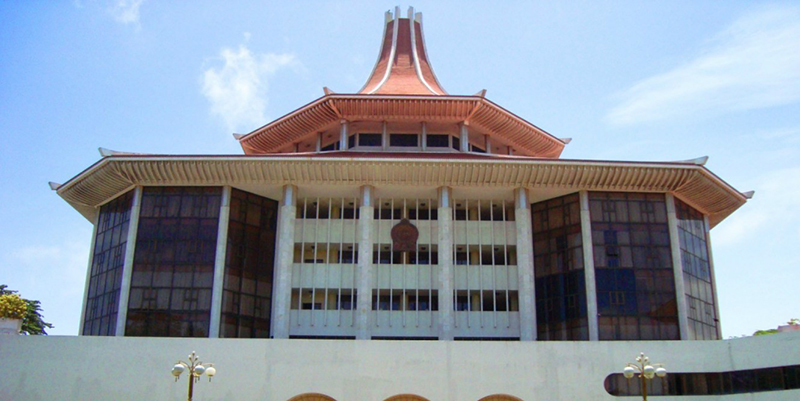
I. The Constitutional Context
Independence of the judiciary is, without question, an essential element of a functioning democracy. In recognition of this, ample provision is made in the highest law of our country, the Constitution, to engender an environment in which the courts are able to fulfil their public responsibility with total acceptance.
As part of this protective apparatus, judges of the Supreme Court and the Court of Appeal are assured of security of tenure by the provision that “they shall not be removed except by an order of the President made after an address of Parliament supported by a majority of the total number of members of Parliament, (including those not present), has been presented to the President for such removal on the ground of proved misbehaviour or incapacity”[Article 107(2)]. Since this assurance holds good for the entirety of tenure, it follows that the age of retirement should be defined with certainty. This is done by the Constitution itself by the provision that “the age of retirement of judges of the Supreme Court shall be 65 years and of judges of the Court of Appeal shall be 63 years”[Article 107(5)].
II. A Proposal for Reform
This provision has been in force ever since the commencement of the Constitution. Significant public interest, therefore, has been aroused by the lead story in a newspaper, Anidda of 13 March, that the government is proposing to extend the term of office of judges of the Supreme Court and the Court of Appeal by a period of two years.
This proposal, if indeed it reflects the thinking of the government, is deeply disturbing from the standpoint of policy, and gives rise to grave consequences. The courts operating at the apex of the judicial structure are called upon to do justice between citizens and also between the state and members of the public. It is an indispensable principle governing the administration of justice that not the slightest shadow of doubt should arise in the public mind regarding the absolute objectivity and impartiality with which the courts approach this task.
What is proposed, if the newspaper report is authentic, is to confer on judges of two particular courts, the Supreme Court and the Court of Appeal, a substantial benefit or advantage in the form of extension of their years of service. The question is whether the implications of this initiative are healthy for the administration of justice.
III. Governing Considerations of Policy
What is at stake is a principle intuitively identified as a pillar of justice.
Reflecting firm convictions, the legal antecedents reiterate the established position with remarkable emphasis. The classical exposition of the seminal standard is, of course, the pronouncement by Lord Hewart: “It is not merely of some importance, but is of fundamental importance that justice should not only be done, but should manifestly and undoubtedly be seen to be done”. (Rex v. Sussex Justices, ex parte McCarthy). The underlying principle is that perception is no less important than reality. The mere appearance of partiality has been held to vitiate proceedings: Dissanayake v. Kaleel. In particular, reasonableness of apprehension in the mind of the parties to litigation is critical: Ranjit Thakur v. Union of India, a reasonable likelihood of bias being necessarily fatal (Manak Lal v. Prem Chaud Singhvi).
The overriding factor is unshaken public confidence in the judiciary: State of West Bengal v. Shivananda Pathak. The decision must be “demonstrably” (Saleem Marsoof J.) fair. The Bar Association of Sri Lanka has rightly declared: “The authority of the judiciary ultimately depends on the trust reposed in it by the people, which is sustained only when justice is administered in a visibly fair manner”.
Credibility is paramount in this regard. “Justice has to be seen to be believed” (J.B. Morton). Legality of the outcome is not decisive; process is of equal consequence. Judicial decisions, then, must withstand public scrutiny, not merely legal technicality: Mark Fernando J. in the Jana Ghosha case. Conceived as continuing vitality of natural justice principles, these are integral to justice itself: Samarawickrema J. in Fernando v. Attorney General. Institutional integrity depends on eliminating even the appearance of partiality (Mandal Vikas Nigam Ltd. v. Girja Shankar Pant), and “open justice is the cornerstone of our judicial system”: (Sahara India Real Estate Corporation Ltd. v. SEBI).
IV. Practical Constraints
Apart from these compelling considerations of policy, there are practical aspects which call for serious consideration. The effect of the proposal is that, among all judges operating at different levels in the judicature of Sri Lanka, judges of the Supreme Court and the Court of Appeal only, to the exclusion of all other judges, are singled out as the beneficiaries of the proposal. An inevitable result is that High Court and District Judges and Magistrates will find their avenues of promotion seriously impeded by the unexpected lengthening of the periods of service of currently serving judges in the two apex courts. Consequently, they will be required to retire at a point of time appreciably earlier than they had anticipated to relinquish judicial office because the prospect of promotion to higher courts, entailing higher age limits for retirement, is precipitately withdrawn. Some degree of demotivation, arising from denial of legitimate expectation, is therefore to be expected.
A possible response to this obvious problem is a decision to make the two-year extension applicable to all judicial officers, rather than confining it to judges of the two highest courts. This would solve the problem of disillusionment at lower levels of the judiciary, but other issues, clearly serious in their impact, will naturally arise.
Public service structures, to be equitable and effective, must be founded on principles of non-discrimination in respect of service conditions and related matters. Arbitrary or invidious treatment is destructive of this purpose. In determining the age of retirement of judges of the Supreme Court and the Court of Appeal, some attention has been properly paid to balance and consistency. The age of retirement of a Supreme Court judge is on par with that applicable to university professors and academic staff in the higher education system. They all retire at 65 years. Members of the public service, generally, retire at 60. Medical specialists retire at 63, with the possibility of extension in special circumstances to 65. The age of retirement for High Court Judges is 61, and for Magistrates and District Judges 60. It may be noted that the policy change in 2022 aimed at specifically addressing the issue of uniformity and compatibility.
If, then, an attempt is made to carve out an ad hoc principle strictly limited to judicial officers, not admitting of a self-evident rationale, the question would inevitably arise whether this is fair by other categories of the public service and whether the latter would not entertain a justifiable sense of grievance.
This is not merely a moral or ethical issue relating to motivation and fulfillment within the public service, but it could potentially give rise to critical legal issues. It is certainly arguable that the proposed course of action represents an infringement of the postulate of equality of treatment, and non-discrimination, enshrined in Article 12(1) of the Constitution.
There would, as well, be the awkward situation that this issue, almost certain to be raised, would then have to be adjudicated upon by the Supreme Court, itself the direct and exclusive beneficiary of the impugned measure.
V. Piecemeal Amendment or an Overall Approach?
If innovation on these lines is contemplated, would it not be desirable to take up the issue as part of the new Constitution, which the government has pledged to formulate and enact, rather than as a piecemeal amendment at this moment to the existing Constitution? After all, Chapter XV, dealing with the Judiciary, contains provisions interlinked with other salient features of the Constitution, and an integrated approach would seem preferable.
VI. Conclusion
In sum, then, it is submitted that the proposed change is injurious to the institutional integrity of the judiciary and to the prestige and stature of judges, and that it should not be implemented without full consideration of all the issues involved.
By Professor G. L. Peiris
D. Phil. (Oxford), Ph. D. (Sri Lanka);
Former Minister of Justice, Constitutional Affairs and National Integration;
Quondam Visiting Fellow of the Universities of Oxford, Cambridge and London;
Former Vice-Chancellor and Emeritus Professor of Law of the University of Colombo.

Over hundred players expected at National Billiards Championship

‘NDB addresses fraud incident and reinforces financial strength and stability’

Credentials vs. Competence Do certificates carry too much weight?

Hayleys Mobility unveils Kaiyi Flagship Store in Colombo

Rocked Toronto … in style

Lankan-origin actress Subashini found dead in India

‘Dates have the highest sugar content to fight Coronavirus’

Sunday Island 27 December – Headlines

#SundayIsland 17th December – Headlines

Sunday Island – 28th March

Sunday Island Headlines – 21 March

Sunday Island – 21st February – Headlines
-

 News5 days ago
2025 GCE AL: 62% qualify for Uni entrance; results of 111 suspended
-

 Features2 days ago
Ranjith Siyambalapitiya turns custodian of a rare living collection
-

 News2 days ago
Global ‘Walk for Peace’ to be held in Lanka
-

 News7 days ago
Tariff shock from 01 April as power costs climb across the board
-

 Business6 days ago
Hour of reckoning comes for SL’s power sector
-

 Editorial5 days ago
Search for Easter Sunday terror mastermind
-

 Opinion7 days ago
Sri Lanka has policy, but where is the data?
-

 Opinion4 days ago
Hidden truth of Sri Lanka’s debt story: The untold narrative behind the report