
Business
‘Agricultural mechanization essential for ensuring food security’


By Hiran H.Senewiratne
Agricultural mechanization is very important for any country to progress and to ensure future food security besides maximizing benefits for local farmlands and improving the living standard of the people, Senior Vice President, Shaktiman International Business, Shawshank Watane said.
“In India agri- mechanization is around 45 percent but in the USA it’s about 95 percent. Therefore in Sri Lanka it is not high and farm mechanization will assist farmers to enhance their quality of life, provide food and farmland security and help reduce high labour costs,” Watane told a media conference recently at Grandezza Hotel, Negombo. On the same day Shaktiman’s annual dealer convention was also held.
‘Our main focus is to provide technology to farmers at an affordable cost and over the last ten years the company has sold more than 25000 farmland tractors. Further, to fill this void for machinery Shaktiman of India is ready to improve mechanization in Sri Lanka’s agriculture by supplying their range of machinery to Sri Lanka, Watane added.
‘The Sri Lankan agricultural sector still relies on traditional machinery-based farming. New machinery can increase productivity and efficiency, Head of Customer Care, Shaktiuman, Rajendra Paraska said.
‘The Sri Lankan agri-sector badly needs more inputs of machinery to move to the next level, Shaktiman’s Country Manager for Sri Lanka, Gajaba De Silva.
De Silva added: ‘To overcome global food production challenges and to achieve national economic goals, mechanization of Sri Lankan agriculture should be increased.
‘When the Shaktiman rotary machine is used, the soil is dug deep and the weeds in the field are suppressed due to the decay of the weeds.
‘There are many advantages that can be achieved by increasing agricultural mechanization as the process will also increase the organic value of the soil and provide a solution to the labor shortage as well. It will also create an opportunity for farmers to increase yield.
‘Shaktiman manufactures and distributes 107 types of agricultural machinery to over 100 countries. About 25 of the latest products are in the final stages of research.
‘Over 100 research teams are dedicated to sustainable agricultural mechanization. Our diverse product portfolio is expanding to cater to all aspects of the crop.’


Countdown to September 2026 begins
Sri Lankan exporters selling into Europe may soon face one of the most significant regulatory shifts in recent years as the European Union prepares to enforce sweeping new rules aimed at eliminating ‘misleading’ environmental and sustainability claims.
The regulation, known as the Empowering Consumers for the Green Transition Directive (EmpCo) – Directive (EU) 2024/825, will become fully enforceable across all EU member states from September 27, 2026. While the directive is primarily designed to protect European consumers from so-called ‘greenwashing,’ and it carries important implications for exporters worldwide, including those in Sri Lanka.
Compliance experts warn that many local businesses remain largely unaware of the new requirements despite their potential impact on market access, brand reputation, and regulatory compliance.
The directive introduces a simple but demanding principle: companies must be able to substantiate environmental and sustainability claims with credible evidence. Generic descriptions such as ‘eco-friendly,’ ‘green,’ ‘sustainable,’ ‘responsible,’ ‘carbon neutral,’ or ‘climate friendly’ may no longer be used freely unless they can be verified through reliable data and supporting documentation.
For Sri Lankan exporters, this represents a significant shift. Sustainability claims increasingly appear on product packaging, websites, social media campaigns, annual reports, tourism marketing materials, and corporate communications. Under the new framework, such claims could face scrutiny from regulators, consumers, retailers, and civil society groups.
The directive also places particular emphasis on future environmental commitments. Claims such as ‘Net Zero by 2040’ or ‘Carbon Neutral by 2030’ may require businesses to demonstrate clear implementation plans, measurable milestones, and systems for monitoring progress rather than relying on aspirational statements alone.
An environmental compliance expert told The Island Financial Review that this transforms sustainability from a communications exercise into a governance issue. “Responsibility will no longer rest solely with sustainability departments. Company directors, senior executives, marketing teams, procurement professionals, and compliance officers will all have roles to play in ensuring that public claims can withstand regulatory scrutiny. The potential costs of non-compliance are considerable. Under the directive, penalties may include fines of up to four percent of annual turnover generated within the relevant EU member state, restrictions on marketing activities, increased regulatory investigations, and challenges from consumer organisations and commercial partners.”
“The reputational consequences may prove even more damaging. In highly competitive export markets, trust has become a critical business asset. Companies found to be making unsubstantiated environmental claims could face long-term damage to relationships with buyers, retailers, and consumers.”
“The timing is particularly important for Sri Lankan businesses because compliance preparations, reporting frameworks and adjustments are needed before the enforcement date arrives.”
“Businesses supplying European markets are therefore being encouraged to begin assessing their exposure now rather than waiting until the last minute. Early preparation could help exporters safeguard market access, maintain buyer confidence, and strengthen their competitive position in an increasingly sustainability-conscious global economy.”
“For Sri Lanka’s export sector, the message from Europe is becoming increasingly clear: sustainability claims will no longer be judged by how compelling they sound, but by how convincingly they can be proven,” he said.
As the countdown to September 2026 begins, exporters may need to ask themselves a critical question: Are their sustainability claims ready for a new era of accountability?
By Sanath Nanayakkare

The University of West London (UWL) has formally opened the University of West London Sri Lanka Branch Campus, the country’s first full UK university branch campus, marking a landmark development in Sri Lanka’s higher education sector.
The University of West London Sri Lanka Branch Campus is designed to bring a UK university learning experience closer to students in Sri Lanka. The campus is operated by ANC Campus, a pioneer in the higher education sector in Sri Lanka with over two decades of experience in delivering internationally recognised education.
The University of West London Sri Lanka Branch Campus gives students the opportunity to study towards world-class UK degrees while remaining close to home. Academic delivery, assessment and quality assurance will be aligned with University of West London standards, with the University maintaining academic oversight of its courses and awards. Students will have access to UWL-approved programmes, academic support, learning resources and a campus environment designed to promote academic success, confidence and employability.

Xiaomi Sri Lanka, marked a significant day in the brand’s local journey with the launch of the all-new Xiaomi 17T and the grand opening of the new Xiaomi Store powered by Abans at One Galle Face Mall, Lower Ground.
This occasion reflects the brand’s growing presence in the country and its commitment to bringing smarter technology, connected devices and immersive customer experiences closer to Sri Lankan consumers.
Held under the theme “Step into a smarter world with Xiaomi,” the launch event welcomed media, partners, technology enthusiasts and customers to experience Xiaomi’s latest innovation and wider smart ecosystem. The new store at One Galle Face Mall powered by Abans has been designed to give customers a hands-on experience across Xiaomi smartphones, smart home products, lifestyle technology and connected devices, supported by Abans’ strong retail presence and customer service network.
Commenting on the milestone, Kain Wang, Country Head, Xiaomi Sri Lanka, said, “17th June is a significant day for Xiaomi in Sri Lanka as we celebrate two important milestones together: the launch of the Xiaomi 17T and the opening of our new Xiaomi Store powered by Abans at One Galle Face Mall. This reflects the strength of Xiaomi’s journey in Sri Lanka and our continued commitment to offering innovation, performance and smarter lifestyle experiences to local consumers. With Xiaomi 17T, we are bringing advanced Leica imaging, powerful performance and long-lasting battery life to users who want to do more with their smartphones. At the same time, our new store creates a dedicated space for customers to experience the Xiaomi ecosystem in a more personal and engaging way.”

Lamine Yamal scores first World Cup goal as Spain thrash Saudi Arabia

Shahidi sanctioned for running on the pitch during Chennai ODI

Kapp’s 81* seals South Africa’s come-from-behind win against India

Belgium see red in goalless World Cup draw with Iran in Los Angeles

Showers in the Western, Sabaragamuwa and North-western provinces and in Galle, Matara, Kandy and Nuwara-Eliya districts

Judicial vacancies: President keeps country guessing

‘Dates have the highest sugar content to fight Coronavirus’

Sunday Island 27 December – Headlines

#SundayIsland 17th December – Headlines

Sunday Island – 28th March

Sunday Island Headlines – 21 March

Sunday Island – 21st February – Headlines
-

 News6 days ago
Beijing Capital Airlines to resume flights to Colombo signalling boost to tourism
-

 Features5 days ago
Killing of Colombo’s ancient trees — a warning on UN’s World Desertification Day – 17 June
-

 News2 days ago
Creditor not yet paid
-

 News3 days ago
Creditor receives USD 2.5 mn as Lankan public bears loss from theft of Treasury funds
-

 News2 days ago
Consumers bearing 22% tax burden despite 18% VAT claim: Dr. Harsha de Silva
-

 Opinion4 days ago
Beyond diagnosis: A strategic design for 7% growth by 2029 (Part I)
-

 Opinion6 days ago
Fifty years after Soweto uprising
-
 News5 days ago
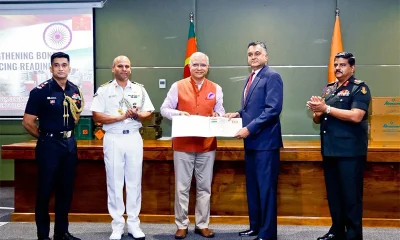
India provides military stores worth USD 5.5 mn to SL