
Latest News
Afghanistan storm into maiden World Cup semi-finals; Australia knocked out


Jonathan Trott first kicked a bag in the dressing room. He then signaled to Afghanistan to slow the game down when rain was around. Rashid Khan had his hands on his head at various moments in the chase. Mohammad Nabi had a constant smile on his face. Dwayne Bravo wasn’t able to watch it.
But the one moment that encapsulated the emotionally-charged night in Kingstown was Naveen ul Haq taking off after taking the final Bangladesh wicket. That sealed Afghanistan’s maiden spot in the semi-final of any men’s senior World Cup.
In a match that had a start-stop nature owing to multiple rain interventions, Afghanistan – led by four-fors from Naveen and Rashid – edged out Bangladesh by a mere eight runs, and in the process, also knocked Australia out of the T20 World Cup 2024.
Both teams, along with Australia, were in contention for one semi-final spot from Group 1 of Super Eight, and the rain only added to the drama. For the best part of the last hour, a cat-and-mouse game ensued. There were moments when Bangladesh edged Afghanistan out on the DLS par score, only for the latter to come back to snatch back the advantage by picking up wickets.
Litton Das with a best of 36 before Monday in the tournament, stayed through it all, but couldn’t take Bangladesh over the line. Rashid and Co. danced their hearts out after knocking two teams with a single blow and the celebrations are only likely to go on for longer.
Bangladesh had to chase their original target of 116 down in 12.1 overs to pip both Australia and Afghanistan to the semi-final. Their chase was delayed by half an hour, thanks to a 20-minute downpour. A shorter game, therefore, was disadvantageous to Bangladesh.
After the second rain break, though, Bangladesh sent out mixed signals. Litton attacked Naveen but Soumya Sarkar fell in a bid to do so against Rashid. Towhid Hridoy’s risks against Mohammad Nabi, which included a dropped catch, came off but he, too, holed out off Rashid. But with Litton hitting Rashid for successive fours – first over mid-off and then just past slip – Bangladesh looked on track to hunt the target down to qualify.
But soon, Mahmudullah’s indecisiveness and Rishad Hossain’s adventurousness meant they slipped to 80 for 7 after 11 overs. Which is when the rainy clouds returned to continuously hover around the stadium, and constantly brought the DLS par scores into picture for the rest of the night.
In the face of increasing pressure, Litton seemingly kept his calm. He has had a forgettable 2024 in T20Is, striking at under 100 and his place in the Bangladesh set-up under scanner. But he started off with intent and kept up their hopes of signing off from the T20 World Cup with a win. But it was not meant to be.
Fazalhaq Farooqi, Afghanistan’s weapon with the new ball, trapped Tanzid Hasan lbw with his third ball, making it his 16th wicket, which drew him equal with Wanindu Hasaranga for most wickets in a men’s T20 World Cup.
Naveen’s first over was expensive, with Litton hitting him for a four and a six. Then Najmul Hossain Shanto heaved one over midwicket in his second over. But with a deep midwicket in place, Naveen once again bowled a length ball angling into Shanto, who picked out the fielder there. Naveen then got the next ball to straighten just enough to catch Shakib Al Hasan’s leading edge for a return catch and Bangladesh were 23 for 3.
One of the methods that has worked for Afghanistan, and their openers, in this World Cup is a non-enterprising start. Rahmanullah Gurbaz and Ibrahim Zadran stayed true to form, taking very few chances inside the powerplay as well as in the first ten overs. They finished the powerplay on 27 for 0 and at the ten-over mark were 58 for 0.
It was Gurbaz and Ibrahim’s fourth fifty partnership, the most by any pair in a T20 World Cup. In the first ten overs, there were only 15 attempts of attacking shots, that too on a surface that was slowing down and was going to see dew later on.
When Rishad was brought on in the ninth over, the wind was blowing diagonally from right to left, in the direction of his natural spin. He immediately beat Ibrahim’s outside edge, and in his second over used the bounce on offer to get the same batter’s leading edge caught at long-off.
Gurbaz then took the attack to Rishad in his third over. He first slapped one over cover point to end a phase of 38 legal balls without a four, and then used the sweep for another four through backward-square-leg region. However, Rishad had the last laugh when he had Gurbaz holing out to deep cover in his last over. A couple of balls later, he also had Gulbadin Naib miscue a slice towards cover point. Naib could have gotten away if not for Sarkar, who sprinted in from the deep and dived forward almost near the 30-metre circle. And just like that, Afghanistan had ceded early advantage to slip from 59 for 0 to 89 for 4.
Rashid walked in at 93 for 5 with just 14 balls left. He faced ten of those, attempted attacking shots on nine of those, and finished on 19 not out. He struck three sixes, two of those in the last over bowled by Tanzim Hasan Sakib. He used good use of the willow generally, except on one occasion when he flung it towards his partner, Karim Janat. It was the last over of the innings and Rashid wanted a second run to retain strike but Janat refused it. Still, he helped Afghanistan score 22 in the last 14 balls that helped them to a total they could fight with, just as the heavens in Kingstown opened up.
Afghanistan faced 66 dot balls in their innings, which was the third-most by a team with five or fewer wickets lost in men’s T20I where ball-by-ball records are available with ESPNcricinfo. But it did not come back to haunt Afghanistan, who kept a clean slate of successfully defending totals in St Vincent.
Brief scores:
Afghanistan 115 for 5 in 20 overs (Rahmanullah Gurbaz 43; Taskin Ahmed 1-12, Mustafizur Rahman 1-17, Rishad Hossain 3-26) beat Bangladesh 105 in 17.5 overs (Litton Das 54*; Rashid Khan 4-23, Naveen ul Haq 4-26, Fazalhaq Farooki 1-15, Gulbadin Naib 1-05) by eight runs via DLS method
[Cricinfo]





Latest News
Heavy showers above 100 mm are likely at some places in the Western, Sabaragamuwa, Southern, Central, and North-western provinces and in Anuradhapura district.

WEATHER FORECAST FOR 14 OCTOBER 2026
Issued at 05.30 a.m. on 14 October 2026 by the Department of Meteorology
Due to a low-level atmospheric disturbance persisting in the Bay of Bengal near Sri Lanka, cloudy skies and increased rainfall are expected to continue over the island.
Misty conditions can be expected at some places in the Sabaragamuwa, Central and Uva provinces during the early hours of the morning.
Showers or thundershowers will occur at times in the Northern, Eastern, Southern and Western provinces. Showers or thundershowers will occur in other parts of the island after 1.00 p.m.
Heavy showers above 100 mm are likely at some places in the Western, Sabaragamuwa, Southern, Central, and North-western provinces and in Anuradhapura district while fairly heavy showers above 75 mm are likely at some places in other areas of the island.
The general public is kindly requested to take adequate precautions to minimize damage caused by temporary localized strong winds and lightning during thundershowers.
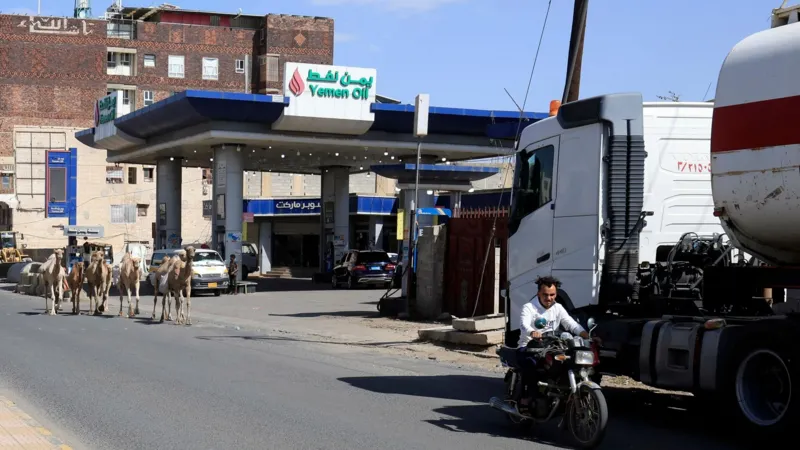
Missiles and drones have been intercepted over Riyadh after the Saudi-led coalition fighting in Yemen struck a fuel depot near the Houthi-controlled capital, Sanaa, its spokesperson says.
Maj Gen Turki al-Maliki said several projectiles targeting the Saudi capital and other cities were intercepted after the coalition carried out a strike on the Yemen Petroleum Company’s al-Sabaha facility on Tuesday night.
The Houthis warned they would target the airport and Aramco refinery in Saudi Arabia’s capital, Riyadh, and Aramco’s headquarters in the eastern city of Dammam.
Al-Maliki later said missiles targeting cities including Dammam had been intercepted, while shrapnel had fallen in a residential area in Dhahran.
It came as the Saudi cabinet, chaired by Crown Prince Mohammed bin Salman, said the Iran-backed group would “bear the consequences” of its recent deadly attacks on the kingdom.
Thirteen people were killed when a missile hit King Khalid International Airport in Riyadh on Saturday, while another person was killed in a similar attack there the following day.
On Tuesday, the coalition said its forces had destroyed three drones north of Riyadh.
The Houthis have said they are targeting airports, oil and gas facilities, and military bases in Saudi Arabia with missiles and drones in response to deadly Saudi strikes on territory that they control in western Yemen, including Sanaa.
The Saudi-led coalition has been providing air support for Yemeni pro-government forces mounting an offensive on Yemen’s Red Sea coast and several other front lines.

A correspondent for AFP news agency reported that queues formed at petrol stations in Sanaa on Tuesday afternoon following the coalition’s warning of an impending operation against the al-Sabaha oil facility, with many residents worried about shortages.
The Yemen Petroleum Company, which is run by the Houthis, issued a statement that sought to reassure them, saying the facility “does not contain any stock of petroleum products”.
The company also said it had “taken all necessary precautionary measures to address any emergency, ensuring the stability of the supply situation and the continued meeting of citizens’ needs in a normal manner”.
After al-Maliki confirmed the strike, first reported by Houthi media, explosions were heard over Riyadh and other Saudi cities, with al-Maliki reporting four missiles and two drones had been intercepted near the capital.
Yemen has been devastated by a civil war that began in 2014, when the Houthis ousted the internationally-recognised government from Sanaa. The conflict escalated in 2015, after the Saudi-led coalition of Arab states intervened in an attempt to restore the government’s rule.
A four-year-old informal ceasefire began to unravel in July, when the Houthis announced a “maritime embargo” against Saudi Arabia and began missile and drone attacks on Saudi airports, oil facilities and tankers in the Red Sea.
The Houthis said they were retaliating for what they call a Saudi blockade of their territory, as well as an air strike on Sanaa airport that they blamed on the kingdom.
The conflict escalated in September after the Houthis seized part of Yemen’s south-western Red Sea coast near the Bab al-Mandab Strait, a chokepoint for global shipping. Their advance contributed to a rise in oil prices following six months of war between the US, Israel and Iran.
US President Donald Trump said on Truth Social on Tuesday the Houthis were “behaving very badly… and purposefully trying to drive up Oil Prices”.
Speaking to reporters, he did not answer a question on whether he’d made a decision to help the Saudis retaliate against them, but said he “might” ask Turkish President Tayyip Erdogan to intervene.
Last week, pro-government forces said they had regained control of territory overlooking Bab al-Mandab after launching a major counter-offensive with the support of Saudi air strikes.
Hundreds of people have reportedly been killed in Yemen since August. The UN’s human rights office says they include at least 54 civilians, half of them children.
More than 216,000 people have also been displaced across the country, and suspected cholera cases have tripled in three weeks, rising from 217 to 647, according to the UN.
[BBC]
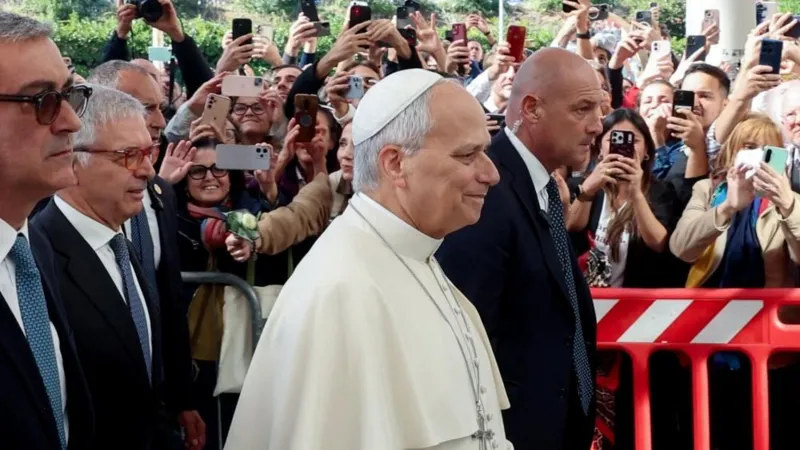
Pope Leo XIV has been diagnosed with lung cancer but had successful surgery to remove a lower lobe of his right lung, the Vatican has said in a medical bulletin.
The 71-year-old underwent a 90 minute surgery on Tuesday at Rome’s Gemelli Hospital and was subsequently diagnosed with lung adenocarcinoma.
“After the operation, the Pope awoke normally and returned after a brief period of observation to his room on the 10th floor,” the Vatican said in a statement.
The lump was first detected during what the Vatican has described as “routine checks”.
Earlier, large crowds gathered outside the hospital to greet the Pope, with some waiting for several hours.
They cheered greetings and well wishes as he passed, while he waved and smiled back through the lowered back window of his car.
He was then met by staff on the hospital steps. “I’m sorry,” one of them commiserated, to which the Pope gave a smile and a shrug. “We’re here for you,” he was assured.
In its statement, the Vatican said the whole lower lobe of the Pope’s right lung was removed “to ensure the procedure was radical”.
A Vatican source told Agence France-Presse news agency further tests were being carried out to see if there was any sign the cancer had spread.
It was Leo XIV himself who on Sunday announced news of his operation to the world, speaking from the balcony in St Peter’s Square after delivering the traditional Angelus blessing.
He said the nodule, or growth, on his lung was “contained” and had been found “at a very early stage”, but that doctors had advised him to have it removed.
Gemelli’s thoracic surgery team operated on the Pope, whose schedule has already been cleared until 20 October to give him time to recover.
Nodules are quite common and not necessarily cancerous, but after it was examined the medical team confirmed it was pulmonary adenocarcinoma, “as suspected by pre-operative tests”, the Vatican said.
The Vatican has stressed that the pontiff, who is generally thought to be fit, had no symptoms of infection or illness.

Cardinal Kikuchi Tarcisio Isao of Tokyo wrote on social media that he’d had an audience with Pope Leo on Monday, and said the pontiff felt “nothing wrong” physically.
He said the Pope had decided to check in for surgery as soon as possible because he was due to travel to Latin America in early November, and was keen to stick to that plan.
The trip is particularly significant because it includes a visit to Peru, where the pontiff was a missionary and then a Bishop for many years.
Despite all the reassurances, the news has shaken Catholics all over the world.
“Am I worried? Yes, because I certainly wasn’t expecting anything like this,” Vatican Secretary of State Cardinal Parolin told journalists on Tuesday.
He agreed that the news was like a “bolt from the blue”, but said the cardinals had been struck by the Pope’s “serenity” and were confident in his recovery.
Outside Gemelli Hospital, which has treated several popes and is home to a large statue of John Paul II, a few Catholics lingered after the pontiff was admitted.
Carla had come specially, wanting to be close.
“He seems calm, so we are calm too – even though illness is always unpleasant,” she told the BBC. “We will wait here and pray.”
[BBC]

AgriConnect Sri Lanka’ to be launched on 30 October to Modernise the Agricultural Sector Through Digitalisation

57th Annual Saints’ Quadrangular Tournament on Saturday and Sunday

Showers or thundershowers will occur at most parts of the island

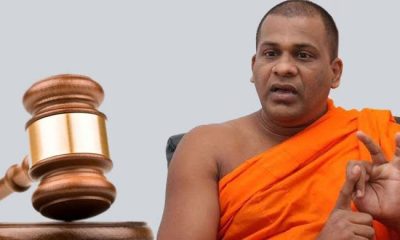
Prison rules to be revised over monks’ attire

AC President recuses himself from hearing prison attire case pertaining to Gnanasara Thera

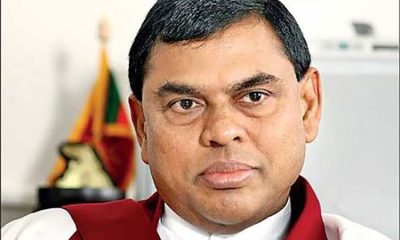
Court orders steps to obtain INTERPOL Red Notice against Basil

‘Dates have the highest sugar content to fight Coronavirus’

Sunday Island 27 December – Headlines

#SundayIsland 17th December – Headlines

Sunday Island – 28th March

Sunday Island Headlines – 21 March

Sunday Island – 21st February – Headlines
-

 News7 days ago
NDB fraud Rs 60mn more than reported
-

 News7 days ago
Removing monk’s robes matter for Sangha to decide: Mahanayake Theras
-

 News6 days ago
NPP govt. reminded of its responsibilities as US warship leaves Colombo
-

 News5 days ago
Sri Lanka escalates anti-graft drive with Shiranthi’s jailing
-

 Latest News6 days ago
Farhan, Sadaqat help Pakistan ace 183 chase to go 1-0 up
-
 News7 days ago
BHC, Colombo: “LTTE remains a proscribed org. in the UK”
-

 Latest News4 days ago
Farhan and Sadaqat help Pakistan seal series in style
-

 News5 days ago
Iranian ships stranded, Lanka fears US sanctions